8 Budget Small Living Room Layouts for Sleeper Sofa Nights
A sleeper sofa used every night needs more than an open patch of floor. It needs a workable daytime arrangement, a clear nighttime bed footprint, and bedding storage that makes the daily reset manageable. These eight layouts account for opening clearance, walking routes, lighting, and access around the bed.
As an Amazon Associate I earn from qualifying purchases.
1.Float the Sleeper Sofa Facing a Shallow Media Wall
Float the sleeper sofa so it faces a wall-mounted television and a narrow media console. At night, the bed can open toward that wall while a low rolling coffee table parks at the room edge or beside the sofa.
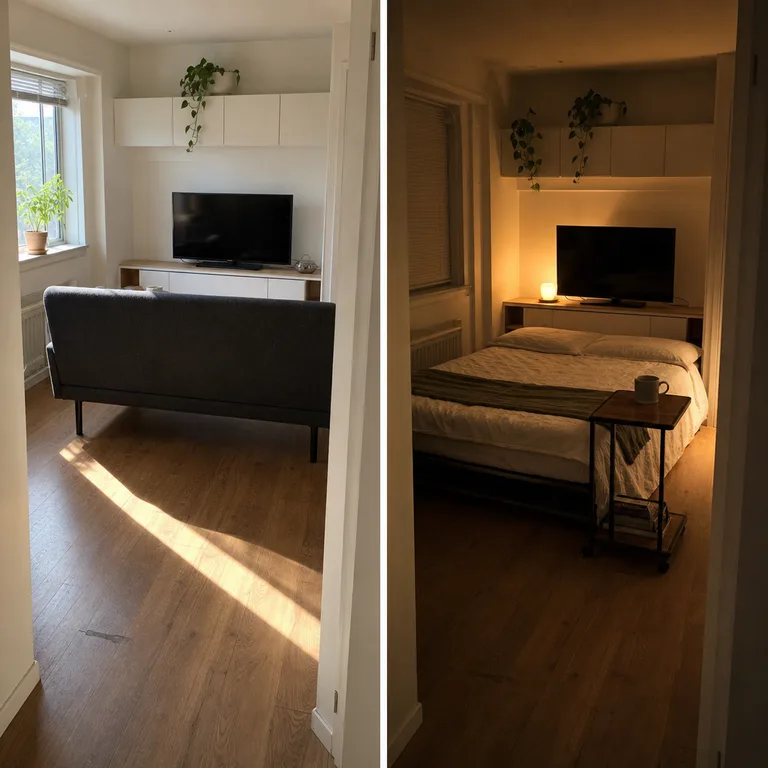
This arrangement keeps the seating area centered rather than making the sofa look like an extra bed pushed against a wall. Store sheets, pillows, and a folded cover in lidded bins behind the sofa, where they are close to the sleeping area but hidden during the day.
Keep the media wall genuinely shallow, since the open bed needs the clearance specified by the sofa manufacturer. A rolling table is easier to move every evening than a heavy coffee table, but lockable casters or a stable parked position help it stay put.
Worth knowing: This layout only works if the distance from the sofa to the media wall leaves the manufacturer-required opening clearance plus room to move around the bed.
Related: 12 Small Living Room Layout Ideas That Leave Room to Walk
2.Use a Window Wall for a Daytime Sofa and Sideways Bed
Place the closed sleeper sofa along a solid wall beside the windows, then let it open sideways across the room at night. Leave one long side of the mattress open for getting in and out, rather than wedging both sides against furniture.
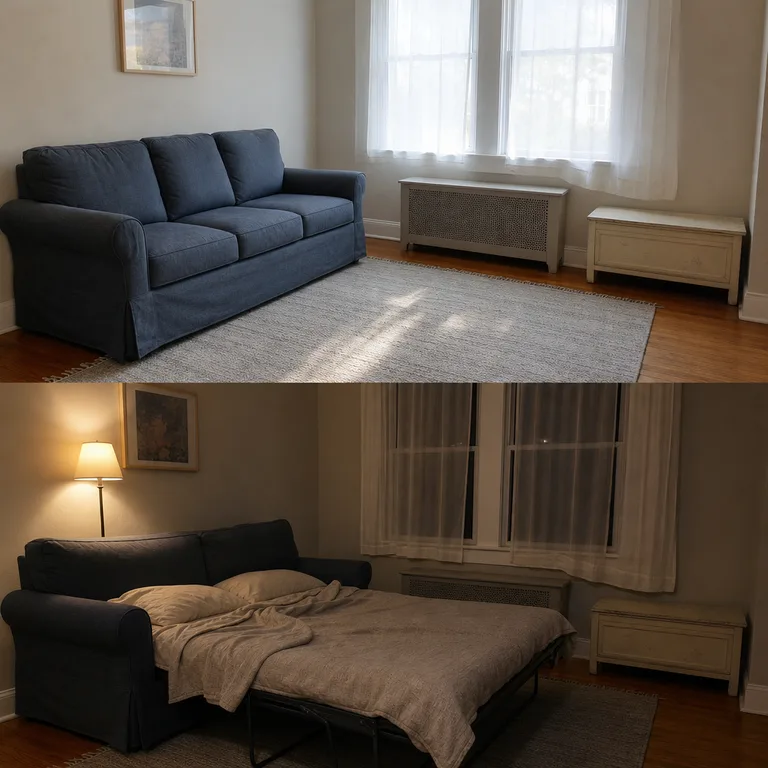
A storage bench near the window can hold folded bedding and also work as daytime seating or a perch for bags. The window side can feel less boxed in during sleep, especially when curtains provide privacy and soften early light.
Choose a low-pile rug that will not bunch under the mechanism, or use a rug small enough to sit clear of the opening path. Keep benches away from radiators, heat registers, and windows that need to open for ventilation.
Worth knowing: Windows can create drafts, glare, and early-morning light, so this setup may need lined curtains and should not block heating equipment.
3.Make a One-Wall Room With a Folding Dining Table
Put the sleeper sofa on the longest wall and use the opposite wall for a folding dining table. During the day, the table provides a place to eat or work; at night, it folds flat so the sofa bed can open into the cleared center of the room.
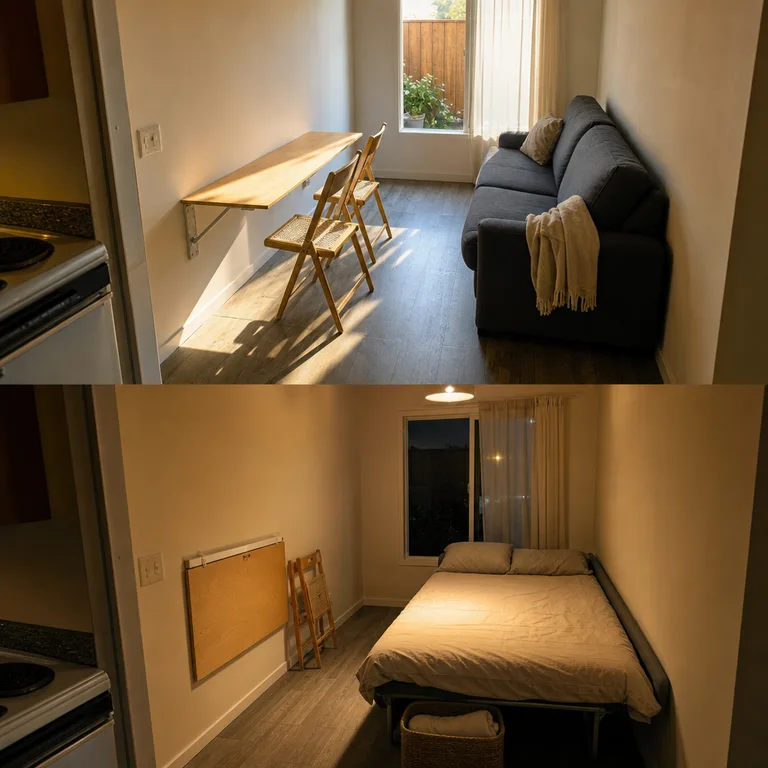
This avoids a common daily problem: relocating a full dining table every evening. Folding chairs can tuck against the wall, and a slim basket at the foot of the bed can hold the items used for the nightly reset.
Use sturdy wall hardware appropriate for the wall type, and make sure the folded table does not project into the bed's opening zone. Keep the dining chairs light enough to move easily, but stable enough for regular use.
Worth knowing: A wall-mounted folding table requires secure installation, which can be difficult on weak walls or restricted in some rentals.
4.Set the Sleeper Sofa Across From a Bookcase Divider
Use a low open bookcase to divide a studio or long room, with the sleeper sofa facing it during the day. At night, the bed opens toward the divider while a clear side remains available for getting into bed and reaching the rest of the home.
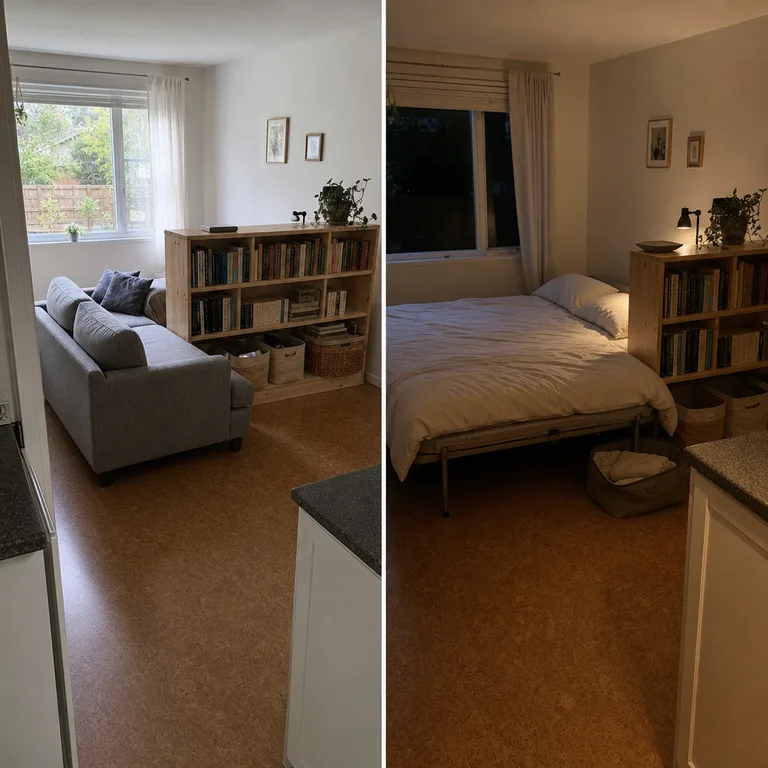
The shelves make the divider useful rather than decorative alone. A lower basket can hold pillowcases and sheets, while a clipped-on reading light can create bedside light without adding a separate nightstand to the floor plan.
Anchor the bookcase to the wall where possible, particularly if it holds books or sits near the bed path. Keep it outside the sofa mechanism's clearance area and avoid overfilling shelves that face the sleeping zone.
Worth knowing: A divider bookcase can make a very narrow room feel tighter, and it must be anchored safely rather than treated as a movable screen.
Related: 12 Studio Apartment Divider Ideas Without Building a Wall
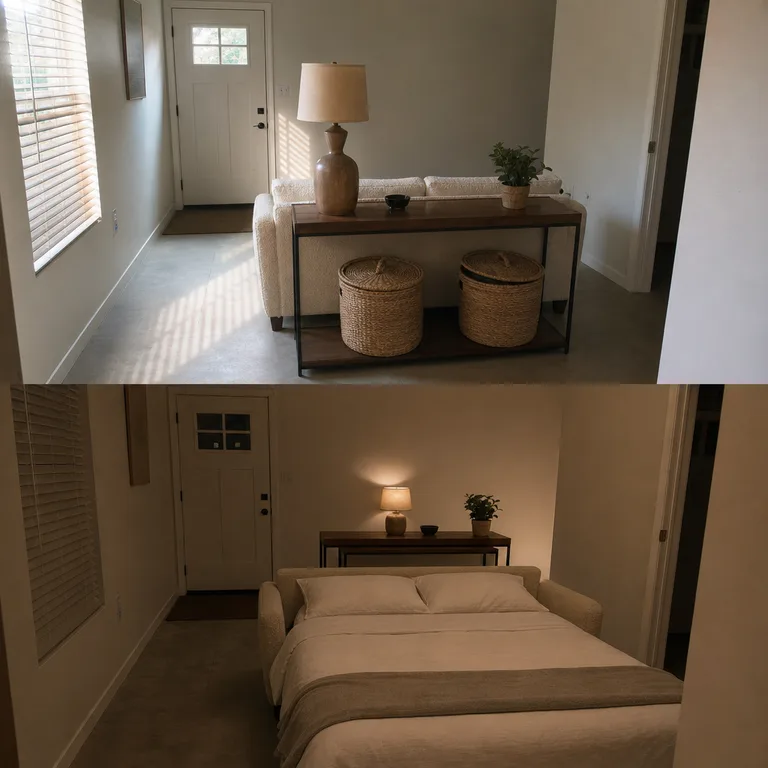
5.Put a Narrow Console Behind the Sofa for the Daily Reset
Float the sleeper sofa in the middle of the room and place a narrow console directly behind it. The console creates a home for a bedside lamp, charging point, and closed baskets of bedding without placing those items on the floor each night.
When the bed opens into the living area, slide the coffee table under the console or against a wall. Preserve one clear side passage to the front door, bathroom, or kitchen so the open bed does not stop the room from functioning.
A console with open space below is especially useful because it can temporarily shelter a slim table or basket. Use cable management for lamps and chargers, and make sure cords do not cross the nightly walking route.
Worth knowing: This arrangement needs enough room behind the sofa for a console and enough open floor in front for the fully extended bed.
6.Use a Corner Sleeper Sofa With a Nesting Table Zone
Place the sleeper sofa in a corner to keep the middle of the room open during the day. Use nesting tables instead of one large coffee table, then separate the tables and tuck them along the adjacent wall before opening the bed.
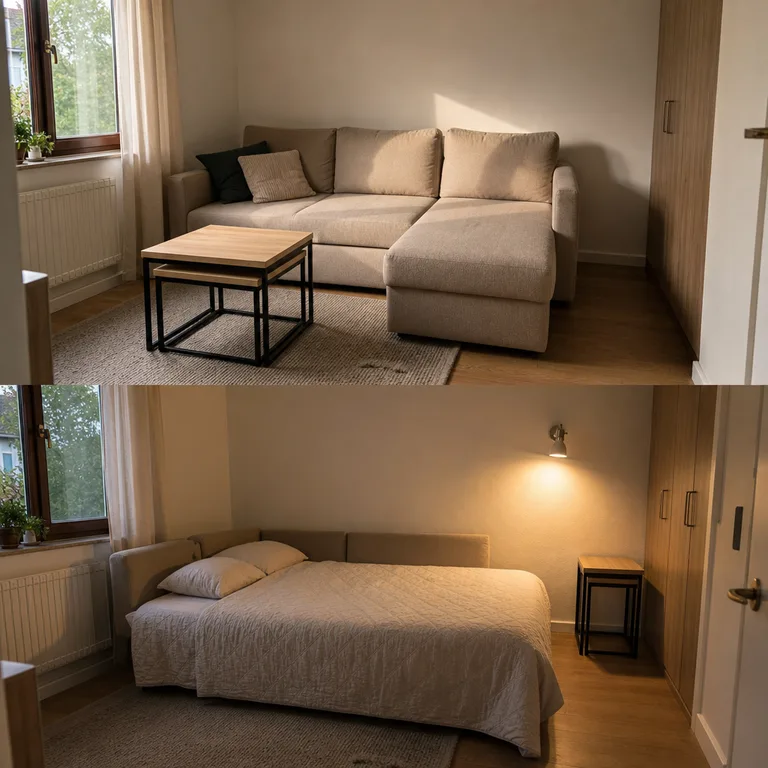
The corner placement gives the sofa a deliberate living-room look while reducing furniture drift around it. A clear strip along the outside edge of the open mattress can lead to a wardrobe, closet, or doorway without requiring anyone to climb over the bed.
Choose tables that are light enough to move nightly and do not have sharp corners at shin height. A low-pile rug can define the daytime seating zone, but it should not interfere with the legs or moving parts of the sofa bed.
Worth knowing: Corner placement can limit where the mattress opens, so check the mechanism carefully and keep wardrobe doors or closet doors out of its path.
7.Create a Sleeper Sofa Alcove With Curtain Privacy
Set the sleeper sofa inside a shallow alcove and frame it with ceiling-mounted curtains. During the day, pull the curtains to either side so the sofa reads as seating; at night, partly close them behind the head area for a more contained sleeping zone.
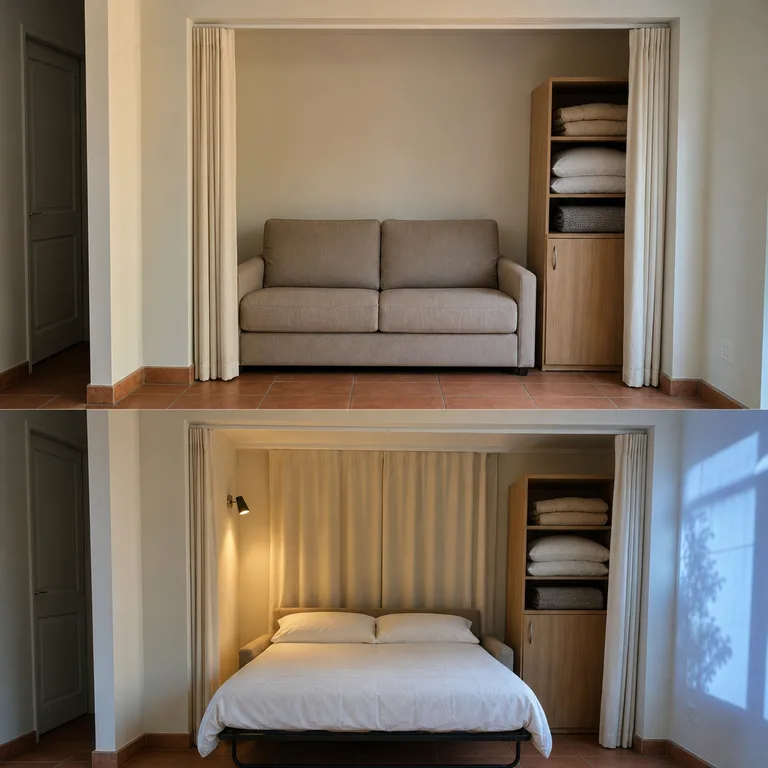
Keep a small cabinet near the alcove for bedding, so the duvet and pillows do not need to travel across the room twice a day. Leave the foot of the open bed clear, creating a route out of the alcove and preventing the curtains from becoming part of the nightly obstacle course.
Use curtain fabric that can be washed easily, since it will sit close to the sleep area and gather dust. Keep curtains well away from lamps, radiators, baseboard heaters, and any other heat source.
Worth knowing: Curtains add privacy and softness but do not block everyday noise, and ceiling-track installation may not be allowed in every rental.
8.Keep the Bed Clear With a Wall-Hung Desk and Ottoman Storage
Use a shallow wall-hung desk on the wall beside the sleeper sofa, leaving the central floor free for the open mattress. A storage ottoman at the sofa end can hold the duvet and extra linens, then move to the wall when it is time to make the bed.
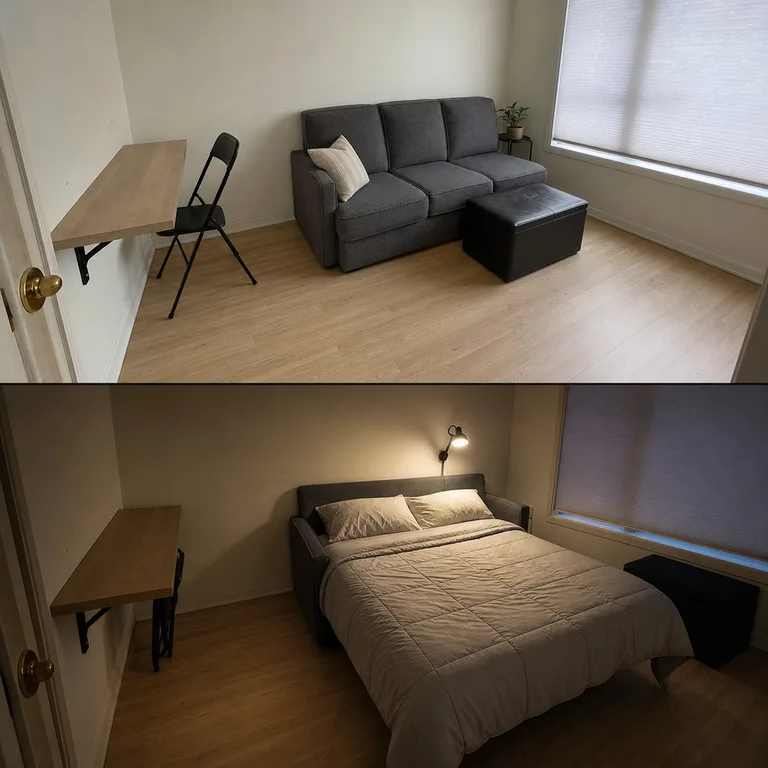
This gives a small room a daytime work spot without adding another large piece of furniture to move every night. Tuck an armless chair under the desk, shift the ottoman aside, and maintain a walking lane along the window side of the bed.
Choose a mounting method that suits the wall and your lease, or use a compact freestanding alternative if drilling is not permitted. An ottoman with a firm lid can work as seating or a footrest by day, but it should be light enough for frequent repositioning.
Worth knowing: A wall-hung desk depends on secure mounting and rental approval, while a storage ottoman still needs a reliable parking spot every night.
About the author
Dana Ruiz, Senior editor
Dana writes about small-space living, storage and low-cost decorating.
Keep reading
8 Easy Small Living Room Ideas to Fit a Piano or Keyboard
November 2, 2026
8 Small Living Room Layouts for an L-Shaped Sectional
November 2, 2026
8 Table Linen Storage Ideas for Homes Without a Dining Hutch
November 2, 2026
8 Christmas Village Layouts That Fit on One Shelf
November 2, 2026