8 Easy Small Living Room Ideas to Fit a Piano or Keyboard
A piano or keyboard can share a small living room when its bench, playing position, and surrounding walkway are treated as part of the furniture layout. These eight arrangements keep seating useful while allowing enough room to sit down, play, and move through the room without turning the instrument into an isolated corner.
As an Amazon Associate I earn from qualifying purchases.
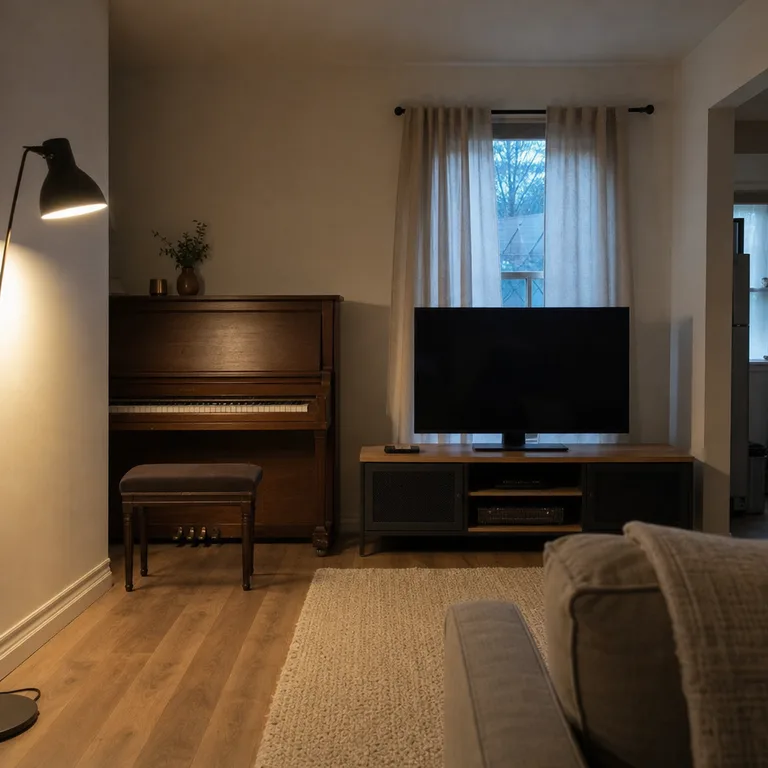
1.Place an Upright Piano Along a Short Wall Beside the Seating
A short wall can be a useful home for an upright piano when the sofa occupies the adjoining wall instead of competing for the same stretch. This creates a defined music area without asking the piano to become the center of every conversation or TV view.
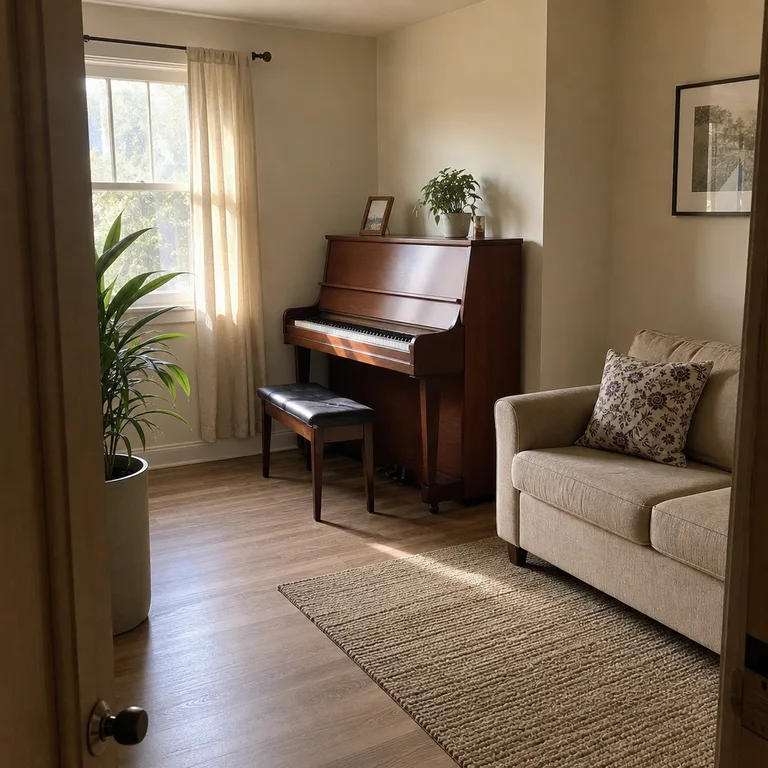
Leave an open strip behind the bench so it can pull back when someone sits down, then slide it in again after playing. A flat-weave rug can visually connect the piano and seating, while a low sofa table or small plant helps the transition between the two zones feel deliberate.
Worth knowing: Check the instrument maker’s placement guidance before using a wall near strong sun, a radiator, an air vent, or an exterior door.
2.Float a Digital Keyboard Behind a Low Sofa
A slim digital keyboard can sit behind a low-backed sofa and face into the room, turning unused sofa-back space into a compact playing spot. The sofa acts as a soft boundary, so the keyboard does not read like office equipment placed against a random wall.
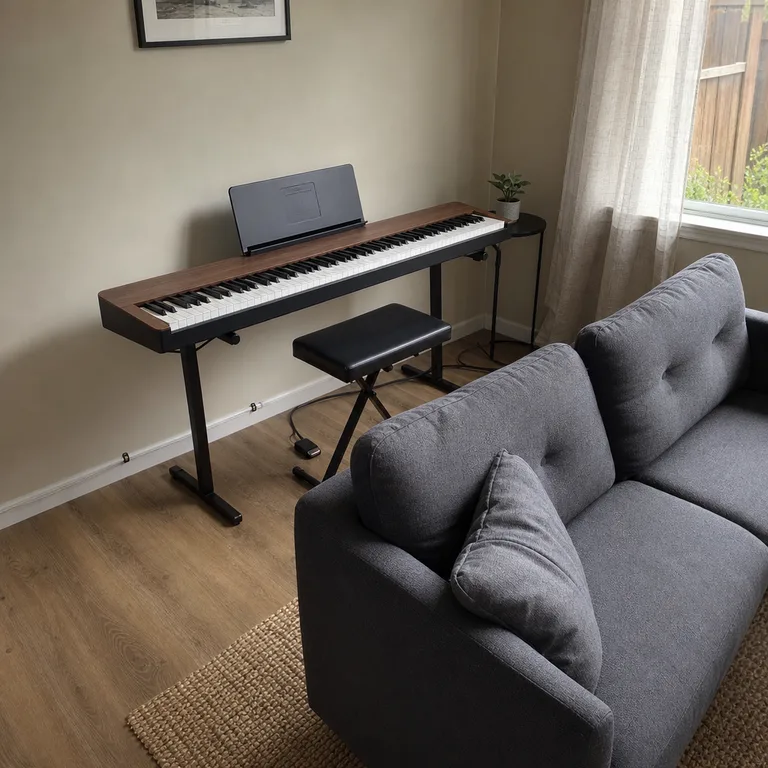
Keep enough open floor behind the sofa for the bench to move and for the player to stand up without climbing around the seating. Use a stable stand suited to the keyboard, and guide the power cable along the wall or under a proper floor cable cover rather than leaving it across the route.
Worth knowing: This layout works best with a low sofa and enough depth behind it; a tall or deep sectional can make the playing position feel cramped.
3.Use the Back of a Sofa as a Piano Boundary
Set an upright piano perpendicular to the back of a compact sofa to create a separate music zone at one end of the seating area. With the bench opening toward a side aisle, the player is less likely to block the center of the room while getting in and out.
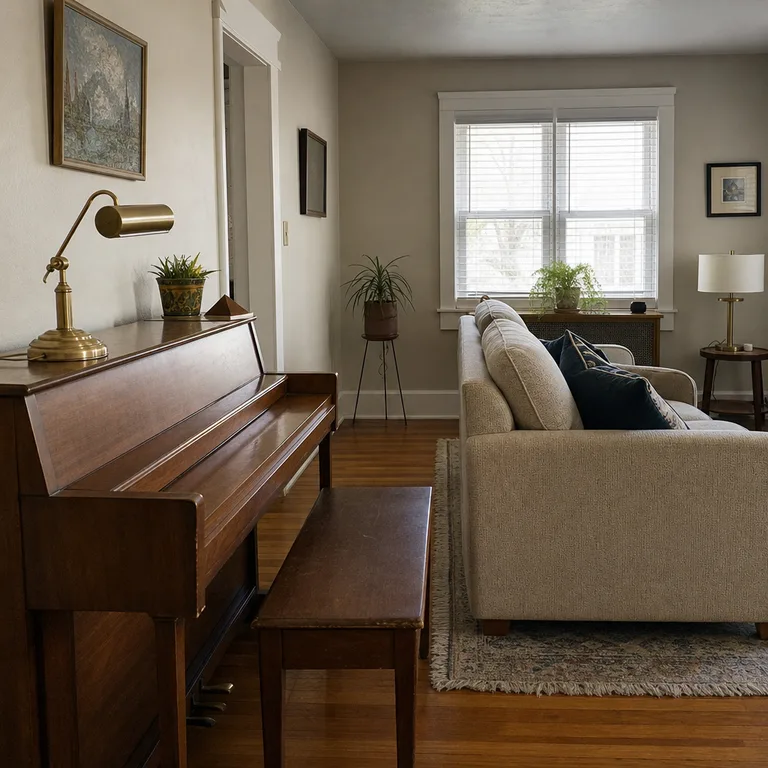
A narrow runner can make that side aisle feel intentional and protect the floor where the bench moves. Keep nearby decor simple, and avoid placing a heavy side table where the bench or player needs to travel.
Worth knowing: The piano needs a stable wall position and a clear path for moving it in, so this arrangement may not suit a tight doorway or narrow apartment entry.
4.Tuck a Keyboard Into a Window Wall With Side Storage
A keyboard can fit neatly below a window or along a bright wall when a slim closed cabinet holds books, music, headphones, and small accessories at one end. Closing away the extras keeps the keyboard area from spreading into the rest of the living room.
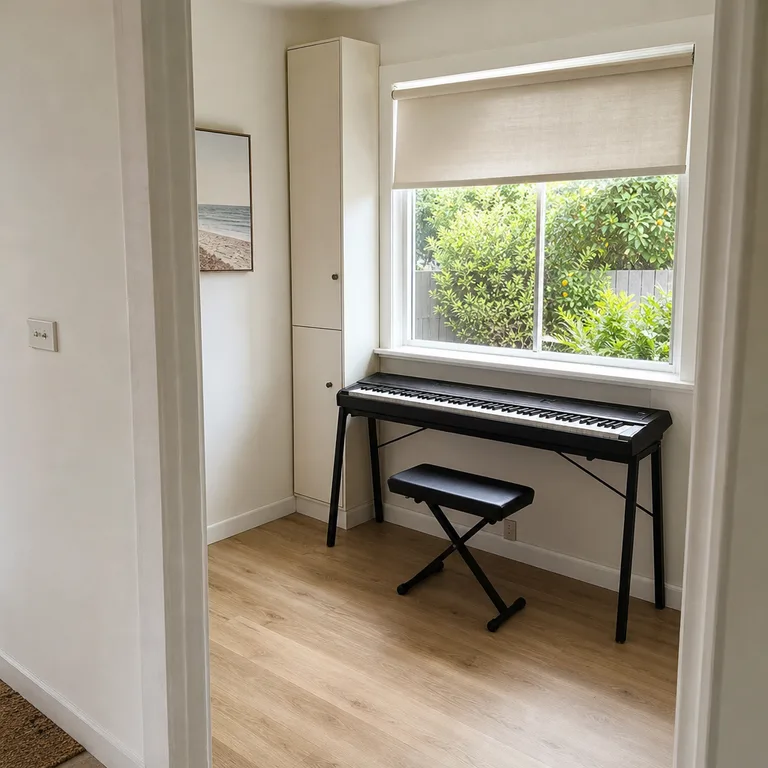
Use a light-filtering shade to manage glare on the keys and screen, then leave the bench easy to pull forward and back. Choose storage that stays below window trim and does not interfere with curtain movement or the route through the room.
Worth knowing: Follow the keyboard maker’s guidance for direct sunlight, temperature changes, and nearby heating or cooling vents before choosing a window wall.
5.Make a Piano Wall Part of the TV Seating Layout
Put an upright piano beside the television zone rather than directly beneath it, giving both functions a clear place on the same wall. The room still reads as one seating area, but the piano is not competing with the screen for the exact center position.
Arrange the sofa so the bench can pull toward an open side route instead of into the TV viewing path. A low media console and a floor lamp can balance the wall without crowding the piano with tall furniture or loose cords.
Worth knowing: This approach needs a wall wide enough for both pieces and may not work if the television wall is also the room’s main passageway.
6.Set the Keyboard Along the Dining Edge of an Open Room
In a living-dining room, place a digital keyboard parallel to the dining edge instead of turning it into the route between the table and sofa. A narrow runner or a consistent furniture line can show where the music area ends and the dining path begins.
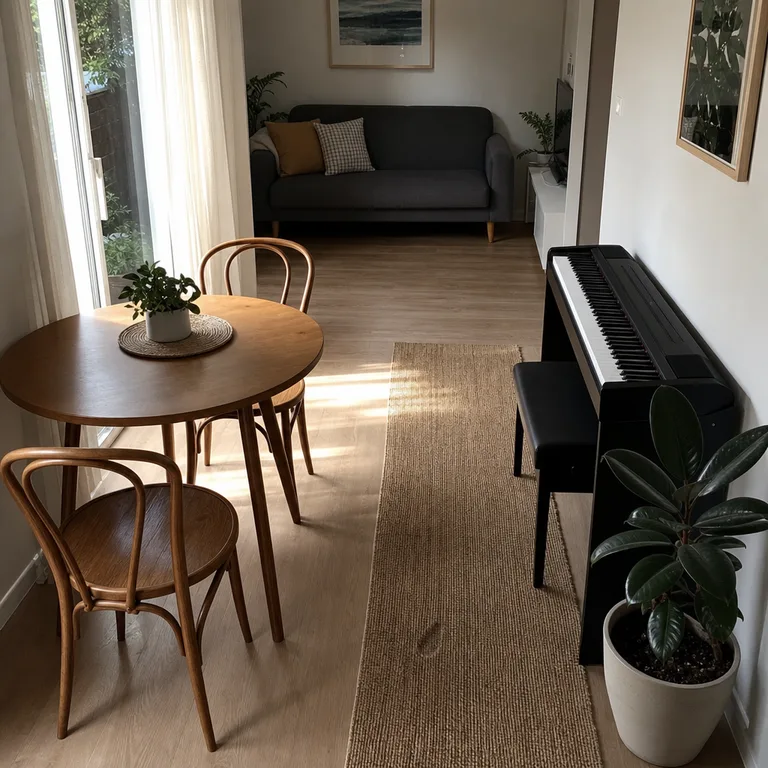
Pull the bench back onto the music-side zone rather than into the route to the table. Keep dining chairs easy to push in, and use a contained cable path along the wall so everyday meals and cleanup do not snag a loose cord.
Worth knowing: This layout depends on keeping the dining route open, so it can be difficult in rooms where chairs already need to extend into the living area.
7.Use a Corner Piano Layout With a Small Chair on the Open Side
A usable corner can hold an upright piano at a gentle angle, with a lightweight armless chair on the open side instead of a bulky end table. The chair adds an extra seat for everyday living but can move quickly when someone needs the full bench area.
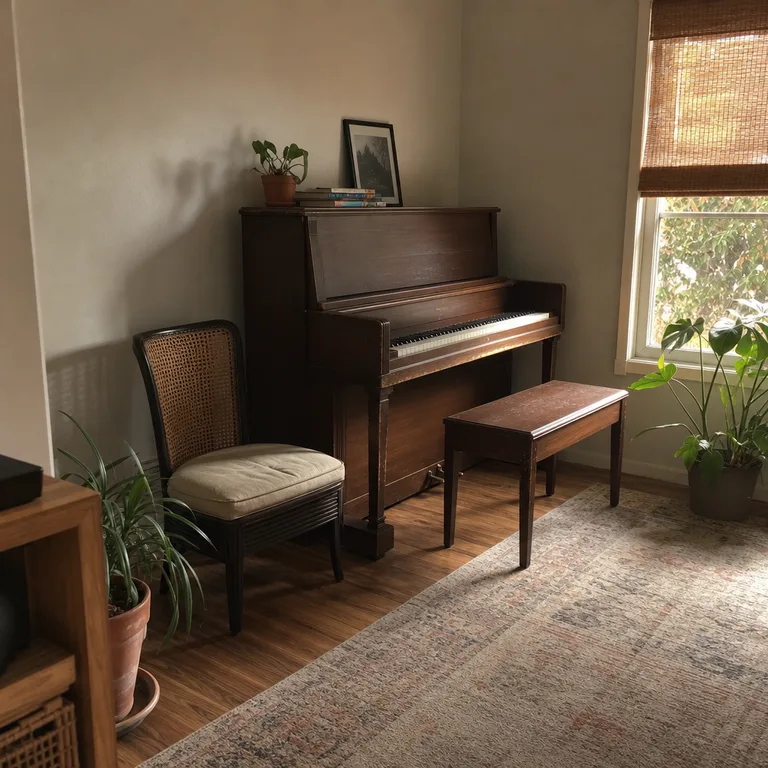
Let the bench face diagonally into the room and keep the floor around it mostly clear. A low-pile corner rug and one plant or lamp can soften the arrangement without filling the limited space needed for playing.
Worth knowing: Angling an upright piano takes more floor area than placing it flat to a wall, and its placement should still follow the maker’s environmental guidance.
8.Create a Keyboard Station That Closes Down Between Practices
A portable keyboard can work in a busy living room when the stand, bench, pedals, and accessories all have a defined place. A folding stand and portable bench allow the playing setup to be opened for practice, then reduced when the room needs to serve guests, games, or family time.
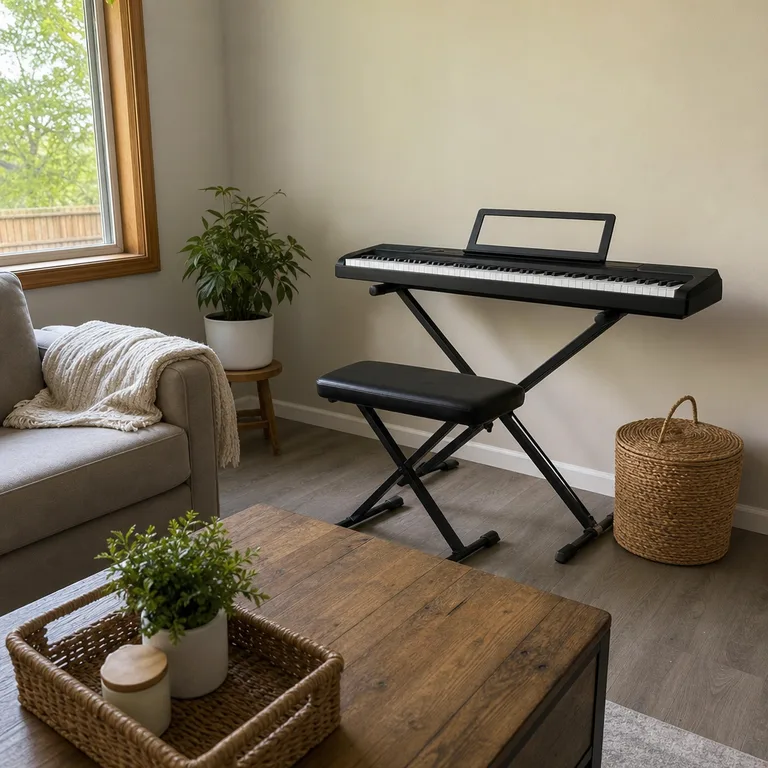
Store books and small accessories in a lidded basket near the keyboard rather than dispersing them across the room. Keep the power connection accessible and the cable route contained, following the maker’s instructions for ventilation, power, and safe setup.
Worth knowing: Folding and reopening a keyboard setup takes regular effort, so it is less convenient for households that use the instrument many times throughout the day.
About the author
Dana Ruiz, Senior editor
Dana writes about small-space living, storage and low-cost decorating.
Keep reading
8 Budget Small Living Room Layouts for Sleeper Sofa Nights
November 2, 2026
8 Small Living Room Layouts for an L-Shaped Sectional
November 2, 2026
8 Table Linen Storage Ideas for Homes Without a Dining Hutch
November 2, 2026
8 Christmas Village Layouts That Fit on One Shelf
November 2, 2026