8 Table Linen Storage Ideas for Homes Without a Dining Hutch
Table linens stay easier to use when tablecloths, runners, placemats and napkins each have a storage spot that suits their shape. These eight ideas use ordinary kitchen drawers, cabinets and nearby furniture to keep clean, dry textiles visible and simple to return after laundry.
As an Amazon Associate I earn from qualifying purchases.
1.File-Fold Tablecloths in a Deep Kitchen Drawer
Fold everyday tablecloths into even rectangles, then stand them upright in a deep drawer rather than stacking them flat. Adjustable dividers, sturdy boxes, or repurposed file holders can keep cloths separated by size and make the pattern or edge visible at a glance.
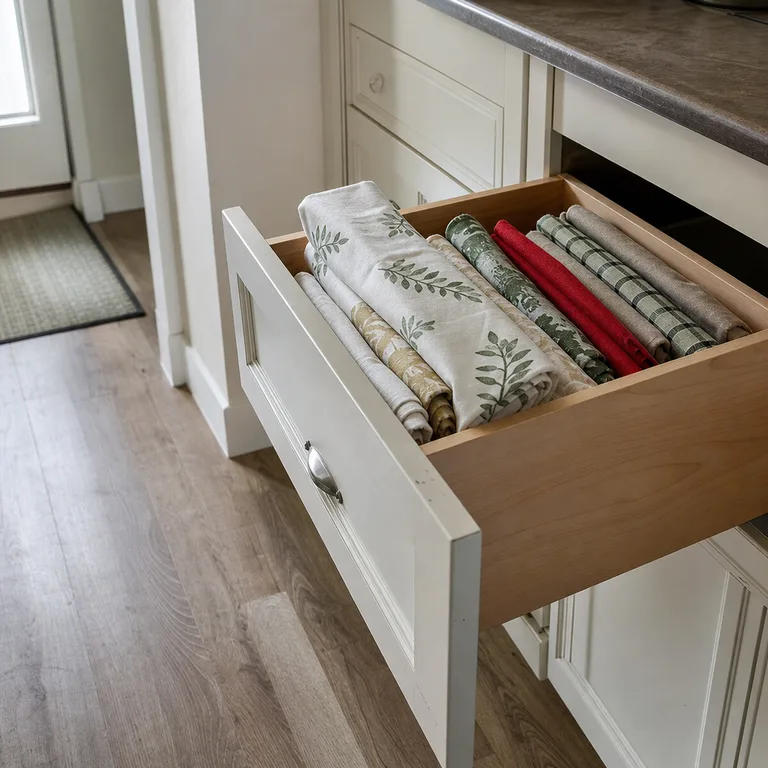
This approach works well for frequently used cotton or easy-care cloths because one piece can come out without shifting the entire drawer. Leave some open room around the folds so fabric that has just come back from the wash is not compressed while it is still damp.
Use a simple return routine: once a cloth is fully dry, fold it to the same width as the drawer section and file it back in its assigned slot. Keep special-occasion or oversized cloths elsewhere so the everyday drawer does not become too crowded.
Worth knowing: This needs a genuinely deep drawer; shallow drawers can crease bulky cloths and make upright filing impractical.
2.Roll Narrow Table Runners in an Open Basket
Loosely roll narrow runners and stand them upright in an open basket near the dining area. Group everyday runners in front and occasional or seasonal pieces behind, or use separate baskets if there is enough room.
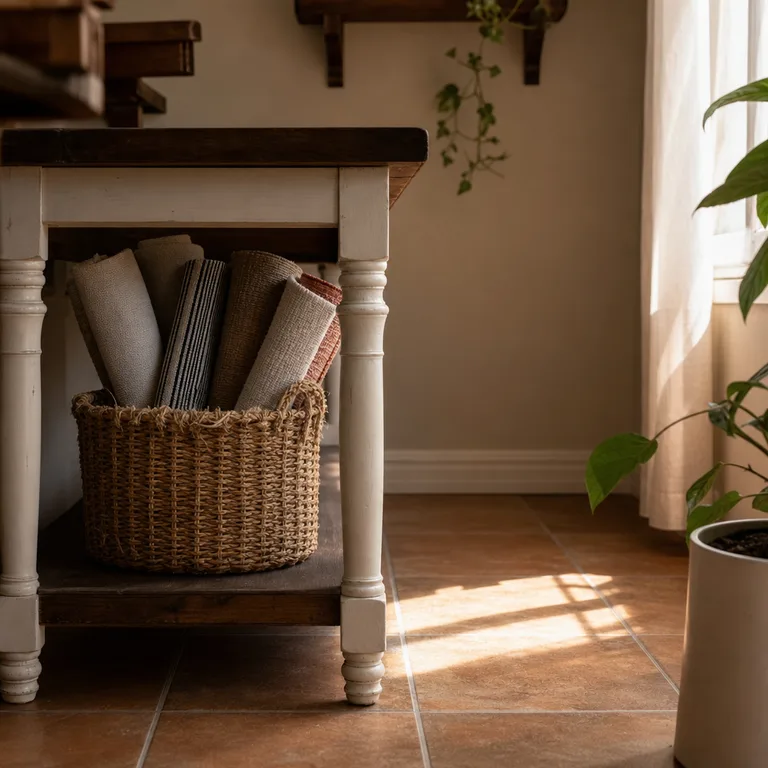
Rolling prevents a long runner from becoming a loose, sliding pile on a shelf. A basket on a bench shelf, open cabinet shelf, or utility-cart tier also makes it easy to return a runner after shaking out crumbs or laundering it.
Reuse a clean woven basket, open fabric bin, or sturdy handled tote rather than buying a dedicated organizer. Avoid tight rolls, particularly with linen-like fabrics, and make sure runners are completely dry before placing them in a basket with limited airflow.
Worth knowing: Open baskets collect dust, so this is best for runners that are used and washed regularly rather than rarely used formal pieces.
Related: 12 Budget Dining Table Styling Ideas for Everyday Meals
3.Stand Placemats Upright in a Cabinet Bin
Store placemats on edge in an open-sided cabinet bin, like folders in a file box. Keep round placemats together and rectangular placemats in a separate bin so different shapes do not slump into one hard-to-sort pile.
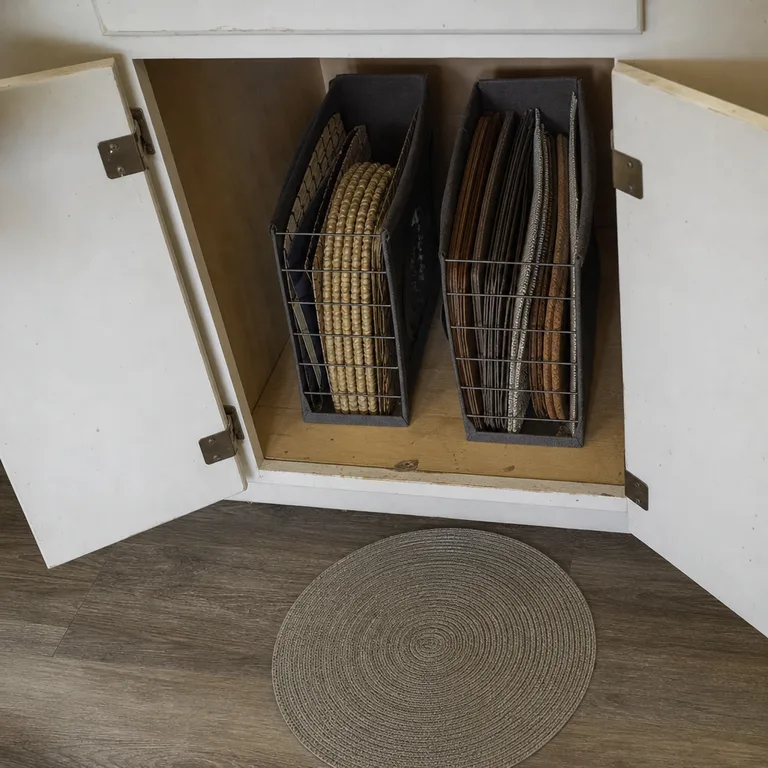
This setup makes it easier to pull out the number needed for a meal while keeping the rest contained. It is especially useful for rigid cork, woven vinyl, or lightly padded mats that do not fold neatly and take up too much room in a drawer.
A basic wire basket, magazine holder, or open bin can work if it fits the cabinet without catching on the door. Place the bin where it can be lifted out easily, and avoid cramming it so tightly that corners bend or woven edges fray.
Worth knowing: Very floppy fabric placemats will not stay upright well and are usually better folded in a drawer or shallow bin.
4.Sort Napkins in Shallow Drawer Compartments
Give folded napkins a shallow drawer with simple compartments. Separate everyday cloth napkins from guest napkins, and reserve one open section for clean napkins that still need to be folded and put away.
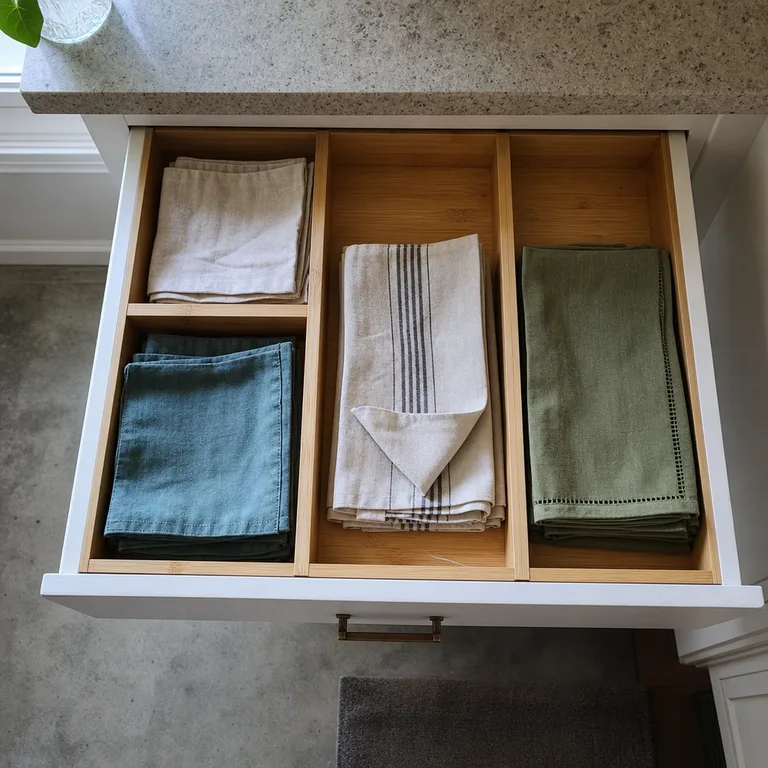
Small groups are easier to grab for a quick meal than one tall stack, and the drawer keeps napkins away from kitchen dust and sunlight. Sorting by use instead of trying to maintain matching sets also makes mixed napkins practical for daily meals.
Use drawer trays, low boxes, or trimmed cardboard containers to create sections. Fold each group to a consistent size, but do not overfill the compartments; an easy-to-lift stack is more likely to be returned neatly.
Worth knowing: Drawer storage only works if the drawer stays dry and is not used for utensils or supplies that can snag, stain, or leave residue on fabric.
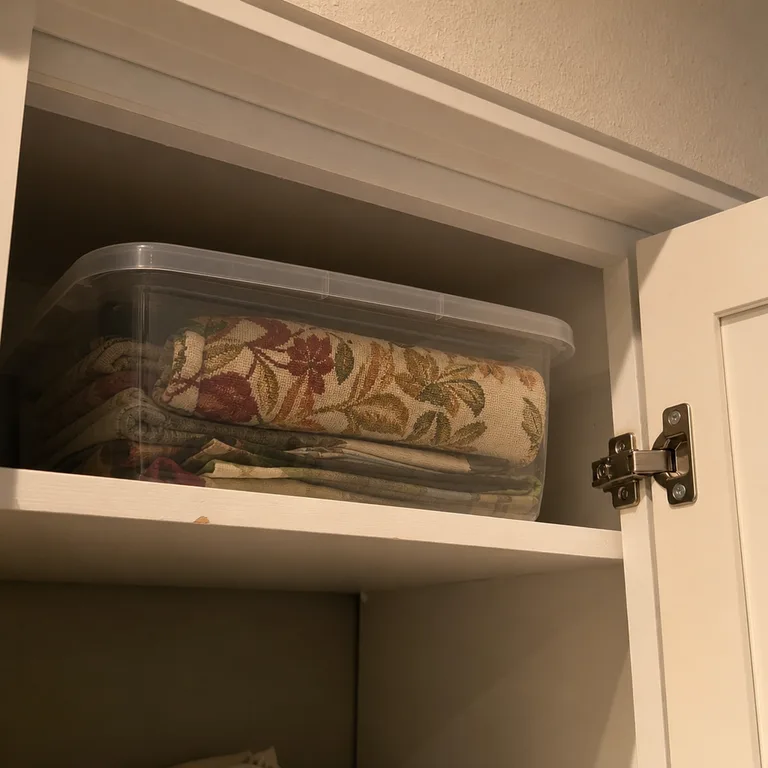
5.Use a Lidded Bin for Seasonal Table Linens
Keep holiday tablecloths, special runners, and occasional napkins together in a lidded bin on a high cabinet shelf or another dry storage area. Fold similar pieces together by use, such as winter gatherings, outdoor meals, or formal occasions, rather than mixing them with everyday linens.
A lidded bin protects infrequently used fabric from dust and keeps seasonal pieces from overtaking convenient kitchen storage. A plain label on the front is enough to identify the group without opening every container.
Reuse a clean bin with a sound-fitting lid, and place the textiles inside only after they are fully dry. Acid-free tissue can be useful between delicate embellishments, but ordinary cotton and washable blends generally just need to be clean, dry, and loosely folded.
Worth knowing: High shelves are inconvenient for heavy bins, so keep the container light enough to lower safely and use a stable step stool when needed.
6.Add a Door-Hung Rack for Flat Placemats
Use a slim rack on the inside of a cabinet or pantry door to hold thin rectangular placemats vertically. Each slot gives flat mats a defined home and frees a shelf for dishes, serving pieces, or food storage.
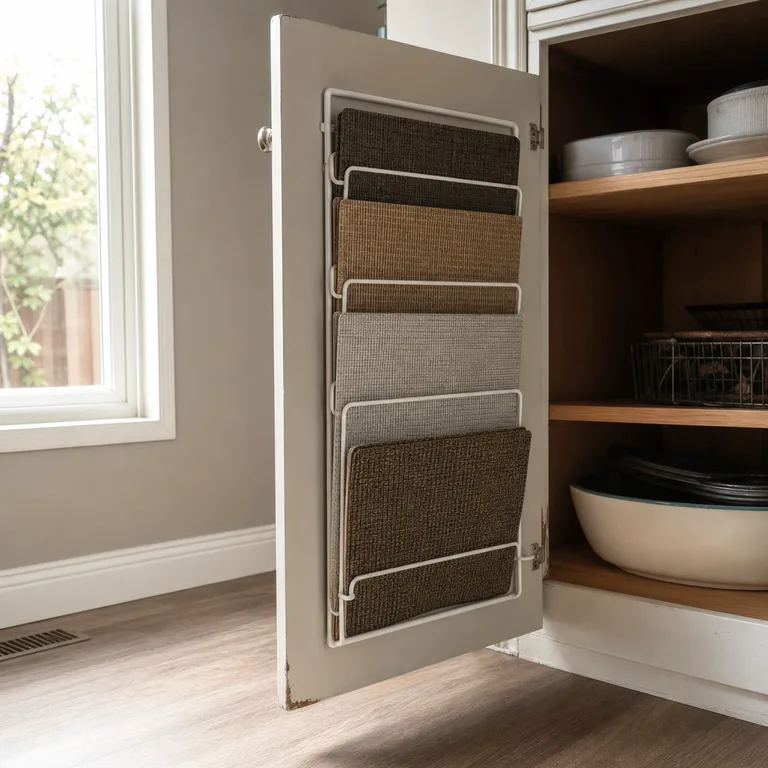
Vertical storage stops thin mats from disappearing beneath bowls and trays. It can also work well in a small kitchen because the mats stay close to where the table is set without taking up a full drawer.
Choose a rack that fits the door’s interior clearance and secure it according to the door material and rental rules. Keep only lightweight, flexible mats here, and check that the rack does not hit shelves, hinges, or stored items when the door closes.
Worth knowing: Thick cork mats, heavy chargers, and bulky woven placemats can strain a door rack or prevent the cabinet from closing properly.
7.Keep a Dining-Linen Caddy on a Utility Cart
Put the linens used most often in one handled caddy on a small utility cart near the dining table or kitchen. Fold napkins in the caddy, keep a few runners on a lower tier, and leave enough room for the items used to clear and reset the table.
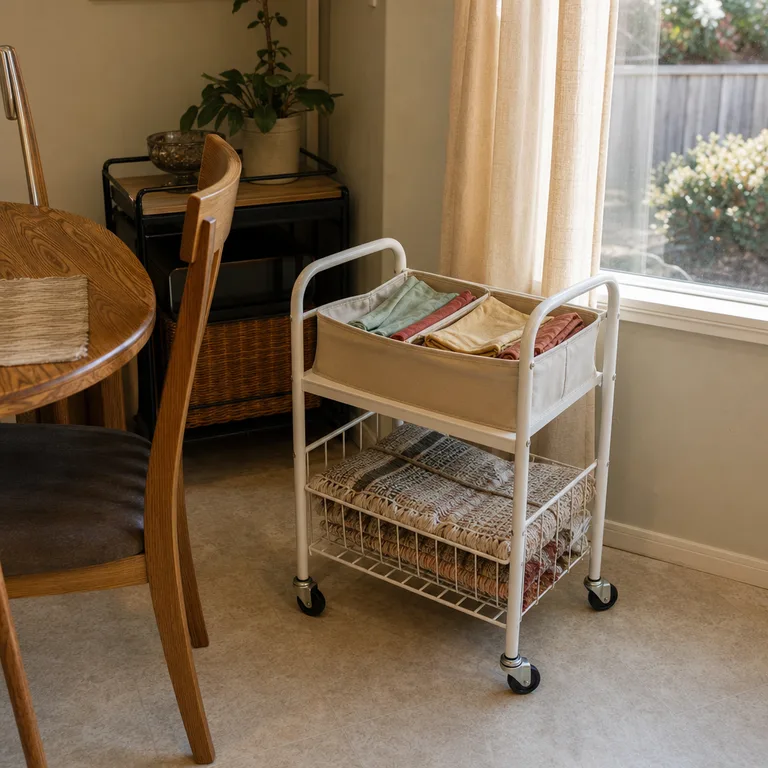
This creates a simple return point after meals: clean napkins go back into the caddy, and runners go back into their basket or shelf space. A cart is particularly helpful when the storage cabinet is away from the table or when several people help set the table.
Use an existing rolling cart, cleaning caddy, or open shelf unit if it fits the room without narrowing a walkway. Locking wheels are useful on hard floors, and the cart should be kept away from splash-prone sinks, radiators, and strong direct sunlight that may fade fabric.
Worth knowing: A cart can quickly look cluttered, so it needs a regular edit and should hold only linens used often enough to earn the accessible spot.
8.Store Oversize Cloths in a Bench Seat Compartment
Use a storage bench near the dining table for broad folded stacks of oversized tablecloths, large placemats, and fabric pieces that will not fit comfortably in a drawer. Divide the compartment by use with fabric bags, low bins, or folded cardboard separators so large cloths do not become one mixed stack.
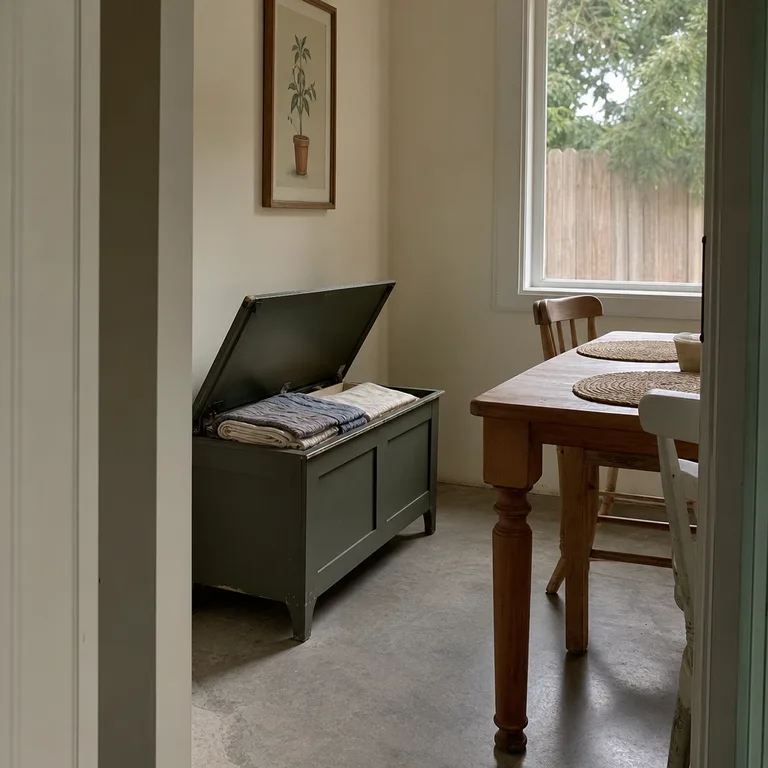
The wide, low space suits bulky textiles better than a narrow cabinet shelf. Keeping it near the table also makes larger cloths easy to retrieve when setting up for a gathering, then easy to return once they are clean and dry.
Check the compartment for dampness, dust, and rough hardware before storing fabric inside. The lid should open fully without striking the table or wall, and a hinged bench needs enough clearance for someone to reach the linens without moving furniture.
Worth knowing: Bench compartments can become a catch-all, so this option needs clear groups and occasional sorting to keep linens from being buried under unrelated items.
About the author
Dana Ruiz, Senior editor
Dana writes about small-space living, storage and low-cost decorating.
Keep reading
10 Craft Paper Storage Ideas for Small Homes
November 2, 2026
8 Indoor Plant Supply Storage Ideas Without a Utility Cupboard
November 2, 2026
8 Sock and Underwear Drawer Ideas for Two People Sharing a Dresser
November 2, 2026
8 Small Living Room Layouts for an L-Shaped Sectional
November 2, 2026