12 Small Living Room Layout Ideas That Leave Room to Walk
A small living room works harder when its furniture follows the natural routes between the door, windows, and television instead of blocking them. These layouts suit long, square, and open-plan apartments while leaving practical room for doors to swing, curtains to move, and everyday traffic to pass.
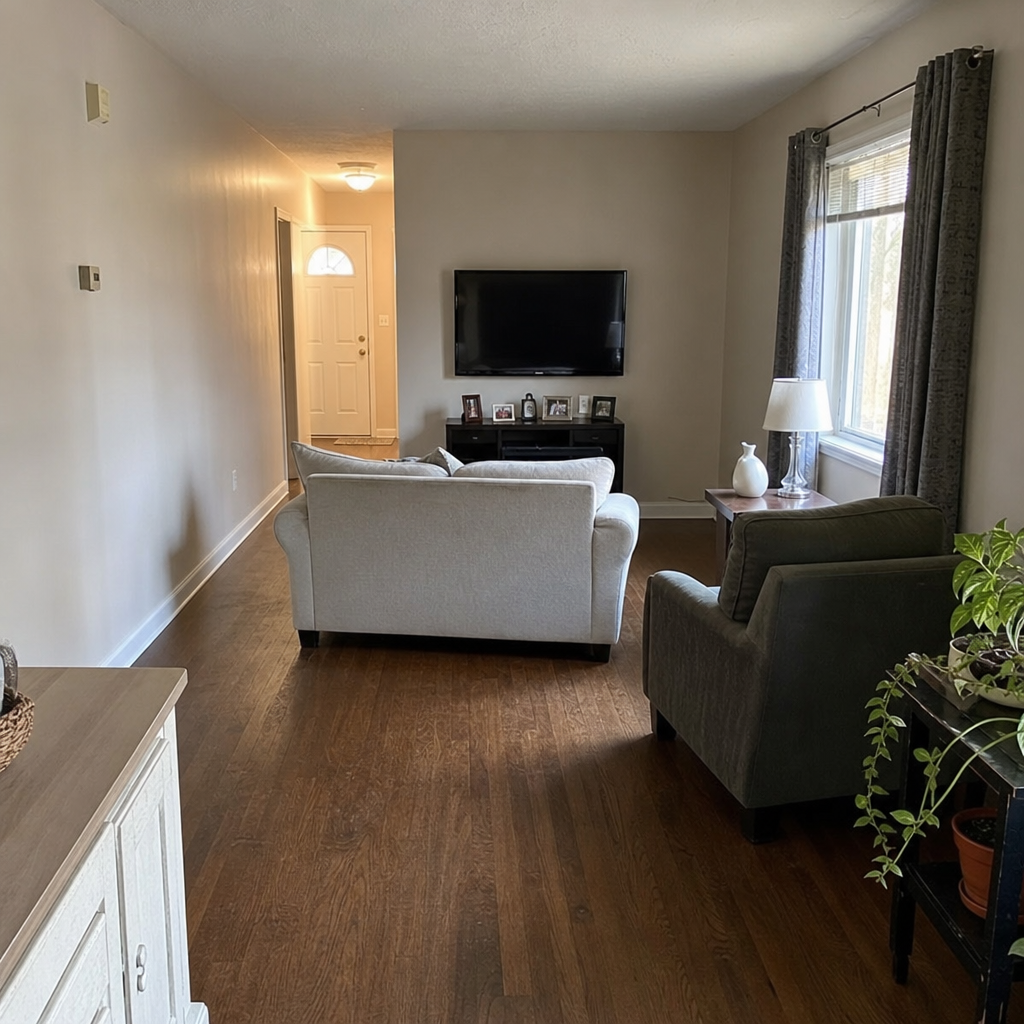
1.Float a Compact Sofa Facing the TV in a Long Room
In a long room, place a compact sofa parallel to the longest wall and set the TV on the opposite wall. Leave the side nearest the entry door as the main route, rather than trying to send traffic through the seating area.
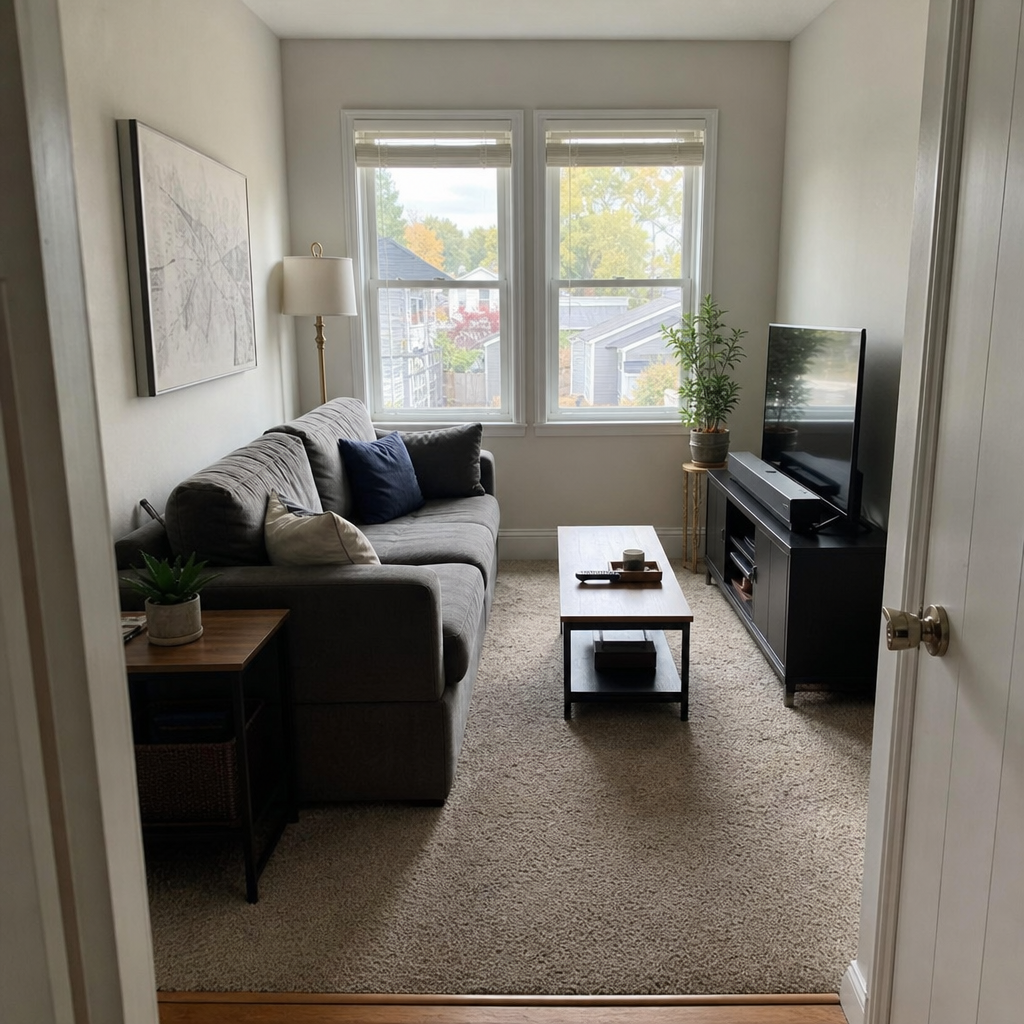
This arrangement makes the room feel like a defined lounge without turning it into a corridor of furniture. A slim sofa, wall-mounted TV, and small coffee table keep the middle from becoming crowded.
Check the sofa depth and the door swing on paper or with painter’s tape before moving anything. A low TV unit may work, but it should not extend into the route along the wall.
Worth knowing: This layout depends on having enough width for both the sofa and a usable side passage; a deep reclining sofa can make the room feel pinched.
Related: 15 Budget Living Room Updates That Work With the Sofa You Already Own
2.Put the Sofa Under a Window and Keep the Center Open
Set a low-backed sofa beneath a wide window, with the TV on the wall opposite. This frees the center of the room for walking from the entry and keeps the main seating arrangement straightforward.
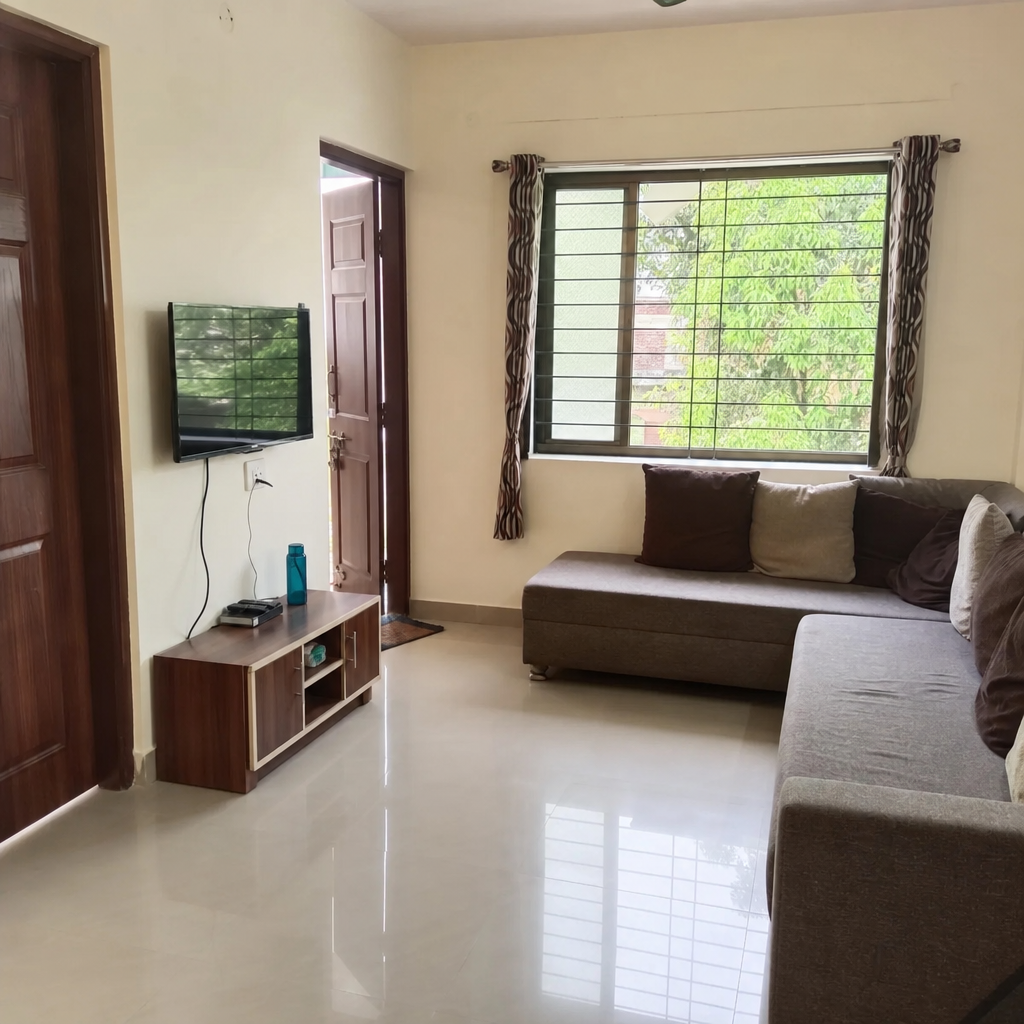
The window wall often goes unused because it feels awkward to furnish, but a sofa can turn it into useful space without making the TV wall busy. Choose a back height that does not cover much of the glass or interrupt the light.
Keep curtains able to open and make sure the sofa does not block a radiator, vent, or window latch. A narrow side table is usually easier to fit than a pair of bulky end tables.
Worth knowing: This is not a good fit where the window sits very low, opens inward, or has a radiator that needs clear airflow.
3.Use Two Small Chairs Instead of a Second Sofa
In a square living room, pair one sofa with two small chairs rather than adding a second full sofa. Angle the chairs toward the sofa and TV, leaving the route from the door open between or beside the pieces.
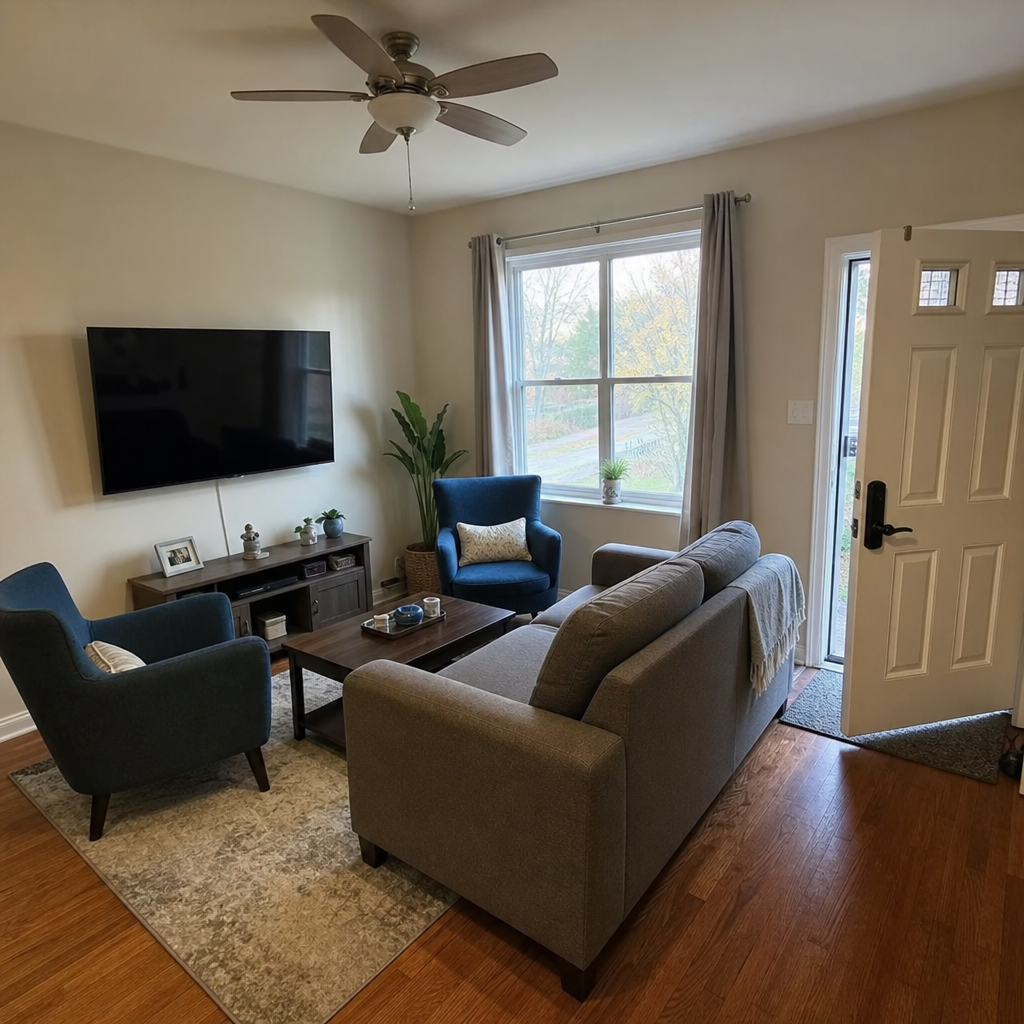
Separate chairs give the same room more flexibility because they can be shifted for guests, cleaning, or access to a window. Their open space underneath and around them also makes a compact room look less blocked in.
Look for chairs with a modest footprint and arms that do not flare far outward. Keep a lightweight table between them only if it does not become an obstacle on the path to the TV wall.
Worth knowing: Small chairs may be less comfortable for long movie nights than a second sofa, especially if they have shallow seats.
4.Tuck an L-Shaped Sectional Into the Window Corner
Use a compact sectional in the corner beside a window in a square room, with the open side facing the TV. Position it so the side closest to the door does not interrupt the natural approach into the room.
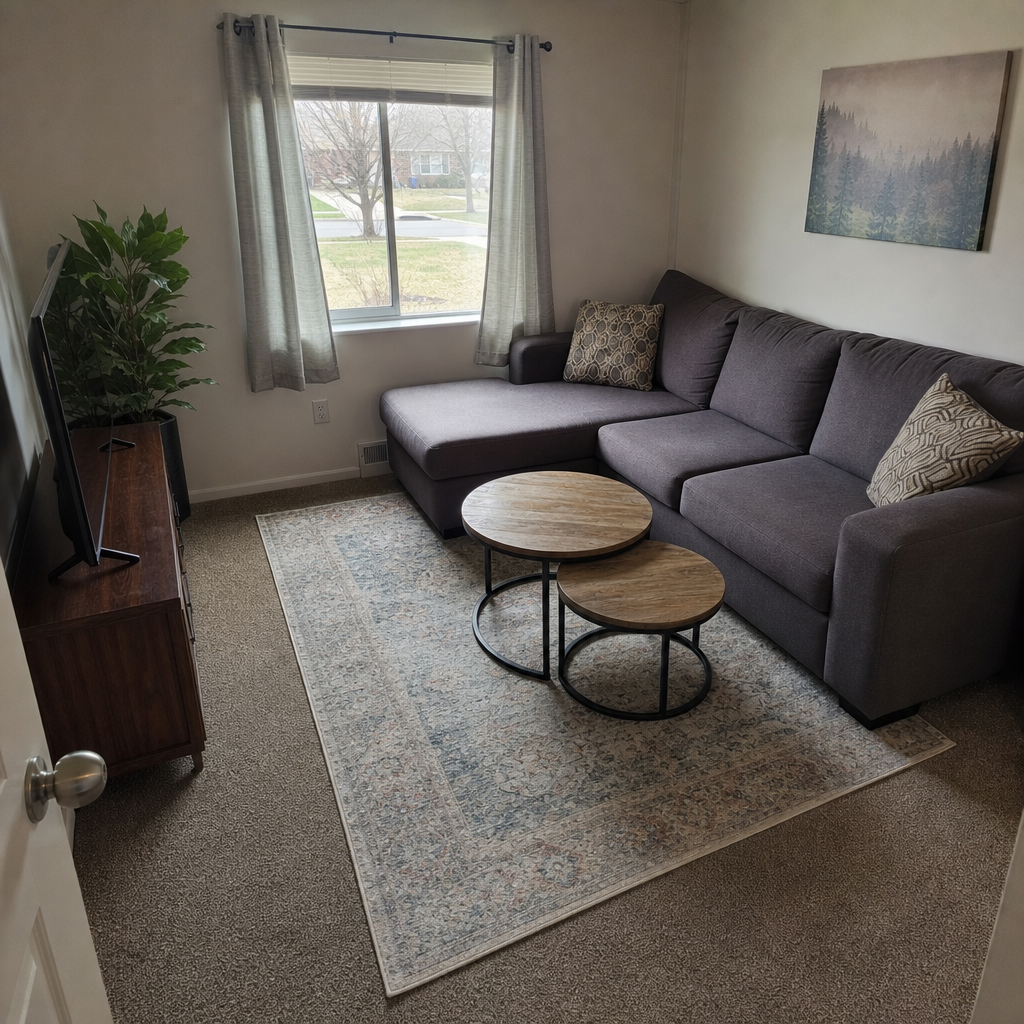
A sectional can make one corner work hard and avoid scattering several separate pieces across limited floor space. Keeping its chaise or return section away from the door side preserves a clearer circulation edge.
Choose the sectional orientation carefully, since a left- or right-hand chaise changes the entire layout. Low arms and visible legs can help a larger seating piece feel less heavy near a window.
Worth knowing: A sectional is difficult to reposition if the room needs to serve different purposes, and the wrong chaise direction can block the best route.
5.Mount the TV on the Short Wall of a Long Room
Place the TV on a short end wall and arrange the seating to face lengthwise down the room. This uses the long walls for a sofa, a chair, or a clear passage instead of forcing a wide TV unit into the narrowest part.
The layout gives the television a natural focal point while reducing visual clutter along the route from one end of the room to the other. Mounting the screen can be especially useful when floor space is tight.
Use a swivel mount if the seating must sit slightly off-center, and plan cable management before installation. Rental rules may limit wall mounting, so a shallow stand against the end wall is the simpler alternative.
Worth knowing: A TV on the end wall can create an overly long viewing distance in a particularly narrow room.
6.Create a Door-Side Landing Strip Behind the Sofa
When the front door opens into the living area, float the sofa forward and leave a clear strip behind it. The TV can sit on the wall in front of the sofa, while the space at the back becomes the route into the home.
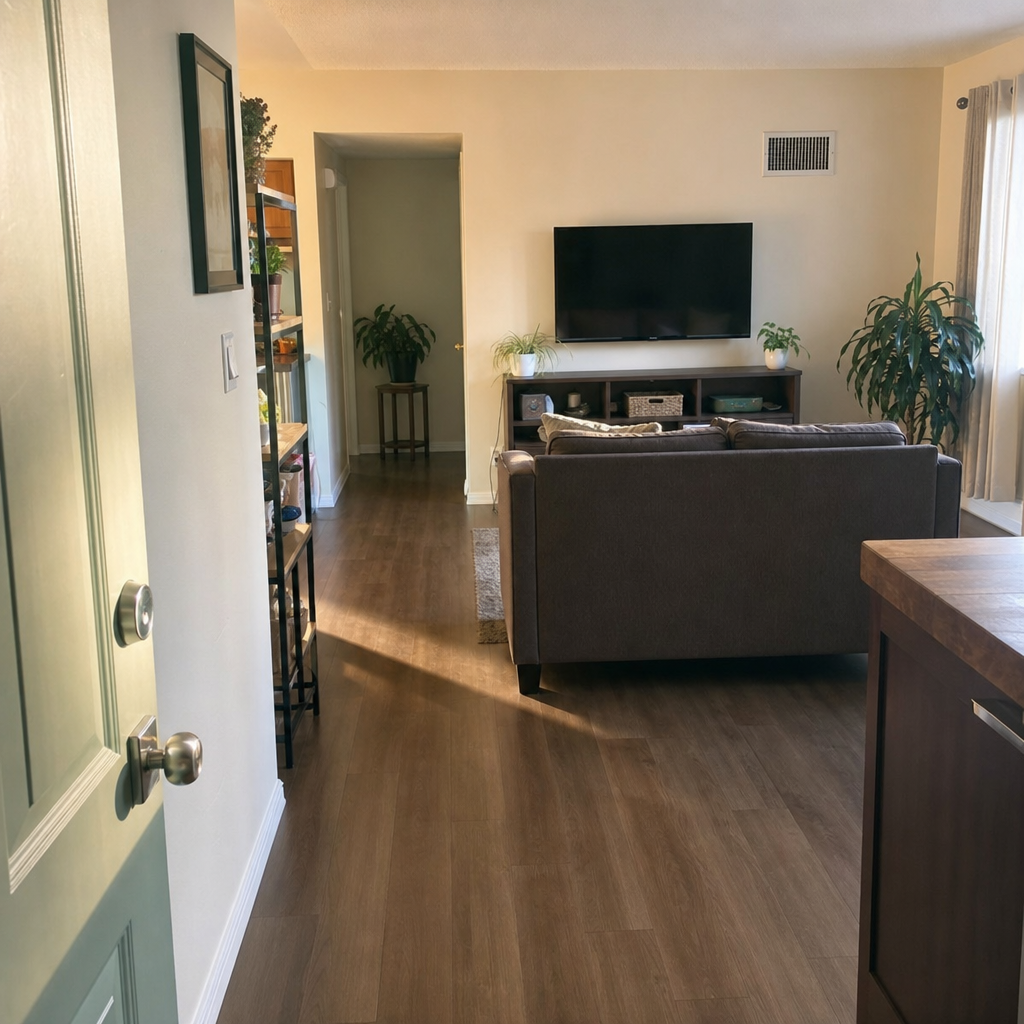
This separates arrival traffic from the lounging zone, so anyone coming in does not need to cut between a coffee table and the television. It can also make an open-plan room feel more organized without adding a divider.
Keep the back of the sofa plain and avoid a deep console table unless the route remains comfortable. A wall hook or shallow tray near the door can handle keys without turning the landing area into storage furniture.
Worth knowing: This arrangement needs enough floor depth to keep both the entry route and the seating area functional.
7.Aim a Pair of Loveseats Toward a Corner TV
Place two compact loveseats at gentle angles toward a TV in the corner, keeping the window and door walls less crowded. The open angle between the seats can point toward the clearest way into the room.
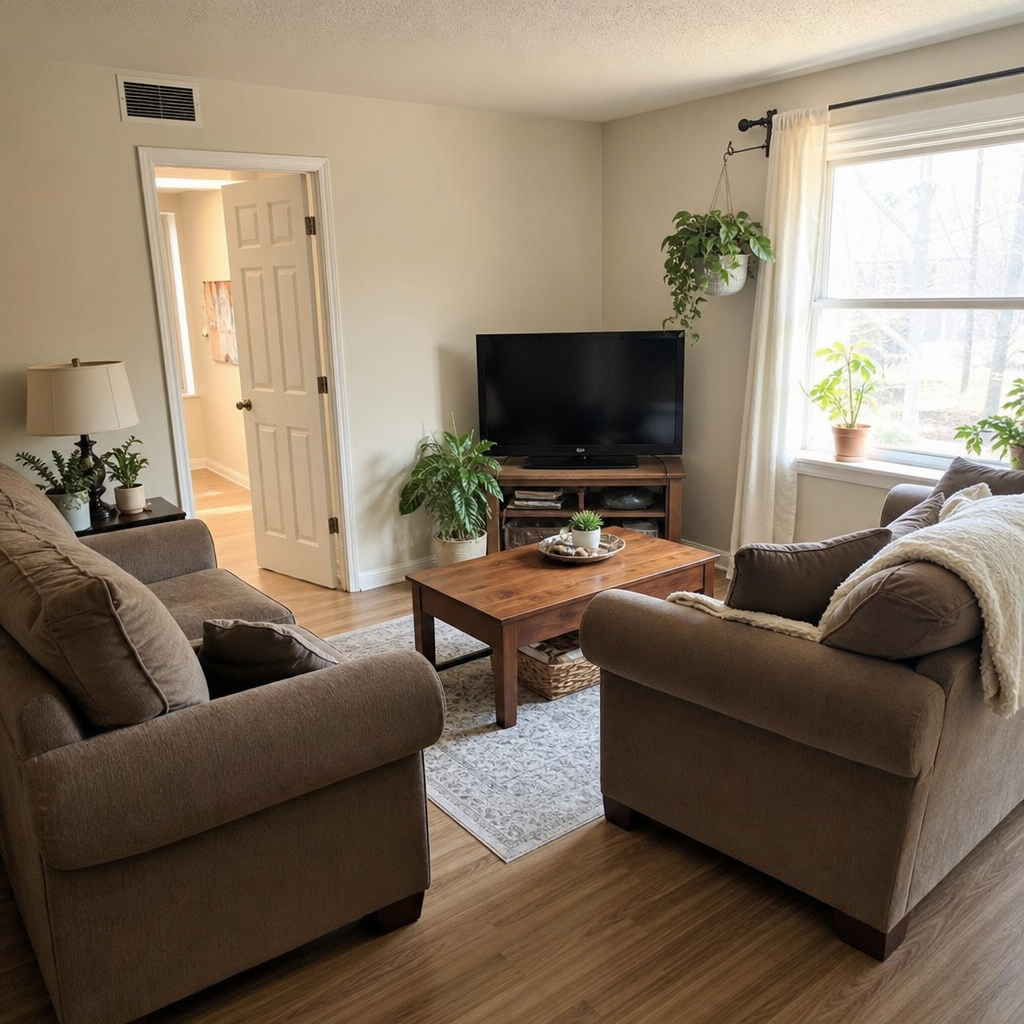
A corner TV uses an area that is often hard to furnish and can prevent the screen from competing with a window. The two loveseats create a conversational arrangement without needing a large sectional.
Choose compact pieces with simple arms, and use a small round or oval table in the middle if one is needed. Test sightlines from both seats so one person is not forced to watch from an awkward angle.
Worth knowing: Two loveseats can still consume substantial floor area, so this works best when both pieces are genuinely compact.
8.Use a Wall-Hugging Chaise Along the TV Wall
Put a narrow chaise or daybed along the same wall as a wall-mounted TV, leaving the center of the room open. This can solve a room where a balcony door, window, or entry door makes the opposite wall unusable for seating.
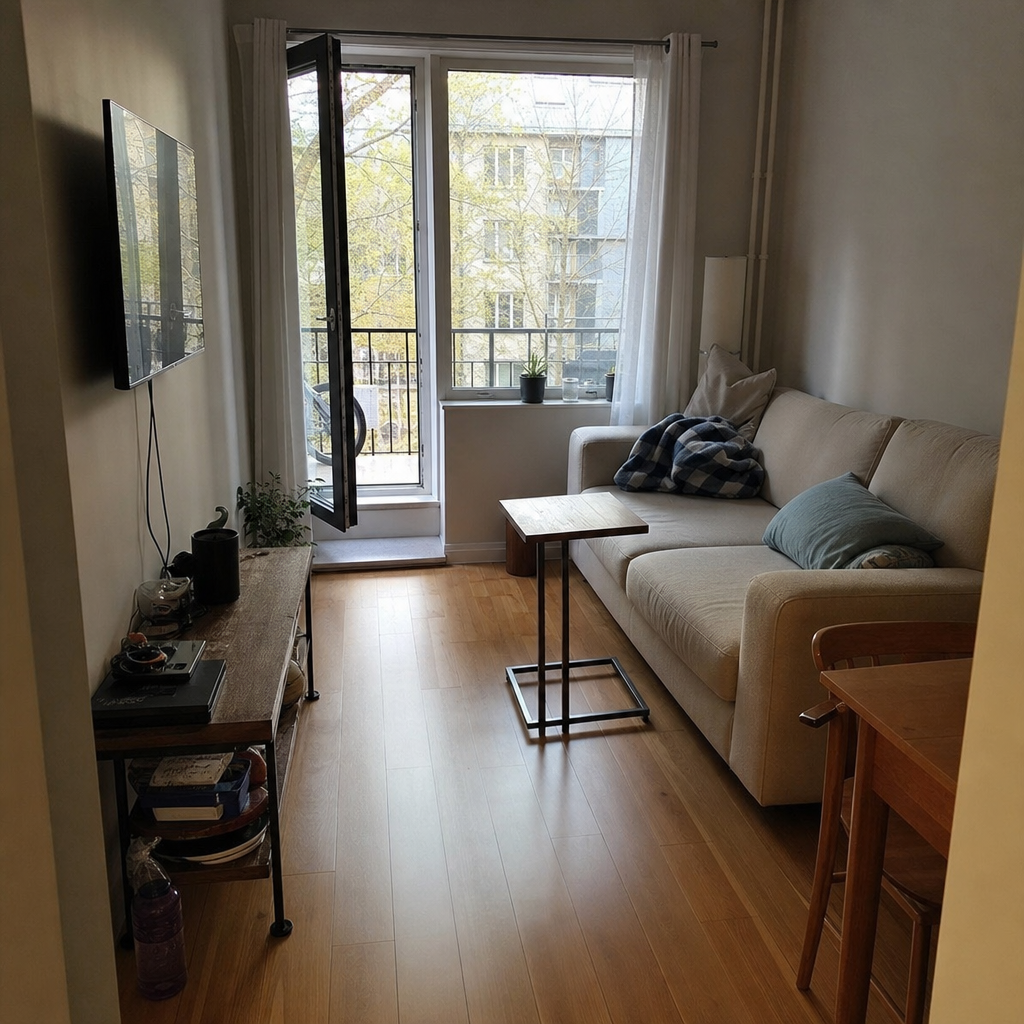
Keeping the largest furniture along one side creates a simple open floor area rather than splitting the room into narrow lanes. A movable side table can replace a fixed coffee table and be pulled aside when the door is in frequent use.
Choose a piece with a supportive back if it will be the main seat, rather than assuming a decorative daybed will suit everyday lounging. Keep bedding, throws, and cushions contained so they do not spill into the route.
Worth knowing: A chaise along the TV wall creates a side-on viewing angle, which may not suit long viewing sessions.
9.Set a Small Sofa Perpendicular to an Open-Plan Kitchen
In an open-plan apartment, turn a compact sofa perpendicular to the kitchen rather than pushing it against the wall. Face it toward the TV and keep the space behind it clear as the route from the entry to the cooking area.
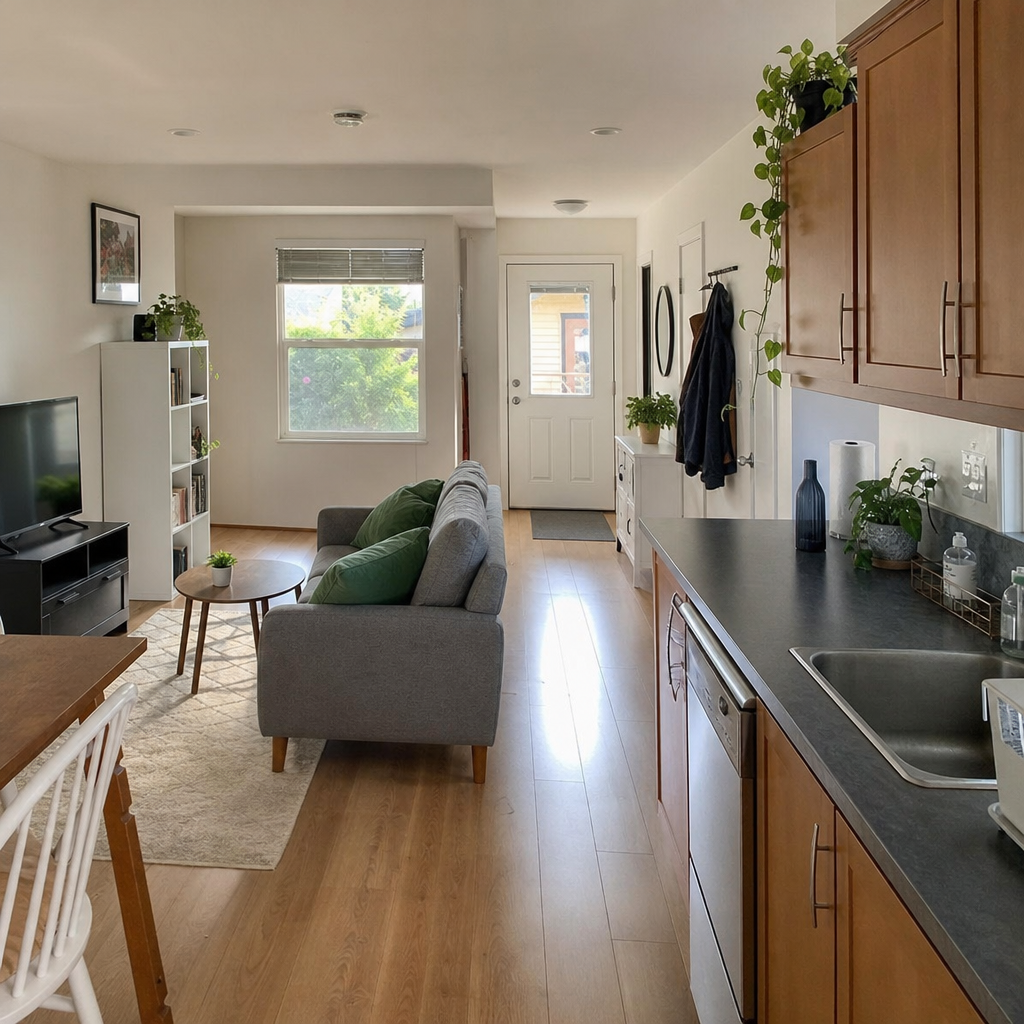
The sofa then defines the living zone without needing a large rug, shelving unit, or partition. It also gives the TV a clear viewing position while allowing the kitchen to remain easy to reach.
Use the sofa back as the boundary, not as a storage surface loaded with baskets or furniture. Check that cabinet doors, appliances, and dining chairs can still be used without colliding with the living room arrangement.
Worth knowing: This layout can make a small open-plan room feel divided if the sofa is too tall or too bulky.
10.Move the TV Beside Rather Than in Front of the Window
Place the TV beside a window instead of covering the glass with a screen or unit. Angle the sofa or chairs toward that wall, while keeping enough space to reach the curtains and operate the window.
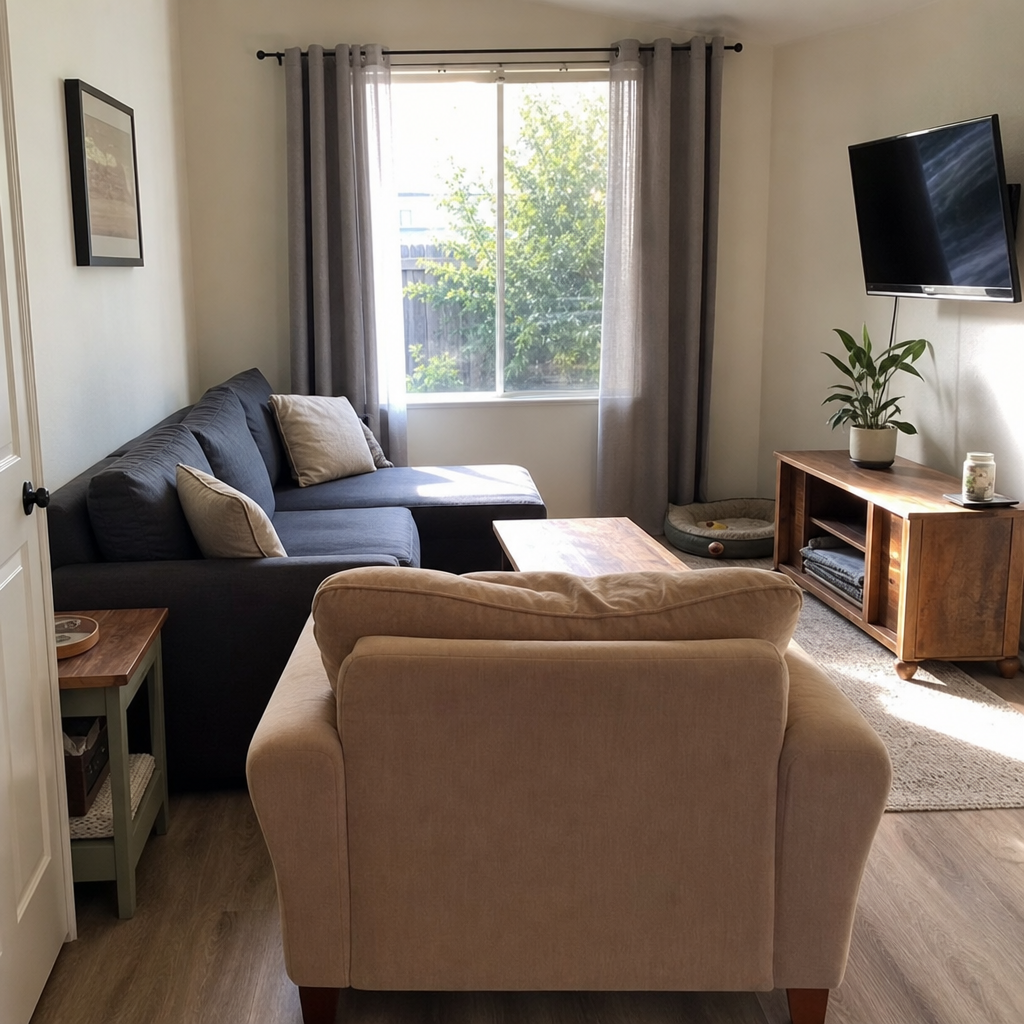
This protects daylight, keeps the window useful, and can make a small room feel wider than a blocked window wall would. It also avoids making the television the first thing seen from outside or from the entry.
Use curtains or blinds that control glare without being permanently closed. Check reflections at the time of day the room is most often used, since direct afternoon sun can still affect the screen.
Worth knowing: If the window receives strong direct sunlight, glare may remain a problem even when the TV is placed beside it.
11.Choose a Round Table for a Through-Route Room
Use a round coffee table when the route to a frequently used door passes close to the seating area. Its curved edge makes it easier to move around than a square table with corners projecting into the walkway.
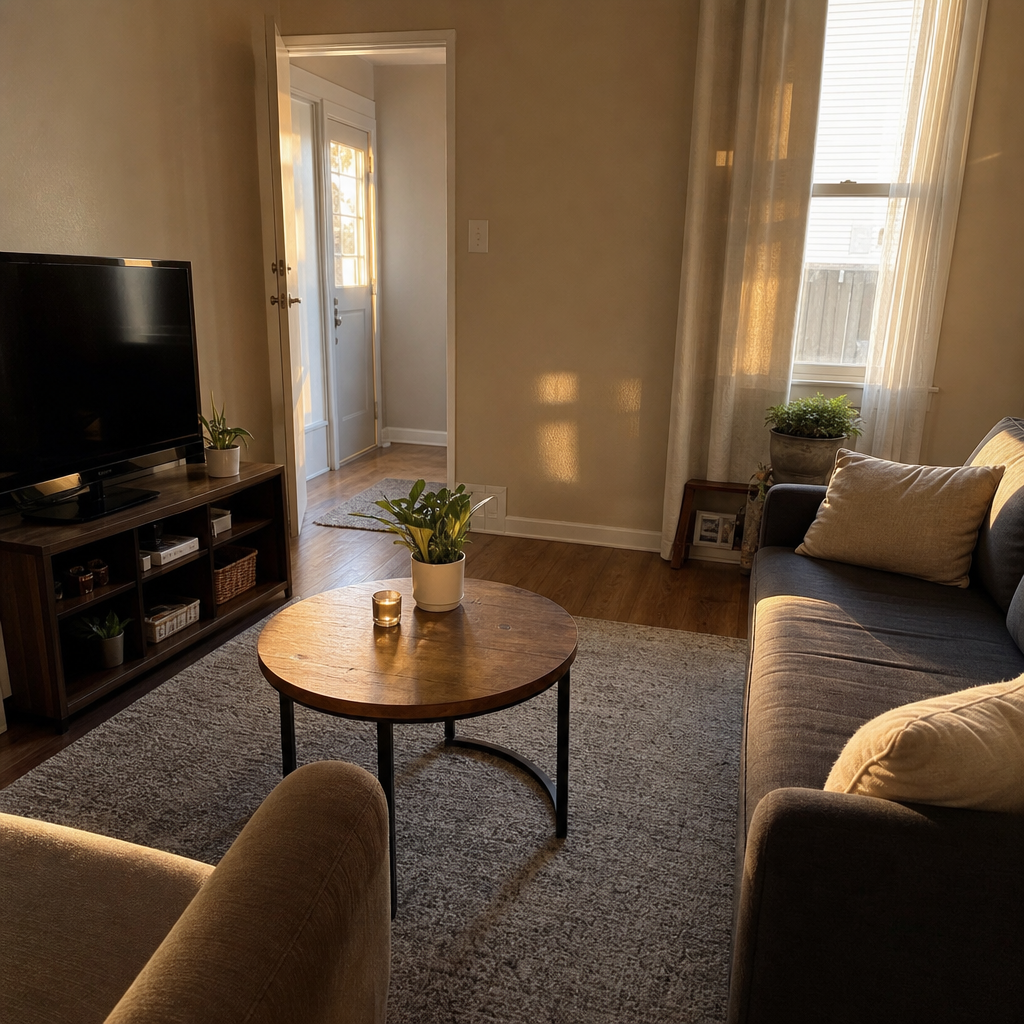
A round shape softens a room full of straight walls, sofa edges, and TV furniture, which can make a compact layout feel more relaxed. It works particularly well with a sofa and chairs arranged for conversation.
Choose a table that suits the available floor rather than filling the gap simply because a coffee table is expected. Nesting tables, a small ottoman, or no central table at all may be better if the route changes throughout the day.
Worth knowing: A round table usually offers less broad surface area for drinks, games, or remote controls than a rectangular coffee table.
12.Build the Layout Around a Clear Window-to-Door Path
For a room with a balcony or patio door, reserve one edge as the direct route from the main entry to that exit. Group the sofa, chair, and TV on the remaining walls so the door can be reached without moving furniture.
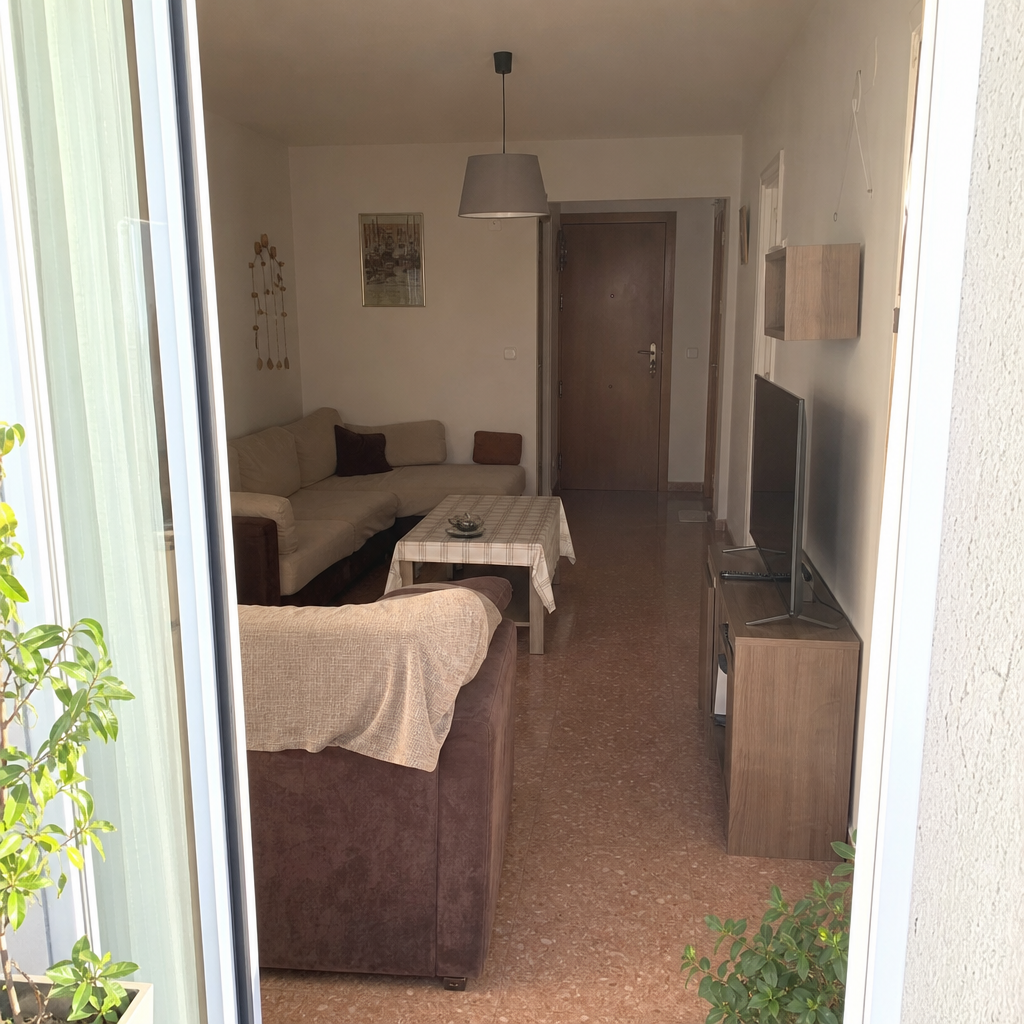
This keeps an important everyday route practical for fresh air, laundry, plants, and outdoor access. It also prevents a balcony door from becoming an awkward feature that furniture must be squeezed around.
Use low pieces near the glass to protect the view and allow curtains or blinds to work. If the door opens inward, leave its full swing clear and avoid placing a loose rug edge where it may catch.
Worth knowing: Giving one side of the room to circulation can reduce the amount of seating that fits comfortably.
About the author
Dana Ruiz, Senior editor
Dana writes about small-space living, storage and low-cost decorating.
Keep reading
10 Living Room Lighting Ideas for Renters on a Budget
September 14, 2026
12 Sage Green and Brown Decorating Ideas That Feel Cozy
September 13, 2026
12 Warm Neutral Living Room Ideas on a Budget
September 13, 2026
12 Thrifted Decor Ideas That Make Mismatched Finds Feel Collected
September 13, 2026