10 Home Office Nook Ideas for a Small Living Room
A small living room can hold a useful work surface when the desk fits the room’s traffic paths, seating needs, and daily light. These placements use overlooked edges and flexible furniture while accounting for screen glare, outlet access, chair clearance, and the difference between occasional laptop use and full-day work.
1.Place a Shallow Desk Behind the Sofa
A sofa that floats away from the wall can create a natural boundary for a desk behind it. This arrangement gives work its own zone without asking the desk to compete for a wall already needed for seating or media furniture.
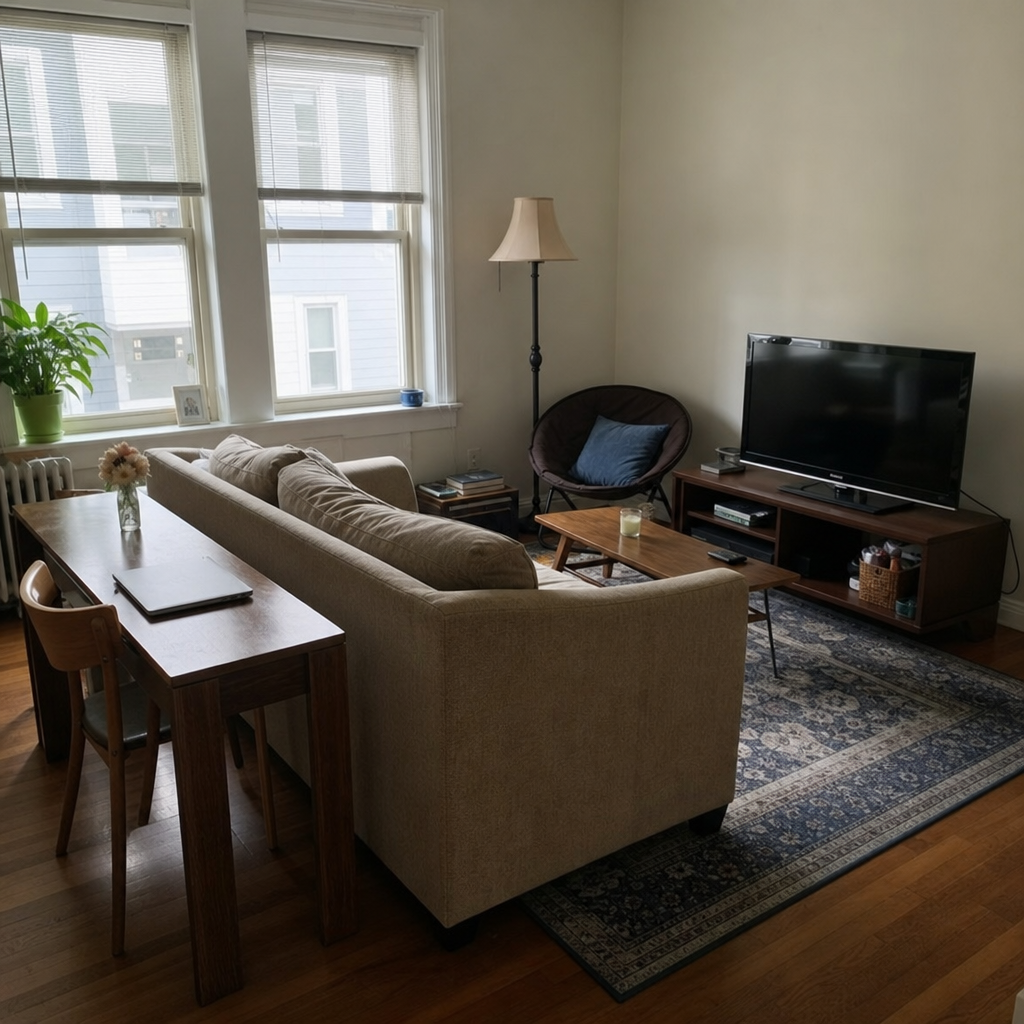
Choose a desk deep enough for the equipment used every day, rather than treating any narrow console as a full-time workstation. Leave enough room behind the chair to sit down and stand up without closing off the main route through the room, and plan a discreet cable path to the nearest outlet.
Worth knowing: This only works when the sofa has generous clearance behind it; a chair that opens into a busy walkway will make the room feel cramped.
Related: 12 Small Living Room Layout Ideas That Leave Room to Walk
2.Turn a Window Wall Into a Daylight Work Nook
Set a compact desk beside a window with its surface perpendicular to the glass. Daylight can make a work nook feel less enclosed, while a side-facing position is usually easier on a screen than sitting directly in front of or with the back to a bright window.
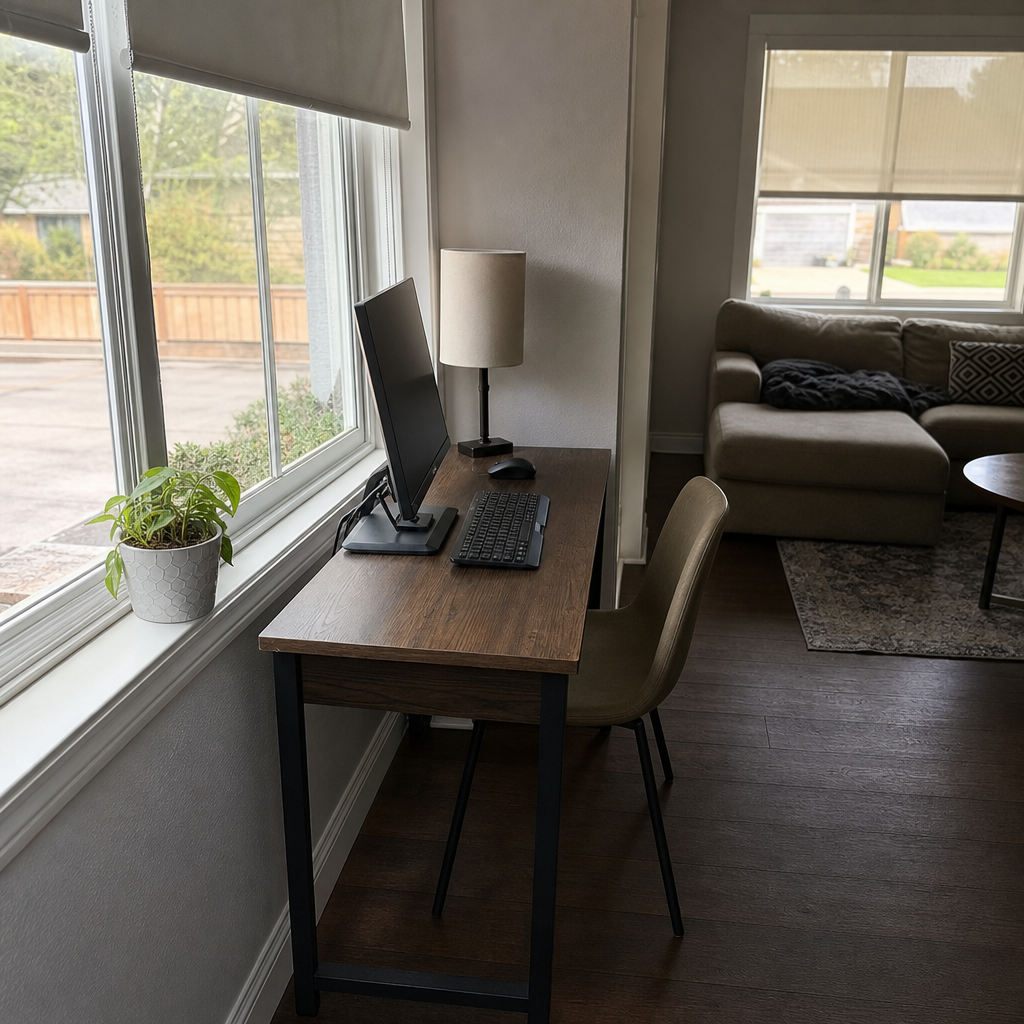
Use an existing curtain, shade, or removable light-filtering treatment to control strong afternoon sun. Keep enough space to open the window and reach its latch, especially in rooms that depend on it for ventilation.
Worth knowing: A window nook may still need a task lamp for evening work, and intense direct sun can be difficult to manage in rooms without workable window coverings.
Related: 10 Budget Curtain Ideas That Make Windows Feel More Finished
3.Use the Space Beside a Bookcase
Place a small desk next to an existing bookcase to make one wall serve both work and storage. The bookcase gives office supplies a home above or beside the desk, so paperwork does not have to spread onto the coffee table.
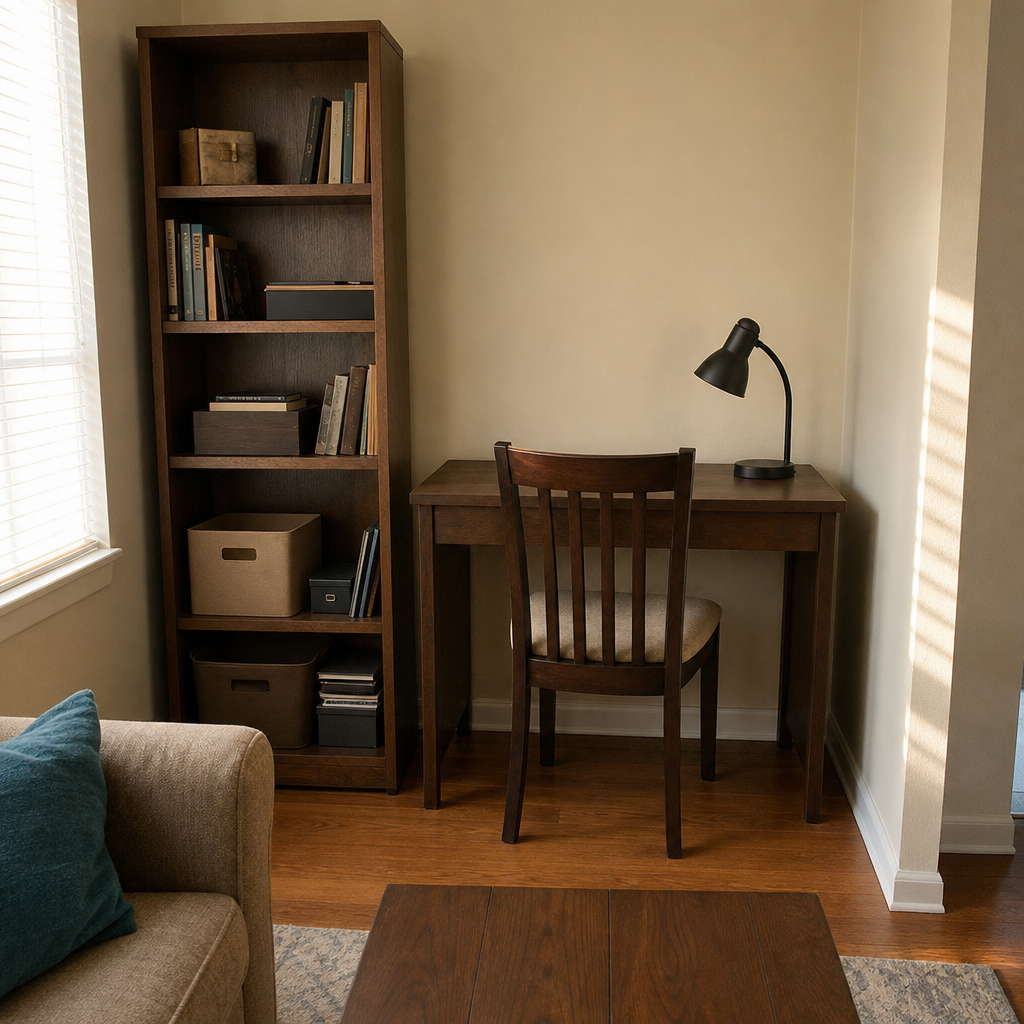
Reserve lower shelves for files, a charging basket, or plain boxes that can be reached from the chair. Matching the desk finish loosely to the bookcase helps the addition read as part of the living room rather than a separate office setup.
Worth knowing: Open shelving can make a work area look cluttered quickly, so it requires regular editing or a few closed containers.
4.Build a Desk Into an Unused Alcove
A recessed alcove is often deep enough for a simple desktop while keeping the desk outside the room’s main seating zone. A cut-to-fit top on basic supports can be more economical than searching for a freestanding desk with exact dimensions.
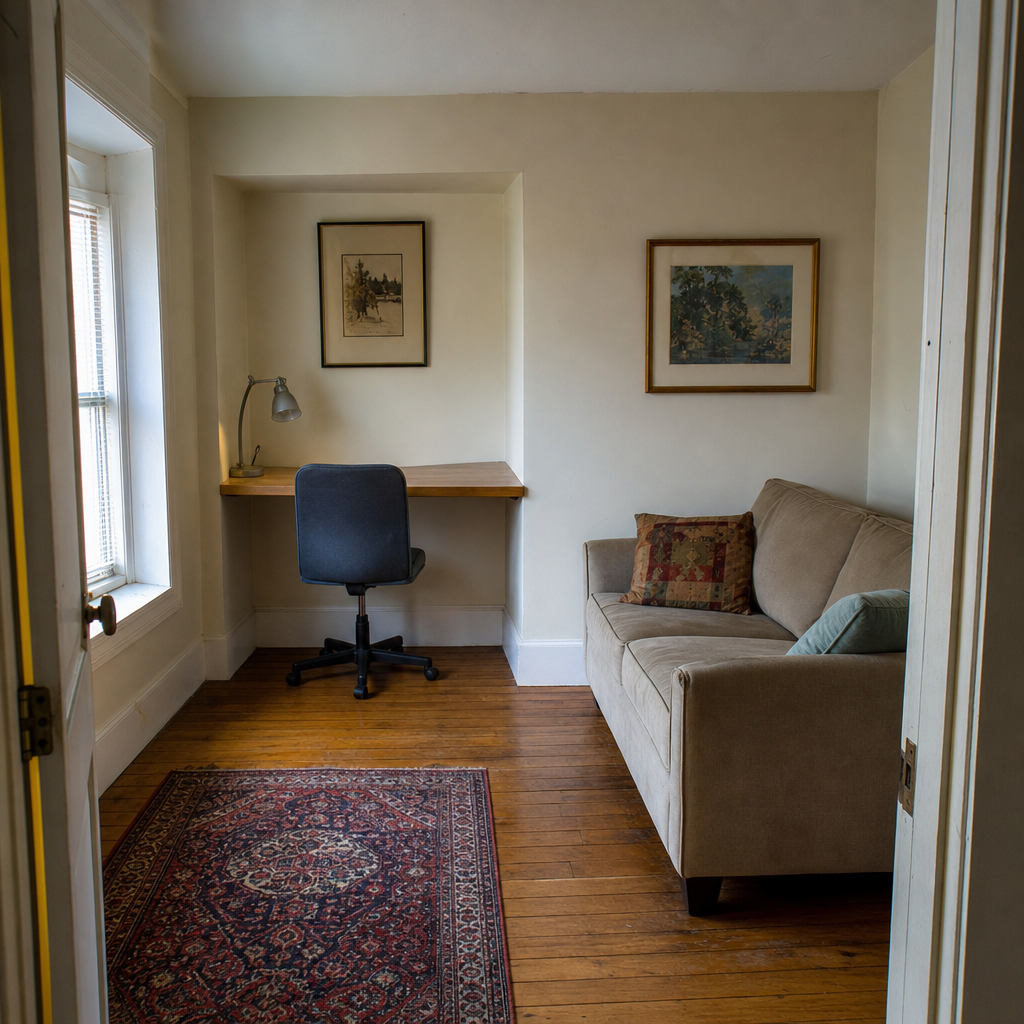
Measure both the desktop and the chair in use, including the space needed to pull the chair back. Add an adjustable task light because alcoves can cast shadows even when the living room has good general daylight.
Worth knowing: A very shallow alcove may fit a writing surface but not a comfortable full-day computer setup or a monitor arm.
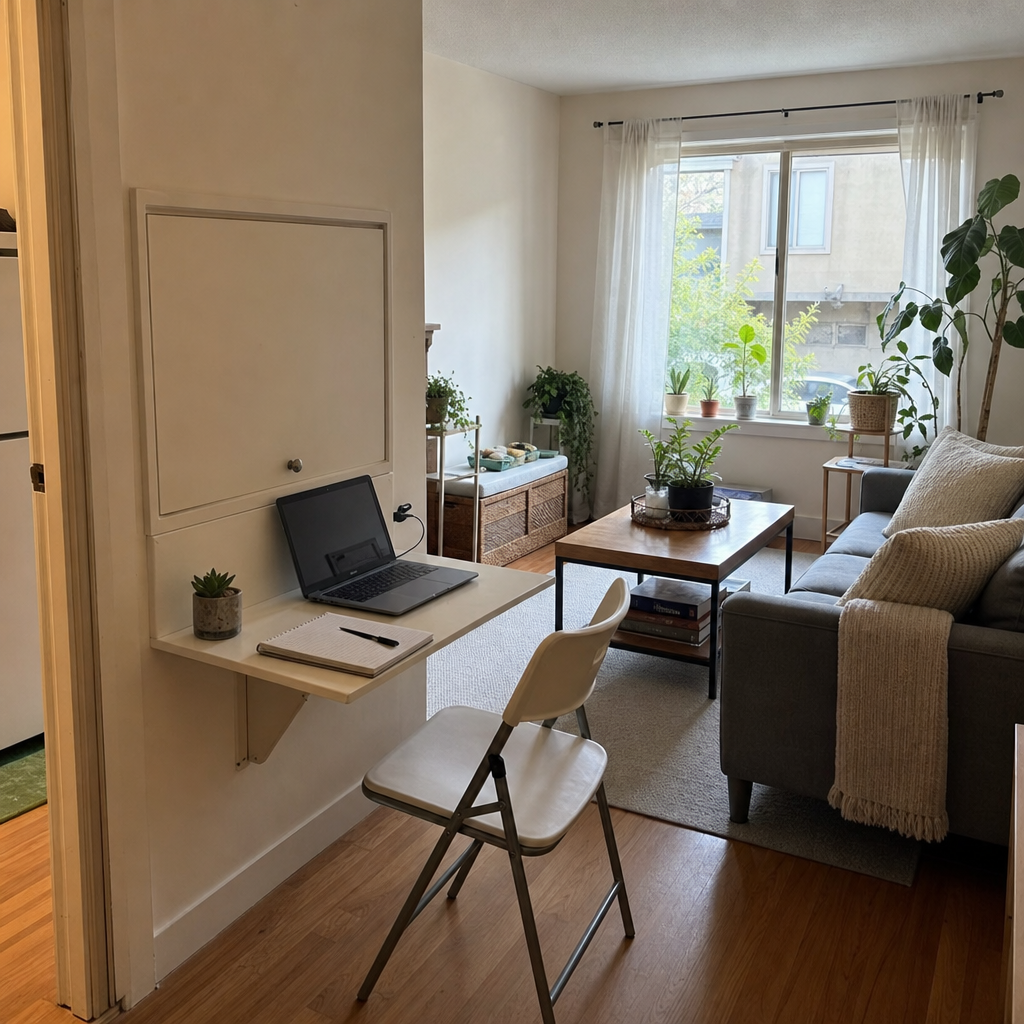
5.Put a Fold-Down Desk on a Short Wall
A wall-mounted fold-down desk gives a short, otherwise unused wall a job without permanently filling the floor area. When closed, it lets the living room return to a more social use and can reduce the visual presence of work equipment.
Use it for a laptop setup or light desk work, and choose a chair that can tuck elsewhere after the workday. Installation needs to match the wall construction and the intended load, so use suitable hardware rather than relying on the desk panel alone.
Worth knowing: This option may not be permitted in a rental, and it is less forgiving than a fixed desk for heavy equipment or long work sessions.
6.Make a Corner Desk Between Two Windows
The wall space between two windows can make an efficient small corner office, particularly when it would otherwise hold little more than a plant or occasional table. A compact corner-shaped top uses the meeting of the walls while preserving more open floor than a wide straight desk.
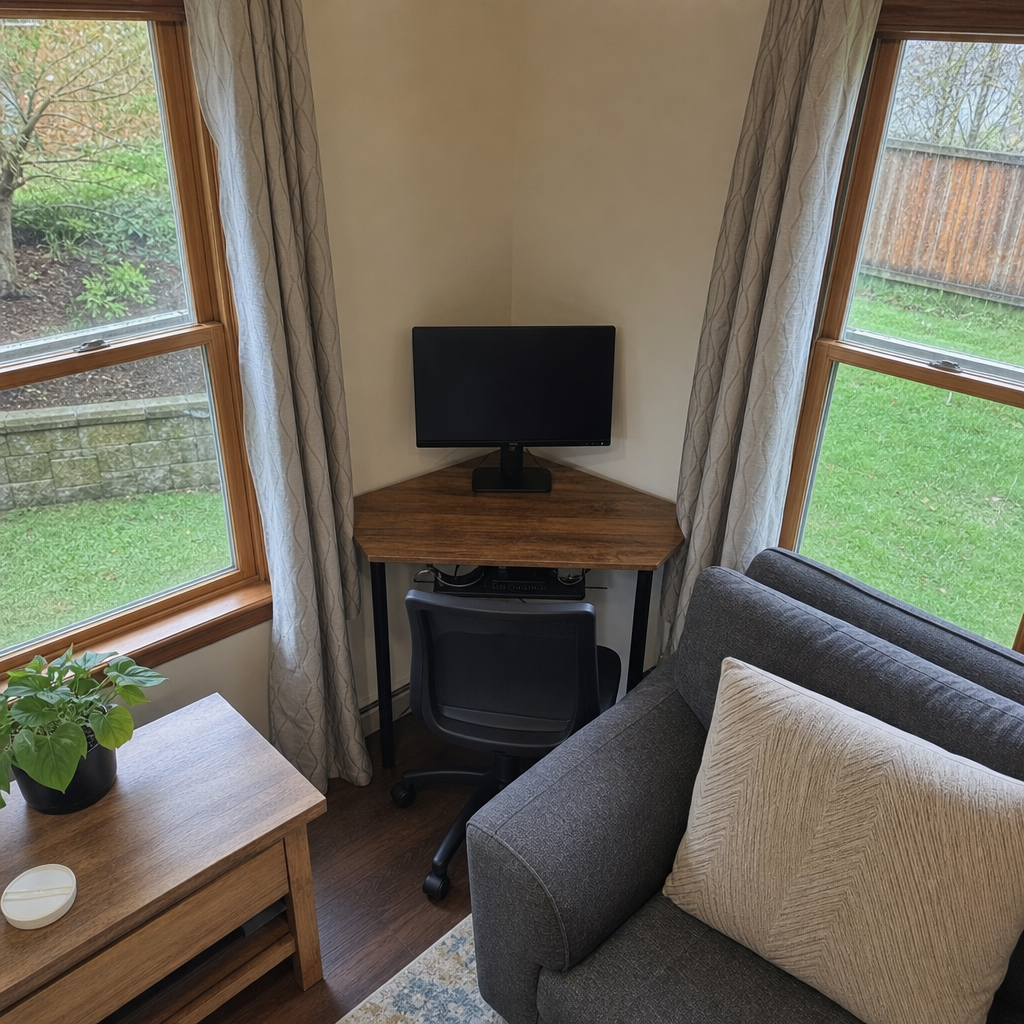
Position the monitor so neither window reflects directly across the screen, and leave the windows accessible for curtains and fresh air. Run cords under the desktop or along the baseboard rather than across the corner where the chair moves.
Worth knowing: Two windows can create changing light from several directions, so glare may still need attention at different times of day.
7.Replace a Side Table With a Laptop-Scale Desk
A narrow surface beside the sofa can replace an end table and offer a quiet place to answer emails, write, or use a laptop. It works best when the work is occasional and the desk can still function as useful living room furniture after hours.
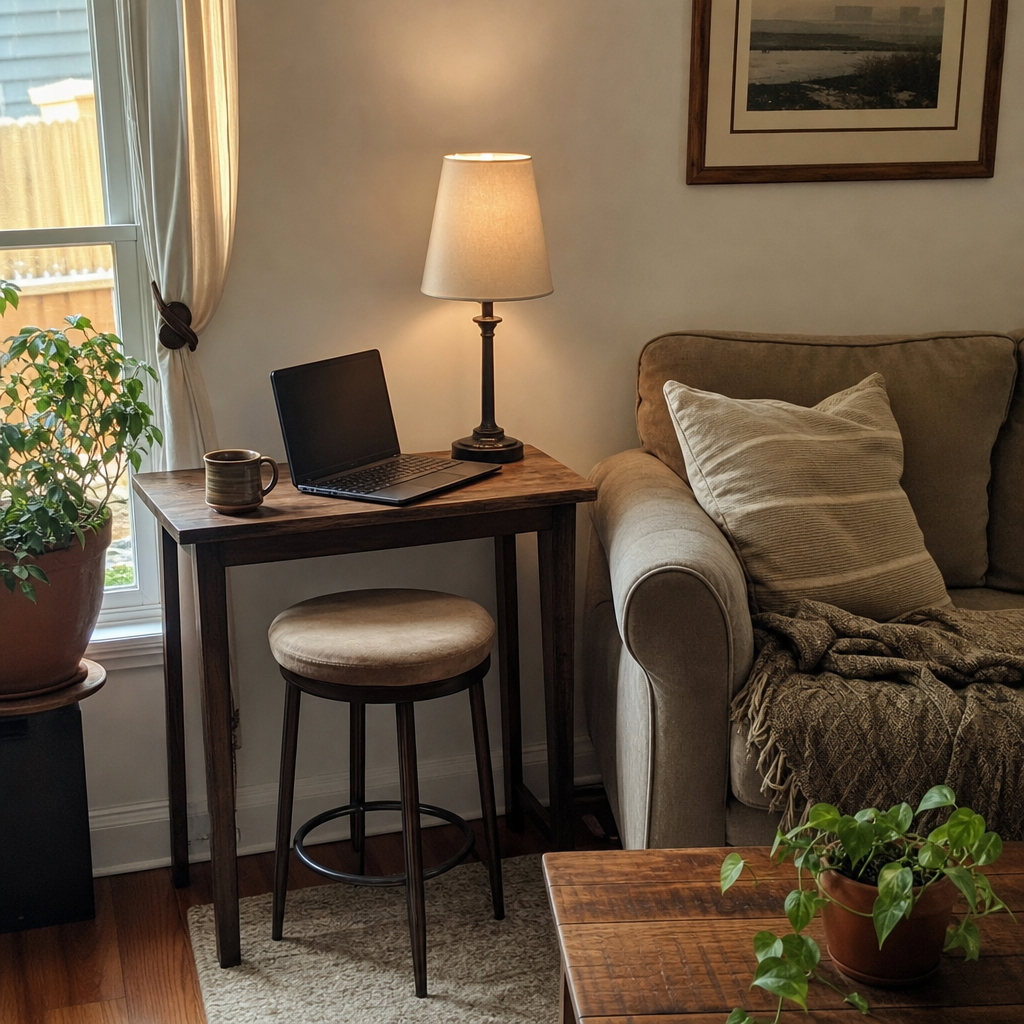
Select a surface with enough knee room and pair it with a compact stool or chair that can tuck away. Keep the lamp, drink, and charging cable contained so the small top does not become crowded during everyday use.
Worth knowing: A laptop-scale desk is not usually deep enough for a monitor, separate keyboard, papers, and other equipment needed for full-day work.
8.Use a Secretary Desk as a Closed Storage Piece
A secretary desk provides a work surface that folds away along with papers, cables, and a laptop. In a shared living room, that ability to close the work zone can make the room feel calmer when the workday ends.
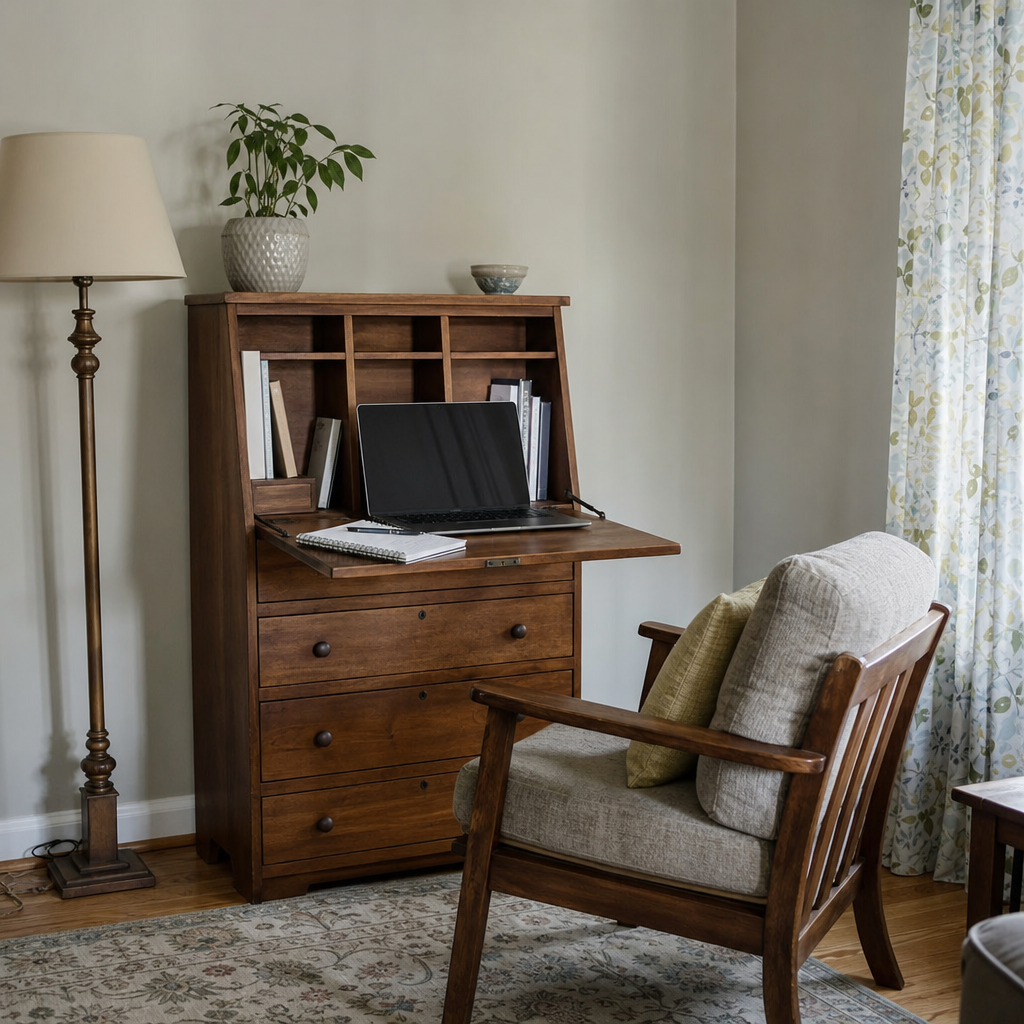
Look for a stable piece with a usable interior surface rather than choosing by exterior appearance alone. Small organizers inside the cabinet keep chargers and notebooks from falling forward when the desk is closed.
Worth knowing: Most secretary desks suit laptop work better than a large monitor setup, and their fixed work height may not suit every chair.
9.Create a Work Wall Behind Matching Storage
Center a compact desk between two low storage units to turn a plain wall into a deliberate work area. The cabinets give office supplies, printer paper, and spare cables a place to disappear, while the desk stays visually clear.
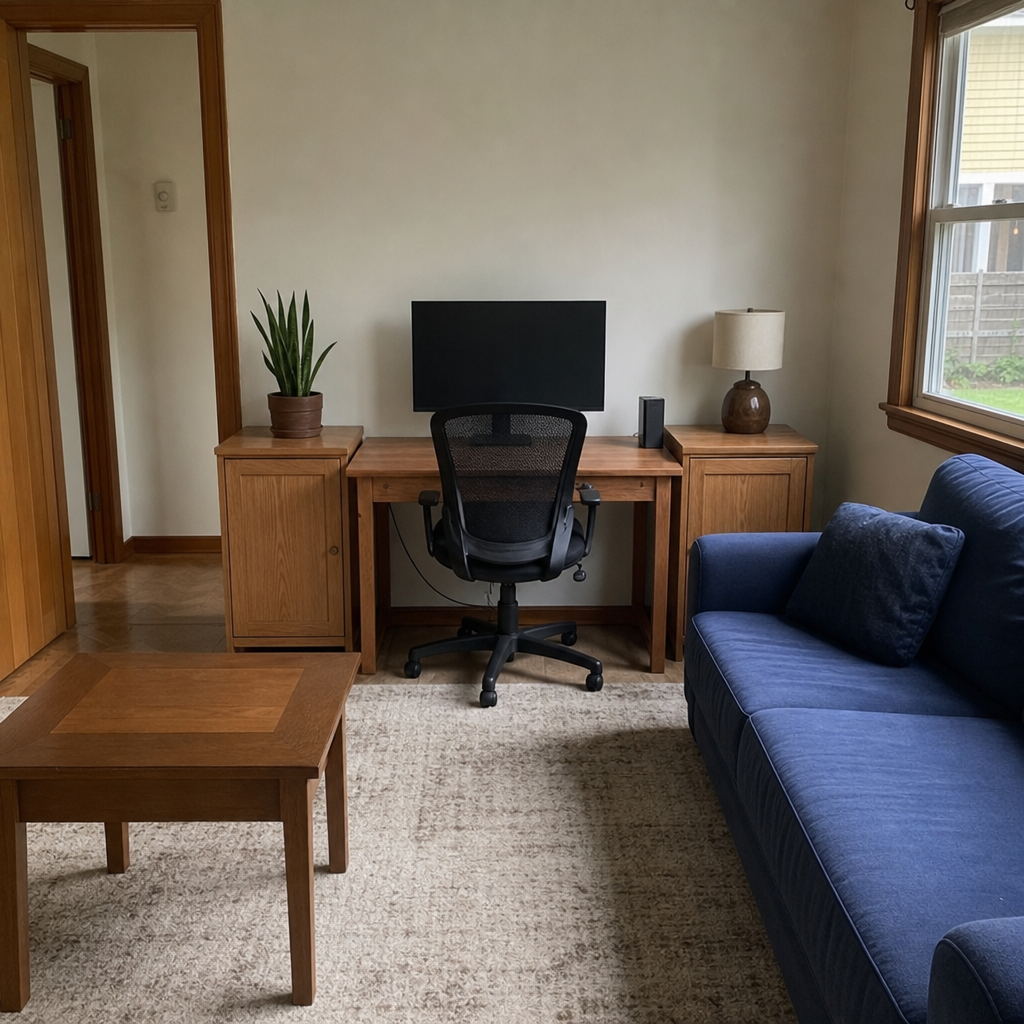
Keep the center zone open for the chair and avoid extending storage so far forward that it narrows the room’s passage. Low, closed pieces are especially useful in a living room because they add storage without making the wall feel top-heavy.
Worth knowing: This layout needs a sufficiently wide uninterrupted wall and may make the room feel more furniture-heavy if the storage is oversized.
10.Park a Rolling Desk Along the Wall
A compact rolling desk can sit neatly along a wall when the living room is in use, then move closer to an outlet or a better work position during the day. This is useful for renters and multipurpose rooms where a fixed desk would be in the way.
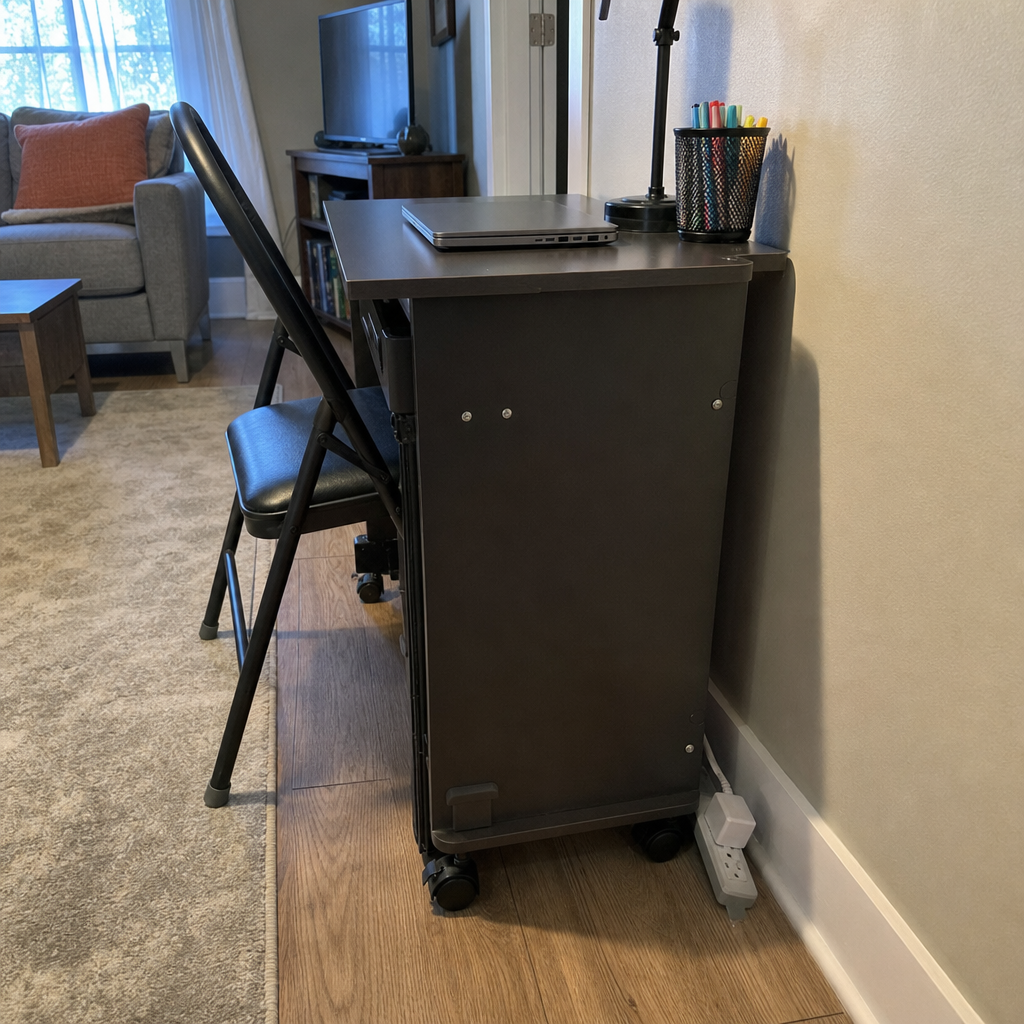
Choose locking casters so the desk stays steady while typing, and use a flexible cable arrangement that does not pull when it moves. Wheels work most reliably on smooth flooring; stopping the desk before a thick rug can prevent wobbling and strain on the casters.
Worth knowing: A rolling desk is less stable than a fixed one on uneven floors, and moving it regularly can become inconvenient with a large monitor or many plugged-in accessories.
About the author
Dana Ruiz, Senior editor
Dana writes about small-space living, storage and low-cost decorating.
Keep reading
12 Small Entryway Ideas for Homes With No Foyer
September 17, 2026
10 Small Dining Area Ideas When You Don't Have a Dining Room
September 16, 2026
12 Small Kitchen Ideas That Free Up Prep Space Without Remodeling
September 15, 2026
12 Studio Apartment Divider Ideas Without Building a Wall
September 15, 2026