12 Studio Apartment Divider Ideas Without Building a Wall
A studio can feel more functional when sleeping, working, and living areas have clear visual edges without permanent construction. These movable divider ideas preserve light and circulation while staying practical for renters.
1.Float a Bookcase Behind the Bed
Place a freestanding, open-backed bookcase behind the bed to give the sleeping area a clear edge. The open structure separates the zones without cutting off window light or making the bed feel enclosed.
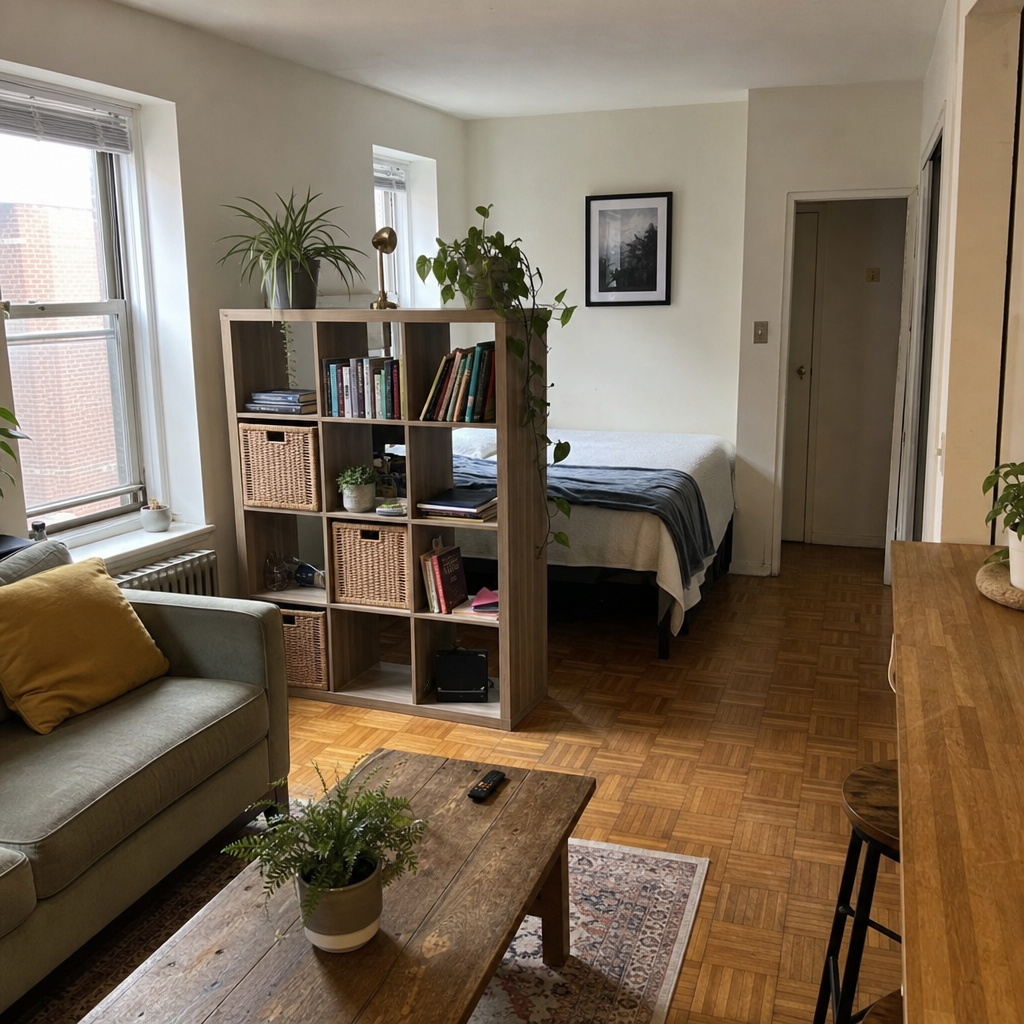
Use books, baskets, and a few practical items rather than filling every shelf with decor. Leave enough room to walk comfortably around both the bed and the unit, and anchor the bookcase according to the manufacturer’s instructions.
Worth knowing: A bookcase takes up more floor space than a curtain or screen, so it can crowd a narrow studio.
2.Use Ceiling-Mounted Curtains Around the Bed
A curtain track around one or two sides of the bed gives the sleeping zone a softer boundary that can be opened during the day. It is especially useful when the bed is visible from the entry or main seating area.
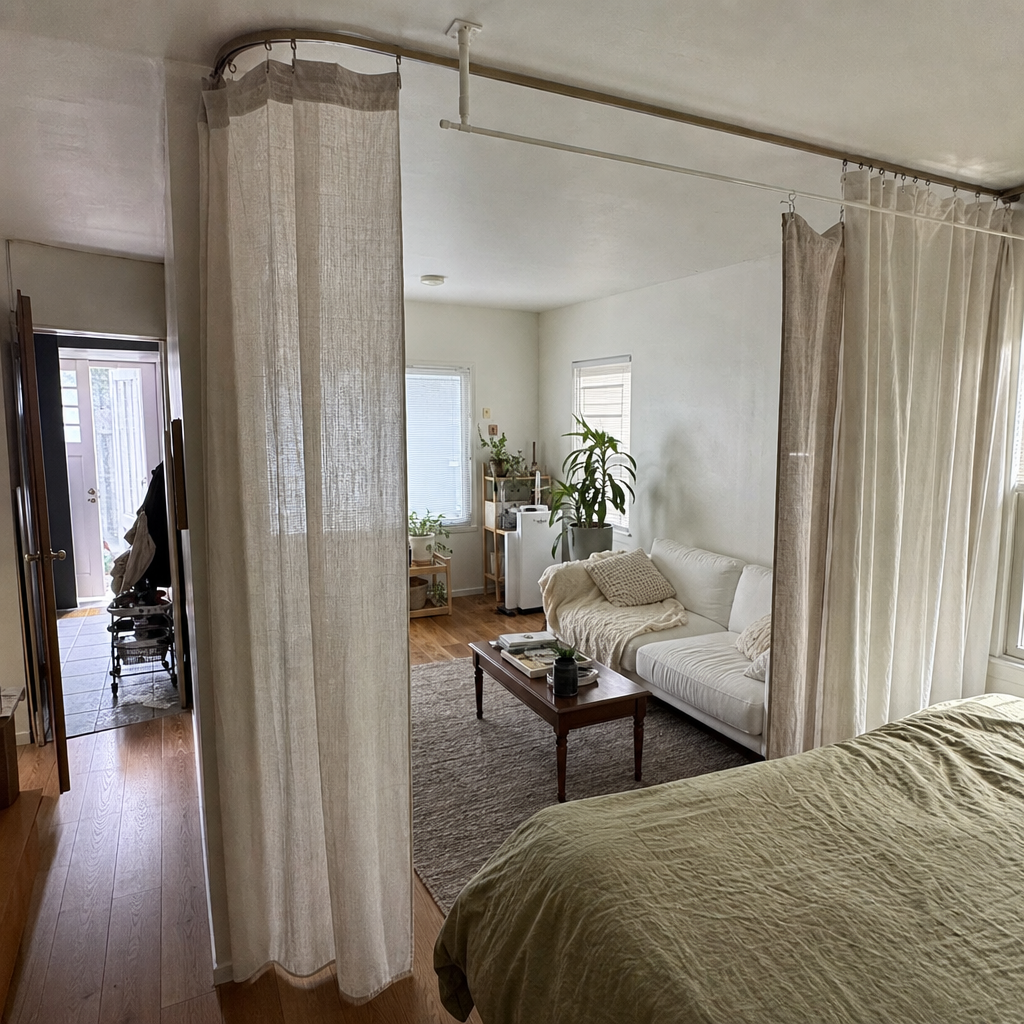
Choose light-filtering fabric so the curtain adds privacy without blocking the studio’s available daylight. Ceiling-mounted tracks require landlord permission in a rental, while a tension solution may work only where there are secure opposing walls.
Worth knowing: Curtains provide visual privacy, not soundproofing, and heavy fabric can make a small room feel darker.
Related: 10 Budget Curtain Ideas That Make Windows Feel More Finished
3.Turn the Back of a Sofa Into a Living Room Boundary
Float the sofa so its back faces the bed or desk rather than pushing it against a wall. This simple shift makes the seating area read as a separate living room and gives the sofa a more intentional role in the layout.
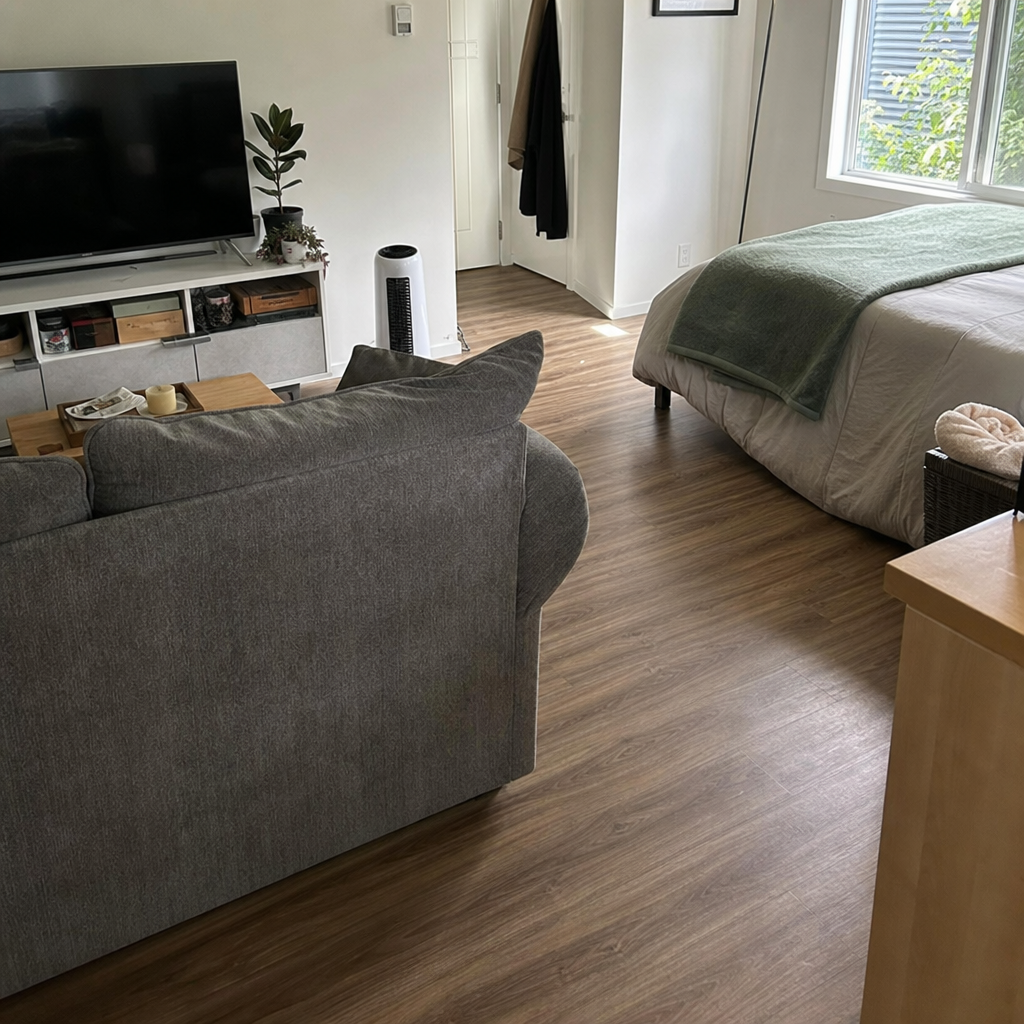
Keep a direct route from the entry to the kitchen, bathroom, and windows. A slim console behind the sofa can add a finishing edge if there is enough clearance, but the sofa alone can do the dividing work.
Worth knowing: This arrangement needs enough room behind the sofa for a usable walkway.
Related: 12 Small Living Room Layout Ideas That Leave Room to Walk
4.Set a Folding Screen Beside the Sleeping Area
Set a folding screen beside the bed to hide part of the sleeping area from the sofa, desk, or entry. It can be folded away when the studio needs to feel open, then pulled out again when guests visit.
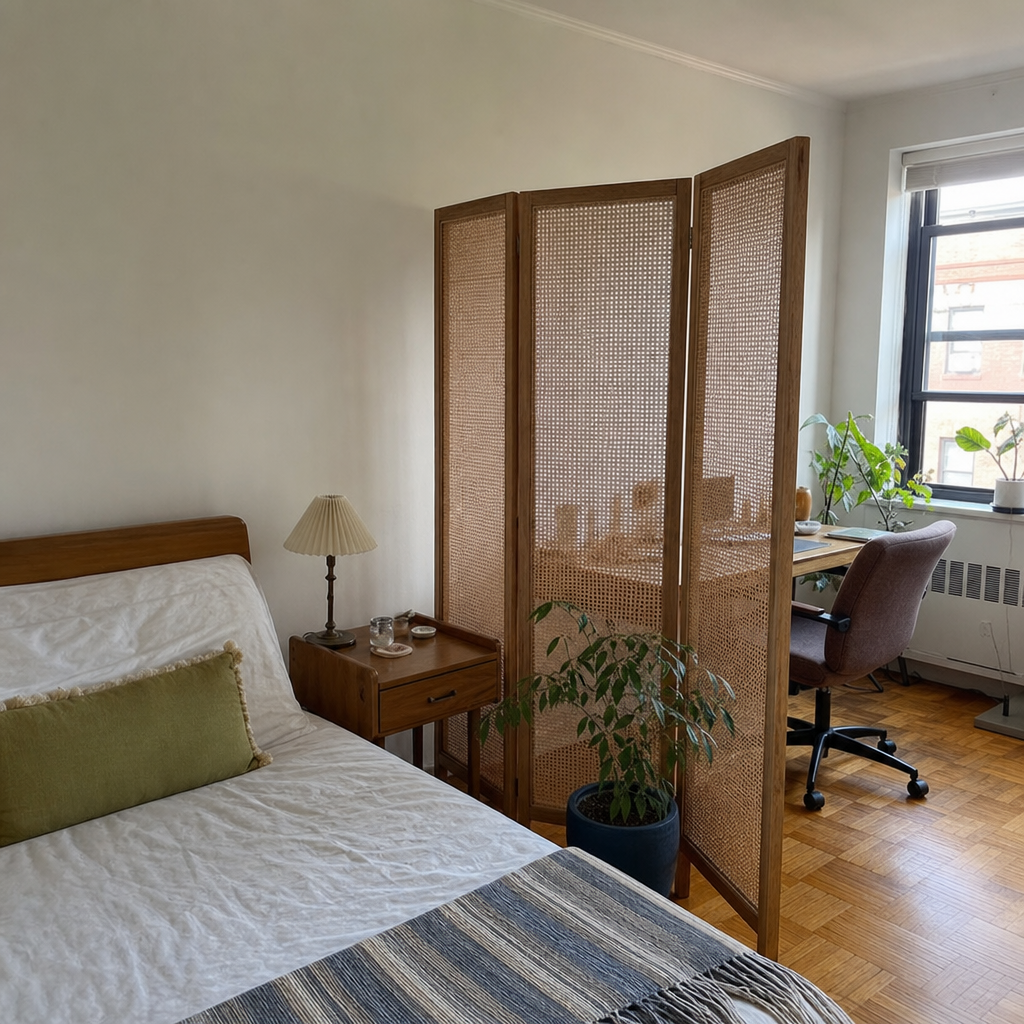
Look for a stable screen with a finish that suits the room, such as wood, woven panels, or plain fabric. Place it in a low-traffic location and away from heating vents so it is less likely to be bumped or interfere with airflow.
Worth knowing: A folding screen can shift or tip if it is placed in a busy pathway or around pets and children.
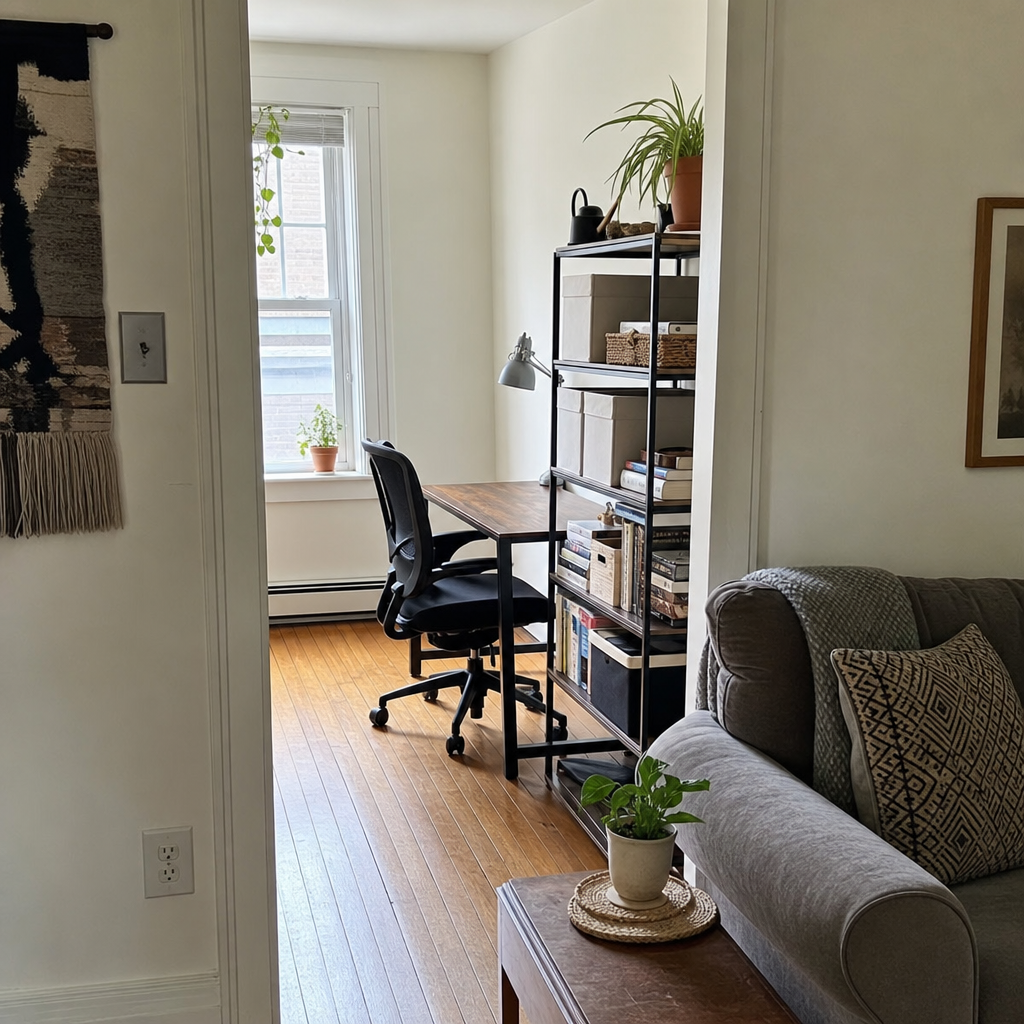
5.Create a Work Nook With a Tall Storage Unit
Put a tall open storage unit along one side of a desk to make the work area feel set apart from the lounge. The shelves create a visual stop point while keeping office supplies close to where they are used.
Use lower shelves for bins and less attractive work items, then keep upper shelves relatively open to preserve light. Choose a unit that does not shade the desk too heavily, and secure it when the manufacturer requires it.
Worth knowing: Tall storage can make a desk nook feel closed in if it blocks the room’s strongest natural light.
6.Hang a Curtain Across an Alcove
If the bed sits in an alcove or recessed section of wall, hang a curtain across the opening instead of adding a freestanding divider. The existing architecture does most of the separating, so the curtain uses almost no floor space.
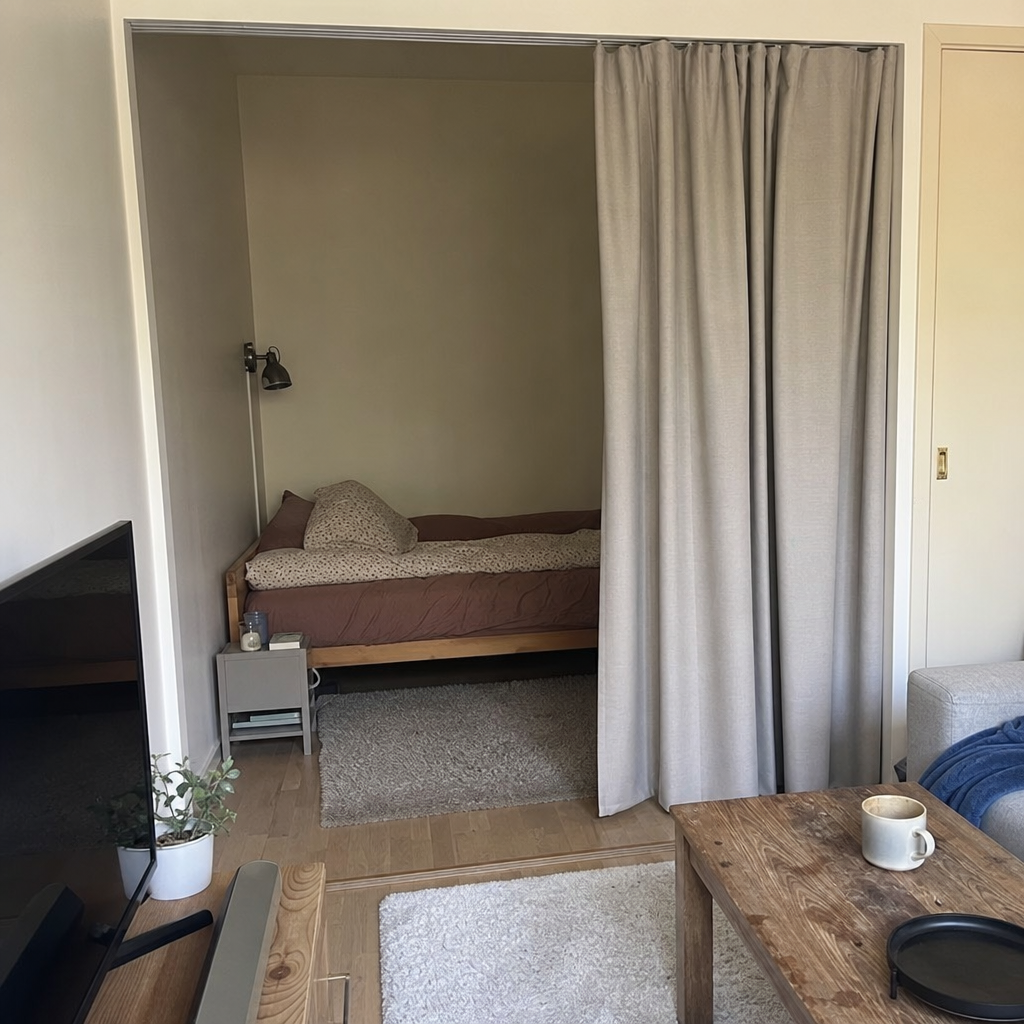
A tension rod may work in a solid, appropriately sized alcove; otherwise, ask for permission to install a mounted rod. Keep the curtain pulled back during the day when the alcove needs more daylight and air movement.
Worth knowing: Not every alcove has suitable walls for a tension rod, and a mounted rod may leave holes when removed.
7.Place a Low Console at the Foot of the Bed
Use a low console, bench, or storage cabinet at the foot of the bed to signal where the sleeping zone ends. Its low profile gives the bed a boundary while keeping sightlines open across the studio.
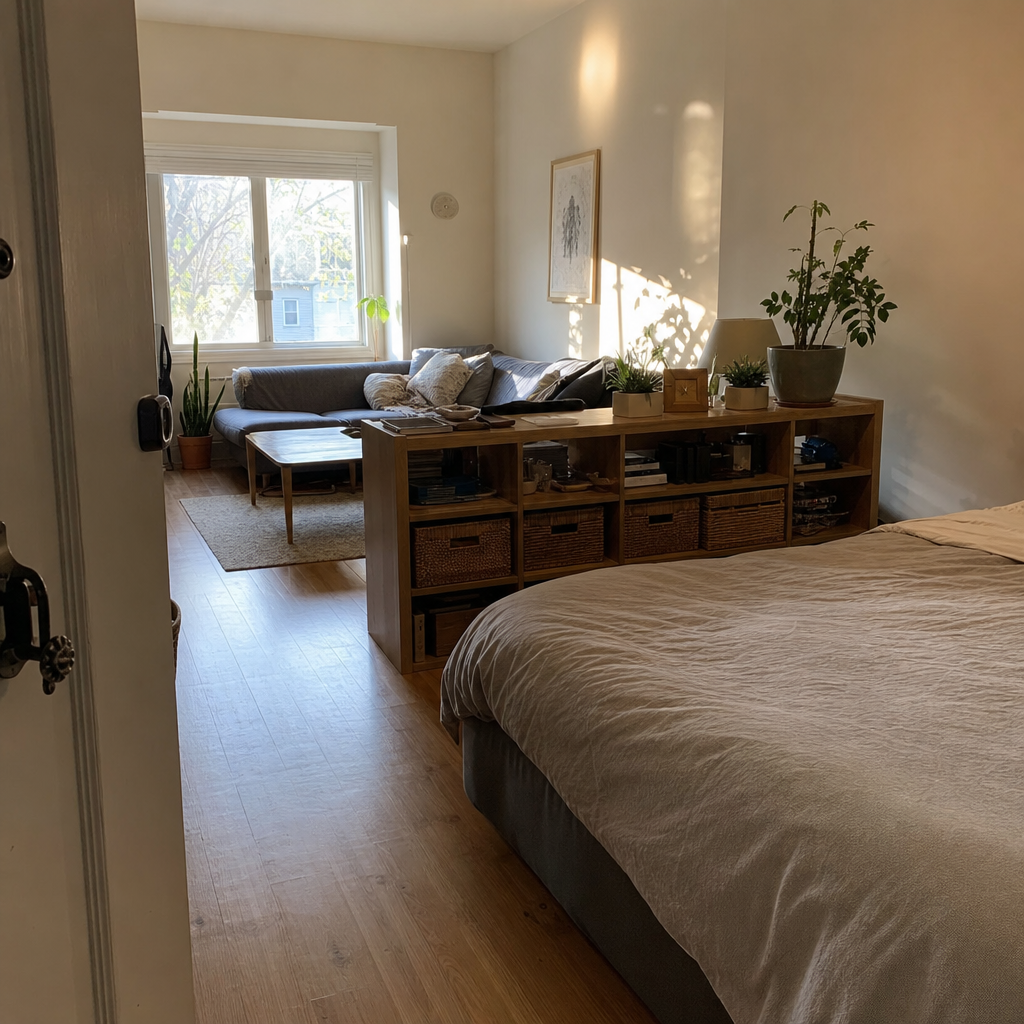
This is a practical choice in rooms with limited windows because it does not cast a large shadow. A secondhand bench or simple storage piece can work well, as long as it does not narrow the route around the bed.
Worth knowing: A low console offers only a subtle visual division and will not conceal an unmade bed from view.
8.Use Open Shelves Between the Desk and Sofa
A waist-high or open shelving unit can mark the edge of a work zone without building a visual wall. Position it beside or behind the desk so the sofa area feels separate from cables, papers, and office equipment.
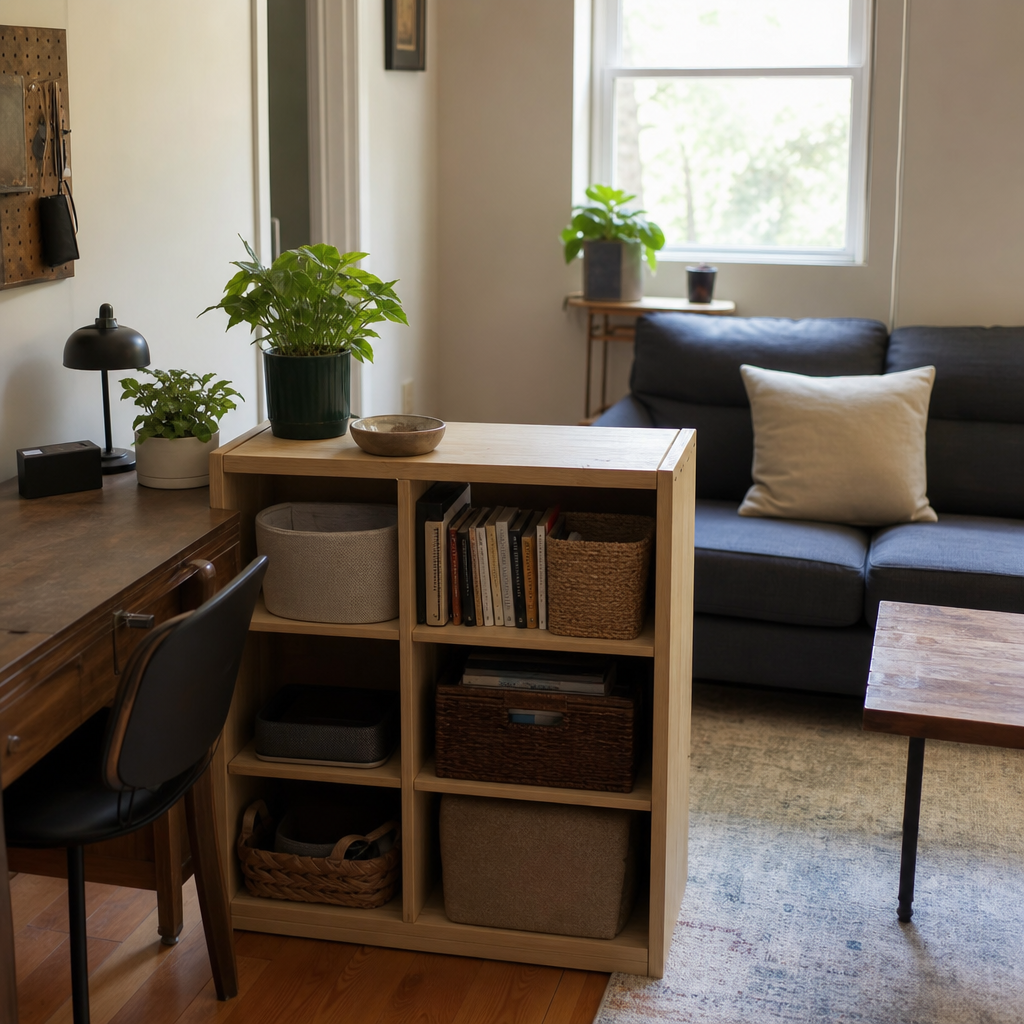
Use baskets on the lower shelves to contain supplies that would otherwise spread into the living area. Keep the upper surface fairly clear so the divider remains useful without becoming another crowded work surface.
Worth knowing: Open shelves need regular tidying because clutter is visible from both sides.
9.Roll a Garment Rack Into a Bedside Boundary
A rolling garment rack can form a lightweight boundary beside the bed while solving a storage need. Arrange a small, coordinated group of clothes on it, or add a fabric panel if the rack needs to screen the bed more directly.
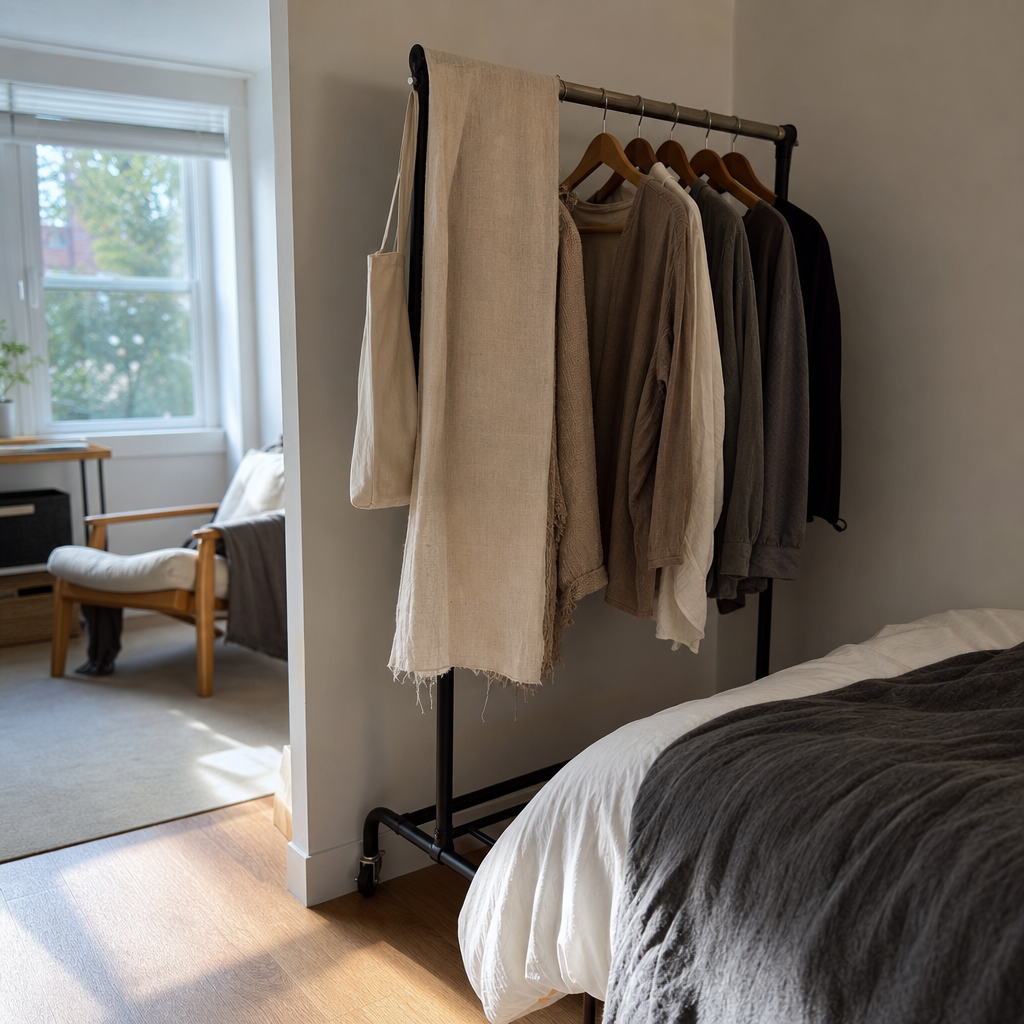
Because the rack moves easily, it can be repositioned for cleaning, guests, or a different room setup. Lock the wheels when it is in place, and keep the load balanced so it stays stable.
Worth knowing: A garment rack quickly looks messy if it becomes overflow storage for too many clothes.
10.Separate Zones With a Large Area Rug
Use a large area rug to gather the sofa, chairs, and coffee table into a defined living room. The bed and desk can remain outside the rug, creating clear zones without adding a physical obstacle to the room.
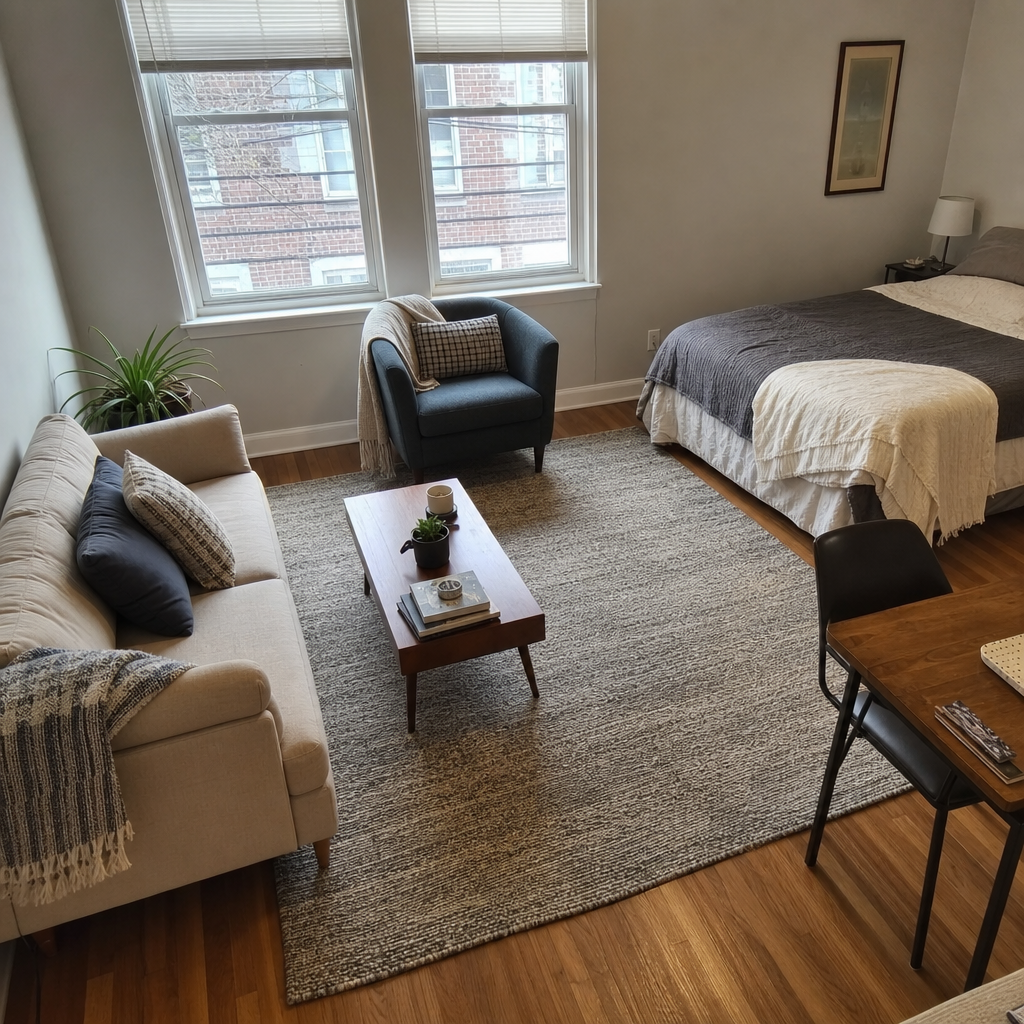
Choose a rug large enough to connect the seating pieces rather than leaving each one isolated. A flat, low-pile option is easier to move and less likely to create a tripping edge in a tight circulation path.
Worth knowing: A rug changes the visual layout but does not provide privacy or hide one zone from another.
11.Use a Movable Panel Screen Near a Window
A lightweight slatted, translucent, or woven panel can screen the bed while still letting daylight move through the studio. It gives more structure than a curtain but remains easier to reposition than a built-in partition.
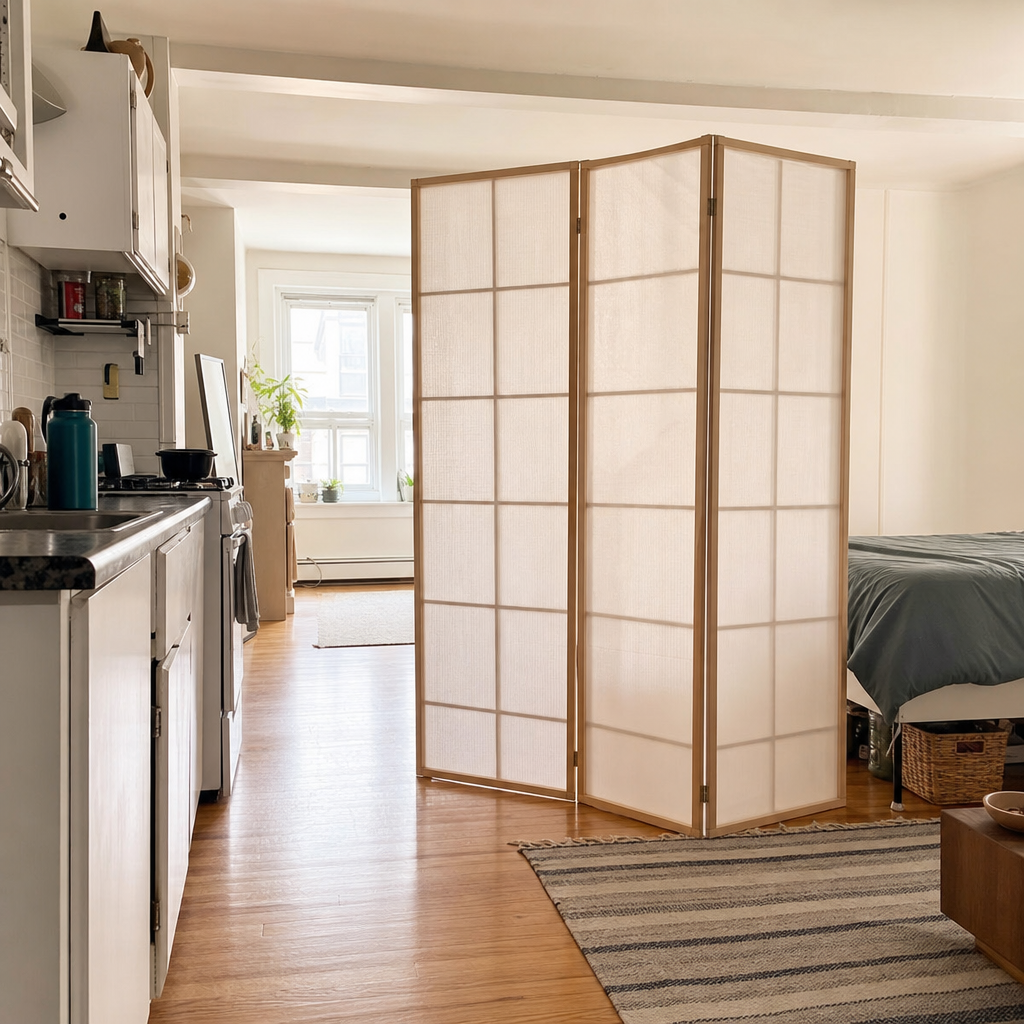
Set the panel far enough from the window that it does not block access, cleaning, or emergency egress. Translucent materials work particularly well in darker studios where an opaque screen would make the sleeping area feel dim.
Worth knowing: A panel screen near a window must never obstruct the window’s opening or the route to it.
12.Angle Two Chairs to Make a Separate Conversation Area
Angle two chairs toward a sofa or small coffee table to create a conversation area distinct from the bed. The grouped seating makes the living zone feel deliberate without relying on a tall divider.
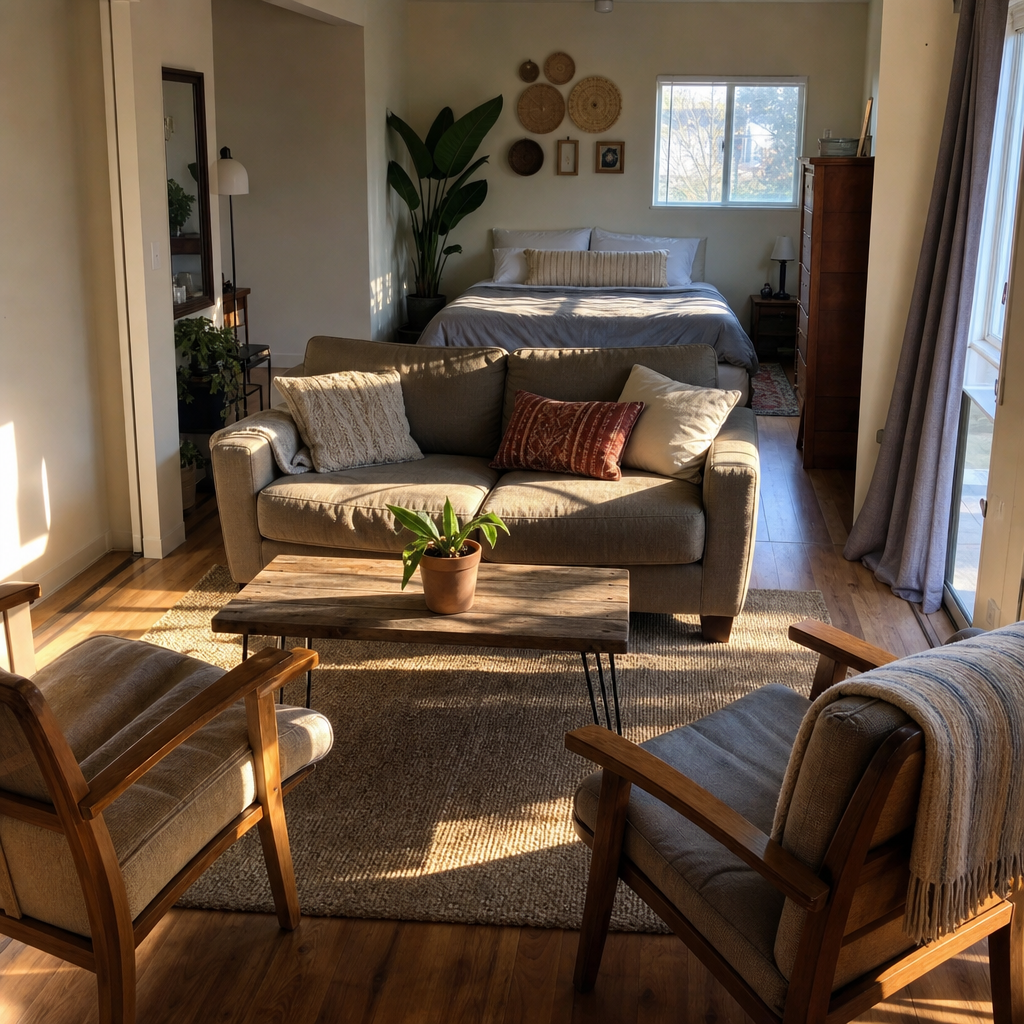
Keep the chairs light enough to move when the studio needs extra open floor space. This layout works best when the seating group still leaves a clear path through the room rather than forcing people to squeeze around chair backs.
Worth knowing: Several separate seats can make a very small studio feel crowded compared with a single compact sofa.
About the author
Dana Ruiz, Senior editor
Dana writes about small-space living, storage and low-cost decorating.
Keep reading
12 Small Kitchen Ideas That Free Up Prep Space Without Remodeling
September 15, 2026
10 Small Bedroom Layout Ideas for a Queen Bed
September 15, 2026
12 Small Living Room Layout Ideas That Leave Room to Walk
September 14, 2026
12 Small Patio Seating Ideas on a Budget
September 16, 2026