8 Budget Ways to Use a Secondhand Dresser Beyond the Bedroom
An intact secondhand dresser can handle household storage roles that might otherwise call for several narrow, task-specific pieces. Match the drawer depth, top surface, traffic pattern, and anchoring needs to the job so the dresser works safely outside the bedroom.
As an Amazon Associate I earn from qualifying purchases.
1.Use It as a Dining Linen Cabinet
A low dresser can hold tablecloths, cloth napkins, placemats, and serving pieces along a dining-room wall. Its top also creates a useful buffet surface for a serving bowl, candles, or a tray during meals.
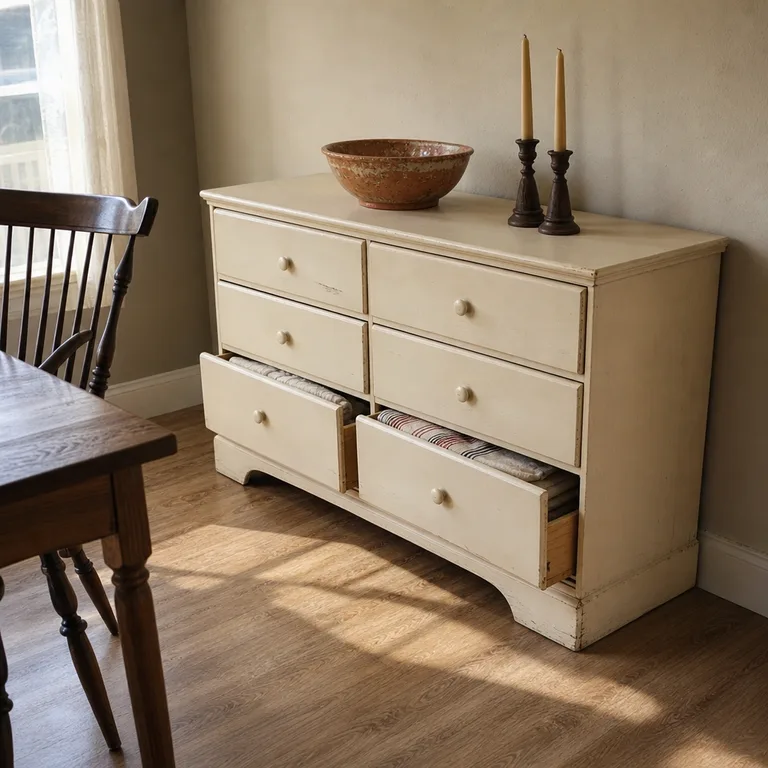
Give each drawer one category so folded linens do not get mixed with heavier dishes. A secondhand piece with shallow, smooth drawers is often enough for this job, and lining drawers can help protect delicate fabric from rough interiors.
Keep the top mostly open rather than treating it as another storage shelf. That clear surface is what makes the dresser useful during a dinner or holiday meal.
Worth knowing: Avoid using a dresser in a room with persistent humidity, since stored linens can develop odors or mildew.
2.Turn It Into an Entry Accessory Chest
A narrow dresser near the front door can sort hats, gloves, reusable bags, dog-walking gear, and other small items that tend to land on a table. A tray on top gives keys and mail one visible landing spot without taking over the drawers.
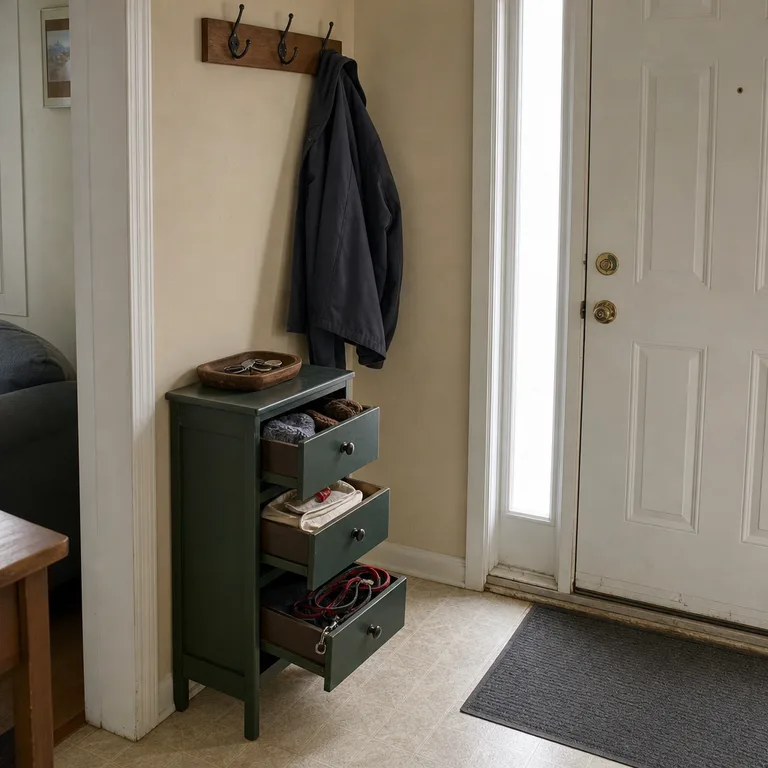
Use simple bins or dividers to keep each drawer from becoming a catchall. Assigning one drawer to each person, season, or routine makes the piece easier to maintain than a pile of loose baskets.
Choose a dresser depth that leaves a comfortable route to the door. A low, wide piece can work well under a wall hook rail if coats are not rubbing against the drawer fronts.
Worth knowing: A tall dresser near an active entry should be anchored, and it cannot narrow a required path to the door.
3.Organize Craft Supplies in Deep Drawers
A dresser with deep, smoothly gliding drawers can contain yarn, paper, paint tools, sewing supplies, and unfinished projects in one spot. This works especially well in a living room or multipurpose corner where open craft shelving would look busy.
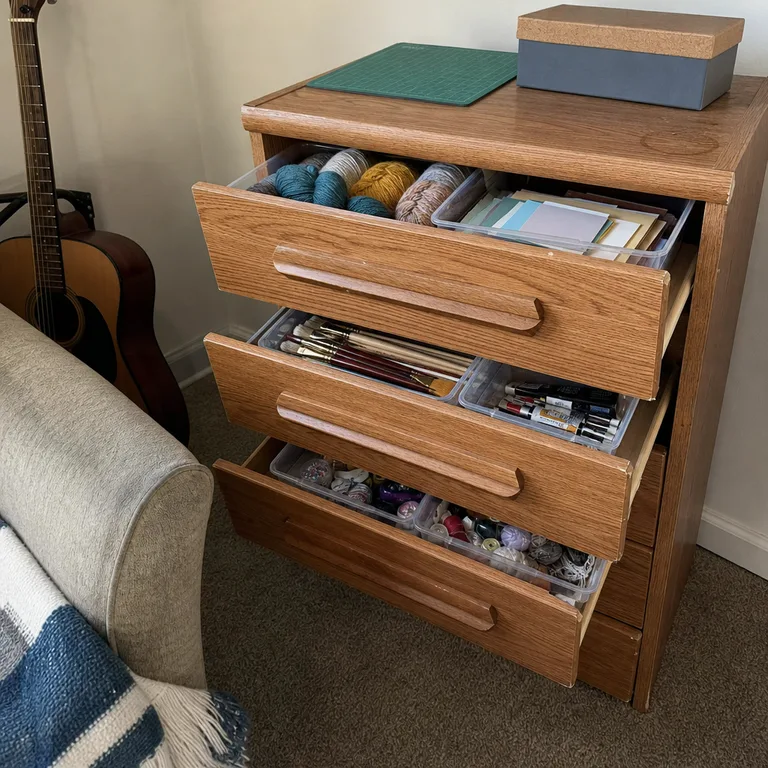
Use washable bins for paints, glue, and other messy supplies, then reserve flatter drawers for paper and cutting tools. Clear containers make it easier to see what is available without pulling out every drawer.
Keep sun-sensitive materials away from a bright window, especially paper, fabric, and paint. A closed dresser also helps the hobby area return to a calmer look when the project is paused.
Worth knowing: Very heavy tools or large equipment may overload ordinary dresser drawers or fail to fit safely.
4.Make a Board-Game Chest Near the Seating Area
Place a sturdy low dresser near the sofa to store board games, card decks, puzzle tins, and game accessories where people actually use them. The top can hold a puzzle board or a game in progress when it is not needed for drinks or decor.
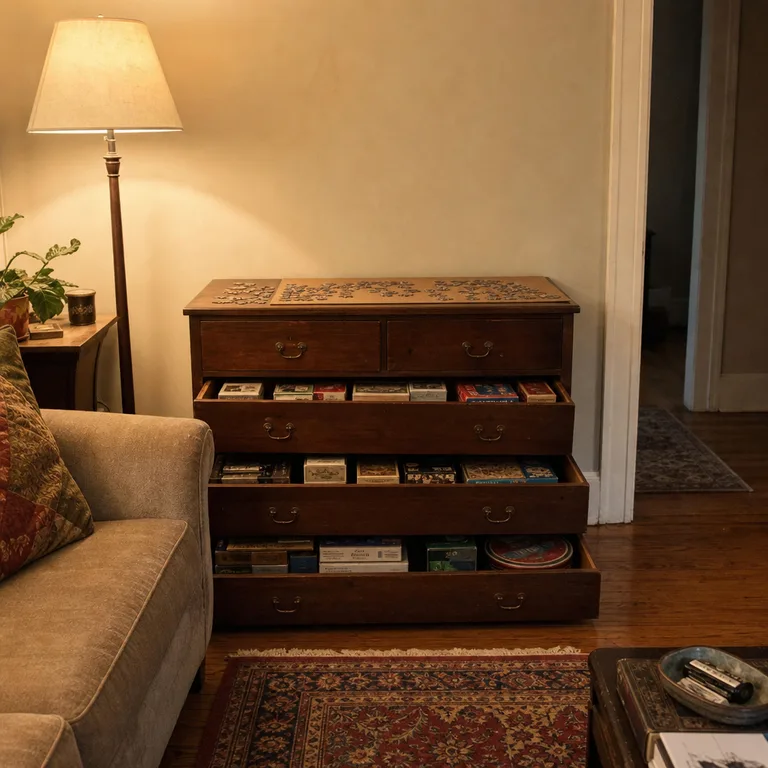
Measure game boxes against the inside width and height of the drawers, not just the outside of the dresser. Wider drawers work best for flat puzzle boxes and larger games, while smaller drawers can hold cards, dice, and score pads.
A secondhand dresser can make a casual game collection feel contained rather than scattered around the room. Felt pads beneath the feet can help protect flooring when the piece needs to be shifted for game night.
Worth knowing: A dresser top is not a secure long-term puzzle surface if it needs to serve other living-room uses.
Related: 10 Board Game Storage Ideas for Homes Without a Playroom
5.Stock a Guest Essentials Cabinet
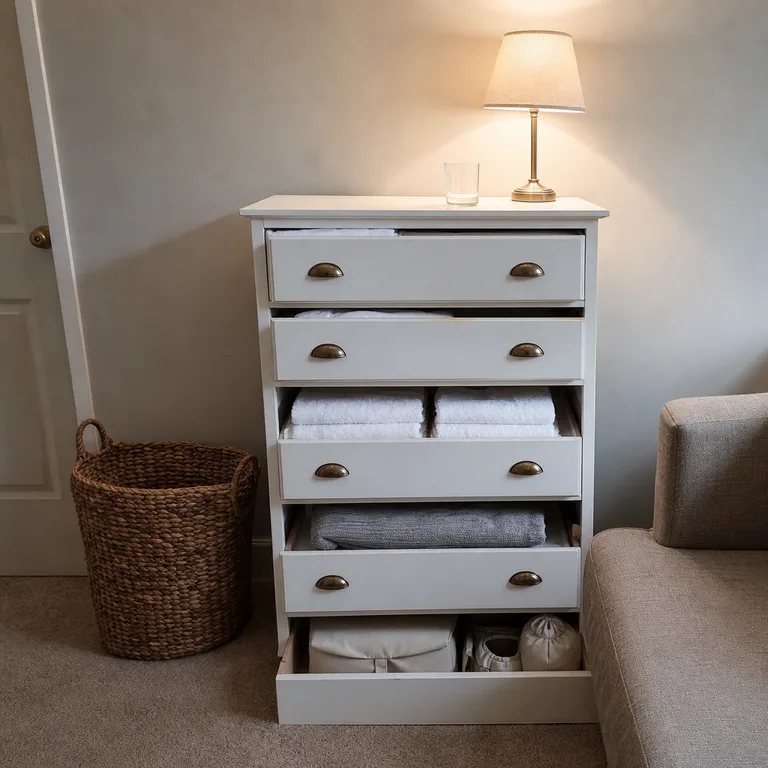
A dresser near a sleeper sofa or guest area can hold spare towels, sheets, blankets, and basic toiletries. This keeps overnight supplies ready without giving up a whole closet or buying a dedicated guest-room cabinet.
Fold complete sheet sets together and keep toiletries in zippered pouches or bins so small items do not drift through the drawer. A lamp, water glass, or small tray on top can make the nearby sleeping area more practical for a visitor.
This role suits a sound dresser with clean interiors and no lingering odors. It is also useful in a home where the living room occasionally becomes a guest space rather than a permanent bedroom.
Worth knowing: Only store clean, dry textiles in an area without moisture problems or basement dampness.
6.Store Seasonal Textiles in a Reserve Chest
Deep dresser drawers can hold off-season throws, pillow covers, lightweight bedding, and holiday table runners. Keeping these textiles out of the main linen closet frees everyday storage for the items used every week.
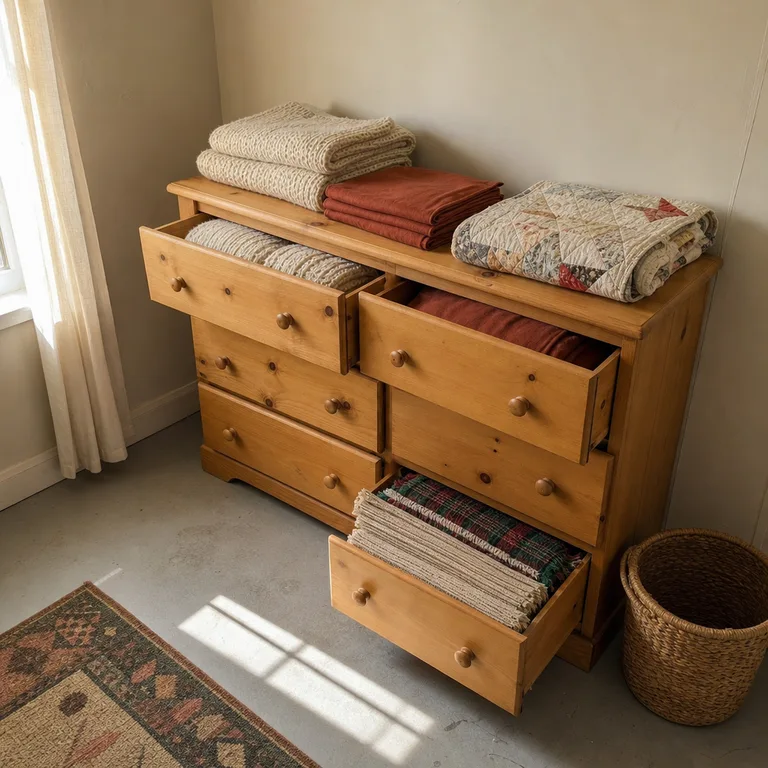
Group contents by season and rotate the drawers as the weather changes. Zippered fabric bags or simple drawer liners can keep loosely woven throws and delicate covers from snagging on unfinished wood.
A reserve chest works best in a living-room alcove, spare room, or other dry interior location. It gives bulky soft goods a defined home without requiring tall stacks in a closet.
Worth knowing: Do not place textile storage against a damp exterior wall or in a basement with unreliable moisture control.
7.Create a Home Paperwork Chest
A dresser can become a contained paperwork station for mail, manuals, tax records, school papers, and office supplies. It is a practical choice for a living-room work nook when a full filing cabinet would feel too office-like.
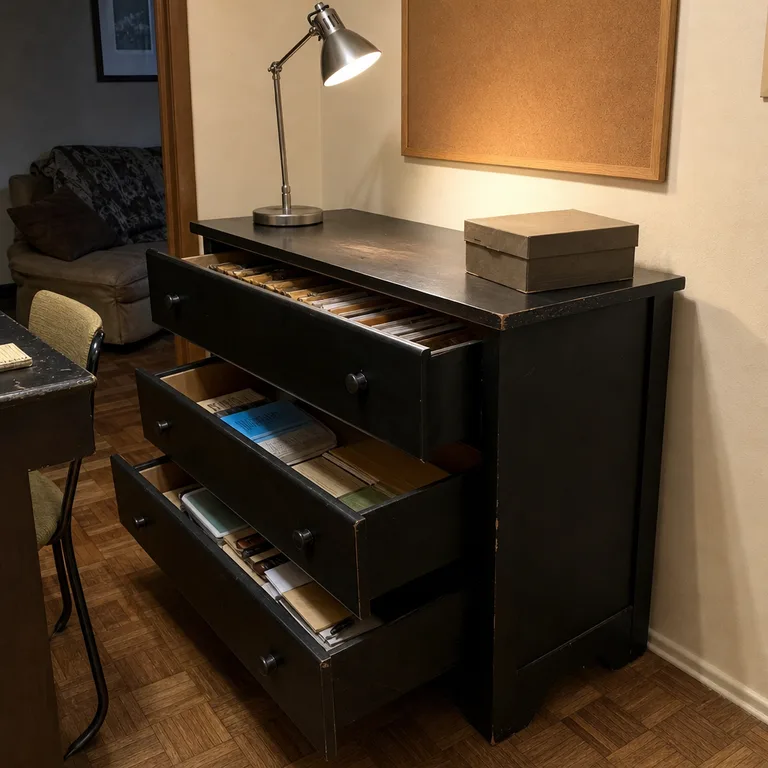
Fit file boxes or hanging-file frames to the drawer interior, then separate active papers from records that only need occasional access. A closed document box on top can hold items waiting to be filed instead of letting papers spread across the room.
Use labels inside the drawers if several people need to find documents. A dresser keeps the visual clutter behind closed fronts while still allowing paperwork to stay close to the desk or mail drop.
Worth knowing: Sensitive records should be secured and kept out of reach of young children or frequent visitors.
8.Use It for Media Accessories and Cables
A low dresser near the television can store remotes, headphones, controllers, manuals, charging accessories, and spare cables. Closed drawers reduce the visual clutter that often collects around a media area.
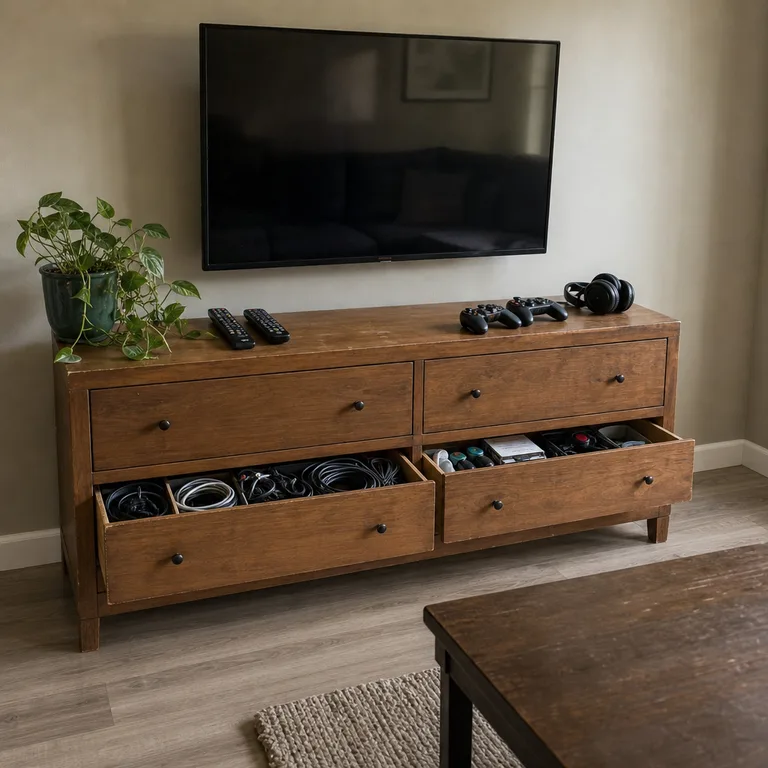
Give small electronics their own drawer or divided bin, and coil spare cables so they do not tangle with controllers. The top can hold a small plant or lamp, provided it does not interfere with the television setup.
This approach is most useful when the dresser is already low enough to sit comfortably beneath or near the screen. It offers more flexible storage than a narrow media console without turning the room into an electronics display.
Worth knowing: Do not block electronics ventilation openings or route cords across walking paths where they create a trip hazard.
Related: 10 Ways to Decorate Around a TV Without Buying a New Console
About the author
Dana Ruiz, Senior editor
Dana writes about small-space living, storage and low-cost decorating.
Keep reading
9 Easy Kitchen Cabinet Zones That Put Tools Where You Use Them
November 12, 2026
7 Easy Kitchen Reset Routines for a More Usable Kitchen
November 11, 2026
8 Budget Family Command Center Ideas for Easier School Weeks
November 11, 2026
8 Easy Bathroom Cleaning Habits for Easier Weekly Upkeep
November 11, 2026