10 Board Game Storage Ideas for Homes Without a Playroom
Bulky game boxes can live in a shared living room without turning every shelf into a jumble of loose cards, dice, and damaged corners. These storage ideas focus on keeping complete games easy to find while using ordinary furniture, closets, and wall space.
1.Use Original Boxes in a Closed Media Cabinet
Original boxes are the simplest low-cost way to keep a game board, instructions, and pieces together. A closed media cabinet makes those boxes less visually busy in a living room while keeping regular favorites close to the main seating area.
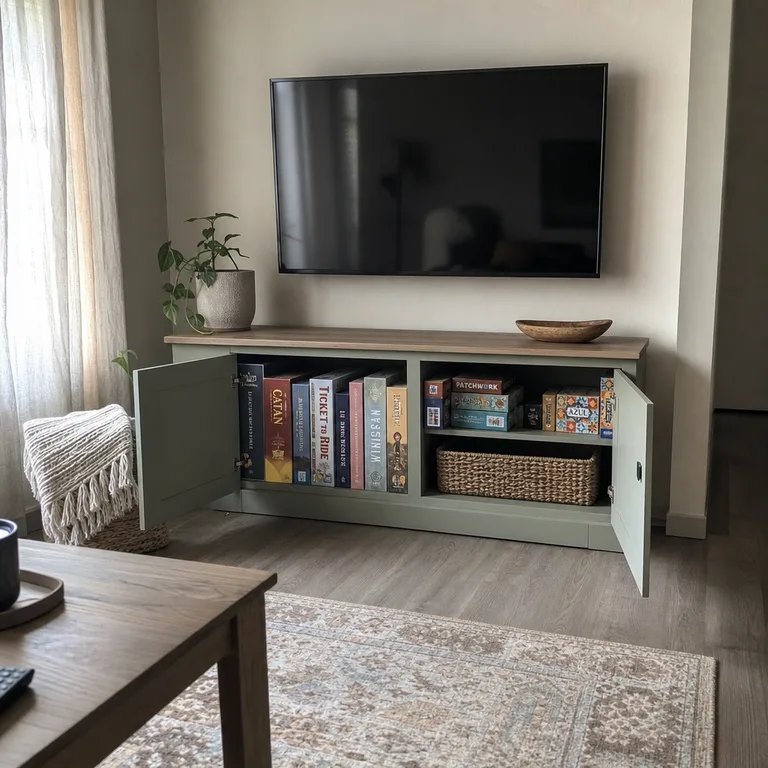
Group boxes with similar heights, and store either upright or flat based on what keeps the contents from shifting. Put heavier games on lower shelves, where older children can reach them without pulling a tall stack down; a cabinet with doors also helps protect cardboard from dust and sunlight.
Worth knowing: This works best when the cabinet shelves are deep enough for game boxes and the doors can close without pressing on them.
2.Add Labeled Bins to a Cube Shelf
A cube shelf can hold a mix of large boxed games and labeled bins for the small items that tend to disappear. Use one bin for card games, one for travel games, or separate bins by child so putting games away has a clear home.
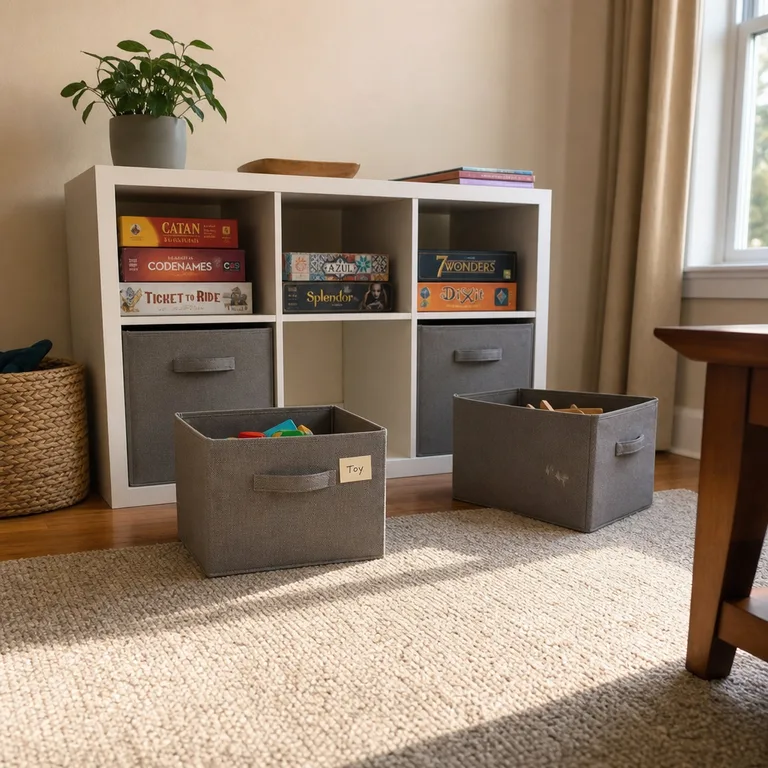
Fabric bins soften the look in a shared room, while plastic bins are easier to wipe clean after snack-heavy game nights. Use large, readable labels on the front rather than relying on everyone to remember where each deck or accessory belongs.
Worth knowing: Deep bins can become catchalls, so they need an occasional quick sort to keep small games accessible.
3.Keep Pieces in Clear Lidded Containers
Clear lidded containers give dice, pawns, tokens, and card decks a defined place when a game’s original insert has failed. Label each container with the game name, then store it inside the box when it fits or beside the box in a dedicated game-parts bin.
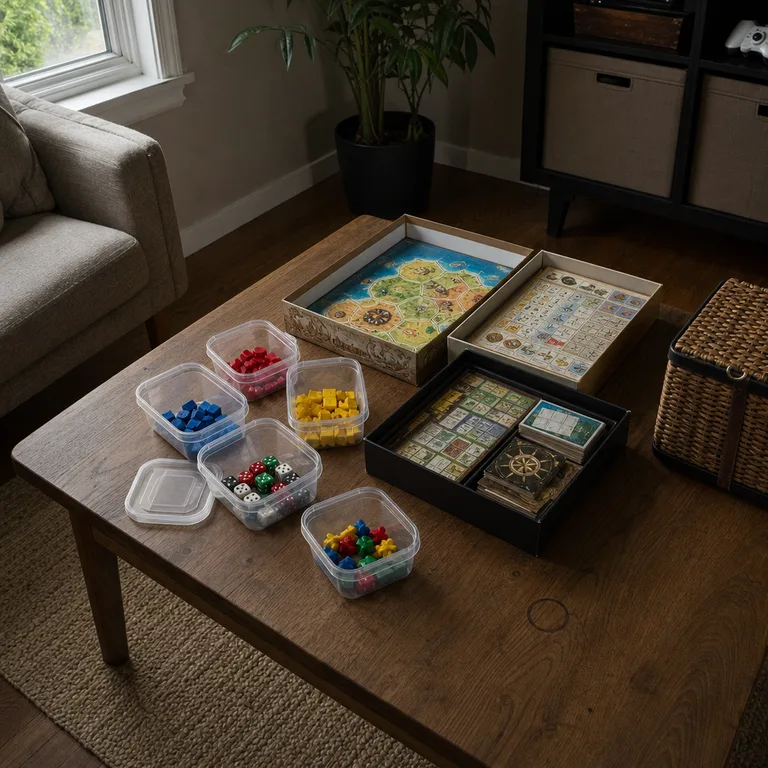
Seeing the contents through the lid makes cleanup faster and helps children check that pieces have made it back. Choose containers with secure lids, especially for games with many small pieces, and avoid overfilling them so cards and boards do not bend.
Worth knowing: Moving pieces out of the original box can mean one more item to carry when the game is taken out.
4.Turn a Console Table Into Game Storage
A console table behind a sofa or along a hallway can hold the flatter parts of a game collection without claiming a whole room. Shallow drawers suit card decks, pencils, score pads, and rulebooklets, while a lower shelf can hold slim game boxes.
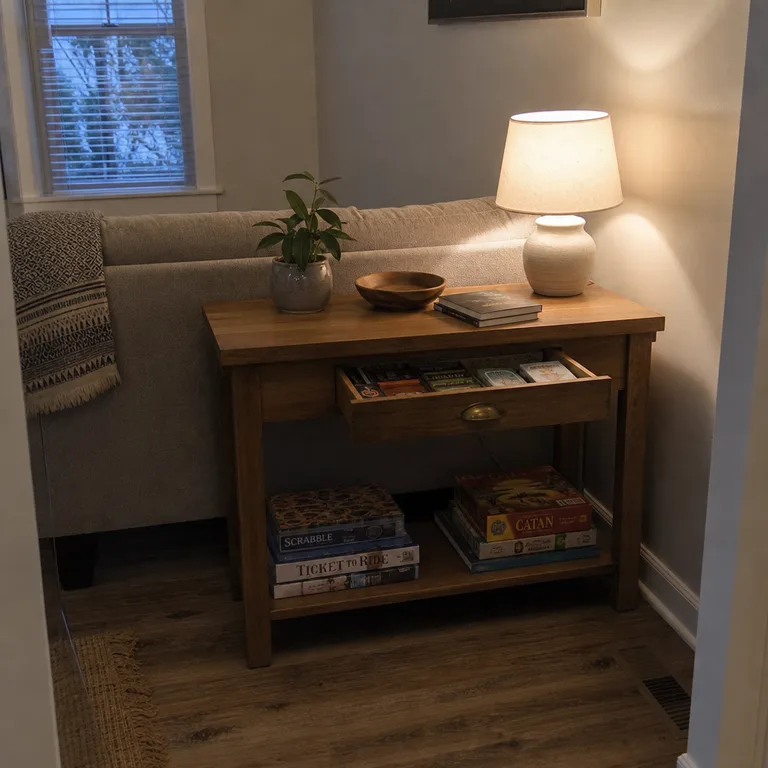
Keep the tabletop useful for a lamp, keys, or a small tray instead of piling games on it. This is an affordable way to use furniture already serving the room, and it keeps quieter games within reach without making the main bookcase look crowded.
Worth knowing: Most console tables are not deep enough for oversized boxes, and a narrow table should be secured if young children may pull open loaded drawers.
5.Use Under-Sofa Boxes for Flat Game Boxes
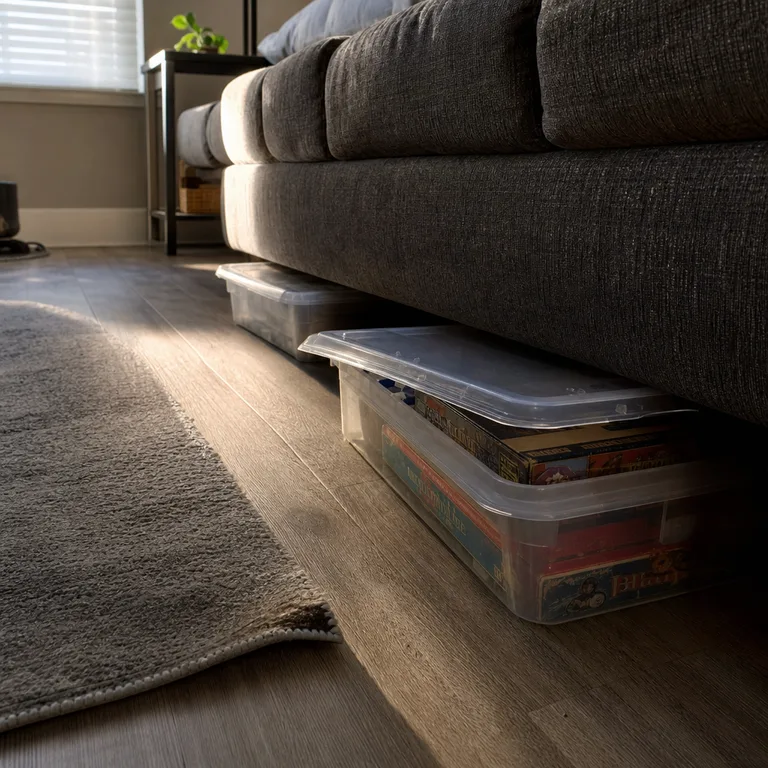
The space under a sofa can hold games that are played often but do not need to stay in view. Shallow lidded boxes work well for flat boxes, boards, and puzzle-style games that can slide in and out as one contained group.
Measure the clearance first, including any low center supports under the sofa. Containers with handles or a front cutout are easier to pull out, and a low-pile rug is less likely to snag when the boxes are moved.
Worth knowing: Under-sofa storage can be inconvenient for very young children or anyone who cannot comfortably reach the floor.
6.Reserve a Closet Shelf for Large Games
Large, awkward boxes can take over a living room cabinet quickly, so give them one dedicated closet shelf instead. Add a simple label to the shelf edge so the space does not gradually fill with unrelated household items.
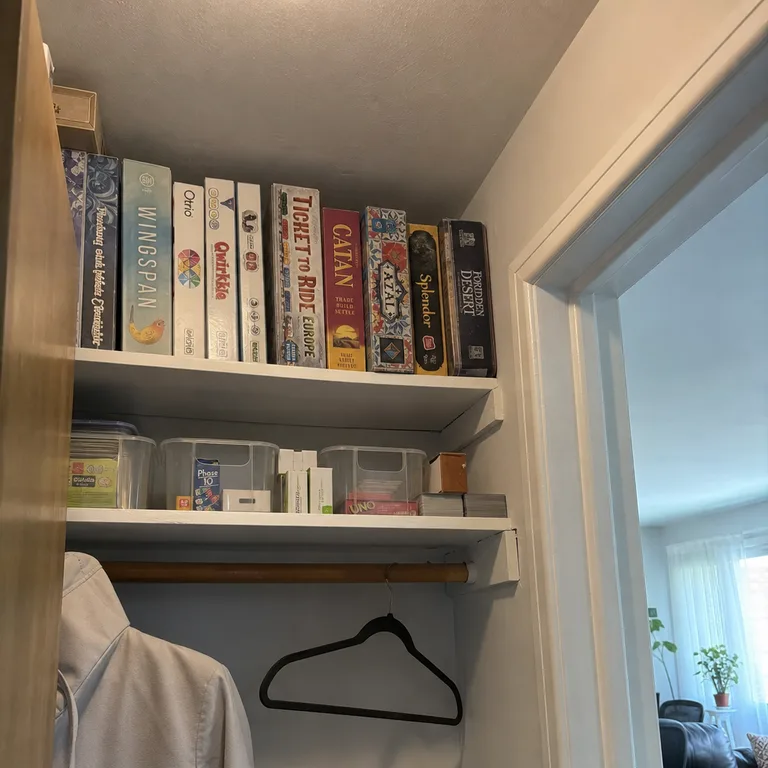
Keep oversized games upright when their contents are secure, or lay them flat in short stacks to prevent crushed corners. A closet inside the main living area is usually a better choice than an attic, garage, or damp basement, where temperature swings and moisture can warp cardboard.
Worth knowing: A high shelf may require an adult to retrieve the games, which makes it less useful for independent play.
7.Store Family Games in a Bench With a Lift-Up Seat
A storage bench by a window, entry, or dining area can hide a rotating group of family games in furniture that already earns its floor space. Keep the games loosely organized in a few small groups so one box can be lifted out without unloading the whole bench.
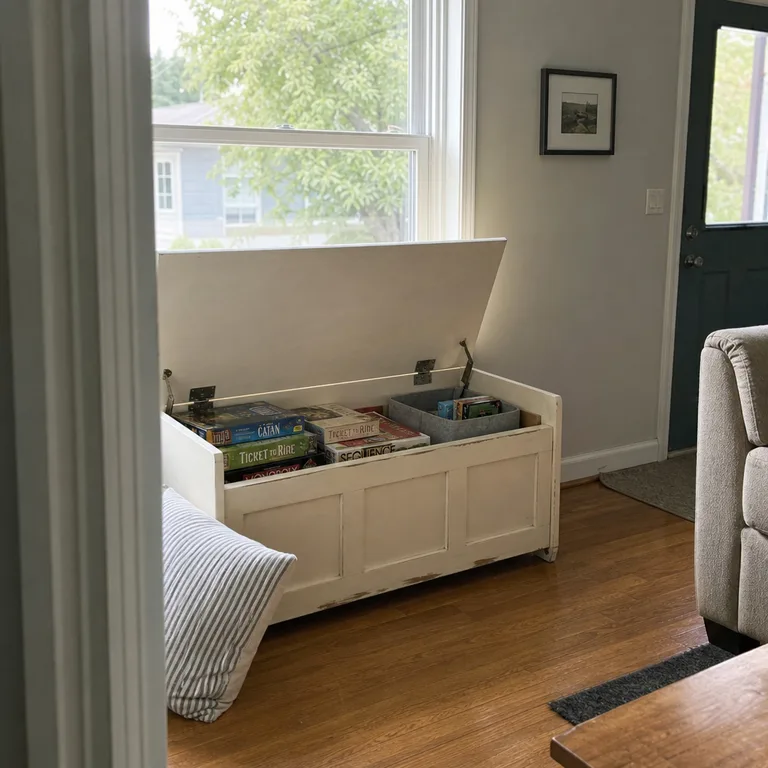
This option works especially well for larger games that do not fit neatly in standard cube shelves. If the bench has a heavy lid, choose one with a support hinge and keep very young children from opening and closing it alone.
Worth knowing: A bench can invite overstuffing, and the games at the bottom may be forgotten if the contents are not rotated.
8.Sort Small Games in a Rolling Cart
A narrow rolling cart gives card games, travel games, and compact puzzle supplies a movable home. It can sit near a bookcase during the week, then roll closer to the table when games come out.
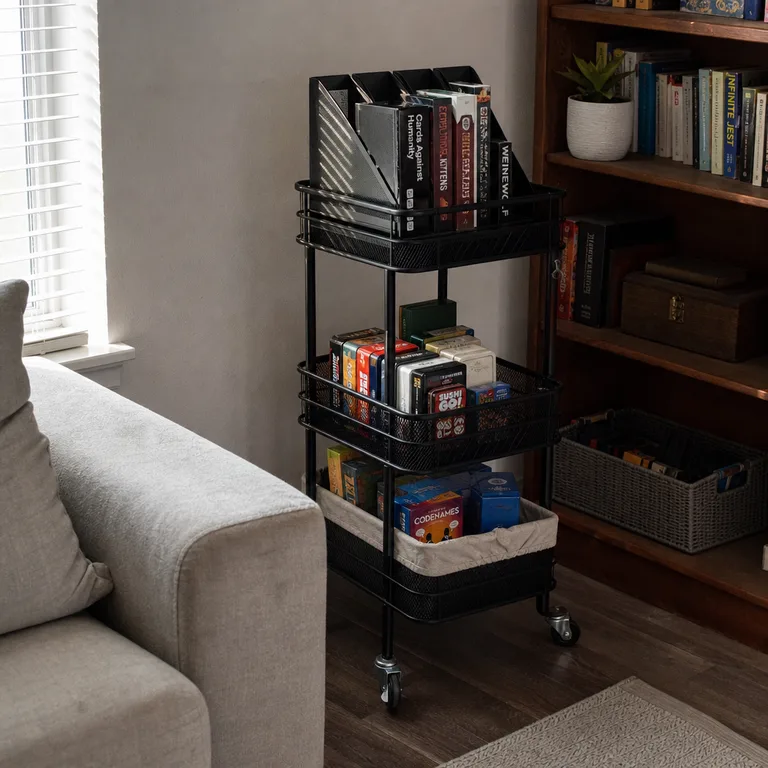
Use upright file organizers or small baskets on the top tier so decks do not slide into a pile. Parking the cart in a closet when guests visit lets the living room return to its usual purpose without moving games to another room.
Worth knowing: A rolling cart is best for small games rather than heavy board-game boxes, which can make it unstable or hard to move.
9.Make One Bookcase Shelf a Game Library
One or two dedicated bookcase shelves can make games as easy to browse as books. Arrange boxes by height with the spines facing out, and keep the most-played choices at an easy reach for the people who use them most.
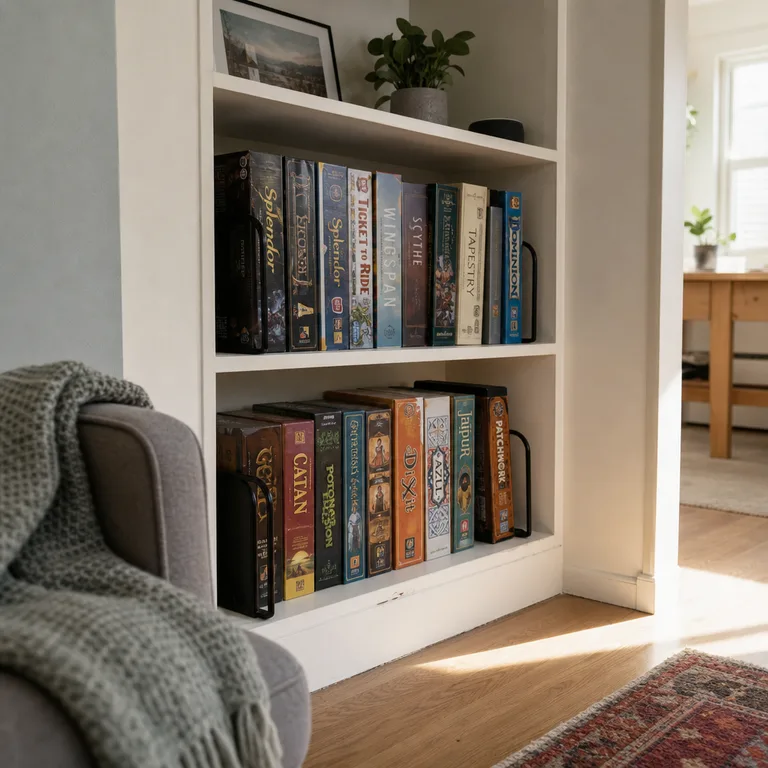
Bookends or simple shelf dividers stop short stacks from falling when a game is removed. This approach costs little if a bookcase is already in the room, and it gives each game a visible spot that encourages complete cleanup.
Worth knowing: Open shelves collect dust and may fade colorful box sides if they sit in strong direct sunlight.
10.Create a Checkout Basket for Games in Progress
An unfinished game needs a temporary home that is separate from permanent storage. Keep one handled basket near the main seating area for the current box, instructions, board, and a lidded container of pieces when the coffee table needs to be cleared.
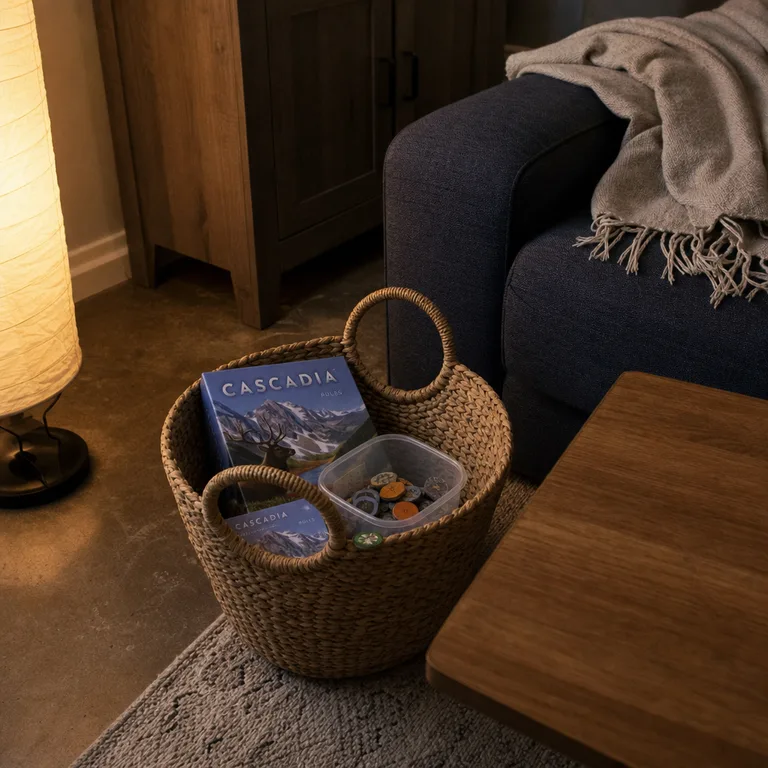
The basket prevents a half-finished round from being mixed into other games or scattered across the room. A handled basket is easy to move for cleaning, but it should be stored where toddlers and pets cannot tip out small pieces.
Worth knowing: This is a short-term holding system, so the basket needs to be emptied once the game is finished.
About the author
Dana Ruiz, Senior editor
Dana writes about small-space living, storage and low-cost decorating.
Keep reading
10 Under-Bed Storage Ideas That Are Easy to Reach
September 23, 2026
10 Small Pollinator Garden Ideas You Can Start in One Corner
September 24, 2026
10 Budget Herb Garden Ideas for a Sunny Patio
September 23, 2026
10 Cottage-Style Patio Ideas You Can Build Around What You Own
September 23, 2026