9 Easy Kitchen Cabinet Zones That Put Tools Where You Use Them
A kitchen works better when each cabinet holds a small task kit near the counter, appliance, or sink where that task happens. These nine zones group the tools everyday cooks reach for during prep, cooking, baking, serving, storing, drinks, breakfast, cleanup, and occasional hosting.
As an Amazon Associate I earn from qualifying purchases.
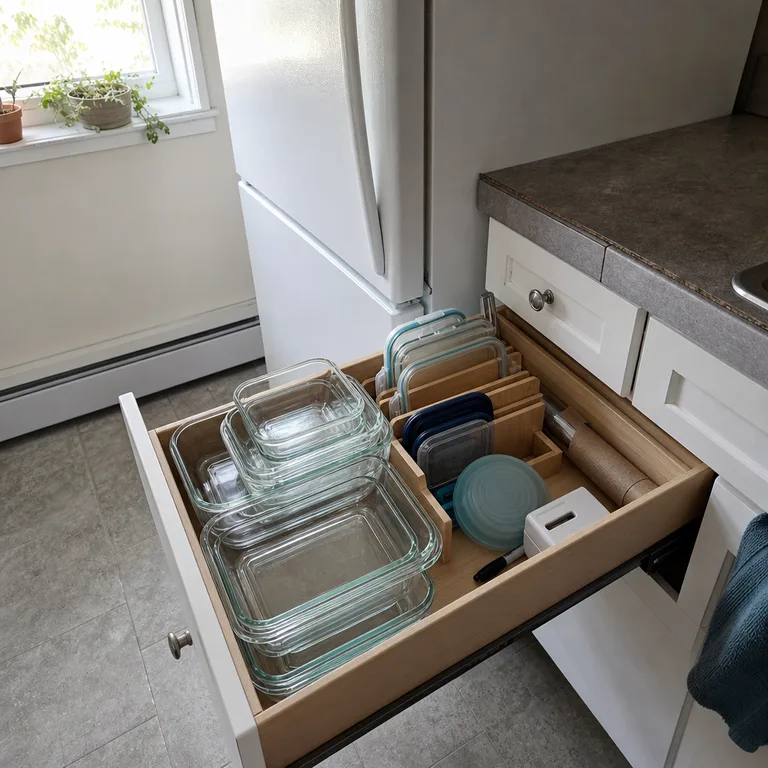
1.Build a Prep Zone Beside the Main Work Counter
Use the cabinet and drawer nearest the clearest stretch of counter for cutting boards, knives, peelers, measuring tools, and mixing bowls. Keeping these items together cuts down on back-and-forth trips while chopping, mixing, and assembling meals.
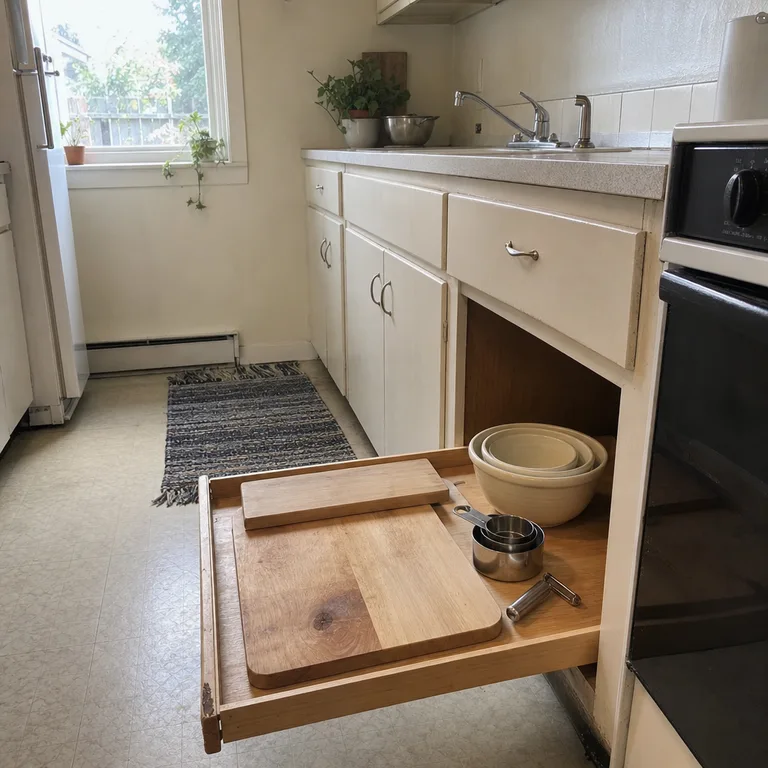
A shallow drawer insert can corral small tools, while nested bowls and upright cutting boards make better use of a base cabinet. Choose the dry side of the counter rather than a cabinet that catches regular sink spray, and keep knife storage secure and out of reach of children.
Worth knowing: This zone only works if the nearby counter stays open enough to serve as a real prep surface.
2.Keep Cooking Tools at the Stove Cabinet
Set aside the drawer or cabinet closest to the range for everyday spatulas, spoons, potholders, a splatter screen, and the pans used most often. The goal is to keep stirring, lifting, and covering tools within reach without turning the stovetop into storage.
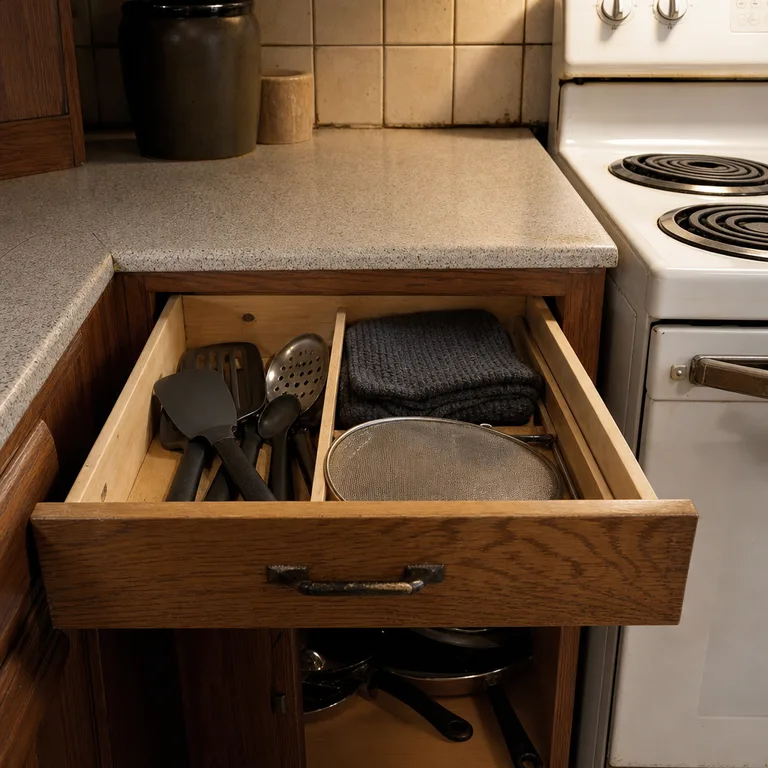
Simple dividers prevent utensils from becoming a mixed pile, and a low cabinet can hold pans with handles facing outward for easier grabbing. Store potholders and other textiles well away from burners, oven vents, and hot cookware, following the range manufacturer’s clearance guidance.
Worth knowing: A very narrow drawer beside the range may only have room for utensils, not pans and protective tools together.
3.Make One Cabinet a Baking Kit
Gather measuring cups, spoons, rolling tools, parchment, baking pans, and dry baking ingredients in one cabinet near the mixer or widest available counter. This makes an occasional baking session feel like one task instead of a hunt through several cupboards.
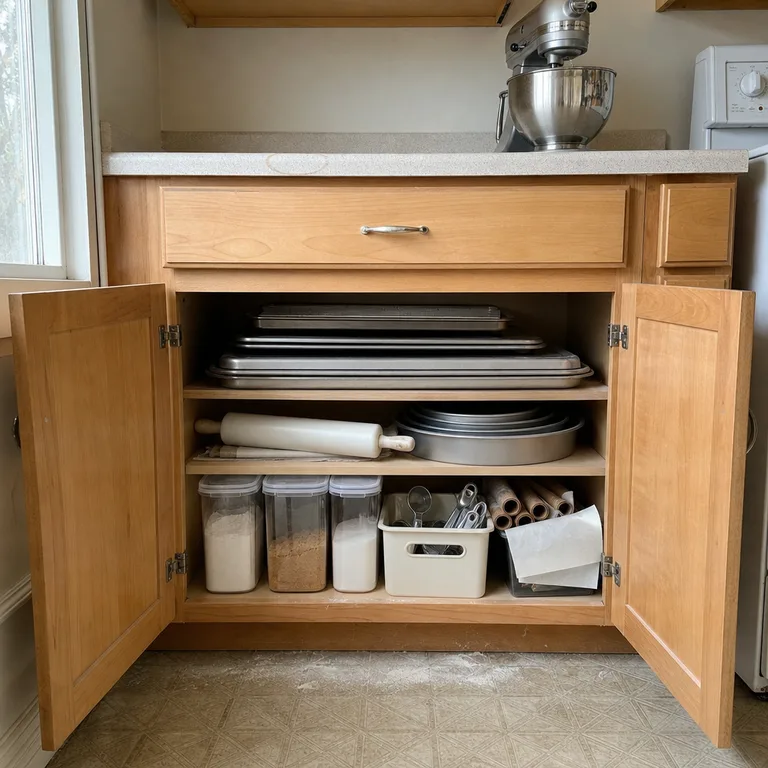
Use a bin for small measuring pieces and stand sheet pans or cooling racks upright when the cabinet shape allows. Keep heavier pans on a lower shelf, and use secure food-storage lids for dry ingredients where humidity or pantry pests are a concern.
Worth knowing: A baking zone can take up substantial cabinet space in a kitchen where baking happens only a few times a year.
4.Place Plating Pieces Near the Serving Counter
Keep everyday plates, bowls, serving spoons, trivets, napkins, and a few serving pieces near the pass-through, dining-side counter, or route to the table. This separates the work of serving from the work of cooking and makes it easier for others to help set out a meal.
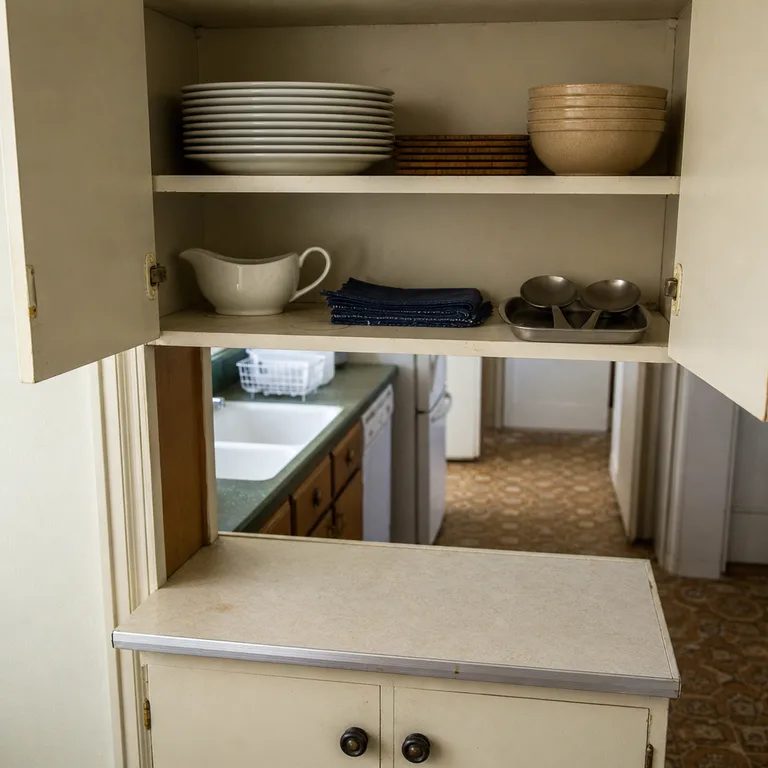
Reserve easy-to-reach shelves for the dishes used most often and use a shallow bin to keep loose serving tools together. Avoid tall, unstable stacks on upper shelves; lighter items belong higher up, while heavier stacks are safer at a comfortable lifting height.
Worth knowing: This setup may mean moving dishes farther from the dishwasher, which can add steps during cleanup.
5.Set Up a Leftovers Zone by the Refrigerator
Put food-contact-rated containers, matching lids, wraps, reusable covers, labels, and a marker in a drawer or cabinet near the refrigerator. Packing up a meal becomes quicker when the storage supplies and cold-food destination are in the same part of the kitchen.
Stack containers by size and stand lids upright in a divider so matching pieces are visible. Leave room for washed lids and containers to dry fully before they go away, and follow current food-safety guidance for cooling, labeling, and holding leftovers.
Worth knowing: Glass containers can make a high drawer or upper shelf too heavy and awkward for some households.
6.Create a Drinks Zone Around the Kettle or Coffee Maker
Use the cabinet above or beside a beverage counter for mugs, tea, coffee filters, scoops, and other daily drink supplies. A small tray for packets or loose accessories keeps the station from spreading across the counter.
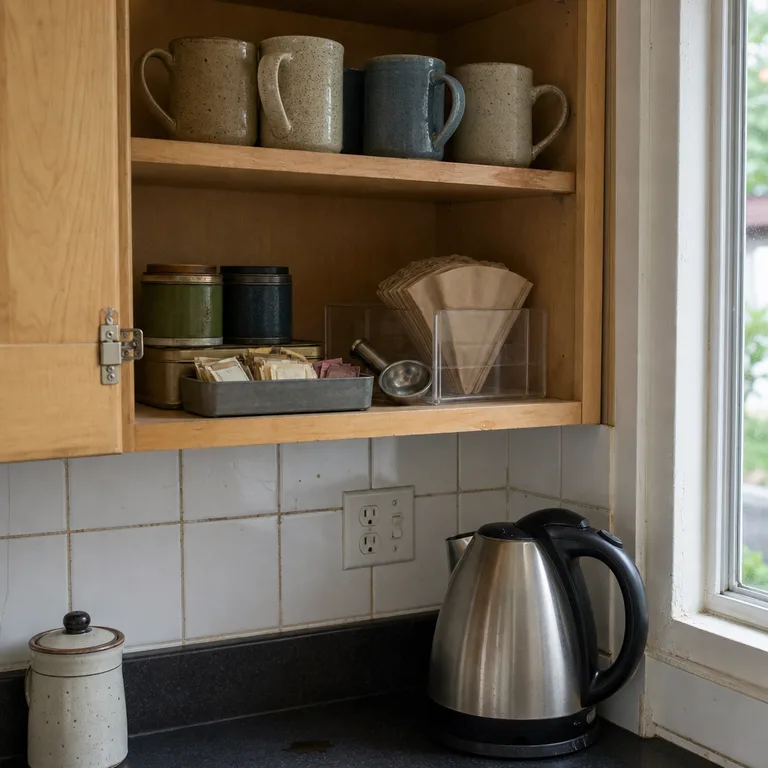
Mismatched mugs can still look orderly when grouped by size, while filters and tea bags are easier to find in simple open bins or holders. Keep paper goods and heat-sensitive items away from steam, and wipe condensation from cabinet surfaces promptly.
Worth knowing: Cabinets directly above a frequently used kettle can need more regular cleaning because of steam exposure.
7.Put Breakfast Staples Near the Toaster
Create a low breakfast zone near the toaster with cereal bowls, bread tools, oats, spreads, napkins, and lunchbox-friendly morning supplies. This gives early routines a defined home without turning a full pantry into a breakfast-only cabinet.
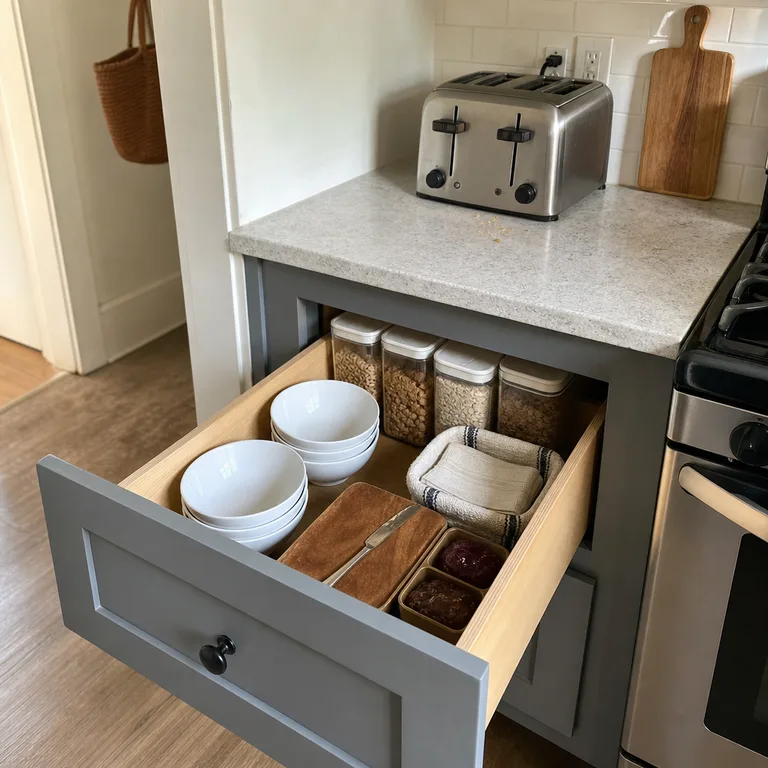
A small handled tray can contain jars and packets, while lidded containers keep dry staples together. Crumbs and appliance heat are practical concerns here, so keep the toaster on a clear counter, follow its instructions for surrounding clearance, and wipe the area regularly.
Worth knowing: Breakfast food stored too close to a warm appliance may not stay as fresh as it would in a cooler cabinet.
8.Turn the Sink Cabinet Into a Cleanup Kit
Group dish soap, brushes, gloves, cloths, dishwasher tablets, and bin liners beneath or beside the sink. A complete cleanup kit prevents the usual pause to search for a fresh cloth or replacement liner halfway through washing up.
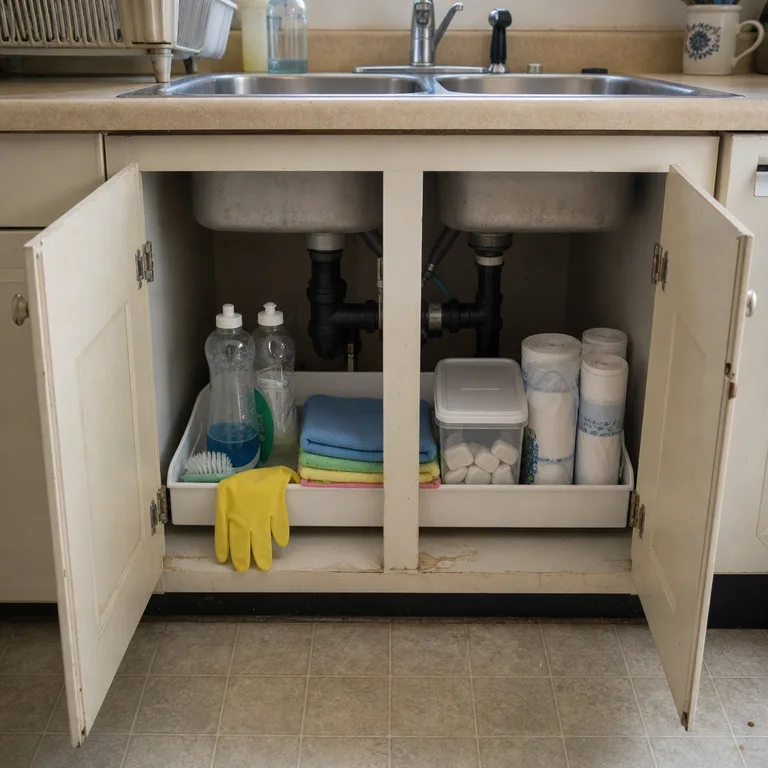
Place supplies in a removable waterproof tray or bin so minor drips are easier to contain and clean. Leave access to shutoff valves and plumbing clear, and do not crowd the cabinet with items that make it difficult to spot a leak.
Worth knowing: Under-sink storage is limited by pipes, disposal equipment, and moisture, so not every cleanup item will fit there.
Related: 12 Under-Sink Storage Ideas That Work Around Pipes
9.Store an Occasional Hosting Kit Near the Dining Route
Keep serving boards, a pitcher, extra glasses, napkins, and basic buffet tools together in a cabinet near the path to the dining area. The kit stays out of the way for daily meals but is ready when guests come over.
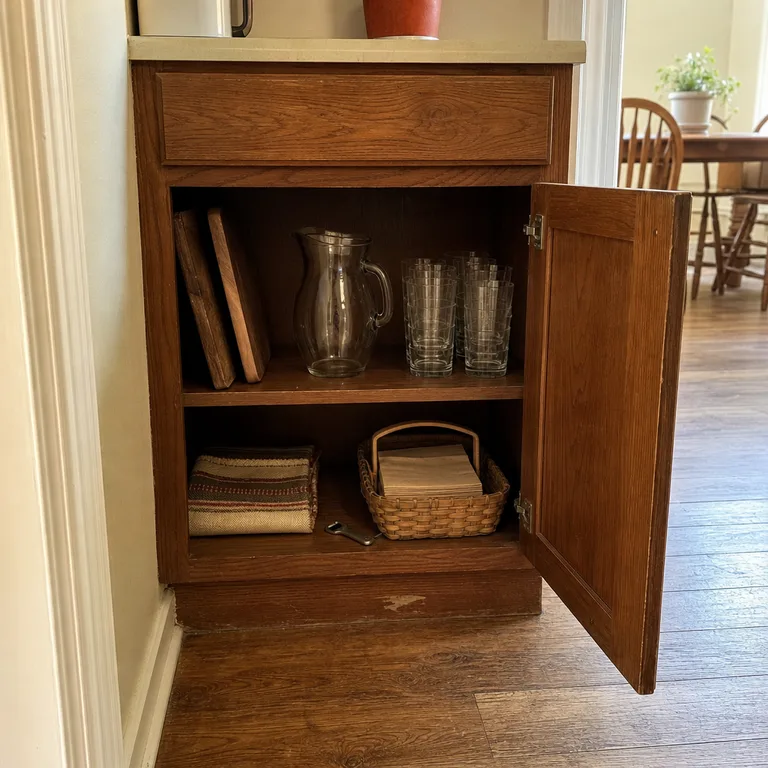
Store lightweight linens and napkins in a basket, and use a stable lower shelf for glassware and heavier serving pieces. This is also a useful place for items that are practical but not needed every day, such as a bottle opener or extra serving spoons.
Worth knowing: A hosting kit can become a catchall unless each item earns its place after every gathering.
About the author
Dana Ruiz, Senior editor
Dana writes about small-space living, storage and low-cost decorating.
Keep reading
8 Budget Ways to Use a Secondhand Dresser Beyond the Bedroom
November 12, 2026
7 Easy Kitchen Reset Routines for a More Usable Kitchen
November 11, 2026
8 Budget Family Command Center Ideas for Easier School Weeks
November 11, 2026
8 Easy Bathroom Cleaning Habits for Easier Weekly Upkeep
November 11, 2026