10 Ways to Decorate Around a TV Without Buying a New Console
A television can sit within a deliberate wall composition without replacing the console that already works for the room. These ideas use art, lighting, paint, plants, and practical furniture additions while keeping sightlines, cords, ventilation, and everyday access in mind.
As an Amazon Associate I earn from qualifying purchases.
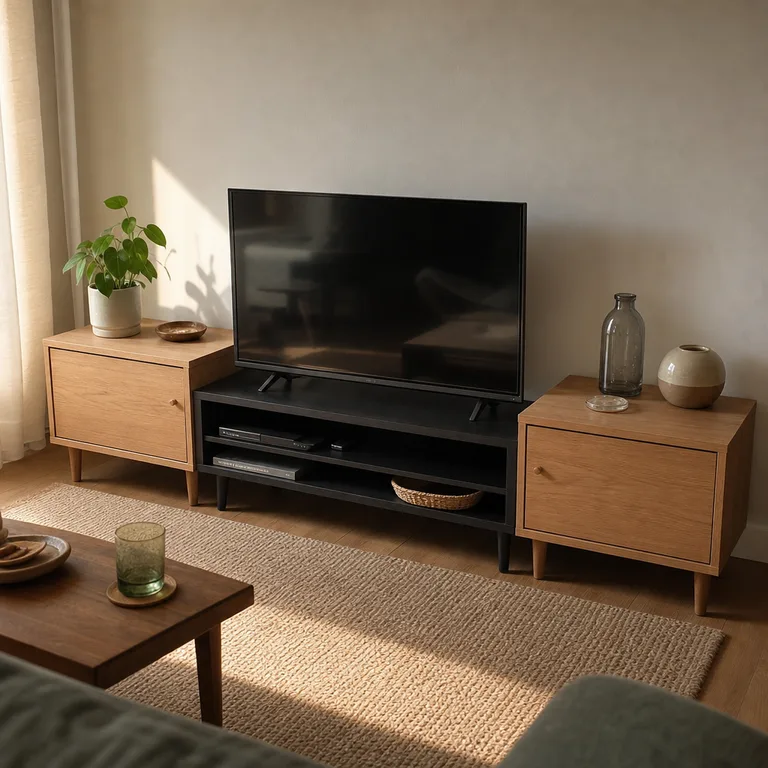
1.Build a Loose Gallery Wall Around the Screen
Treat the TV as part of a larger arrangement by hanging frames around its outer edges, not directly in its path. A mix of family photos, printable art, and thrifted frames breaks up the dark rectangle and gives a plain wall more character.
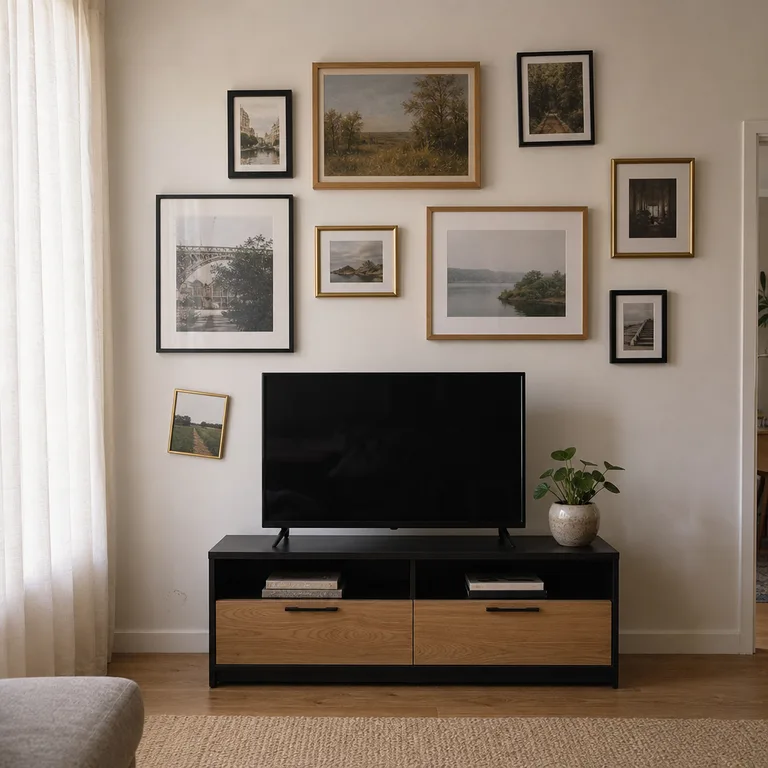
Lay the arrangement out on the floor first, then keep a little more open space near the TV than around the outer frames. Use lightweight frames and removable hanging strips where appropriate, but leave access to wall-mount hardware, outlets, and cables.
Worth knowing: A gallery wall can look busy on a small wall, so use fewer, larger pieces rather than filling every gap.
Related: 12 Budget Gallery Wall Ideas Using Mismatched Frames
2.Paint a Wide Color Block Behind the TV
Paint a broad rectangle that extends beyond the TV and console on every side. This makes a mismatched television and stand read as one intentional zone, especially on a large blank wall.
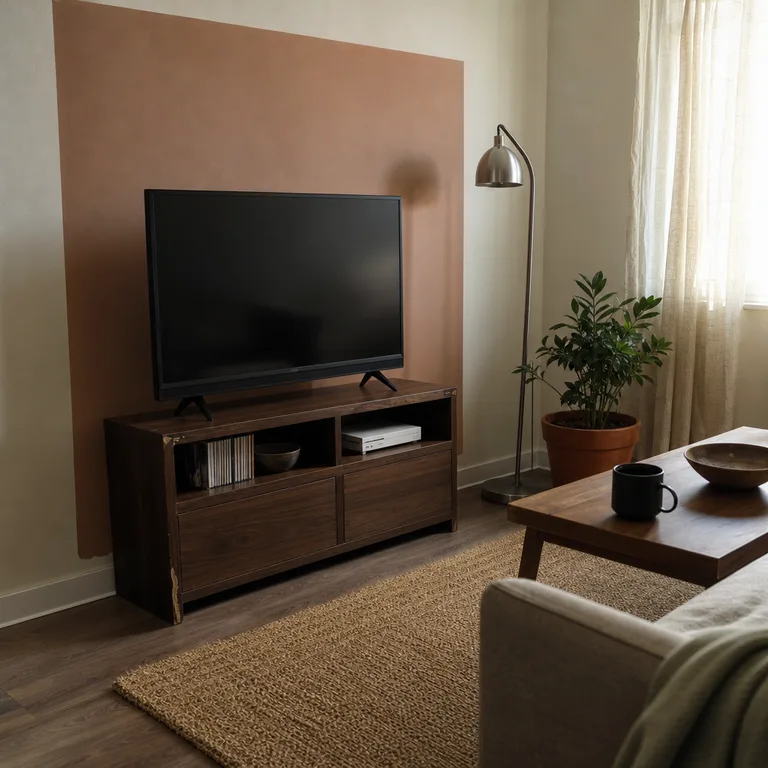
Choose a muted darker tone or a warm mid-tone with a low-sheen finish, which is less likely to reflect window glare toward the screen. Careful taping helps, though a slightly soft hand-painted edge can suit a relaxed room better than a sharply graphic look.
Worth knowing: Painting is less flexible for renters and may require touch-ups if the TV position changes later.
Related: 12 Warm Neutral Living Room Ideas on a Budget
3.Add Picture Ledges Above and Beside the TV
Shallow picture ledges create a place for leaning art, small ceramics, and a few changing objects without committing to a full wall of individual nail holes. Position them above or to one side of the screen so they frame the TV without crowding it.
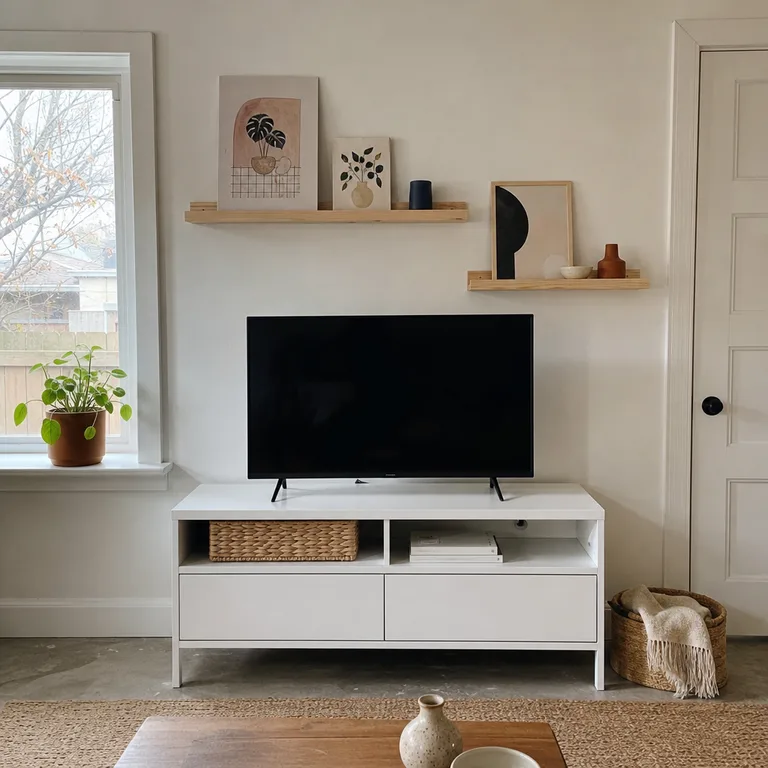
Unfinished pine ledges can be painted, stained, or left natural for a low-cost custom look. Keep the shelves shallow and avoid placing them where a wall-mounted TV needs to tilt, where controls need reaching, or where cables enter the wall.
Worth knowing: Ledges need secure installation into suitable wall anchors or studs, particularly if they hold framed art or heavier objects.
Related: 10 Large Wall Art Ideas That Start With Affordable Materials
4.Use Matching Sconces to Frame the Screen
A matching pair of sconces gives the TV wall a clear structure and makes an ordinary console feel more anchored. Mount fixtures at equal height on each side of the screen, far enough away that their light does not distract from viewing.
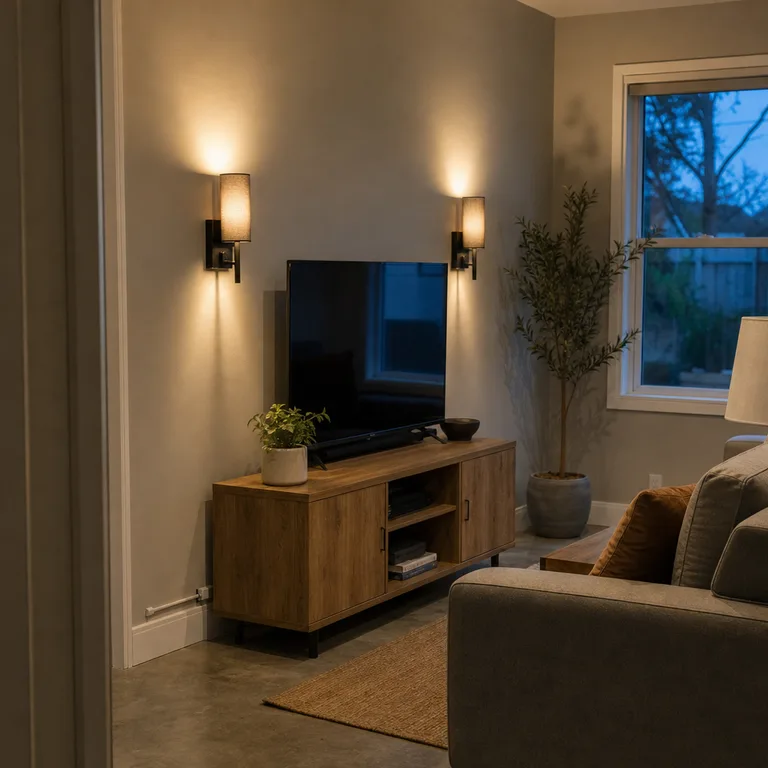
Plug-in sconces, battery-powered fixtures, or wireless puck-light styles can avoid electrical work. If using plug-in lights, route cords in paintable covers along the wall and baseboard rather than leaving them loose where children, pets, or vacuums can catch them.
Worth knowing: Even warm, dimmable sconces may cause glare on some screen finishes, so test their placement before making cable covers permanent.
5.Extend the Console With Two Small Side Tables
Place matching side tables, compact cabinets, or simple stools on both sides of a narrow stand to make the overall furniture grouping feel wider. The television stays on the existing console, while the added pieces give the wall a more substantial base.
Look for pieces with a similar wood tone, leg shape, or color rather than trying to find an exact match. Leave enough space around the central stand for doors, drawers, speakers, and air vents, and use leveling pads if the floor makes the pieces sit unevenly.
Worth knowing: This approach needs enough clear wall width and floor space to avoid making a compact room feel crowded.
6.Layer Tall Plants at One End of the TV Wall
A tall floor plant can soften one end of a TV wall, while a small tabletop or trailing plant balances the other side. The varied heights make the screen look less isolated without requiring more furniture or wall decor.
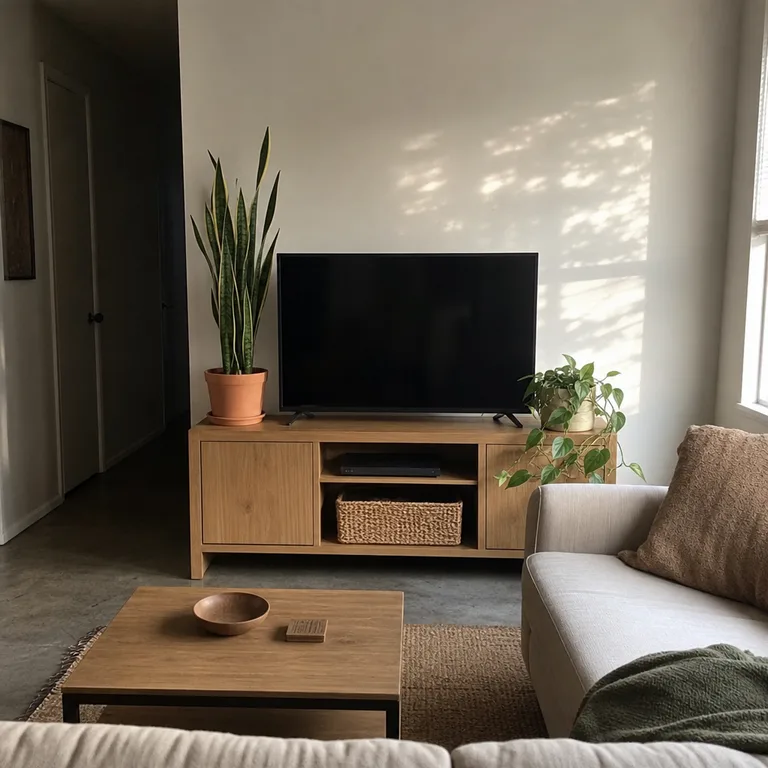
Match the plant to the room's actual light rather than forcing a sun-loving variety into a dim corner. Keep foliage away from electronics, heat vents, and any path used to reach cords or controls; a saucer beneath the pot also protects the console and floor from watering spills.
Worth knowing: Live plants require consistent care, and a low-light room may be better served by a convincing faux plant.
7.Hang One Large Textile Beside the Television
A woven hanging, quilt panel, or fabric wall piece brings softness beside a hard-edged screen. One large textile often works better than several small decorations, especially when the TV wall needs visual weight without becoming cluttered.
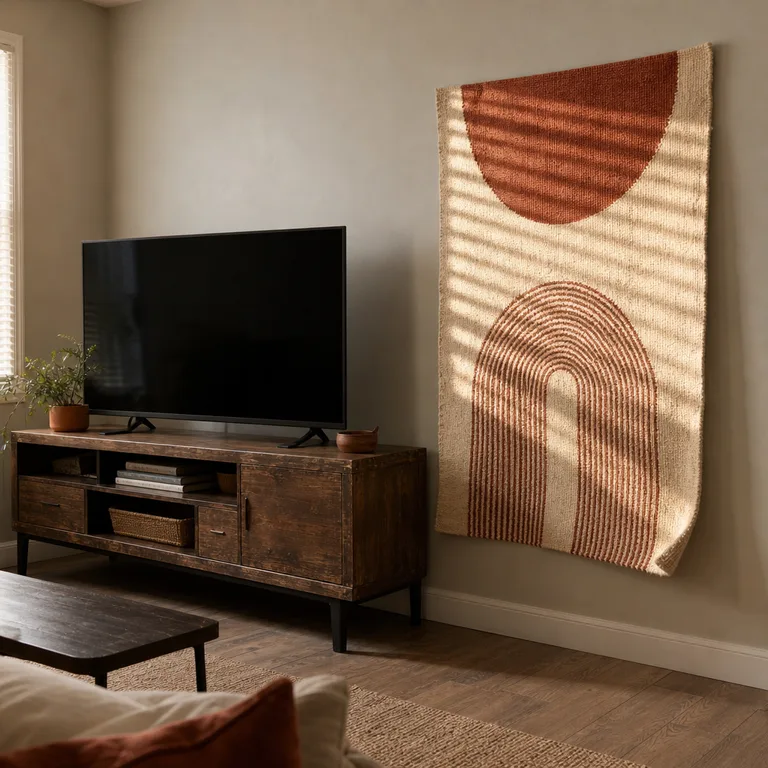
Hang it beside the screen rather than behind it, using a dowel or simple rod to give the fabric shape. Choose a textile that can handle the room's sun exposure, since strong direct sunlight can fade dyes over time, and secure the lower edge if pets or young children may pull at it.
Worth knowing: Textiles collect dust and may need occasional gentle vacuuming or cleaning based on the fabric type.
8.Create a Low Display Row Across the Console
Use the far ends of the existing console for a small, low display of books, a vase, a tray, or a compact basket. This visually connects the screen to the furniture while keeping the middle open and useful.
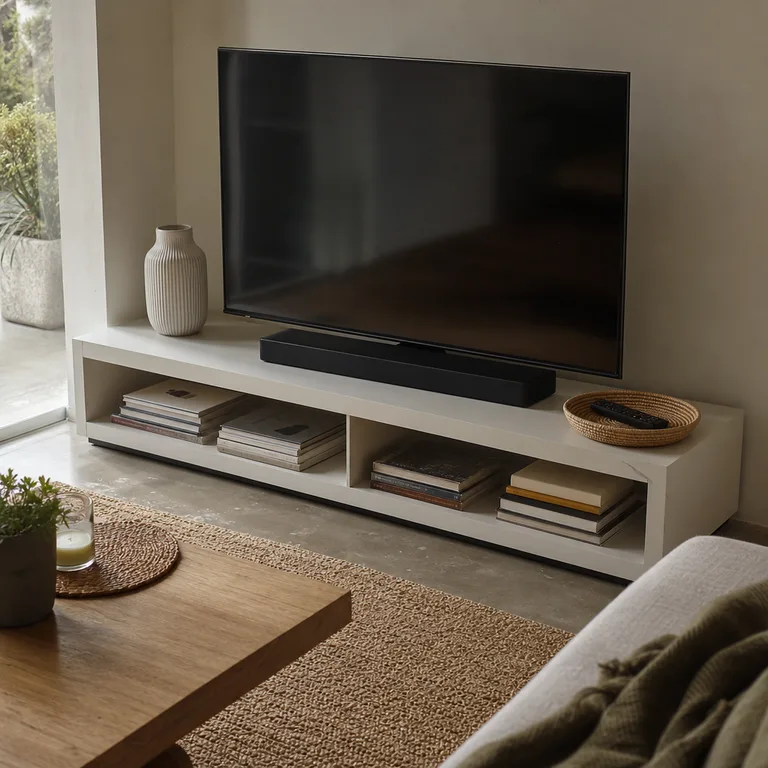
Choose objects lower than the bottom of the screen and group them in a restrained way rather than lining up many small pieces. Keep remote sensors, soundbars, gaming equipment, and ventilation openings clear, and use a tray to contain the everyday items that tend to collect there.
Worth knowing: A crowded console quickly becomes inconvenient for cleaning and can interfere with electronics if objects migrate toward the center.
9.Use a Curtain Panel to Soften a Blank TV Wall
Stationary curtain panels at the outer edges of a TV wall add height and softness where the room lacks architectural detail. A rod mounted wider than the television area makes the wall feel more finished while leaving the screen and console unobstructed.
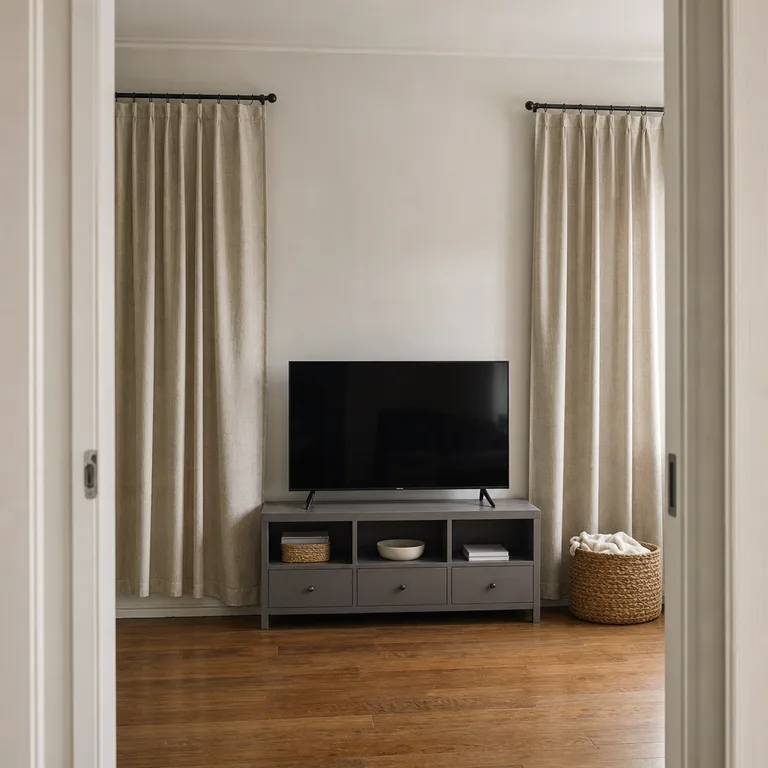
Use lightweight, washable panels in a color close to the wall for a subtle effect, or choose a deeper neutral for more contrast. Keep the fabric clear of floor vents, radiators, and the back of a freestanding television so it does not restrict airflow or create a dust-catching gap.
Worth knowing: This look needs enough wall space on both sides of the television to keep the panels from appearing squeezed in.
10.Add a Narrow Bench Under the Existing Console
If the console has legs and open space beneath it, a narrow woven bench or low basket can add texture and storage without replacing the main furniture piece. Folded throws, extra pillows, or game-night supplies make it useful as well as decorative.
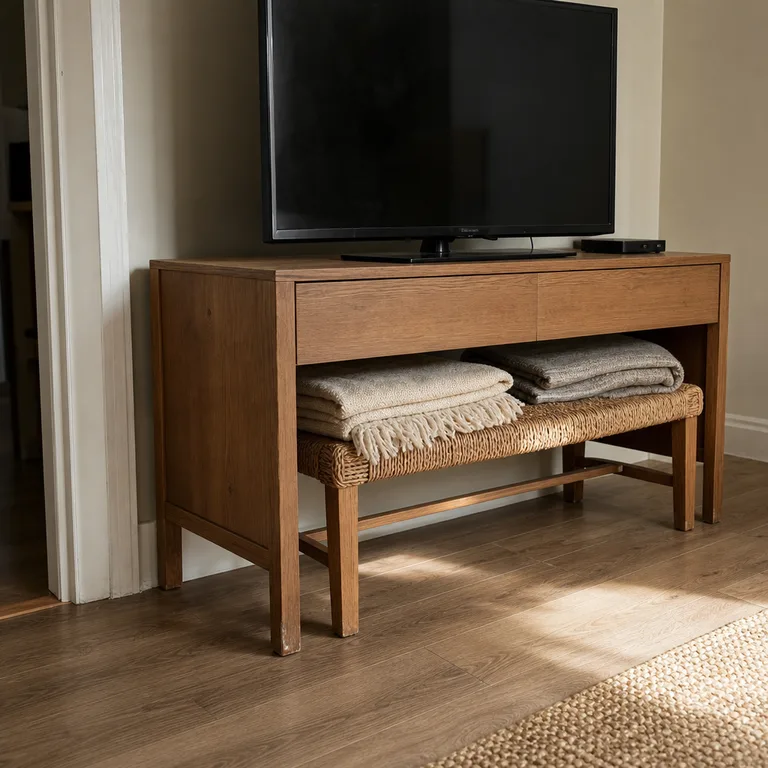
Measure the opening and leave room for the console doors or drawers to operate freely. A bench with soft edges or baskets is easier to fit into a busy living room, but it should not block access for vacuuming, outlet use, or cable adjustments.
Worth knowing: This only works with a legged console or enough open floor area; a solid base cabinet will not have the needed clearance.
About the author
Dana Ruiz, Senior editor
Dana writes about small-space living, storage and low-cost decorating.
Keep reading
10 Budget Headboard Ideas That Work With a Basic Bed Frame
October 6, 2026
10 Small Kitchen Trash and Recycling Ideas Without Losing a Cabinet
October 11, 2026
10 Budget Christmas Porch Ideas for a Narrow Front Step
October 11, 2026
10 Bed Linen Storage Ideas That Keep Sheet Sets Together
October 10, 2026