7 Small Living Room Setups That Leave Space for a Foldaway Exercise Mat
These seven living room layouts reserve a clear 2-by-6-foot footprint for a standard foldaway exercise mat, then give each movable piece a simple place to return. They suit ordinary small rooms where door swings, daylight, and everyday seating still need to work when the mat is put away.
As an Amazon Associate I earn from qualifying purchases.
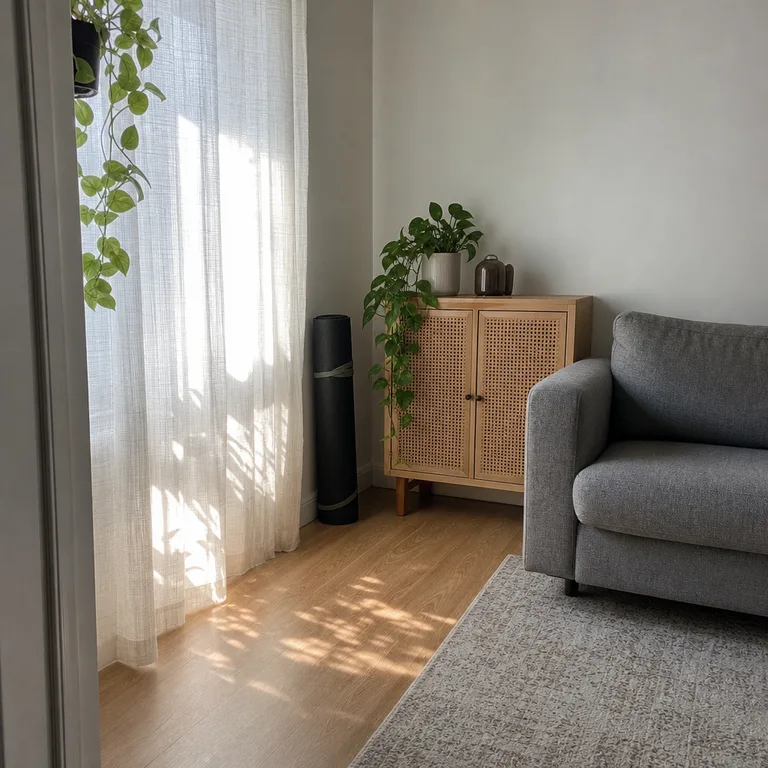
1.Use a Light Side Table Instead of a Central Coffee Table
Replace a central coffee table with a light side table beside the sofa. This leaves the middle of the room open, so clearing a 2-by-6-foot mat area means moving one small piece to the wall rather than rearranging the whole seating group.
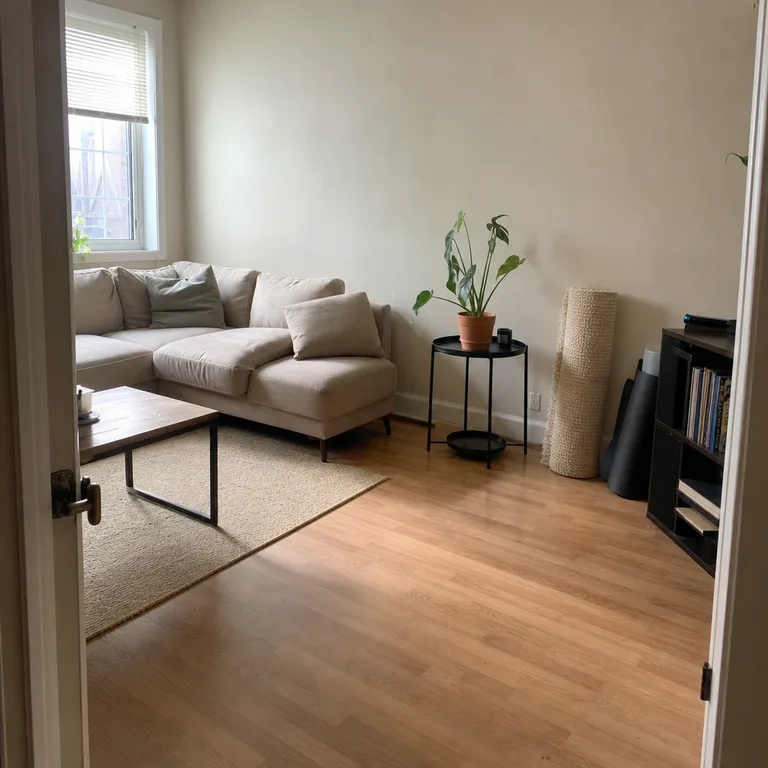
A slim table can still hold a lamp, drink, or remote without becoming the room’s main obstacle. Choose one that can sit flush against a wall in its reset position, and keep its cords short or secured so they do not cross the open floor.
Worth knowing: This works best for households that do not rely on a large coffee table for games, meals, or substantial storage.
Related: 12 Small Living Room Layout Ideas That Leave Room to Walk
2.Shift Nesting Tables Apart for a Temporary Center Floor Zone
Use nesting tables beside the sofa in place of one fixed coffee table. When the mat comes out, stack the smaller tables together and slide the set beside the sofa to reveal a clear 2-by-6-foot rectangle.
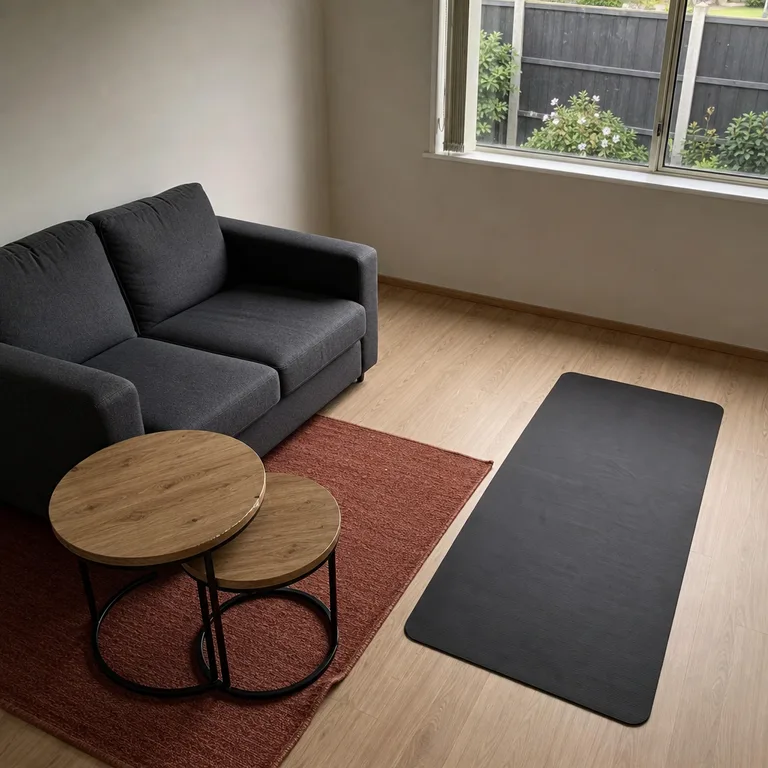
The tables can spread out again afterward, giving each seat a nearby surface without permanently filling the center of the room. Low-pile rugs are easier to work around here because a thick or curling rug edge can make the mat sit unevenly.
Worth knowing: Several separate tables can make a compact room look busy when they are all in use.
3.Park a Rolling Ottoman Along the Wall After Seating Use
Choose a compact ottoman with locking casters as extra seating or a footrest, then assign it a wall-side parking spot near a media console. Once it is rolled aside, the floor in front of the sofa can become the mat area without any heavy lifting.
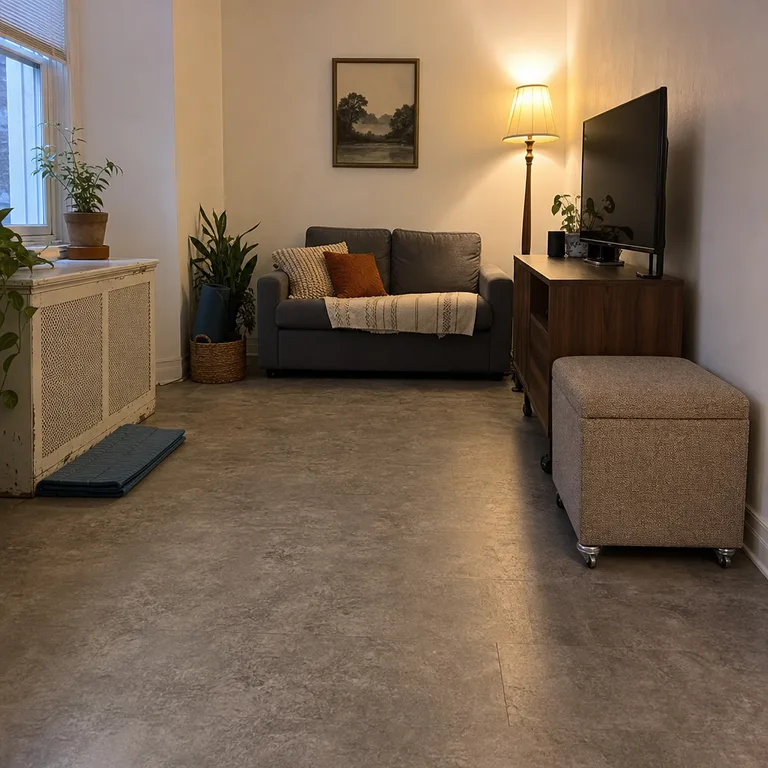
A storage ottoman can also keep throws or other soft living room items contained, which makes the reset feel quicker. Check that the parked ottoman does not block a radiator, outlet, cabinet door, or the route to another room.
Worth knowing: Casters can mark or dent softer flooring unless they are suited to the floor surface and kept clean.
Related: 12 Small Living Room Seating Ideas Beyond a Second Sofa
4.Leave One Mat-Sized Corner Free Beside the Window
Arrange the sofa and any extra chair along the other walls, leaving a 2-by-6-foot strip open beside a window. The space reads as an intentional breathing area when it is empty and becomes a ready-made place for a folded mat when needed.
Keep the mat stored vertically beside a cabinet or bookcase so it is close to the open corner. Avoid using a spot directly in front of a radiator, over a floor vent, beside a tangle of outlets, or within the swing of a window or door.
Worth knowing: Window-side floor space may be uncomfortable at certain times of day in very sunny, drafty, or poorly insulated rooms.
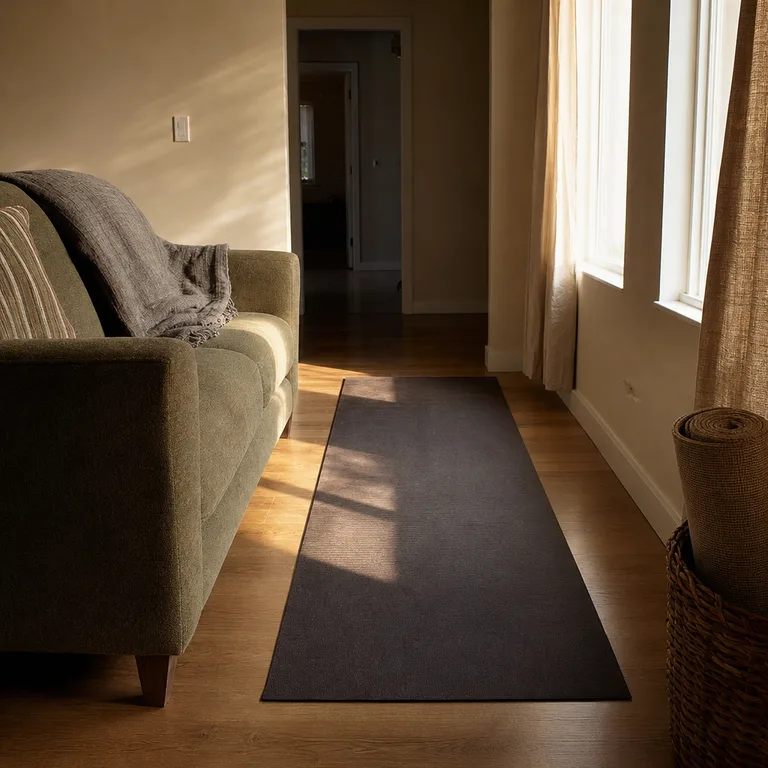
This approach preserves a compact furniture arrangement because no permanent empty corner is required. Keep the hall opening and any exterior door fully clear, and do not treat a narrow everyday walkway as usable floor space.
Worth knowing: The room cannot be used for normal circulation while the mat is down, so this setup suits quieter off-hours.
6.Store a Folded Mat Beside a Low Storage Unit
Use the narrow gap beside an existing low bookcase or cabinet for the folded mat. Keeping it in the living room removes the need for separate exercise storage and makes it easier to clear the same floor area each time.
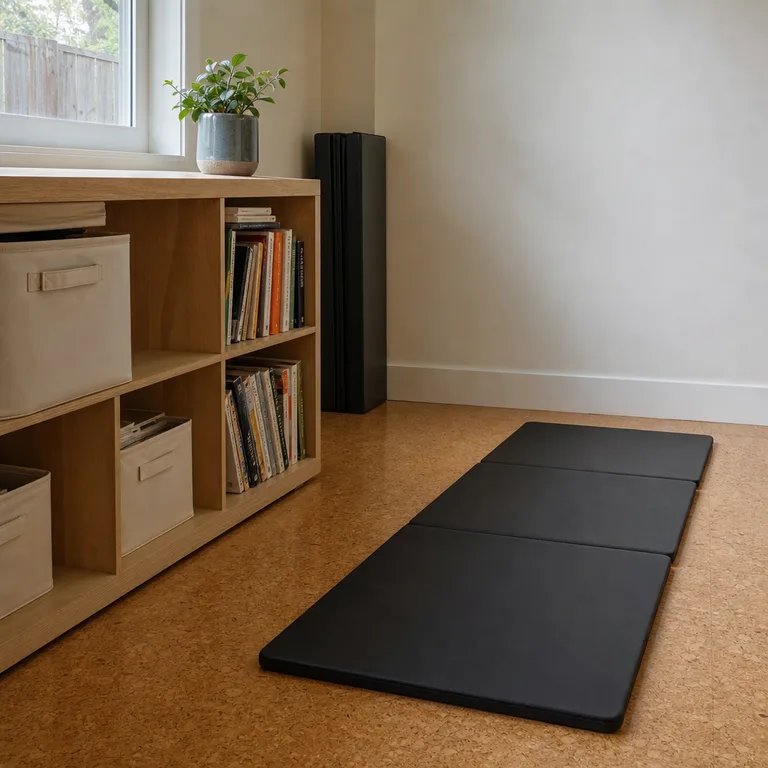
Plan the furniture placement so the mat can unfold into a 2-by-6-foot zone without moving the storage unit. A low cabinet helps keep the wall visually open, while bins or cubes inside it can take over clutter that might otherwise land in the mat area.
Worth knowing: Not every folded mat is slim enough for a narrow furniture gap, and forcing one into place can scuff walls or damage the mat edges.
7.Give a Lightweight Armchair a Marked Parking Spot
Use a lightweight armchair as flexible seating and give it one consistent wall-side parking spot. When the mat is needed, move the chair to that spot and leave the sofa and media unit where they are.
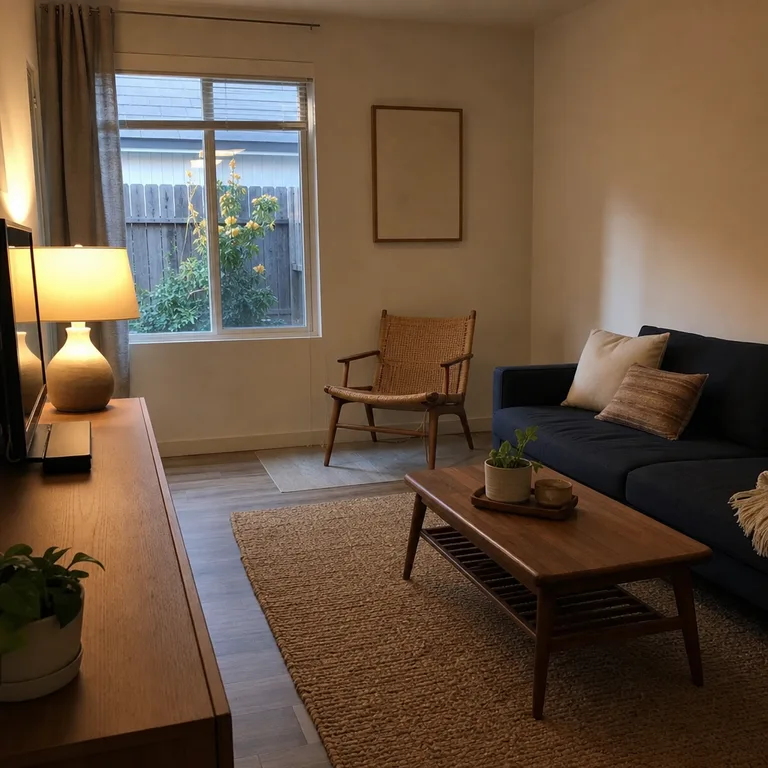
A subtle marker, such as the edge of a rug or a furniture pad, helps the chair return to the same place without guesswork. Choose a chair that is genuinely manageable to move and does not need to be dragged across the flooring.
Worth knowing: A lightweight chair may not provide the deep, fixed seating comfort that some households want for long evenings.
About the author
Dana Ruiz, Senior editor
Dana writes about small-space living, storage and low-cost decorating.
Keep reading
6 Foldaway Ironing Setups for a Bedroom Without a Permanent Laundry Area
October 16, 2026
8 Dresser Alternatives for a Small Bedroom That Already Has a Closet
October 16, 2026
9 Fall Bulb Planting Plans for a Small Bed Using One Modest Bag of Bulbs
October 16, 2026
6 Lampshade Swaps That Refresh a Table Lamp Without Replacing Its Base
October 16, 2026