6 Lampshade Swaps That Refresh a Table Lamp Without Replacing Its Base
A sound secondhand lamp base can look current again with a shade that changes its outline, texture, and how it spreads light across the living room. Match the replacement to the lamp’s actual fitter, harp or attachment point, check shade dimensions and bulb clearance, and follow the manufacturer’s heat limits.
As an Amazon Associate I earn from qualifying purchases.
1.Use a Plain Tapered Fabric Shade for a Familiar, Balanced Shape
A plain tapered shade is an easy fit for a dated ceramic, brass, or wood base because its sloped outline feels familiar without looking heavy. Linen-look cotton and other matte fabrics soften a shiny base and work well near patterned rugs, printed curtains, or upholstered seating.
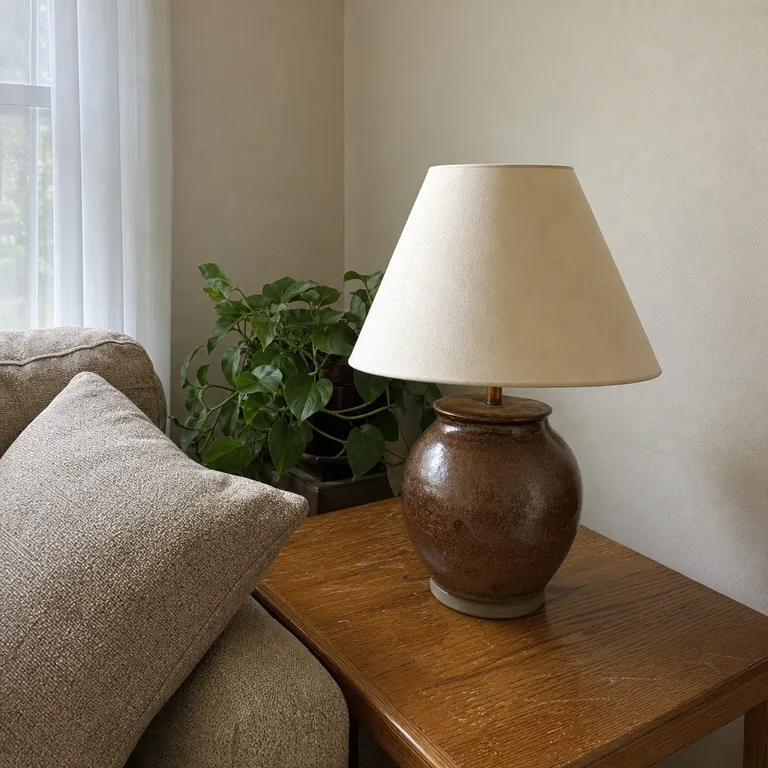
This shape sends light outward and downward, so it suits a side table where the lamp needs to do more than decorate. Choose a calm neutral that relates to the wall, sofa, or curtains, and compare the shade’s bottom width with the table so it does not dominate a narrow surface.
Worth knowing: A tapered shade is versatile rather than dramatic, so it may not noticeably change a lamp whose base is already very ornate.
2.Fit a Compact Drum Shade on a Small Side Table
A compact drum shade gives a narrow lamp base a straighter, cleaner outline. It can make a secondhand lamp feel more at home in a small apartment living room or beside a sofa where several objects already compete for space.
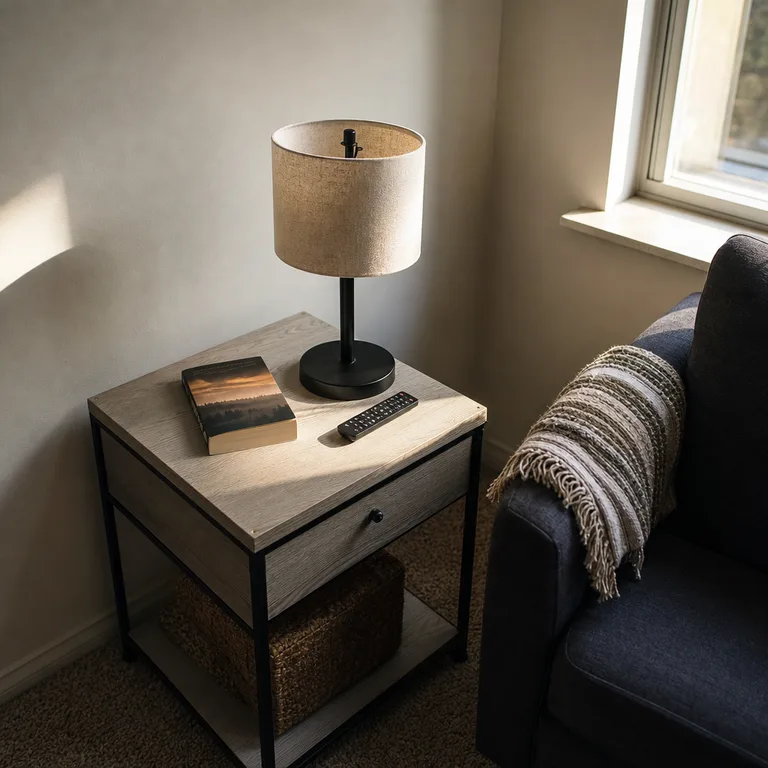
Keep the shade short and restrained in diameter when the lamp sits on a crowded end table. A simple oatmeal, white, or warm gray fabric lets the vertical silhouette do the work, while a fitter that sits level on the existing harp keeps the update looking intentional.
Worth knowing: The vertical sides of a drum shade can direct less light outward than a tapered style, which may make it less useful for close reading.
3.Add a Neutral Pleated Shade for Texture Without Strong Color
A cream, flax, or pale beige pleated shade adds detail without introducing a new bold color. The folds give a plain painted or ceramic base more character and suit rooms with traditional furniture, woven baskets, linen-look upholstery, or older wood pieces.
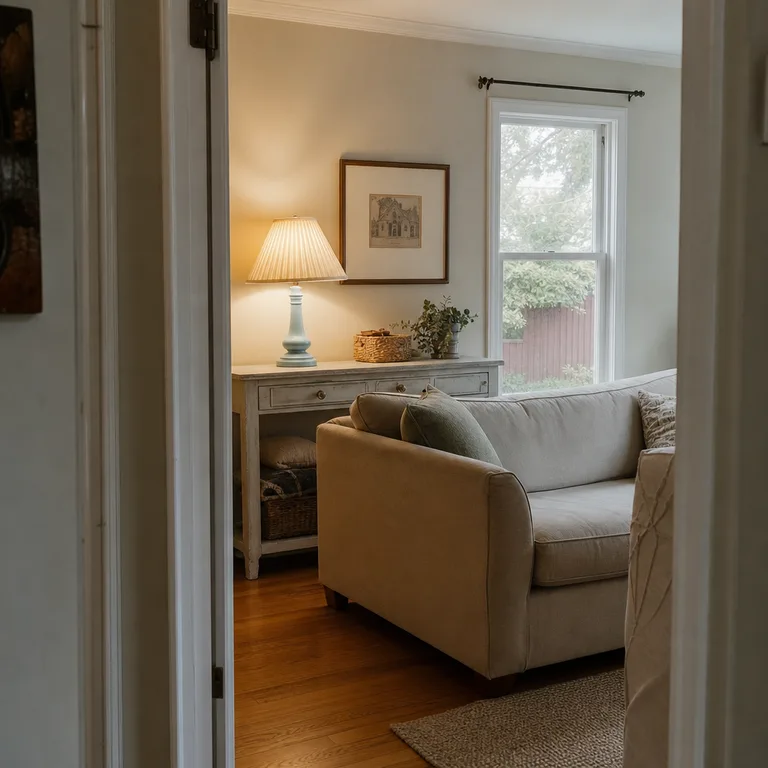
Use the pleats as a small layer of texture rather than another busy pattern. A neutral shade is often easier to coordinate than a printed one, and it can help a functional lamp blend into a softer, more collected room.
Worth knowing: Pleats hold dust more readily than smooth fabric and need gentle, regular cleaning to stay crisp.
4.Bring in a Woven Shade for Natural Texture
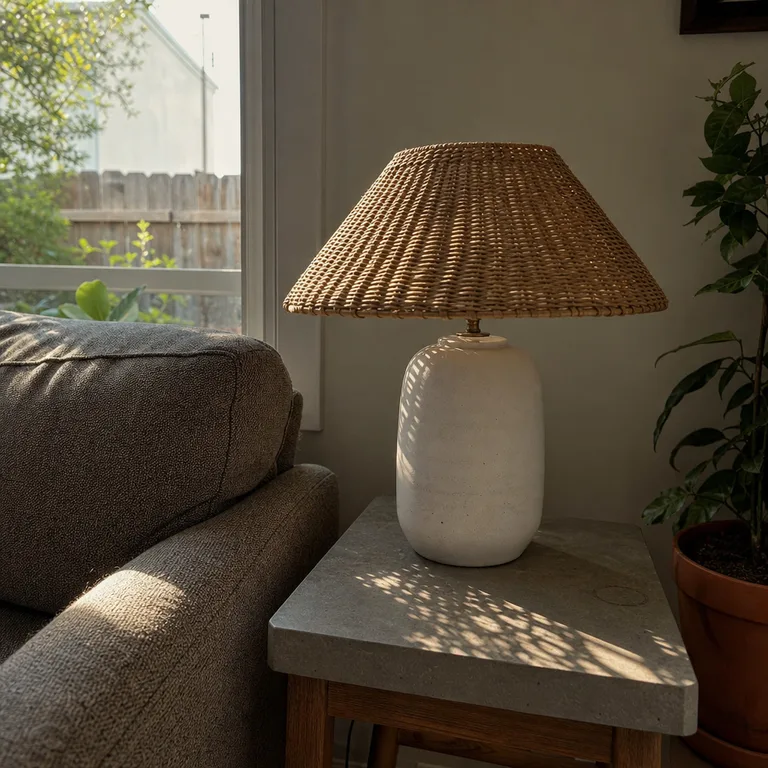
A woven rattan, seagrass, or open-weave shade changes a plain lamp base into a more textural accent. It is especially effective on uncomplicated white ceramic, wood, or stoneware bases, where the weave becomes the main visual feature instead of competing with decorative details.
This option works well in rooms that already use natural materials such as baskets, wood furniture, or houseplants. Use an LED bulb that is appropriate for the fixture and shade, since the open weave leaves the bulb more visible and projects patterned light onto nearby walls and tabletops.
Worth knowing: Open weaves can create glare and broken shadows, so this style is not ideal immediately beside a favorite reading chair.
Related: 10 Rattan Accent Ideas That Add Warmth Without a Full Room Makeover
5.Choose a Soft-Color Shade to Link the Room’s Accents
A muted blue, moss green, clay, or blush shade can connect a lamp to colors already present in a rug, cushion, or artwork. This is a useful way to keep an older brass or ceramic base while making it feel part of the room’s current palette.
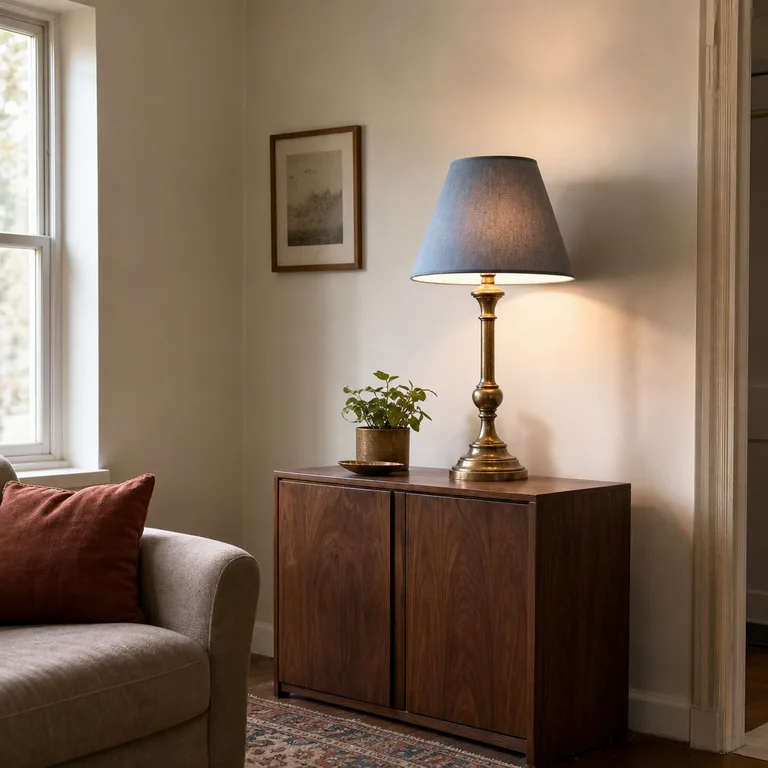
Choose a softened color rather than a highly saturated one for a lamp used every day. A pale interior lining helps preserve useful light, while a dark opaque shade can make the lamp feel moodier but reduce the amount of light reaching the table and surrounding seating.
Worth knowing: Color is more sensitive to changing decor than a neutral shade, so it may need replacing sooner if the room’s accent colors change.
6.Use a Wider Low-Profile Shade to Make a Tall Base Look Intentional
A wide, low-profile shade can steady the appearance of a tall, narrow lamp base that otherwise looks top-heavy or old-fashioned. Its broader footprint also spreads light across a wider end table, making the lamp feel more useful beside a sofa or chair.
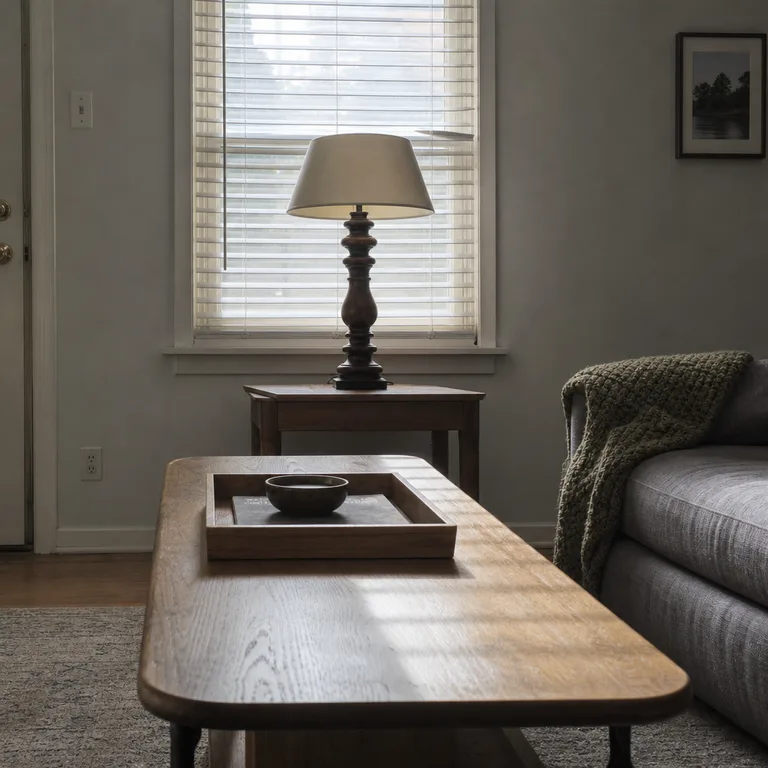
This swap needs room around it: check that the shade will not reach into a walkway, brush curtains, or interfere with someone sitting down. On a broad table, an off-white fabric keeps the low shape light and understated while allowing the existing wood or ceramic base to remain visible.
Worth knowing: A wide shade can overwhelm a small table or become a bump hazard in a tight seating arrangement.
About the author
Dana Ruiz, Senior editor
Dana writes about small-space living, storage and low-cost decorating.
Keep reading
9 Open Kitchen Shelf Styling Ideas Using Dishes You Actually Use
October 16, 2026
10 Shower Curtain Color Schemes That Work With Dated Bathroom Tile
October 16, 2026
7 Ways to Pair Mismatched Bedside Lamps So They Look Collected
October 16, 2026
10 Living Room Color Pairings for Dark Rental Floors You Cannot Change
October 16, 2026