8 Dresser Alternatives for a Small Bedroom That Already Has a Closet
A full dresser can take up the one clear wall or walking path a small bedroom needs, even when a built-in closet already holds hanging clothes. These compact alternatives keep folded items reachable by shifting storage into the closet, under the bed, or into furniture with a smaller footprint.
As an Amazon Associate I earn from qualifying purchases.
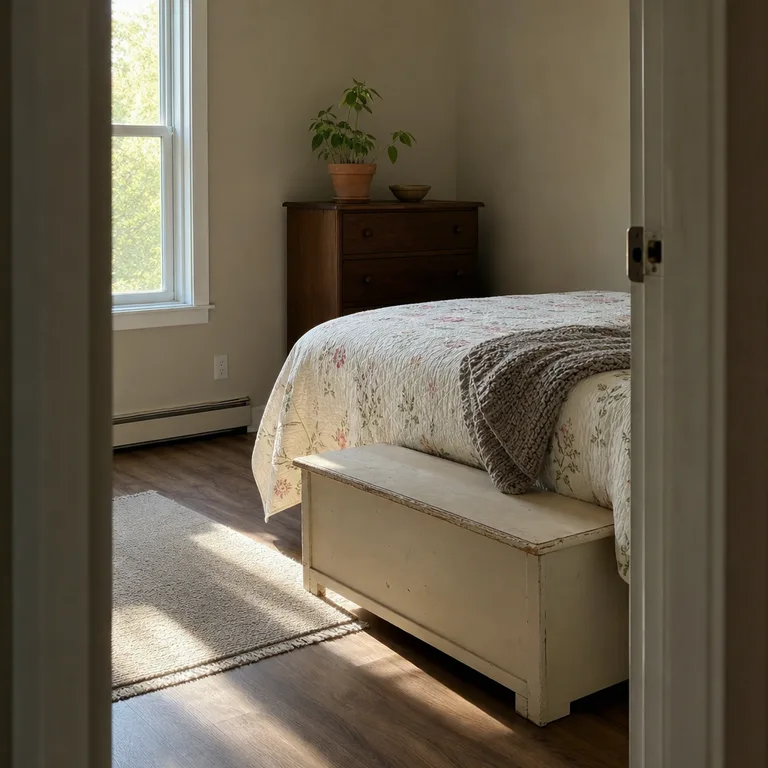
1.Use Shelf Boxes on Existing Closet Shelves
Sturdy shelf boxes turn one open closet shelf into separate homes for folded T-shirts, pajamas, workout clothes, and knitwear. They stop stacks from spreading across the shelf and make it easier to pull out one category without disturbing everything beside it.
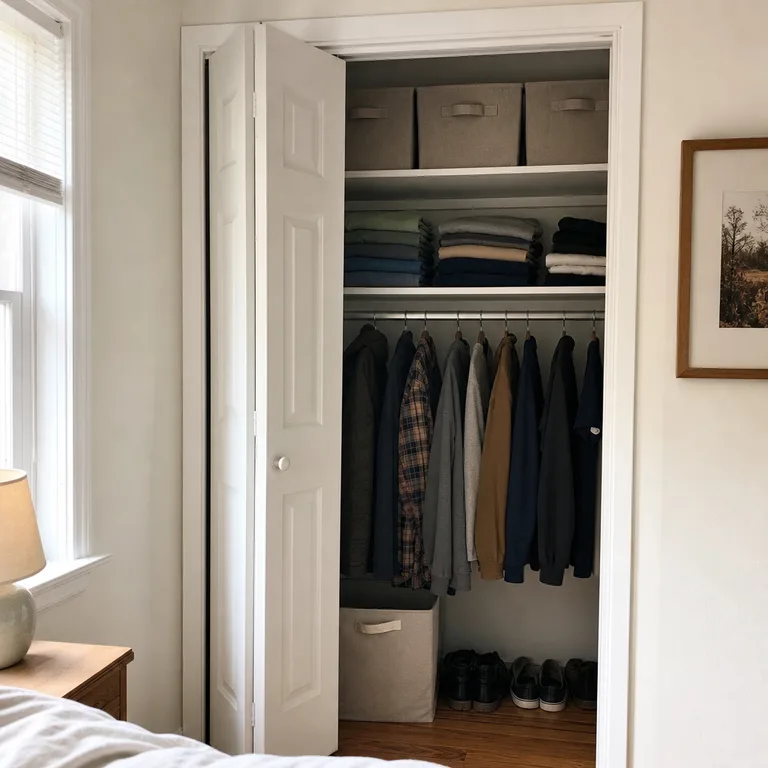
Reuse baskets or bins already around the home if they fit the shelf and are easy to lift down. Choose boxes with handles, then keep frequently worn clothes between waist and shoulder height; higher shelves are better for occasional items.
Worth knowing: Open-top boxes still need occasional refolding, and very deep closet shelves can leave clothing hard to reach at the back.
Related: 15 Small Closet Organization Ideas Without a Custom System
2.Hang Fabric Cubbies From the Closet Rod
A fabric cubby organizer hangs from the closet rod and adds a column of small shelves for folded everyday clothing. It works well for jeans, shirts, leggings, and sweaters that do not need the full depth of a dresser drawer.
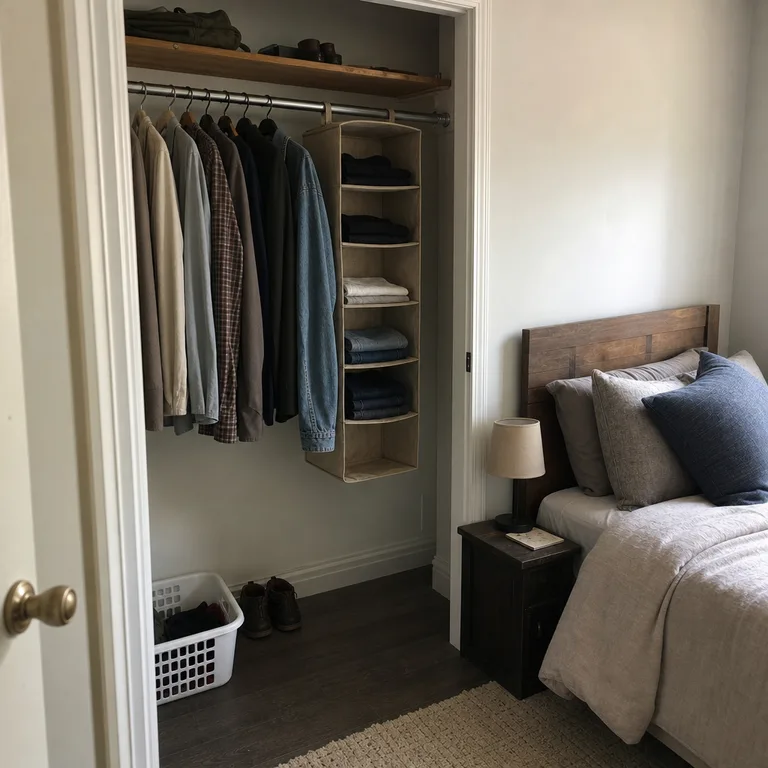
Keep the heaviest items on the lowest shelves so the organizer hangs straighter. This is an affordable way to use spare rod width, especially if the closet has more hanging space than needed.
Worth knowing: A crowded rod or a weak rod bracket may not support the added bulk and weight comfortably.
3.Place a Slim Drawer Unit Inside the Closet
A narrow drawer unit inside the closet gives small folded items the contained storage of a dresser without placing furniture in the bedroom. Under short-hanging shirts is often the most useful position, leaving long garments elsewhere on the rod.
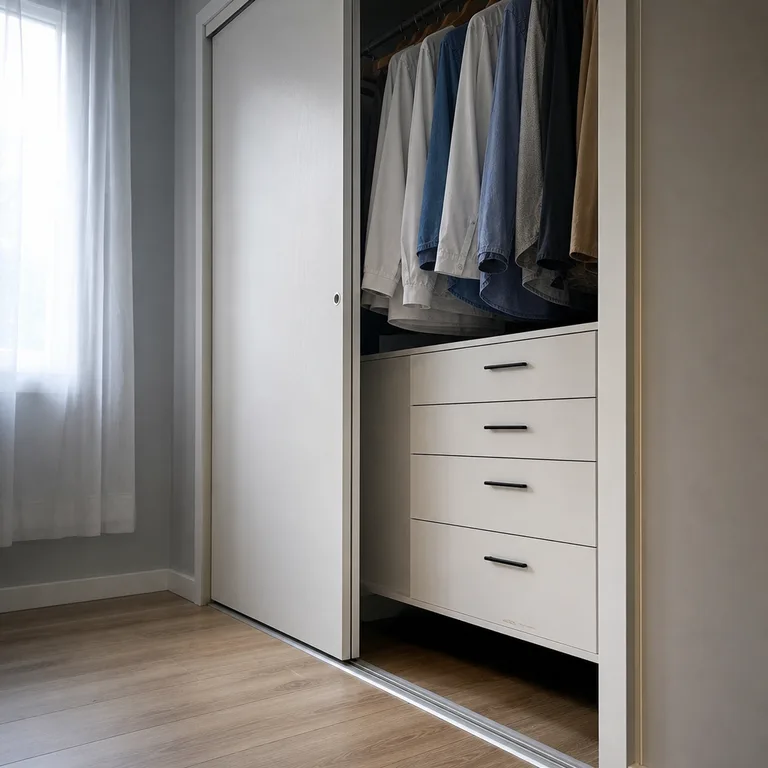
Measure the closet depth as well as its width. Drawers need room to open fully without catching the door track, and a freestanding unit should be anchored when its design and installation instructions require it.
Worth knowing: This only works if the closet is deep enough for both the unit and clear drawer access.
4.Choose Bedside Tables With Real Drawers
A compact bedside table with drawers can hold socks, underwear, sleepwear, or small accessories while still providing a surface for a lamp and nightly essentials. Two matching tables can replace part of a dresser's storage without adding a separate furniture piece.
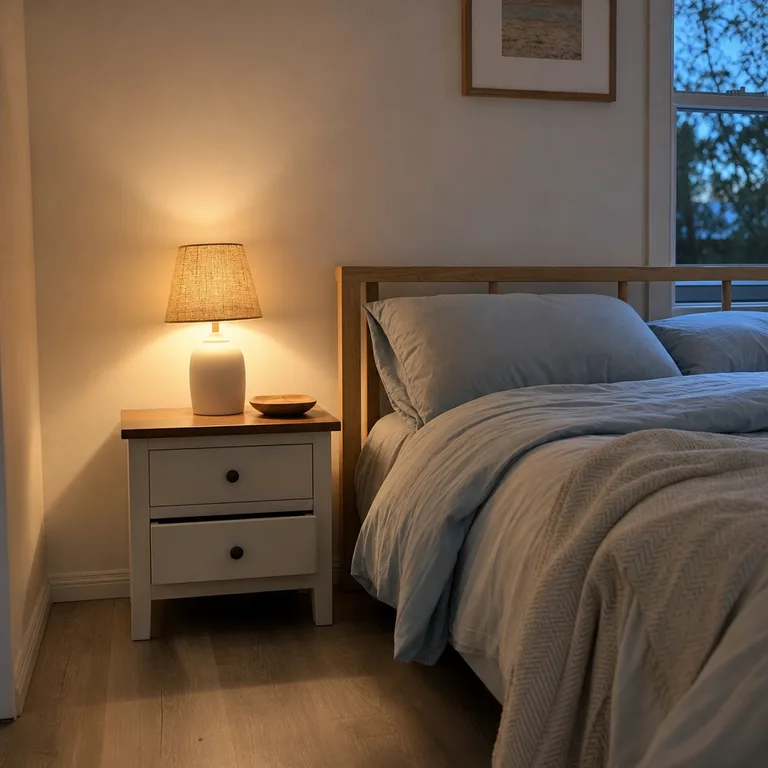
Look for a table that fits beside the bed without narrowing the walking route. Drawer dividers made from small boxes or folded fabric keep tiny items from becoming one mixed pile.
Worth knowing: Bedside drawers are best for small categories, not large stacks of everyday clothing.
Related: 10 Nightstand Alternatives for Bedrooms With Almost No Bedside Space
5.Set a Shallow Lidded Chest at the Bed End
A low lidded chest at the end of the bed stores bulky folded items such as spare bedding, seasonal knitwear, or extra towels. Its top can also work as a place to lay out clothes or sit briefly while getting dressed.
A secondhand wood chest can be cleaned and repainted, while a simple upholstered storage bench offers a softer look. Leave enough room between the chest and the bed to raise the lid fully and to move around it without blocking the doorway.
Worth knowing: A chest is less convenient for clothes used every day because items at the bottom are harder to access.
6.Slide Woven Baskets Onto a Low Open Shelf
A short open shelf fitted with removable baskets creates flexible clothing storage along a low, unused wall. Each basket can hold one category, so laundry-day sorting and putting clothes away are simpler than managing one large open shelf.
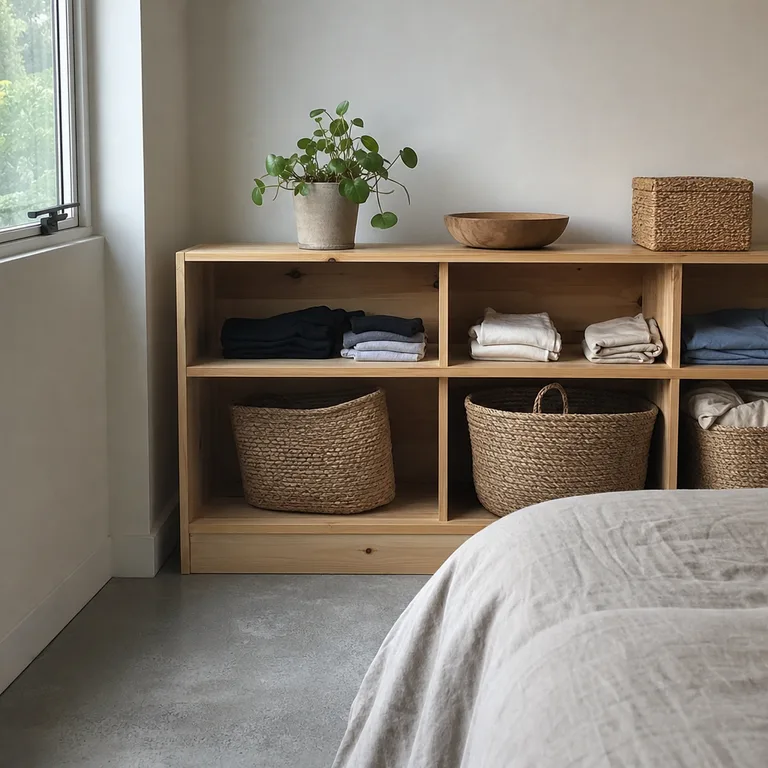
Use sturdy baskets with handles so they can be lifted out like drawers. A basic shelf can often be reused from another room, but secure it to the wall when required, particularly in homes with children or pets.
Worth knowing: Baskets conceal clutter but do not prevent it, so each one needs a clear clothing category.
7.Store Folded Clothes in Shallow Under-Bed Boxes
Shallow lidded boxes make use of the empty space under a raised bed for folded clothes that do not need daily access. They are particularly useful for off-season layers, spare linens, or items kept for occasional trips and events.
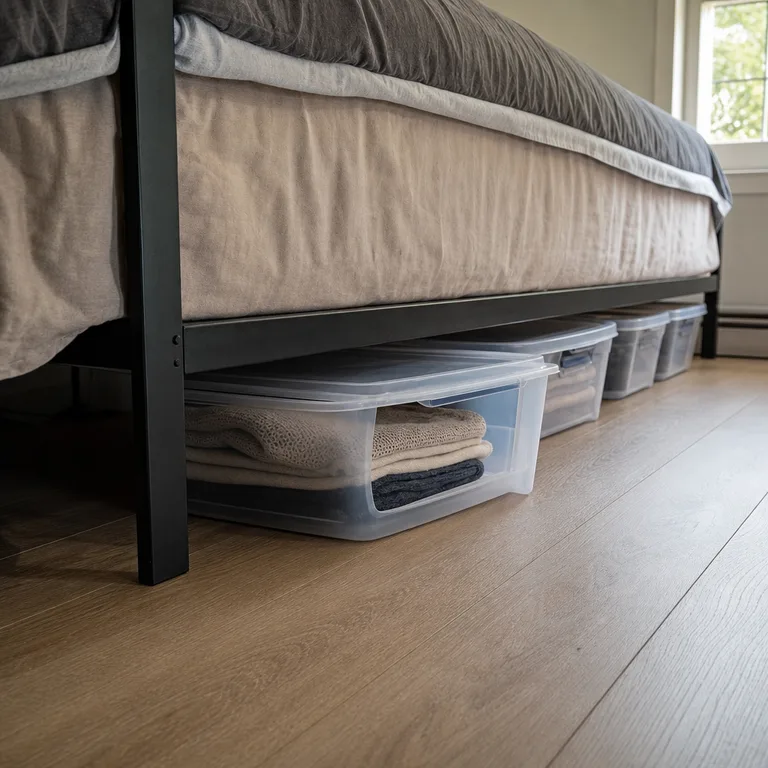
Measure the clearance beneath the bed frame before choosing containers, including any central support bars. Lidded boxes protect clothing from dust, but fabrics should be fully dry before storage, especially in humid rooms where trapped moisture can become a problem.
Worth knowing: Low bed frames and carpet that catches on box edges can make under-bed storage frustrating to use.
8.Park a Rolling Fabric-Drawer Cart in the Closet
A compact cart with fabric drawers can sit beneath hanging clothes and roll forward when it is time to get dressed. It gives folded items defined compartments without needing a permanent built-in closet system.
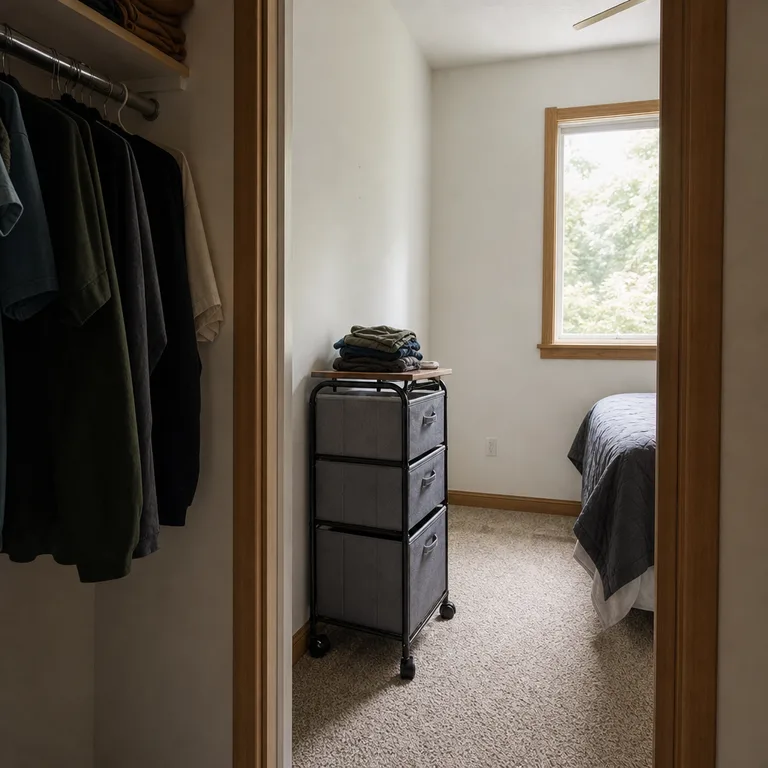
This option suits renters because it can move with the household and usually needs little or no installation. Check that the wheels roll smoothly on the closet floor, and leave enough clearance to pull the cart out without snagging clothes on the rod above.
Worth knowing: Fabric drawers can sag when overfilled and are not as protective against dust as solid drawers.
About the author
Dana Ruiz, Senior editor
Dana writes about small-space living, storage and low-cost decorating.
Keep reading
6 Foldaway Ironing Setups for a Bedroom Without a Permanent Laundry Area
October 16, 2026
7 Small Living Room Setups That Leave Space for a Foldaway Exercise Mat
October 16, 2026
9 Fall Bulb Planting Plans for a Small Bed Using One Modest Bag of Bulbs
October 16, 2026
6 Lampshade Swaps That Refresh a Table Lamp Without Replacing Its Base
October 16, 2026