12 Small Living Room Seating Ideas Beyond a Second Sofa
A small living room can host extra people without dedicating its floor plan to a second sofa. These seating ideas use pieces that tuck away, serve another daily purpose, or move into place only when visitors arrive, while keeping circulation and storage practical.
1.Use two nesting stools as a compact coffee-table substitute
Nesting stools can stand together in front of the sofa as a coffee-table substitute, then separate into two individual seats when guests arrive. Choose stools with flat, stable tops so they can still hold a tray, book, or drink during daily use.
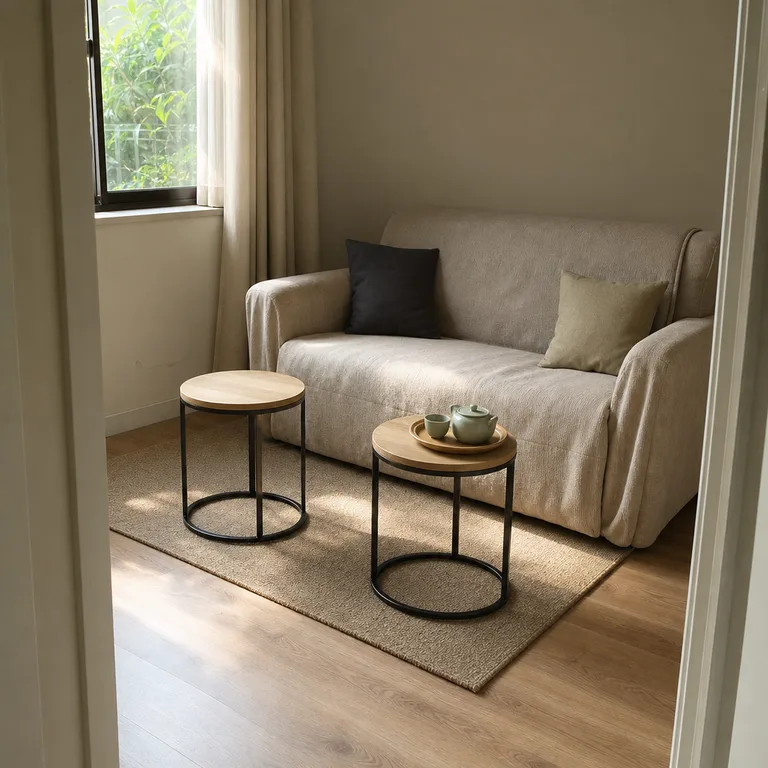
This approach keeps the center of the room useful without introducing a bulky second seating piece. It works best on level flooring, and a rug can help define their usual spot while making them less likely to slide.
Look for simple, sturdy stools that tuck fully together and suit the room even when nobody is sitting on them. Wipeable wood, laminate, or sealed surfaces are usually easier to live with than delicate upholstery in this high-use position.
Worth knowing: Small stools are useful for short visits, but they are less comfortable than chairs with backs for a long conversation.
2.Keep a pair of stackable stools in a nearby closet
Stackable stools provide several extra places to sit while using only a small vertical slice of closet space between visits. Pull them out and place them at the edge of the seating group rather than lining them up against a wall, where conversation can feel disconnected.
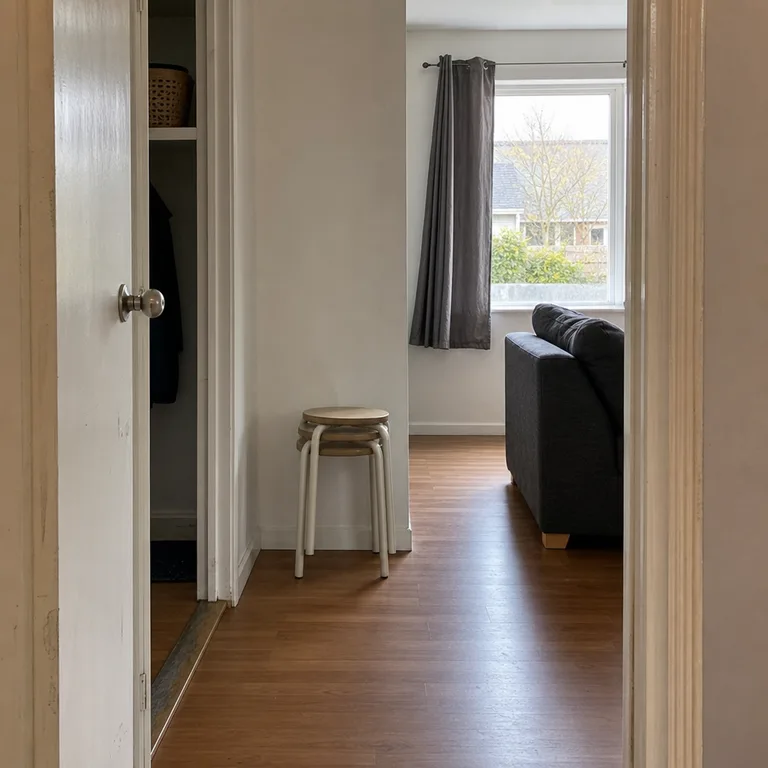
They are especially practical for hosts who need visitor seating only occasionally. A matching set looks intentional when it is out, but the stools do not need to occupy valuable floor space every day.
Check the closet height and depth before choosing them, including room to lift the stack out easily. Felt pads can reduce scraping and noise on hard floors, especially in apartments with neighbors below.
Worth knowing: Stacked stools need accessible storage, so they are less convenient in homes with crowded closets.
3.Add an upholstered storage ottoman with a firm lid
An upholstered storage ottoman can hold blankets, board games, or spare throws on ordinary days and become one extra seat during a gathering. A firm, well-supported lid matters because a soft lid can feel unsteady when someone sits down.
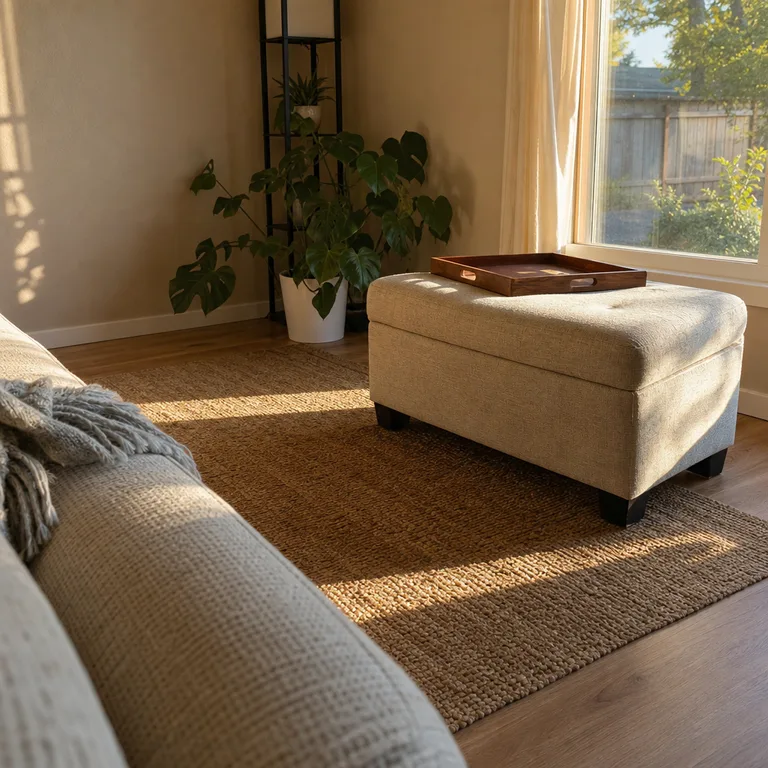
Its padded surface adds warmth to a living room without the visual weight of another chair. Pick a shape that fits the existing circulation route, leaving a clear path between the sofa, doorway, and window.
Use it as a coffee table with a tray when seating is not needed, or move it beside the sofa when visitors arrive. Durable upholstery is worth prioritizing if it will regularly handle feet, drinks, and storage access.
Worth knowing: A storage ottoman generally seats only one person, and opening it is inconvenient when someone is already using it as a seat.
4.Park a slim accent chair in an unused corner
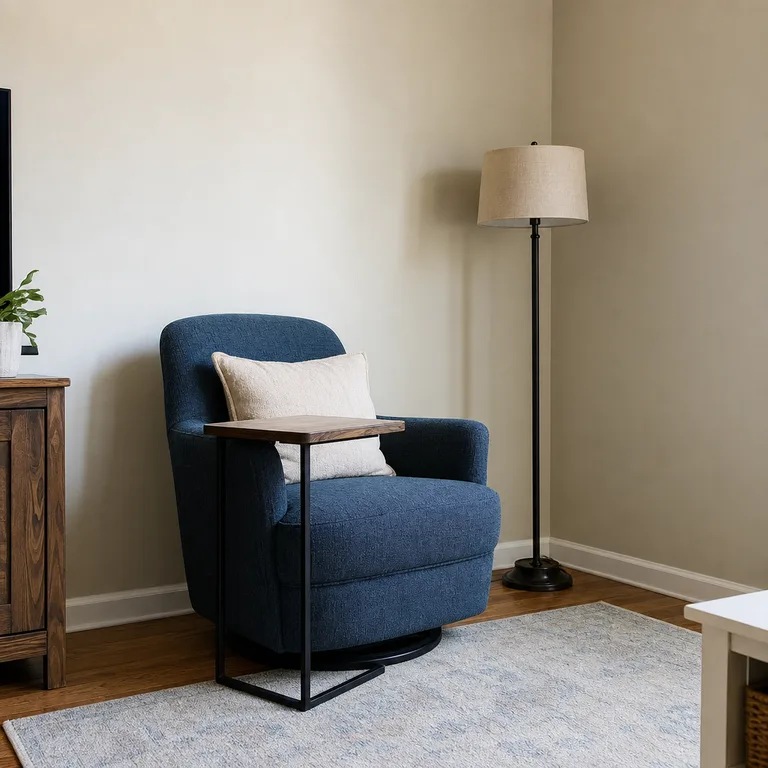
A narrow accent chair can supply a proper everyday seat while still helping when visitors come over. Place it at the open end of the sofa or beside a window, angled inward so it feels part of the conversation area rather than stranded in a corner.
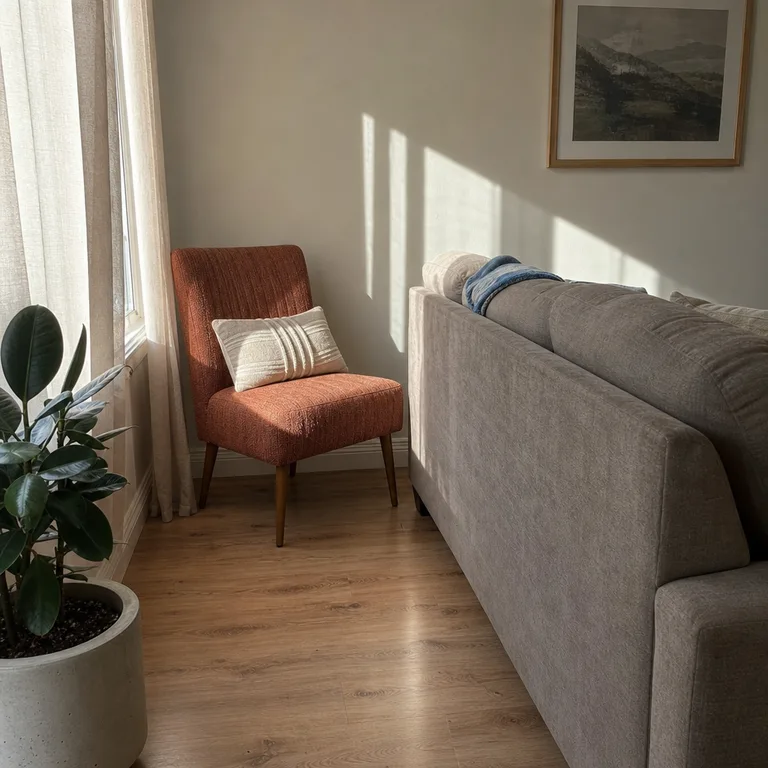
An armless chair or one with a light visual profile can keep a compact room from feeling boxed in. It also gives the household another place to read, make a call, or sit apart from the main sofa.
Measure the route around it, not just the chair itself. Leave room for curtains to move, windows to open, and people to pass without bumping chair legs.
Worth knowing: A chair that is too wide or deeply reclined can quickly narrow an already tight walkway.
Related: 12 Small Living Room Layout Ideas That Leave Room to Walk
5.Choose a lightweight folding chair that hangs on the wall
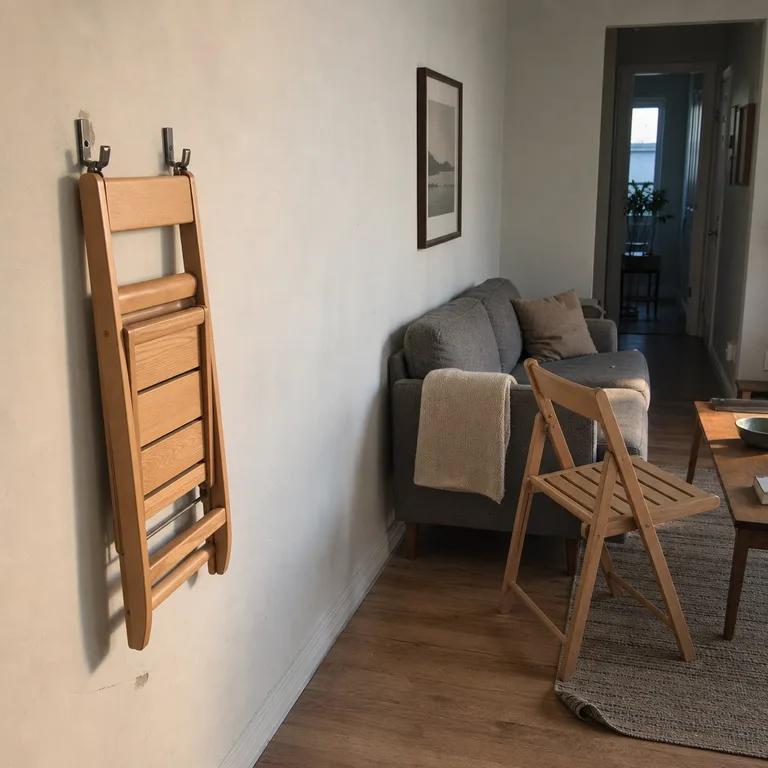
A folding chair gives visitors a familiar upright seat but can disappear from the floor after they leave. Hang it on secure hooks, store it behind a door, or slide it into a narrow closet where it is easy to retrieve.
Choose a model light enough to carry comfortably and stable enough for regular indoor use. Keeping two matching chairs together makes last-minute seating look more deliberate than bringing in unrelated spare chairs.
Wall storage works only where the mounting surface can support the hardware and the chair’s weight. Renters may need a non-damaging storage option or written permission before installing hooks.
Worth knowing: Folding chairs can be less comfortable than upholstered seating, particularly for longer visits.
6.Let a small pouf move between rooms
A small pouf can act as a footrest beside the sofa, a temporary perch in a bedroom, or informal guest seating in the living room. That flexibility makes it useful when each piece of furniture needs to earn its place.
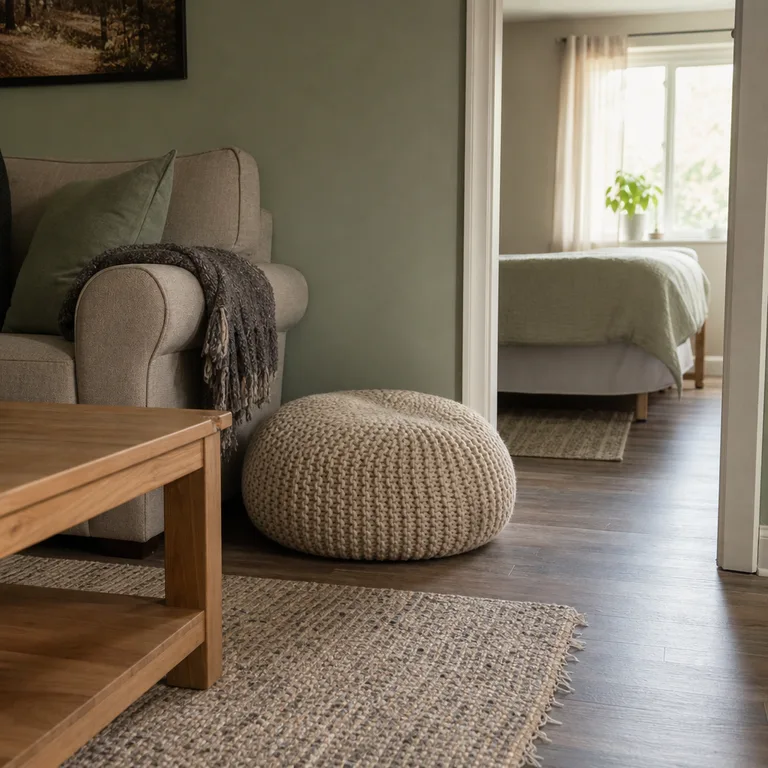
A pouf is easy to move into the seating circle without rearranging the room. Select a firm fill so it holds its shape and is high enough to be practical for the people most likely to use it.
Use a washable cover or a material suited to frequent handling if it will travel between rooms. A lightweight pouf is easiest to move, but it should still have enough structure not to flatten immediately.
Worth knowing: Low poufs are not a good fit for guests who need back support or find it difficult to stand from a low seat.
7.Use a rolling task chair from a desk nook
In a combined living room and work area, a desk chair can become an extra visitor seat without requiring separate storage. Roll it away from the desk and turn it toward the sofa so the group faces one another.
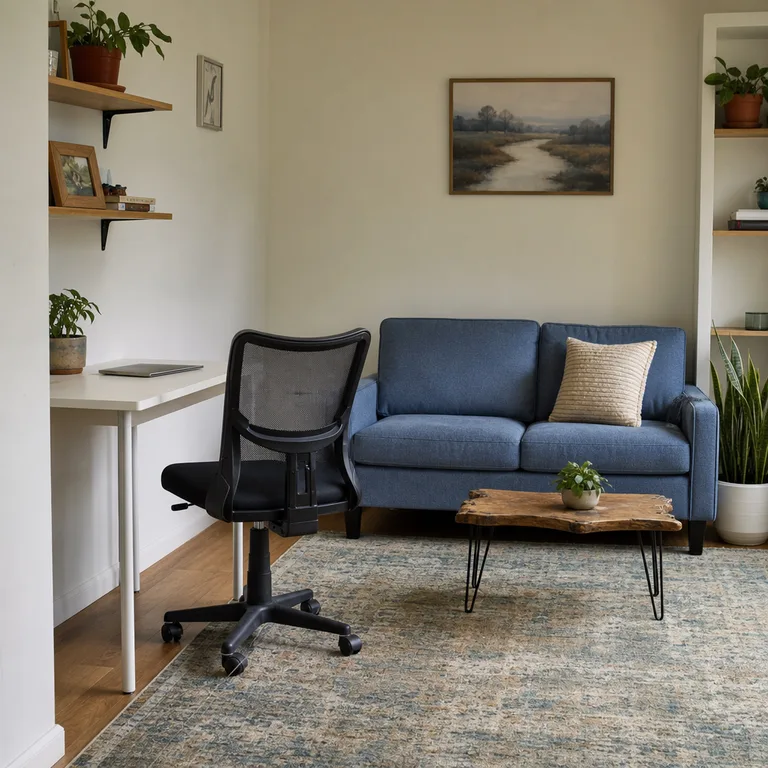
A task chair is often more supportive than a stool and can be useful for a longer visit. Keep the desk nook close enough to the seating zone that moving the chair does not create an awkward detour through the room.
Test how the casters behave on the floor surface. A chair that rolls too freely on smooth flooring may need a stable rug or a different caster type, while thick rugs can make it difficult to pull into place.
Worth knowing: A desk chair can make a relaxed living room feel more work-focused, especially if it has a large frame or prominent controls.
Related: 10 Home Office Nook Ideas for a Small Living Room
8.Bring in a dining chair for occasional conversation seating
A dining chair is one of the simplest extra seats because it already has a job elsewhere in the home. Move one into the living room when needed and place it beside, not directly opposite, the sofa to keep the group close enough to talk easily.
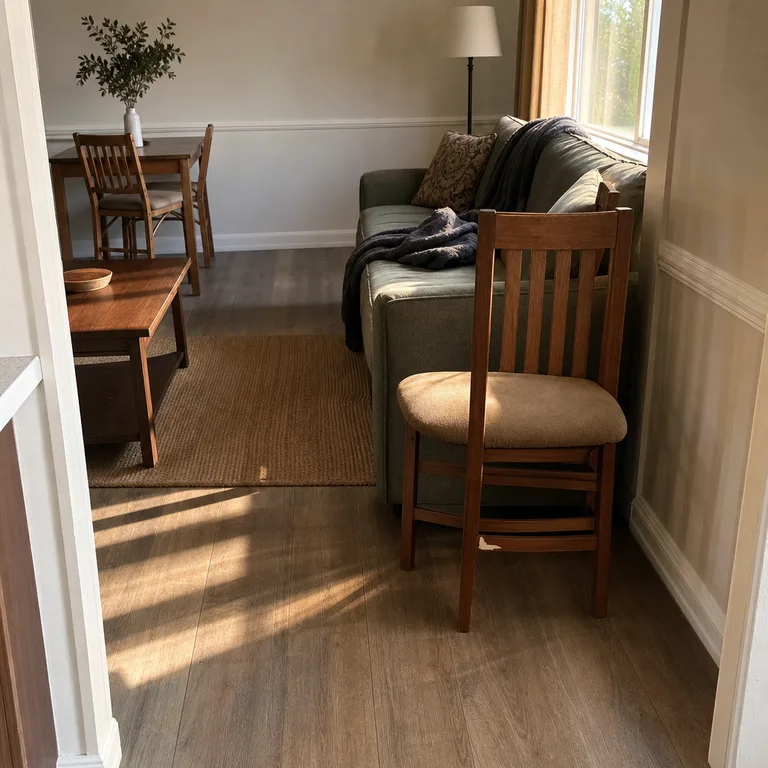
This option requires no new furniture and no dedicated storage. A small lumbar cushion or seat pad can make a hard wooden or molded chair more comfortable for a longer visit.
It works best when the dining area is nearby and the chair can be moved without disrupting a meal setup. Protect delicate floors with felt pads if chairs are often shifted between rooms.
Worth knowing: Using dining chairs for guests can leave the dining area short on seating at the same time.
Related: 10 Small Dining Area Ideas When You Don't Have a Dining Room
9.Set a backless bench against the wall
A slim backless bench can seat more than one visitor while taking up less visual space than several chairs. Keep it against a long wall when not in use, then pull it slightly forward if needed to make the seating arrangement feel more connected.
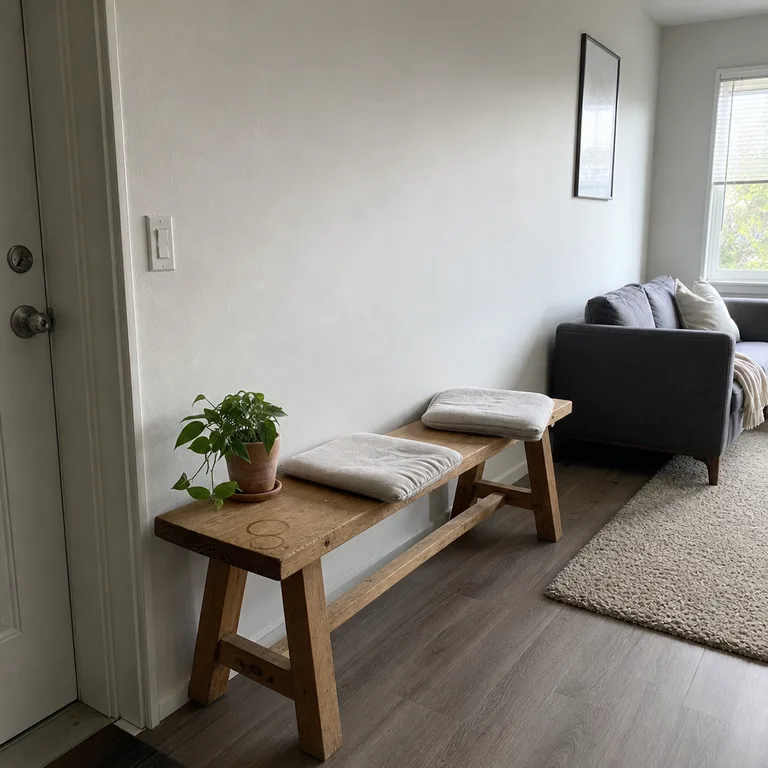
On ordinary days, it can act as a landing place for a tray, a few plants, or folded throws. A simple bench with removable cushions can soften the look without making the piece too precious for everyday use.
Plan around nearby doors, radiators, outlets, and windows before choosing its length. The bench should not turn a clear path into a squeeze, especially in a narrow room or near the entry.
Worth knowing: Backless benches are best for short gatherings because they offer little support and may be awkward for some guests.
10.Use a tray-top ottoman that changes jobs
A tray-top ottoman serves as a surface for books and drinks most of the time, then becomes a padded extra seat as soon as the tray is removed. It is a useful choice when there is room for one central piece but not room for both a coffee table and another chair.
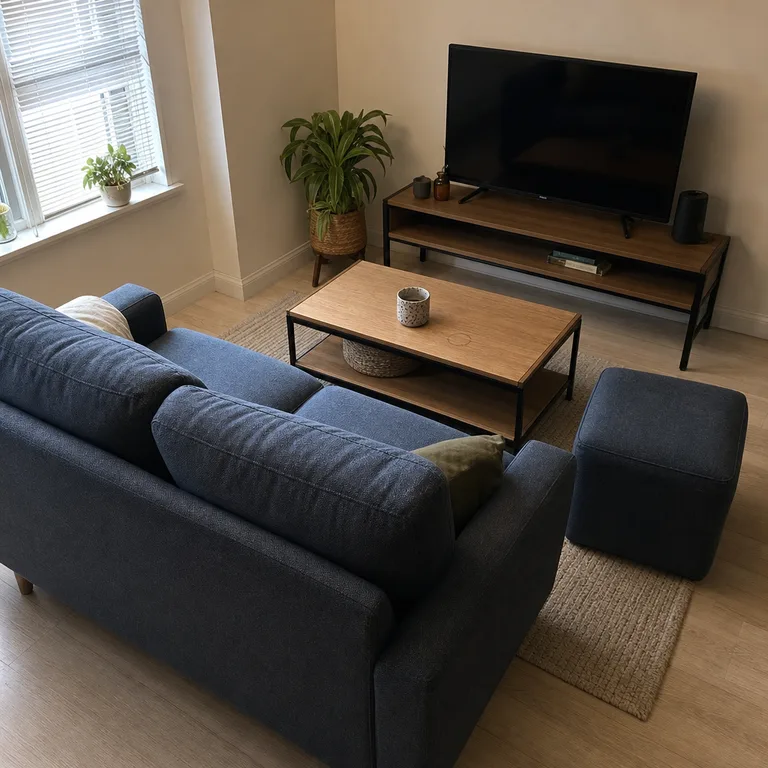
The removable tray gives the ottoman a clearer daily purpose than a guest-only seat. Choose a tray with raised edges for everyday use, and keep it somewhere safe and reachable when the ottoman is needed for seating.
A square or rectangular ottoman can sit close to the sofa without making the room feel fragmented. Leave enough space around it to walk through comfortably, since its position will be central to the room.
Worth knowing: The tray needs its own temporary landing spot when guests arrive, which can be difficult in a room with few surfaces.
11.Slide a low floor cushion out from under a console
Flat floor cushions can store beneath a console table, bed, or low shelf and come out quickly for casual gatherings. They keep the room clear between visits and can add color or texture without requiring a large furniture commitment.
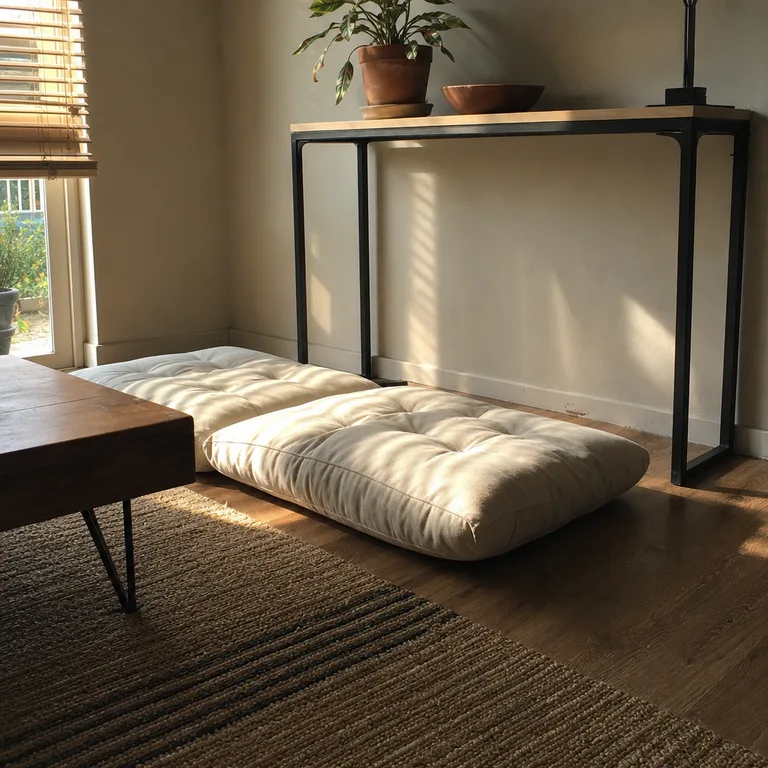
Place them around a low coffee table or at the edge of a rug so they feel like part of the group. Choose firm, washable cushions with enough fill to avoid placing guests directly against the floor.
This is best for informal hosting, such as game nights or relaxed visits where people are comfortable sitting low. Keep the storage area dry and dust-free, particularly if cushions will spend long periods under furniture.
Worth knowing: Floor cushions do not provide the support or easy standing height that many guests need.
12.Keep a compact sling chair folded behind the sofa
A compact sling chair can fold flat behind a sofa or fit into a closet, then open into a relaxed individual seat when another person joins the room. It is a good option when visitor seating is occasional and the daily layout needs to stay open.
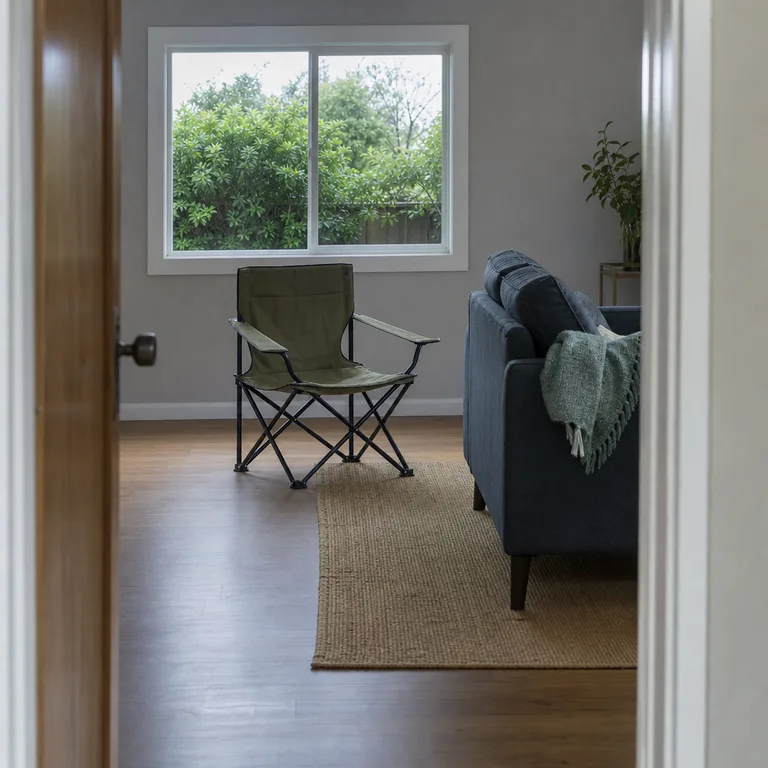
Its lighter look can work well in small rooms because the frame does not block as much of the view across the space as a solid upholstered chair. Open it at the end of the sofa or near a window, while maintaining a clear route through the center of the room.
Check that the chair locks securely when opened and sits level on the floor. If it will also be stored in a porch, shed, or other damp space, choose materials that can handle moisture and allow the fabric to dry fully before folding.
Worth knowing: Sling chairs are comfortable for some people but may feel too low or too reclined for guests who prefer upright support.
About the author
Dana Ruiz, Senior editor
Dana writes about small-space living, storage and low-cost decorating.
Keep reading
10 Small Laundry Nook Ideas for Homes Without a Laundry Room
September 21, 2026
10 Guest Room and Office Ideas for One Small Room
September 20, 2026
10 Budget Reading Nook Ideas for an Unused Corner
September 20, 2026
10 Small Bathroom Ideas That Keep the Floor Clear
September 19, 2026