6 Foldaway Ironing Setups for a Bedroom Without a Permanent Laundry Area
A small bedroom can handle occasional ironing when the board uses a stable temporary surface or a clear strip of floor, then has a defined place to cool and store. These setups keep the bed, walking path, and electrical cord in mind while using an approved ironing board rather than turning furniture or bedding into an ironing surface.
As an Amazon Associate I earn from qualifying purchases.
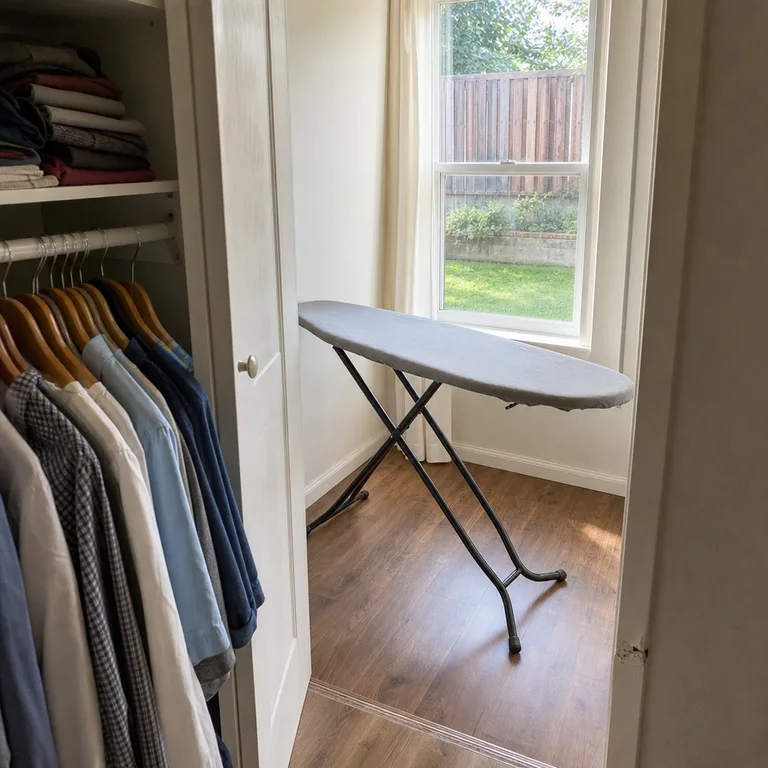
1.Set a tabletop board on a cleared desk
A solid desk can become a short-term ironing station with a folding tabletop board designed for that use. Clear the whole surface first so the board sits flat, and keep the chair pushed aside to preserve a safe standing area.
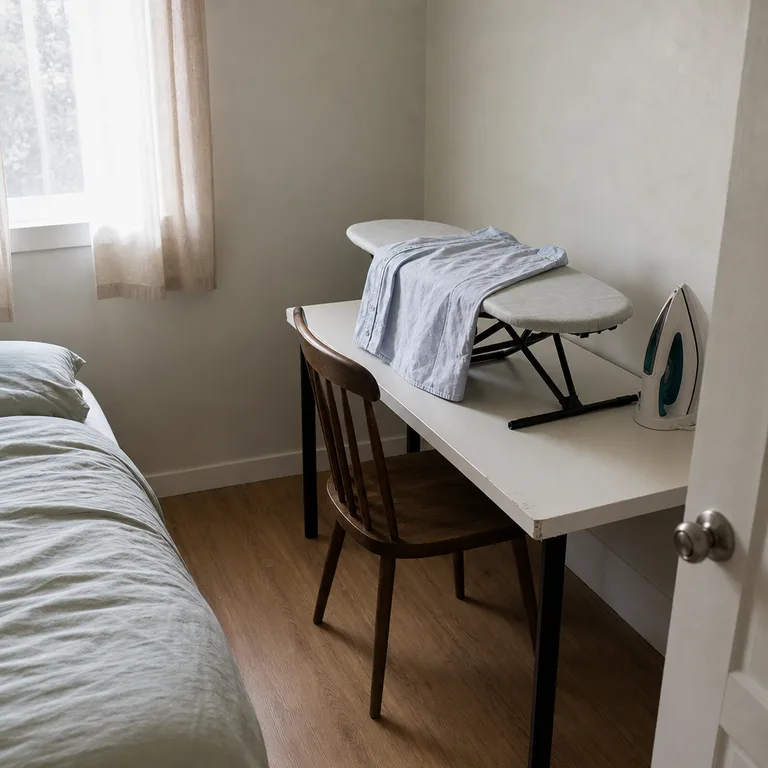
This works especially well in a bedroom where the desk already sits near an outlet. Route the iron cord along the desk side rather than across the walkway, and let the iron and board cool on the desk before folding the board into a closet shelf or roomy drawer.
A tabletop board keeps the room’s floor open, so the desk can return to homework, paperwork, or getting ready once the clothes are put away.
Worth knowing: Not every desk is wide or sturdy enough for a tabletop board, and a desk surface can be damaged if a hot iron is set down outside its approved rest.
Related: 10 Guest Room and Office Ideas for One Small Room
2.Use a sturdy dresser as a temporary ironing station
A broad, stable dresser can support a tabletop ironing board when its top is fully cleared. The board should sit level without rocking, with nothing underneath that could shift or make the surface uneven.
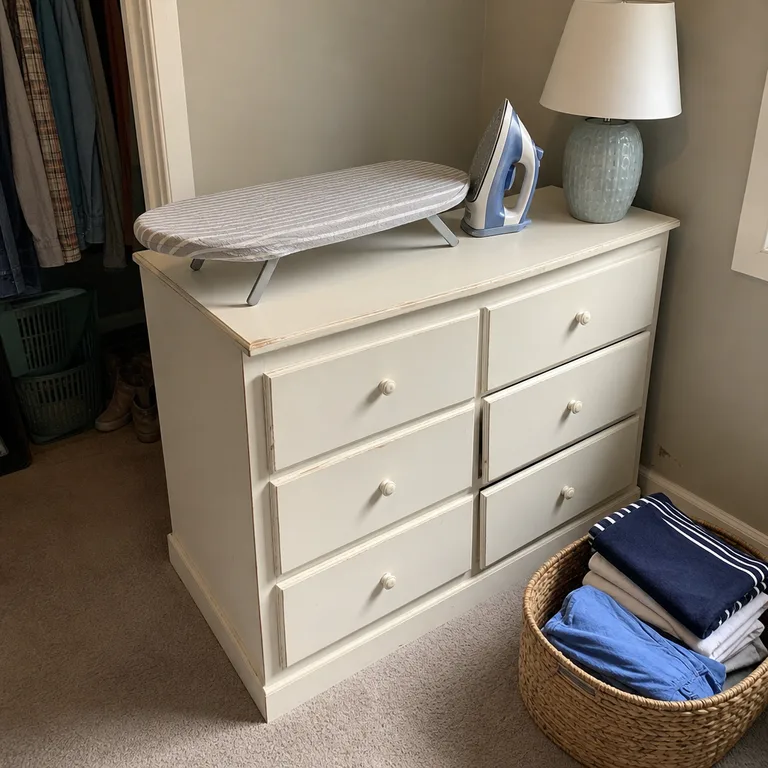
This option keeps ironing close to clothing storage, making it easier to press an item and put it away. Keep the iron cord on the dresser side nearest the outlet, not stretched across the bed-end path or a route to the door.
Use the dresser only for the active task, then remove the board after it has cooled. A folded board can go in a closet, behind the dresser if there is safe clearance, or on a shelf that can support it.
Worth knowing: Dressers with narrow tops, loose construction, lightweight drawers, or an unstable position against the wall are not suitable supports.
Related: 15 Small Closet Organization Ideas Without a Custom System
3.Open a folding board at the foot of the bed
A full folding board can fit in the strip of floor at the foot of the bed when that area remains clear. Position it so there is room to stand, turn, and set down clothing without pressing against the bed or blocking the doorway.
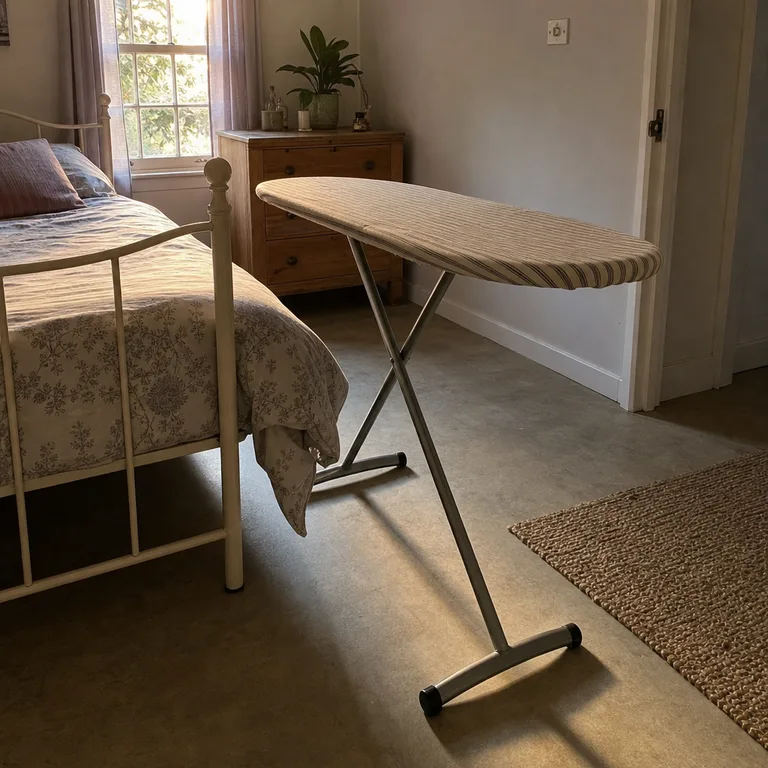
This arrangement gives more working length than a tabletop board, which helps with trousers, dresses, and larger shirts. Folded laundry can wait in a basket beside the board, provided it stays away from the iron and does not become a tripping hazard.
Choose an ironing time when the bed-end area is not needed for opening drawers, entering the room, or making the bed. Once the iron is unplugged and both items are fully cool, fold the board and return the floor strip to normal use.
Worth knowing: This setup does not suit bedrooms where the bed already leaves only a tight route to the door, closet, or drawers.
4.Iron beside an open closet and store the board inside
Set a folding board beside an open closet if the space allows the closet doors, nearby drawers, and bedroom door to move freely. Keeping the board close to hanging clothes makes it practical for pressing a garment just before wearing it or returning it to the rail.
A closet can also provide a defined storage home for the cooled board. Depending on the closet layout, stand it upright against a side wall, slide it into a narrow gap that does not crush clothing, or use a suitable hook system installed securely for the board’s weight.
Keep the cord on the closet side only if it reaches an outlet without crossing the room. If the closet is crowded, reduce hanging clutter or reserve one narrow vertical section so putting the board away does not become an awkward reshuffling task.
Worth knowing: Do not store a board or iron while warm inside a closet, where heat sits close to clothing and other stored fabrics.
5.Reserve a corner for a narrow ironing board
A narrow folding ironing board can make use of an otherwise empty bedroom corner while keeping the middle of the room available. Place it on a level floor with enough clearance from curtains, bedding, laundry piles, and furniture edges.
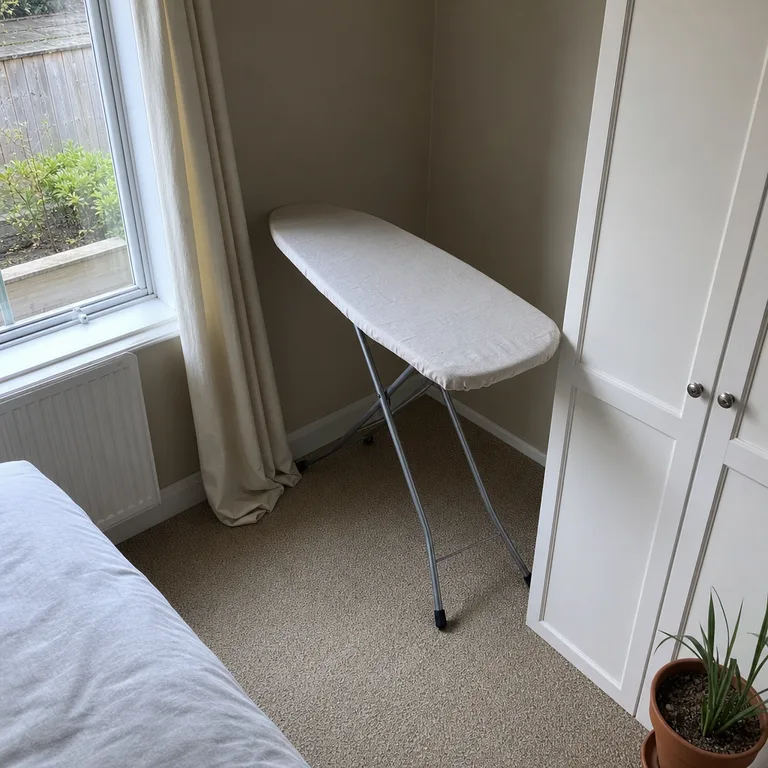
This can be a useful semi-regular setup for someone who irons occasional clothing but does not want a large board taking over the room. Store the board folded in the same corner, against a wall or in a nearby closet, so it has a predictable place between uses.
Check the outlet position before settling on a corner. An extension lead should not create a loose cord across a walking path, and the board should be moved if sunlight, a radiator, or an open window curtain brings fabric too close to the ironing area.
Worth knowing: Narrow boards save floor space but provide less support for wide garments and linens.
6.Use a portable board, then hang it away after cooling
A portable board is suited to the smallest bedrooms because it can come out only for the task and disappear afterward. Use it only on a stable, approved support or in the arrangement specified by its manufacturer, never on the bed or other soft furnishings.
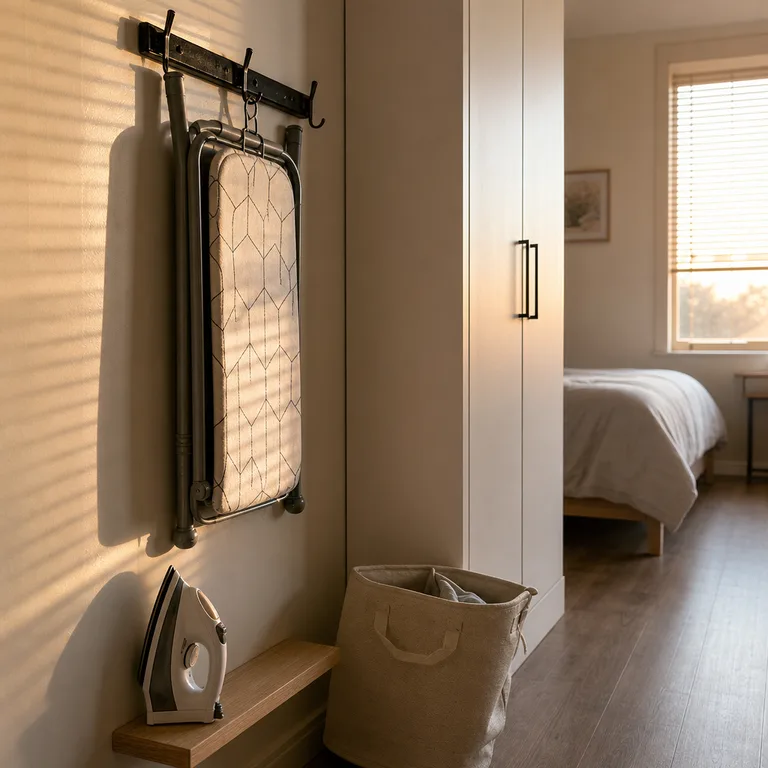
Give the iron and board time to cool completely after use. Then fold the board and hang it on securely installed hooks or place it in a designated rack, keeping the iron on a separate stable shelf or other appropriate storage spot.
A dedicated hanging place prevents the board from leaning in a corner, where it can fall or make the bedroom feel crowded. Choose a location beside a wardrobe, inside a closet, or behind a door only if rental rules allow installation and the door can still operate normally.
Worth knowing: Wall hooks and racks require secure mounting into a suitable surface, which may not be permitted or practical in a rental.
About the author
Dana Ruiz, Senior editor
Dana writes about small-space living, storage and low-cost decorating.
Keep reading
7 Small Living Room Setups That Leave Space for a Foldaway Exercise Mat
October 16, 2026
8 Dresser Alternatives for a Small Bedroom That Already Has a Closet
October 16, 2026
9 Fall Bulb Planting Plans for a Small Bed Using One Modest Bag of Bulbs
October 16, 2026
6 Lampshade Swaps That Refresh a Table Lamp Without Replacing Its Base
October 16, 2026