15 Small Closet Organization Ideas Without a Custom System
A reach-in closet can work harder without removing the existing rod, drilling into walls, or installing a custom system. These renter-friendly additions focus on sorting what is already there, using vertical space carefully, and keeping doors, rod limits, and daily access in mind.
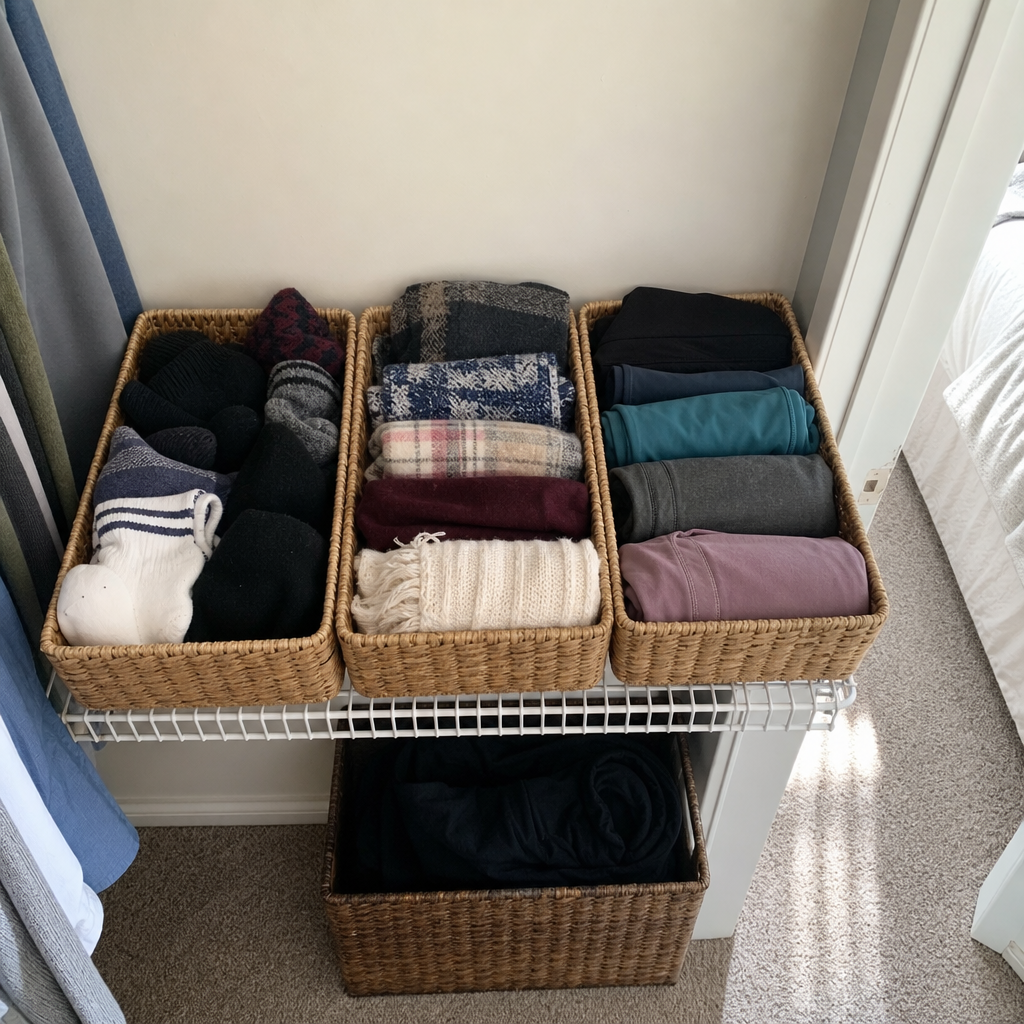
1.Sort the Closet Into Daily, Seasonal, and Occasional Groups
Emptying the closet briefly makes it easier to see which clothes earn the easiest-to-reach spots. Keep daily shirts, workwear, and frequently used shoes at eye level or near the front, while formalwear, heavy outerwear, and off-season items can move higher or farther back.
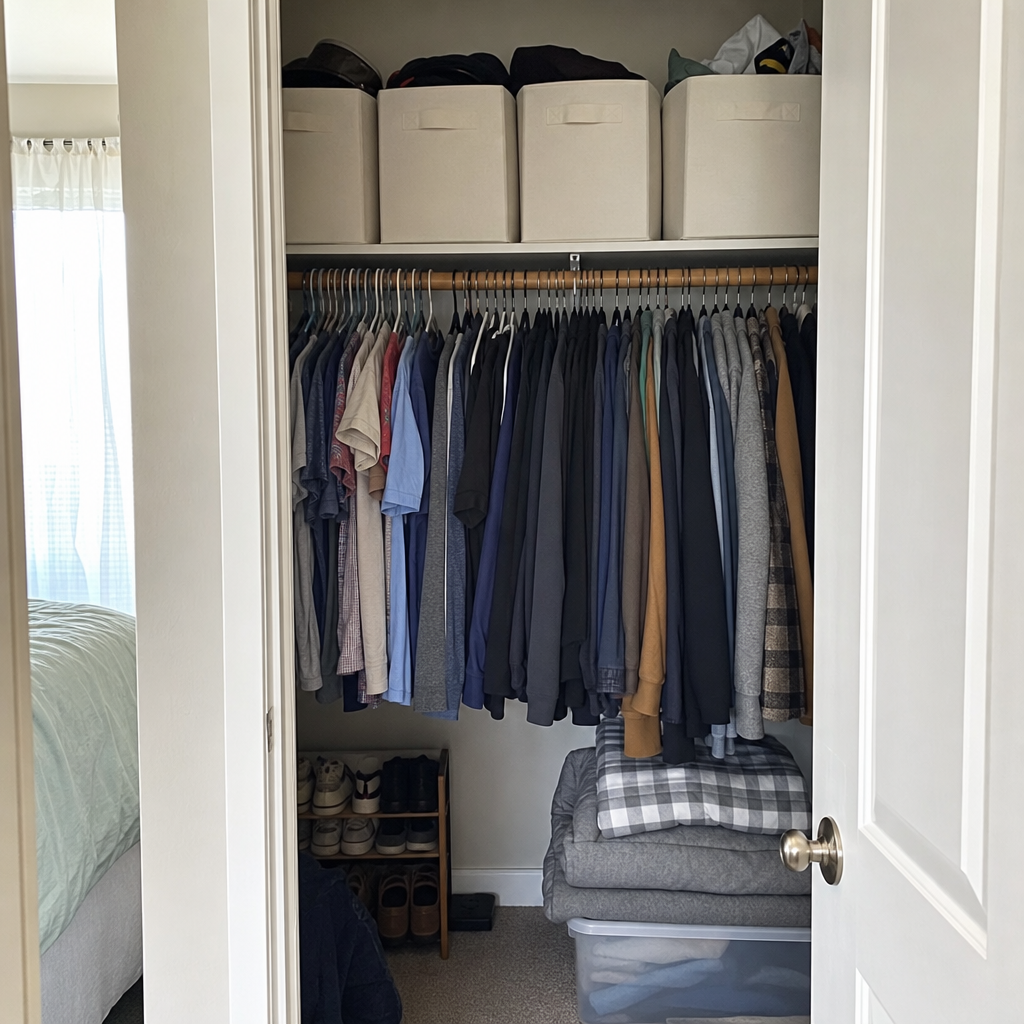
Use the current shelf and rod arrangement as a map rather than trying to fit every category everywhere. A few broad groups are easier to maintain than many tiny categories, especially in a shared closet.
Worth knowing: This improves access and prevents crowding, but it does not create more physical storage space for a wardrobe that is simply too large.
2.Use Matching Slim Hangers for Hanging Space
Replace a mixed collection of bulky, bent, and mismatched hangers with slim hangers of one general style. The clothes will sit at a more even height, stay less tangled, and be easier to slide along the rod.
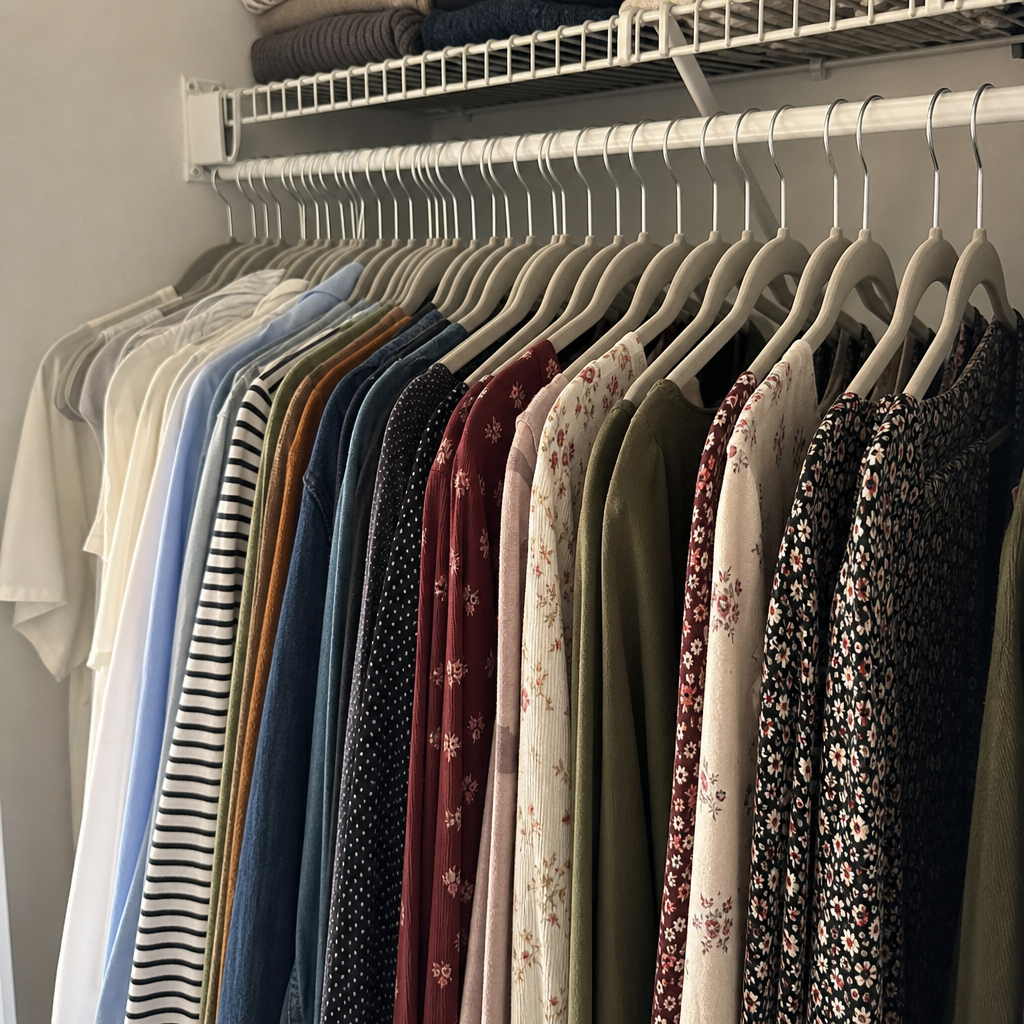
Use sturdy hangers for heavier pieces and reserve lighter slim styles for shirts, dresses, and lightweight layers. Keep an eye on the existing rod, especially in older rentals, because tightly packed clothing and heavy coats can put too much weight on weak brackets.
Worth knowing: Slim hangers reduce visual bulk, but they should not be used as a reason to overload an existing closet rod.
3.Add a Fabric Hanging Shelf Unit
A fabric shelf unit hangs from the existing rod and creates cubbies for folded sweaters, jeans, T-shirts, or handbags. It is useful when the closet has plenty of hanging height but only one shallow shelf.
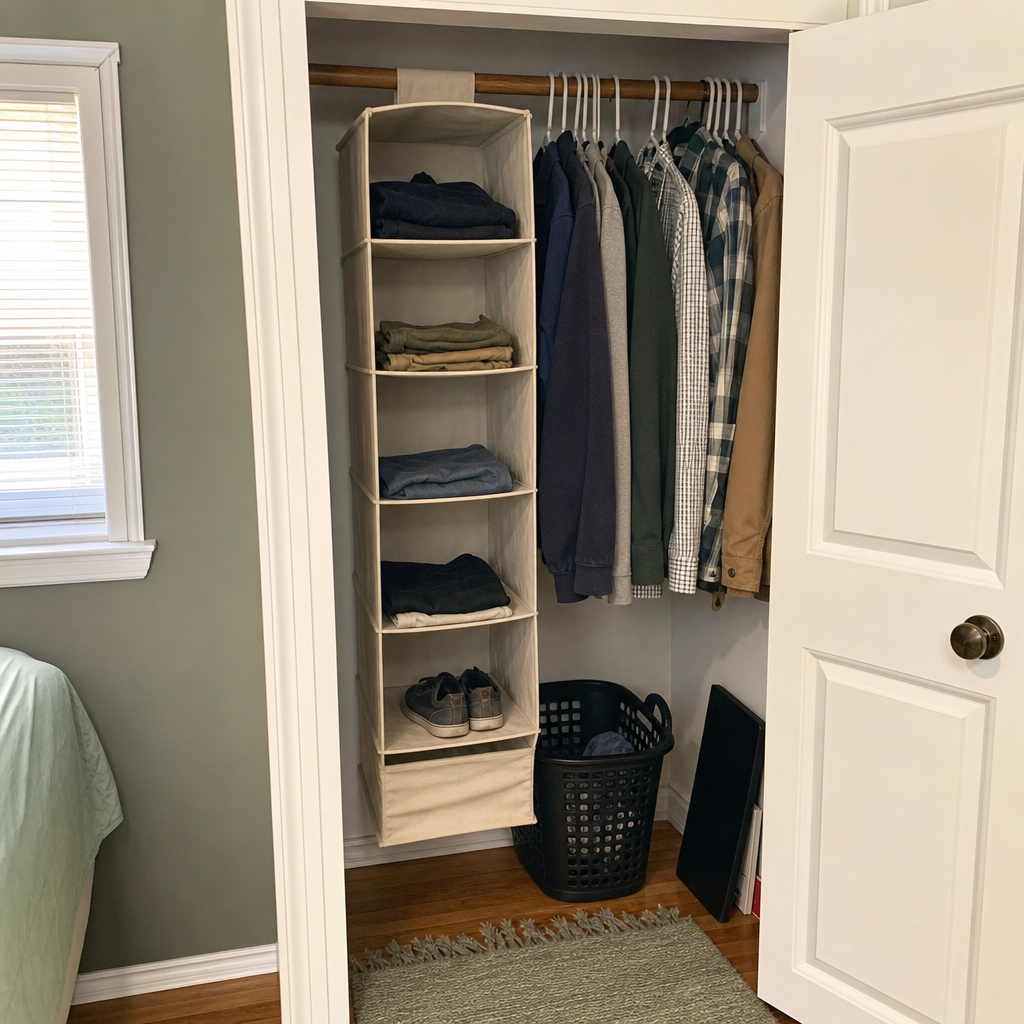
Choose a unit that leaves room for the garments beside it and place heavier folded items in the lower cubbies. This is a removable option that suits renters, but it works best when the rod is already secure and not carrying a dense load of clothing.
Worth knowing: A hanging shelf unit takes up rod width, so it can make a closet with many long hanging garments feel more crowded.
4.Store Handbags Upright in Shelf Dividers
Freestanding shelf dividers keep handbags upright rather than piled on top of one another. Each bag can be removed without knocking over the rest, which makes an upper shelf feel more usable.
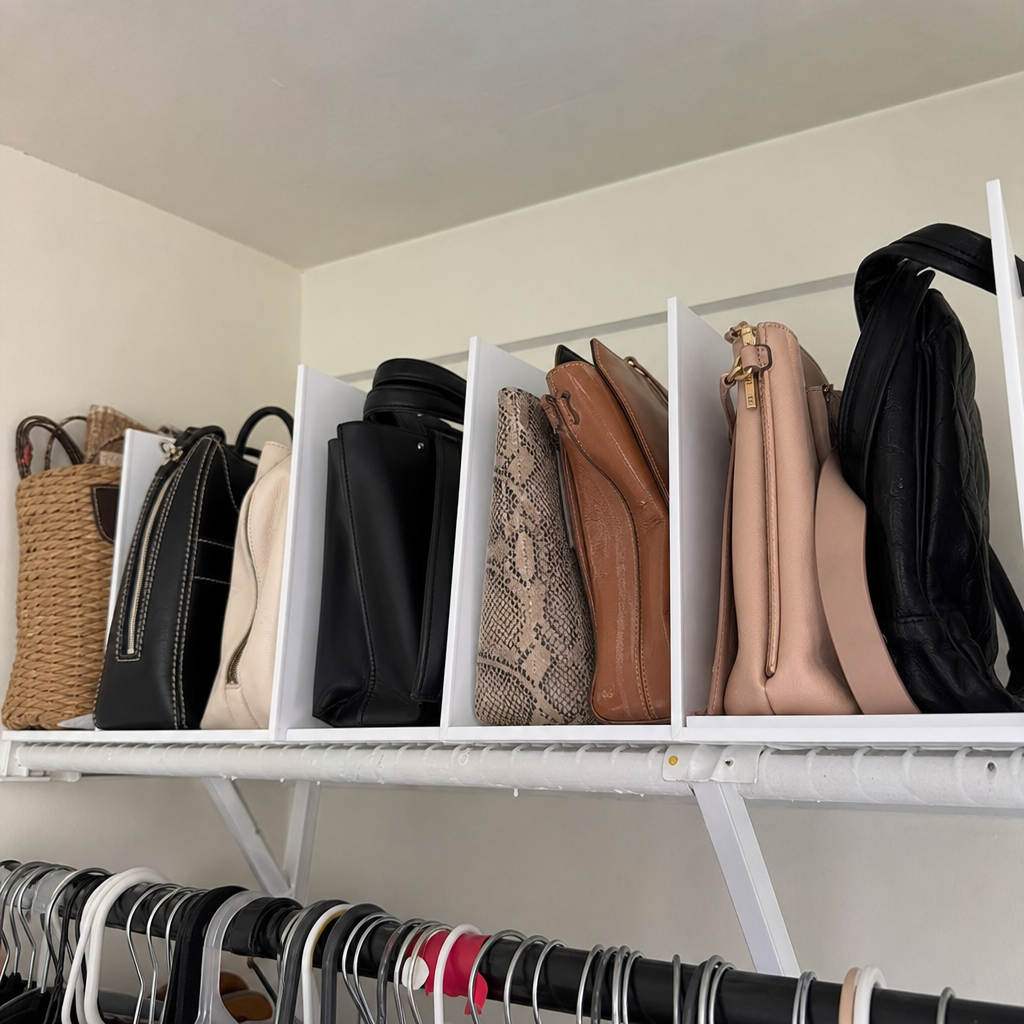
Use dividers on a stable shelf and group bags by how often they are carried. Soft bags may need simple stuffing from clean fabric or paper to hold their shape, while very heavy bags are better stored on a lower shelf.
Worth knowing: Shelf dividers need a shelf with enough depth and a stable edge, and they may not sit securely on some wire shelves.
5.Use Shelf Baskets for Small Folded Items
Open baskets turn a deep shelf into clear zones for small folded items that are easy to lose in a large stack. Scarves, sleepwear, workout clothes, swimwear, and cold-weather accessories are all good candidates.
Choose lightweight baskets that fit the shelf depth without hanging over the front edge. Open tops make daily items easy to reach, while keeping each category contained when the closet is opened and closed.
Worth knowing: Baskets can hide clutter if they are overfilled, so each one needs a simple, consistent category.
6.Make the Top Shelf Work for Off-Season Storage
Reserve the top shelf for clothing that is not needed every week, such as seasonal layers, special-event items, or spare bedding. Lidded bins and soft zippered bags keep these pieces together and reduce visual clutter below.
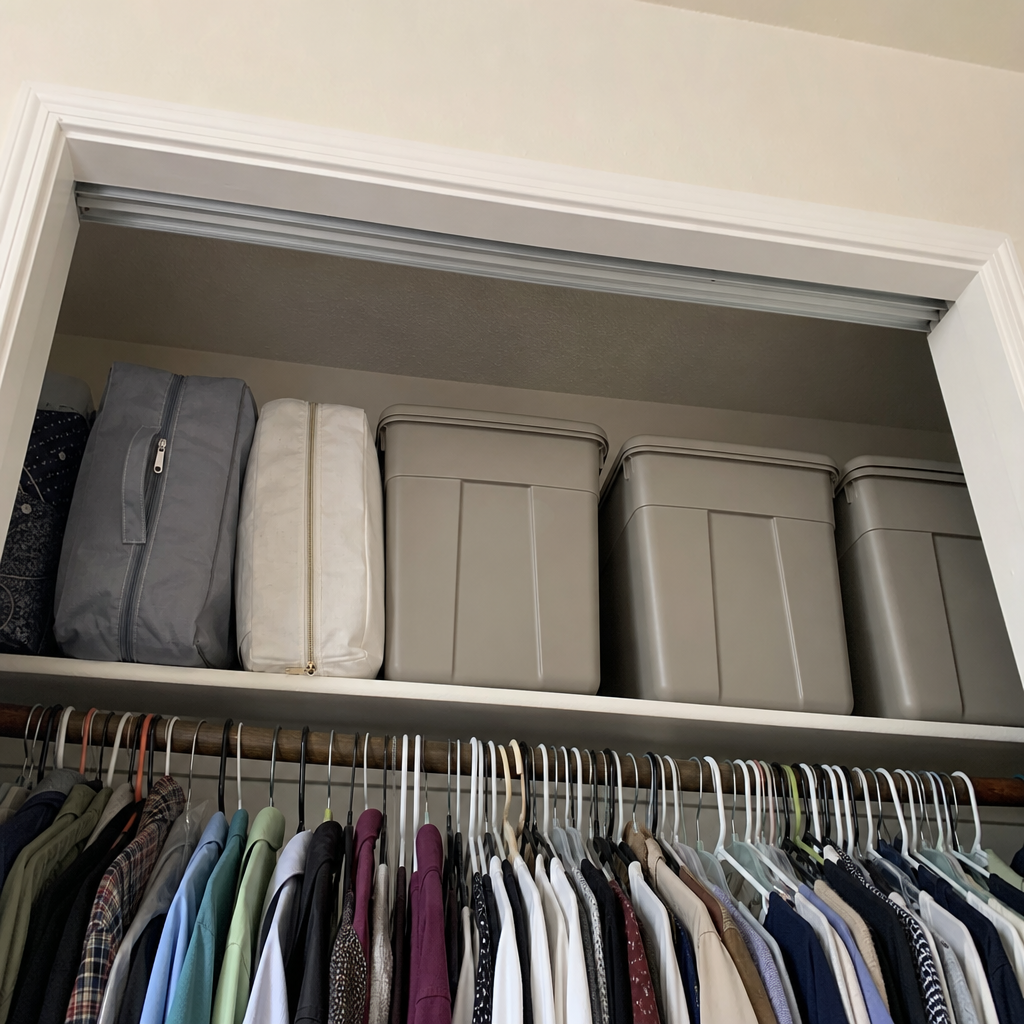
Measure the shelf depth, height, and clearance under the ceiling before choosing containers. Use manageable containers that can be lifted down safely, and avoid stacking heavy bins where a weak shelf or wire rack could sag.
Worth knowing: High storage is inconvenient for everyday items and may be unsafe if a step stool cannot be used steadily in the room.
7.Hang a Pocket Organizer on the Inside of the Door
An over-door pocket organizer uses a surface that often goes unused. It can hold rolled belts, tights, scarves, small clutches, and lightweight accessories without changing the closet walls.
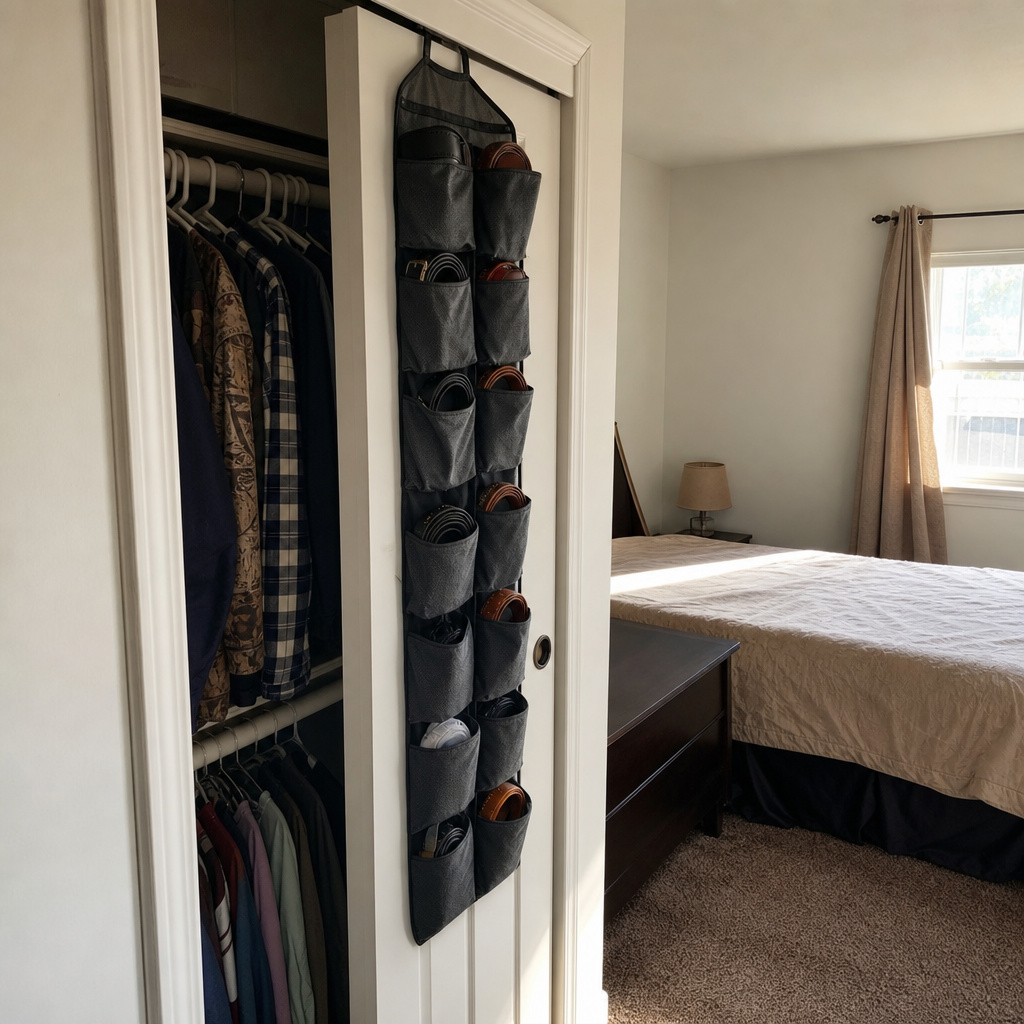
Check how the door moves before adding one. Hinged doors need enough clearance at the top and sides, while sliding doors usually cannot accommodate an over-door hook or organizer at all.
Worth knowing: The organizer can prevent the door from closing properly if the pockets are too full or the door has very little clearance.
8.Use a Door Hook Rack for Tomorrow's Outfit
A removable hook rack creates a designated place for a next-day outfit, robe, tote, or reusable bag. Keeping only a few items there stops a chair or bed from becoming the default clothing drop zone.
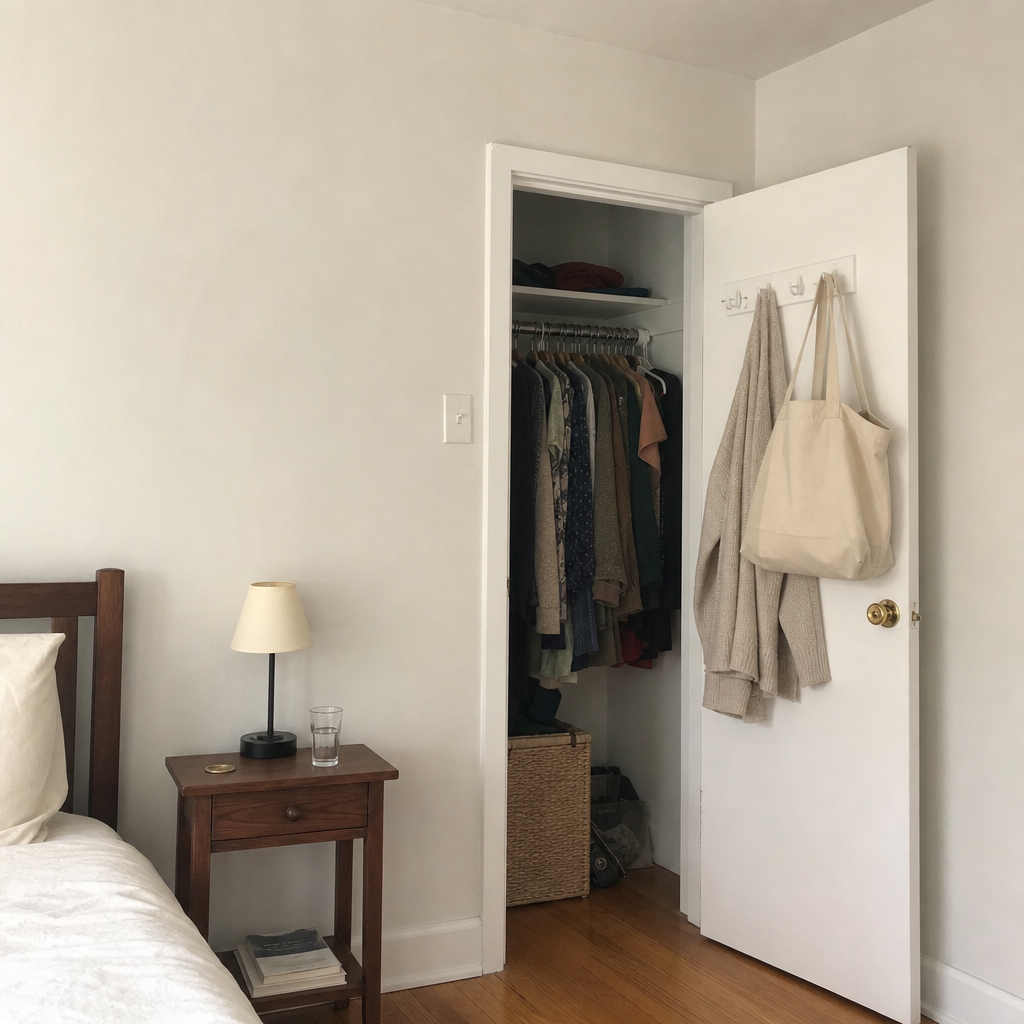
This works best on a hinged door that opens fully and has room for the rack behind it. Choose lightweight items for the hooks, particularly if the closet door is hollow or its hinges already feel loose.
Worth knowing: Door hooks are not suitable for sliding closet doors and can create interference in narrow bedrooms.
9.Add Clip Hangers for Skirts and Trousers
Clip hangers let skirts and trousers hang vertically instead of taking up a shelf in folded stacks. Seeing each piece at once can make it easier to get dressed and keep similar items together.
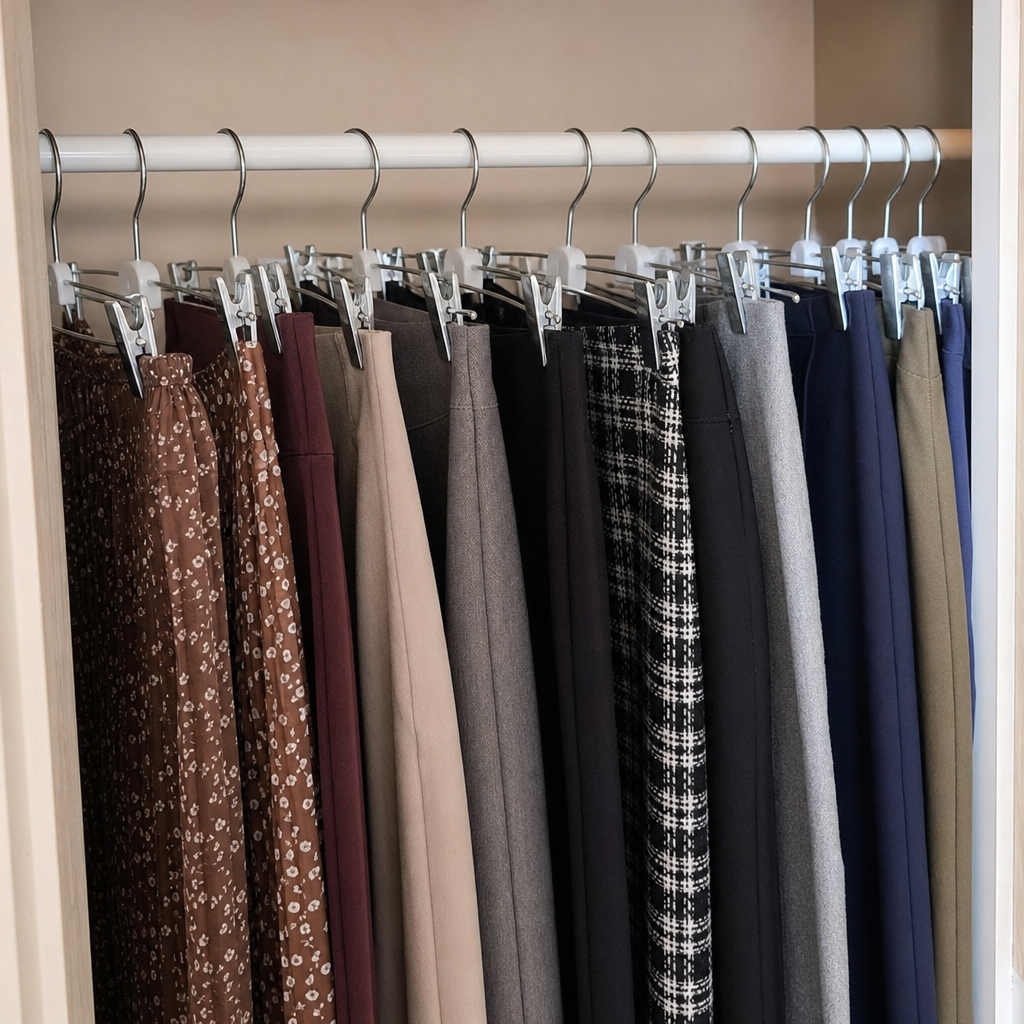
Space them loosely enough that fabric does not crease heavily or catch on neighboring hangers. For delicate materials, place a small piece of soft cloth between the clips and the garment to reduce marks.
Worth knowing: Clip hangers can leave impressions on delicate fabric and use more vertical length than folded storage.
10.Corral Shoes in Low Stackable Bins
Low stackable bins make the closet floor more orderly by separating pairs of shoes from loose clothing and dust. Clear fronts or open bins help identify everyday sneakers, flats, and sandals without digging through a pile.
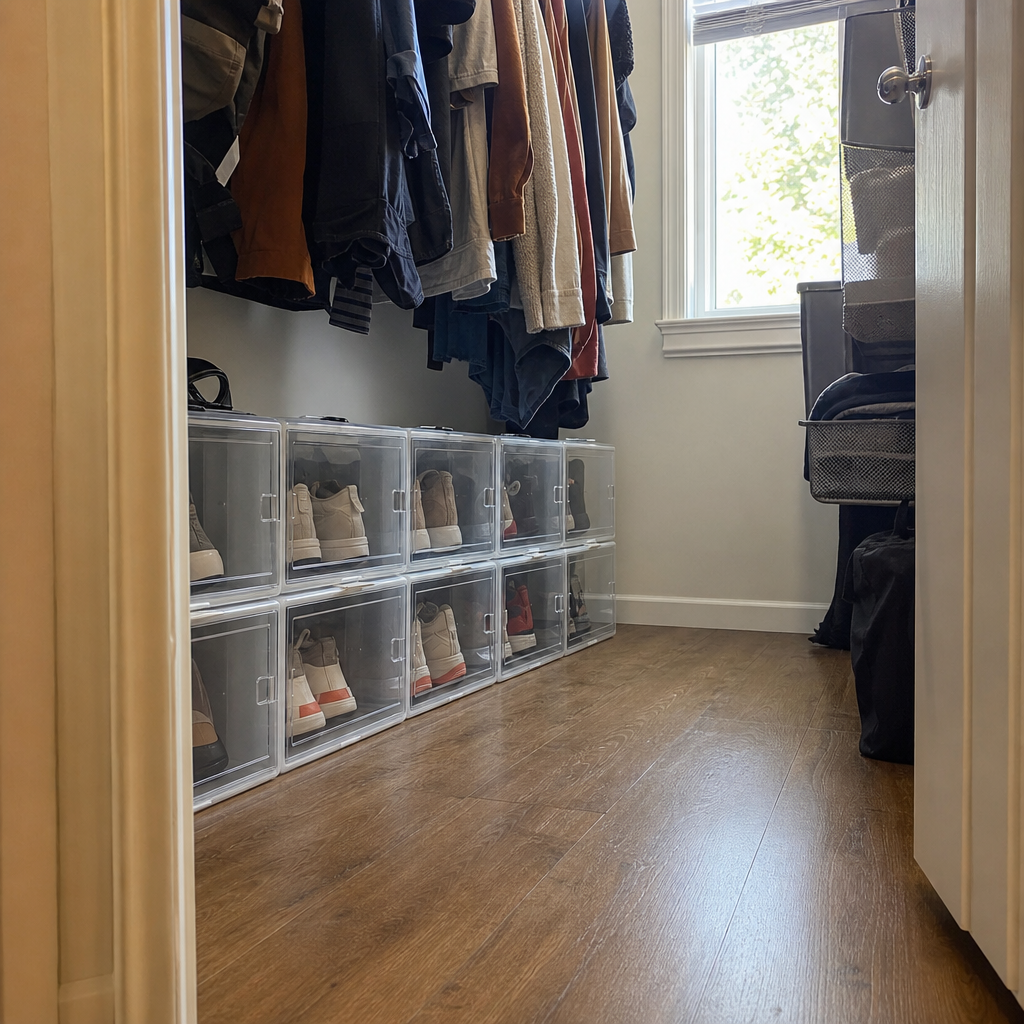
Keep the bins along one side or under shorter clothes so there is still room to stand in front of the closet. Let damp shoes dry fully outside the bin first, since enclosed storage can trap moisture and odors.
Worth knowing: Stacked bins can be awkward for shoes worn daily, especially if the most-used pair ends up in a lower container.
11.Raise One Shoe Row With a Simple Riser
A freestanding shoe riser creates a second level for low-profile shoes without attaching anything to the closet. Flats, sandals, and loafers can sit on top while another row stays below.
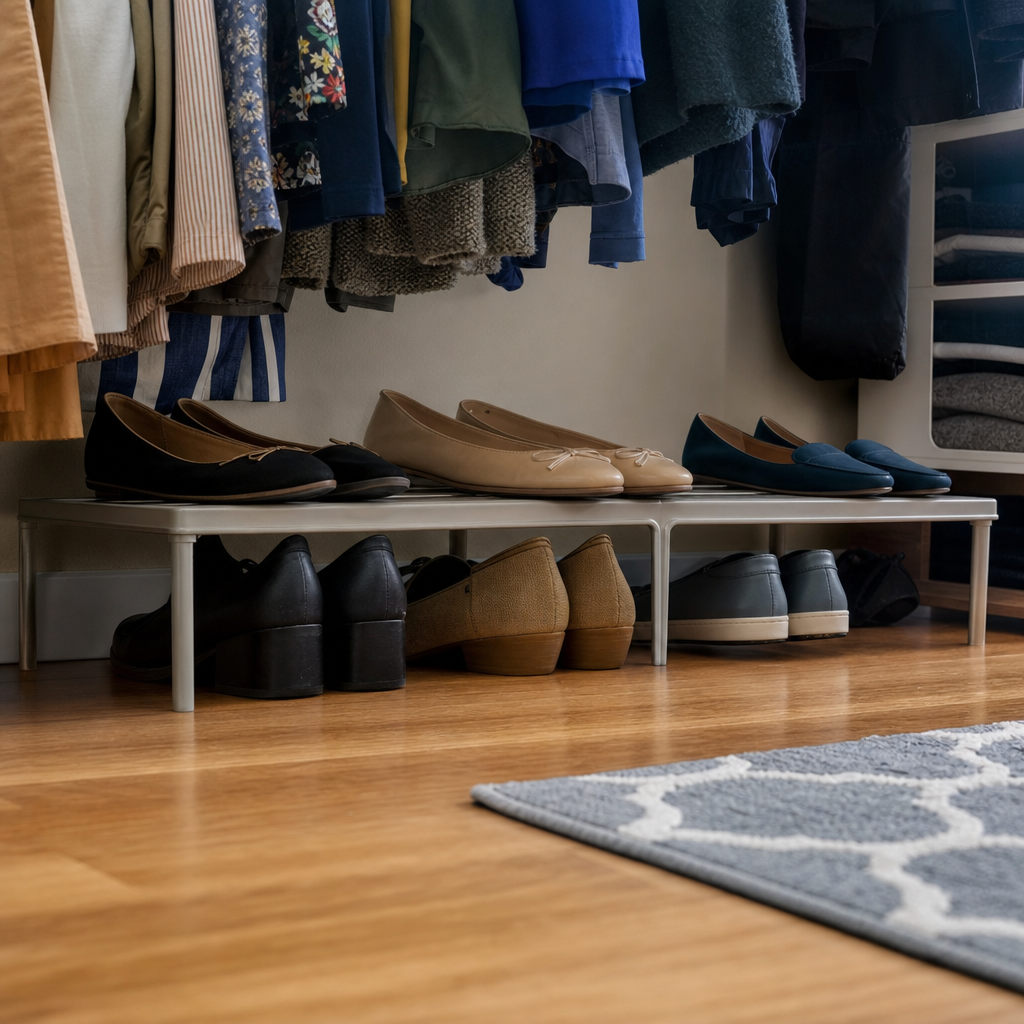
Choose a riser with a stable base that fits the available floor depth. Leave a clear strip in front of it so shoes can be removed without blocking the closet opening or catching on hanging clothes.
Worth knowing: This solution is best for low shoes and may not work for boots, bulky sneakers, or a closet floor with very little depth.
12.Use Under-Shelf Baskets Below a Solid Shelf
Clip-on under-shelf baskets use the empty space below a solid shelf for lightweight folded T-shirts, clutches, or small accessories. They can create a useful layer between the shelf and hanging clothes without permanent installation.
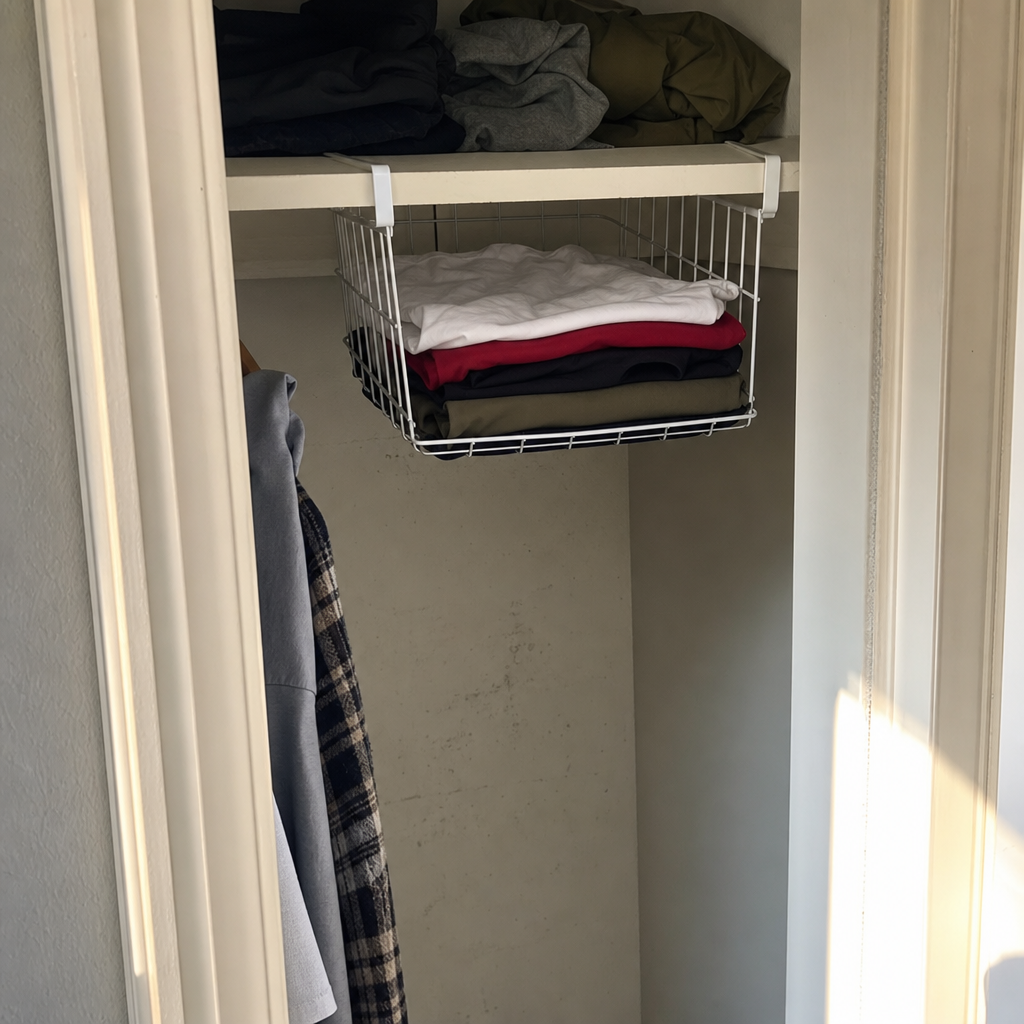
Check that the shelf is solid, stable, and thick enough for the basket clips. Keep the contents light so the basket does not pull downward or interfere with garments hanging below.
Worth knowing: Under-shelf baskets are not a good match for flimsy wire shelving or for storing heavy items.
13.Keep Laundry Separate With a Narrow Hamper
A narrow hamper at one end of the closet gives worn clothes a clear destination away from clean clothing. This can be especially helpful in a small bedroom where there is no space for a separate laundry basket.
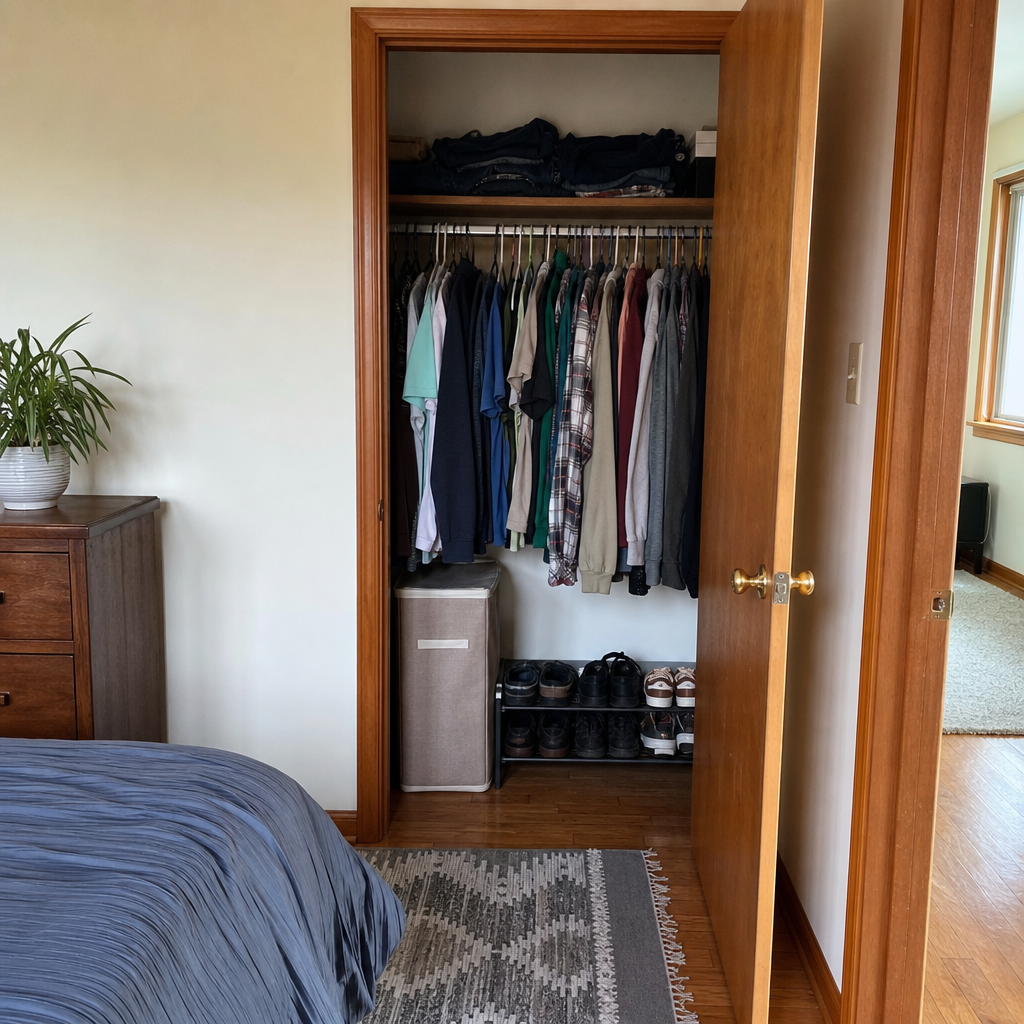
Choose a freestanding style that fits under the rod or beside shoe storage without blocking access. A breathable fabric hamper is useful for everyday laundry, but damp towels and workout clothes should be aired out before they go inside.
Worth knowing: A hamper uses valuable floor space and can make a shallow closet harder to access if it is too wide.
14.Use a Freestanding Drawer Unit Under Short Clothes
A compact freestanding drawer unit can fill the open floor space below shirts, blouses, or jackets. It provides concealed storage for underwear, socks, accessories, and other items that do not need to hang.
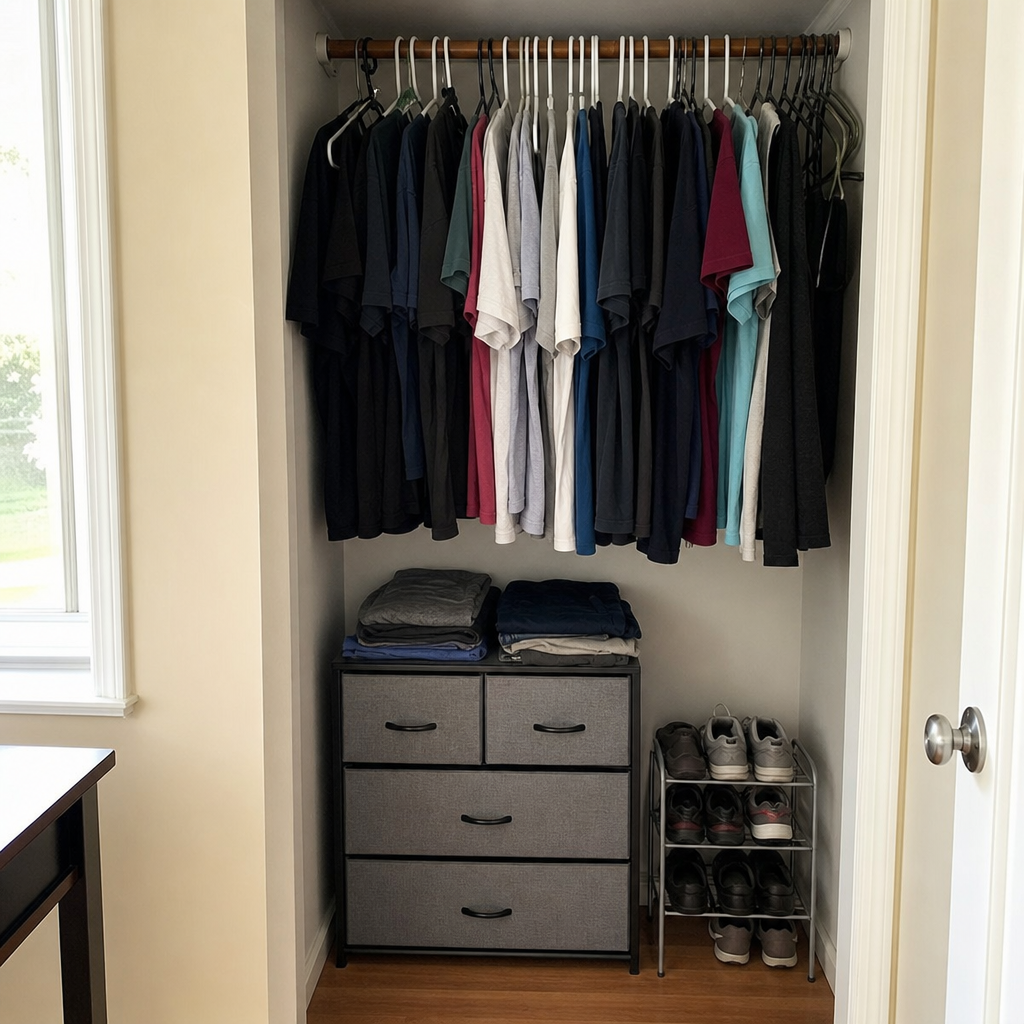
Measure the height from the floor to the hem of the shortest hanging garments so they do not rest on top of the unit. Keep the drawers easy to open and avoid placing a tall piece where it blocks shoes or the closet door path.
Worth knowing: This only works beneath short hanging clothes; long dresses, coats, and trousers need the full vertical space.
15.Create a Small Donation or Repair Bin
Set one lightweight bin near the front of the closet for clothes that need mending, returning, donating, or further consideration. It keeps uncertain items from going back into the main clothing groups simply because there is nowhere else to put them.
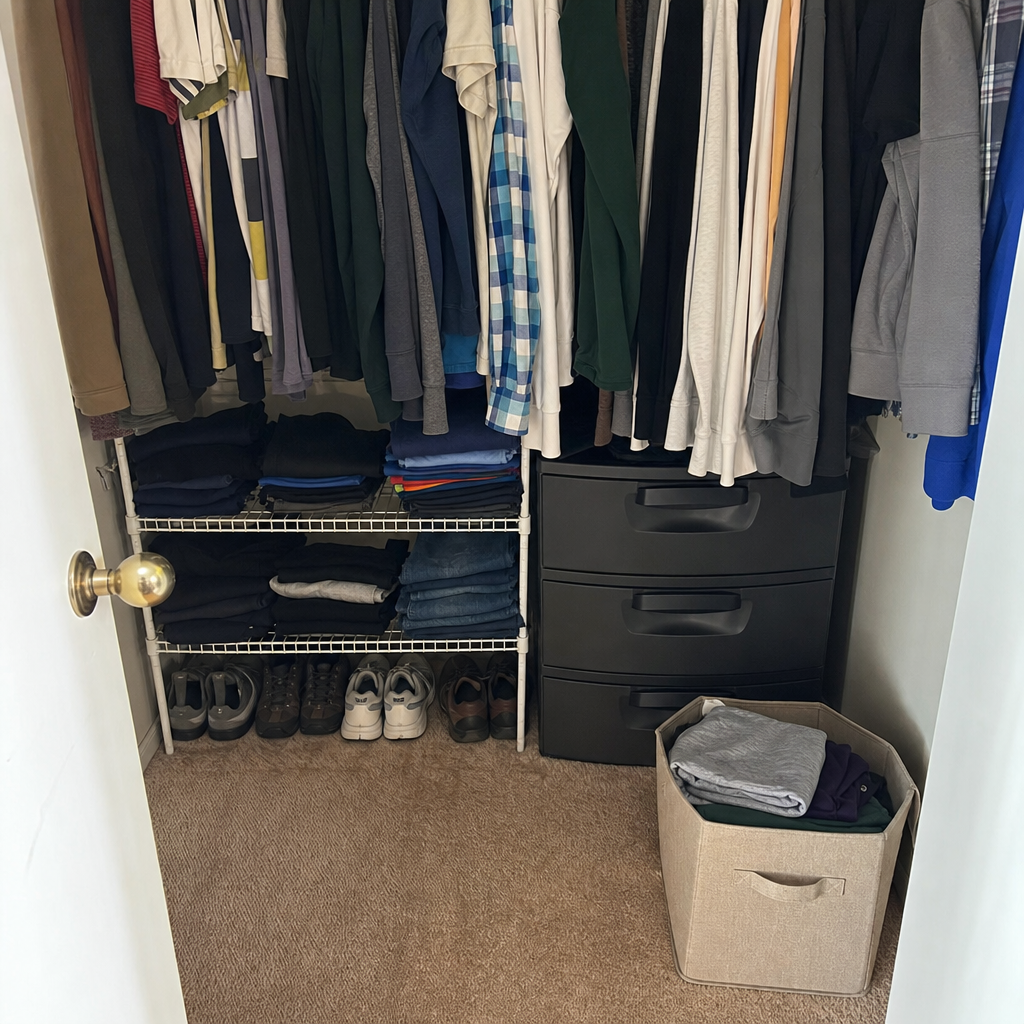
Keep this bin small enough that it cannot become permanent overflow storage. Empty it regularly by repairing what is worth keeping and moving donation-ready items out of the closet.
Worth knowing: A decision bin only helps when it is reviewed regularly; otherwise it becomes another place for delayed clutter.
About the author
Dana Ruiz, Senior editor
Dana writes about small-space living, storage and low-cost decorating.
Keep reading
10 Small Dining Area Ideas When You Don't Have a Dining Room
September 16, 2026
12 Small Patio Seating Ideas on a Budget
September 16, 2026
12 Small Kitchen Ideas That Free Up Prep Space Without Remodeling
September 15, 2026
12 Studio Apartment Divider Ideas Without Building a Wall
September 15, 2026