10 Guest Room and Office Ideas for One Small Room
A small spare bedroom can work as a useful office on ordinary days and still be ready for an overnight guest without a major furniture shuffle. The best layout depends on how often guests stay, how much desk space is needed, and whether the room has enough clear floor area for a bed to open safely.
1.Place a Daybed Along the Longest Clear Wall
A daybed gives the room a place to sit during work hours without making it feel like a bedroom all week. Set it along the longest uninterrupted wall, then place the desk opposite it or on the adjacent wall to preserve a clear center path.
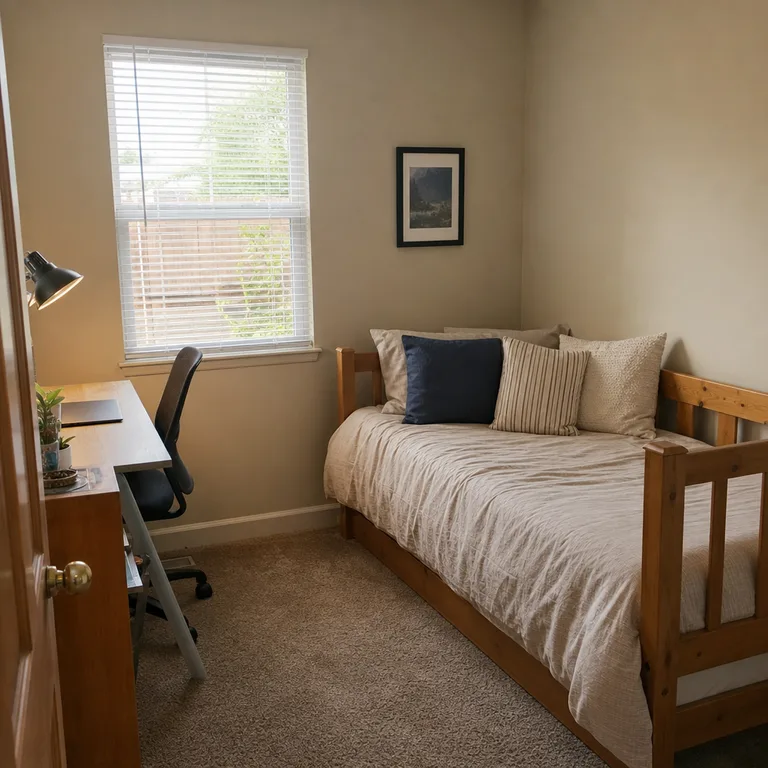
Use a standard mattress and simple washable cover so the bed looks more like a sofa when it is not in use. A pair of firm back cushions can make it comfortable for reading or video calls, while under-bed drawers or bins can hold spare linens.
Worth knowing: A daybed is usually best for one guest, and a deep mattress can make it less comfortable to use as daytime seating.
Related: 10 Budget Reading Nook Ideas for an Unused Corner
2.Use a Wall Bed With a Folding Desk Surface
A wall bed lets the room read as an office during the workweek because the mattress is stored vertically inside a cabinet. Some models include a desk surface that folds or moves out of the way as the bed opens, which can reduce the amount of furniture competing for floor space.
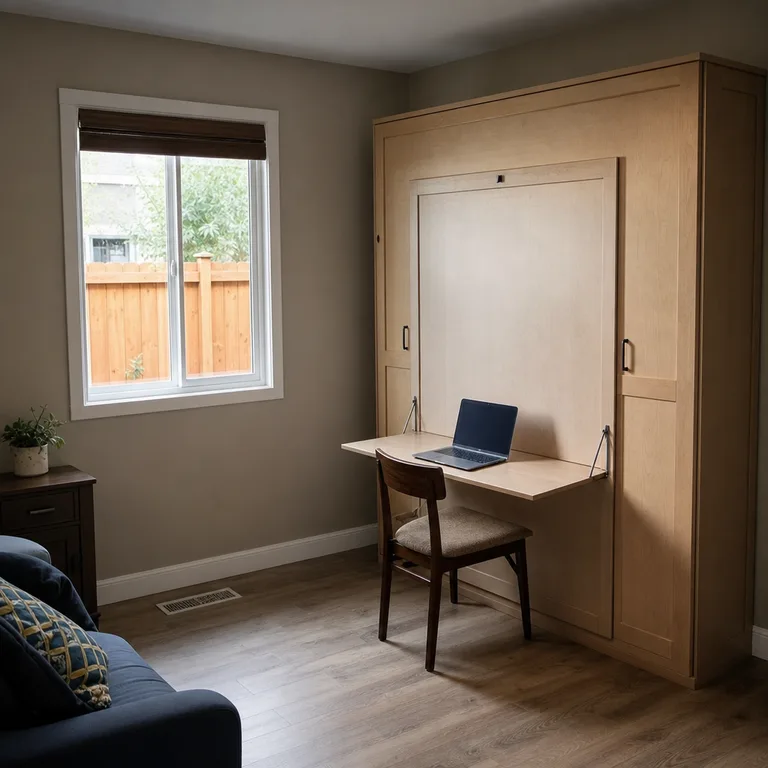
Choose a unit designed and rated for this use, and follow the manufacturer’s installation instructions exactly. Measure the full opening path, including room for bedding and a safe walkway, and use proper wall attachment rather than adapting ordinary shelving or cabinetry into a bed support.
Worth knowing: Wall beds require secure installation and enough unobstructed floor area in front of the cabinet, so they are not a simple renter-friendly change.
3.Choose a Sofa Bed That Faces the Desk Wall
A compact sofa bed makes the room feel more like a study or sitting room when no one is staying over. Put the desk on the facing wall so it remains a dedicated work zone while the sofa is folded up.
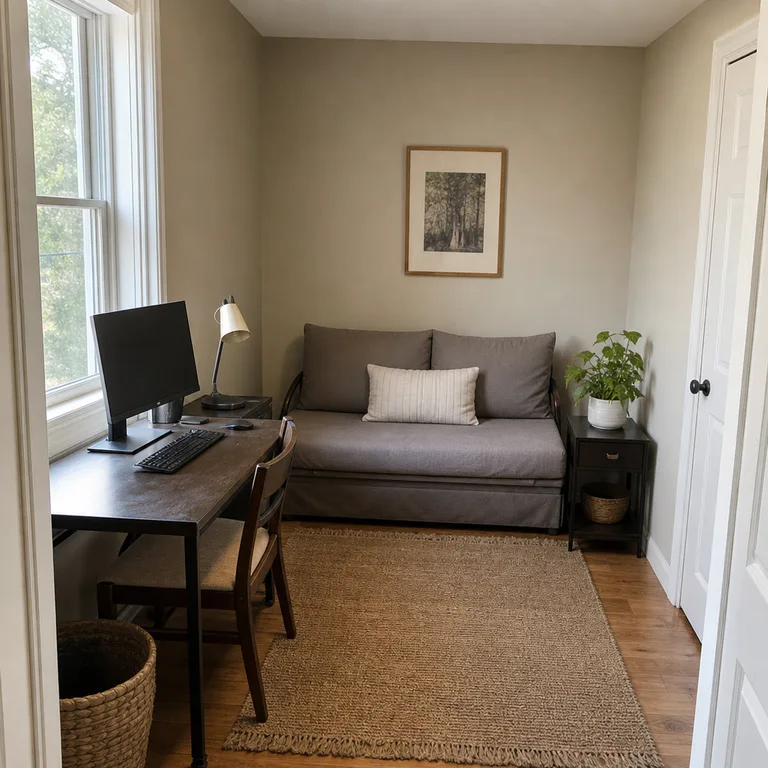
Look for a layout that leaves a direct route from the door to the desk and window. Keep a slim side table instead of a bulky coffee table, since that piece may need to move when the mattress is pulled out.
Worth knowing: When the bed is open, the desk may be difficult to reach unless the room has a generous path around the extended mattress.
Related: 12 Small Living Room Layout Ideas That Leave Room to Walk
4.Tuck a Desk Into a Shallow Closet Niche
A closet desk keeps office supplies in one contained zone while leaving the rest of the room available for a regular guest bed. Remove only what is needed, then fit a work surface and wall shelves inside the niche without blocking door hardware or access to electrical outlets.
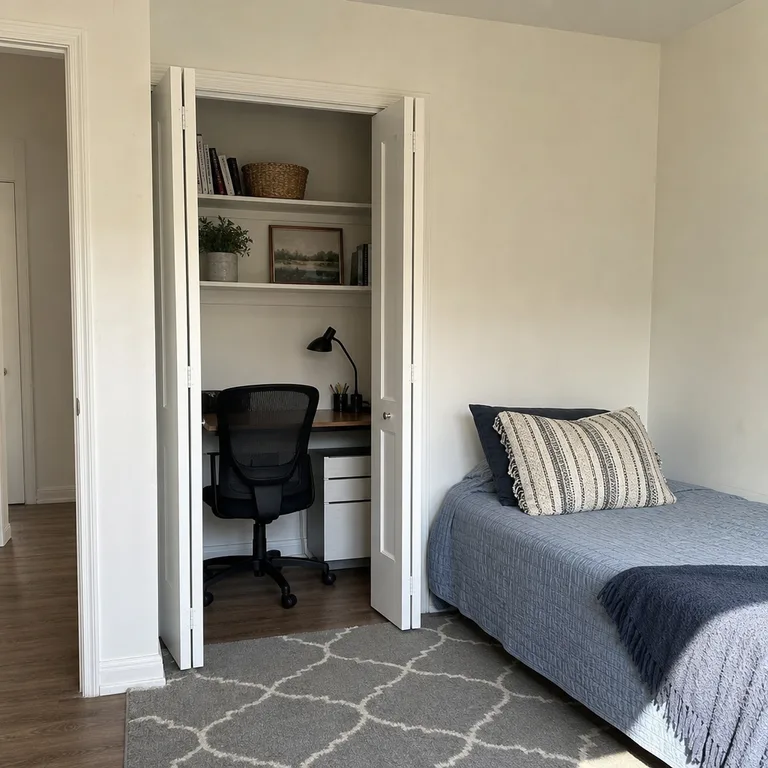
Use the existing closet doors to hide the desk when guests arrive, or add a curtain if doors are missing. A narrow chair that tucks fully under the desk will make the transition faster and keep the bed area from feeling crowded.
Worth knowing: This approach works best in a closet with enough depth for a chair and safe cable routing, and it gives up some hanging storage.
Related: 10 Home Office Nook Ideas for a Small Living Room
5.Set a Narrow Desk Behind a Sleeper Sofa
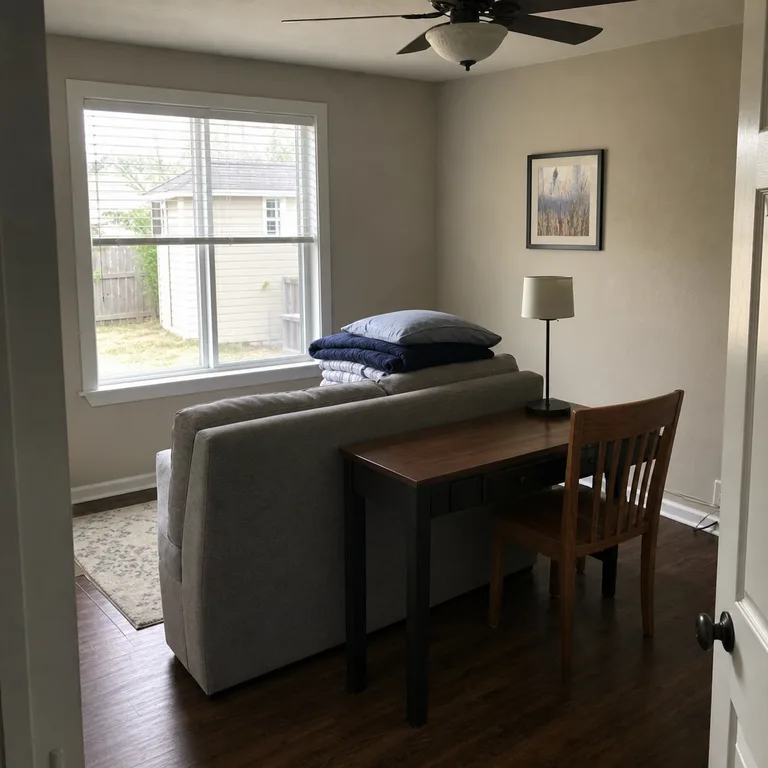
A shallow desk behind a sleeper sofa can create a clear work zone without taking another wall. The sofa back acts as a soft divider, helping the desk feel separate from the guest sleeping area on ordinary days.
Choose a desk with enough depth for the work actually done there, but not so much that it pinches the route behind the sofa. Test the sleeper mechanism with the chair pushed in and the door fully open, since the extended bed needs a clear path.
Worth knowing: This layout can feel tight quickly, especially if the sleeper sofa opens toward the desk or the room has an inward-swinging door.
6.Make a Window Wall the Dedicated Work Zone
Placing the desk under or beside a window gives daytime work a natural focal point and keeps the bed on the opposite wall. This straightforward layout is often easier to maintain because neither major piece has to move for a guest visit.
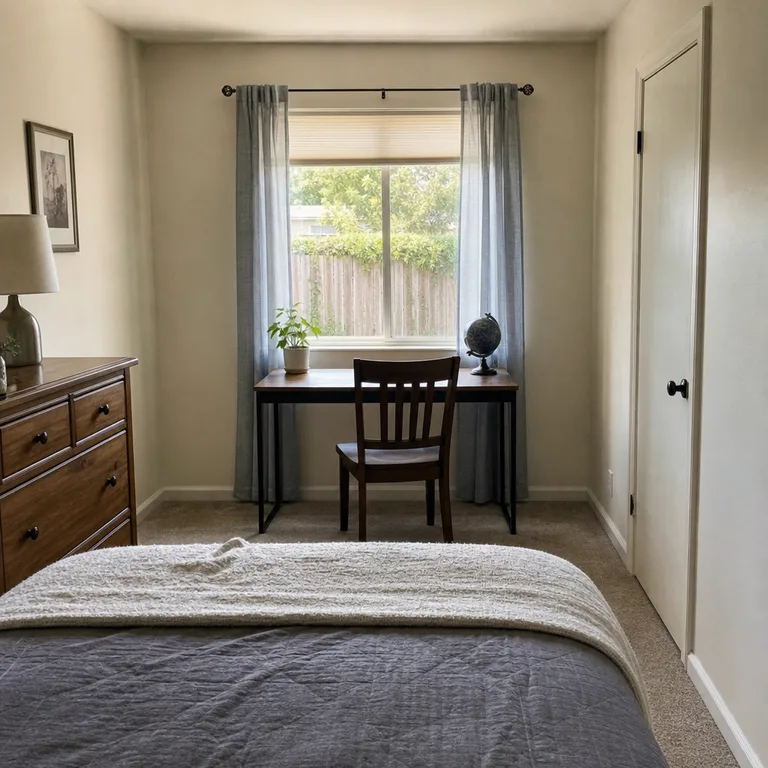
Position the screen perpendicular to direct sun when possible, and use adjustable curtains or blinds to control glare. Avoid placing the desk over a radiator or blocking a window that must remain accessible for ventilation or emergency exit.
Worth knowing: Strong afternoon sun can make screen glare and heat uncomfortable, while direct sunlight may fade fabrics near the window.
7.Store Guest Bedding in a Bench or Ottoman
A storage bench at the foot of the bed keeps sheets, pillowcases, and a lightweight blanket near the place they will be used. It also gives guests a spot to set a bag, while a lidded ottoman can double as extra seating during the workday.
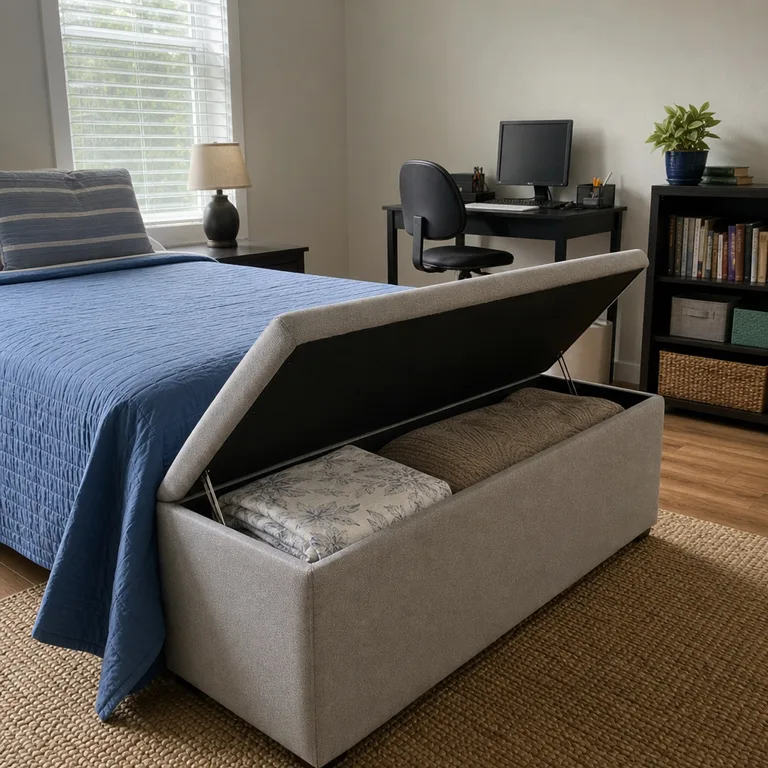
Pick a piece that does not obstruct drawers, closet doors, or the route around the bed. Fold bedding into one complete set so setup does not depend on clearing desk drawers or searching through household storage.
Worth knowing: A bench can make a narrow room harder to walk through, and upholstered storage needs occasional cleaning if it is used often as seating.
8.Use a Room Divider to Screen the Bed
A curtain track or lightweight folding screen can give the bed some visual privacy without building a permanent wall. It is especially useful when the desk must stay visible from the doorway or when the room feels more restful with the bed partly concealed.
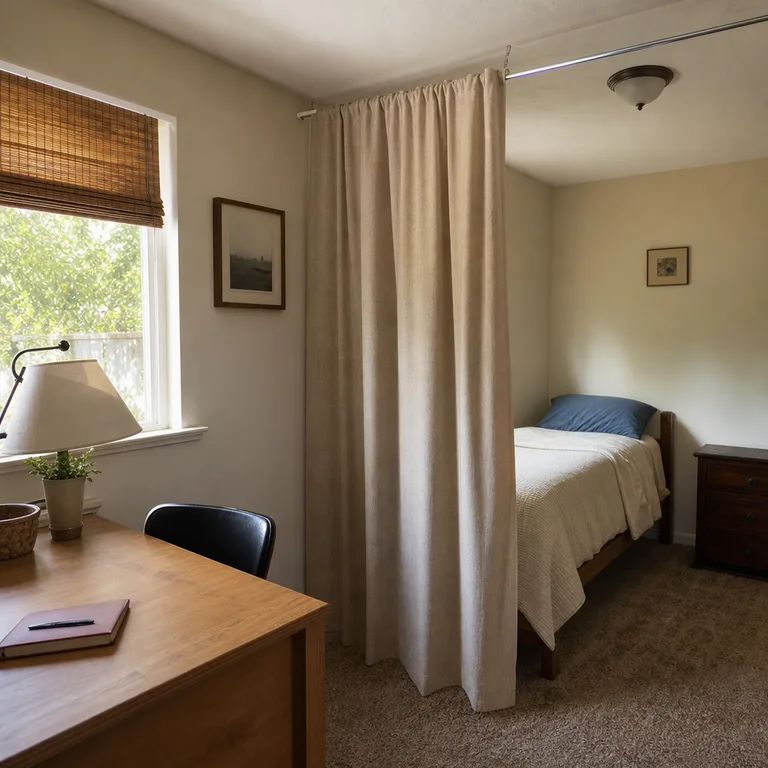
Use a ceiling-mounted curtain only where the ceiling and mounting method can support it, or choose a freestanding screen for a less permanent option. Keep the divider away from heating vents, radiators, window access, and smoke detectors, and choose a breathable fabric in a small room.
Worth knowing: A divider changes the view more than the sound or privacy level, and a heavy screen can make a compact room feel closed in.
9.Fit a Rolling Desk Under a Fixed Worktop
A rolling desk can slide beneath a larger fixed worktop when a guest needs more open floor space. This suits a room where the main work surface stays in place, but a smaller mobile station can be tucked away for overnight visits.
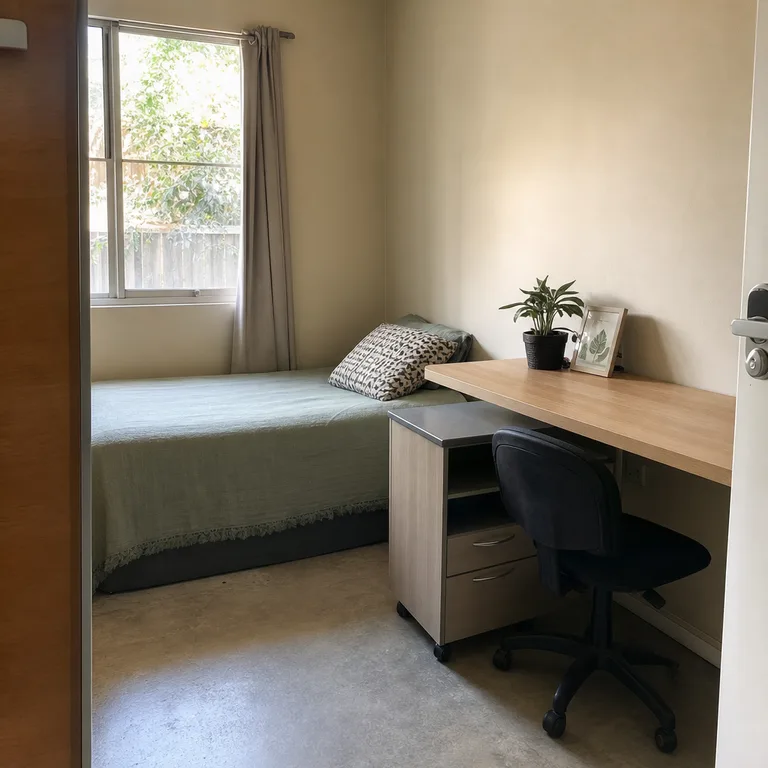
Use locking casters and keep the desk low enough to roll under without catching cables or the worktop edge. Store only lightweight office supplies in the mobile piece, and leave enough clearance for it to move without scraping the bed frame or wall.
Worth knowing: A rolling desk is less stable than a fixed desk and may not suit heavy equipment or work that needs a large permanent surface.
10.Create a Simple Guest-Ready Reset Routine
A repeatable reset keeps the room from becoming a rushed cleanup project when someone stays over. Keep a complete bedding set together, clear one bedside surface, leave an outlet accessible, and give work papers a dedicated drawer, box, or closed cabinet.
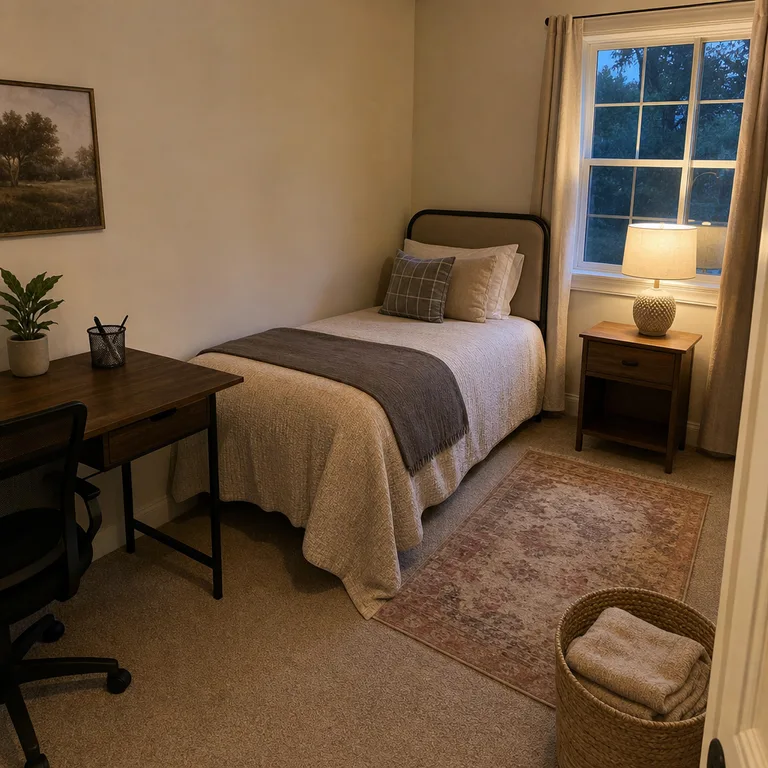
Make the final arrangement part of the room’s normal storage plan rather than an extra task. A small basket for the guest blanket and a hook or clear spot for a bag can make the room feel prepared without adding much furniture.
Worth knowing: A reset routine only stays quick when desk clutter is contained regularly, so it requires a simple daily habit rather than a one-time organizing session.
About the author
Dana Ruiz, Senior editor
Dana writes about small-space living, storage and low-cost decorating.
Keep reading
10 Budget Reading Nook Ideas for an Unused Corner
September 20, 2026
10 Small Bathroom Ideas That Keep the Floor Clear
September 19, 2026
10 Rattan Accent Ideas That Add Warmth Without a Full Room Makeover
September 20, 2026
12 Bookshelf Styling Ideas Using Things You Already Own
September 20, 2026