12 Kitchen Drawer Organization Ideas Using Simple Dividers
Shallow kitchen drawers work better when each tool category has a defined section that fits the drawer’s interior dimensions. These divider ideas separate utensils, wraps, packets, and knife-safe tools while keeping cleaning, drawer clearance, and daily access in mind.
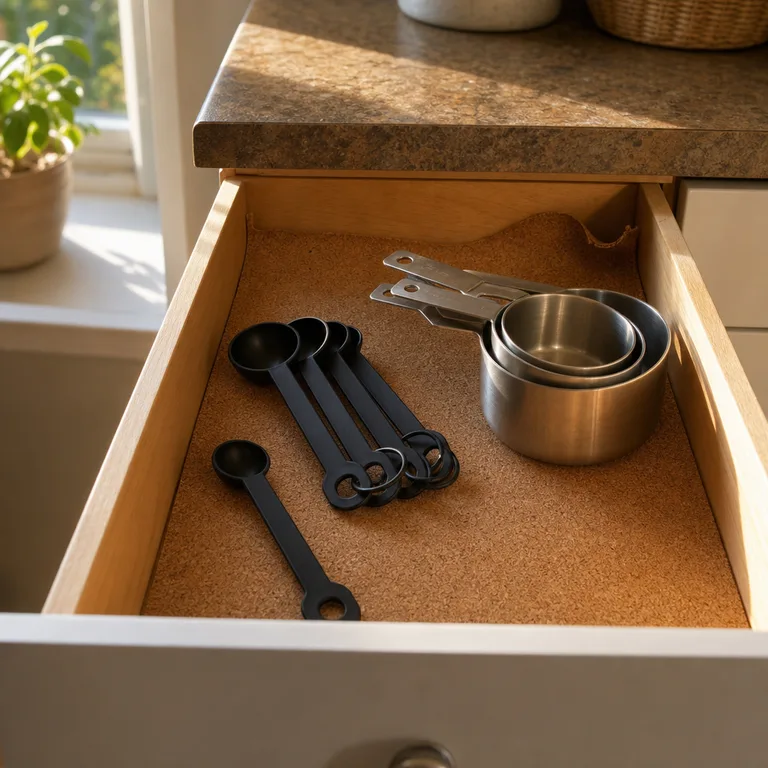
1.Add Adjustable Crosswise Dividers for Cooking Utensils
Run adjustable dividers from the front of the drawer to the back to create long, narrow channels. Give spatulas, tongs, whisks, and wooden spoons separate lanes so handles no longer overlap in one loose pile.
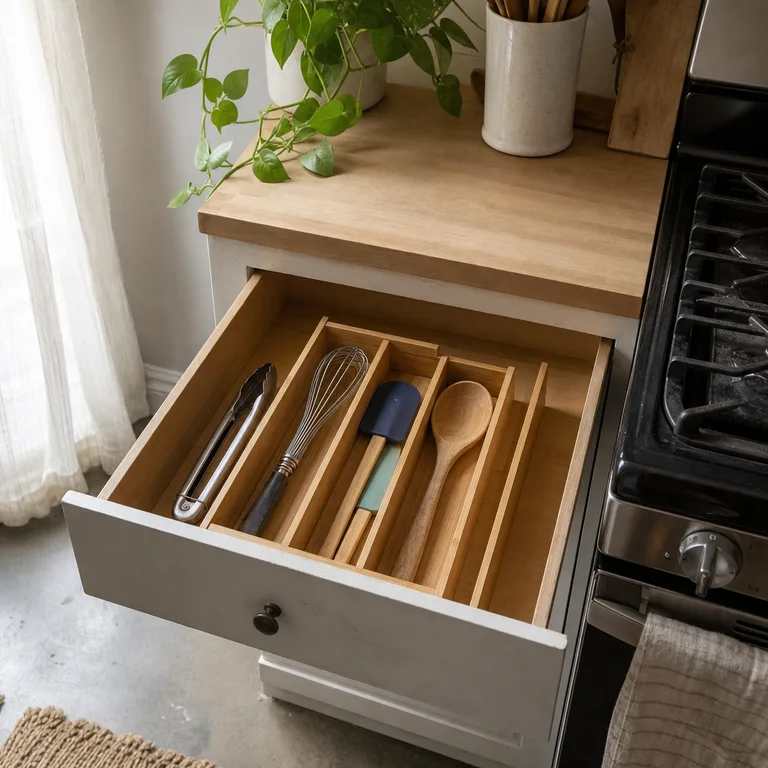
Measure the drawer’s inside width and depth rather than its cabinet face, then test the tallest utensil with the drawer closed. Adjustable dividers are useful in a rental because they can usually be removed without altering the drawer.
Worth knowing: Very shallow drawers may not close over bulky tongs, ladles, or raised divider ends.
Related: 12 Small Kitchen Ideas That Free Up Prep Space Without Remodeling
2.Create a Knife-Safe Section With a Low In-Drawer Block
Set a low slotted knife block or knife insert along one side of a suitable drawer. It holds blades apart and stops them from sliding beneath other tools, where reaching into the drawer can become unsafe.
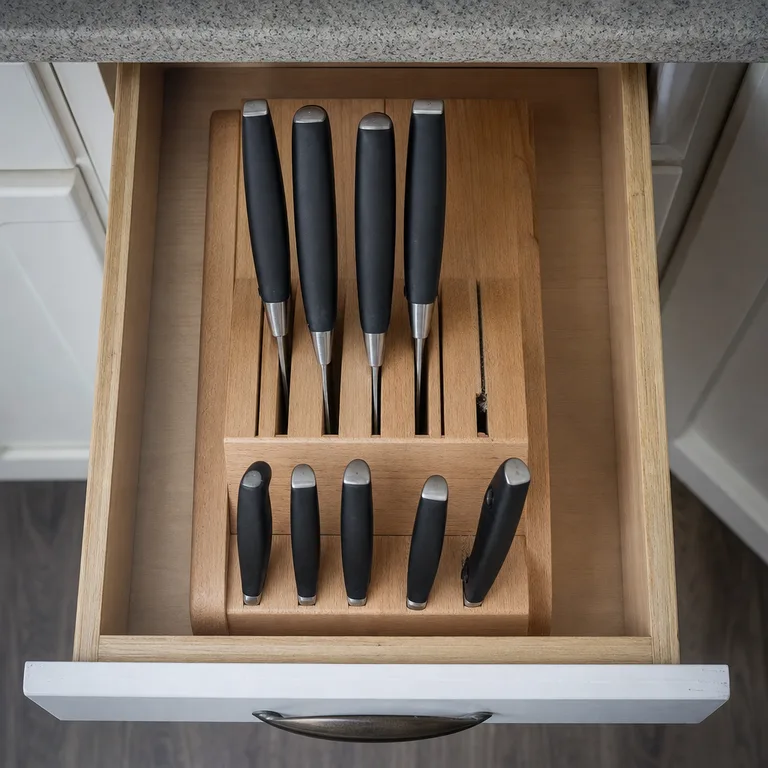
Check the full clearance of both the blades and handles before committing to the layout. A simple fitted insert is generally cheaper than changing cabinetry, but it should sit firmly so it does not shift when the drawer opens.
Worth knowing: Not every shallow drawer is deep enough for a knife insert and closed knife handles.
3.Use a Long Tray for Foil, Parchment, and Food Wrap
Reserve the longest uninterrupted section of a wide drawer for foil, parchment, and food wrap. Place boxes or refillable dispensers parallel to the drawer sides so their cutter edges face upward or toward the front for easier access.
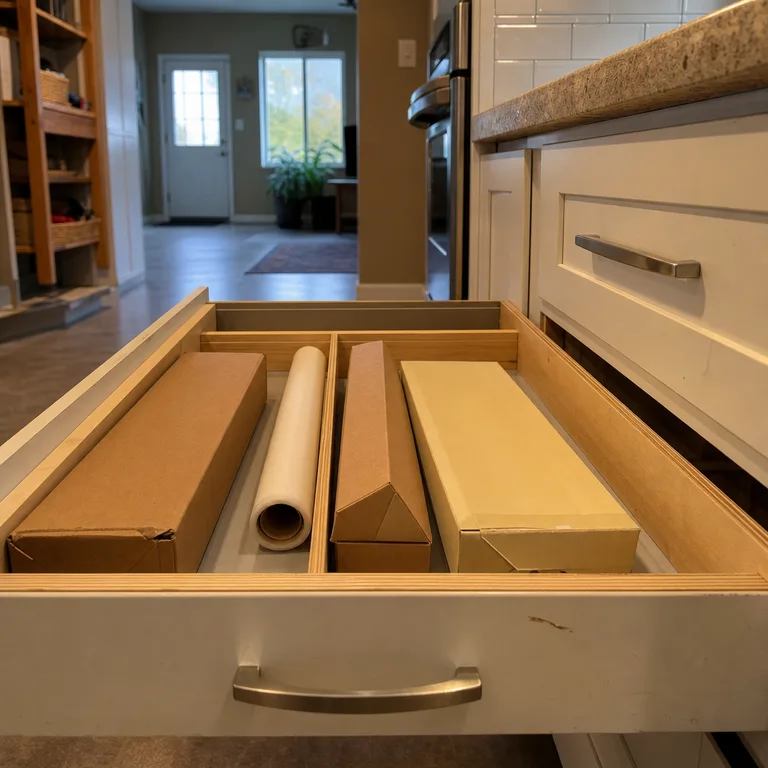
A long tray or two straight dividers keeps boxes from rolling into utensils and protects flimsy cardboard corners. Grouping wraps together also makes it easier to see which roll is running low without digging through a cabinet.
Worth knowing: Full-size wrap boxes can be too long for smaller drawers, especially where drawer hardware takes up interior space.
4.Divide a Small Drawer Into Packet Compartments
Turn a narrow drawer into short compartments for tea bags, seasoning packets, drink mixes, and other small pantry items. Washable bins work well here because loose powders and torn packets are easier to clean up than from a lined drawer.
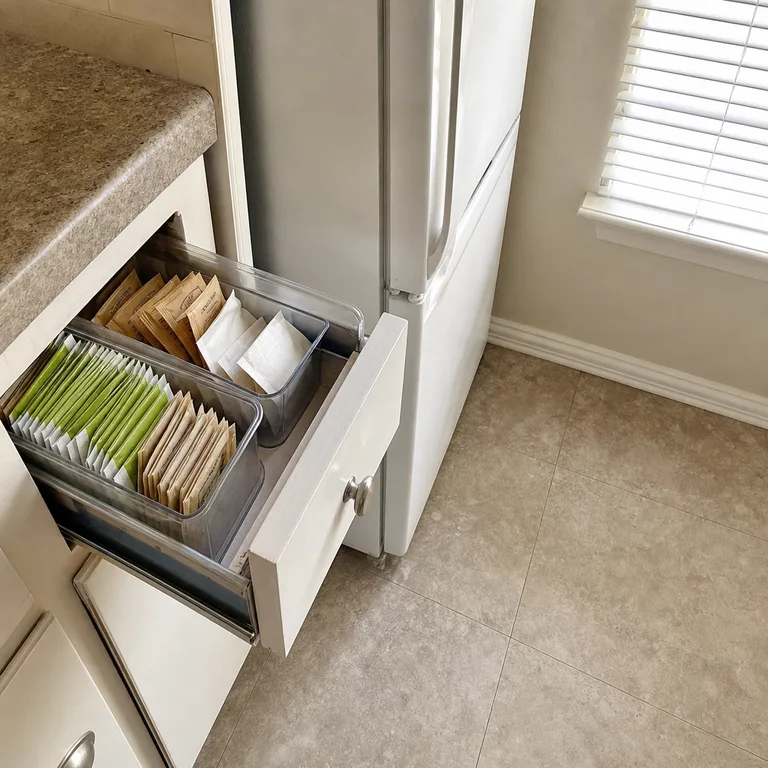
Keep each category in a separate bin instead of sorting every flavor into its own section. This contains the clutter while leaving enough room to restock without constantly rearranging the drawer.
Worth knowing: Packet drawers need occasional checks, since older packets can collect unnoticed at the bottom.
Related: 15 Small Pantry Organization Ideas Without Matching Containers
5.Sort Measuring Tools in Nested Compartments
Give nested measuring cups one shallow compartment and reserve a slim neighboring slot for measuring spoons. Keeping the sets together prevents small spoons from disappearing under larger cups and makes baking prep less frustrating.
Choose a compartment that is just wider than the largest cup, then keep duplicate or loose pieces in the narrow slot. A non-slip liner can help lightweight plastic sets stay put when the drawer is opened quickly.
Worth knowing: Mixed measuring sets may not nest neatly enough to stay compact in a shallow drawer.
6.Make a Narrow Slot for Peelers and Can Openers
Use slim dividers to create individual lanes for peelers, can openers, and kitchen shears. These tools tend to snag larger utensils, and separating them keeps sharp edges and turning handles from tangling together.
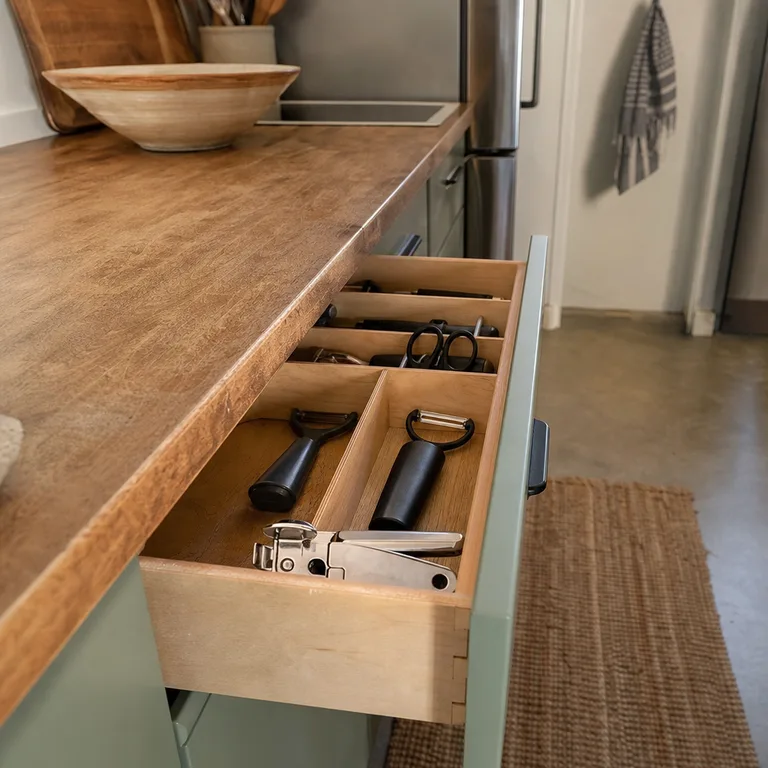
Place the most-used tool near the front of the drawer and keep the lanes short enough that each item stays in place. Fixed dividers or closely fitted trays work better than broad open bins for this narrow category.
Worth knowing: Some can openers are too bulky or tall for a slim lane and may need a deeper drawer.
7.Use a Diagonal Insert for Oversized Gadgets
Fit a diagonal divider across an open corner for awkward handheld gadgets such as a garlic press, citrus squeezer, or small grater. The diagonal shape uses a corner that standard rectangular compartments often waste.
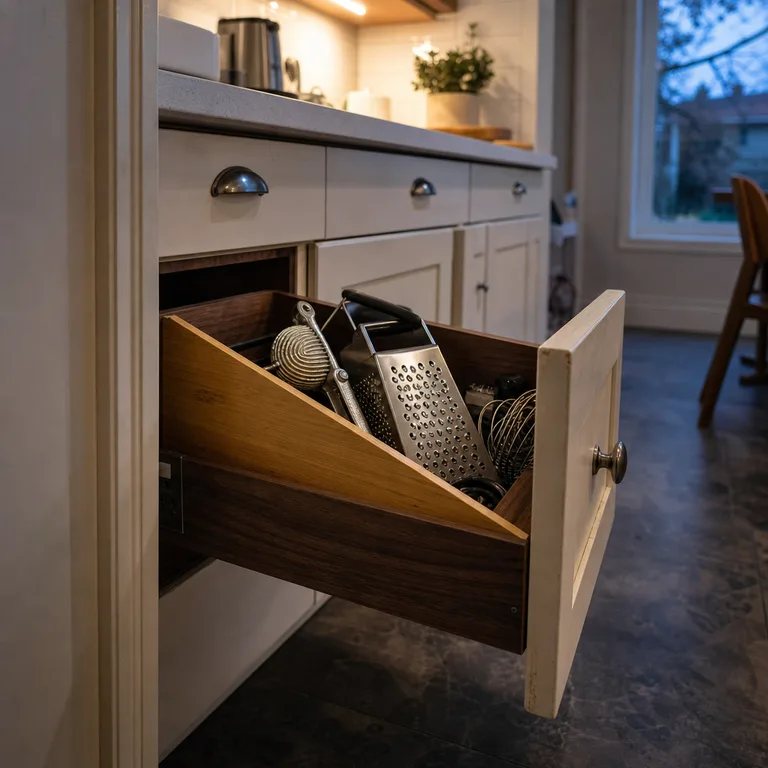
Keep these bulky pieces outside the central utensil area so daily tools remain easy to grab. A simple cut divider strip can work if it is secured snugly enough not to slide or lift with the drawer motion.
Worth knowing: A diagonal compartment is less flexible if the drawer contents change often.
8.Store Everyday Flatware in a Removable Tray
Use a removable flatware tray in the drawer closest to where meals are served or dishes are unloaded. Separate forks, spoons, and table knives, leaving one adjacent section for serving spoons or chopsticks.
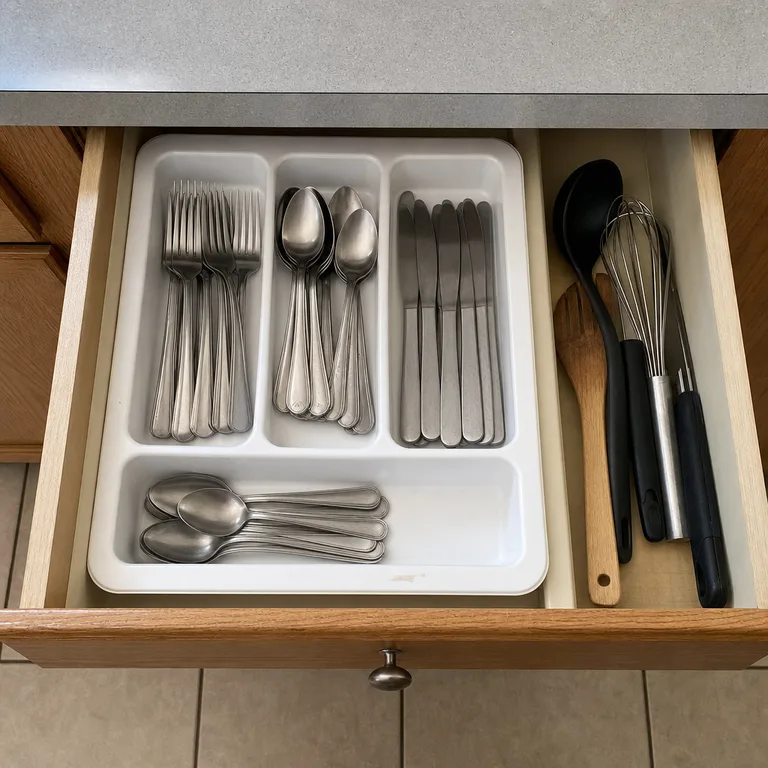
A lift-out tray makes routine cleaning easier because crumbs can collect beneath flatware. Choose one that fits the drawer interior with a little room around the edge, or add side filler strips so it does not drift.
Worth knowing: A removable tray can slide around unless it is closely fitted or supported with non-slip material.
Related: 10 Small Dining Area Ideas When You Don't Have a Dining Room
9.Add a Back Row for Rarely Used Tools
Separate the rear portion of a deeper drawer with a low divider and use it for tools that are useful but not daily essentials. A pastry brush, thermometer, corn holders, and similar pieces stay available without taking over the front of the drawer.
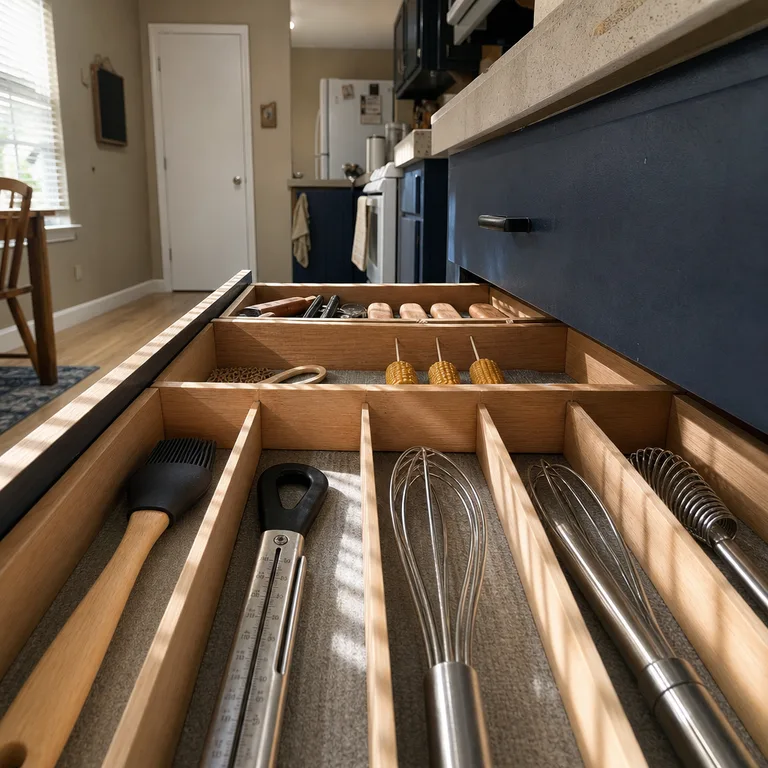
Keep the front section for everyday utensils and make the back divider low enough that items remain visible from above. This layout works especially well when a drawer is deep front to back but does not have much vertical clearance.
Worth knowing: Tools stored in the back can still become forgotten if the drawer is very deep or poorly lit.
10.Corral Jar Openers and Silicone Mats Flat
Give flexible, flat items a broad shallow compartment of their own. Jar grips, silicone trivets, pot holders, and thin mats stay visible when laid flat instead of curling around handles and utensils.
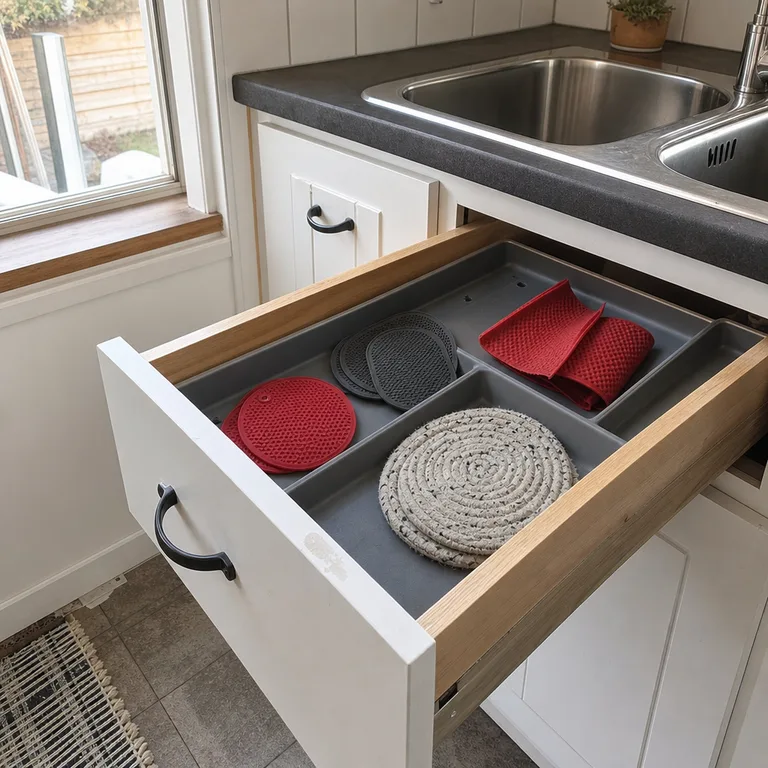
Use a low tray or a wide divider section that matches the drawer shape. Fold only items that are designed to tolerate creasing; keeping silicone pieces flat helps them stay easy to find and clean.
Worth knowing: Wet silicone items should be dried first so moisture does not sit in the drawer.
11.Use Small Washable Cups for Clips and Tiny Parts
Place short washable cups inside a divided utility drawer for bag clips, twine cutters, replacement blades, and other small pieces. The cups keep tiny items from migrating under larger tools and can be lifted out for cleaning.
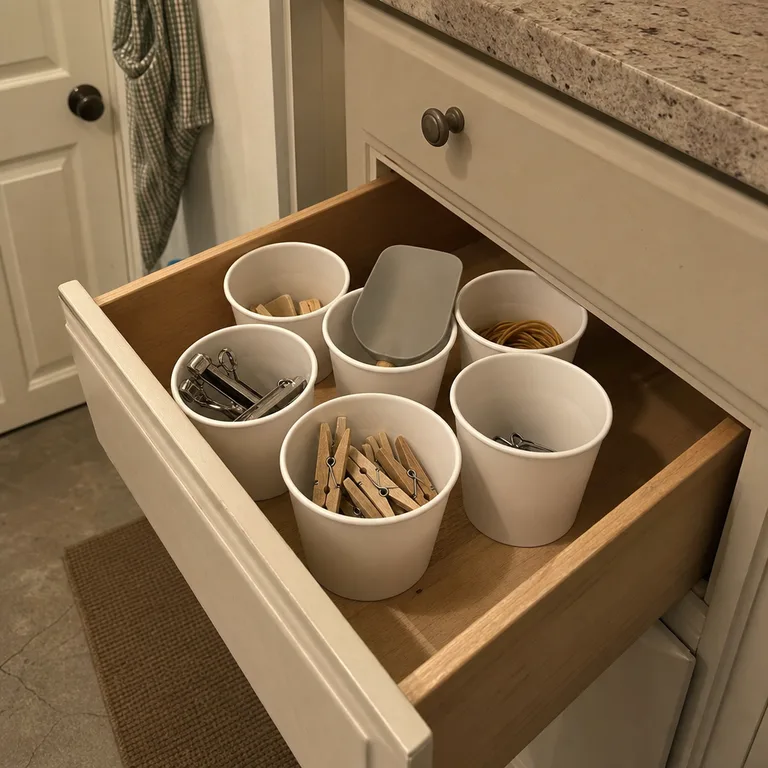
Reuse containers only when they fit the space, have smooth washable surfaces, and are short enough not to catch on the drawer above. Group items by function rather than making a separate cup for every small object.
Worth knowing: Loose sharp replacement blades need a secure covered container, not an open cup.
12.Build a Custom Grid for an Awkward Drawer Size
For an unusually narrow or shallow drawer, cut simple divider strips into a custom grid. A tailored layout can use interior width that standard trays leave empty, particularly in older kitchens with nonstandard drawer dimensions.
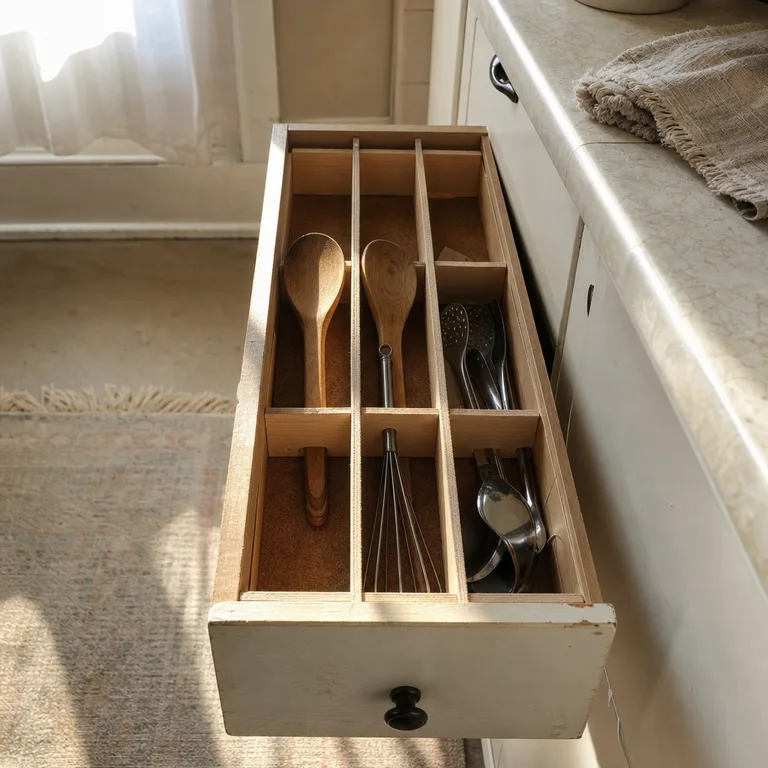
Measure around drawer slides, screws, and any interior hardware before cutting materials. Thin wood, plastic divider strips, or removable fitted organizers can create sections without a complicated build, but test the drawer’s movement throughout installation.
Worth knowing: Custom dividers take more measuring and may need to be remade if the drawer is repurposed later.
About the author
Dana Ruiz, Senior editor
Dana writes about small-space living, storage and low-cost decorating.
Keep reading
10 Laundry Supply Storage Ideas for a Tight Utility Corner
September 25, 2026
10 Board Game Storage Ideas for Homes Without a Playroom
September 25, 2026
10 Under-Bed Storage Ideas That Are Easy to Reach
September 23, 2026
10 Budget Christmas Kitchen Decor Ideas That Keep Counters Usable
September 25, 2026