10 Small Dining Area Ideas When You Don't Have a Dining Room
A dining area can fit into the edge of a kitchen or living room when the table, seating, and walking route are chosen for everyday use rather than occasional entertaining. These renter-friendly layouts make room for meals while keeping folding pieces, chair clearance, and existing furniture in mind.
1.Place a Round Pedestal Table in an Open Corner
A small round pedestal table can turn an unused kitchen or living-room corner into a place for regular meals. Its single center base leaves more room for knees than a table with four legs, and chairs can sit closer to the edge when they are not in use.
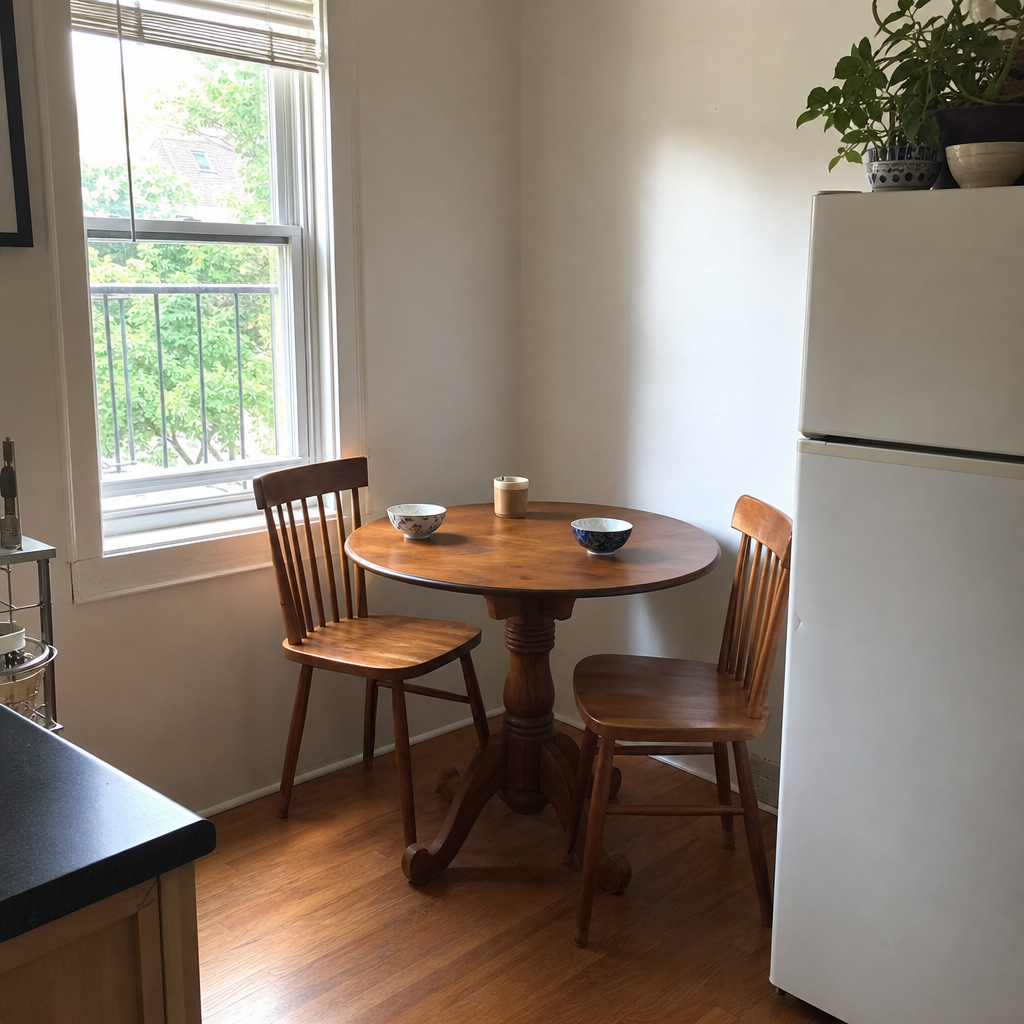
Use a table already in the home if its top is sturdy and easy to wipe clean, or look for a secondhand pedestal base and simple round top. Keep the table away from cabinet doors, appliances, and the main route through the room so diners do not have to stand up every time someone passes.
Worth knowing: A round table is comfortable for two or three people, but it may not provide enough surface area for larger meals or work projects.
2.Use a Drop-Leaf Table Along a Wall
A drop-leaf table works well along a blank wall because it can stay narrow between meals. Open one leaf for a solo meal or two-person dinner, then open both only when the room can handle the extra depth.
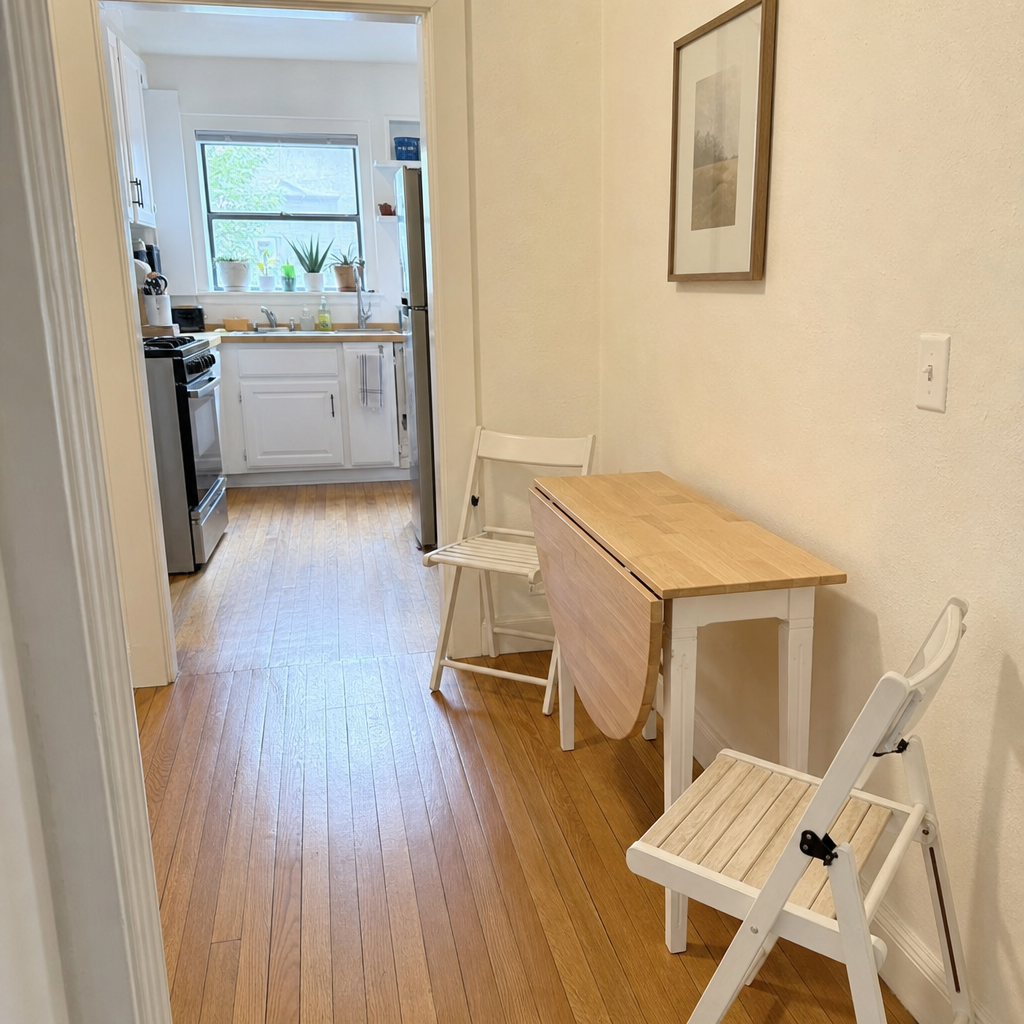
Pair it with folding chairs or lightweight chairs that can move aside without much effort. Measure the open table position and leave a usable path behind the chairs; a table that blocks the kitchen route every day will quickly become frustrating.
Worth knowing: Even a folding table needs clear floor space when its leaf is open and chairs are pulled out.
3.Turn the Back of a Sofa Into a Dining Zone
Set a compact rectangular table behind the sofa to give an open-plan room a clearer purpose. The sofa back acts as a visual divider, so the dining setup feels separate from the lounging area without needing a screen or another large piece of furniture.
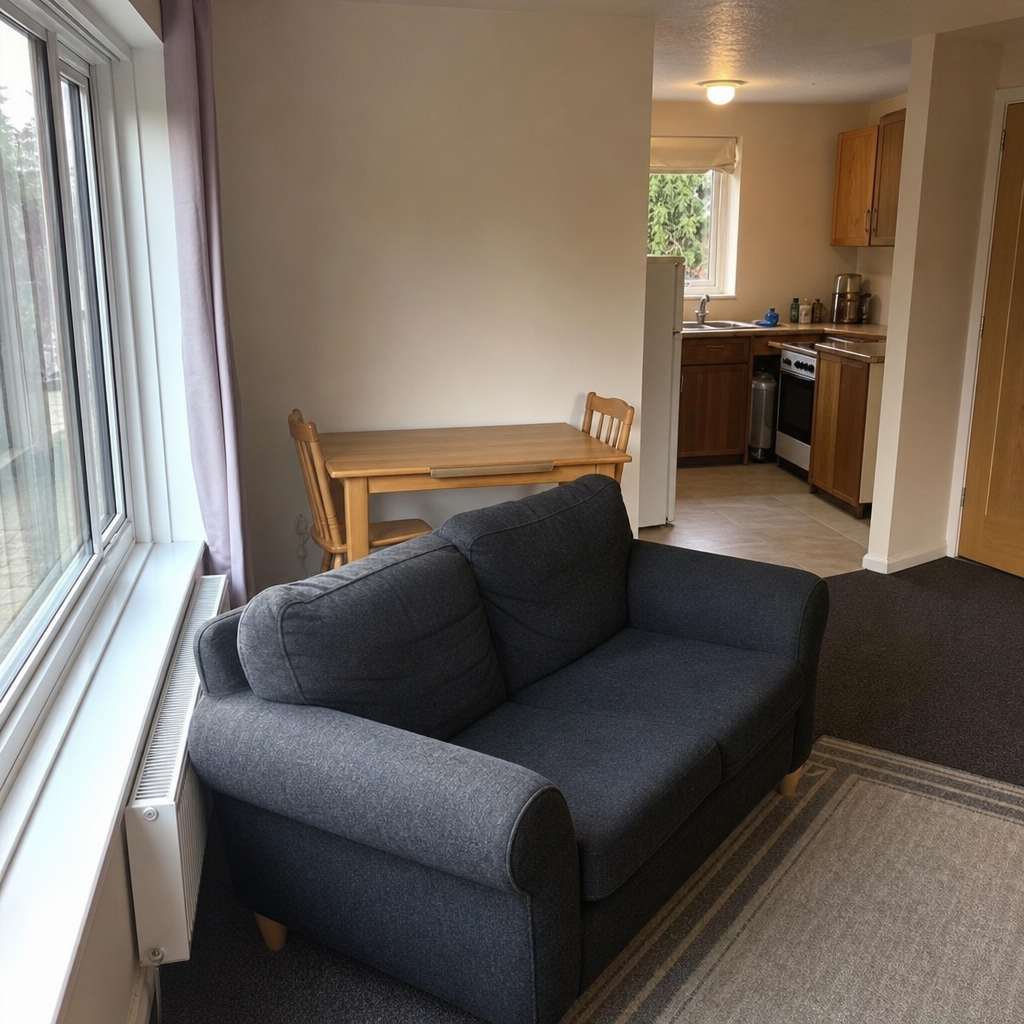
Choose a table narrow enough to preserve a passage between the seating area and kitchen. Reuse two chairs from elsewhere in the home if they fit comfortably under the table, and use a small rug only if it will not bunch up under moving chairs.
Worth knowing: This layout depends on having enough room behind the sofa for chairs and a walkway, not just enough room for the table itself.
Related: 12 Studio Apartment Divider Ideas Without Building a Wall
4.Set a Bistro Table by a Bright Window
A two-seat bistro table gives a bright window edge a useful job and can make a small living room feel less like every meal belongs on the couch. Lightweight chairs keep the setup easy to adjust when the window needs to be opened or cleaned.
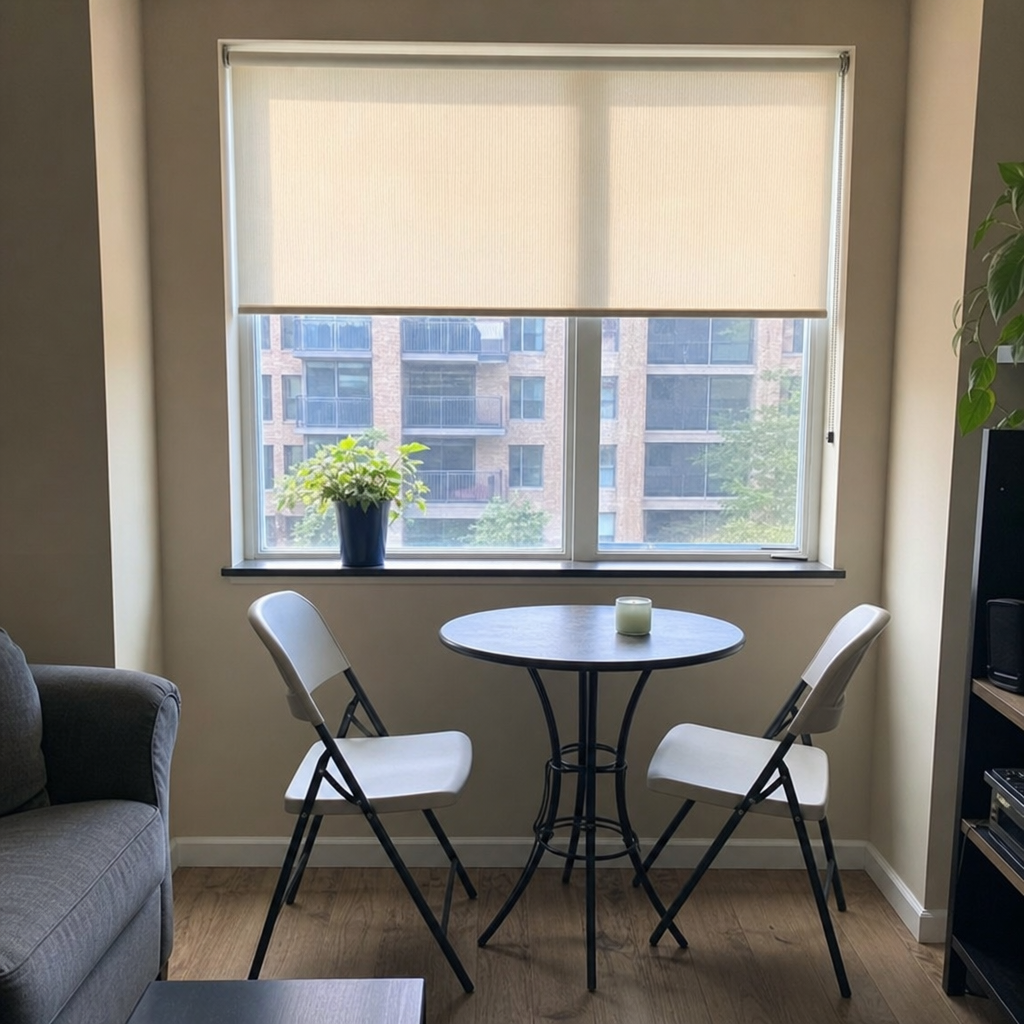
Use washable placemats and keep the tabletop simple so it is easy to clear after each meal. If the window gets strong afternoon sun, add a renter-friendly shade or keep the table slightly outside the brightest strip to reduce glare and heat.
Worth knowing: Direct sun can make the seat uncomfortable at certain times of day and may fade fabrics placed beside the window.
5.Pair a Slim Table With a Bench on One Side
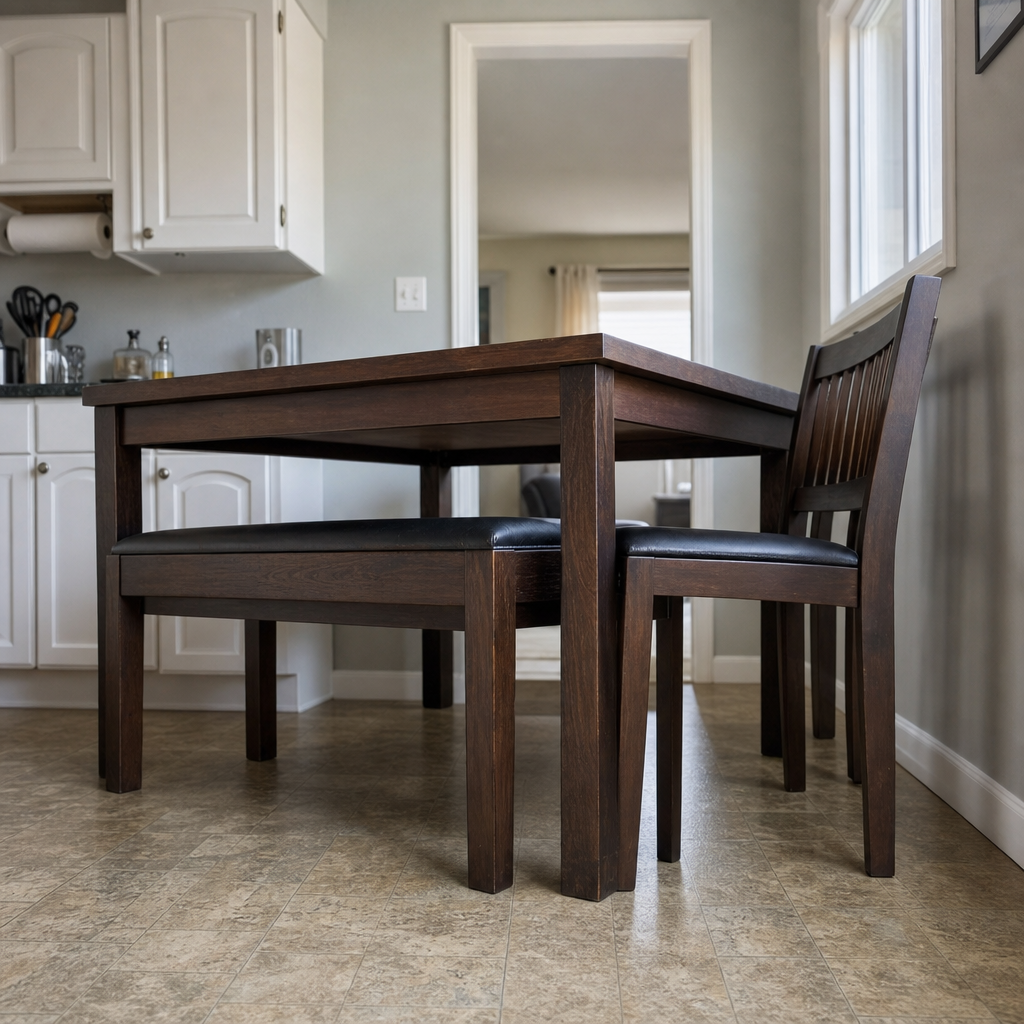
A slim table with a bench on one long side can fit where a chair on both sides would crowd a kitchen path. Slide the bench fully under the table after meals, leaving the traffic side open for the people moving through the room.
A plain wood bench, an existing entry bench, or a sturdy secondhand option can work if its height matches the table and it is stable. Put chairs on the outer side of the table, where they can pull back without hitting cabinets or blocking a doorway.
Worth knowing: A bench is less comfortable for long meals and may be awkward for anyone who needs easy access to their seat.
Related: 12 Small Kitchen Ideas That Free Up Prep Space Without Remodeling
6.Make a Window-Ledge Table With a Wall-Mounted Folding Surface
A wall-mounted folding table creates a meal spot in a narrow kitchen edge where a freestanding table would take over the floor. When folded up, it leaves space for daily circulation and can make a small window wall feel more purposeful.
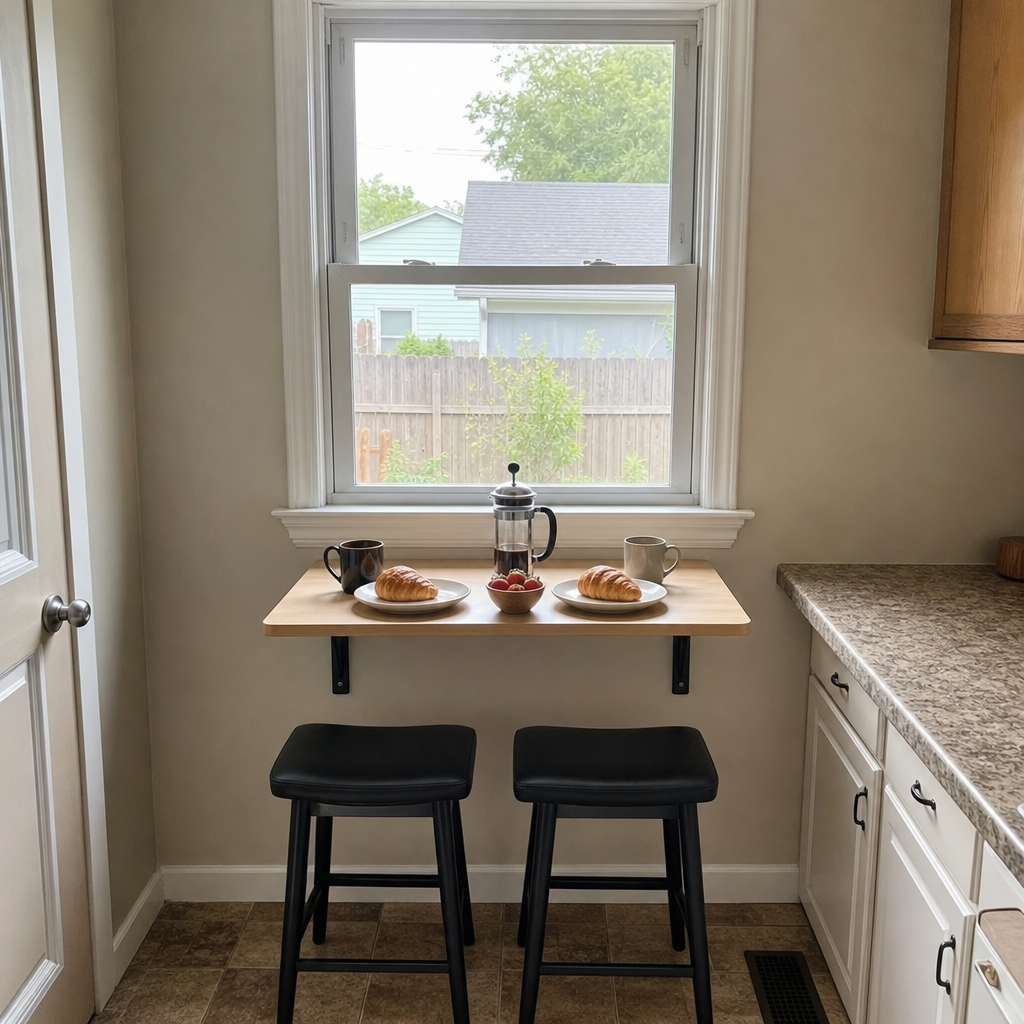
Choose a surface sized for the number of people who will actually eat there, rather than trying to force a full dining table into a tight spot. Renters should check their lease, identify the wall type, and use an approved mounting method; a folding surface must be securely installed to hold dishes and leaning arms.
Worth knowing: Installation can be difficult in rentals, and a poorly mounted table is not safe to use.
7.Reuse a Small Desk as a Dining Table
An unused small desk can become a practical two-person table at the edge of a living room. This reuse-first approach avoids adding another large item, and the desk can still serve as a homework or paperwork surface when meals are cleared away.
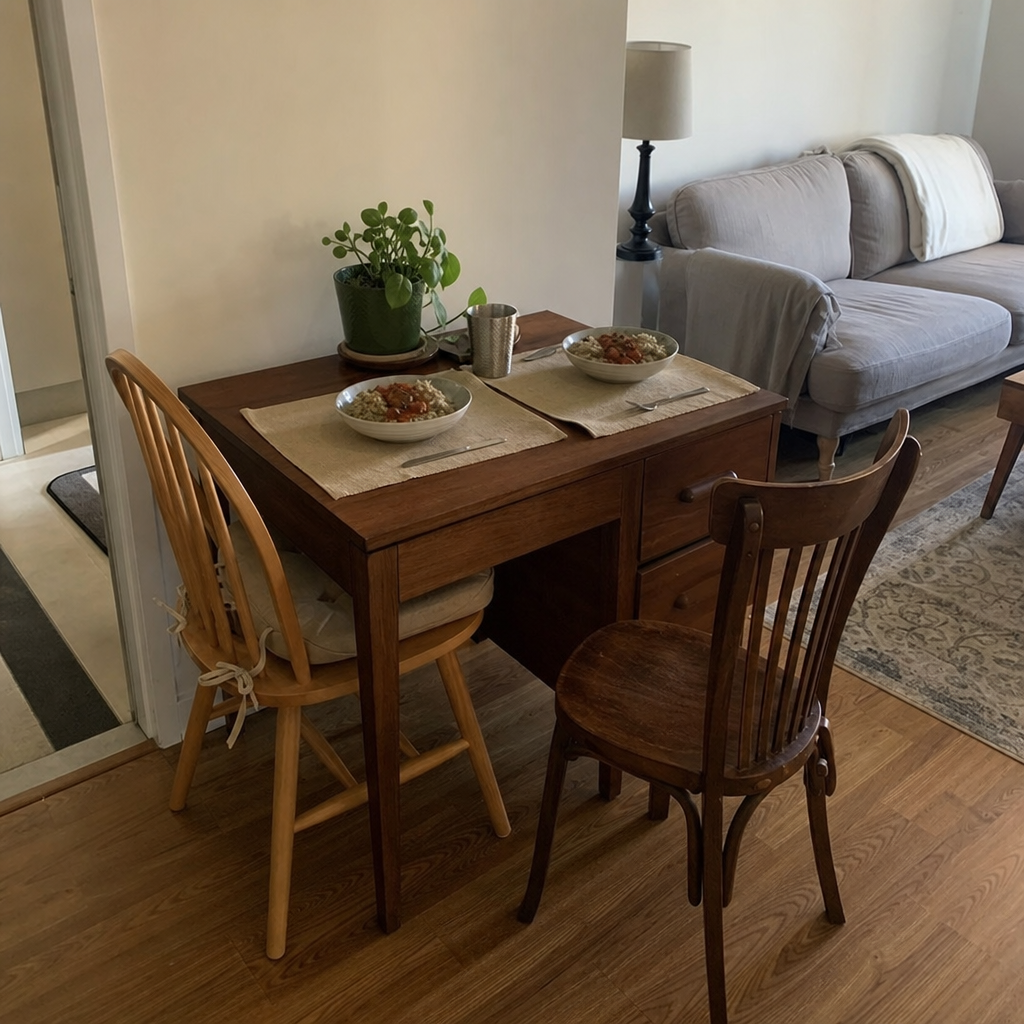
Check that the desk height works with the chairs available and that the top can handle regular wiping. A desk with deep drawers may limit knee room, so choose chairs that tuck in without forcing diners to sit too far from the table.
Worth knowing: Desks with delicate finishes, uneven tops, or limited leg clearance may not be comfortable for everyday meals.
8.Choose Stackable Chairs for a Flexible Table
Stackable chairs make a small table more useful when extra people occasionally join a meal. Keep two chairs at the table for daily use, then stack the extras against an unused wall or in a closet so they do not occupy the walkway all week.
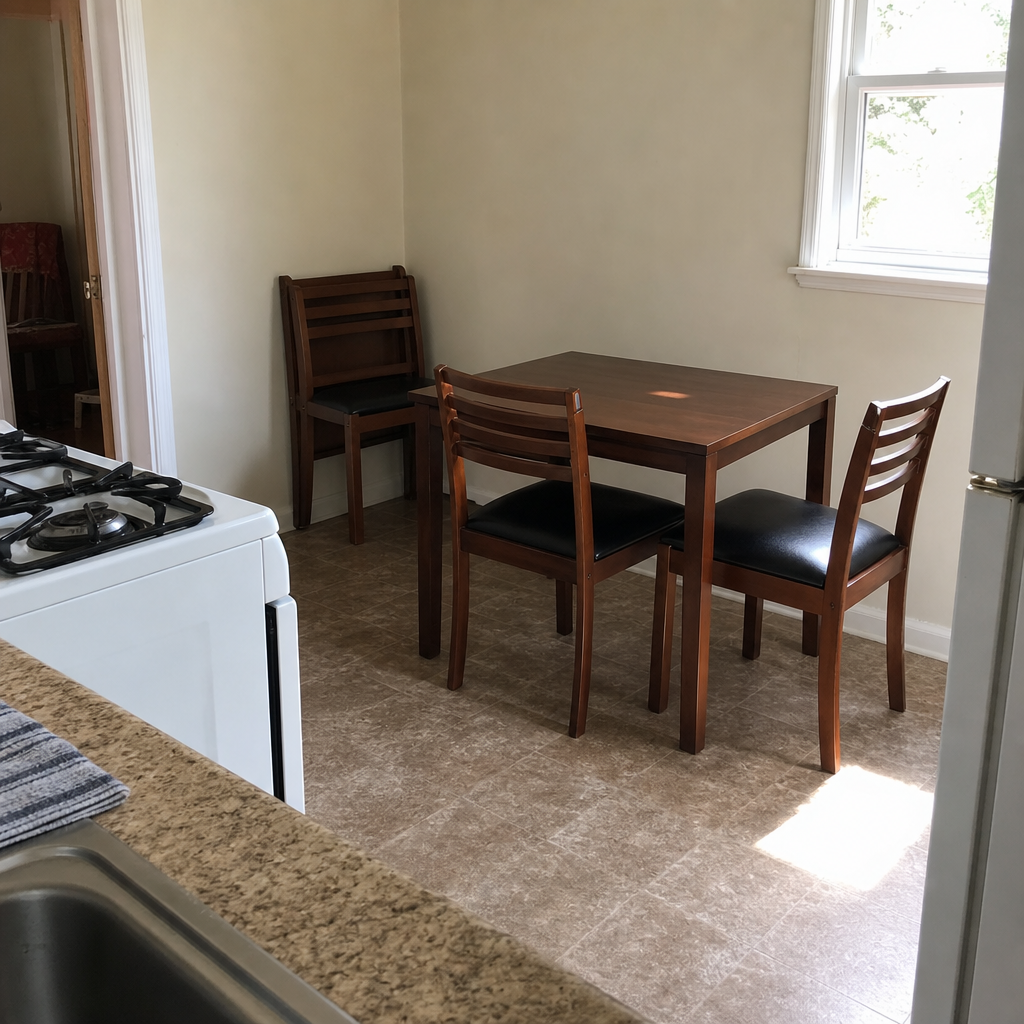
Look for chairs that are stable, easy to lift, and simple to clean rather than adding bulky dining seating. A small square table is often enough for this arrangement, especially when it can sit close to a wall between meals.
Worth knowing: Stacked chairs still need a dry, accessible storage spot and can look cluttered if left in a main living area.
9.Create a Dining Nook With a Storage Bench
A storage bench placed against a wall or under a window can anchor a compact dining nook while holding table linens, placemats, or occasional dishes. The wall side does not need chair pull-out space, which leaves more room for chairs on the open side of the table.
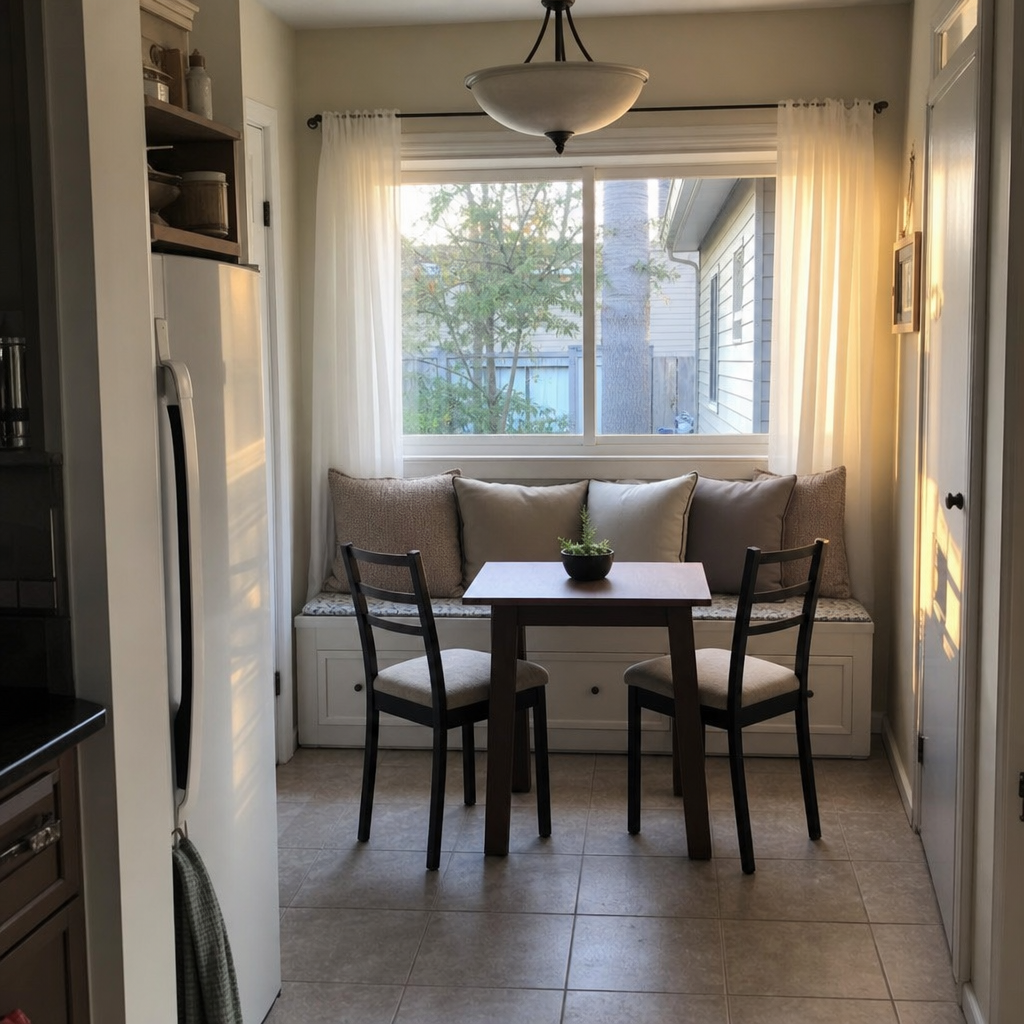
Use a freestanding bench instead of a built-in unit to keep the arrangement renter-friendly. Choose a smooth, wipeable cushion or one with a removable cover, especially in homes with children or pets, and avoid blocking a radiator or window access.
Worth knowing: Storage benches need regular cleaning around hinges, seams, and cushions, and they can be hard to move when full.
10.Use a Rolling Cart as a Movable Dining Sidepiece
A small rolling cart beside a dining table can hold plates, cups, napkins, and serving dishes without requiring a larger table. After meals, it can roll back toward the kitchen or along a clear wall, freeing the living-room edge for other routines.
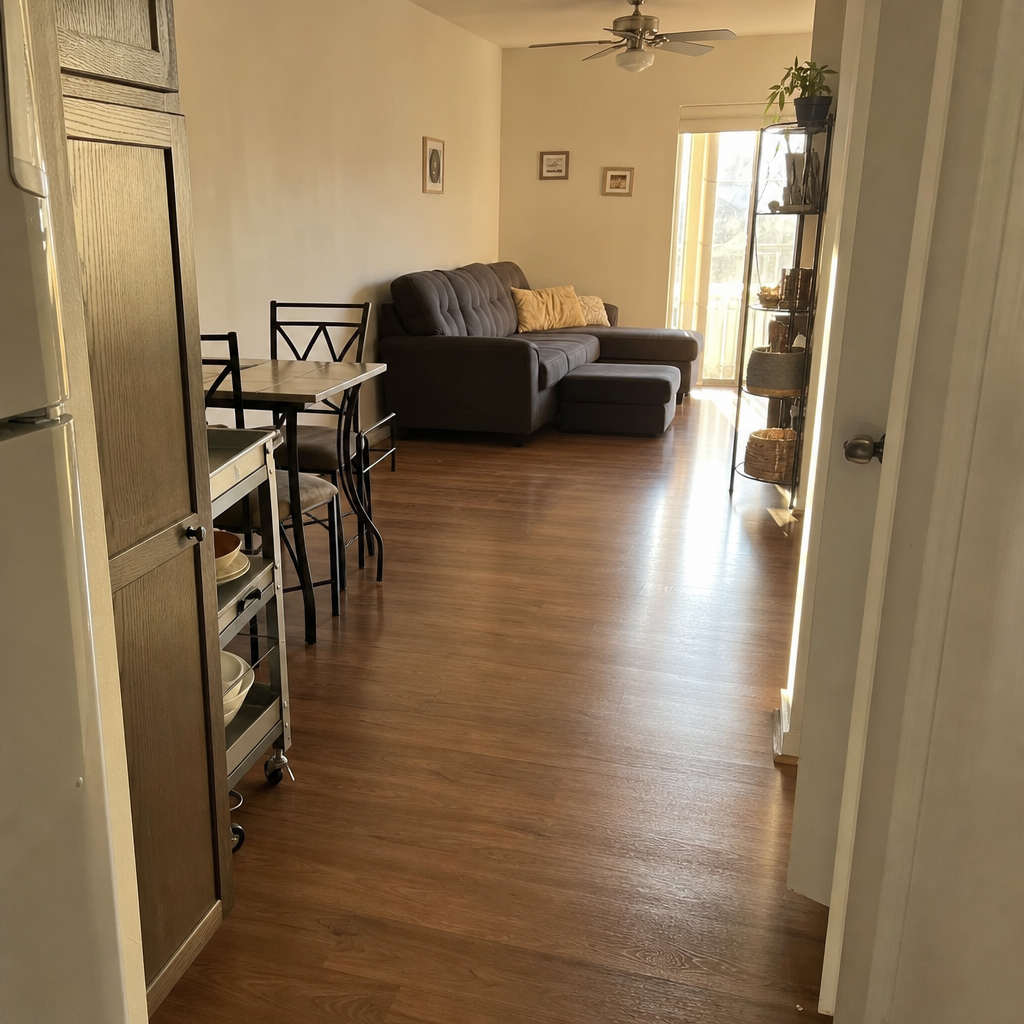
Use an existing utility cart or a simple secondhand cart with locking wheels and a stable top. Keep the cart out of the chair pull-out zone, and do not overload it if the route between kitchen and table includes uneven flooring or thresholds.
Worth knowing: A rolling cart adds convenience but does not replace proper dining storage, and it can become a clutter catchall if it is never reset.
About the author
Dana Ruiz, Senior editor
Dana writes about small-space living, storage and low-cost decorating.
Keep reading
12 Small Kitchen Ideas That Free Up Prep Space Without Remodeling
September 15, 2026
12 Studio Apartment Divider Ideas Without Building a Wall
September 15, 2026
10 Small Bedroom Layout Ideas for a Queen Bed
September 15, 2026
12 Small Living Room Layout Ideas That Leave Room to Walk
September 14, 2026