7 Budget Small Backyard Layouts That Keep Clotheslines Useful
A small backyard can keep a working clothesline without giving up every inch to poles, wet laundry, and a laundry basket path. These seven layouts reserve room to hang, lift, and retrieve washing while making space for planting or a modest place to sit when the line is empty.
As an Amazon Associate I earn from qualifying purchases.
1.Wall-Mounted Retractable Line Above a Narrow Bench
A retractable line mounted high on a solid exterior wall can run to a removable hook on the opposite side of a compact yard. When the line is closed, the wall stays tidy and the space below can work as a simple sitting spot.
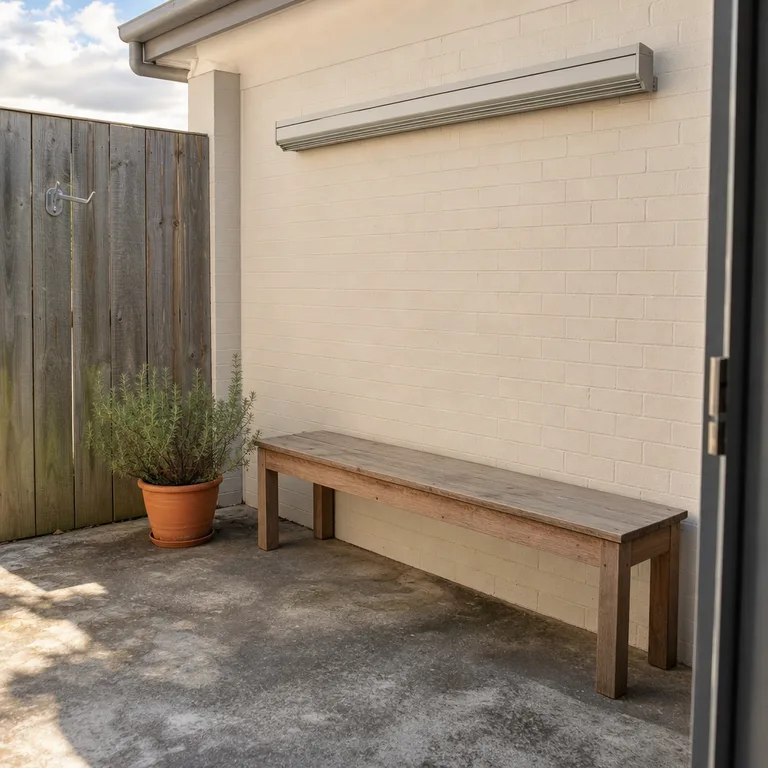
Use a shallow bench that leaves a clear route between the back door, laundry basket, and line. A secondhand timber bench or a simple weather-resistant bench is often a lower-cost choice than building a dedicated laundry structure.
Check that both fixing points can take the pull of wet washing, rather than attaching the line to a light fence panel or decorative trim. Keep the bench easy to move if it makes reaching the wall fitting awkward.
Worth knowing: A wall-mounted line needs a sound wall and a secure receiving point; it is not suitable for weak masonry, loose cladding, or an unsupported fence.
Related: 12 Small Patio Seating Ideas on a Budget
2.Side-Yard Line With a Central Stepping-Stone Basket Path
A side yard can become a useful laundry lane when the clothesline follows one long edge and stepping stones make a direct path through the middle. The open center lets someone carry a basket beneath the line without trampling soil or brushing against plants.
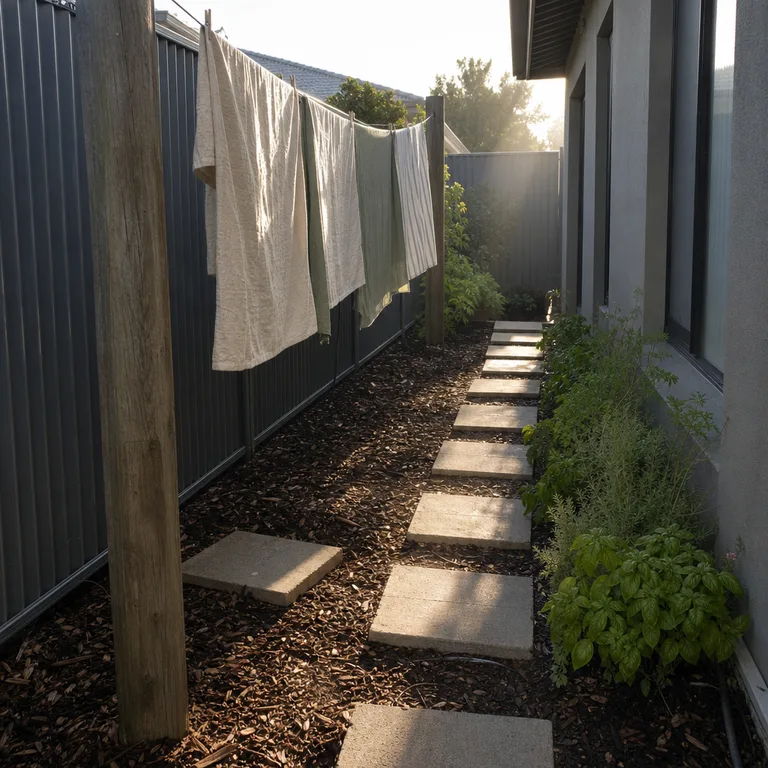
Set low planting along the house or fence boundary, using herbs, tough groundcover, or shade-tolerant foliage according to the available sun. Reused pavers or basic concrete stepping stones can define the route without turning the whole strip into hard paving.
Leave enough unplanted space beside the line to reach pegs and retrieve larger items. In a damp or shaded side yard, choose a surface with reliable drainage so the basket path does not stay muddy.
Worth knowing: A narrow side yard may dry laundry slowly if nearby walls, fences, or trees block sun and airflow.
Related: 10 Small Side Yard Ideas That Keep the Walkway Useful
3.Rotary Line Centered in a Gravel Utility Circle
A rotary line works best when it has a clear circle around it for raising the arms, hanging washing, and walking all the way around. Placing that circle in a less useful corner or end of the yard preserves the remaining space for a path, lawn, or seating.
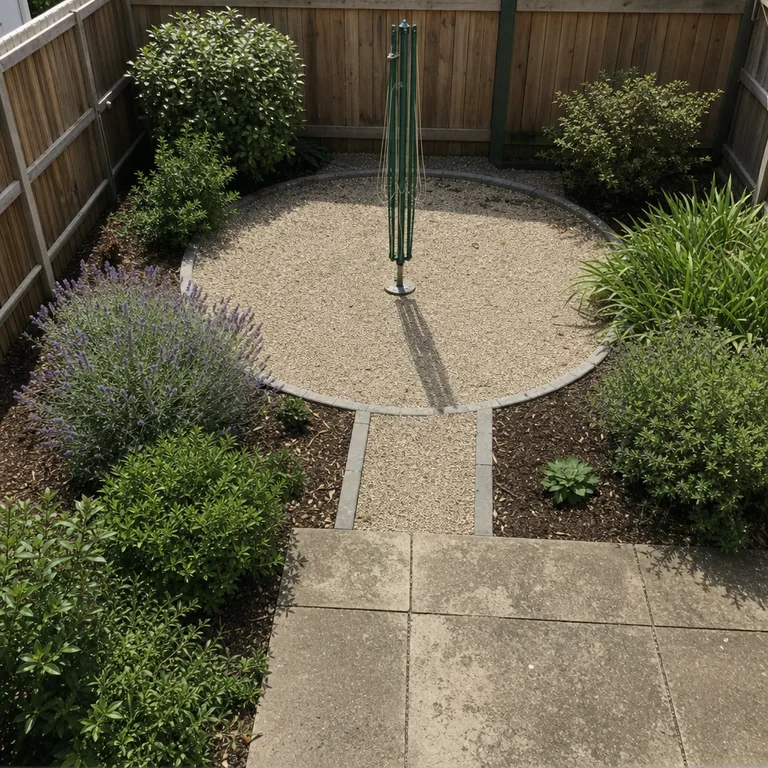
Use gravel around the socket and place planting beds beyond the working radius of the arms. Simple edging helps stop gravel spreading into the beds, while folded arms make the circle look less like a permanent obstacle on days without laundry.
Plan the circle around the fully open line, not the folded shape. A ground socket can allow the line to be removed, but it should be installed securely and kept clear of loose paving or furniture.
Worth knowing: A rotary line needs more open ground than a wall-to-fence line, so it can overwhelm a very tight yard.
Related: 15 Budget Landscaping Ideas That Make a Small Yard Feel Finished
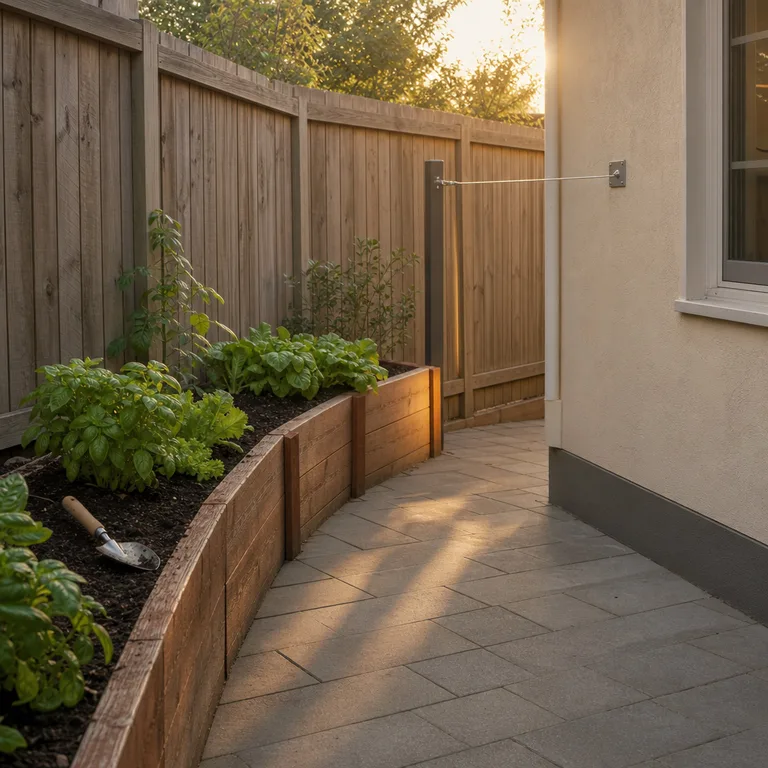
4.Corner Post Line With a Curved Raised Planter
A short clothesline across one corner can turn an overlooked edge into a focused utility zone. A curved raised planter set outside the hanging and walking area brings vegetables or herbs close to the patio without forcing laundry into the middle of the yard.
Build the planter from reclaimed boards in good condition or use a simple ready-made raised bed. Keep its highest plants away from the line so sheets do not drag across leaves, soil, or watering equipment.
A corner line should connect to a properly braced post or a solid house fitting, not a fence board alone. Choose crops for the sunlight in that corner, since a line full of washing can add temporary shade.
Worth knowing: Raised planters need regular watering and can make access harder if they are placed too close to the basket route.
5.Fold-Down Line Across a Patio Dining Edge
A fold-down line above the outer edge of a patio can share space with a compact bistro table instead of replacing it. Position the table to one side so there is still a clear standing and lifting strip below the washing.
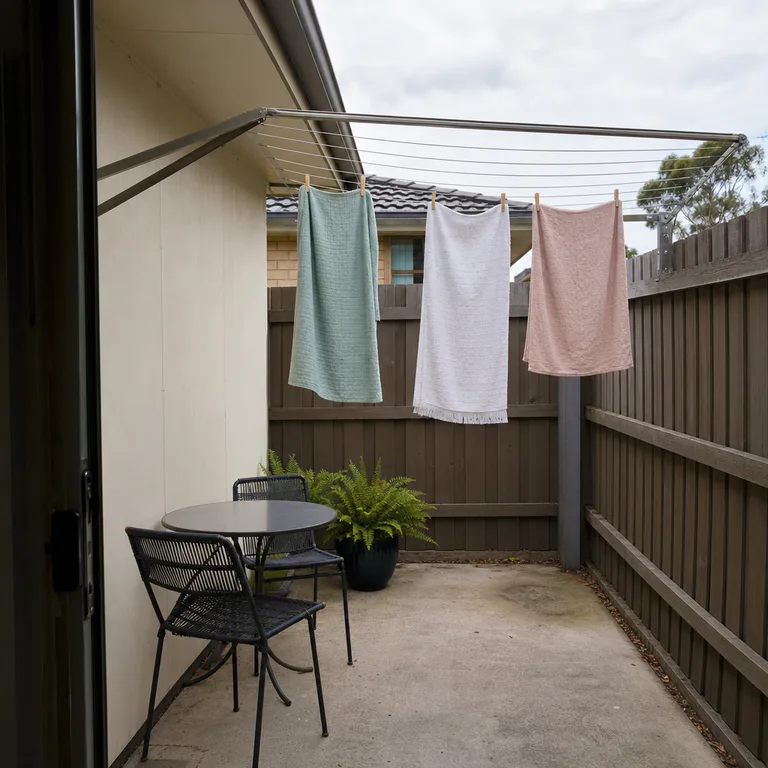
Choose folding chairs or light seating that can shift easily when larger loads need to be hung. Keeping the line near the patio edge also avoids placing dripping laundry directly above the main doorway or everyday seating area.
Make sure the brackets are fixed into suitable structure at both ends and are high enough for the type of laundry normally hung. In rental homes, get permission before drilling into exterior walls or fences.
Worth knowing: The patio cannot function fully for meals while a large load is hanging, especially if towels or bedding are in use.
6.Removable Umbrella-Style Line Beside a Permeable Patio
A socket-mounted umbrella-style line can be lifted out after laundry is dry, leaving the surrounding surface open for folding chairs or casual outdoor use. This makes one small paved area do two jobs without permanent poles dominating the view.
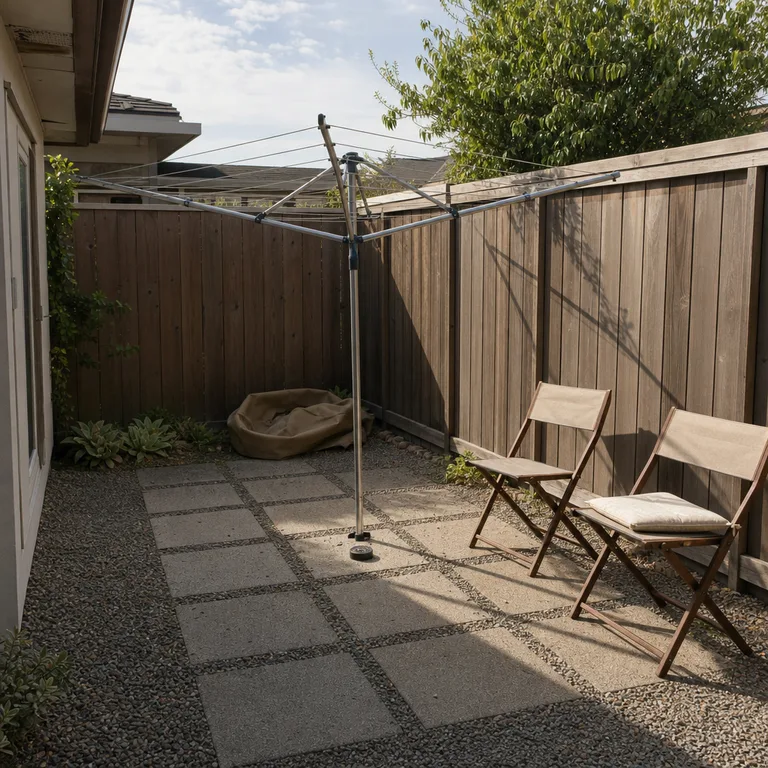
Permeable pavers, gravel-filled grids, or a well-draining gravel surface are practical around the socket because they reduce standing water near the work area. Store the removed line under cover and use a cap that keeps debris out of the socket.
Keep fixed furniture beyond the open arms and leave a direct route from the door to the line. The socket also needs a stable base, particularly where frost movement, heavy rain, or loose soil can affect it.
Worth knowing: Removing and storing the line adds a task, and the socket needs occasional cleaning to remain easy to use.
7.Fence-to-House Line Above a Screening Shrub Border
A line from a house bracket to a reinforced fence point can hang over a clear strip of paving, while a low shrub border softens the fence behind it. The shrubs screen the utility edge from the rest of the yard without blocking access to the washing.
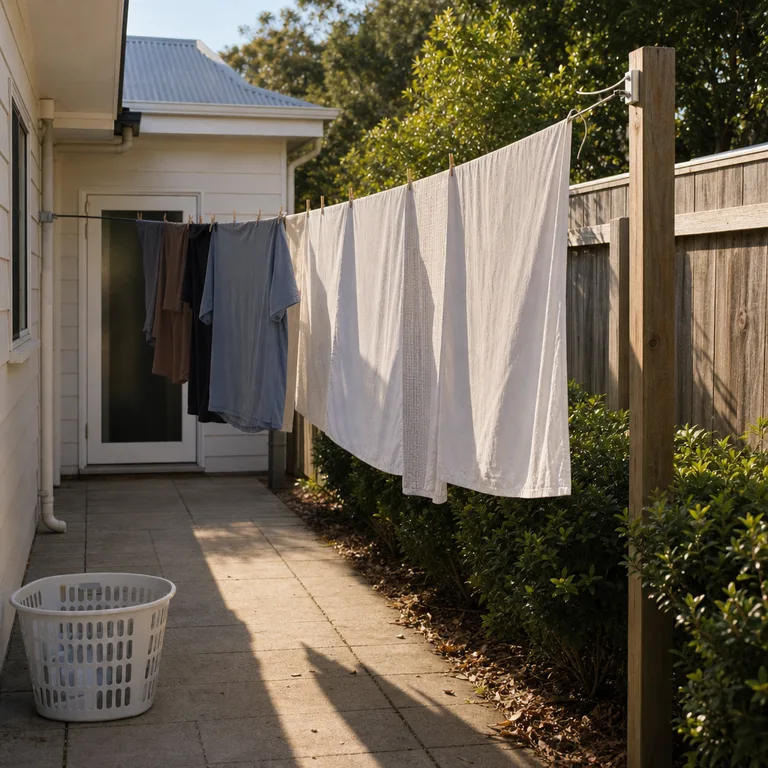
Choose compact shrubs that suit the climate and remain below the lowest hanging laundry. Start with smaller plants or divide suitable existing clumps where possible, then mulch the border to reduce weeds and retain moisture.
Keep the paved strip wide enough to stand, lift items, and set down a basket without crushing the plants. The fence end needs reinforcement because wet laundry places a steady sideways pull on the connection.
Worth knowing: Shrubs take time to fill out and require pruning so they do not catch damp clothes or narrow the access strip.
About the author
Dana Ruiz, Senior editor
Dana writes about small-space living, storage and low-cost decorating.
Keep reading
8 Easy 4-by-4 Raised Bed Planting Layouts for Beginners
November 8, 2026
8 Budget Ways to Display Family Keepsakes Without Clutter
November 9, 2026
8 Budget Christmas Decor Ideas for Homes With Cats or Dogs
November 9, 2026
10 Easy Cleaning Tasks That Make a Home Feel Fresh
November 9, 2026