12 Small Kitchen Ideas That Free Up Prep Space Without Remodeling
A small kitchen works better when the clear surface near the sink or stove is protected for chopping, mixing, and plating. These renter-friendly changes use movable pieces, temporary covers, and smarter appliance placement instead of permanent construction.
1.Roll a Narrow Cart Into the Cooking Zone
A narrow rolling cart can act as a movable ingredient station beside the stove or a temporary chopping spot near the sink. Roll it into the cooking zone while preparing a meal, then park it against an open wall when the kitchen needs a clear path.
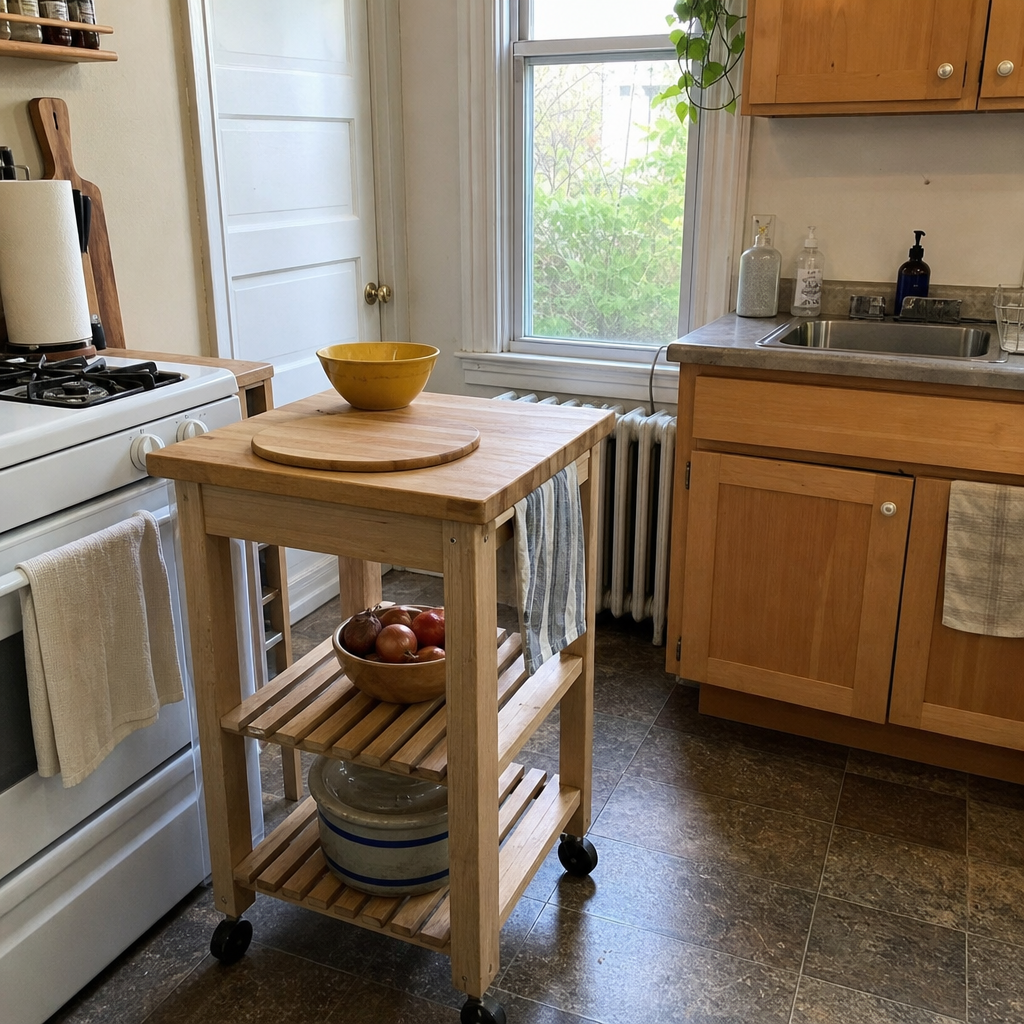
Choose a cart with a stable top, locking wheels, and shelves that can hold bowls or frequently used pans. A simple tray on the top can contain spills and makes the surface easier to clear before using it for prep.
Worth knowing: A cart that is too wide can block cabinet doors, appliance doors, or the route through a galley kitchen, so leave a comfortable aisle around it.
2.Cover the Sink With a Removable Work Surface
A fitted sink cover turns an unused sink into a temporary place for chopping, assembling sandwiches, or setting out ingredients. It is especially useful in kitchens where the sink occupies most of the available counter run.
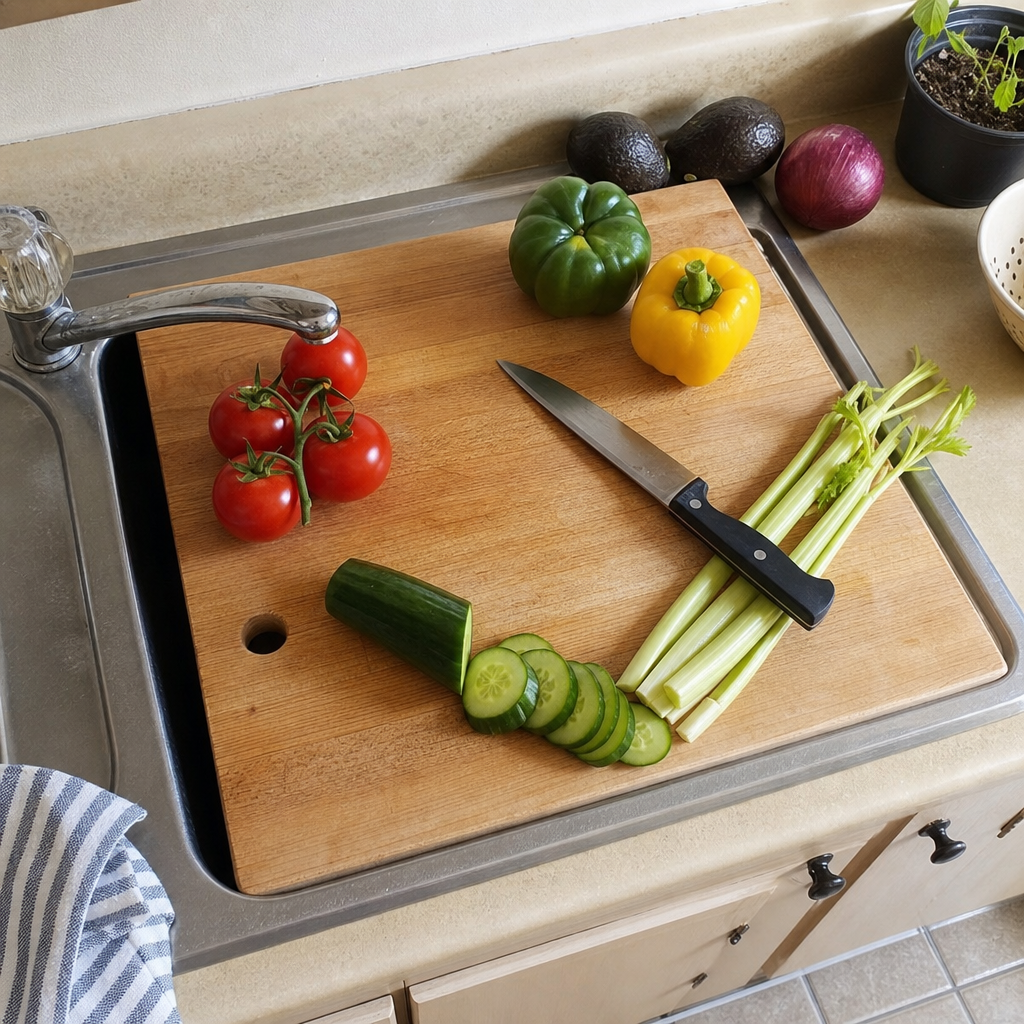
Use a sturdy board designed for food contact, or have a simple cover cut to sit securely across the sink rim without shifting. Keep it dry between uses, and remove it as soon as washing, draining, or filling pots is needed.
Worth knowing: The board must sit firmly and cannot safely replace the sink when there are dirty dishes or a need for quick access to water.
3.Use a Stovetop Cover Only When Burners Are Cold
A cover over a completely cold cooktop can provide a short-term surface for mixing, plating, or laying out ingredients. This can help in a compact kitchen where the stove is close to the only useful counter.
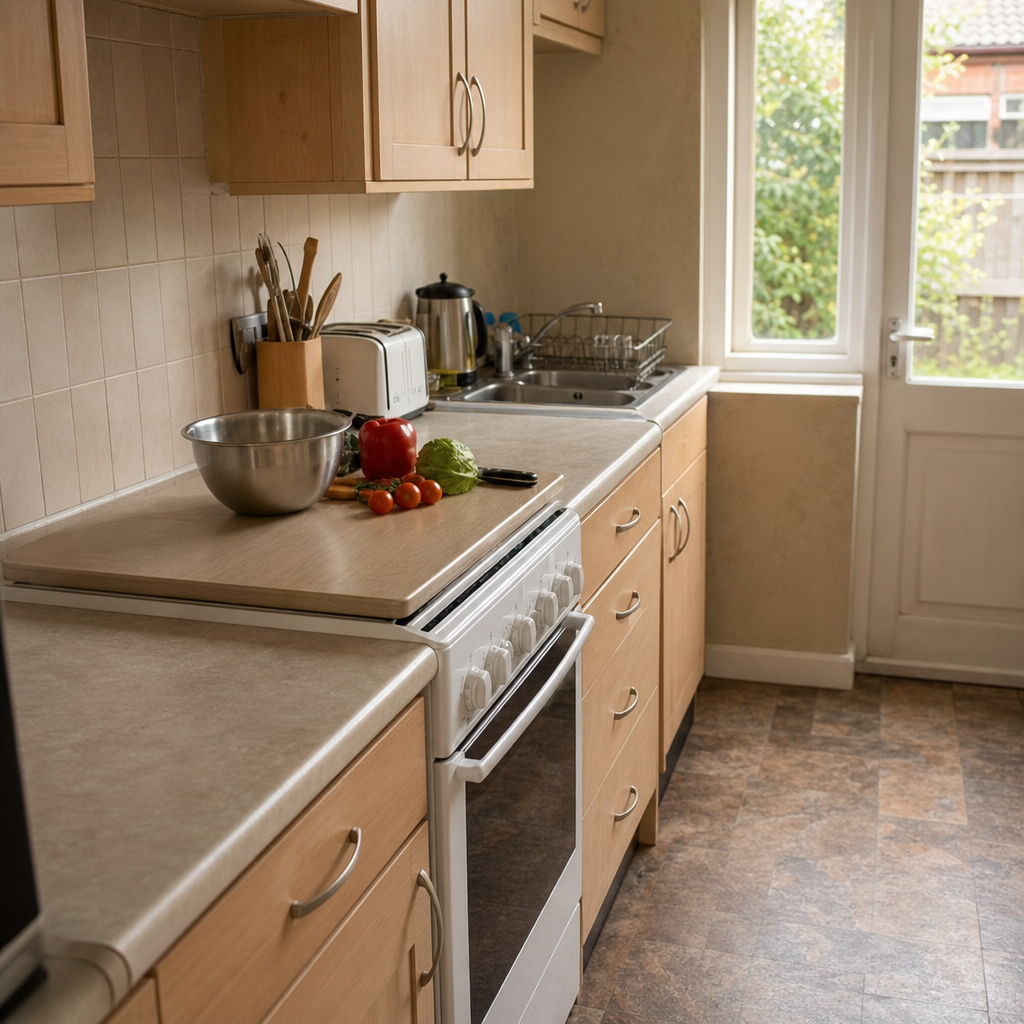
Use a cover made for the cooktop type or a sturdy removable board that is stored elsewhere while cooking. Clear it away before turning on any burner, and keep handles, cords, and towels away from the cooking area.
Worth knowing: A stovetop cover is never safe over warm burners or a recently used cooktop, so it is not a practical prep surface during active cooking.
4.Move Countertop Appliances to a Storage Shelf
Counters often lose their most useful stretch to appliances that are only used occasionally. Moving a blender, toaster oven, mixer, or similar item to a nearby shelf or cabinet can make room for daily chopping and mixing.
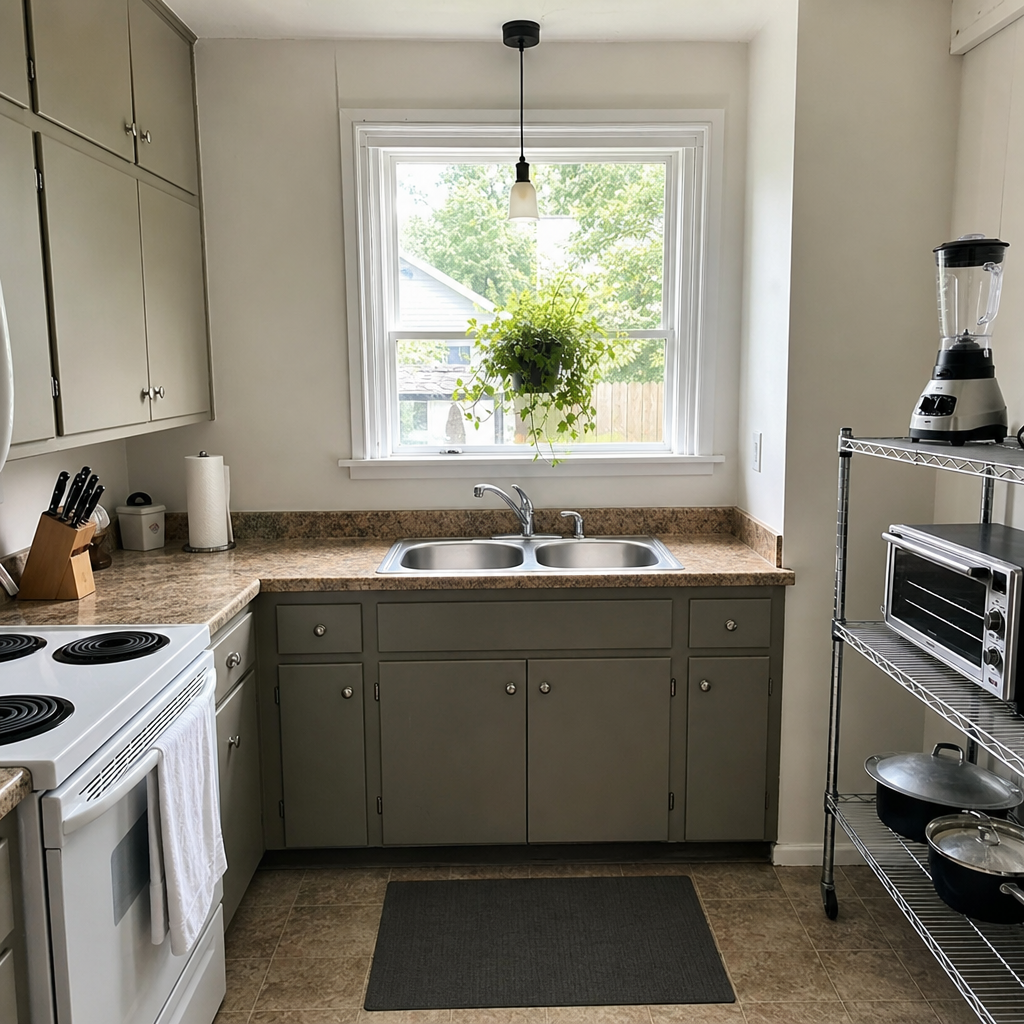
Keep heavy appliances on a stable surface at a reachable height, rather than lifting them down from above shoulder level. An open utility shelf just outside the main work zone can be more convenient than deep cabinet storage while still keeping the counter clear.
Worth knowing: Appliances used every day may become annoying to retrieve, and a toaster oven still needs proper ventilation and a heat-safe operating location.
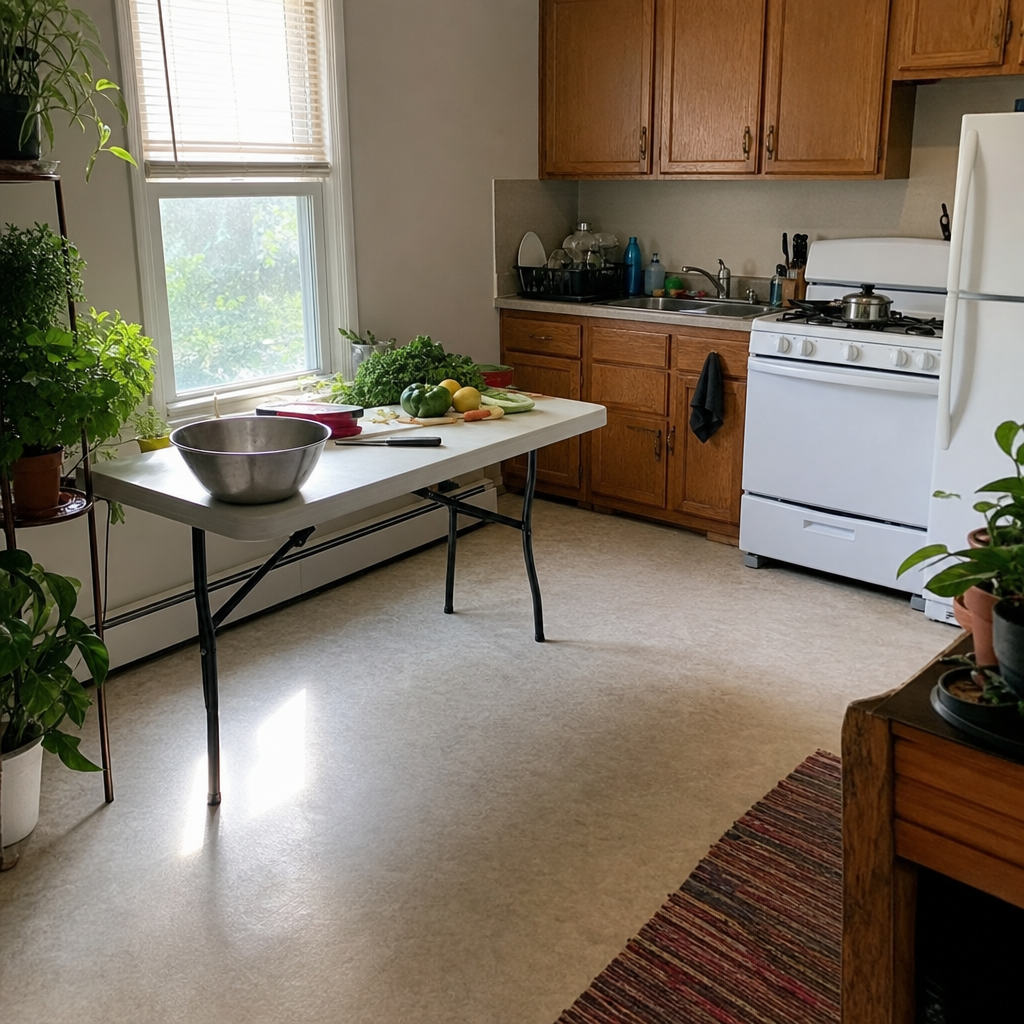
5.Set Up a Folding Table for Batch Prep
A compact folding table gives larger cooking sessions their own workspace for trimming vegetables, mixing dough, or organizing ingredients. When the cooking is done, it folds flat and can be stored behind a door, beside a refrigerator, or under a bed if the home is tight on storage.
Choose a table with a stable top and position it outside the main traffic route. A washable cloth or removable board can protect the surface and give food a cleaner working area.
Worth knowing: A folding table can make a small kitchen feel crowded, so it needs to stay clear of the refrigerator, exits, and cabinet doors.
6.Turn a Small Drop-Leaf Table Into an Island
A small drop-leaf table can serve as a flexible island when one or both leaves are raised. Fold the leaves down after meal prep so the room regains its walking space instead of committing to a fixed island.
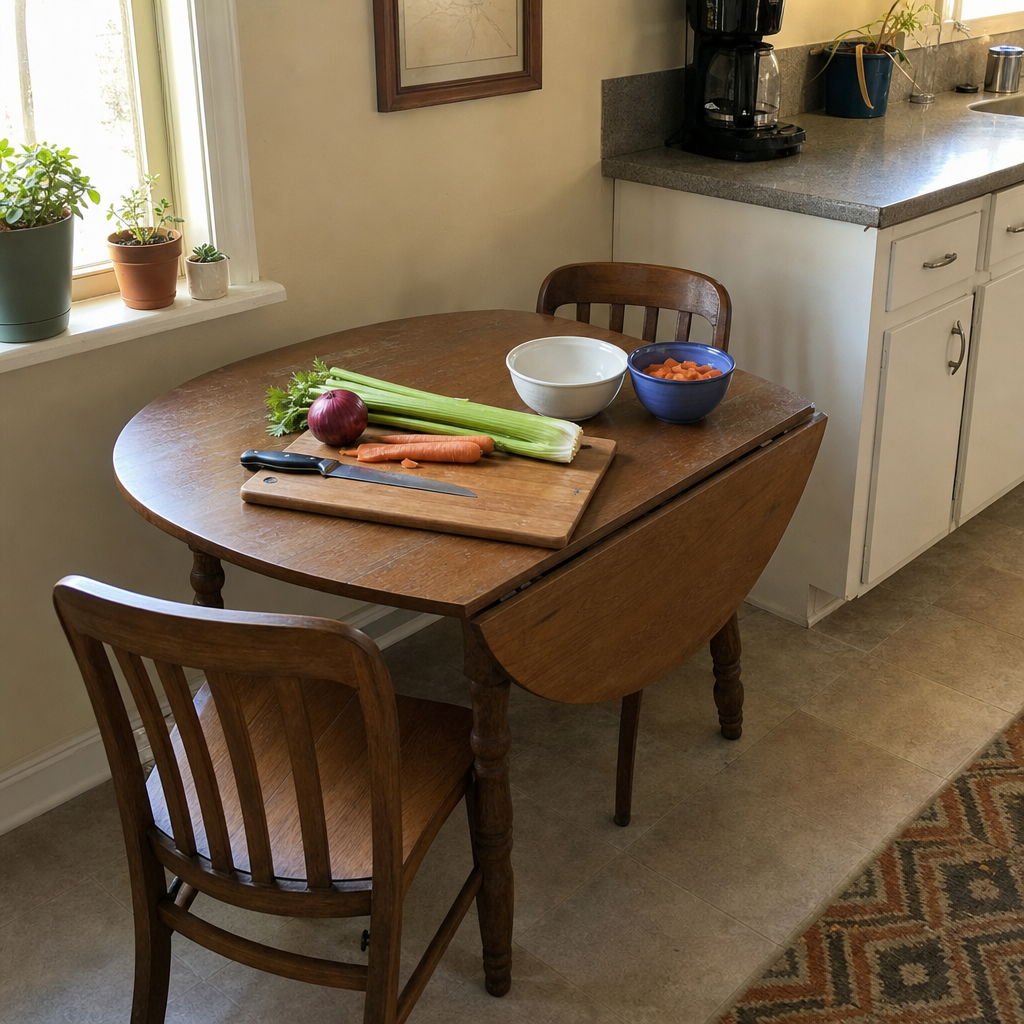
Place it close enough to the kitchen to be useful but far enough away that open cabinet doors and appliances still have room. A simple table can also work as a serving station when the kitchen counter is busy.
Worth knowing: Even a compact table needs floor space around it, so this works best in a kitchen-dining area rather than a very narrow galley.
7.Add a Clamp-On Board to a Sturdy Table
A removable board clamped to the edge of a solid dining table can extend the work surface for rolling dough, assembling meals, or laying out containers. It gives a small kitchen more usable edge space without attaching anything permanently to cabinets or walls.
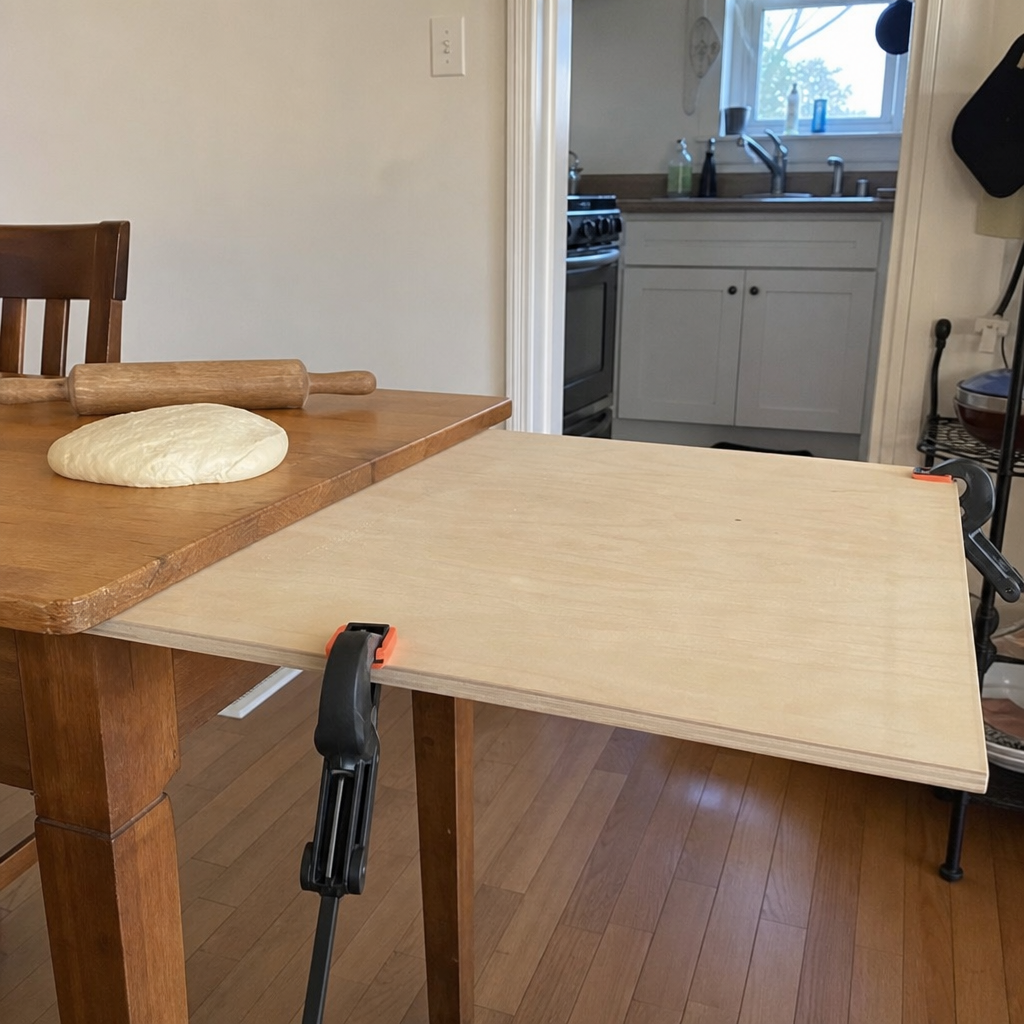
Use protective pads under the clamps to avoid dents or scratches on a rental table. The board should be food-safe, easy to clean, and large enough to stay stable without creating a heavy overhang.
Worth knowing: This setup depends on a table that does not wobble, and clamps may not suit delicate, glass-topped, or lightweight furniture.
8.Use a Wall-Mounted Rail for Prep Tools
A rail near the prep area can hold utensils, potholders, measuring tools, and a small basket of commonly used items. Moving these pieces off the counter keeps them within reach without allowing them to spread across the only chopping space.
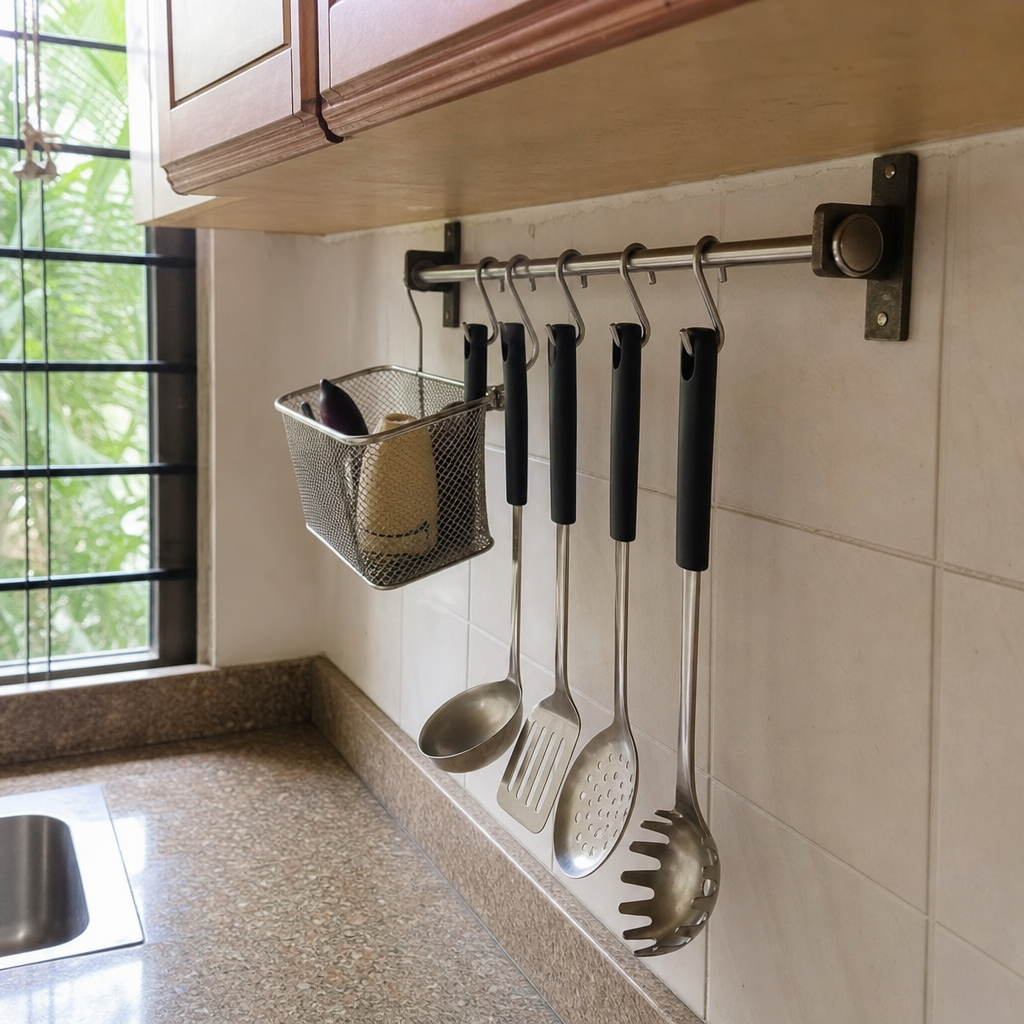
For renters, use a removable option only if the wall surface and product instructions allow it, or request approval for a mounted rail. Keep the rail away from spots that receive constant steam, grease, or splashing, since adhesives and finishes can fail in damp conditions.
Worth knowing: A rail holds only light items, and installation may be restricted by a lease or unsuitable wall material.
9.Park a Cutting Board in a Vertical Rack
Store cutting boards upright in a slim rack rather than leaning them across the counter or stacking them in a cabinet. A board that is easy to grab is more likely to be put away promptly after washing, leaving the prep area open.
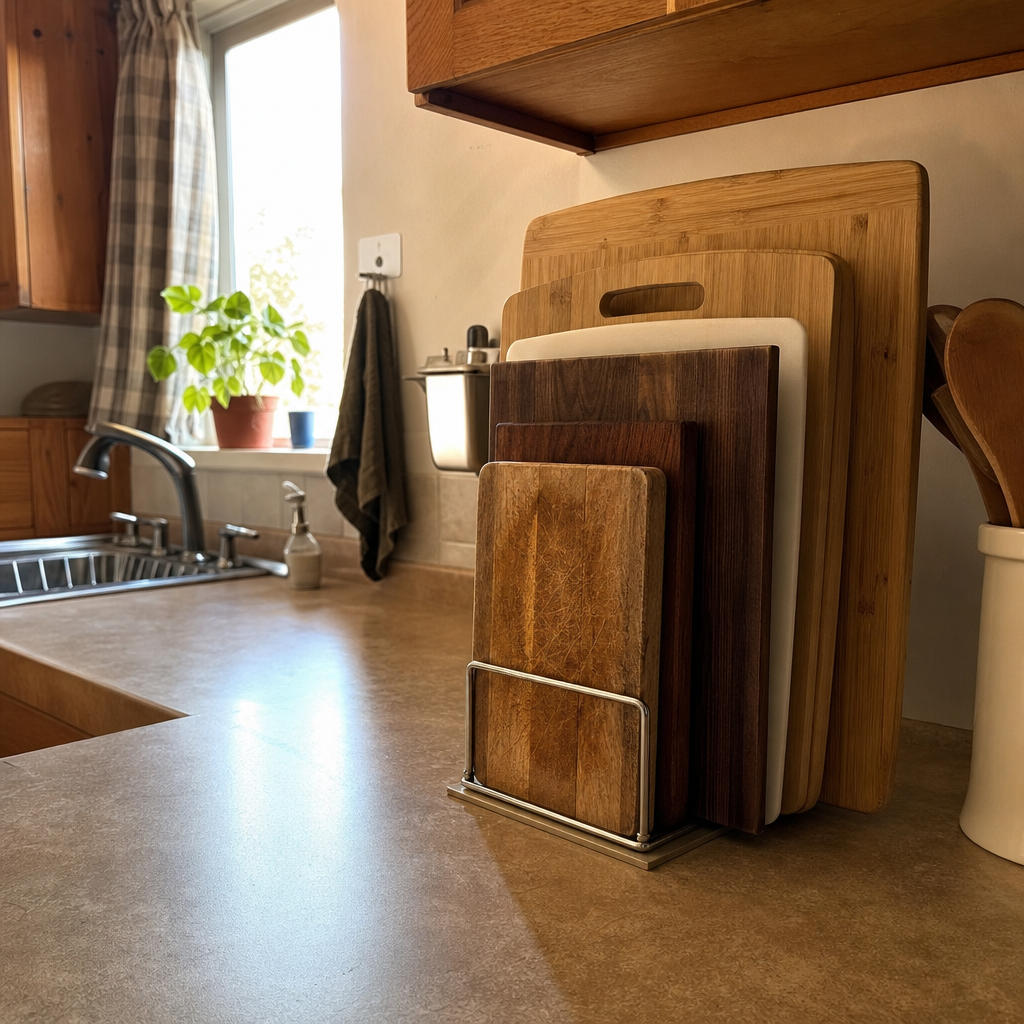
Place the rack near the main work zone but away from direct sink splash. Let wood boards dry fully before returning them to the rack so moisture does not stay trapped between surfaces.
Worth knowing: A rack still takes a small amount of counter or cabinet space, and damp boards can develop problems if packed tightly together.
10.Create a Landing Zone With a Tray
Put oil, salt, pepper, and other regularly used cooking items on one handled tray. When more room is needed, the entire group can move to a shelf, table, or cart in one trip instead of being cleared item by item.
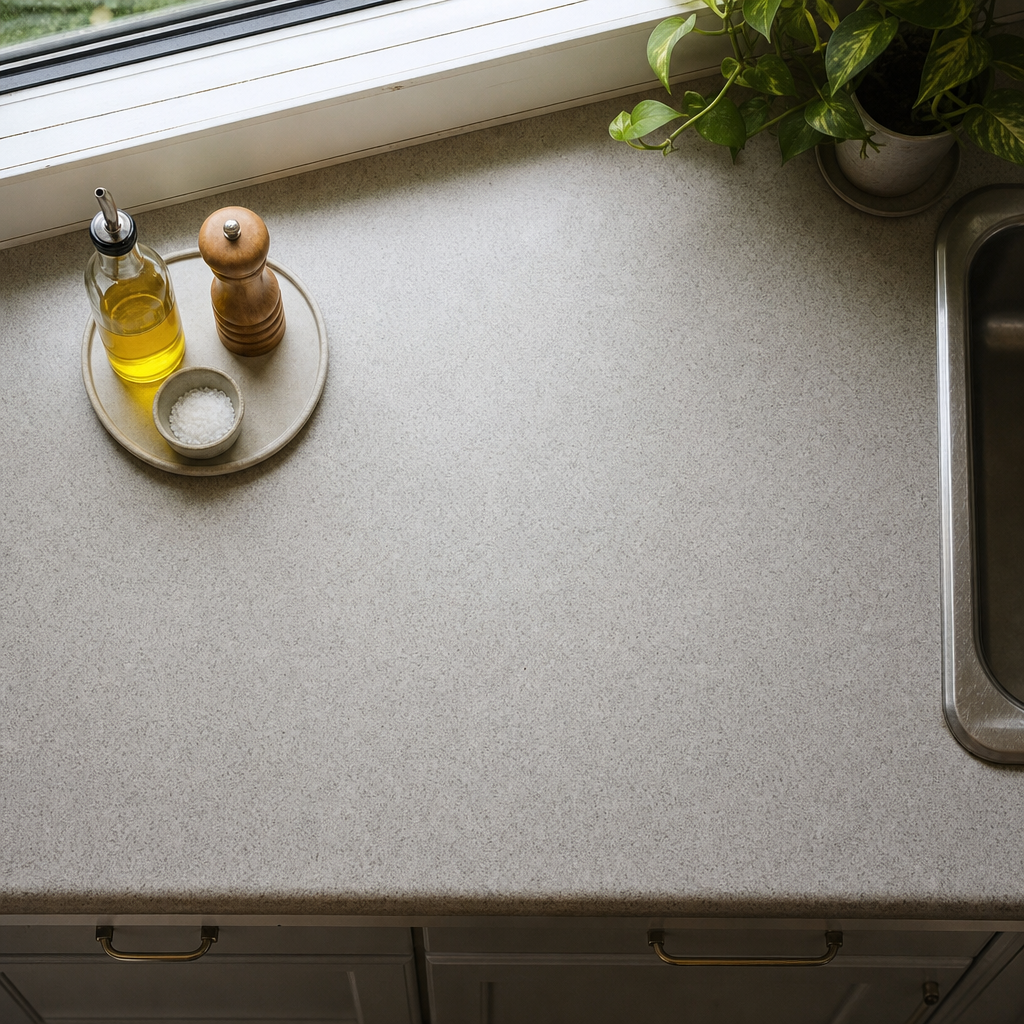
Choose a tray with a raised edge to contain drips and make wiping easier. Store oils away from direct sunlight and the strongest stove heat, which can shorten their usable life and leave greasy residue near the cooking area.
Worth knowing: A tray reduces visual clutter but does not create storage for items that are already too numerous for the counter.
11.Use the Refrigerator Top Only for Light, Infrequent Items
The top of a refrigerator can sometimes hold a lightweight basket of rarely used kitchen items, freeing a cabinet shelf or counter area. It is best for soft, light objects that do not need frequent access, such as spare napkins or rarely used plastic containers.
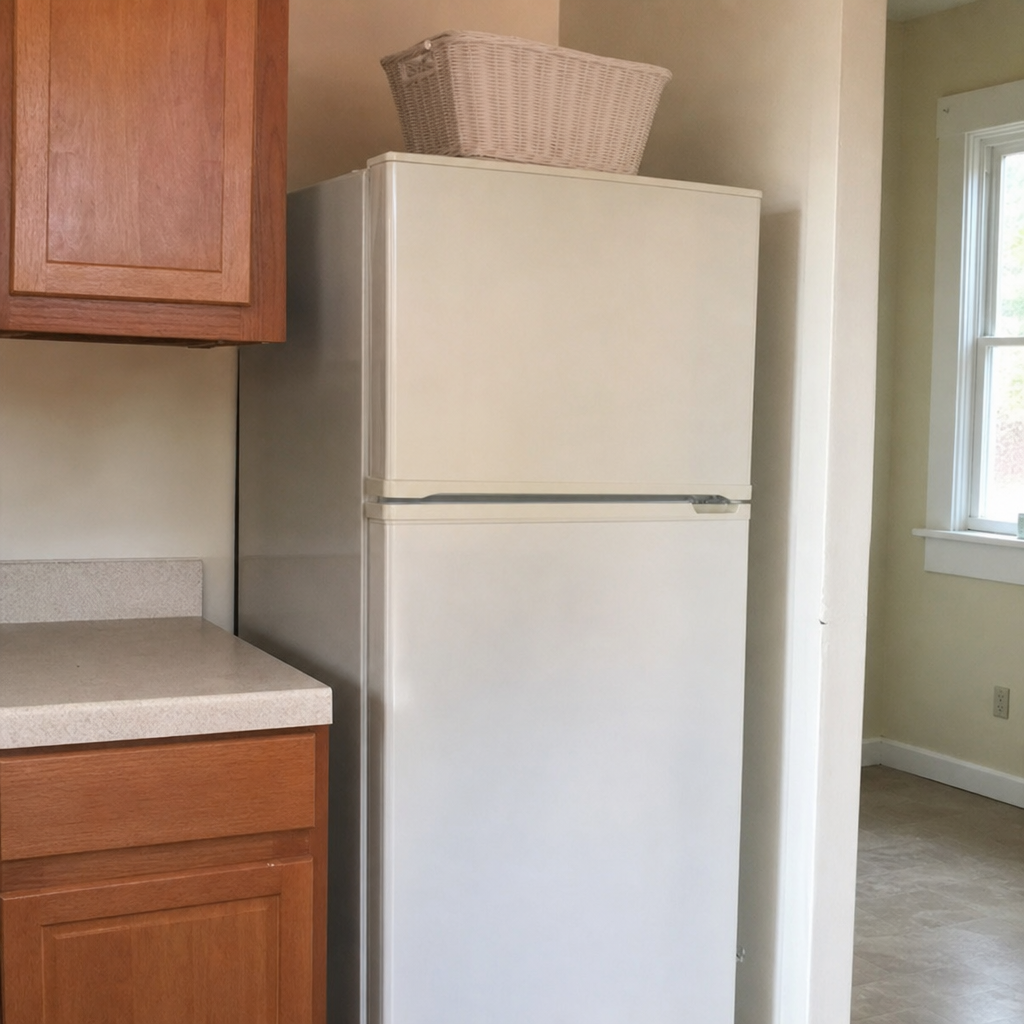
Check the appliance manual first and leave any required clearance for ventilation. Keep the basket low, stable, and easy to remove without standing on an unstable chair or reaching over a hot appliance.
Worth knowing: Many refrigerators need unobstructed space around the top or back, and heavy items overhead create a safety risk.
12.Make One Counter Section the Permanent Prep Zone
Choose the most convenient counter section and reserve it for food preparation every day. A spot near the sink is useful for washing produce, but it should be far enough from splashing water to keep the board and ingredients dry.
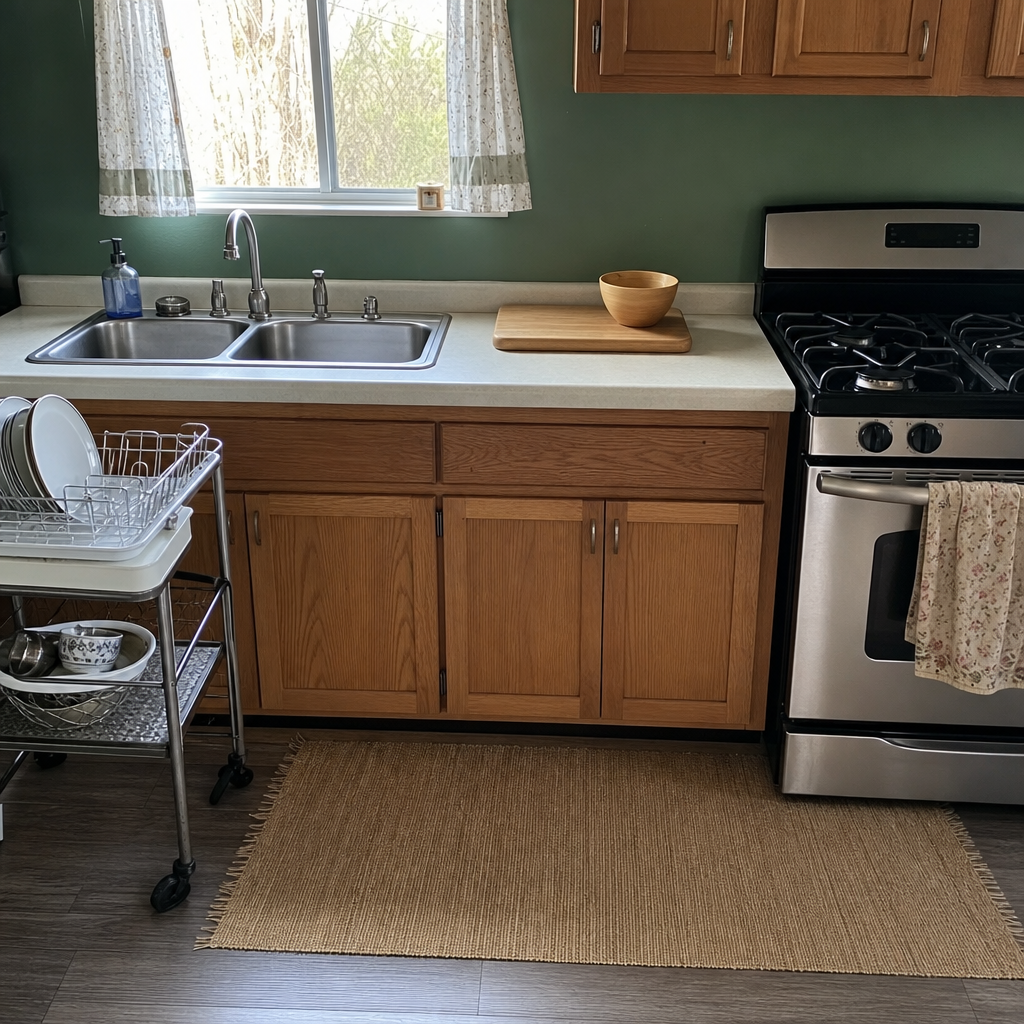
Move dish drying, mail, chargers, decorative objects, and non-kitchen items to another location. A dish rack can sit on a cart or a separate table, while small household papers belong outside the kitchen whenever possible.
Worth knowing: This approach requires consistent reset habits, especially in a shared home where counters collect dishes and everyday items quickly.
About the author
Dana Ruiz, Senior editor
Dana writes about small-space living, storage and low-cost decorating.
Keep reading
12 Studio Apartment Divider Ideas Without Building a Wall
September 15, 2026
10 Small Bedroom Layout Ideas for a Queen Bed
September 15, 2026
12 Small Living Room Layout Ideas That Leave Room to Walk
September 14, 2026
12 Small Patio Seating Ideas on a Budget
September 16, 2026