12 Corner Kitchen Cabinet Organization Ideas Without a Remodel
Deep corner cabinets work better when their contents are divided into portable zones that can be pulled forward instead of reached for blindly. These no-remodel ideas suit both blind-corner cabinets and diagonal corner cabinets, with attention to the opening width, shelf depth, load, and everyday cleanup.
As an Amazon Associate I earn from qualifying purchases.
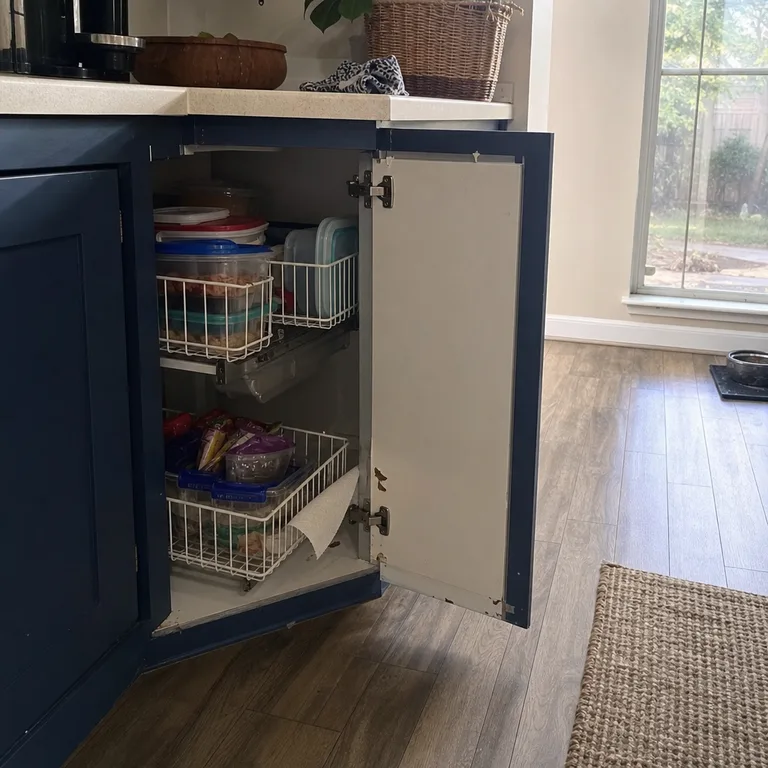
1.Use handled bins to create pull-forward pantry zones
Handled bins turn loose pantry supplies into groups that can come forward through a narrow blind-corner opening. Use one bin for baking packets, another for snack refills, or another for jars that would otherwise get lost behind the front shelf.
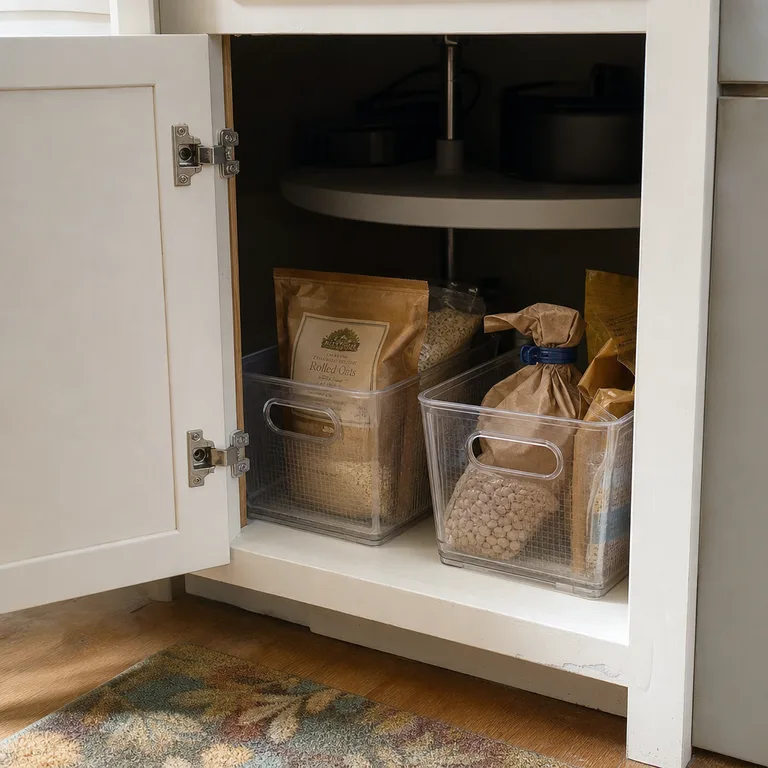
Choose bins with handles that are easy to grip without catching on the cabinet face frame. Keep heavier jars in shallow bins and reserve deeper bins for light packets, then label the front edge so each group goes back in the same place.
Worth knowing: A fully loaded bin can be awkward to lift over a cabinet lip, especially when it contains glass jars.
Related: 15 Small Pantry Organization Ideas Without Matching Containers
2.Store cookware in a low-sided pull-out tray
A low-sided tray gathers skillets, lids, or smaller casserole dishes into one movable unit. It works especially well in a diagonal corner cabinet, where a wide opening makes it easier to lift the tray forward.
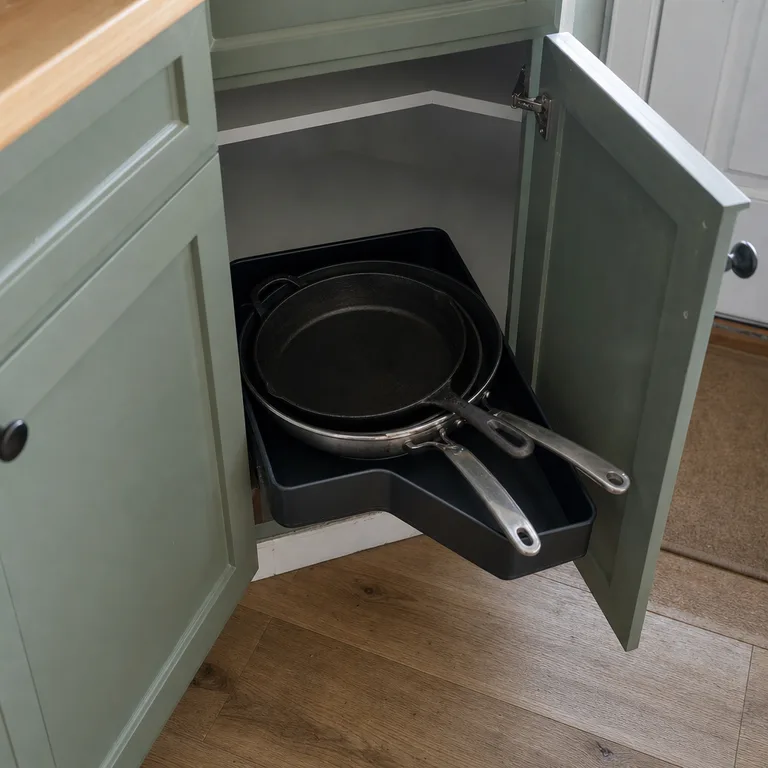
Add a non-slip shelf liner underneath so the tray does not slide while pans are being stacked. Keep the load modest and place the heaviest cookware near the front, since lifting cast iron from a deep corner can strain both the shelf and the person reaching for it.
Worth knowing: This is not a good solution for a large collection of heavy cookware or very high cabinet lips.
3.Fit a lazy Susan tray inside a diagonal corner cabinet
A freestanding lazy Susan makes oils, vinegars, sauces, and cooking sprays visible at a turn. Unlike a fixed corner-cabinet fitting, it can be removed for cleaning or moved to another shelf later.
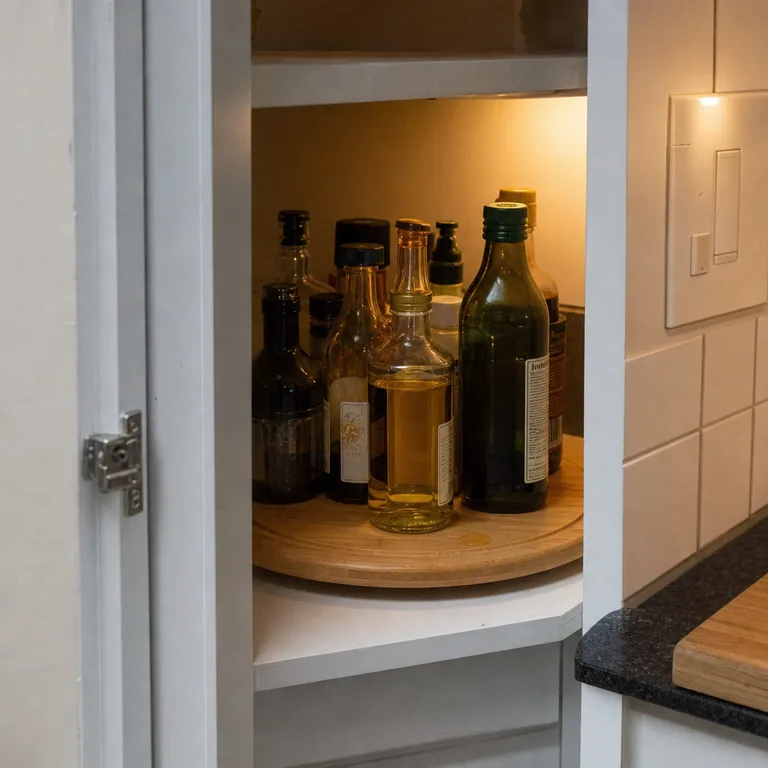
Measure the usable shelf area and check clearance around hinges and door edges before choosing a tray. Use bottles of similar height together so tall containers do not block shorter ones or hit the shelf above as the tray rotates.
Worth knowing: Round trays waste some space in square cabinet corners and may catch if the shelf is not level.
4.Add shallow turntables for small jars and bottles
Separate shallow turntables prevent spices, extracts, and small condiment bottles from disappearing behind larger items. Two smaller trays are often easier to manage than one large turntable in a deep upper corner shelf.
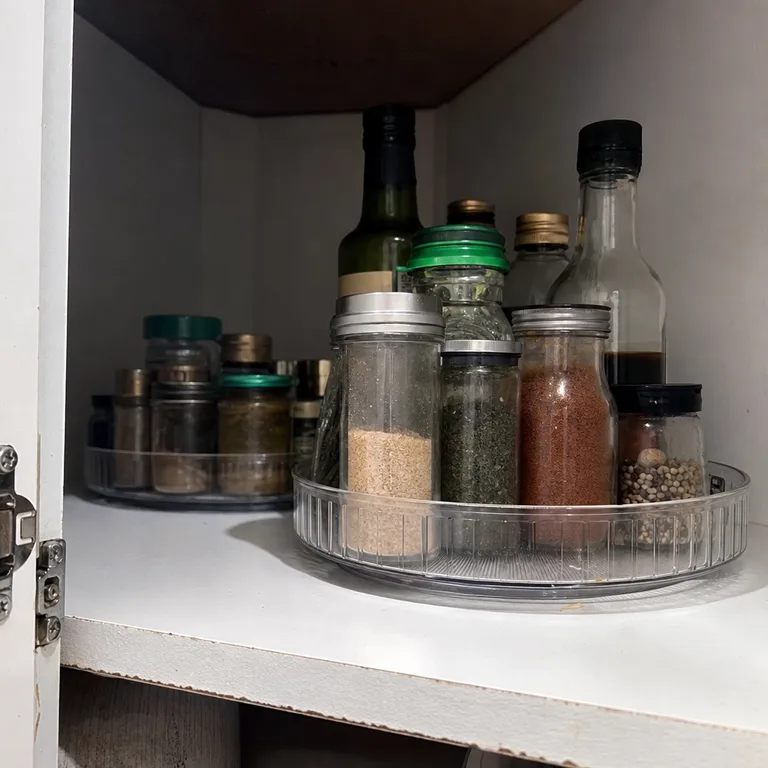
Sort by use, such as baking flavorings on one tray and everyday seasonings on another. Avoid overfilling the edges, because small jars can fall when the tray spins quickly or when the cabinet door closes hard.
Worth knowing: Turntables do little for rectangular boxes, tall grinders, or containers that are too large to rotate freely.
5.Stack open-front baskets for lunch supplies
Open-front baskets keep lunch containers, snack packets, napkins, and reusable bags in contained groups without hiding their contents. In a blind corner, the front basket can be lifted or slid aside when it is time to reach the one behind it.
Use stackable baskets only when the shelf height leaves enough room to remove the lower basket without scraping. Lightweight supplies work best here, while glass containers and heavy drink bottles are safer closer to the cabinet opening.
Worth knowing: Stacking creates an extra step when supplies in the lower or rear basket are needed often.
6.Set cleaning supplies in a leak-catching caddy
A solid-bottom plastic caddy keeps spray bottles, cloths, brushes, and gloves together in an under-counter corner cabinet. Pulling out one caddy is simpler than reaching around plumbing, hinges, or items stored near the front.
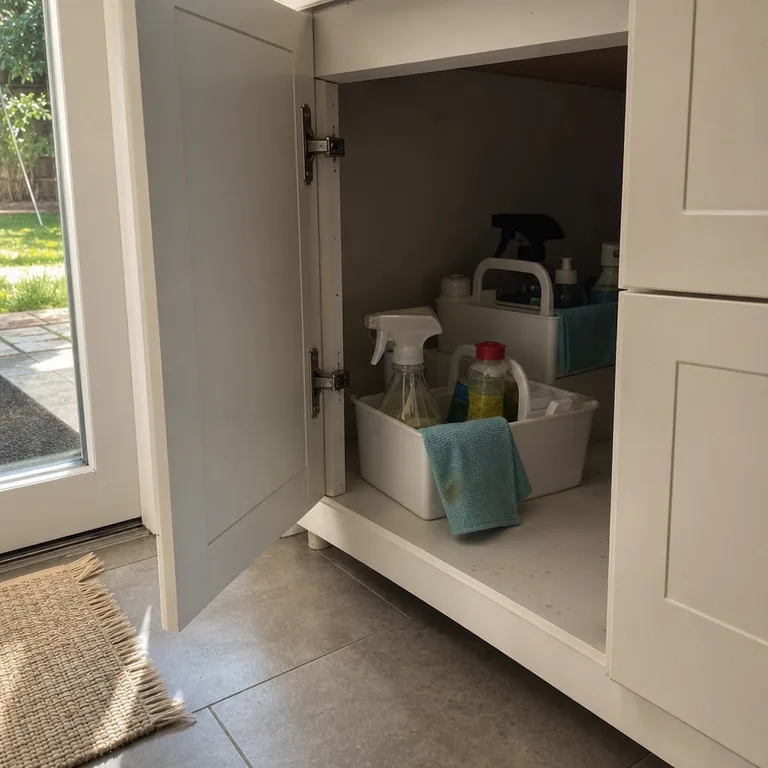
Place a washable shelf mat beneath the caddy to protect the cabinet base from drips. Keep cleaning products separate from food storage, and store them securely if children or pets can access the cabinet.
Worth knowing: A caddy cannot prevent damage from a major leak, so plumbing and cabinet bases still need occasional checks.
Related: 12 Under-Sink Storage Ideas That Work Around Pipes
7.Corral baking sheets in a vertical file rack
A freestanding vertical rack holds baking sheets, cutting boards, cooling racks, and flat pans upright near the cabinet opening. This stops a heavy horizontal pile from forming in the corner, where the bottom pan is hard to remove.
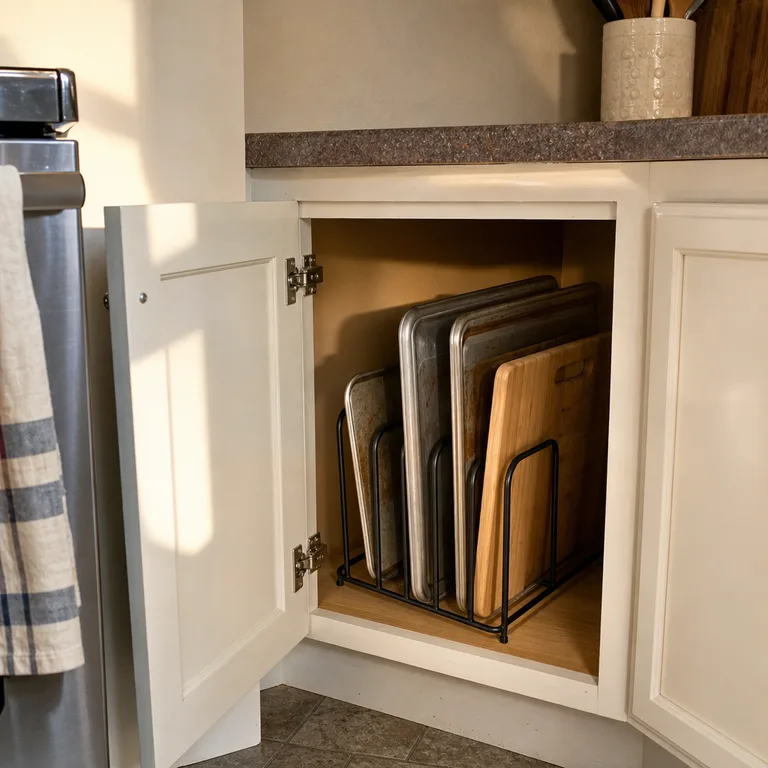
Choose a rack with slots wide enough for the thickest board or pan in the group. Put the most-used sheet pans in the front slots and use the deeper area of the cabinet for lighter, less frequently used pieces.
Worth knowing: Freestanding racks can tip if they are overloaded or placed on a slick shelf without a grippy liner.
8.Use a divided tote for food-storage lids
A divided tote gives plastic lids a clear home while containers nest behind it in the deeper part of the cabinet. The tote can come out first, leaving the rest of the shelf easier to reach and less likely to become a mixed pile.
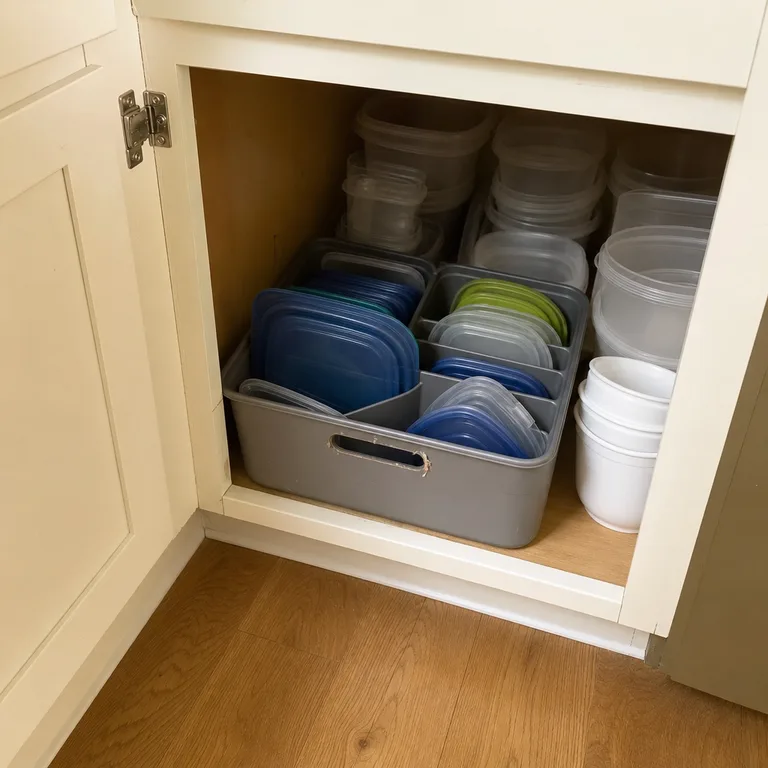
Sort lids by general size rather than trying to create a slot for every shape. A low tote is usually easier to lift from a base cabinet, while a taller divided organizer may work better on a shelf closer to eye level.
Worth knowing: Very large lids and mismatched specialty-container lids may not stay upright in the dividers.
9.Make a tea and coffee station in a portable basket
A handled basket keeps tea bags, coffee filters, cocoa packets, sweeteners, and small drink supplies together on a deep upper shelf. Bringing the basket forward makes the cabinet useful without turning every morning drink into a reach to the back.
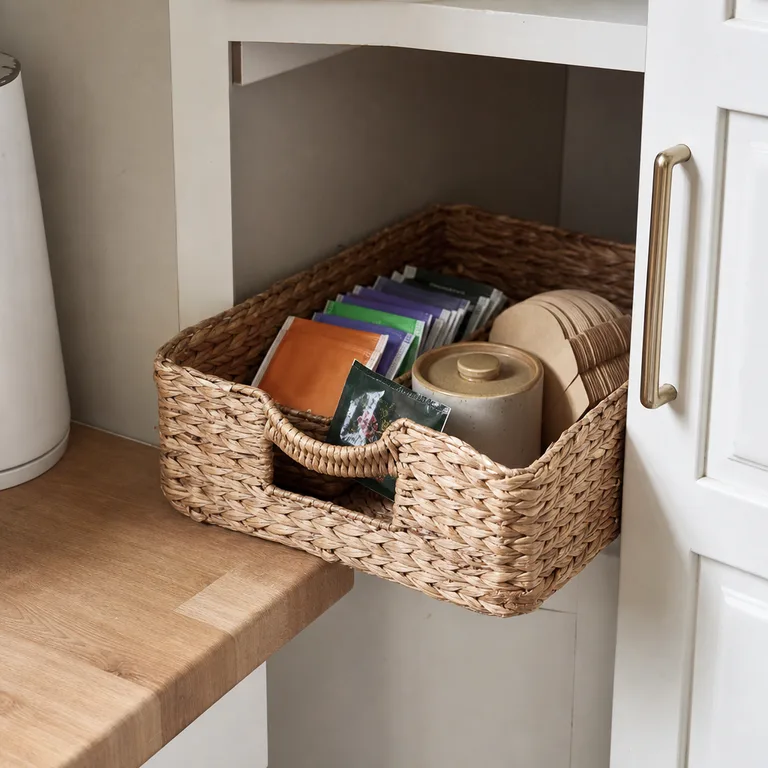
Use a basket with a firm base and sides low enough to see what is inside. Woven baskets suit dry goods, but a wipeable plastic or metal bin is easier to maintain if loose coffee grounds or sticky packets are common.
Worth knowing: A basket can become cluttered quickly if it also becomes the catch-all spot for mugs, loose spoons, and unopened boxes.
10.Store serving pieces in a wide slide-out basket
A wide basket can hold cloth napkins, trivets, serving utensils, and lightweight platters as one entertaining group. It makes occasional-use supplies easier to retrieve from a blind corner without shifting everyday kitchen items.
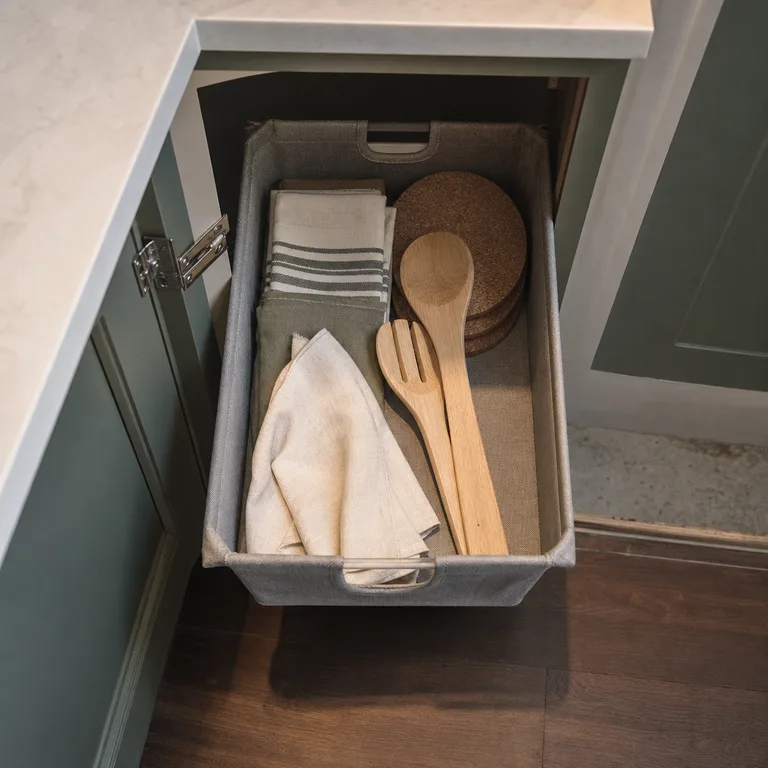
Choose a basket that fits through the actual cabinet opening, not just the shelf width behind it. Keep fragile serving dishes on a stable shelf near the front, and use the basket for soft goods or durable pieces that can handle movement.
Worth knowing: Fabric-sided baskets are harder to clean after spills, and broad baskets can be cumbersome when filled too heavily.
11.Create a back-stock bin for pantry refills
The deepest part of a corner cabinet is a practical place for unopened pasta, canned goods, foil, and other backup supplies. Separate bins make the back area intentional rather than a place where duplicates and expired items disappear.
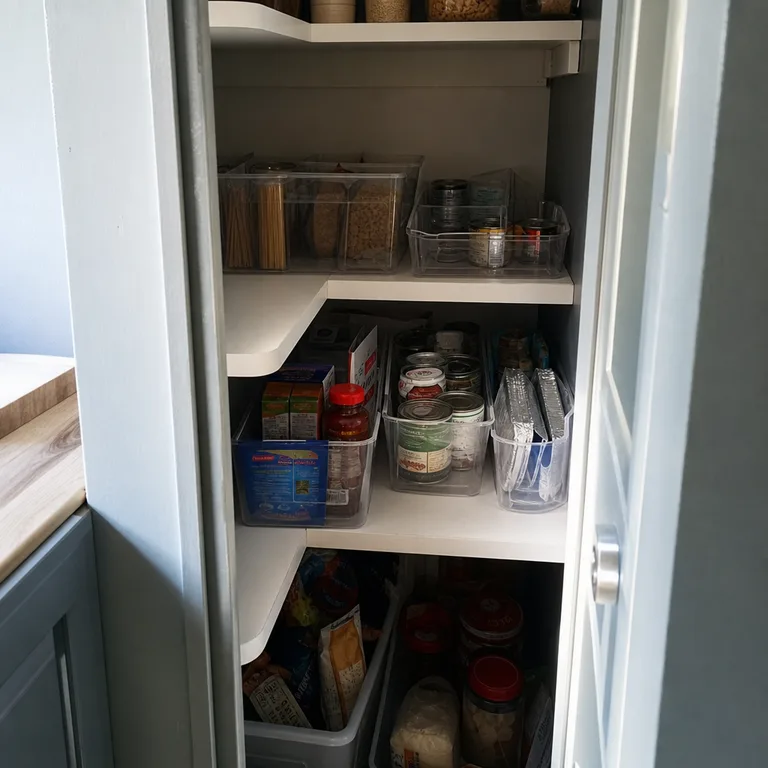
Keep everyday items near the opening and pull a refill bin forward only when the front supply runs low. Check dates and remove damaged packaging during restocking so the back-stock area stays useful rather than becoming overflow storage.
Worth knowing: This system requires regular restocking habits, or duplicates can still build up unseen at the back.
12.Place a rolling cart beside the cabinet for overflow
A slim rolling cart can take over storage for appliances, produce, bulk supplies, or frequently used baking items that do not work well inside the corner cabinet. This frees the cabinet for categories that can be stored safely in portable bins or trays.
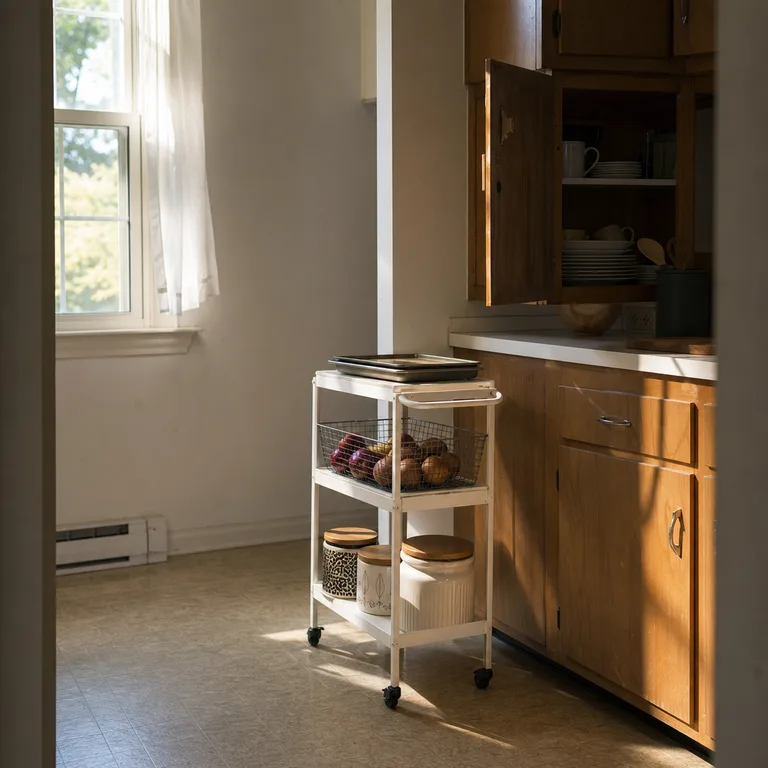
Park the cart where it does not block a work aisle, dishwasher, or nearby cabinet door. Locking wheels help keep it stable, and a cart is especially useful in rentals where changing cabinet hardware or installing pull-out fittings is not allowed.
Worth knowing: A rolling cart needs clear floor space and may make a small kitchen feel more crowded if it has no dedicated parking spot.
About the author
Dana Ruiz, Senior editor
Dana writes about small-space living, storage and low-cost decorating.
Keep reading
12 Kitchen Drawer Organization Ideas Using Simple Dividers
September 25, 2026
10 Laundry Supply Storage Ideas for a Tight Utility Corner
September 25, 2026

10 Large Wall Art Ideas That Start With Affordable Materials
September 28, 2026
12 Bathroom Wall Decor Ideas for Awkward Blank Spaces
September 28, 2026