10 Small Side Yard Ideas That Keep the Walkway Useful
A narrow side yard can stay clear for bins, gates, and maintenance while gaining planting, lighting, and surfaces that make it feel intentional. These ideas protect a direct walking route and account for drainage, shade, mature plant spread, and property-line clearance.
As an Amazon Associate I earn from qualifying purchases.
1.Lay a Straight Permeable Paver Track to the Gate
A straight paver track gives bin wheels and foot traffic a firm route from the front to the gate. Keeping the line simple makes a narrow passage feel orderly rather than crowded.
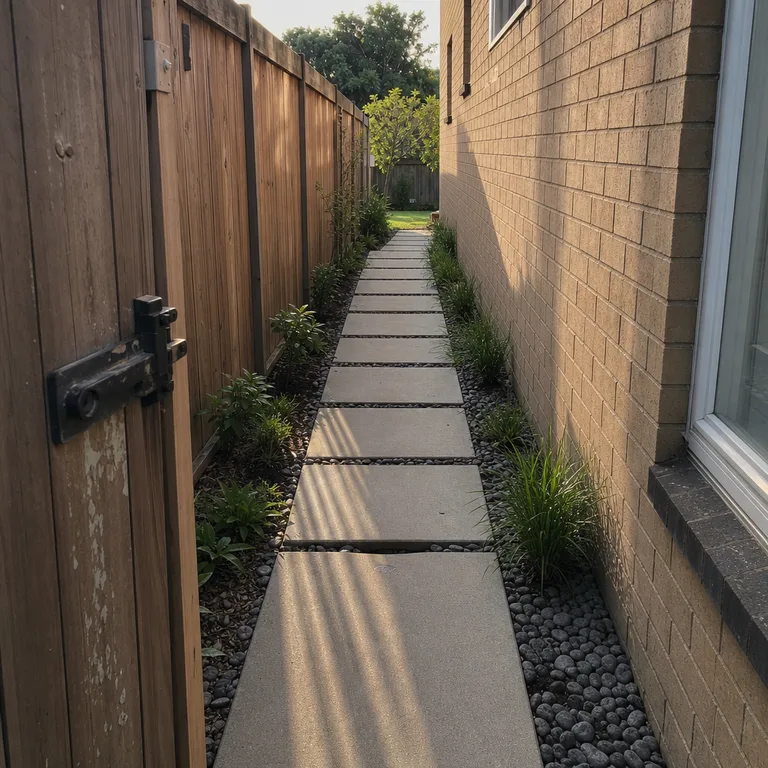
Choose permeable pavers or pavers with gravel-filled joints so water can move through the surface instead of pooling along the house. Build the base carefully and grade it away from the foundation; a path that holds water or shifts under bin wheels will become more work than it saves.
Use the full practical width needed for the widest bin or garden equipment, then reserve any leftover edge for gravel or a slim planted border. This is usually more affordable than paving the entire passage, while still making the route durable.
Worth knowing: Permeable pavers still need a properly prepared base and may need occasional joint material topped up, especially where bins roll repeatedly.
Related: 15 Budget Landscaping Ideas That Make a Small Yard Feel Finished
2.Use a Narrow Gravel Strip Along the House Wall
Run a contained strip of crushed stone along the house wall and keep the main walking surface clear. The gravel gives the edge a clean finish and can reduce muddy splashes where rain falls from the roofline.
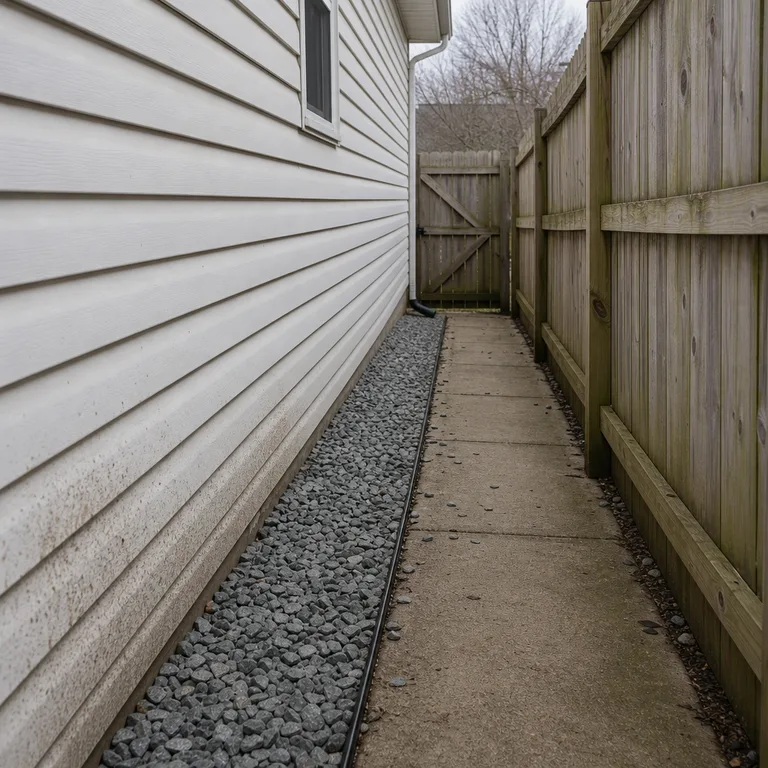
Metal or durable edging helps keep stones from migrating onto the walkway. Use a suitable permeable fabric beneath the gravel only where it will not interfere with intended drainage, and make sure the soil beneath slopes away from the foundation.
This treatment works well beside an existing concrete path, paver route, or compacted walkway. It is a modest update that adds contrast without taking space from gates or bin access.
Worth knowing: Gravel does not solve a drainage problem on its own; downspouts and ground grading must direct water safely away from the house.
3.Plant Shade-Tolerant Groundcover in a Single Border
Put all planting along one fence-side border instead of placing pots and beds on both sides of the passage. A single planted edge softens a long blank run of fence while keeping the walking line obvious and open.
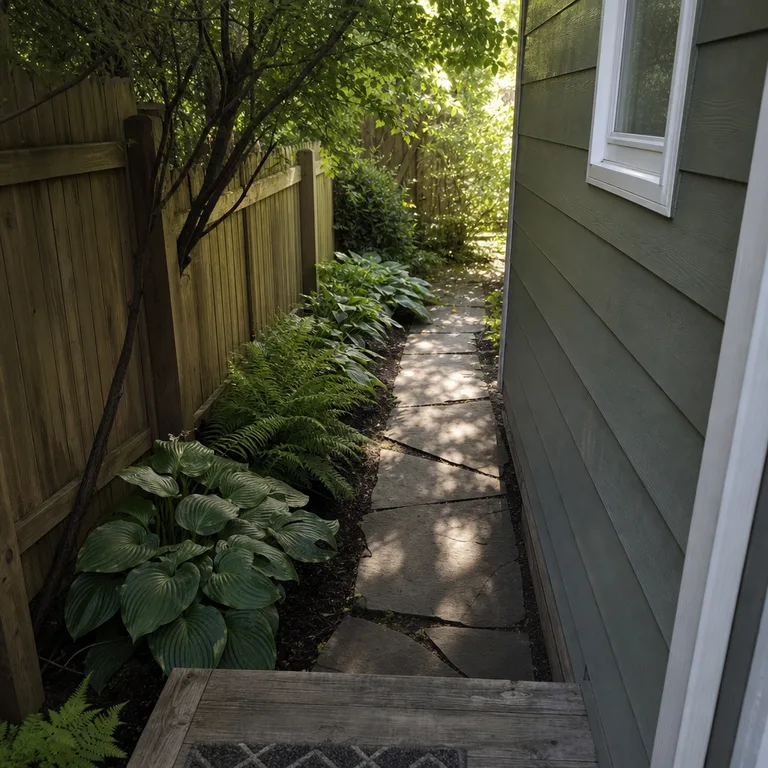
For a shaded strip, choose plants that suit low light and check their mature spread rather than their size at purchase. Ferns, hostas, and other shade-tolerant choices can fill the border without demanding a sunny location, but they should be set back far enough for trimming.
Use mulch to make small plants look more finished while they grow in. Buying smaller plants and letting them fill in over time is often easier on the budget than crowding the bed from the start.
Worth knowing: Even compact plants need regular cutting back in a narrow passage, and dense shade can slow growth or keep soil damp for longer.
Related: 10 Shade Garden Ideas for a Small Yard on a Budget
4.Add a Slim Bin Parking Bay Beside the Fence
Create one defined parking bay for bins at the widest point of the side yard, preferably against the fence. A hard, level surface stops wheels sinking into soil and prevents bins from drifting into the main route.
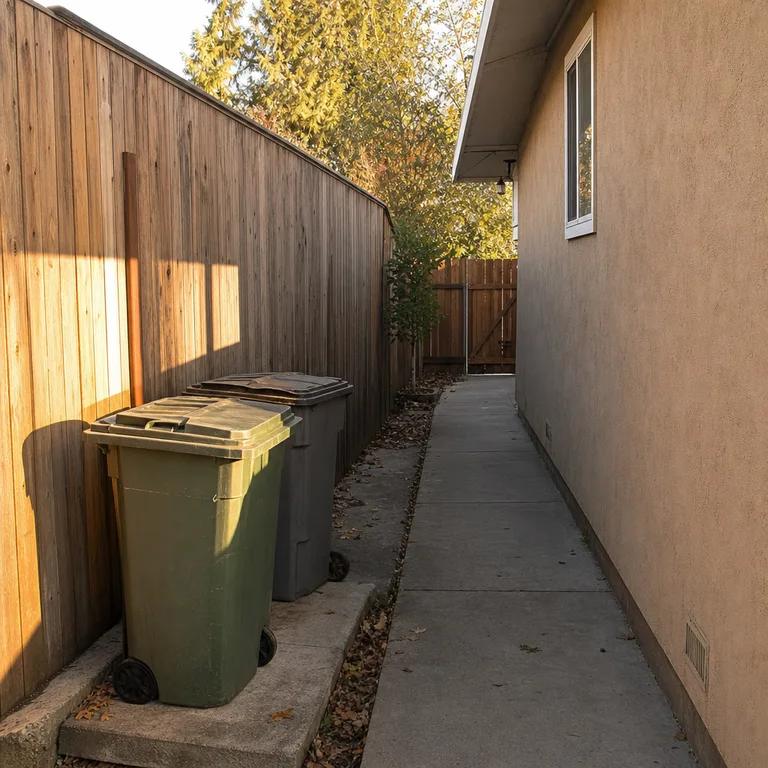
Concrete slabs, leftover pavers, or a simple compacted base can make a practical bay without rebuilding the full passage. Keep a continuous clear route to the gate and test whether bins can be turned and moved out on collection day.
A low screen can reduce the visual impact if it does not block access or catch the wind. Leave the lid-opening side and gate swing area clear, especially in a tight space.
Worth knowing: A bin bay only works where the passage has enough extra width; forcing one into a too-tight route can make gate and maintenance access worse.
Related: 10 Garden Hose Storage Ideas for a Small Yard
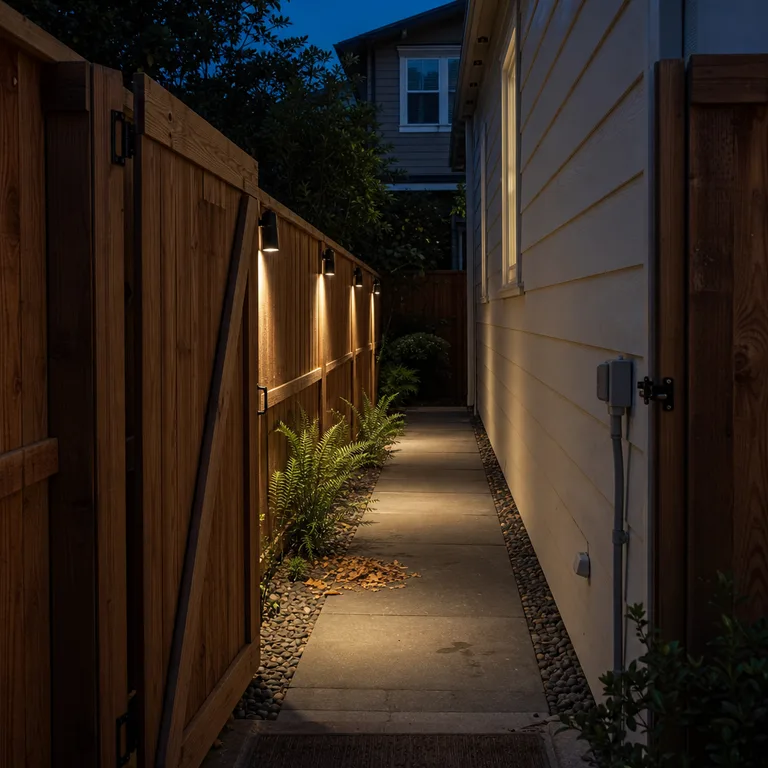
5.Mount Downward-Facing Lights on the Fence
Small downward-facing lights mounted on the fence can make the route easier to use after dark. They light the path and gate latch without adding posts, stakes, or bulky fixtures at ground level.
Space the lights so their pools overlap lightly rather than aiming a bright fixture directly toward the house or a neighbor. Solar options avoid new wiring where the fence receives enough daytime sun, while wired low-voltage lighting may be more reliable in a deeply shaded passage.
Choose simple weather-rated fixtures that can handle rain and regular fence movement. Keep cords and connections protected, tidy, and away from bin wheels.
Worth knowing: Solar lights can be weak or unreliable in side yards that receive little direct sun, particularly in winter or beneath dense tree cover.
6.Fit a Wall-Mounted Fold-Down Potting Shelf
A shallow fold-down shelf creates a temporary spot for repotting, sorting hand tools, or setting down a watering can. When folded up, it gives the side yard its full walking width again.
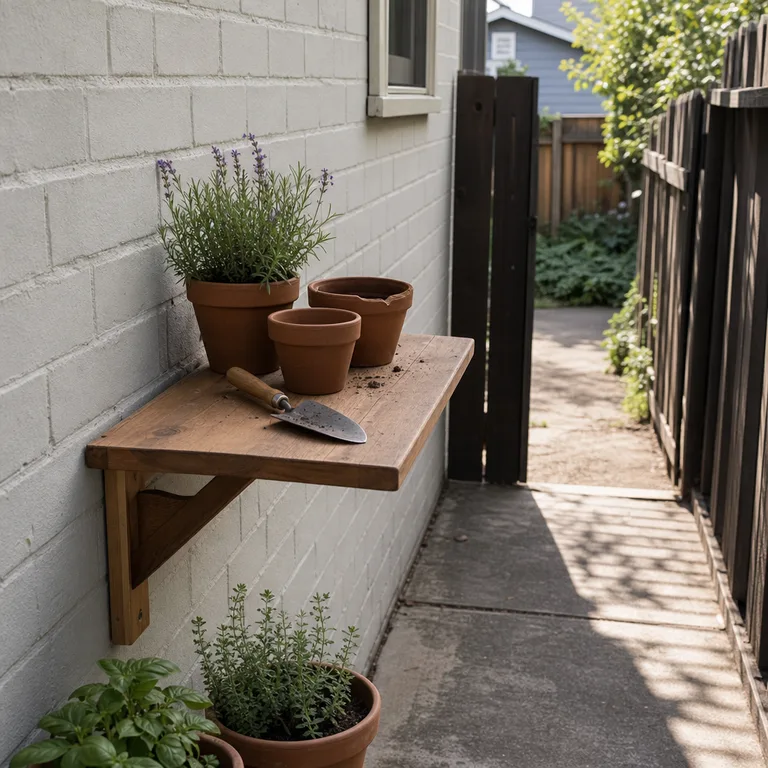
Mount it only on a suitable wall or solid fence section, and position it away from doors, meters, vents, and any service panels. A simple exterior-rated board with sturdy folding brackets can be enough for light garden tasks.
Keep the shelf narrow and use hooks beneath it for a hand trowel or gloves rather than adding a freestanding storage unit. This makes a useful work point without turning the passage into a permanent storage zone.
Worth knowing: A fold-down shelf needs secure mounting and should not obstruct required utility access, window openings, or the route used to move bins.
7.Train a Trellis Flat Against the Fence
A flat trellis gives a plain fence vertical interest while preserving the width of the walkway. It works best when the support sits close to the fence and the plant is tied in rather than allowed to spill outward.
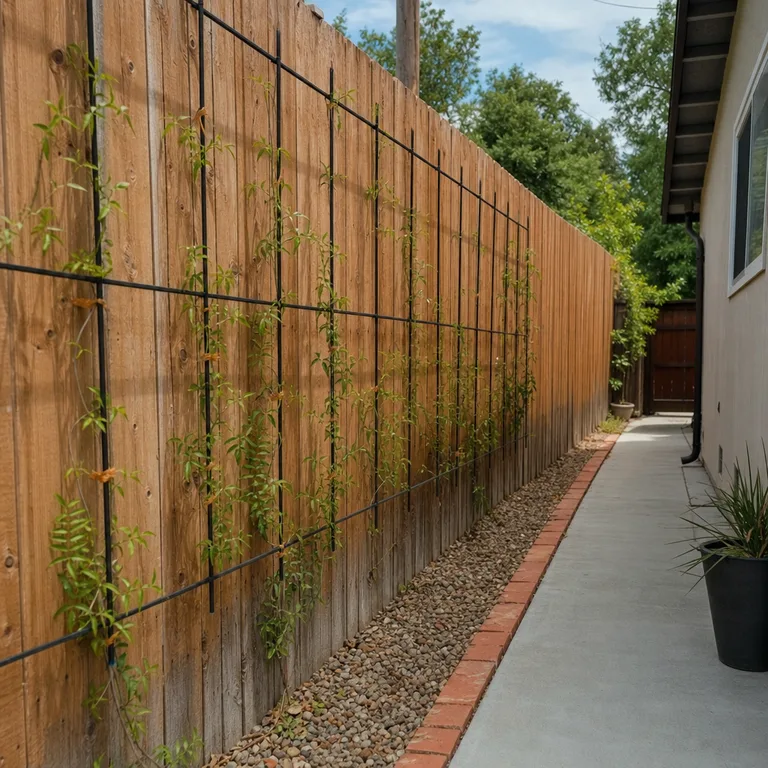
Choose a climber suited to the amount of sun in the passage and its local winter conditions. Young plants are usually the economical choice, but they need regular guidance until they cover the trellis evenly.
Keep stems clear of gate hinges, latches, gutters, utility equipment, and neighboring property lines. Pruning little and often prevents the green wall from becoming a snagging hazard along the route.
Worth knowing: Climbers require ongoing trimming, and vigorous varieties can damage fences or obstruct access if left unmanaged.
8.Screen Utility Equipment With a Removable Slatted Panel
A removable slatted panel can make visible utility equipment less prominent without pretending it is not there. The gaps between slats keep the screen lighter looking than a solid wall and can allow appropriate airflow where needed.
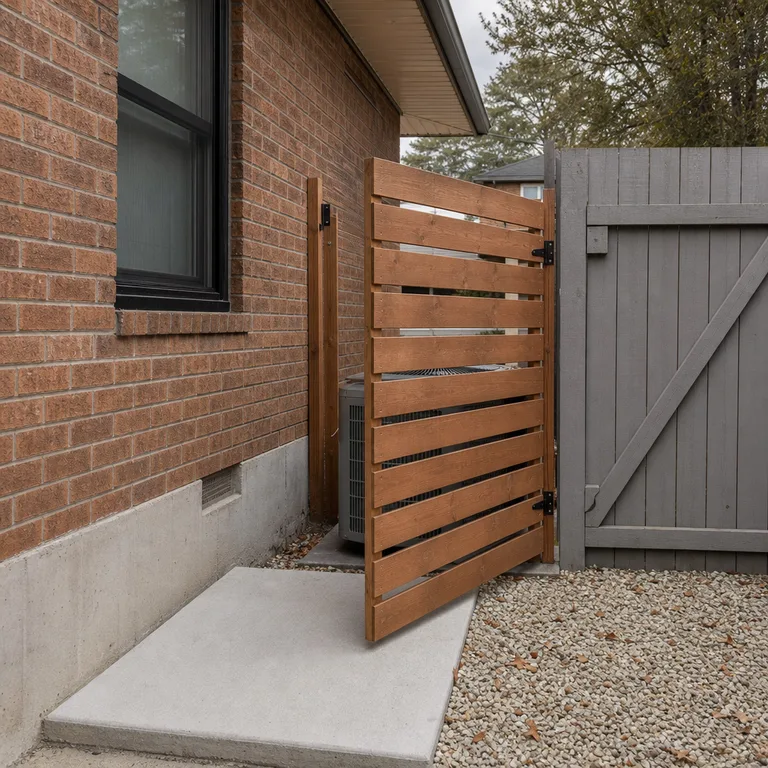
Build the panel as a hinged or lift-off section so service workers can reach the equipment quickly. Follow equipment manufacturer clearance requirements and local rules rather than placing a screen tightly around a unit.
Use simple exterior wood slats or a pre-made screen panel, keeping the design consistent with the existing fence. A screen that matches nearby woodwork can make the side passage feel planned instead of improvised.
Worth knowing: Some equipment needs substantial open clearance, so a screen may not be appropriate or may need to sit farther away than the passage allows.
9.Place Stepping Stones Through a Dry Creek Drainage Bed
A shallow dry creek bed can guide runoff through the side yard while flat stepping stones preserve a walking route. It adds texture to a narrow strip and can look more natural than a uniform drainage channel.
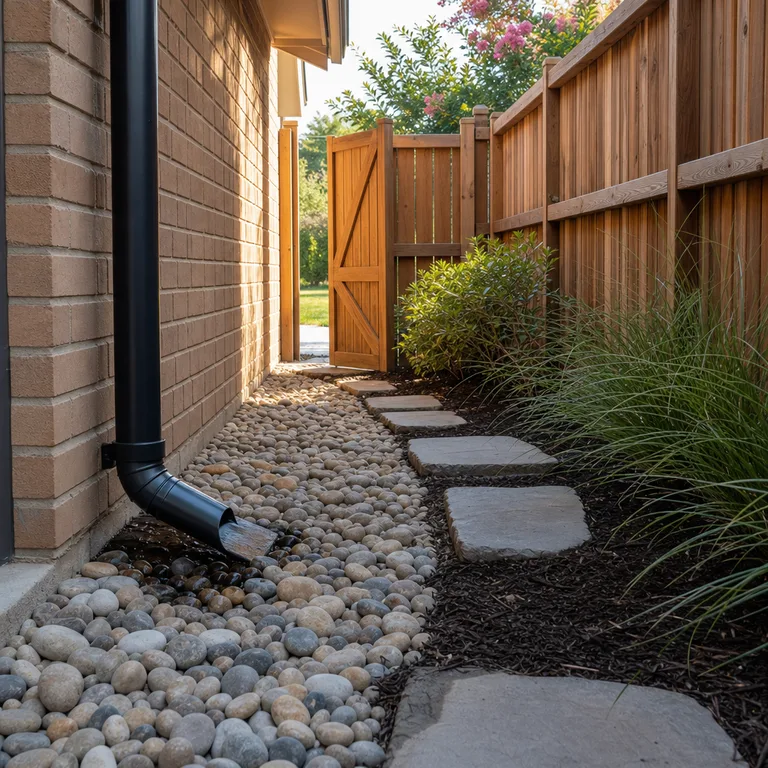
The key is the direction of flow: shape the bed so it moves water away from the foundation and toward a suitable outlet. Set each stepping stone firmly on a compacted base so it remains stable when wet and does not become a trip point.
Use river rock or similar stone around the route, with larger stones at edges where they are less likely to scatter. Keep the bed shallow enough that bins can still pass where necessary, or limit it to a separate drainage edge.
Worth knowing: A dry creek bed needs a real drainage destination; it should not simply collect roof runoff beside the foundation or send water onto a neighboring property.
10.Make the Gate a Clear Focal Point With Contrasting Paint
Painting the gate a contrasting, muted color gives the eye a clear endpoint and makes the passage read as a deliberate route. It can refresh a weathered gate without changing its footprint or adding anything that narrows the walkway.
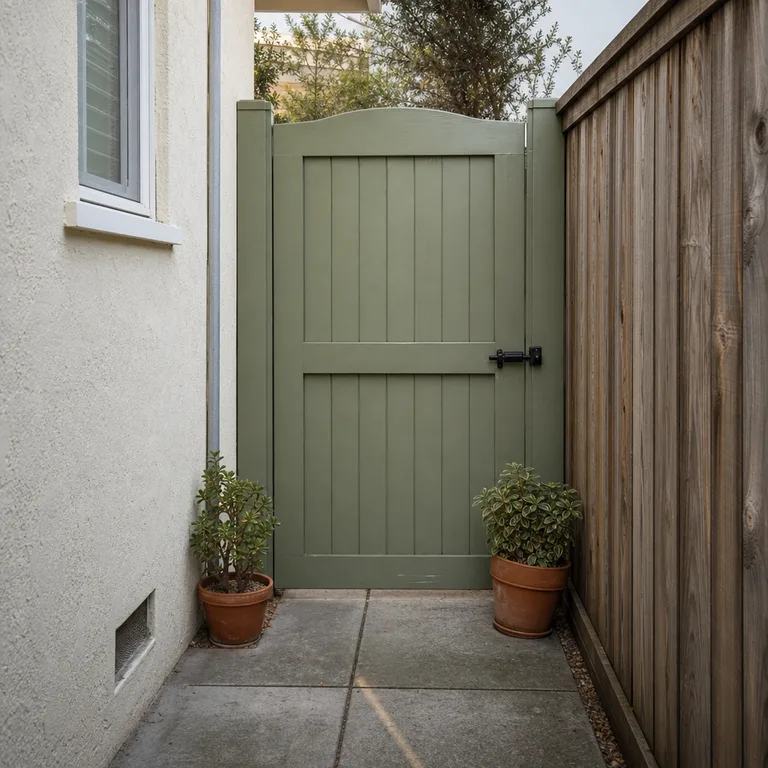
Choose exterior paint suited to the gate material and prepare peeling or bare areas before painting. A color that relates to the house trim, fence, or garden planting will look settled rather than overly decorative in a small space.
Keep pots, trellises, and stored items outside the gate swing path. The latch should remain easy to reach from both sides, and the bottom edge should still clear the ground after seasonal movement.
Worth knowing: Paint improves appearance but will not correct a sagging gate, damaged posts, or a latch that no longer aligns.
About the author
Dana Ruiz, Senior editor
Dana writes about small-space living, storage and low-cost decorating.
Keep reading
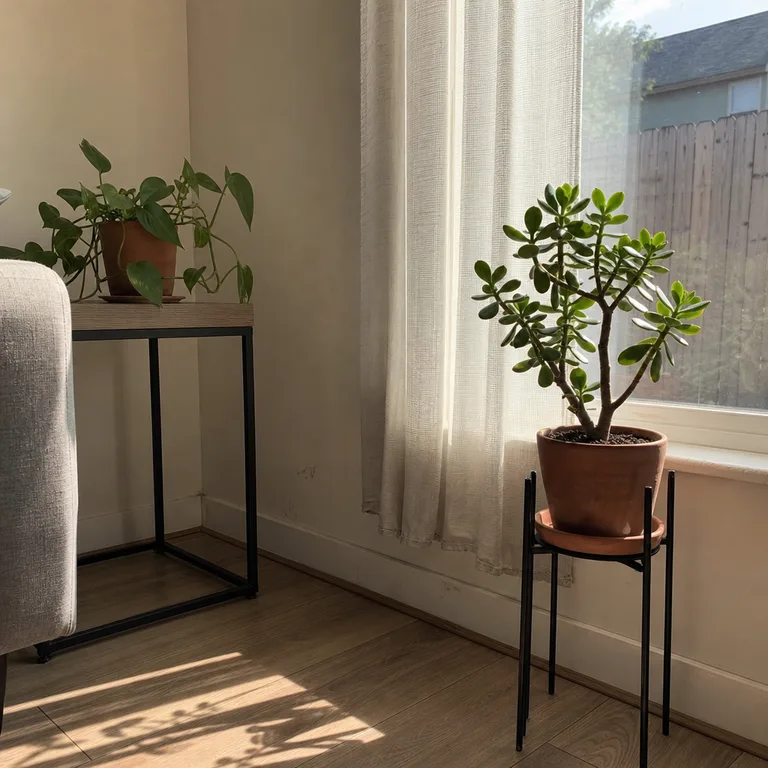
8 Steps for Bringing Patio Houseplants Indoors Before Winter
October 14, 2026
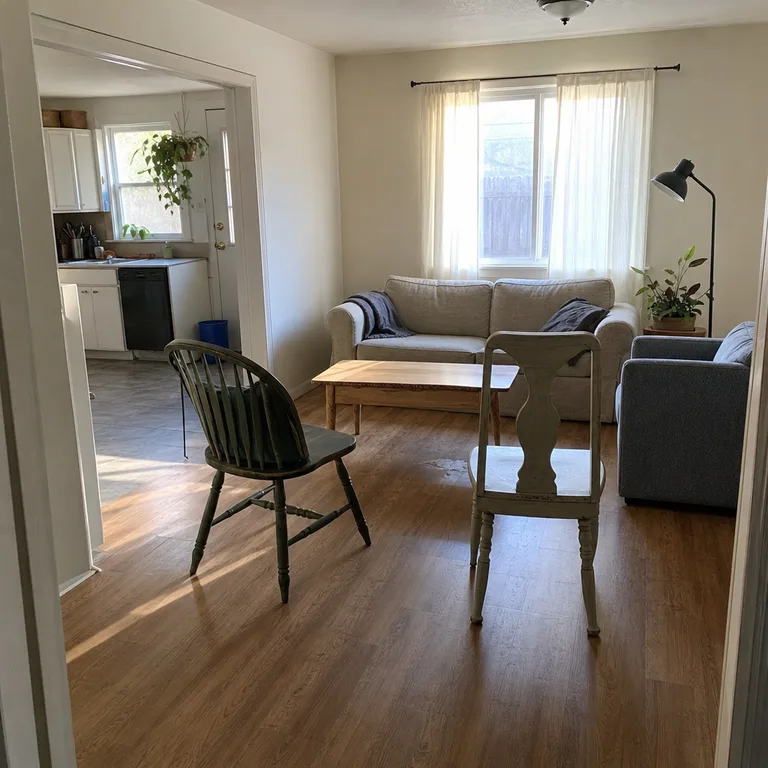
10 Holiday Hosting Layout Ideas for a Small Apartment
October 15, 2026
8 Houseplant Display Ideas for a Living Room With One Bright Window
October 15, 2026
8 Wet Boot Tray Setups for a Winter Entryway With No Mudroom
October 14, 2026