8 Steps for Bringing Patio Houseplants Indoors Before Winter
Tender houseplants need a planned move indoors as local nights approach each species’ cold tolerance, not a single calendar date for every pot. A brief inspection, cleanup, quarantine period, and realistic indoor placement can reduce pest spread and help plants adjust to lower light and slower growth.
As an Amazon Associate I earn from qualifying purchases.
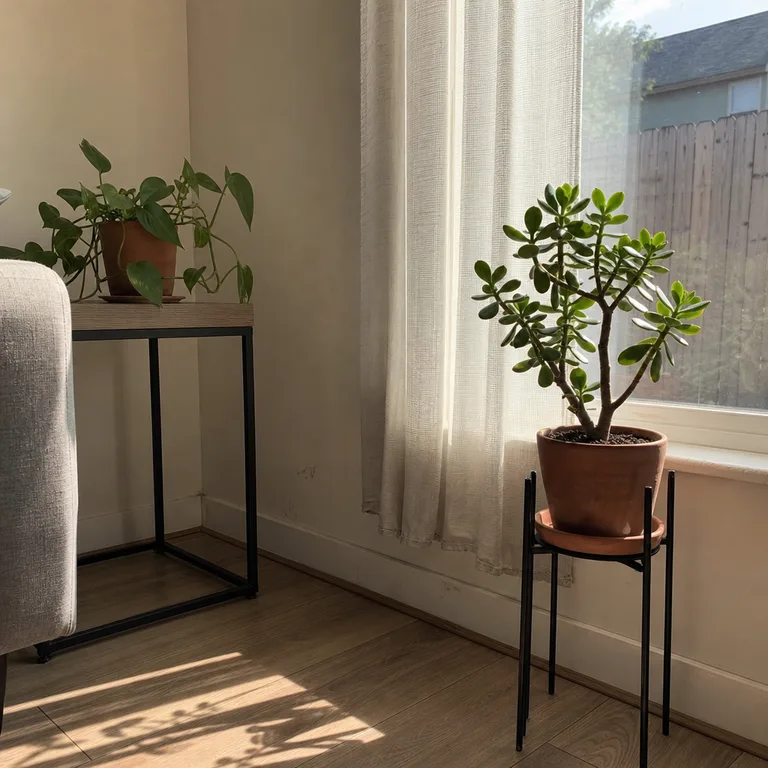
1.Make a list of tender plants and their cold limits
Sort patio pots into true houseplants, tender tropicals, and plants that are meant to stay outdoors. Not every plant that spent summer outside belongs in a living room for winter, and some seasonal containers are better composted or handled according to their own overwintering needs.
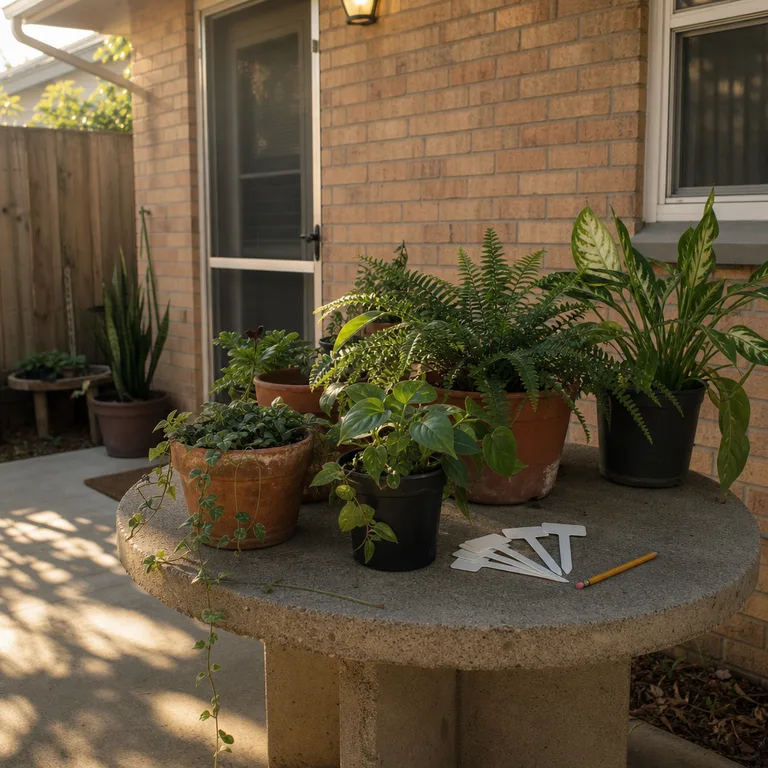
Check each houseplant’s species-specific cold tolerance and watch the local overnight forecast. Move the most cold-sensitive plants first, rather than relying on one date or bringing every pot in during a single rushed afternoon.
Worth knowing: Common names can cover plants with different needs, so identify an uncertain plant as closely as possible before using a cold-limit guideline.
2.Inspect leaves, stems, and soil for pests or disease
Look closely at leaf undersides, new growth, stem joints, pot rims, and the soil surface. Webbing, sticky residue, scale-like bumps, tiny insects, unusual spotting, mold, or a sudden decline can all signal a problem that should not be carried into the main indoor plant area.
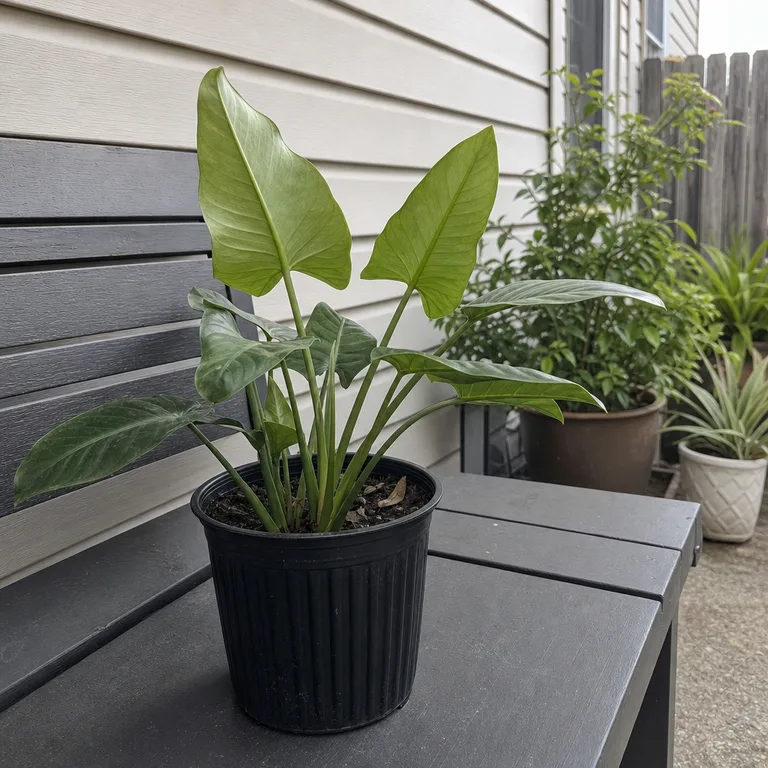
Use bright natural light and, if needed, a magnifier to inspect plants one by one. Set aside anything questionable instead of placing it near healthy houseplants, and seek species-appropriate pest or disease guidance if the cause is unclear.
Worth knowing: A plant can appear clean during one inspection and still reveal pests later, so follow-up checks indoors are still necessary.
3.Rinse pots and wipe down outdoor grime
Remove fallen leaves, loose mulch, and soil from pot exteriors, then rinse or wipe the outside of the container and its saucer. This keeps patio dirt, algae, and mineral residue from ending up on indoor floors, shelves, and window trim.
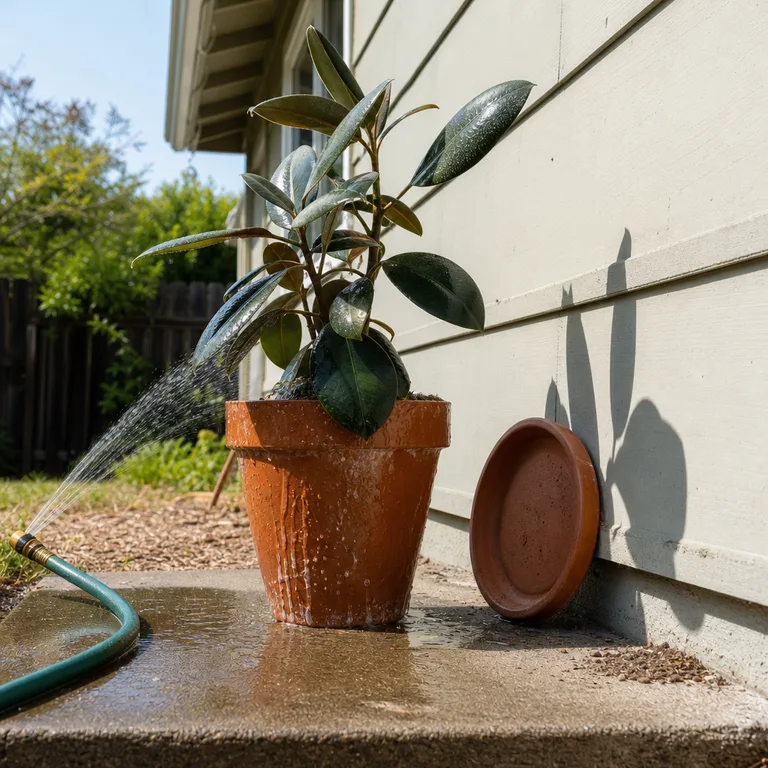
Wipe broad, sturdy leaves gently if they are dusty, using a method suitable for that plant. A soft cloth and plain water are often enough; avoid coating leaves with products that can leave residue or interfere with normal leaf function.
Worth knowing: Some plants have fuzzy, delicate, or easily damaged leaves that should not be rubbed or rinsed heavily.
4.Quarantine plants with signs of trouble
Keep plants with suspected pests or disease away from the main collection in a separate room, enclosed porch, or other area with suitable light. Give them their own saucers and avoid moving shared runoff, tools, or fallen leaves between the isolated plant and healthy plants.
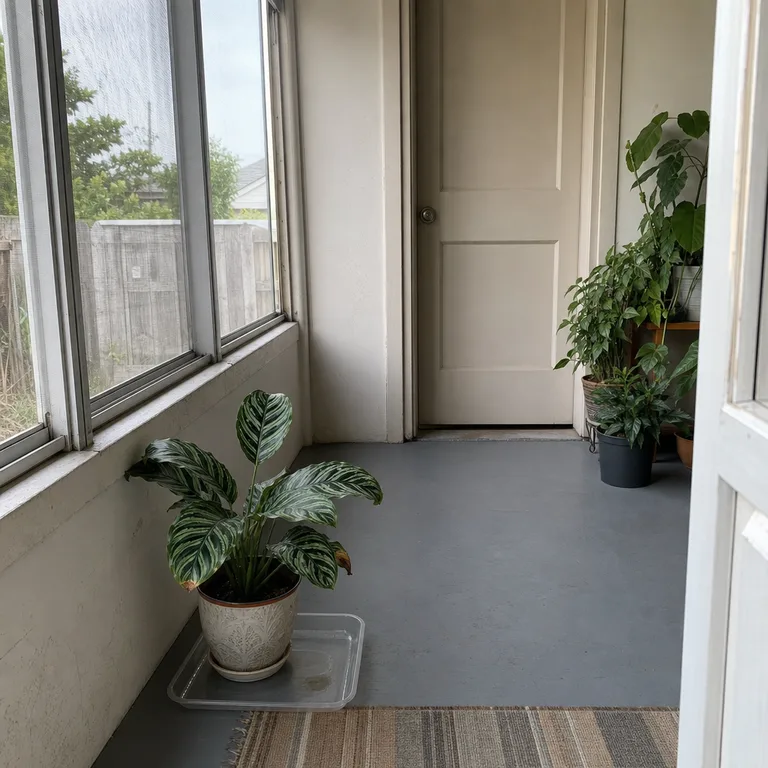
Quarantine gives time to observe whether damage is spreading and to respond based on the actual issue. If a plant shows signs of disease, remove and dispose of affected material carefully rather than adding it to an indoor compost container.
Worth knowing: A quarantine space still needs conditions the plant can tolerate, especially enough light and protection from cold drafts.
5.Choose indoor spots that match each plant’s light needs
Place plants according to the light they can realistically receive indoors. Sun-loving plants usually need the brightest available window area, while plants adapted to gentler light can sit farther from glass or behind a sheer curtain.
Keep foliage away from cold windowpanes, heating vents, and frequent door drafts. Grouping plants by light needs can make care easier, but leave enough room for air circulation and for checking each pot individually.
Worth knowing: Indoor winter light is often much weaker than patio light, so even a bright window may not fully match summer growing conditions.
6.Cut back dead growth and remove spent flowers
Remove yellow leaves, broken stems, spent blooms, and dead material caught at the soil line. This gives pests fewer hiding places and makes it easier to see fresh damage or new growth once the plant is indoors.
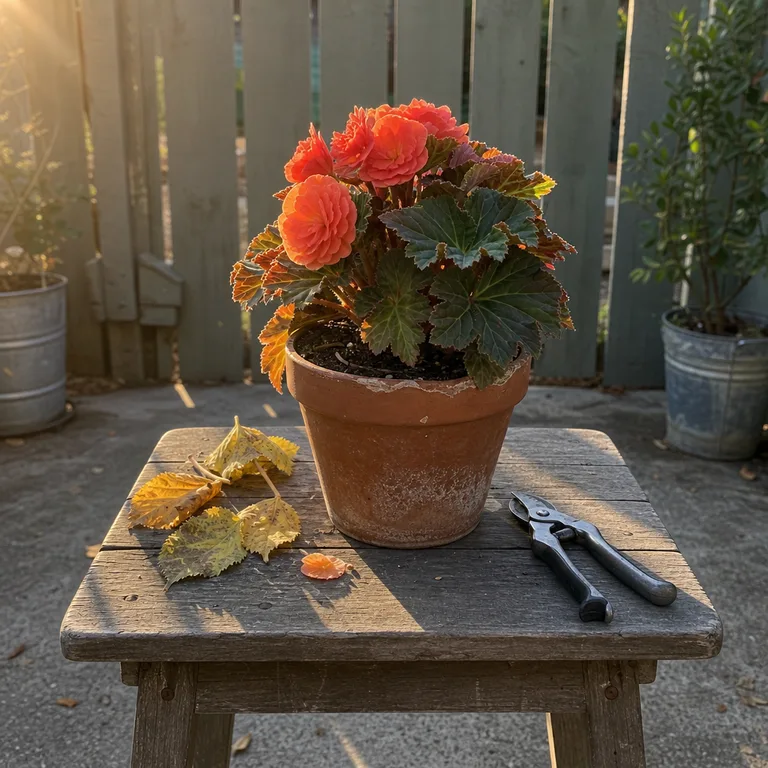
Use clean pruners for thicker stems and make only light, purposeful cuts. Skip major reshaping during the move indoors, since heavy pruning can add stress while the plant is also adapting to lower light and different humidity.
Worth knowing: Removing too much healthy foliage can reduce the plant’s ability to adjust to dimmer indoor conditions.
7.Ease plants into lower indoor light and warmer air
Bring each plant in before nights fall below its own tolerance, then give it a stable indoor location instead of moving it repeatedly from room to room. A few older leaves may yellow or drop as the plant responds to lower light, shorter days, and changed airflow.
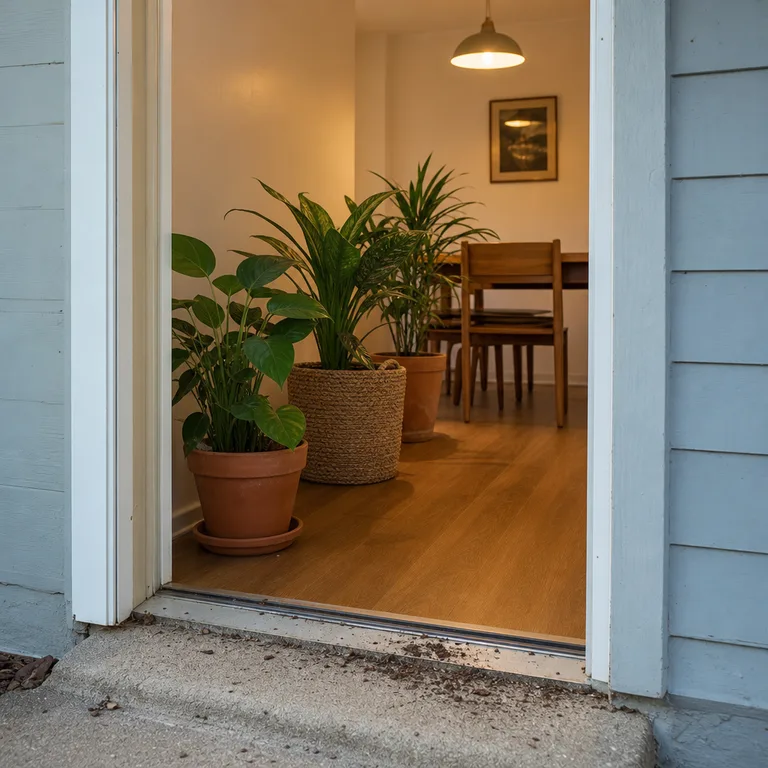
If the change from patio sun to indoor light is dramatic, place the plant in its best available spot and avoid pushing new growth with heavy feeding. Consistent temperatures and a predictable care routine are more useful than trying to recreate every outdoor condition at once.
Worth knowing: Some leaf drop can be normal after a seasonal move, but rapid decline, widespread spotting, or visible pests needs closer attention.
8.Reduce watering and monitor plants through the first weeks indoors
Indoor plants usually use water more slowly once light levels and evaporation drop. Check the soil and the needs of each species rather than watering on the same schedule used outside, where wind and sun dried pots faster.
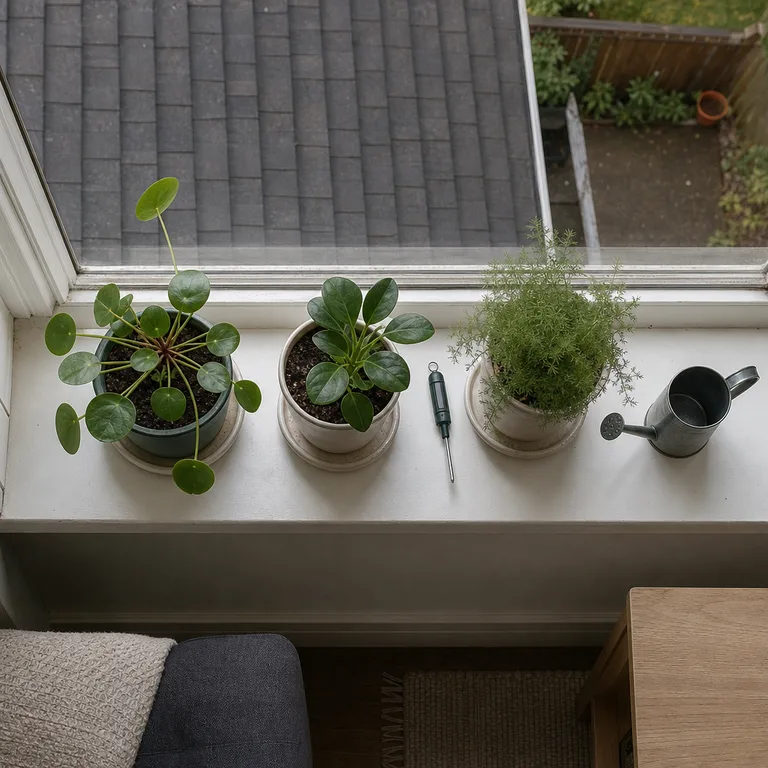
Water thoroughly when the plant needs it, then empty standing water from saucers so roots are not left sitting in it. Check leaves, stems, and soil regularly during the first weeks indoors, when delayed pest activity and adjustment stress are easiest to catch.
Worth knowing: A moisture meter can be a helpful clue, but it does not replace checking the soil and understanding the needs of the specific plant.
About the author
Dana Ruiz, Senior editor
Dana writes about small-space living, storage and low-cost decorating.
Keep reading
6 Small Garden Bird Bath Setups Using Simple Shallow Basins
October 11, 2026
9 Budget Christmas Bedroom Accents That Keep the Bed Easy to Use
October 14, 2026
9 Winter Mitten and Scarf Stations That Separate Damp Gear From Dry Gear
October 14, 2026
12 Spice Storage Ideas for a Small Kitchen Without Custom Cabinets
October 14, 2026