10 Garden Hose Storage Ideas for a Small Yard
A compact hose holder keeps a small patio safer and makes watering less of a daily untangling job. The right option depends on hose length and weight, tap location, wall material, and whether winter freezing requires the hose to be drained and stored indoors.
As an Amazon Associate I earn from qualifying purchases.
1.Mount a Wall Reel Beside the Outdoor Tap
A wall-mounted reel keeps the hose at the point where it is used, rather than looping across the patio between watering sessions. It makes a small outdoor area look clearer and leaves the walking route open.
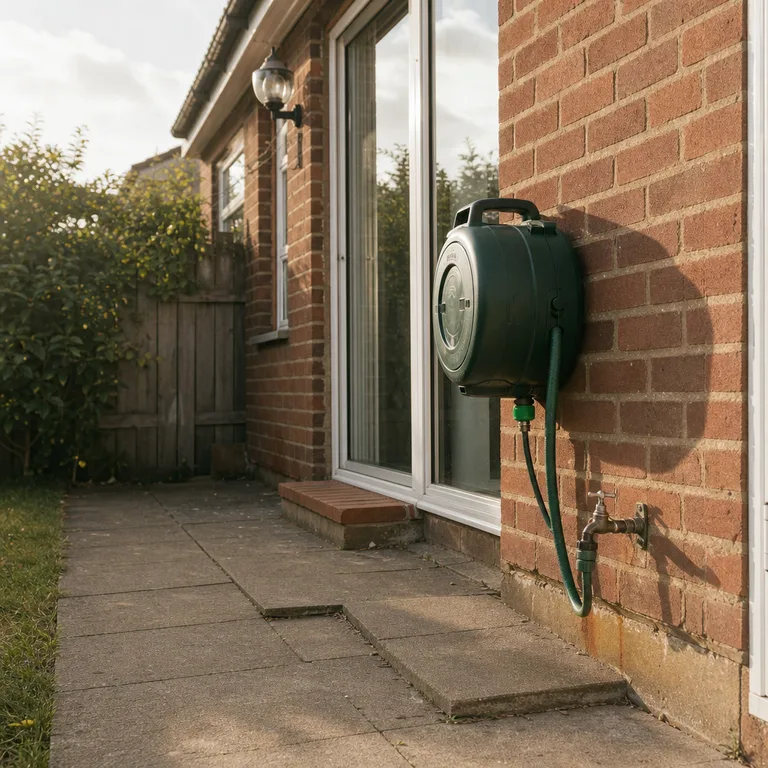
Choose a reel sized for the hose already in use, with enough room beside it to turn a handle or pull hose from the unit. Attach it only to sound masonry or a wall with solid stud backing, using fixings suited to that surface; a loose reel can damage both the wall and the hose connection.
Worth knowing: This option is not suitable for weak cladding or rental walls where drilling is not allowed.
2.Use a Freestanding Hose Cart Along a Fence
A wheeled hose cart gives a long hose a defined parking place without requiring anything to be fixed to the house. Tuck it along a fence-side strip, with its handle facing the open end of the path so it can be rolled out easily.
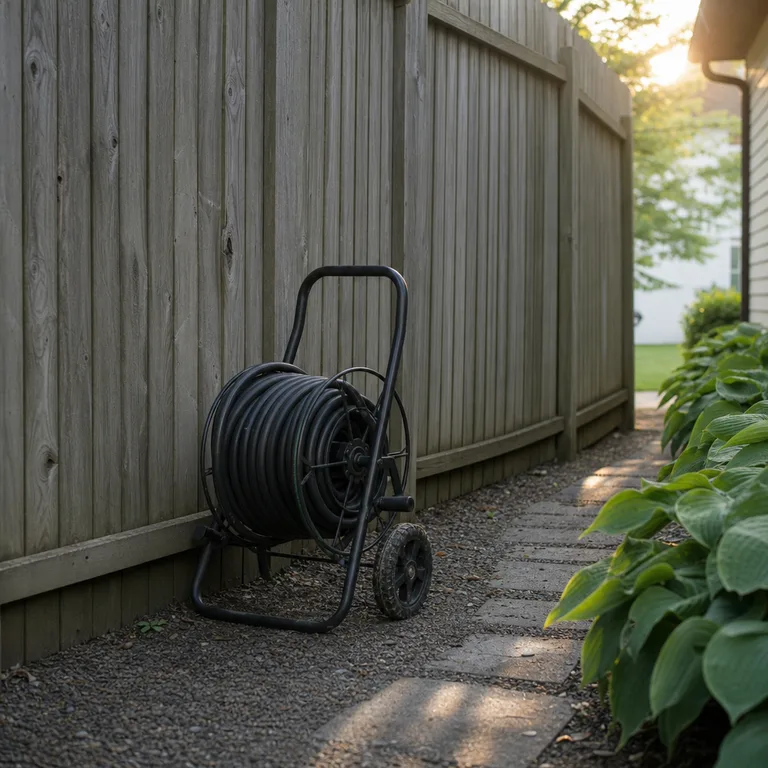
Look for a cart with a stable base and a hose guide that helps the coil wind evenly. Gravel or firm paving is easier for the wheels than soft ground, and storing the cart beside rather than on a narrow path prevents it from becoming another obstacle.
Worth knowing: A cart still needs a clear route to the tap and can be awkward to move over steps, loose gravel, or uneven ground.
3.Hide a Hose Pot Near the Patio Edge
A lidded hose pot disguises a short, flexible hose in a patio corner while keeping it close to containers or border plants. Its rounded shape softens the look of a hard-surfaced patio more than an exposed coil does.
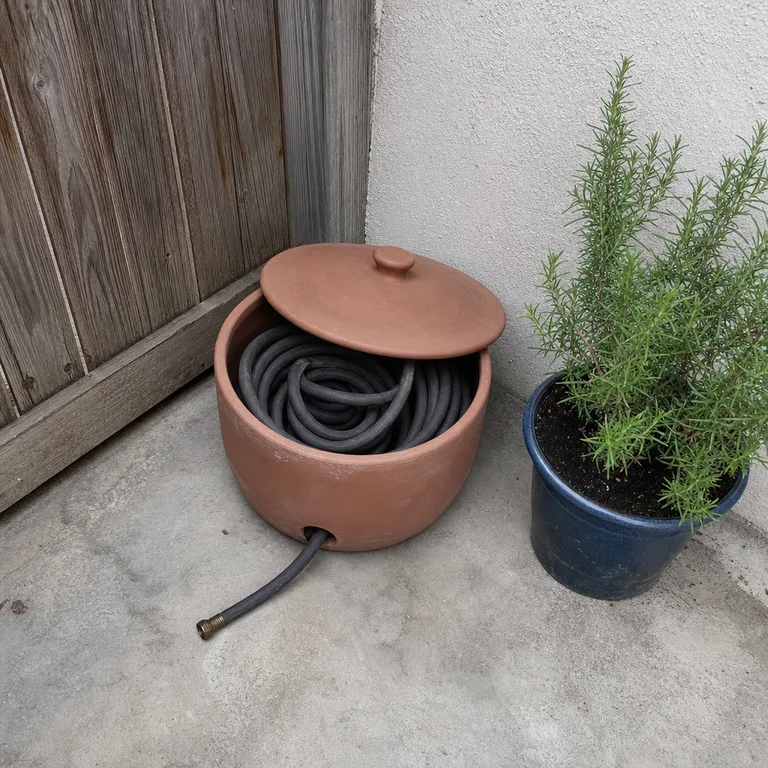
Set the pot on level paving near the patio edge, not in a low spot where rainwater collects underneath. A simple flexible hose and quick connector make this setup easier to lift, coil, and use than a heavy long hose.
Worth knowing: Hose pots hold only a limited amount of hose and are less practical for watering a large or distant garden area.
Related: 12 Container Garden Ideas for a Small Patio on a Budget
4.Hang a Simple Hose Hanger on a Shed Wall
An open metal hose hanger turns an unused shed wall into straightforward storage. Because the hose hangs in broad loops, air can move around it after watering instead of leaving it compressed in a closed container.
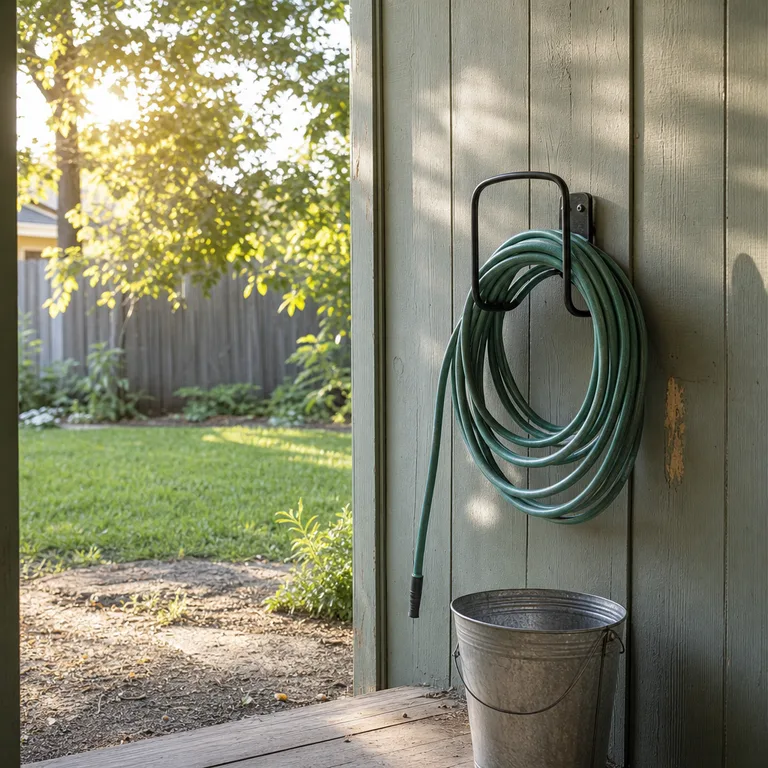
Mount the hanger to solid framing, not just thin shed cladding, and coil the hose loosely to avoid sharp bends. This is a simple option for a hose used around a backyard border, especially when the shed sits away from the main patio.
Worth knowing: A basic hanger leaves the hose visible and may not suit a front-facing wall or a carefully styled seating area.
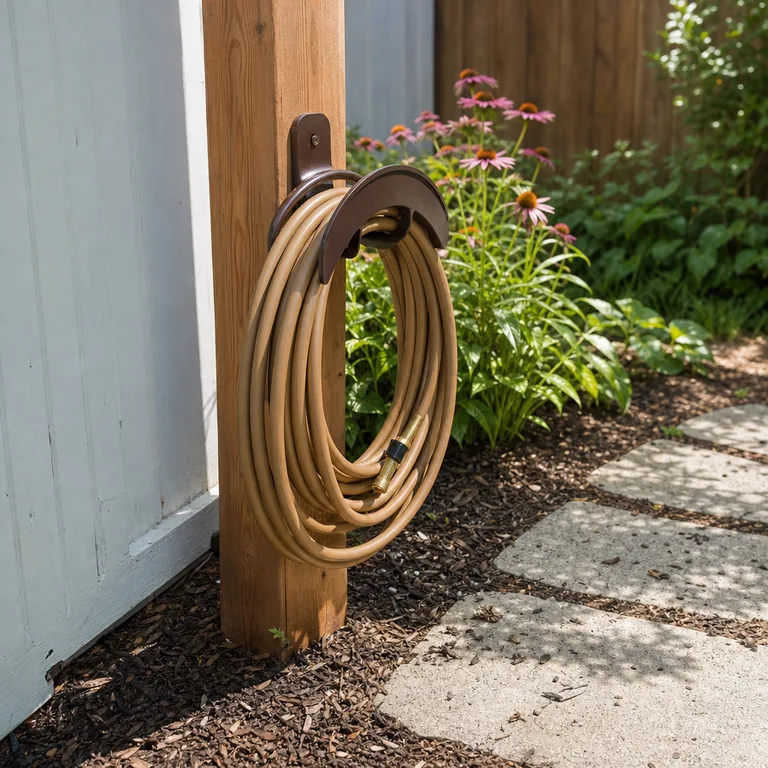
5.Add a Narrow Post-Mounted Hose Hanger
A post-mounted hanger creates hose storage where there is no useful wall, such as beside a garden border or at the far end of a path. It keeps the coil above mulch and soil, which helps prevent grime from collecting around the hose.
Position the post outside the main walking route and away from known irrigation lines or buried utilities. A sturdy timber or metal post set in stable ground works best, and the hose should reach the tap without being pulled tightly across a path.
Worth knowing: Installing a stable post takes more effort than mounting a hanger to an existing wall.
Related: 15 Budget Landscaping Ideas That Make a Small Yard Feel Finished
6.Store a Soaker Hose in a Lidded Deck Box
A small deck box keeps a soaker hose, connectors, and repair fittings together near raised beds. This prevents the soft hose from being left in a heap on the deck or snagged under garden tools.
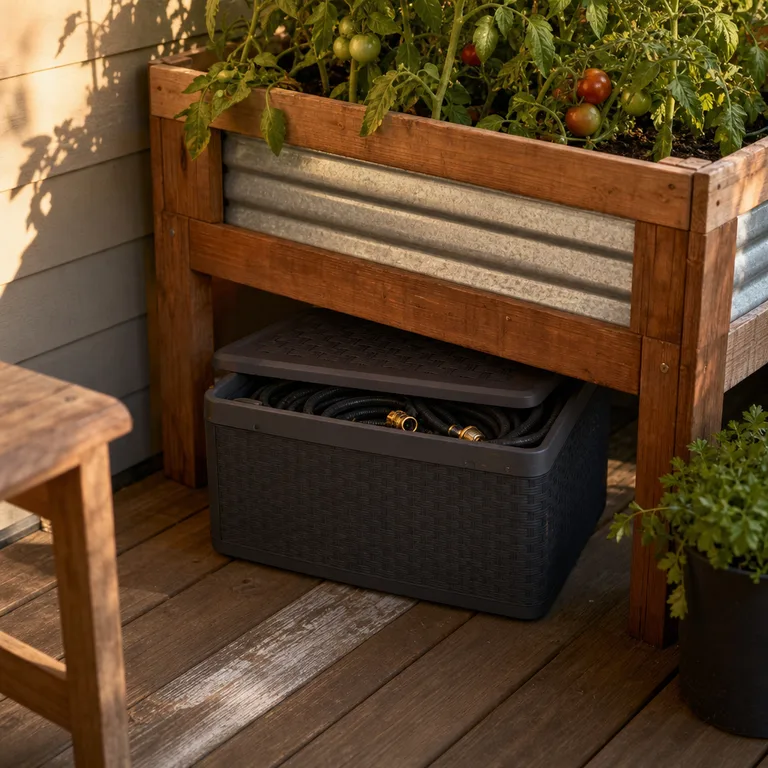
Choose a weather-resistant box with a dry, ventilated interior, then let the hose drain before putting it away. Keeping the box beside the planting area shortens setup time and makes it easier to use the soaker hose regularly during dry spells.
Worth knowing: A deck box needs enough spare floor space and should not be packed with a wet hose for long periods.
7.Tuck a Retractable Reel Under a Deck Rail
A retractable reel mounted beneath a deck rail or on a substantial deck post keeps the hose mostly out of sight from the seating area. Pull the hose out when needed, then let it retract rather than leaving it across the deck boards.
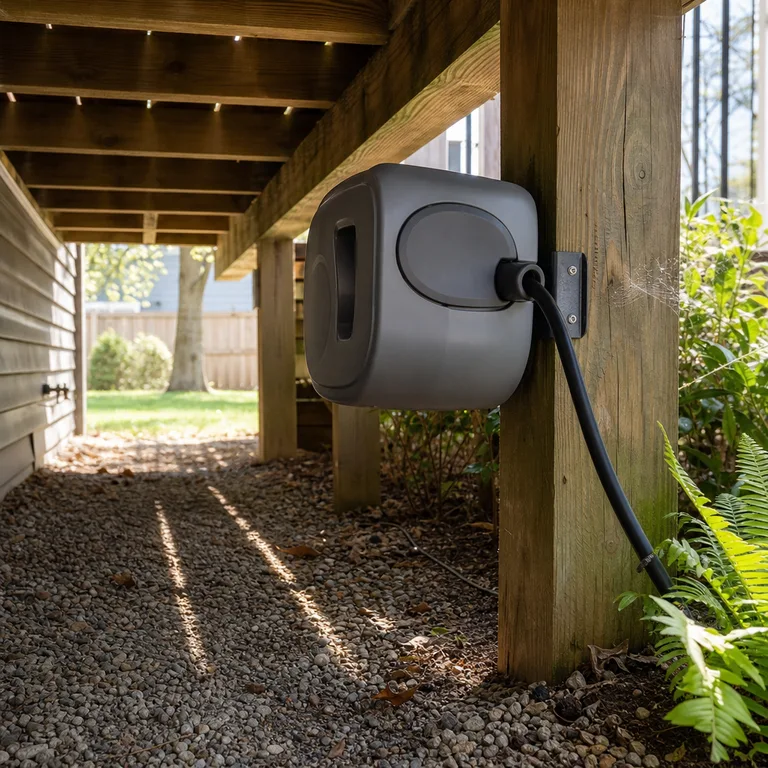
Check that the mounting point is structural and that the reel will not interfere with railings, gates, or access below the deck. Route the hose toward the flower bed or tap in a way that avoids rubbing against sharp corners.
Worth knowing: Retractable reels are more complicated to install and may be difficult to repair if the internal mechanism fails.
Related: 12 Small Patio Seating Ideas on a Budget
8.Use a Hose Stand with a Built-In Hose Guide
A freestanding hose stand places a guide near the tap, helping the hose turn smoothly instead of kinking against a wall or path edge. It is useful when the outdoor tap sits beside a planting bed and a wall reel would crowd the area.
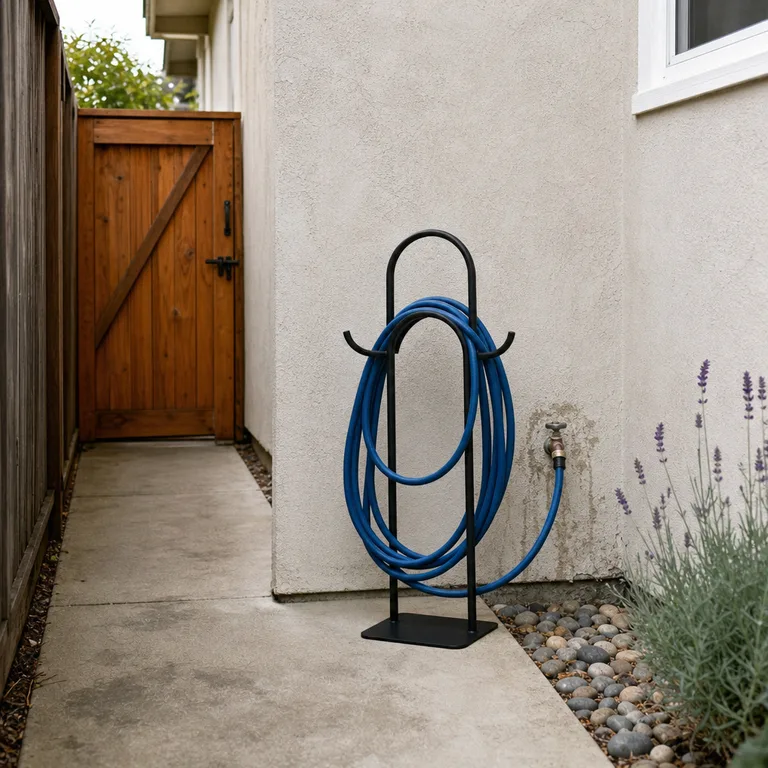
Set the stand on firm, level ground and leave enough clearance to wind the hose without stepping into the bed. A hose guide is especially helpful with longer hoses because it directs the coil as it is rewound.
Worth knowing: Freestanding stands can shift or tip if they are not anchored well, particularly on loose soil.
9.Create a Hose Bay Behind a Slatted Screen
A short slatted screen hides a hose coil beside bins, a side passage, or another utilitarian corner without sealing it into a damp enclosure. The gaps between slats keep the area airy while making the patio view feel less cluttered.
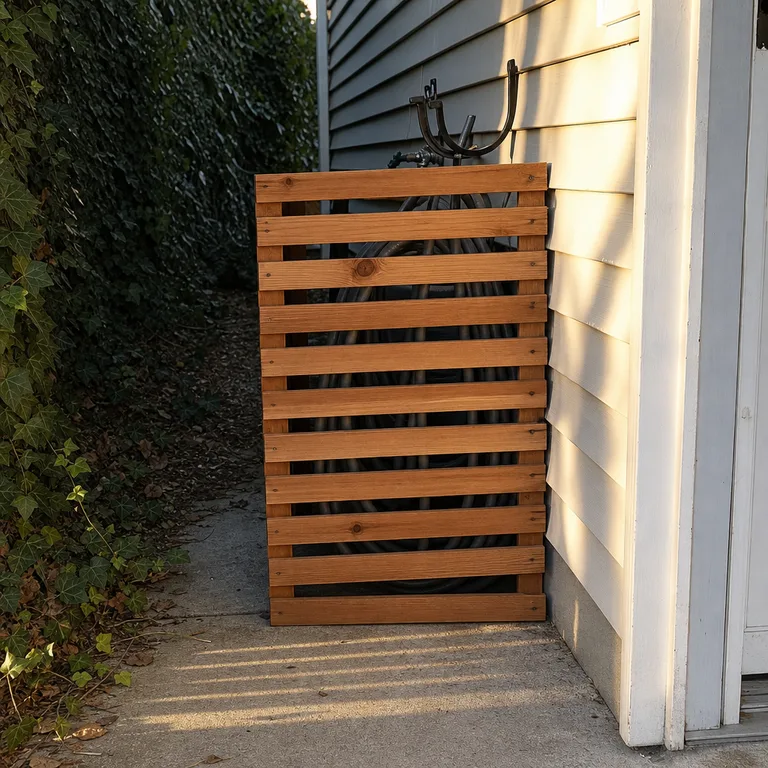
Use simple hooks behind the screen and leave room to lift the hose on and off without scraping the slats. Keep screens clear of air-conditioning equipment, utility meters, and any area that needs regular servicing or airflow.
Worth knowing: A screen conceals the hose but does not solve tangling unless the hose also has hooks, a hanger, or a reel behind it.
10.Bring the Hose Indoors for Winter Storage
In freezing climates, draining the hose and hanging it inside a garage or shed protects it from winter damage and clears the outdoor tap area for the season. Wide wall hooks keep the hose off the floor and reduce hard bends that can weaken it over time.
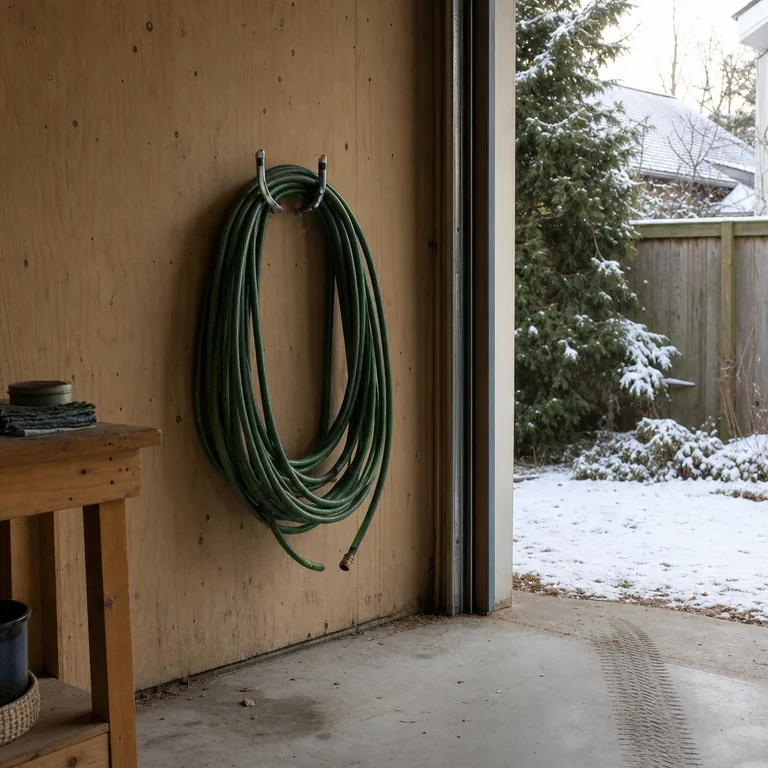
Disconnect the hose after the watering season, let water run out, and store it in loose loops away from sharp tools. Follow local guidance for preparing the outdoor tap as well, since a stored hose does not protect plumbing that remains exposed to freezing weather.
Worth knowing: Indoor storage requires a dry, accessible garage or shed and adds a seasonal task each autumn and spring.
About the author
Dana Ruiz, Senior editor
Dana writes about small-space living, storage and low-cost decorating.
Keep reading
10 Ways to Group Mismatched Plant Pots So a Patio Looks Intentional
October 10, 2026
10 Budget Garden Trellis Ideas for a Small Growing Space
October 9, 2026
10 Bed Linen Storage Ideas That Keep Sheet Sets Together
October 10, 2026
10 Reusable Grocery Bag Storage Ideas for Small Kitchens
October 9, 2026