8 Houseplant Display Ideas for a Living Room With One Bright Window
A small plant collection can look intentional when each pot earns its place in the light already available from one bright living-room window. These arrangements use existing furniture and a few compact supports while keeping the window usable, protecting surfaces, and matching each plant to the light it can handle.
As an Amazon Associate I earn from qualifying purchases.
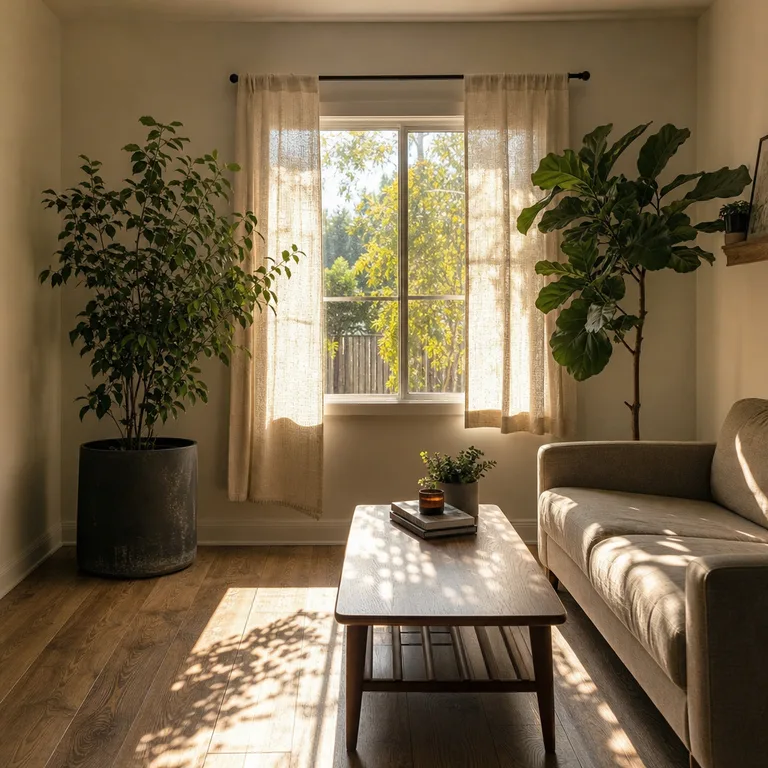
1.Stagger Existing Stands Beside the Window
Line up plant stands beside the window in descending heights, rather than making a dense cluster in front of the glass. Put plants that need the strongest light on the tallest stand nearest the window, then move more adaptable plants slightly farther into the room.
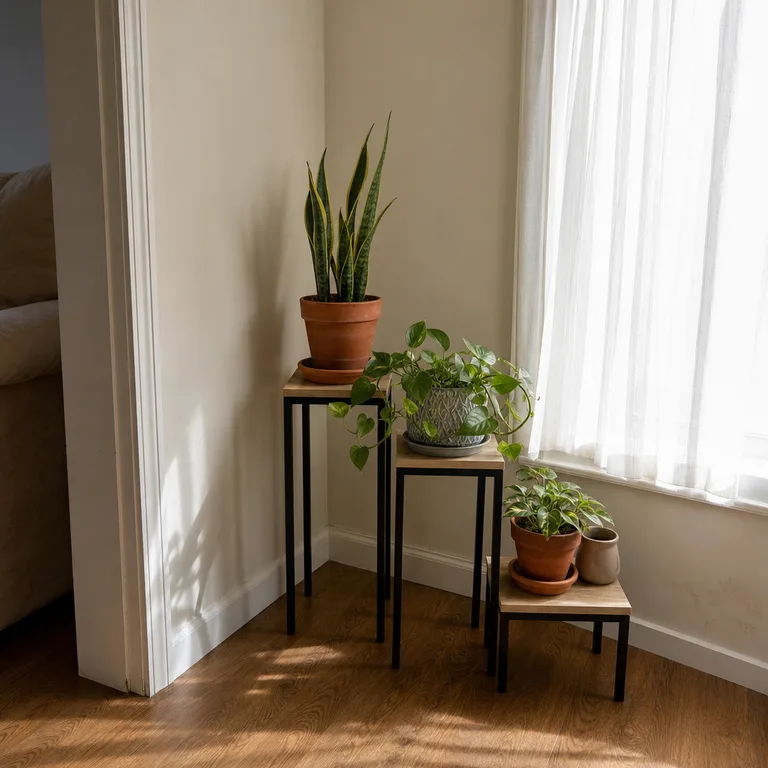
A stepped arrangement gives each plant a visible silhouette and makes a small collection look layered instead of crowded. Reuse mismatched stools, risers, or stands if their tops are stable and wide enough for the pots.
Keep the curtain path and window latch clear, especially in a rental where the window may be the main source of ventilation. Place saucers under every pot, since water can damage flooring and leave marks on painted stands.
Worth knowing: This works best when there is open wall space beside the window; tall stands can feel cluttered in a narrow walkway.
2.Make a Side Table the Main Cluster
Turn a side table near the window into a single plant station for several small pots and one medium plant. Use a shallow tray or waterproof liner to contain drips and make the collection easier to move for watering.
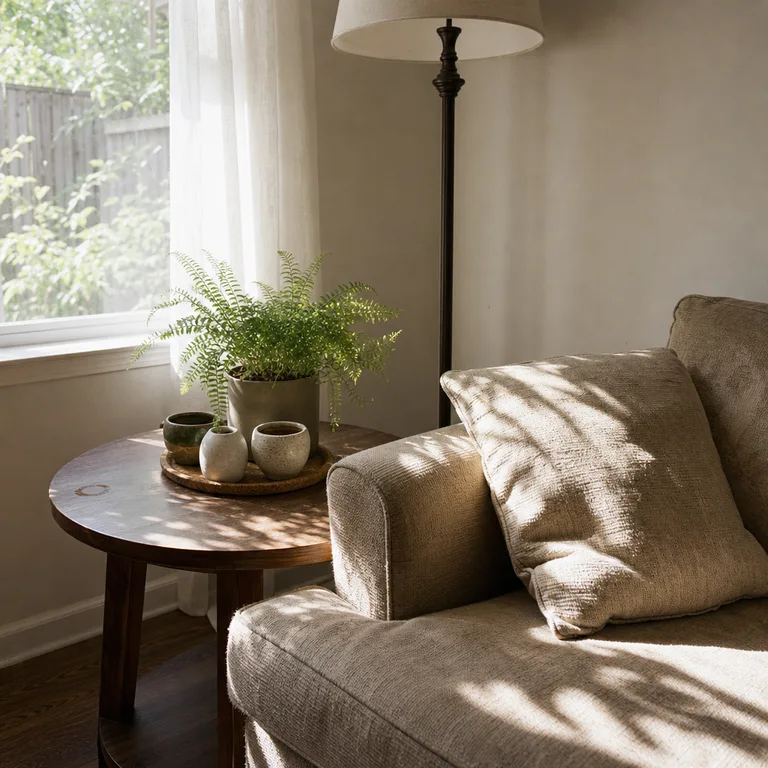
Grouping plants on one surface creates a fuller green focal point without spreading pots across every available ledge. Vary leaf shape and pot height, but keep the tallest plant low enough that it does not block the window or interrupt the view from the sofa.
A table that already sits near the bright window is usually cheaper and simpler to use than adding another piece of furniture. Check that the tabletop can handle moisture, and do not let leaves press against a hot lamp bulb or radiator.
Worth knowing: A crowded side table may not suit a room that relies on it for drinks, remotes, or everyday seating-side storage.
3.Give One Plant the Clear Windowsill
Reserve the windowsill for one compact plant instead of filling it edge to edge with pots. Choose a plant that suits the direct or bright light at that exact window, and use a saucer that fully catches runoff.
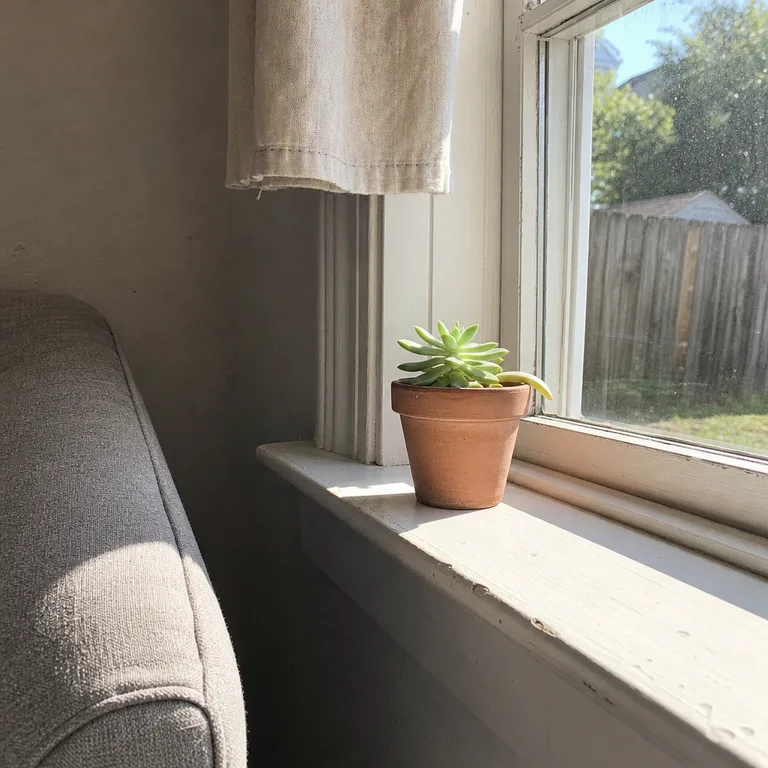
One specimen gives the sill a deliberate, uncluttered look while allowing daylight to reach the rest of the room. It also keeps the latch, frame, and glass easier to clean than a packed row of plants would.
A simple nursery pot inside a cachepot can work if it is easy to lift out for watering. In cold weather, keep foliage from touching chilly glass and watch for condensation around the pot.
Worth knowing: Shallow sills or frequently opened windows may not safely accommodate even a small pot.
4.Use a Low Bench Under the Bright Window
Set a low, sturdy bench below the window and arrange a few plants across its length with space between pots. This gives plants access to bright indirect light without turning the sill into storage.
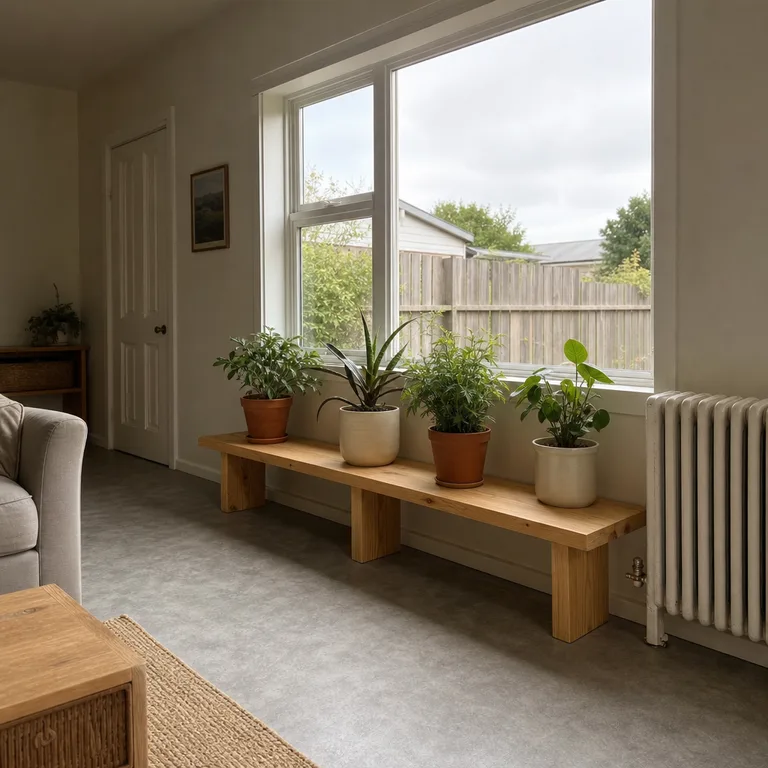
The low horizontal line anchors the window area and makes several unrelated pots read as one display. It is particularly useful for plants that do not need direct sun but still benefit from being near the brightest part of the room.
An existing entry bench, spare stool, or simple low bench can do the job if it is level and protected with trays or pot feet. Leave a gap between the bench and the wall or window for airflow, and keep any radiator or heat vent uncovered.
Worth knowing: Plants above a radiator can dry out quickly, so this layout is not ideal where heat rises directly beneath the window.
5.Frame the Window With Two Floor Pots
Place one larger floor plant on each side of the window, outside the curtain line and away from the opening path. The pair should frame the light rather than cover the lower glass or crowd the furniture route.
Matching the scale of two floor pots gives a modest window more presence and keeps the middle of the room visually open. The plants do not need to be identical; similar pot color or shape is enough to make different foliage feel connected.
Use broad, weighted planters or keep nursery pots inside heavier outer pots for stability. This is especially important in homes with pets, children, or a tight passage beside the sofa.
Worth knowing: Two substantial plants can overwhelm a very small room or create a tripping hazard if the window sits beside the main walkway.
Related: 10 Budget Curtain Ideas That Make Windows Feel More Finished
6.Roll the Whole Group Into the Light Zone
Keep a mixed collection together on a narrow rolling cart or a wheeled caddy near the window. It can be moved for cleaning, window access, or seasonal changes in cold drafts and harsh sun.
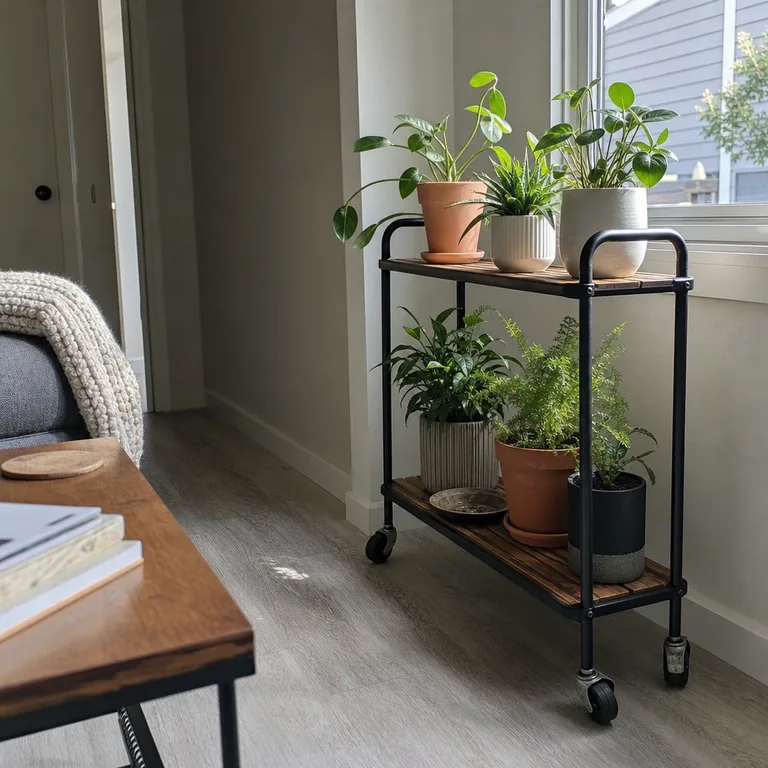
Using one mobile base makes the collection feel contained instead of scattered around the living room. It also lets smaller plants share the best light without permanently blocking the window or a walkway.
Choose locking wheels and low shelves so the cart stays steady when pots are watered. Empty standing water from saucers before moving it, and avoid rolling a loaded cart over thick rugs or uneven flooring.
Worth knowing: A cart can become top-heavy if large pots are placed on upper shelves, so it is better for small and medium plants.
7.Use the Light-Facing End of a Bookcase
Use the shelves closest to the window for a few smaller, shade-tolerant plants, leaving the darker end for books and other storage. Place plants on trays so water cannot run onto paper, veneer, outlets, or electronics.
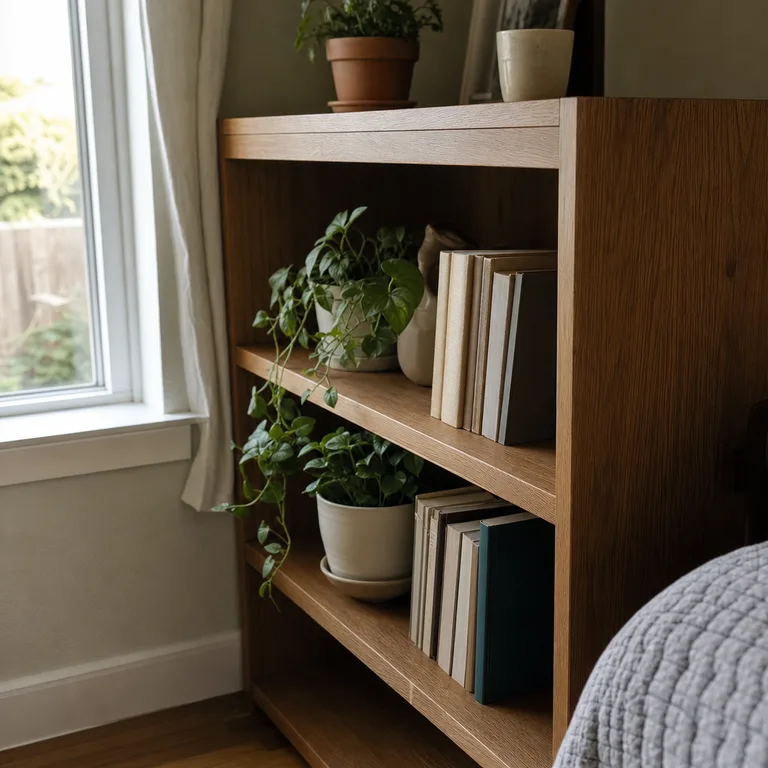
This approach softens a bookcase without asking it to become a full plant shelf. A trailing plant near the light-facing edge can add movement, while a compact upright plant fills space without hiding books.
Reuse a bookcase you already have, but avoid placing pots directly above items that would be damaged by a leak. Pull plants forward enough for light, and turn them occasionally if they lean strongly toward the window.
Worth knowing: Most bookcases sit farther from the glass than plants prefer, so this layout suits plants that tolerate lower or indirect light rather than sun-loving varieties.
8.Raise One Trailing Plant on a Stable Pedestal
Place one trailing plant on a sturdy pedestal near the bright window, rather than directly in front of it. The elevated pot lets the vines become part of the display while keeping floor space mostly clear.
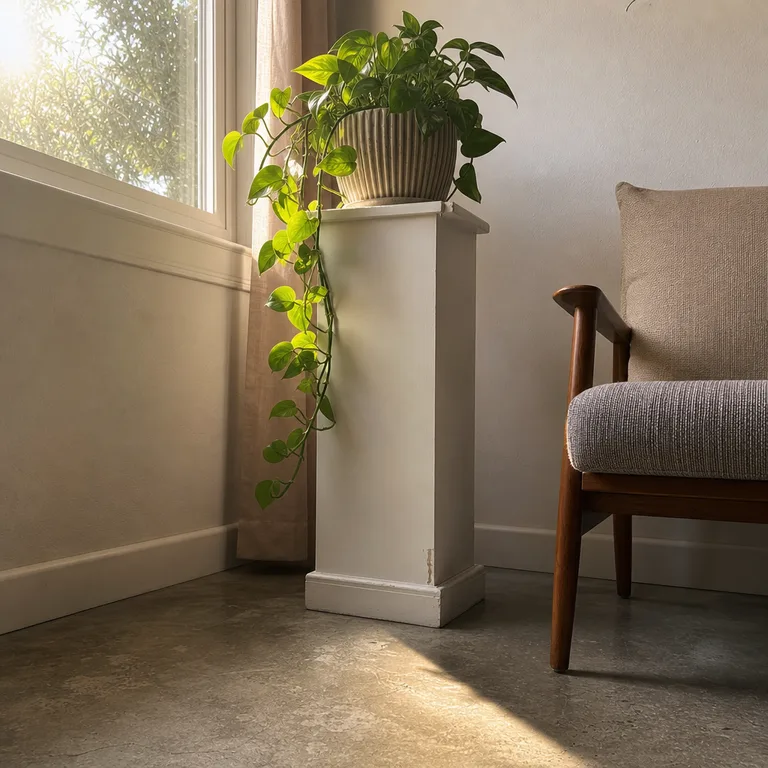
A single raised plant adds height without needing a shelf installation or a larger collection. Its trailing shape balances upright floor plants and can make a plain window corner feel more finished.
Choose a pedestal with a broad base and a top wider than the pot, then keep the vines clear of curtains, lamps, and pet access. Small clips can guide a few stems, but avoid pulling or tightly tying the plant into a fixed shape.
Worth knowing: A pedestal is easy to knock over if it has a narrow base, making it a poor choice for busy rooms or homes with climbing pets.
About the author
Dana Ruiz, Senior editor
Dana writes about small-space living, storage and low-cost decorating.
Keep reading
9 Budget Christmas Bedroom Accents That Keep the Bed Easy to Use
October 14, 2026
11 Reusable Paper Christmas Decorations for a Living Room on a Budget
October 12, 2026
12 Christmas Window Decoration Ideas for Apartments With No Wide Sill
October 12, 2026
10 Holiday Hosting Layout Ideas for a Small Apartment
October 15, 2026