8 Sock and Underwear Drawer Ideas for Two People Sharing a Dresser
A shared dresser drawer works better when each person has a clear zone and each daily garment has a repeatable place. These ideas use simple inserts, folding methods, and reuse-first containers that fit inside an existing drawer rather than adding a larger storage system.
As an Amazon Associate I earn from qualifying purchases.
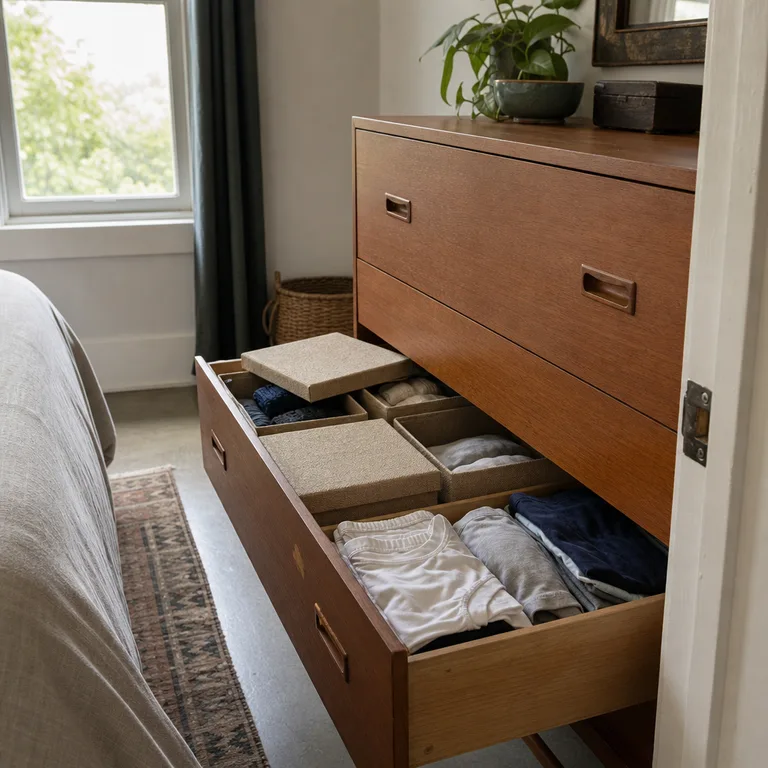
1.Split the Drawer Down the Middle With a Low Center Divider
Run a low divider from the front of the drawer to the back, creating one long side for each person. Keep socks and underwear folded or rolled in the same direction on both sides so the dividing line remains clear when the drawer is opened quickly.
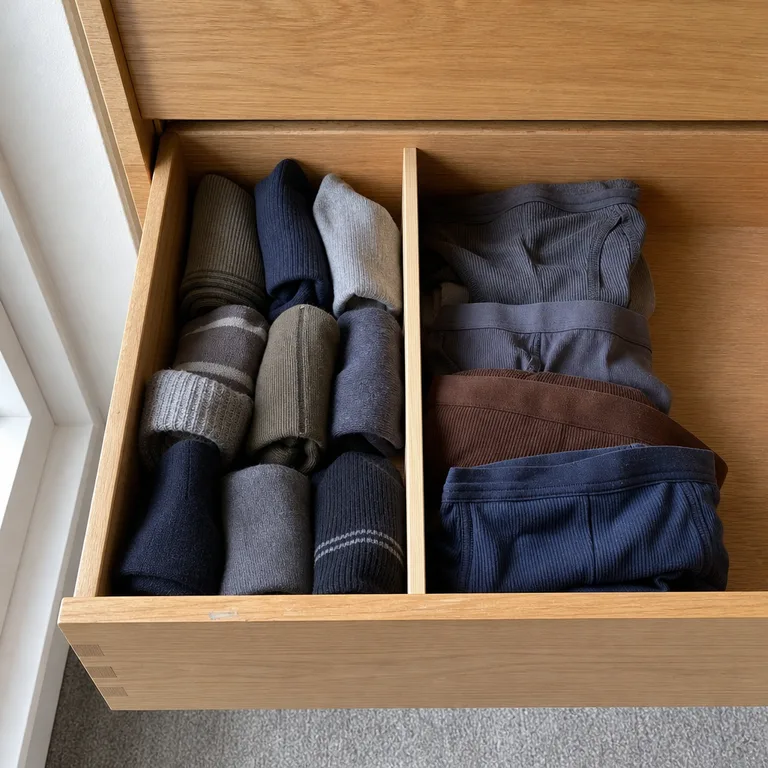
A simple adjustable divider can work, but a smooth piece of clean scrap wood cut to fit can be just as useful. Choose a divider low enough that it does not snag delicate fabric or prevent the drawer from closing; this setup is most useful in a drawer that is already fairly evenly shared.
Worth knowing: A center split can become frustrating if one person needs much more drawer space than the other.
2.Use Two Shallow Trays for Separate Sock Collections
Place one shallow tray on each side of the drawer and make each tray one person’s sock area. Rolled pairs are easy to see at a glance, while underwear can sit beside or behind the trays in the remaining space.
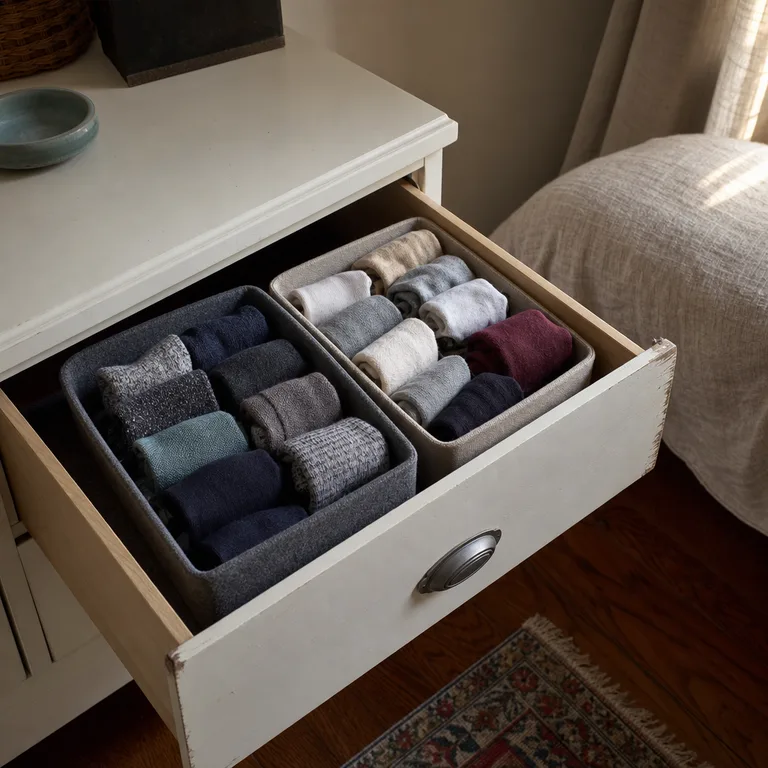
Reuse sturdy gift-box lids, low fabric bins, or small trays that fit without wasting much drawer height. Mismatched trays are fine when each person consistently uses the same one, and removable trays also make it easier to clean the drawer base.
Worth knowing: Shallow trays are less effective for tall stacks or bulky winter socks.
3.Give Each Person a Front Row for Everyday Underwear
Reserve the front section of the drawer for the underwear each person reaches for most often. Give each person a separate front row, then place reserve pairs, specialty items, or less-used styles behind that daily row.
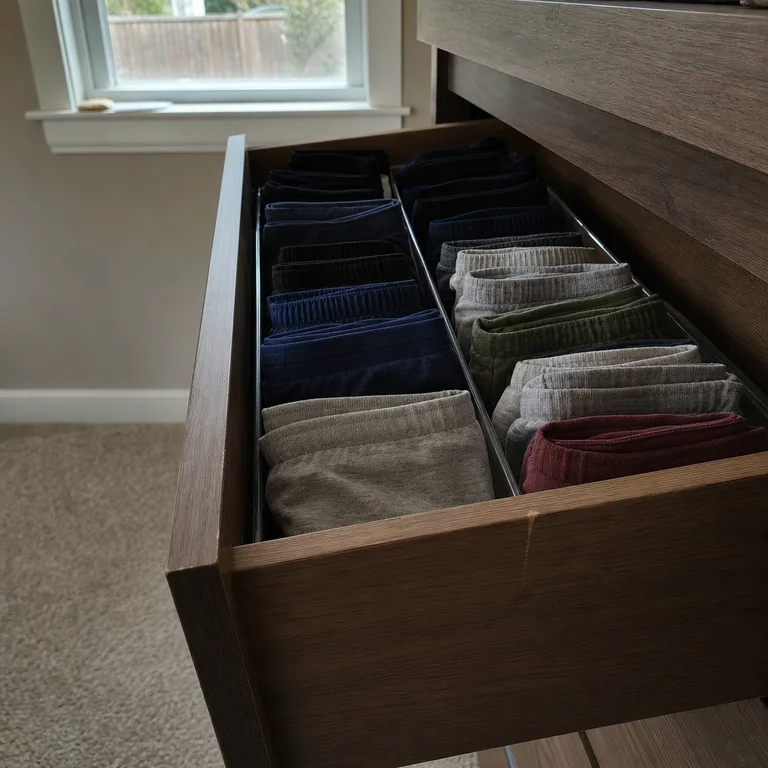
This arrangement does not require a full organizer: a narrow divider, a small box edge, or a folded strip of firm fabric can hold the two rows apart. It works especially well in a wide drawer because opening it gives both people direct access without shifting the contents at the back.
Worth knowing: The back section can become untidy if it is used as a catch-all for unrelated clothing.
4.Make Small Cardboard Compartments for Individual Pairs
Cut clean, sturdy cardboard into low cells sized for one rolled sock pair or one folded underwear bundle. Individual spaces stop small garments from spreading into the other person’s zone, which is helpful when the drawer is shallow or frequently overfilled.
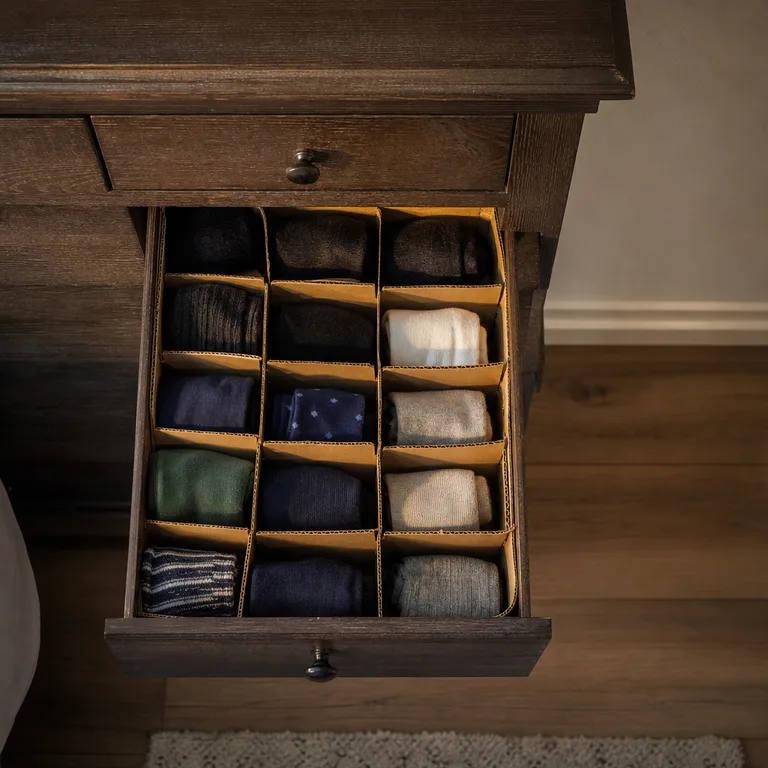
Use the sides of shipping boxes, packaging inserts, or other smooth cardboard that will not shed debris on clothes. Make a test cell first and adjust the size to the actual garments; slightly flexible compartments are easier to remove when the drawer needs cleaning.
Worth knowing: Cardboard can bend or wear out in humid rooms and may need occasional replacement.
5.Turn Small Lidded Boxes Into Lift-Out Categories
Use low lidded boxes for categories that do not need daily access, such as workout socks, tights, spare underwear, or travel items. Each box can belong to one person or hold a category used by both, while everyday garments remain visible in the open part of the drawer.
Repurposed boxes work well if their lids are easy to lift and the boxes do not scrape the drawer sides. This approach is particularly useful in a deeper drawer, where contained categories would otherwise disappear beneath loose layers of clothing.
Worth knowing: Lidded boxes add an extra step, so they are not ideal for items used every morning.
6.Fold Underwear Upright in Narrow File Rows
Fold underwear into compact upright bundles and arrange them in narrow rows rather than flat stacks. Assign a row to each person, or use separate rows for briefs, undershirts, and other small garments so every piece remains visible.
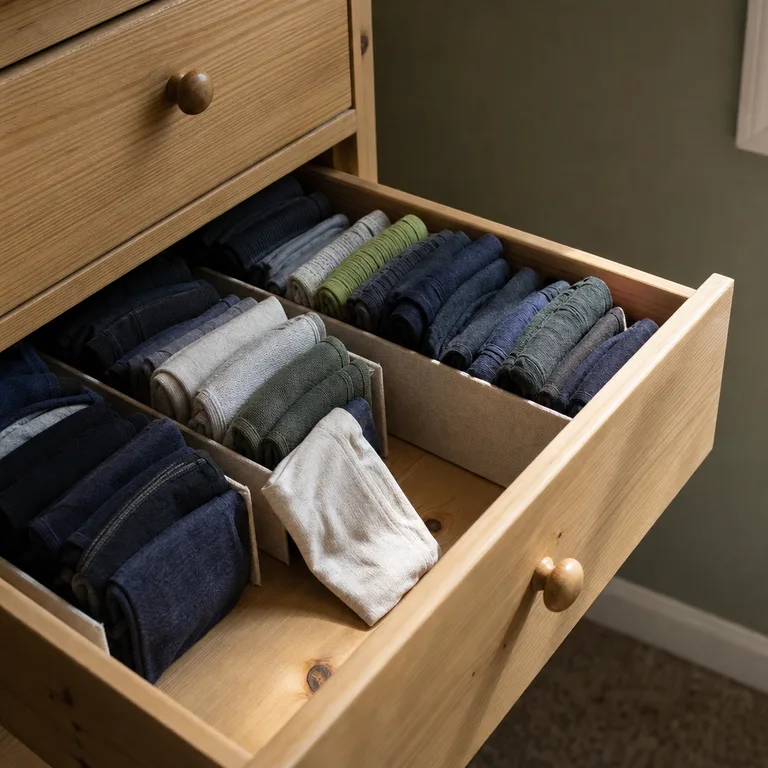
Short dividers, folded fabric bins, or even a fitted strip of cardboard can keep the rows from leaning together. File rows make good use of a deep drawer, but the folds need to be refreshed occasionally when a row becomes too loose.
Worth knowing: This method takes more time to maintain than simply placing garments in an open pile.
7.Create a Two-Layer Drawer With a Sliding Tray
Add a shallow tray across the back part of a deeper drawer to create an upper storage level. One person can keep lighter garments in the tray while the lower area holds the other person’s socks, or the tray can hold occasional-use items above everyday basics.
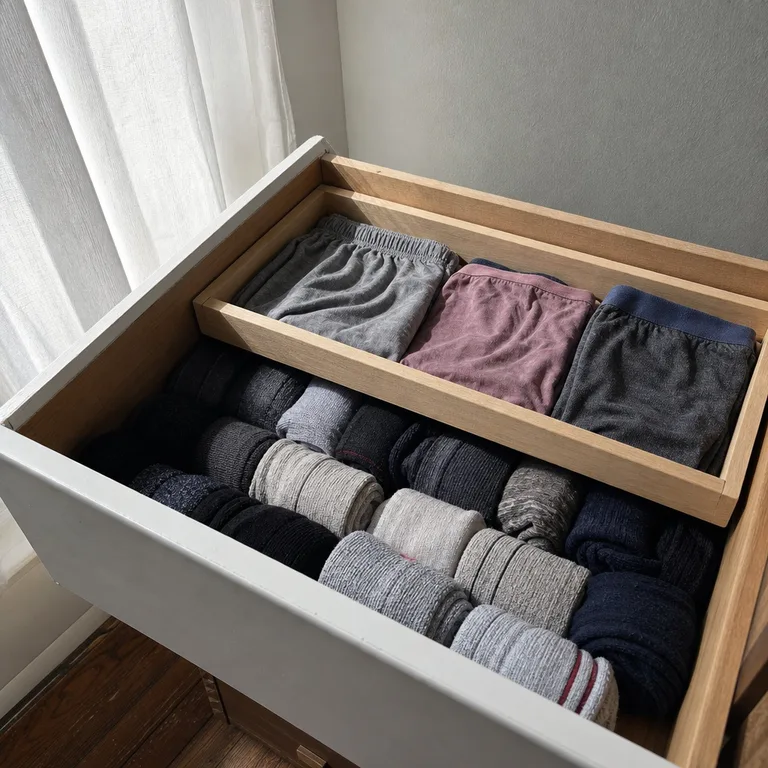
Look for a tray with smooth edges that can slide without catching on the drawer sides, or adapt a low wooden tray that fits the available width. Measure the drawer depth and the clearance beneath its top edge first, since the tray must not interfere with the drawer closing.
Worth knowing: A sliding tray reduces the height available below it, so it will not suit thick socks or bulky fabric.
8.Use Different Neutral Liners to Mark Each Person’s Zone
Line each person’s half of the drawer with a different neutral material, such as felt on one side and washable canvas on the other. The visual change makes ownership clear even when a few garments shift out of their usual rows.
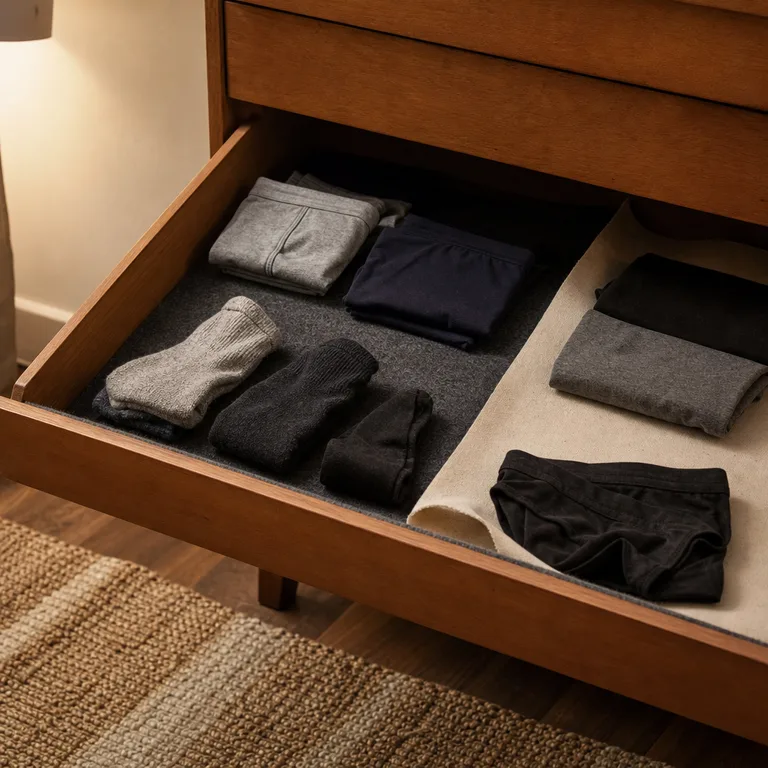
Use removable liner pieces rather than adhesive material so they can be shaken out or washed when needed. This is a useful finishing detail alongside another organizing method, especially for people who prefer not to use labels in a bedroom drawer.
Worth knowing: Liners define zones but do not create physical boundaries, so loose garments can still migrate across the drawer.
About the author
Dana Ruiz, Senior editor
Dana writes about small-space living, storage and low-cost decorating.
Keep reading
8 Indoor Plant Supply Storage Ideas Without a Utility Cupboard
November 2, 2026

8 Concrete Patio Color and Pattern Ideas for an Existing Slab
November 2, 2026

9 Three-Plant Color Schemes for a Small Flower Bed
November 2, 2026
10 Living Room Rug Looks That Make Pet Hair Less Noticeable
November 2, 2026