8 Indoor Plant Supply Storage Ideas Without a Utility Cupboard
A modest plant-care kit can live in the living room without turning shelves or corners into a mess of loose soil, saucers, and tools. These storage ideas keep dry materials contained, put a wipeable barrier under anything that may leak, and keep labeled treatments separate from food and out of reach of children and pets.
As an Amazon Associate I earn from qualifying purchases.
1.Slide a lidded bin beneath the sofa
A shallow lidded bin can turn unused space beneath a sofa into storage for nested saucers, gloves, a hand trowel, and small sealed bags of potting material. Choose a bin that slides out easily without catching on the sofa frame or rug.
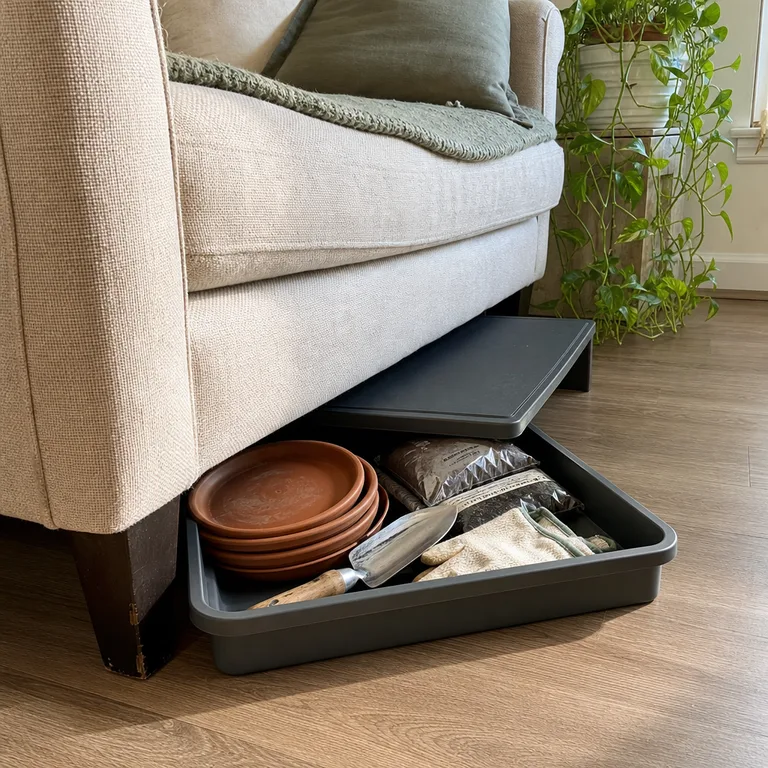
Set a waterproof tray inside the bin so stray soil and small drips stay off the floor. This works especially well for dry supplies that are needed occasionally but do not need to remain on display.
Keep the contents low enough for the lid to close fully, and reseal potting materials after each use so they do not shed dust into the bin.
Worth knowing: This only works under a sofa with enough clearance, and it is less convenient for supplies used every few days.
2.Use a storage ottoman with a removable spill tray
A hinged storage ottoman can hide a compact plant-care kit in a living room while still keeping it close to the plants. Place a rigid, removable tray inside for pruners, cloths, a small spray bottle, and other routine tools.
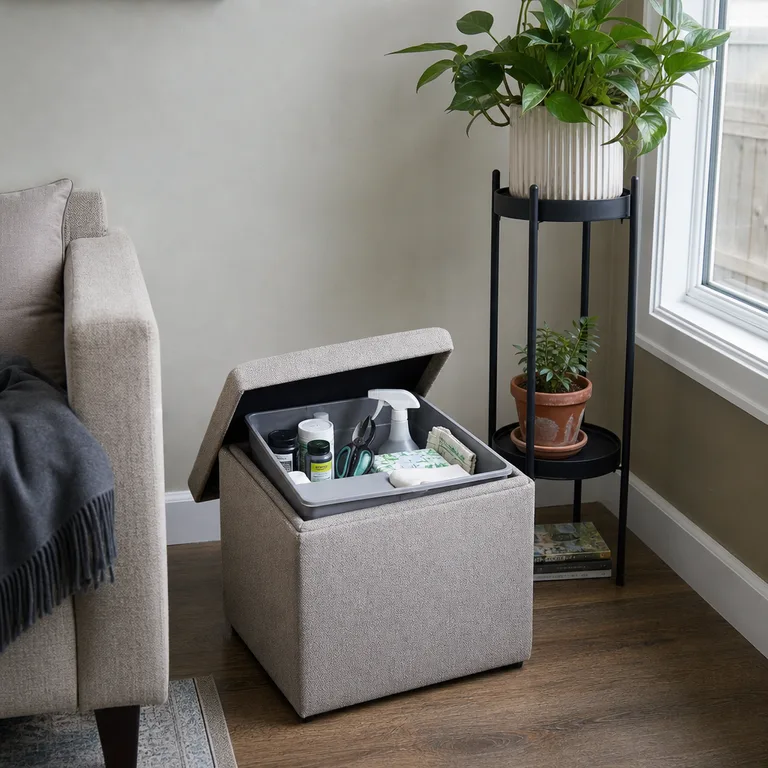
The tray makes loose soil easier to lift out and clean, rather than allowing it to collect in fabric-lined storage. Keep fertilizer and pest-treatment products in their original labeled containers, standing upright inside a separate closed box if the ottoman is shared with other household storage.
An ottoman with a firm lid and a simple interior is easier to keep clean than one with deep fabric pockets. A child-resistant or difficult-to-open option is important when treatments are stored inside.
Worth knowing: Upholstered ottomans are a poor choice for wet supplies or leaking bottles because moisture can reach the fabric and padding.
3.Tuck a pull-out caddy into a media-console drawer
A deep media-console drawer can hold a handled caddy filled with the basics: plant ties, labels, gloves, pruners, and a small scoop. Stack spare saucers along one side so their rounded shapes do not roll around the drawer.
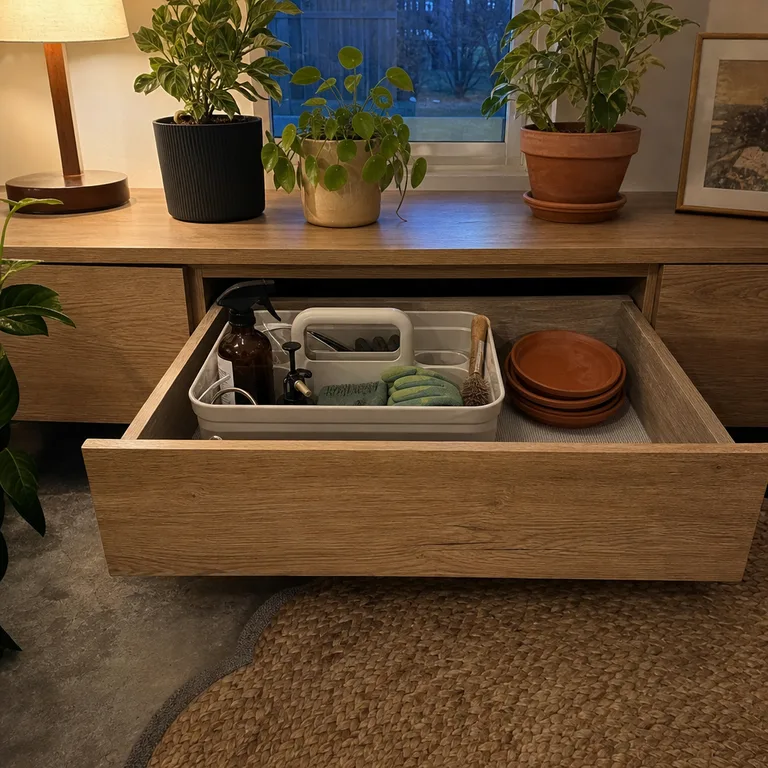
Line the drawer with a wipe-clean mat to catch soil crumbs and make cleanup quick. Keep bags of perlite, potting mix, or amendments sealed, and reserve the drawer solely for plant supplies rather than mixing them with remotes, cables, or food-related items.
A removable caddy is useful because it brings the needed tools to a plant without turning the console top into a storage surface.
Worth knowing: This depends on having a genuinely deep drawer, and heavy loads of clay saucers can strain lightweight drawer hardware.
4.Line a lidded basket beside the bookcase
A lidded woven basket gives dry plant supplies a softer appearance beside a bookcase or chair. It can hold empty nursery pots, labels, a moisture meter, gloves, and sealed bags of lightweight materials without looking like utility storage.
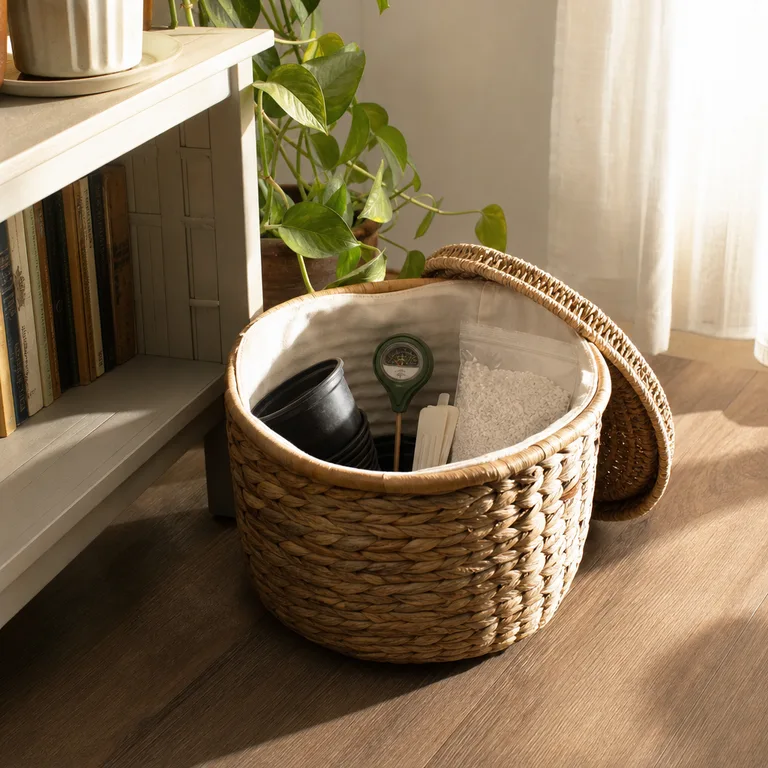
Fit the basket with a washable liner or a rigid insert to prevent soil from lodging in the weave. The lid keeps visual clutter hidden, while the basket itself can suit a living room more naturally than an exposed plastic tote.
Use this option for clean, dry items and wipe down tools before putting them away. A basket near a sunny window should not hold products with labels or ingredients that can be damaged by heat and direct light.
Worth knowing: Woven fibers are difficult to clean after a spill, so damp soil and leaking liquids should not be stored directly in the basket.
5.Store care supplies in the base of a cabinet-style plant stand
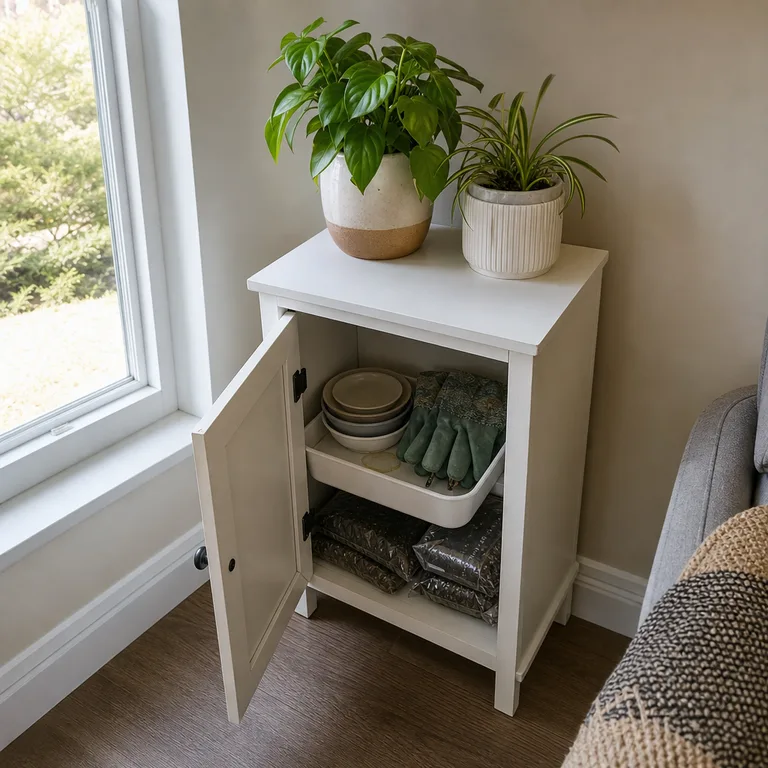
A cabinet-style plant stand places spare saucers and basic care tools directly beneath a small plant collection. The closed compartment reduces visual clutter and keeps the supplies near the place where they are most likely to be used.
Put a raised-edge tray on the cabinet floor before loading it with supplies. It helps contain condensation from pots, watering drips, and crumbs of potting material that would otherwise mark or swell the cabinet base.
Keep only a compact kit in this compartment so air can circulate around stored items and the door can close without crushing bags. Check the tray occasionally, especially if plants above are watered frequently.
Worth knowing: Cabinet-style stands can be vulnerable to water damage, particularly if they are made from engineered wood and a spill is left unnoticed.
6.Put a sealed tote inside a window-seat compartment
A window-seat compartment can hide a complete indoor plant-care kit in a sealed tote. Use a tote with a secure lid for saucers, dry potting materials, tools, and any upright containers that need a stable place.
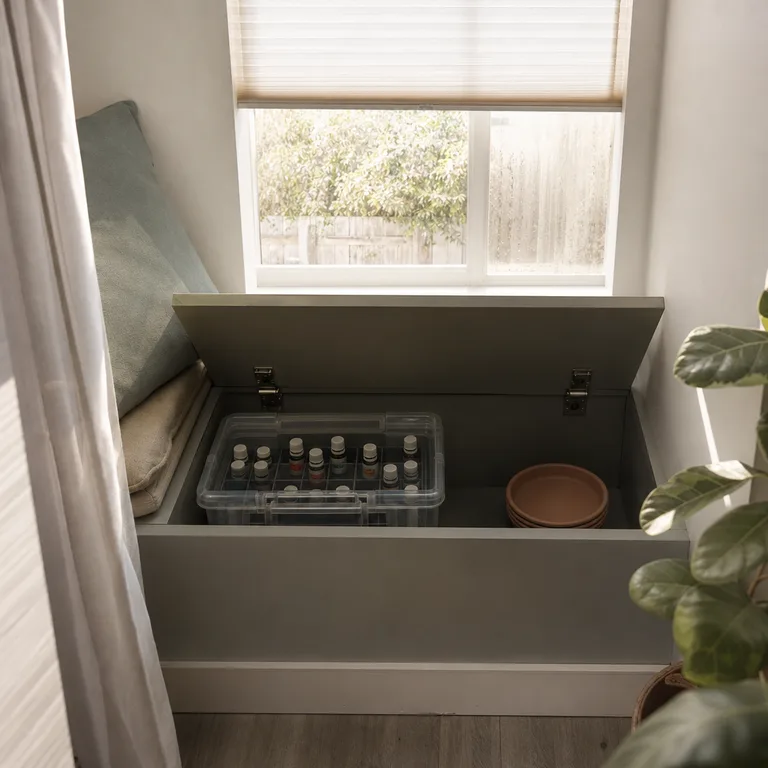
A small organizer insert keeps bottles and narrow tools from tipping as the tote is moved. This setup also makes it easier to lift the whole kit out for occasional care days, then return it to a clean enclosed space.
Check the window area for recurring condensation before choosing this location. Keep the tote away from strong direct sun, which can fade labels and create unsuitable heat for certain products.
Worth knowing: A window seat affected by leaks, cold drafts, or regular condensation is not reliable storage for potting materials or plant treatments.
7.Keep a closed supply box on a rolling plant cart
A narrow rolling plant cart can hold a closed supply box on its lower shelf while leaving the upper shelf open for a small watering can or a few plants. It keeps supplies mobile between grouped houseplants without becoming a full potting workspace.
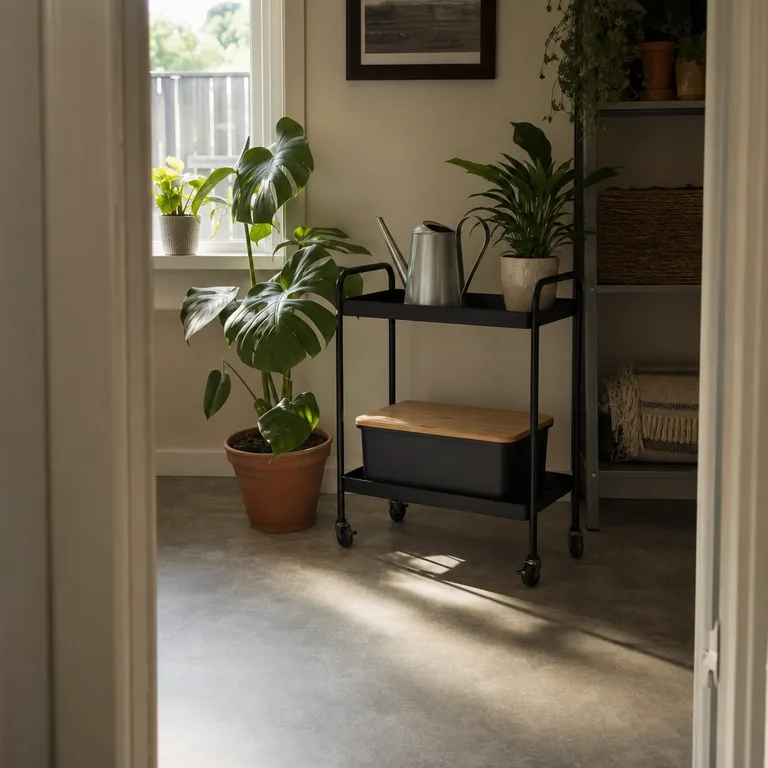
Choose a box with a close-fitting lid so soil, labels, and small tools stay contained as the cart moves. Locking wheels help the cart stay steady on hard floors, particularly in homes with pets or in busy walkways.
Keep the cart narrow enough to park beside a window or plant cluster without blocking a path. Wipe water from the shelves after watering so it does not sit against metal or wood finishes.
Worth knowing: A rolling cart takes up visible floor space and can be unstable if overloaded or pushed across uneven rugs.
8.Use a high shelf box with a clip-on label pocket
A sturdy lidded box on a securely mounted high shelf can store infrequently used saucers, unopened dry supplies, and small tools. A label pocket on the front helps everyone identify the contents without opening containers or rummaging through the box.
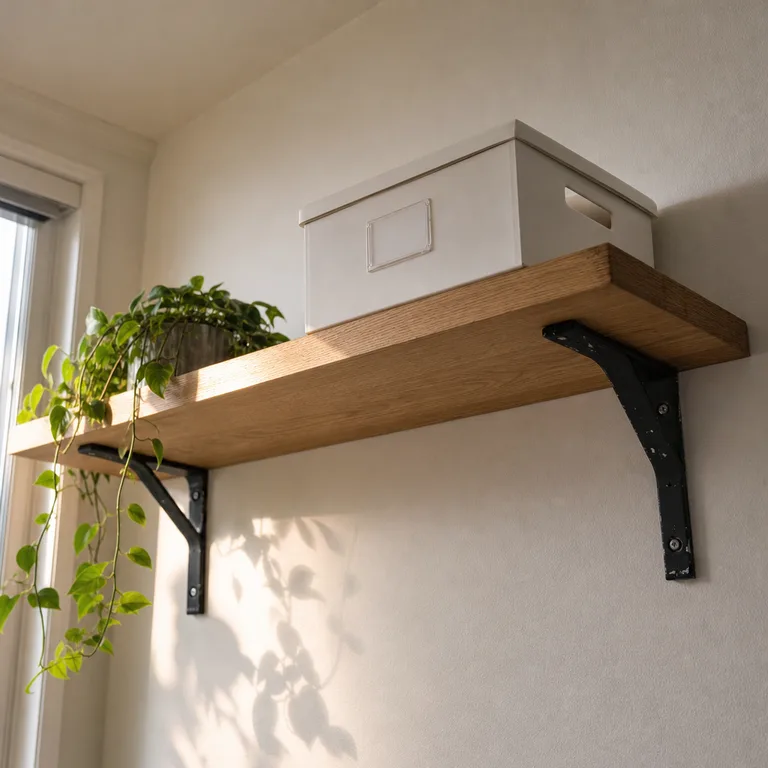
This approach frees up floor and furniture storage while keeping a modest plant-care kit together. Use a handled box that can be lowered safely, and place lighter supplies inside rather than dense stacks of ceramic or clay.
The shelf needs secure wall fixing and should be within a safe lifting reach. Keep treatment products contained and inaccessible to children, and do not store supplies above food preparation or dining areas.
Worth knowing: High storage is inconvenient for routine plant care and should not be used for anything heavy, fragile, or difficult to lift down safely.
About the author
Dana Ruiz, Senior editor
Dana writes about small-space living, storage and low-cost decorating.
Keep reading
8 Sock and Underwear Drawer Ideas for Two People Sharing a Dresser
November 2, 2026
8 Concrete Patio Color and Pattern Ideas for an Existing Slab
November 2, 2026
9 Three-Plant Color Schemes for a Small Flower Bed
November 2, 2026
10 Living Room Rug Looks That Make Pet Hair Less Noticeable
November 2, 2026