10 Craft Paper Storage Ideas for Small Homes
Small-home paper storage works best when full sheets, cardstock, and scraps each have a protected place that is easy to sort by size. These ideas fit into shared living rooms without turning the room into a craft workspace or confusing paper storage with gift-wrap roll storage.
As an Amazon Associate I earn from qualifying purchases.
1.Slide Lidded Art Cases Under the Sofa
Shallow lidded art cases turn the unused space under a sofa into protected storage for full sheets. Use dividers to separate common formats, such as letter-size cardstock from larger drawing paper, and add simple labels at the case edge.
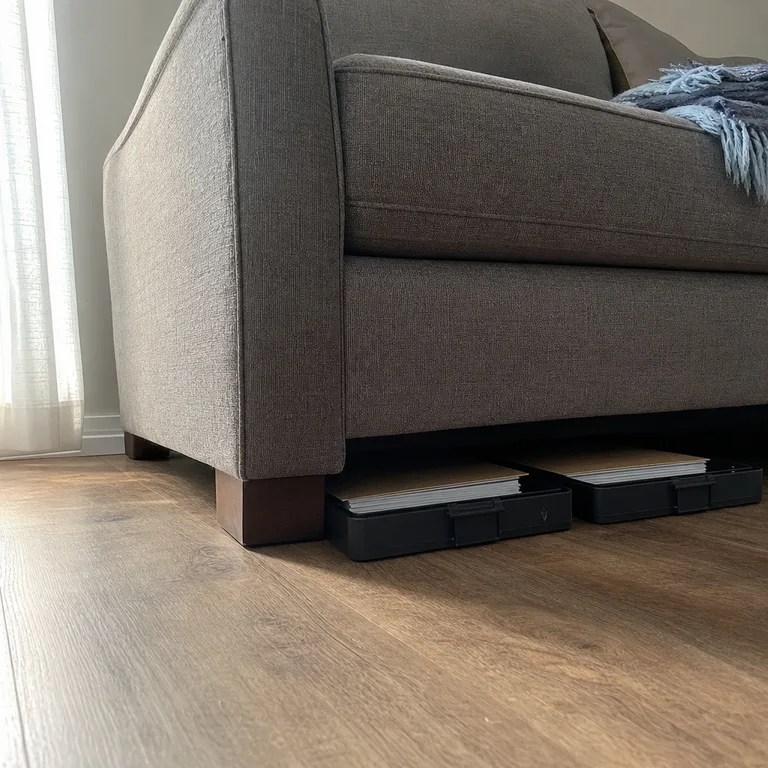
The rigid lid keeps dust off and helps prevent corners from catching as the case moves in and out. Reuse sturdy flat cases where possible, and choose a depth that clears the sofa frame without forcing the paper to bend.
Keep the cases away from damp floors and check exterior walls for condensation, especially in colder or humid climates.
Worth knowing: This only works when there is enough clearance beneath the sofa, and heavy cases can be awkward to pull out often.
2.Use Magazine Files for Upright Cardstock Packs
Sturdy magazine files can hold sealed cardstock packs upright on a bookcase shelf. Group files by sheet size, color family, or project type, with tabs high enough to see without pulling out every pack.
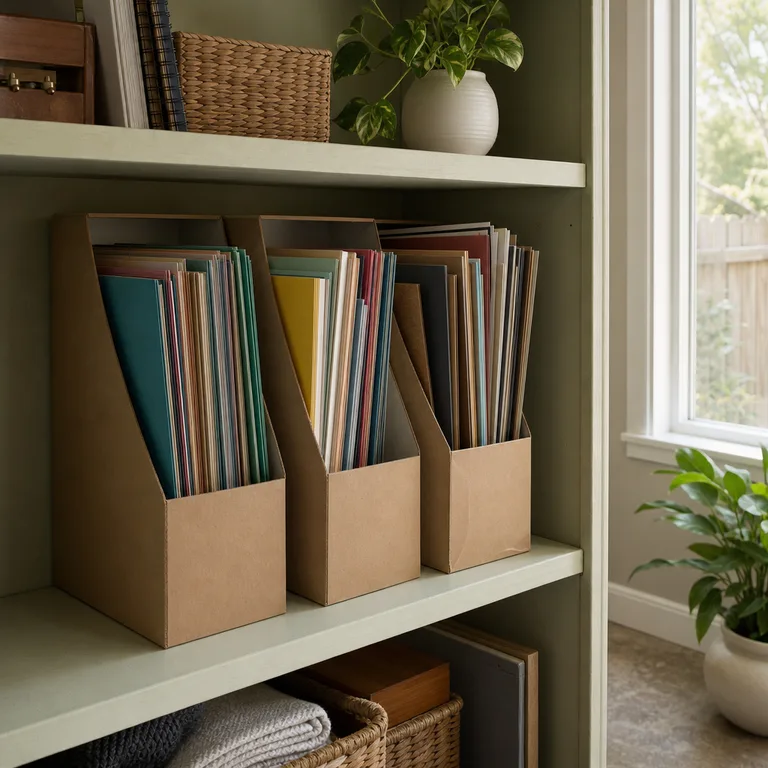
Upright storage makes cardstock easy to scan in a shared room and uses the same footprint as books. Choose rigid files that support the full height of the sheets so the bottom edges do not slump or curl.
Place the files on a stable shelf away from direct sun, which can fade exposed paper over time.
Worth knowing: Magazine files are best for smaller standard sheets; large or loose sheets can bow unless the file is wide and well supported.
3.Add Flat Paper Trays Inside a Console Drawer
A deep console drawer can hold stacked paper trays for letter-size sheets, cards, and smaller pieces. Reserve one shallow tray for usable scraps so they do not disappear underneath full sheets.
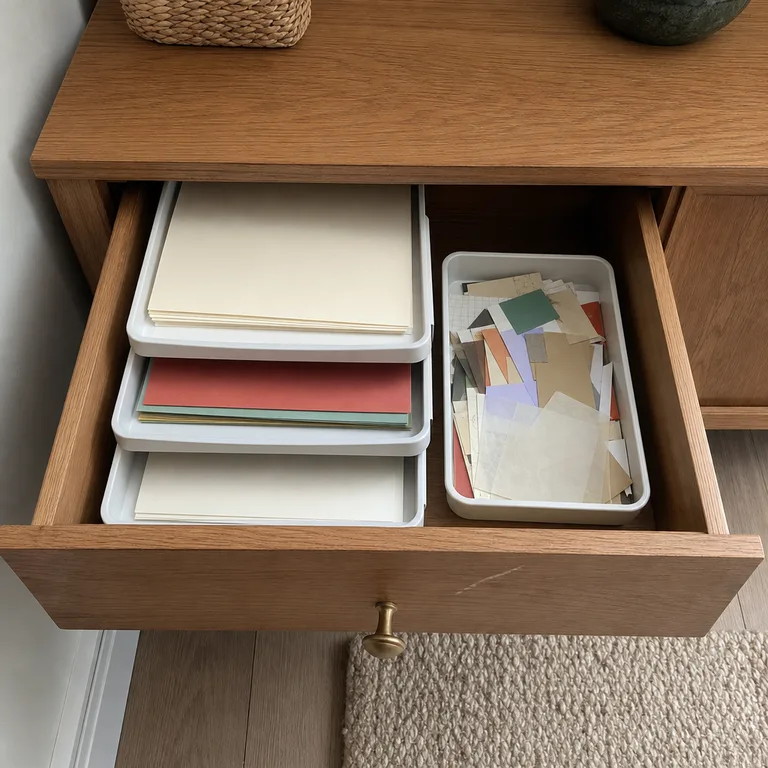
Separate trays make it faster to return paper after a project and keep delicate edges from being crushed by other household items. Plastic office trays, shallow organizers, or clean reused packaging can create layers without permanent changes to the furniture.
Sort scraps by a simple rule, such as color or minimum usable size, rather than saving every narrow offcut.
Worth knowing: This approach depends on a drawer that is wide and deep enough for trays to sit flat without jamming.
4.Store Large Sheets in a Zippered Portfolio Behind Furniture
A zippered artist portfolio holds oversized paper flat while taking up little visible room. Lean it behind a low cabinet or sofa, with the handle facing an accessible side and corner protectors added if needed.
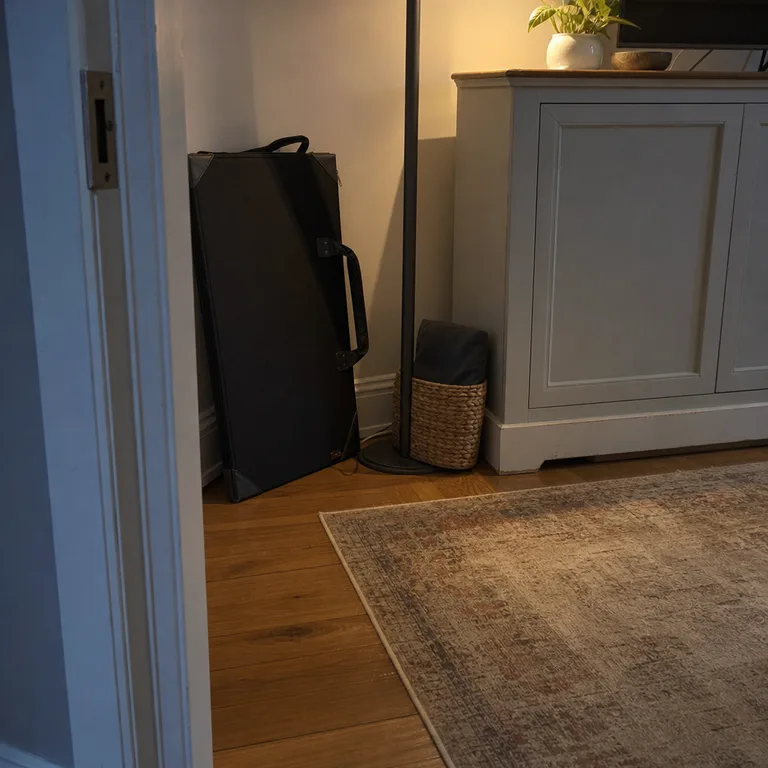
The portfolio shields sheets from bent corners, dust, and casual handling better than a loose stack. A secondhand portfolio or sturdy presentation case can be a useful reuse-first option when its interior is clean and dry.
Keep it out of direct sunlight and leave enough air space so it is not pressed against a damp wall.
Worth knowing: A portfolio stored behind furniture must be pulled out to browse, so it is less convenient for paper used every day.
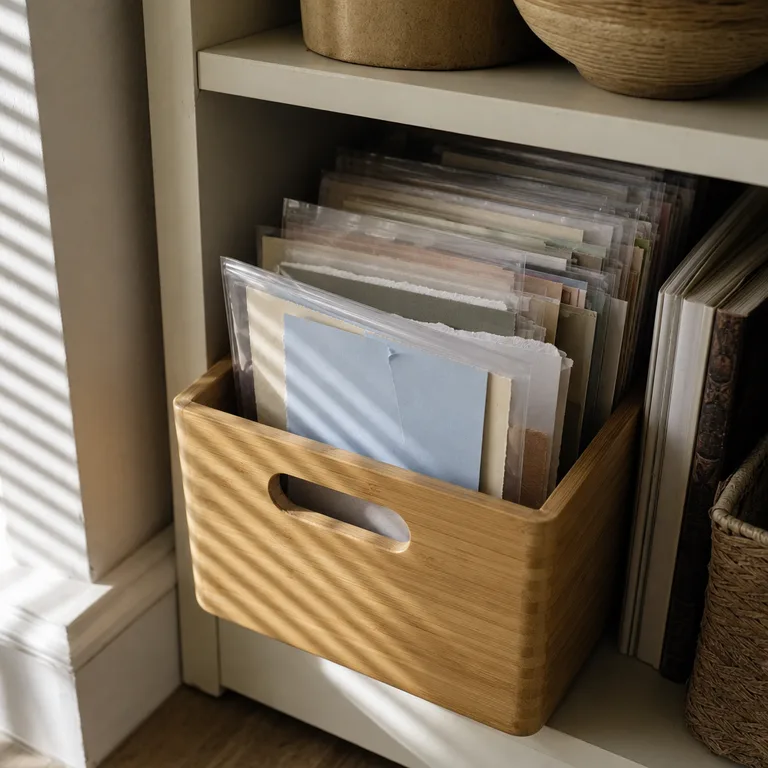
5.Make a Scrap Library in Clear Envelopes
Clear envelopes give small scraps a defined home without mixing them into bulk cardstock. Sort by color family, shape, or size, then stand the envelopes upright in a small bin like files.
Seeing the contents through each envelope reduces rummaging and makes small pieces more likely to be used. Reuse clean document sleeves or sturdy envelopes, and discard scraps that are too creased, narrow, or damaged for the projects you actually make.
Keep the bin near the main paper storage rather than at a work surface, so it remains material storage instead of becoming a permanent craft station.
Worth knowing: Clear envelopes can become crowded quickly if scraps are not edited regularly.
6.Keep Specialty Paper in Labeled Archival Boxes
Lidded archival boxes are useful for handmade paper, delicate finishes, and other sheets that need protection from dust and light. Use tissue between fragile pieces and label each box with the paper type and size.
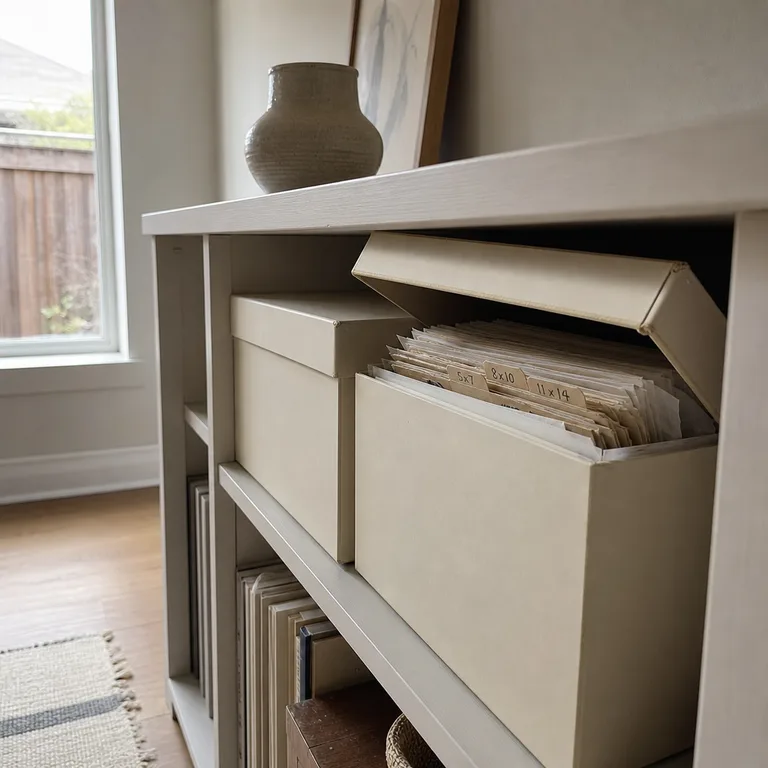
Boxes create a calmer look on open shelving than exposed stacks, which matters in a living room. Look for clean, sturdy existing boxes made for documents or photos, and keep specialty papers separate from everyday cardstock.
An interior shelf is usually safer than a sunny windowside bookcase, where heat and light can affect paper condition.
Worth knowing: Archival boxes are protective but slower to browse than open files, especially when several paper types share one box.
7.Hang a Pocket Organizer Inside a Cabinet Door
A clear pocket organizer on the inside of a cabinet door can hold small cardstock rectangles, tags, folded sheets, and sorted scrap packets. Keep full sheets in flat trays or files elsewhere so the pockets do not crease them.
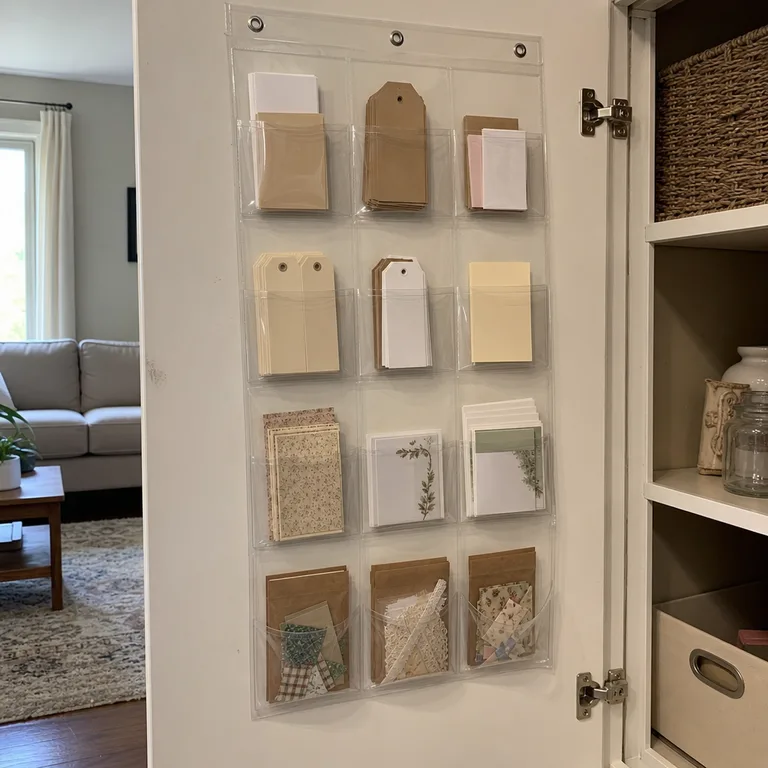
This uses a hidden vertical surface and keeps small materials visible at a glance. Secure the organizer with hardware suited to the door, and make sure it does not interfere with shelves or prevent the cabinet from closing.
Limit each pocket to lightweight paper so the door hinges are not strained.
Worth knowing: Cabinet-door organizers are not suitable for full-size sheets or heavy paper packs.
8.Turn an Ottoman Into a Protected Paper File
A hinged storage ottoman can hide lidded paper files and a separate scrap box beside the sofa. Place a rigid board under the files if the base is soft, uneven, or fabric-lined.
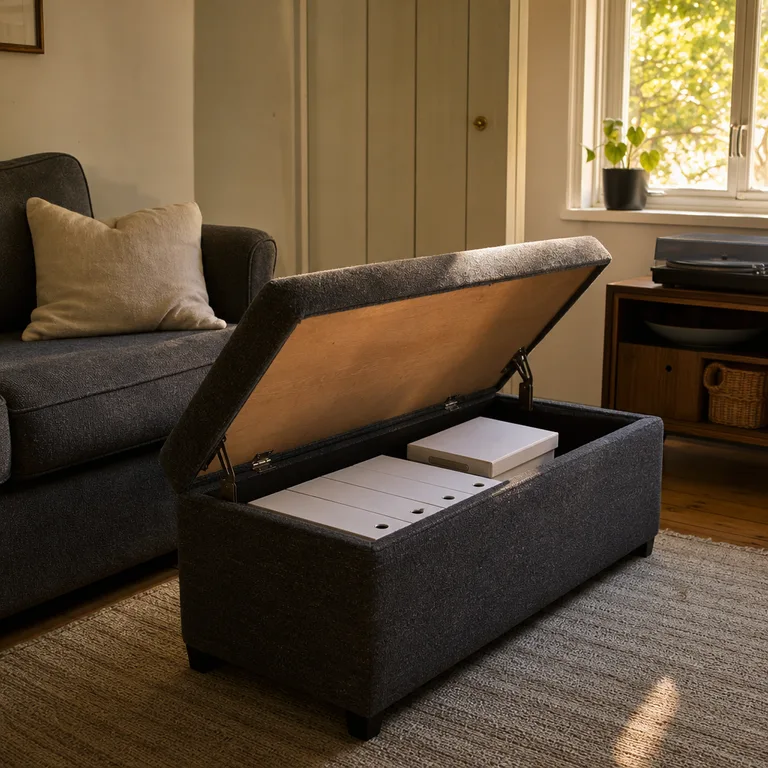
The lid protects paper from room dust and lets the ottoman continue serving as seating or a footrest when closed. Use compact files that sit flat and avoid overfilling the compartment, which can put pressure on sheet edges.
Choose a dry location away from a drafty exterior door or a spot where drinks are often set down.
Worth knowing: Paper stored in an ottoman is protected but not instantly visible, so labels are important for quick retrieval.
9.File Paper by Size in a Rolling Cart With Covers
A slim rolling cart can hold covered bins for different paper formats, such as small scraps, card fronts, and full cardstock sheets. Keep one format per bin and use visible tabs so the cart can be returned to order quickly.
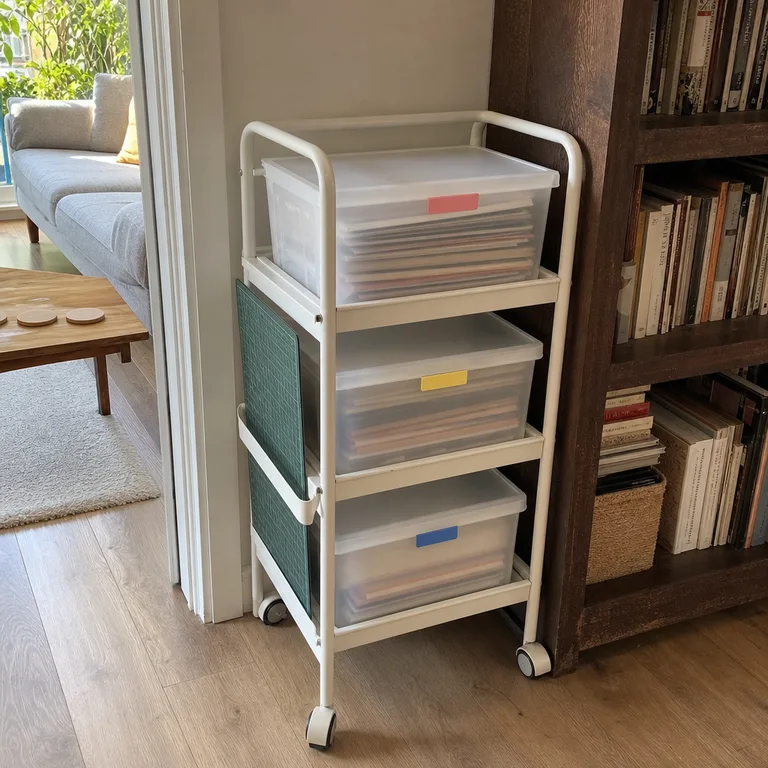
The cart can roll beside a bookcase when needed and tuck away when the room is used for guests or family time. Covered bins help keep dust off, while a vertical slot at the side can hold a cutting mat without turning the cart into a full craft workspace.
On hard floors, locking wheels or wheel cups help keep the cart from drifting when a bin is opened.
Worth knowing: A rolling cart still takes floor space, and narrow carts may not accommodate larger paper flat.
10.Use a Shallow Wall Cabinet for Flat Paper Files
A shallow wall cabinet above a console can hold upright file folders filled with flat paper and cardstock. File by size first, then add broad labels for paper type or color so the most useful category is easy to find.
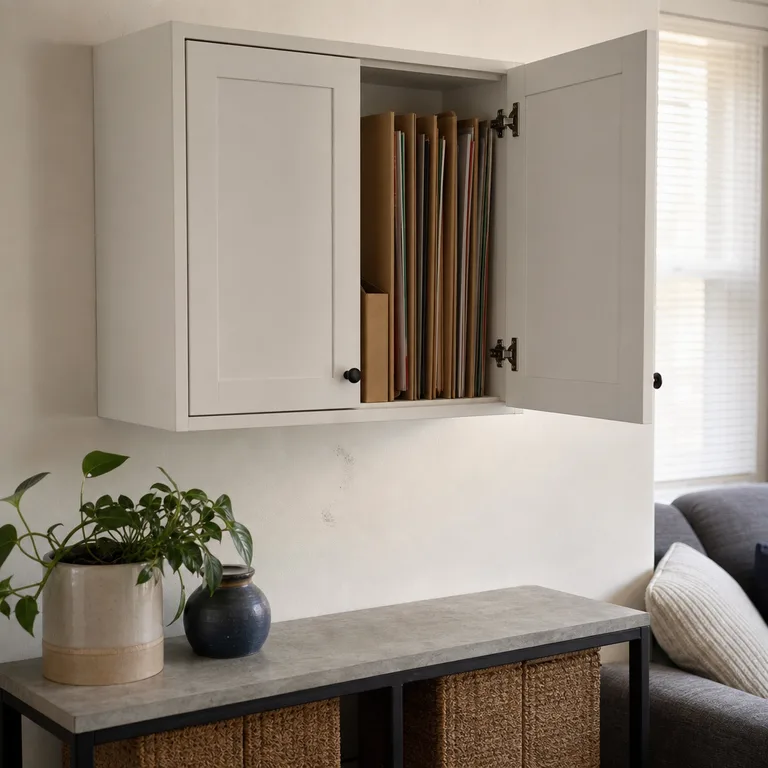
Wall storage frees the floor and keeps supplies contained behind a door in a shared living area. Lightweight paper files are a better fit than dense stacks, and folders should be supported so sheets remain upright rather than folding at the bottom.
Renters need an approved mounting method, while homeowners should mount the cabinet into suitable wall support and follow its load guidance.
Worth knowing: Installation takes more planning than freestanding storage, and shallow cabinets cannot hold large paper formats or heavy supplies.
About the author
Dana Ruiz, Senior editor
Dana writes about small-space living, storage and low-cost decorating.
Keep reading
8 Table Linen Storage Ideas for Homes Without a Dining Hutch
November 2, 2026
8 Indoor Plant Supply Storage Ideas Without a Utility Cupboard
November 2, 2026
8 Sock and Underwear Drawer Ideas for Two People Sharing a Dresser
November 2, 2026
8 Small Living Room Layouts for an L-Shaped Sectional
November 2, 2026