12 Budget Dining Table Styling Ideas for Everyday Meals
A dining table that works every day needs styling that stays low, leaves room for place settings, and can move aside in one trip when work, homework, or serving dishes take over. These ideas use familiar linens, bowls, trays, and small vessels to make an ordinary kitchen table feel welcoming without creating a permanent obstacle.
1.Center a low tray with a small bowl and candleholders
Set a shallow tray in the middle of the table and place a small fruit bowl with two short candleholders inside it. The grouping gives the table an intentional center without putting a tall object between people at mealtime.
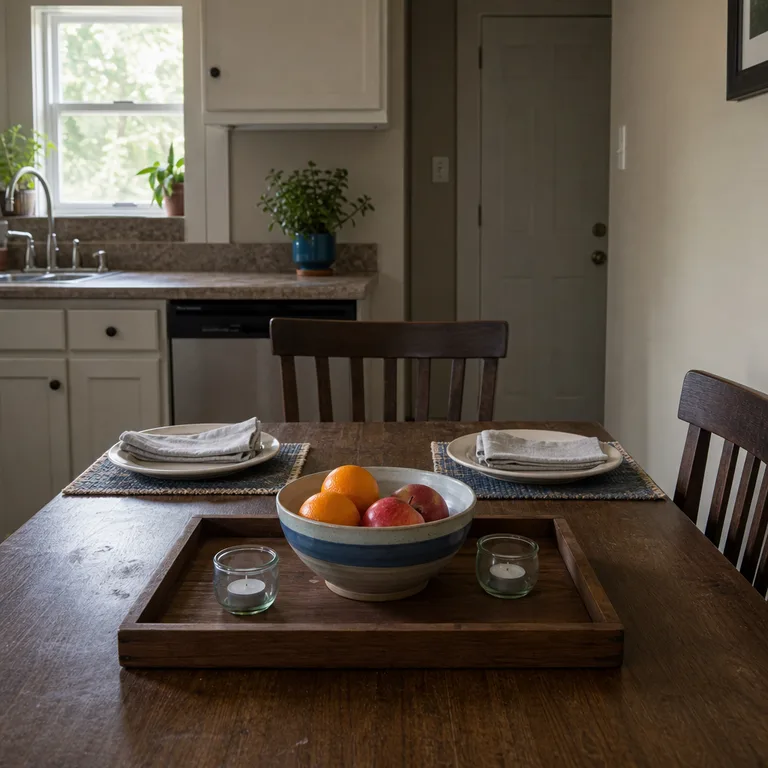
Use a tray already on hand, such as a serving tray, small board, or shallow basket with a flat base. Keep the arrangement compact enough that it can be lifted with one hand and set on a counter when plates, homework, or serving dishes need the space.
Worth knowing: Open-flame candles are not a practical choice around young children, pets, or crowded meals; unlit holders or battery candles keep the same low look.
2.Use a narrow runner that stays under serving dishes
A narrow runner gives shared dishes, condiments, and a water carafe a defined landing spot while leaving the outer edges of the table bare for place settings. It adds softness to a plain table without covering the whole working surface.
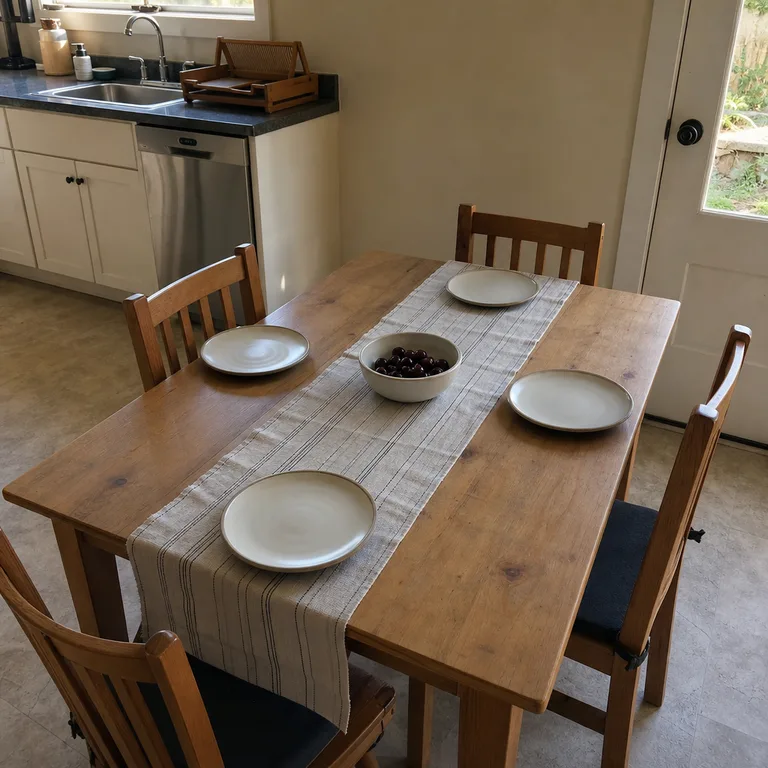
Choose a washable runner from existing linens, or cut down a length of durable fabric and hem it simply if needed. On a small table, keep it narrow enough that plates and elbows stay on the exposed tabletop rather than partly on fabric.
Worth knowing: A runner can bunch beneath heavy serving bowls, so it works best on a table where the fabric can lie flat and does not slide easily.
3.Keep napkins in a handled basket
Put folded cloth or paper napkins in a small handled basket rather than leaving a stack loose on the table. It makes a casual meal feel prepared and gives everyone an easy place to reach for an extra napkin.
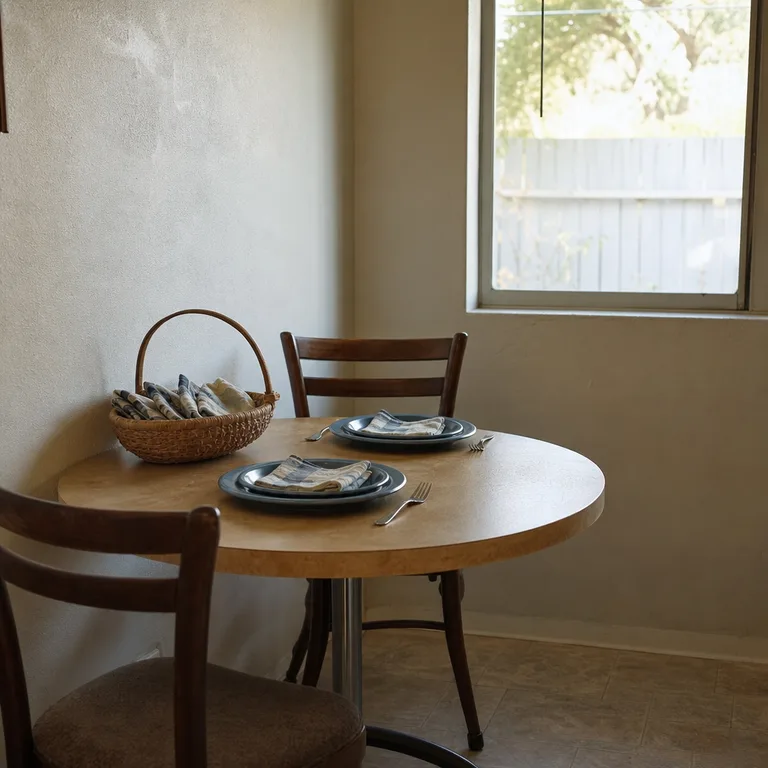
A basket from another room can work well if it is clean and small enough not to take over the center. Carry it to a nearby shelf, cabinet, or sideboard after dinner so the table returns to a clear surface quickly.
Worth knowing: Woven baskets can catch crumbs and are harder to wipe clean than a smooth tray or bowl.
4.Fill one sturdy pitcher with seasonal stems
A single pitcher holding a few clipped branches, leafy stems, or simple flowers brings life to the table without requiring a formal centerpiece. Choose a short, loose arrangement so people can still see one another across the table.
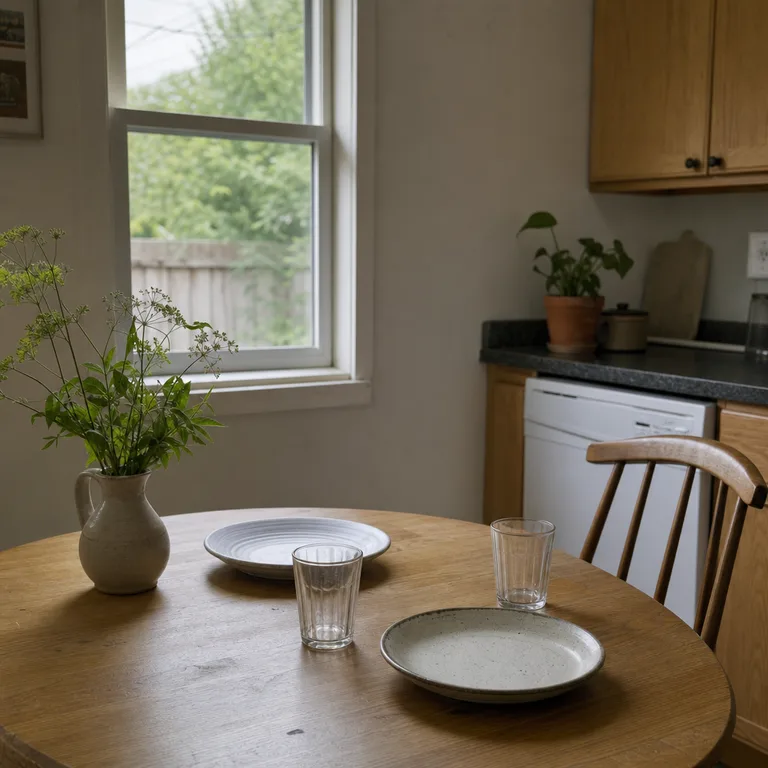
Use a water pitcher or sturdy vessel already in the kitchen instead of buying a dedicated vase. Fresh stems can be moved to the counter during meals that need more serving room, while dried stems offer a lower-maintenance option in dim spaces.
Worth knowing: Fresh arrangements need regular water changes, and cut greenery may drop leaves or pollen onto the table.
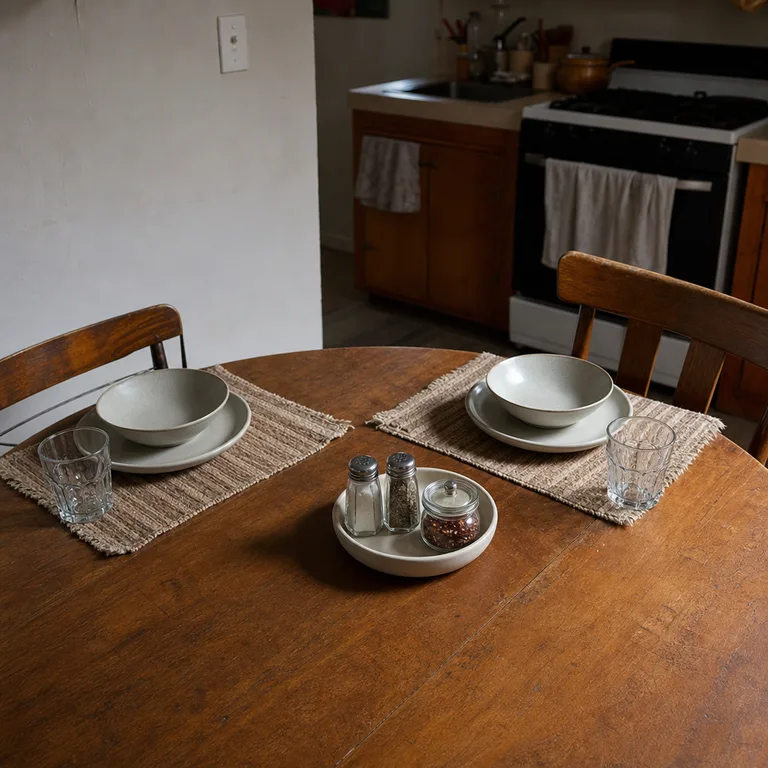
5.Set everyday salt and pepper on a small saucer
Place salt, pepper, and one often-used condiment on a small saucer at the center of the table. This small grouping keeps everyday essentials from looking scattered and makes the setting feel ready for a meal even on a busy weeknight.
A spare saucer, bread plate, or shallow dish is enough to create the grouping. After the meal, carry the whole set to a cupboard or pantry shelf instead of collecting each item separately.
Worth knowing: This approach is best for only a few items; a large collection of sauces and seasonings will quickly make the saucer feel crowded.
6.Layer two easy-care placemats instead of a full cloth
Individual placemats define each seat while preserving the open center of the table for shared food. They give everyday dishes a more settled look and make a worn or plain tabletop feel less exposed.
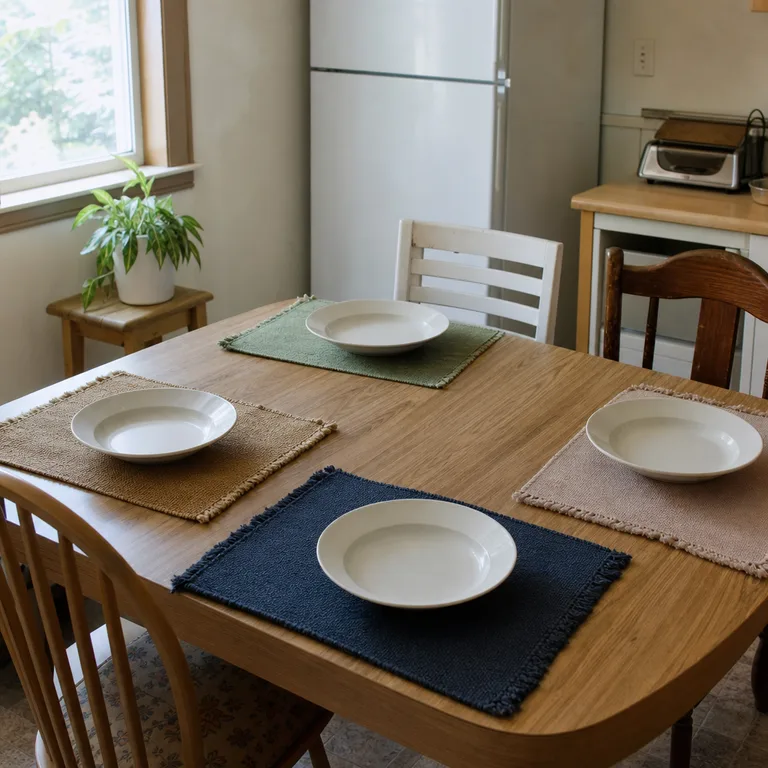
Mix placemats already in the house if they share a loose color family or similar texture. Wipeable mats suit frequent spills, while washable fabric mats are a softer choice for quieter meals and can be stacked away after clearing.
Worth knowing: Placemats do not protect the table from very hot dishes, so hot pans and serving bowls still need a trivet.
7.Make a slim centerpiece from three small jars
Line up three short jars down the center of the table, each holding a few stems or a small tea light. The repeated shapes create a deliberate centerpiece while keeping most of the tabletop free for plates and serving bowls.
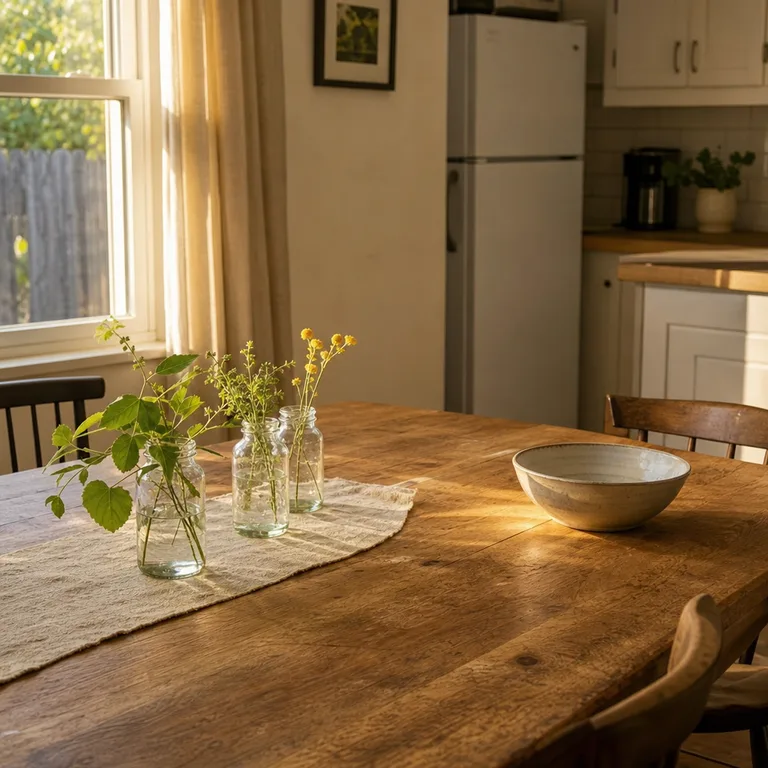
Reuse small food jars after removing labels, or gather mismatched vessels in similar heights for a relaxed look. Keep the row narrow and low enough that it can be gathered in one hand when the table needs to change jobs.
Worth knowing: Several small pieces create more items to wash and store than one larger vessel.
8.Store a foldable tablecloth in a nearby drawer
Use a simple tablecloth for slower dinners or when company is coming, then fold it away once the meal is over. This lets the table feel more dressed for dinner without asking it to stay covered during work, crafts, or daily tasks.
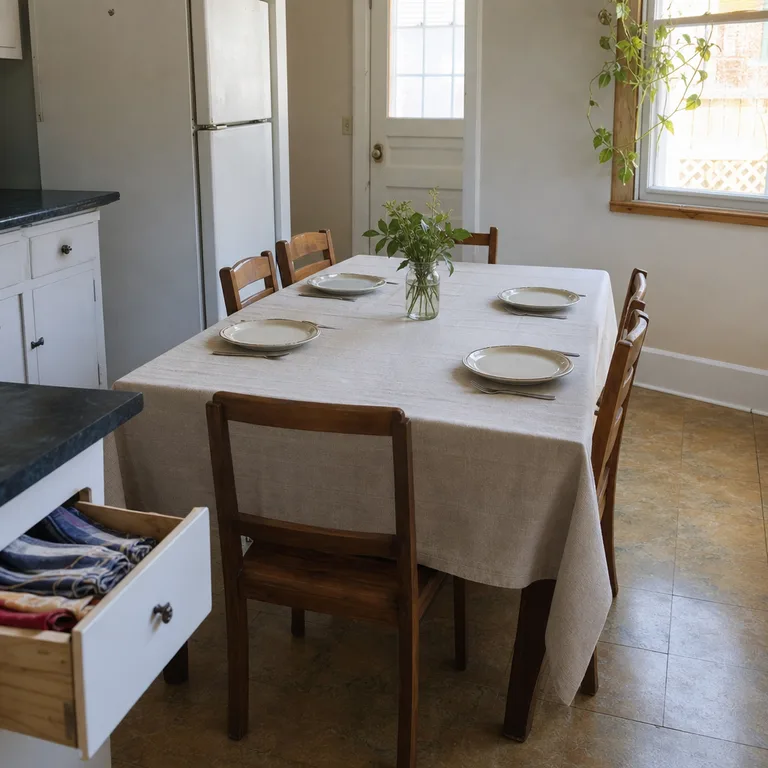
Choose a fabric that can be washed easily and fold it in a nearby drawer, basket, or cabinet rather than storing it elsewhere in the house. A plain cloth is flexible enough to work with different dishes and seasonal stems without needing matching decor.
Worth knowing: A tablecloth can shift under plates and chair arms, especially on lightweight tables or in homes with active children.
9.Put the main arrangement on a cutting-board base
Use a small cutting board as a base for a low vase, a fruit bowl, or a few meal essentials. The wood adds warmth against a plain tabletop and makes unrelated objects read as one contained arrangement.
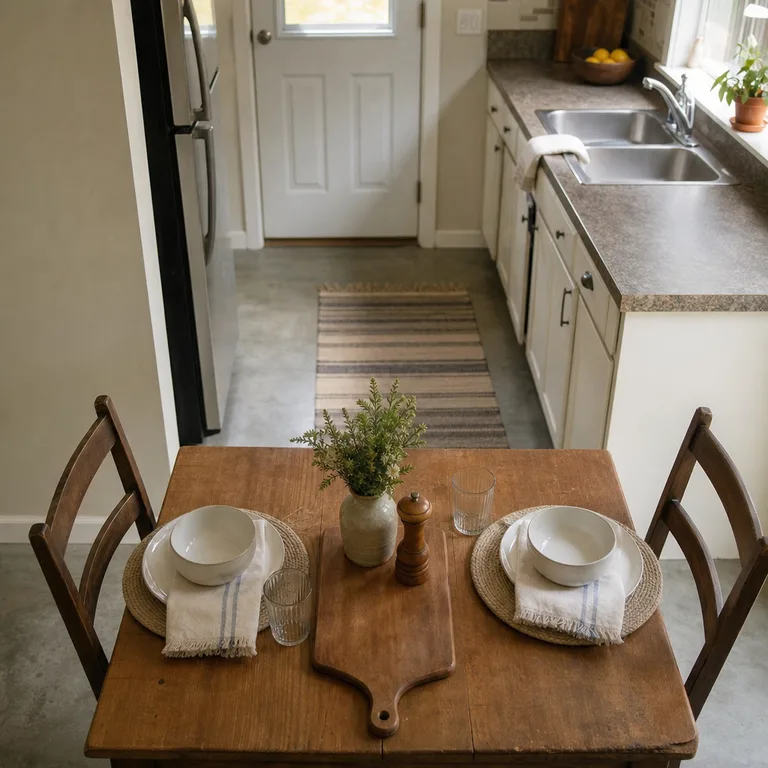
Choose a board that is stable and no wider than the table can comfortably spare. A board already used for food prep should be washed and fully dried before it becomes a table base, particularly if it has deep knife marks or lingering odors.
Worth knowing: Wood can be damaged by moisture, so a vase or pitcher should have a coaster or liner beneath it if it may sweat or leak.
10.Reserve one end for a movable serving station
On a longer table, give one far end a small runner, pitcher, and serving bowl while keeping the other end bare. This layout makes the table look purposeful while preserving a clear zone for a laptop, quick breakfast, or a single place setting.
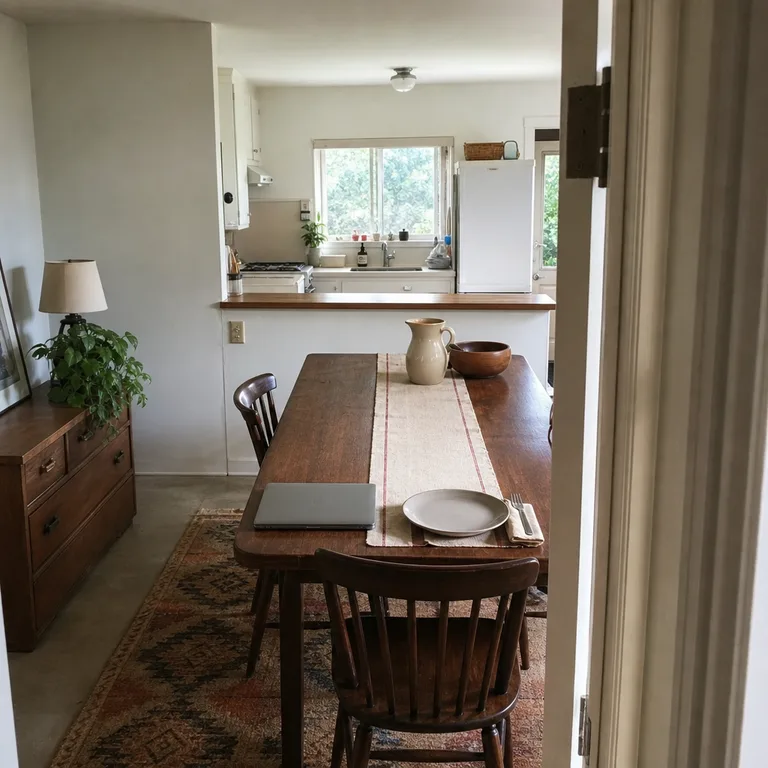
Keep the styled end limited to useful objects that can move with the meal rather than decorative pieces that stay put. It is especially helpful in a compact home where the dining table is also the main work surface.
Worth knowing: This layout needs a table long enough that the serving area does not crowd the seats people use most often.
Related: 10 Small Dining Area Ideas When You Don't Have a Dining Room
11.Choose a lidded bowl for fruit and small clutter
A lidded bowl can hold fruit at breakfast, then hide tea bags, spare napkins, or the small loose items that tend to collect on a dining table. Its closed shape makes the table look calmer than an open pile of everyday objects.
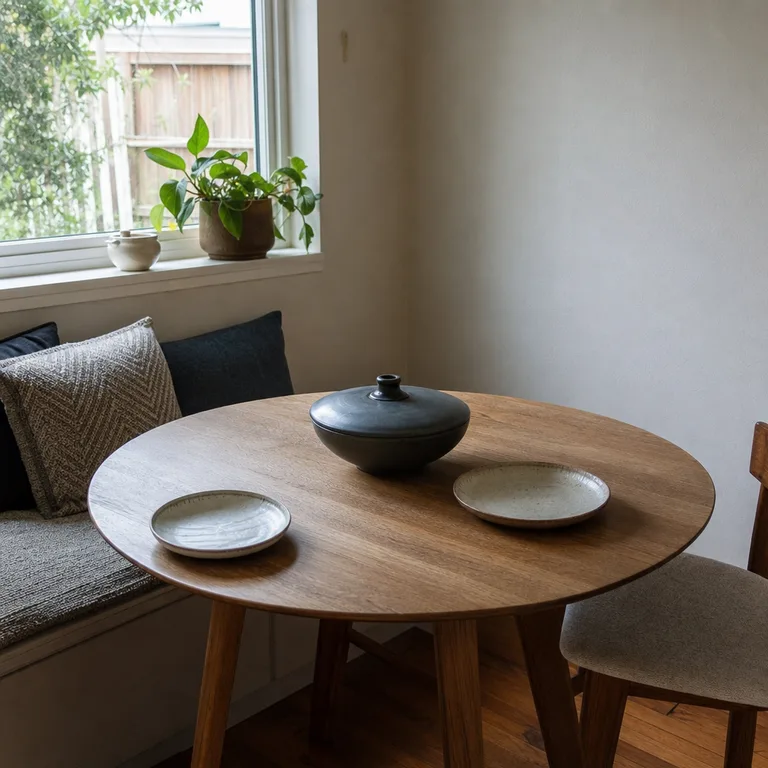
Look for a bowl that is easy to lift and has a lid that fits securely rather than one that needs careful arranging. Keep it low and centered, with enough room around it for plates when the table is set for two or more.
Worth knowing: A lidded bowl can become a hiding place for clutter, so it still needs an occasional emptying and reset.
12.Hang a basket nearby for fast table resets
Give placemats, napkins, and the removable centerpiece tray a dedicated home in a basket on a nearby shelf or wall hook. Clearing becomes simpler when those items have one close destination instead of being carried to several different rooms.
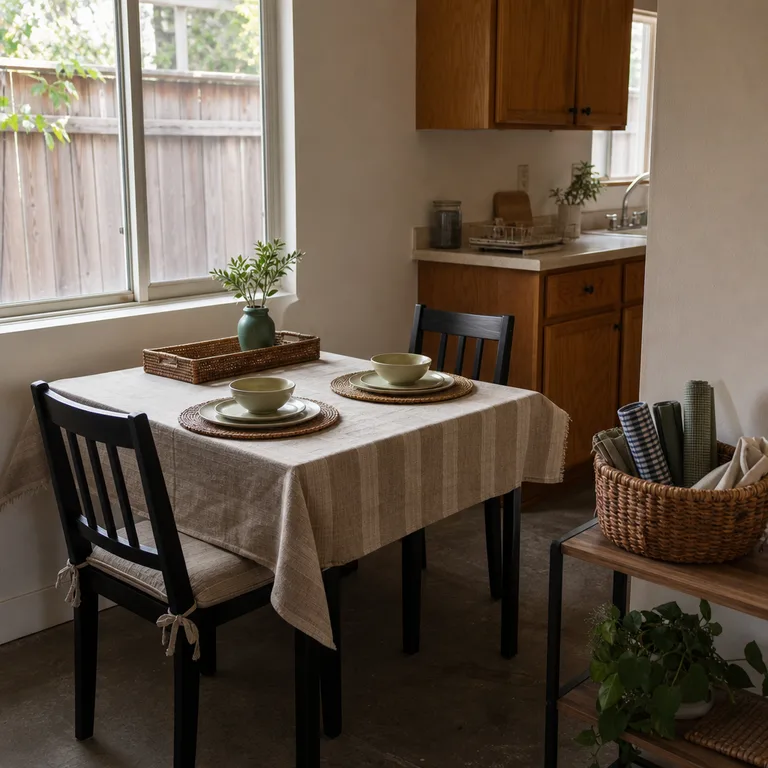
A freestanding shelf avoids wall installation and works well for renters or anyone who does not want to add hardware. If using a wall hook, follow rental rules and make sure the mounting method can safely hold the basket when it is full.
Worth knowing: A nearby basket only helps if it stays within easy reach; storage across the kitchen is less likely to support a quick reset.
About the author
Dana Ruiz, Senior editor
Dana writes about small-space living, storage and low-cost decorating.
Keep reading
10 Rattan Accent Ideas That Add Warmth Without a Full Room Makeover
September 20, 2026
12 Bookshelf Styling Ideas Using Things You Already Own
September 20, 2026
12 Playful Striped Decor Ideas You Can Try on a Budget
September 20, 2026
10 Budget Art Deco Decor Ideas for an Ordinary Living Room
September 19, 2026