8 Reused Seed Starting Containers for a Small Garden Project
A small seed batch can start in clean, reused containers that offer drainage, enough root room, and a stable place under suitable light. Match the container depth to the seedling’s likely root growth, label each planting, and discard any container that cannot be fully cleaned or has held hazardous material.
As an Amazon Associate I earn from qualifying purchases.
1.Sanitized Nursery Cell Pack for Several Small Seedlings
An intact nursery cell pack is a practical choice for starting several varieties while keeping each sowing separate. Its divided cells make labeling simple and let seedlings be lifted out with less disturbance when it is time to transplant.
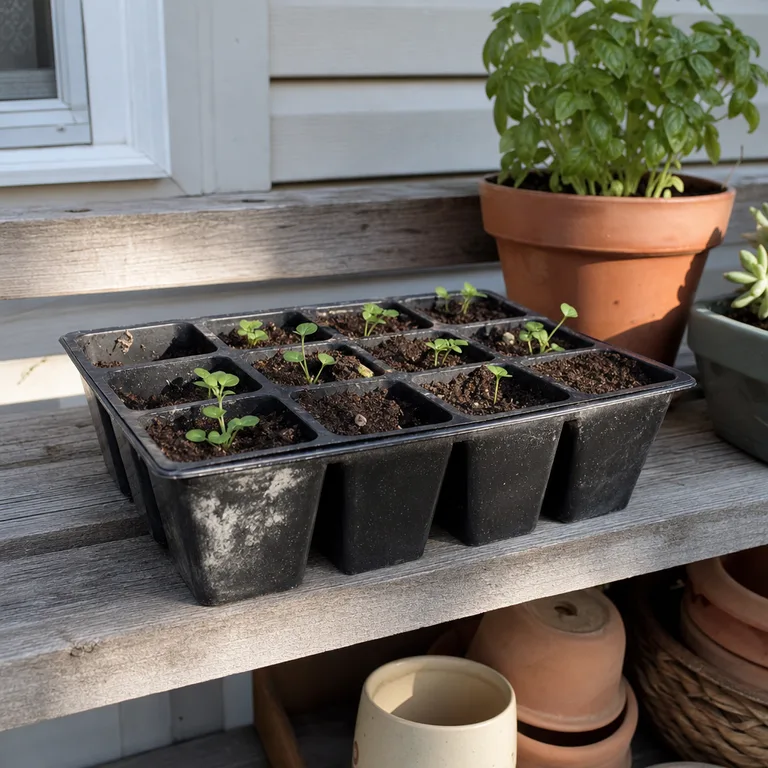
Wash away old soil, inspect the pack for cracks, and make sure every cell has an open drainage hole. Fill the cells with fresh seed-starting mix rather than garden soil, then set the pack in a waterproof tray so excess water does not run across a windowsill or patio table.
Reuse a cell pack that is still rigid enough to hold damp mix without bending. This works especially well for smaller seedlings that will be moved into the garden or a larger pot soon after developing a healthy root system.
Worth knowing: Shallow cells dry quickly and are not a good long-term home for seedlings that need substantial root space before planting out.
Related: 12 Container Garden Ideas for a Small Patio on a Budget
2.Small Nursery Pot for a Single Larger Seedling
A cleaned small nursery pot gives one seedling its own space, which is useful for plants that dislike crowded roots or are easier to transplant one at a time. It also avoids the thinning step required when several seeds share a wider container.
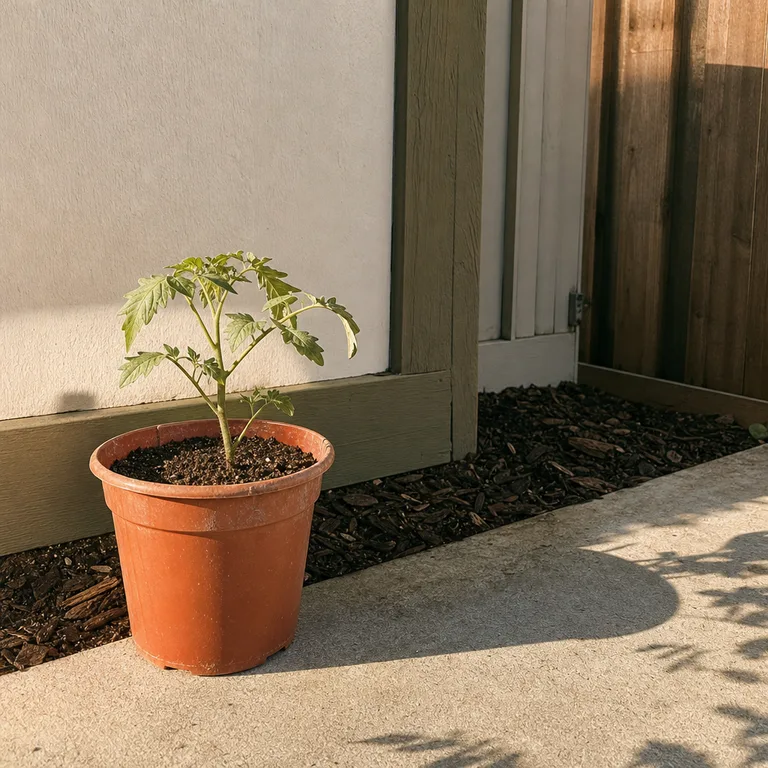
Choose a pot with drainage holes already molded into the base, then scrub it well and remove every trace of old potting mix. Sow only as many seeds as the pot can support, keeping the strongest seedling if more than one comes up.
Used nursery pots are common after buying patio plants, and they can be reused for several seasons if they remain sturdy. A deeper pot can give a seedling more time to grow when cool weather delays outdoor planting.
Worth knowing: A single pot takes more room under a grow light or near a bright window than a compact cell pack.
3.Yogurt Cup With Added Drainage Holes
A thoroughly washed yogurt cup can become a simple starter pot for a small sowing. Its light weight makes it easy to move toward better light, and the smooth sides make it fairly easy to slide out a root ball at transplanting time.
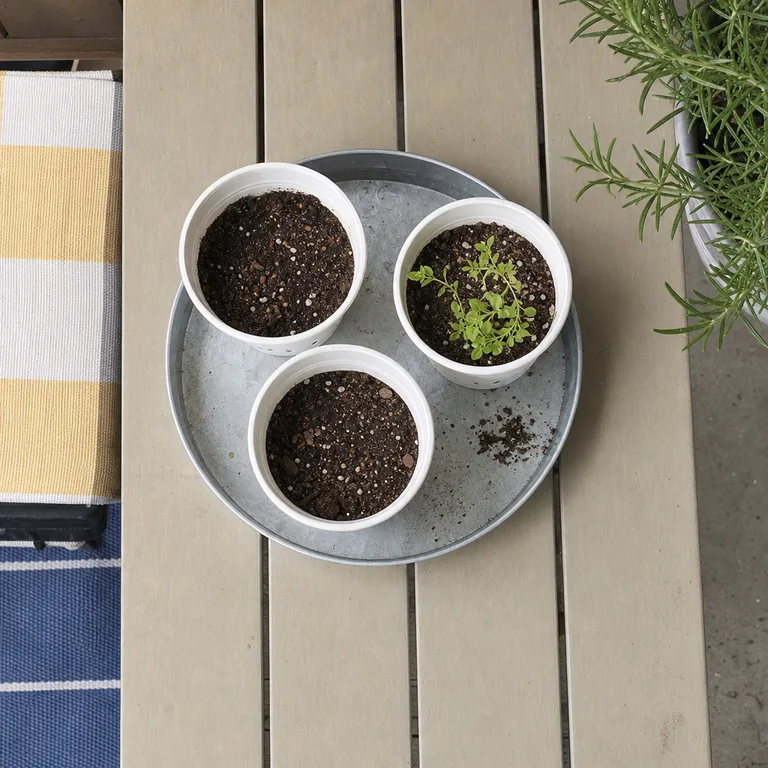
Pierce several small holes in the bottom and place the cup in a shallow tray before filling it. Use a permanent label on the outside, since several similar cups can quickly become hard to identify once seedlings emerge.
This option suits quick-growing seedlings that will be transplanted promptly, such as leafy greens started for a small garden bed or container. Use an awl or similar tool carefully, supporting the cup on a firm surface while making holes.
Worth knowing: Many yogurt cups are shallow, so seedlings can become root-bound if weather or transplant timing keeps them inside too long.
4.Lidded Food Tub Used as a Seedling Pot
A clean food-storage tub offers a wider planting area for a small group of the same seedling. It can work for a short row of greens, herbs, or flowers that can be thinned and transplanted individually later.
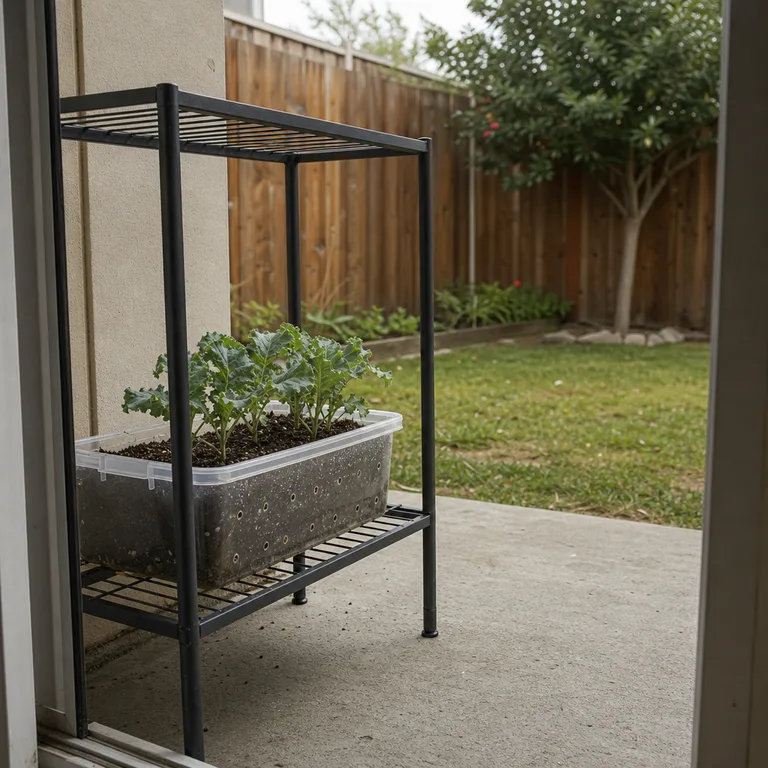
Make drainage holes across the bottom rather than relying on one opening in a corner. Fill with seed-starting mix, sow sparingly, and thin early enough that remaining seedlings have light and air around their leaves.
A clear tub can be useful for checking moisture near the sides, but avoid treating the lid as a permanent cover. Seedlings need ventilation after germination, and a closed container can hold too much moisture around stems and soil.
Worth knowing: Crowding is easy in a broad tub, and separating tangled roots can be difficult if seedlings are left together for too long.
Related: 10 Small Pollinator Garden Ideas You Can Start in One Corner
5.Deep Produce Box as a Carrying and Drainage Tray
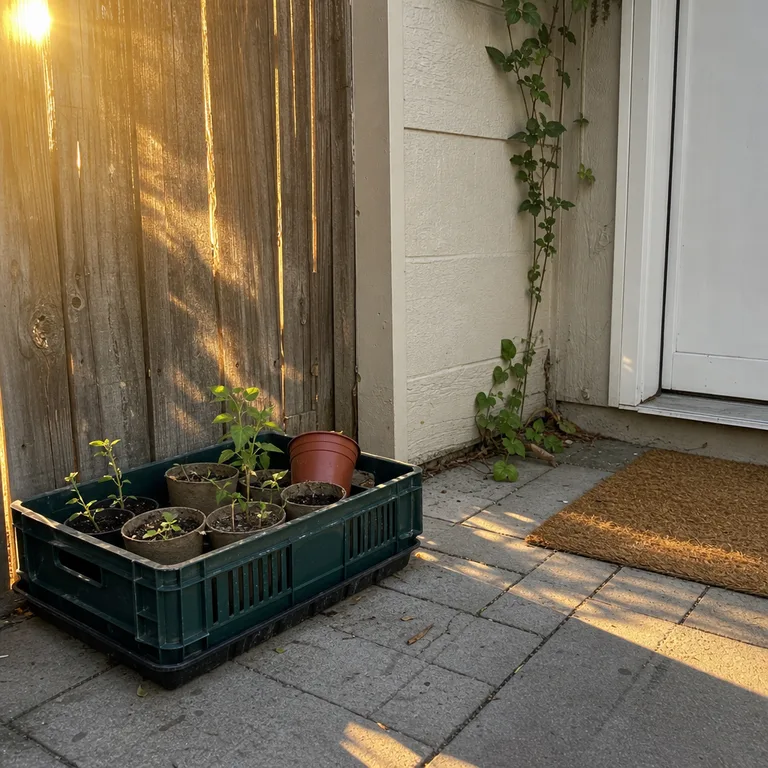
A washed deep produce box is most useful as a holding tray for several individually planted containers rather than as the seed pot itself. It gathers a small seed-starting setup in one movable place and helps contain drips from cups or nursery pots.
Set the planted containers inside on a saucer or waterproof liner if the box has large openings. Empty standing water after watering so the bottoms of the pots are not left soaking, which can contribute to root problems.
This approach makes sense for a patio, balcony, or bright indoor spot where seedlings may need to be shifted during cold nights or heavy rain. The open sides also allow air to move around the containers.
Worth knowing: A produce box can be bulky on a narrow sill, and its open structure will not catch water without a separate tray or liner.
Related: 10 Garden Hose Storage Ideas for a Small Yard
6.Reused Seed Flat for a Neat Group of Starts
A scrubbed seed flat keeps plug cells or small pots together in one neat unit. It is useful when a small batch needs to be carried outside for sun and brought back in during a cold snap.
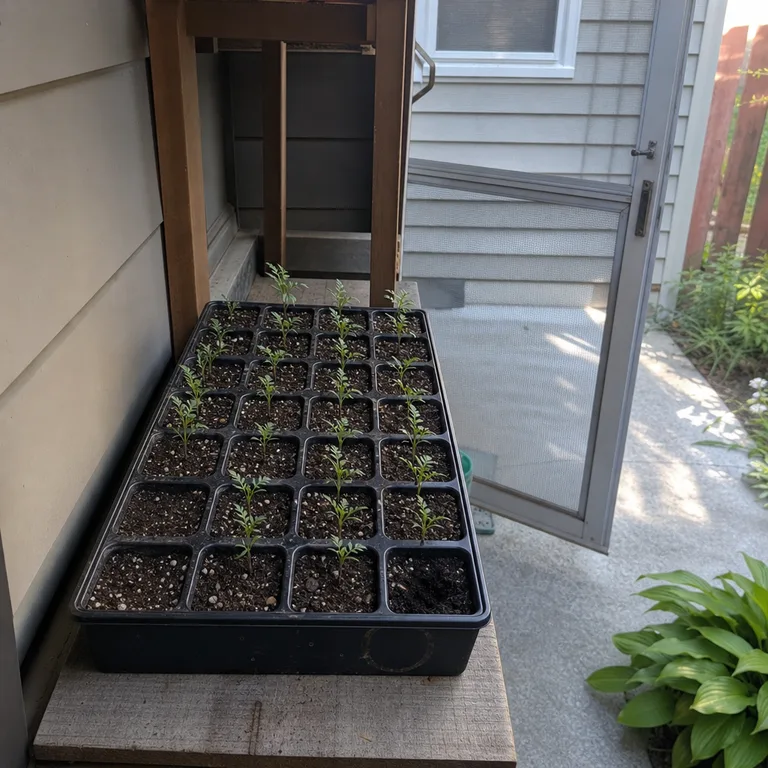
Check that the flat has drainage and no deep cracks where old soil can remain lodged. Place plug inserts or individual pots inside it, leaving enough space for air circulation and for labels that identify each variety.
A flat can be reused for multiple sowing sessions when it is washed between uses and allowed to dry. It also gives a modest patio setup a more orderly footprint than a collection of loose cups.
Worth knowing: A flat is a carrier and catch tray, not enough root space on its own; seedlings still need cells or pots inside it.
7.Beverage Carton With Holes in the Bottom
A rinsed beverage carton can become a narrow seed container when cut down to a manageable height and fitted with drainage holes. Its rectangular shape sits neatly along a sill or in a tray and can suit a small sowing of herbs or compact seedlings.
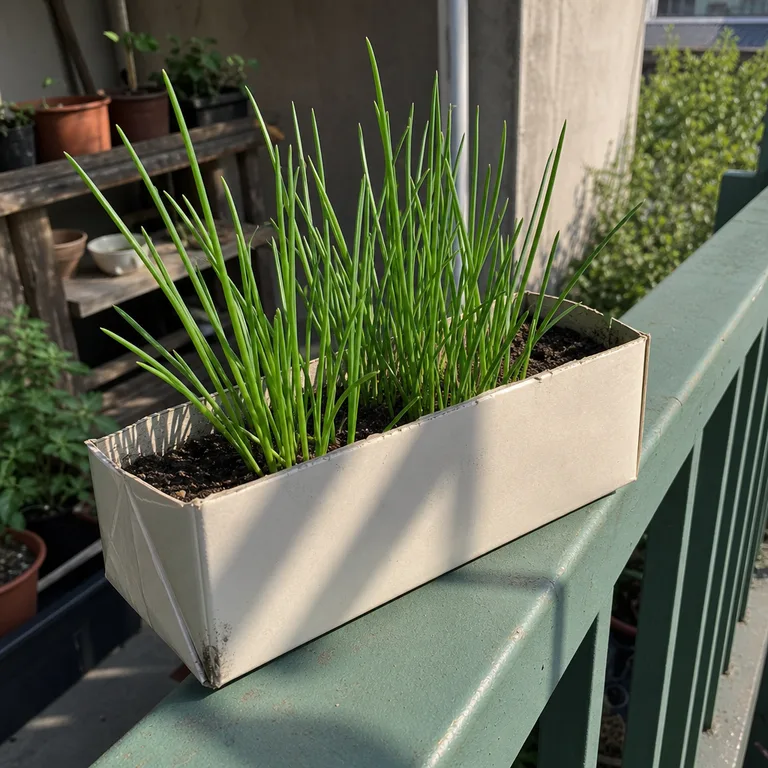
Use only a carton that is clean, odor-free, and still firm when damp. Cut carefully, smooth any sharp edge if needed, then pierce holes in the base and support the carton in a tray before adding mix.
The opaque sides reduce light exposure to roots, and the carton can be labeled directly. Because wet carton material can soften over time, this is best treated as a short-term starter rather than a season-long planter.
Worth knowing: Cartons can weaken or leak as they stay wet, so they need regular inspection and should be replaced at the first sign of softening.
8.Food-Grade Cup for One Easy-to-Move Start
A clean food-grade cup with drainage holes makes a straightforward individual starter for one seedling. Separate cups are useful for plants that need their own root space or for a beginner testing a few different varieties from several seed packets.
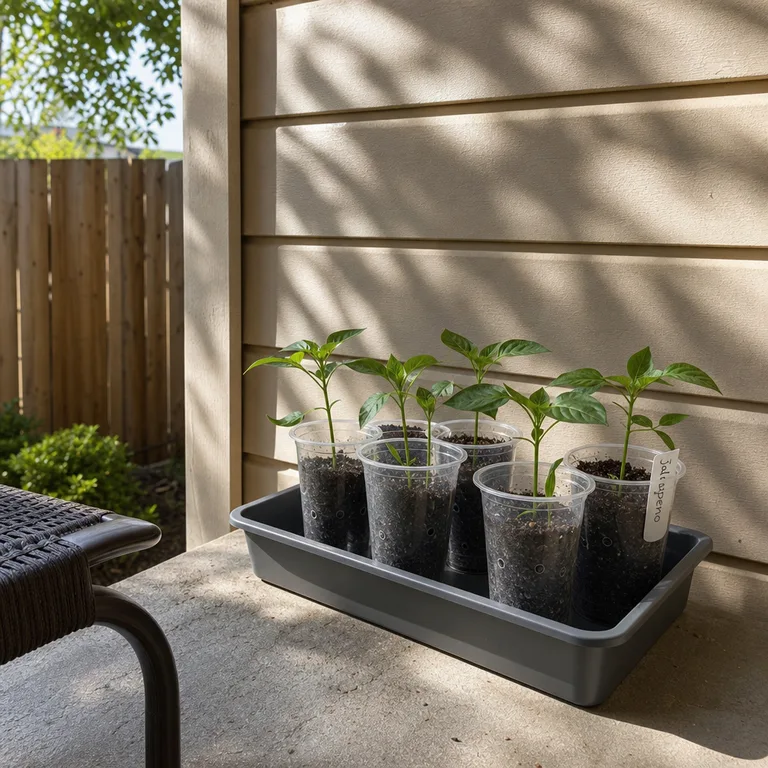
Make several holes across the base, not just one central hole, and set the cups in a shallow tray. Clear cups can reveal roots near the sides, but keep the tray out of direct light if roots become exposed through the plastic.
Use the cup only until the seedling is ready for a larger pot or its final garden position. If roots circle tightly around the inside or push through the drainage holes, transplanting should not be delayed.
Worth knowing: Clear cups can allow light to reach roots, and their small volume can dry out faster than a deeper nursery pot.
About the author
Dana Ruiz, Senior editor
Dana writes about small-space living, storage and low-cost decorating.
Keep reading
7 Narrow Foundation Bed Layouts for the Front of a Small House
October 31, 2026
8 Christmas Porch Planters Using Empty Summer Pots
October 29, 2026

8 Small Front Yard Layouts for a Plain Rectangular Lawn
October 29, 2026
8 Christmas Gift-Wrapping Stations That Pack Away in a Small Home
October 31, 2026