8 Small Front Yard Layouts for a Plain Rectangular Lawn
These eight complete layouts keep a workable rectangle of lawn, a clear route from curb or driveway to the front door, and one planting zone that gives the yard a finished focal point. Each plan can be phased from route repairs and bed edging to plants and mulch, with plant choices adjusted to the site’s sun, winter conditions, and drainage.
As an Amazon Associate I earn from qualifying purchases.
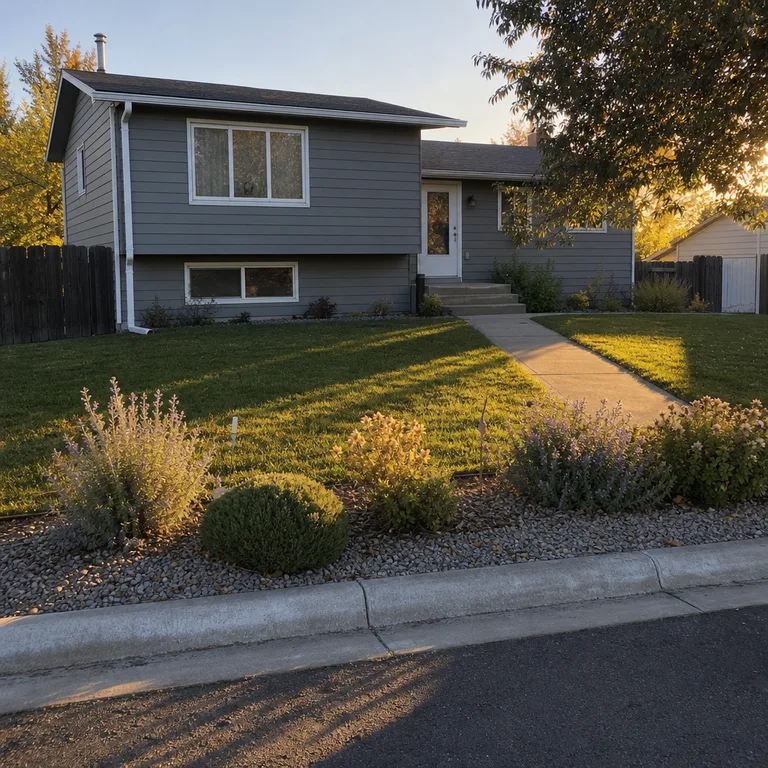
1.Center Walk With a Deep Front-Corner Bed
A straight center walk works well when the front door already sits near the middle of the house. Keep a lawn panel roughly 10 to 14 feet wide on either side of a 3- to 4-foot route, then give one sunny front corner a bed about 5 to 7 feet deep.
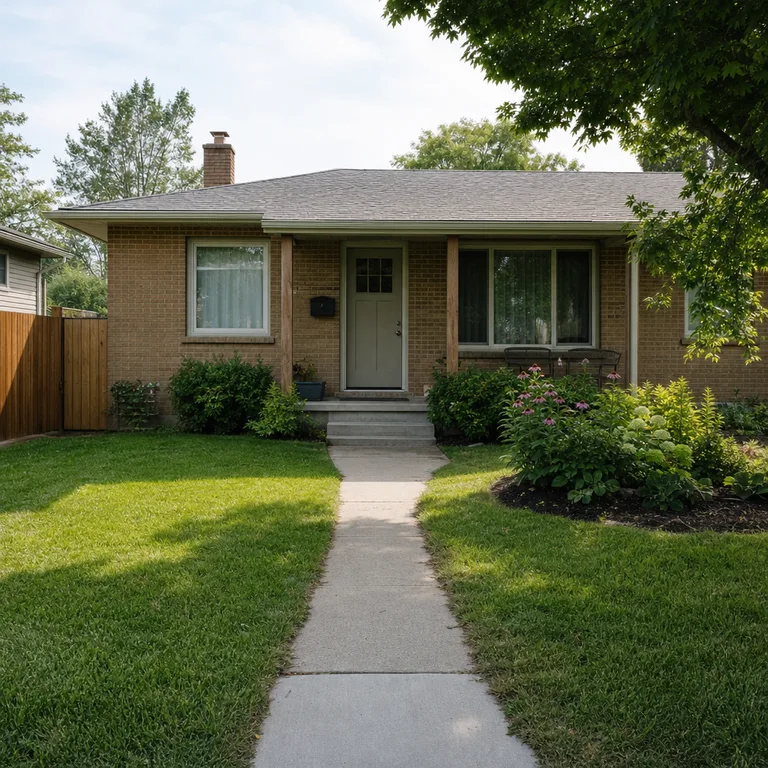
That deeper bed has enough room for shrubs that mature 3 to 5 feet tall, with lower perennials or groundcover at the edge. The lawn remains easy to use and mow, while the planted corner gives the view from the street a clear destination.
Start with the walk repairs, bed outline, and mulch so the layout looks intentional even while plants are small. Choose shrubs with a mature width that will not block windows, the walkway, or access for house maintenance.
Worth knowing: This layout can look overly formal on a house with an off-center door or a sharply angled driveway.
Related: 15 Budget Landscaping Ideas That Make a Small Yard Feel Finished
2.Driveway-Side Border With an Open Lawn
Use the driveway edge as the organizing line when the driveway already provides the natural approach to the door. Leave one open lawn panel about 12 to 16 feet wide, and plant a 3- to 5-foot border along the driveway rather than breaking up the middle of the yard.
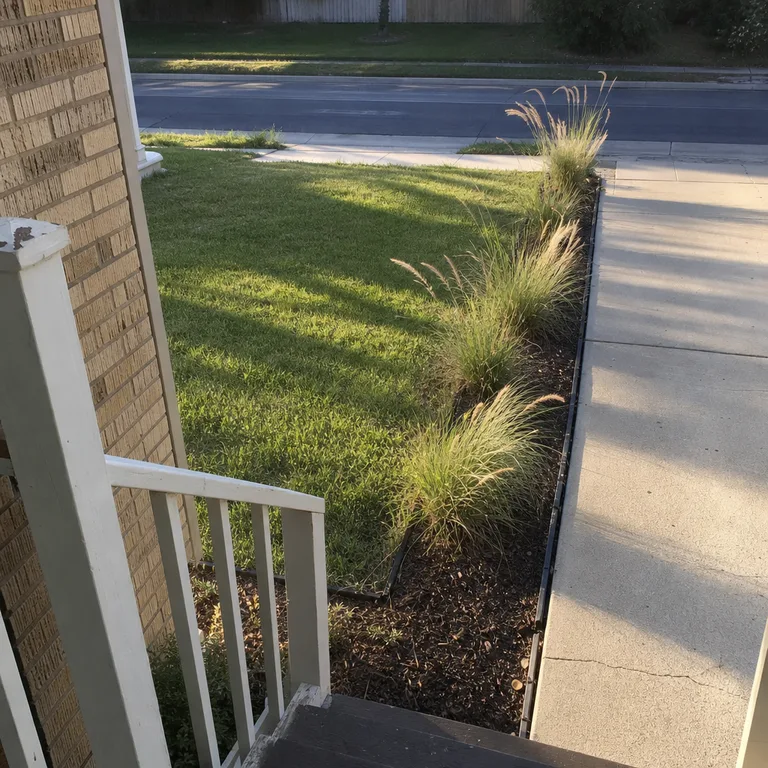
A low border of grasses, flowering perennials, and shrubs under 4 feet tall softens a hard stretch of concrete without making the frontage feel crowded. It also keeps the walking path from driveway to porch obvious and unobstructed.
Prepare the border in sections if the full length feels like too much work at once. Plants beside pavement need extra watering during hot, dry periods, and anything near a vehicle door should stay compact enough to avoid being brushed or stepped on.
Worth knowing: Driveway borders collect heat, road grit, and winter salt in some climates, so delicate plants may struggle there.
3.Diagonal Walk to a Single Oval Island Bed
A diagonal path can make sense when the driveway and porch do not line up. Set a 3-foot-wide paver or stepping-stone route across the lawn, leaving enough open grass on both sides for easy mowing and a direct trip to the door.
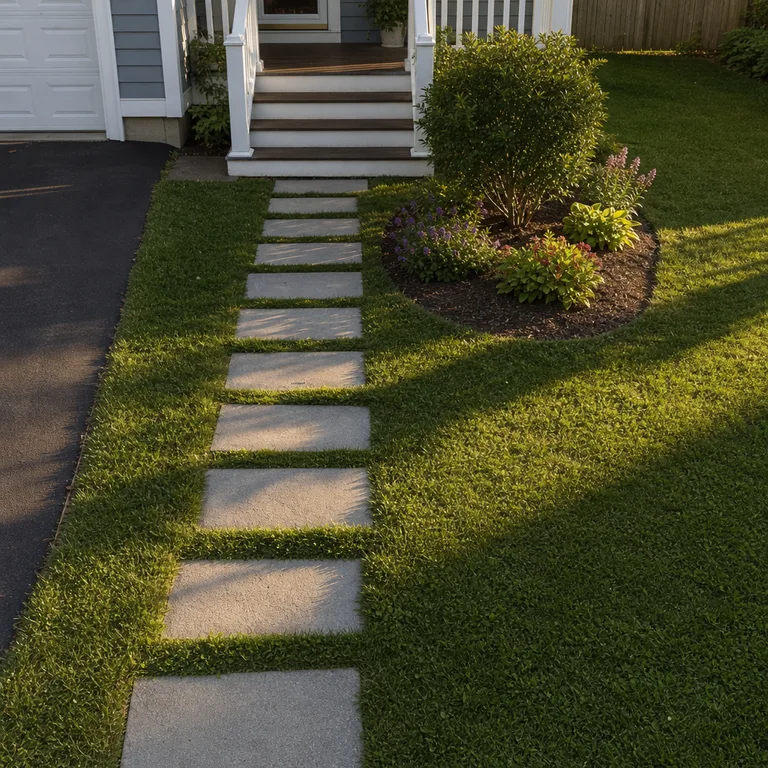
Place one oval bed, roughly 6 by 10 feet, beside rather than in the middle of the route. A small shrub that matures 4 to 6 feet tall can anchor the bed, while sun-loving perennials make the planting feel fuller without turning the whole yard into garden space.
Lay out the route with a hose or string first, then test whether a mower can move around the island without awkward trimming. Add the path and bed edge first; plants can go in over a season or two as the budget allows.
Worth knowing: Individual pavers can shift in freeze-thaw climates or on poorly drained soil and may need occasional leveling.
4.L-Shaped Bed Around the Porch Steps
Frame modest porch steps with an L-shaped bed while leaving the main lawn as one simple rectangle. Keep a direct sidewalk route about 3 to 4 feet wide, and make the bed around 4 feet deep so it reads as a real planting area rather than a thin strip.
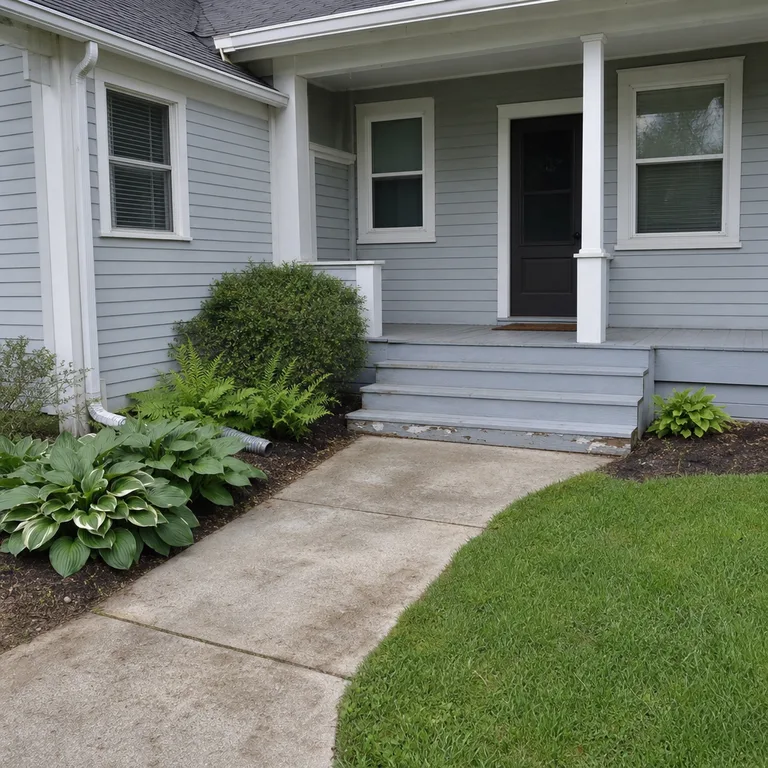
This plan is useful for a shaded porch side where low plants can soften the steps and foundation. Choose shade-tolerant varieties that mature 1 to 3 feet tall, keeping railings, steps, and the door area visible.
Check the downspout and grade before adding mulch and plants. If roof runoff lands beside the steps or foundation, redirecting it or improving the drainage comes first; damp mulch alone will not solve standing water.
Worth knowing: A bed close to the steps needs regular tidying because leaves and loose mulch can migrate onto the walking surface.
Related: 10 Front Porch Decorating Ideas for a Small Budget
5.Wide Curbside Bed With a Narrow Entry Lawn
Put the focal planting zone at the street edge when the house needs more visual depth from the curb. A 5- to 6-foot-deep curbside bed can sit in front of a narrower lawn area about 10 to 12 feet deep, with a straight 3-foot route kept open from curb or driveway to the door.
Low drought-tolerant plants and shrubs that mature under 3 feet preserve sightlines for drivers and people backing from driveways. The broad planted strip gives the property a finished front edge while the lawn near the house remains available for everyday use.
Install this layout one section at a time, beginning with a clean bed line and mulch or gravel where appropriate. Street-side plantings face reflected heat, compacted soil, and possible road salt, so use plants suited to those conditions rather than relying on frequent watering.
Worth knowing: A curbside bed may be subject to municipal rules, snow storage, or utility access requirements.
6.Foundation Bed With a Side Arrival Path
Shift the arrival route to one side when a front walk through the lawn feels unnecessary or cramped. A 3- to 4-foot gravel or paver path can run from driveway to porch, leaving the rest of the lawn as one broad, easy-to-mow rectangle.
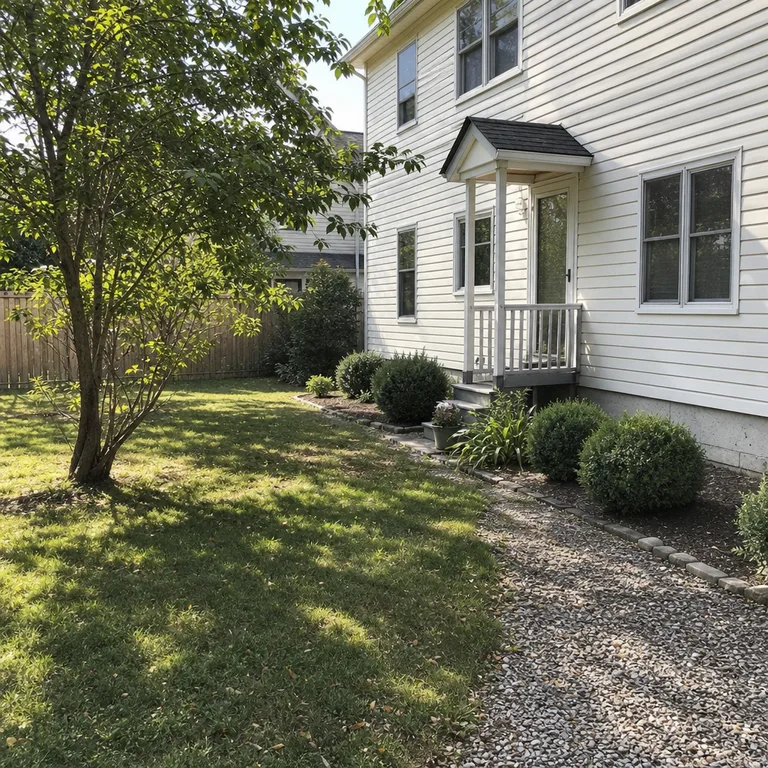
Make the foundation planting the single focal zone, using shrubs with a mature spread of 3 to 5 feet and enough open space around siding, windows, vents, and hose connections. A continuous bed pulls the front of the house together more effectively than a row of isolated plants.
A compacted gravel path is usually a manageable phased project, but it needs a firm edge to keep stone out of the lawn. Keep the path surface level and use a material that suits the slope; loose gravel can be difficult on a steep route or for anyone needing stable footing.
Worth knowing: Foundation beds require disciplined spacing, since crowded shrubs can hide windows and complicate exterior repairs.
7.Rain Garden at the Downspout End of the Lawn
Use the wettest low end of the lawn as the focal planting zone instead of repeatedly trying to keep it uniformly grassy. Keep the higher, firmer part of the rectangular lawn for use and retain the existing route to the door, then form a shallow rain-garden bed about 6 to 8 feet wide near the downspout outlet.
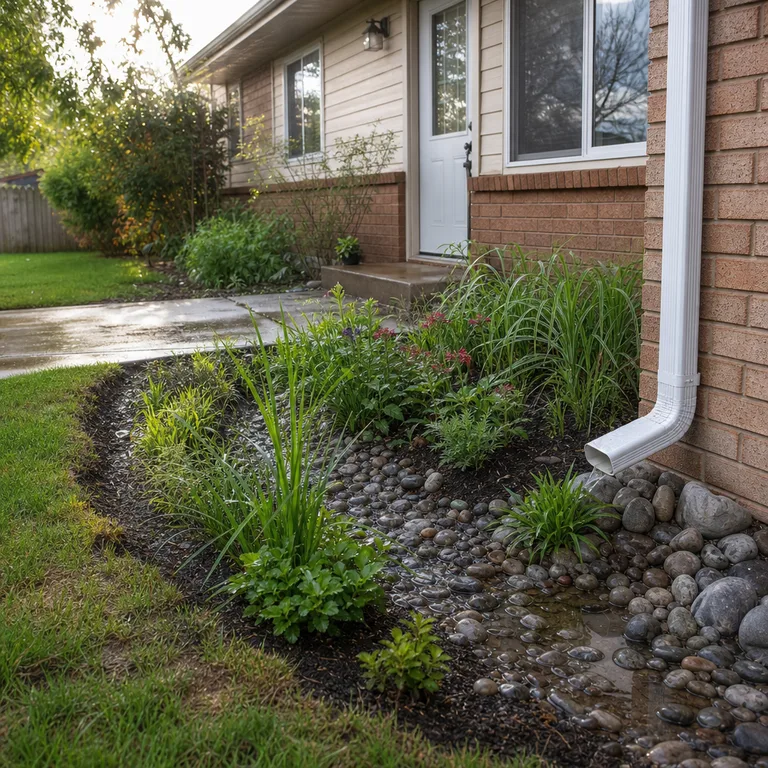
Moisture-tolerant plants that mature 2 to 4 feet tall make the basin look planted on purpose while helping define its edge. A shallow stone channel can guide downspout flow into the bed and reduce erosion where water leaves the house.
Start by confirming where water goes during a hard rain and whether the area drains after storms. The bed should direct water away from the foundation and should not be used to hide a drainage problem that needs professional assessment.
Worth knowing: This plan is not suitable where the proposed basin would send water toward the house, a neighbor’s property, or a required access route.
8.Porch-Facing Crescent Bed With a Mowing Loop
Place a crescent-shaped bed where it can be seen from the porch and street without cutting the lawn into small pieces. Keep a clear 3- to 4-foot arrival route from the driveway or sidewalk, and leave a continuous grass edge around the bed so mowing remains straightforward.
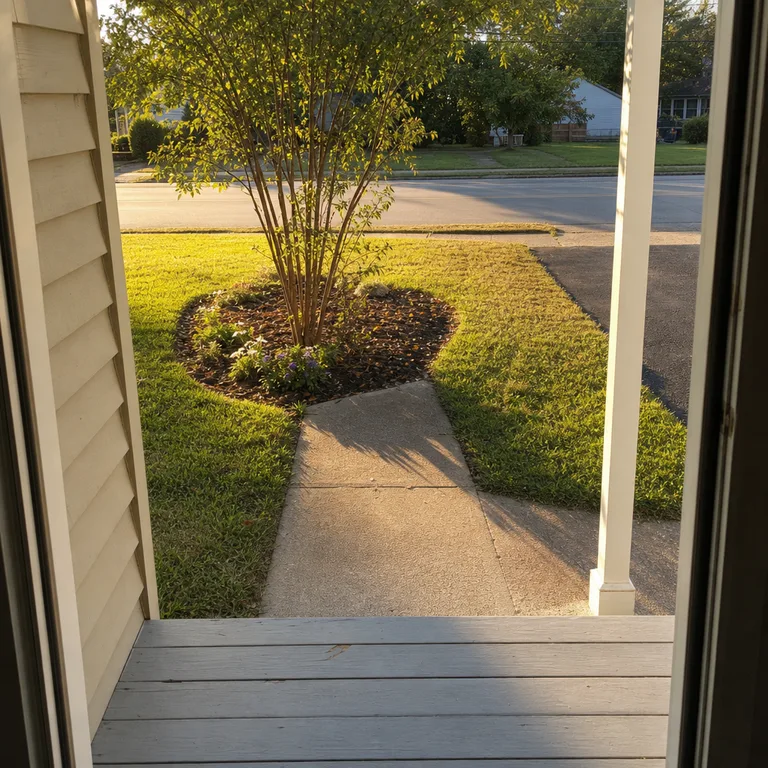
A young multi-stem tree that will mature around 8 to 12 feet tall gives this layout height without overwhelming a small frontage. Surround it with low plants, then let the bed become more layered over time as the tree begins to cast shade.
Plant the tree first and give it room away from the house, utility lines, walks, and driveway. Underplant later rather than filling the bed densely at the start, because the changing shade and root zone will affect which plants thrive there.
Worth knowing: A tree-centered bed needs ongoing pruning and leaf cleanup, and the plant mix may need adjustment as shade increases.
About the author
Dana Ruiz, Senior editor
Dana writes about small-space living, storage and low-cost decorating.
Keep reading
7 Narrow Foundation Bed Layouts for the Front of a Small House
October 31, 2026
8 Christmas Porch Planters Using Empty Summer Pots
October 29, 2026
8 Christmas Gift-Wrapping Stations That Pack Away in a Small Home
October 31, 2026
9 Kids' School Paper Organization Ideas That Separate Forms From Keepsakes
October 31, 2026