8 Christmas Porch Planters Using Empty Summer Pots
Empty summer pots can become layered Christmas porch containers with cut evergreens, branches, berries, lights, and a few weather-ready accents. Check that each pot can handle local freeze-thaw conditions, weight tall materials against wind, and keep steps, railings, and the entrance clear.
As an Amazon Associate I earn from qualifying purchases.
1.Tall Porch Pot With Pine, Birch, and Pinecones
Use a deep, frost-safe pot for a vertical arrangement of pine boughs, upright birch branches, and a loose layer of pinecones at the base. The branches give a low porch some height without needing a large decoration beside the door.
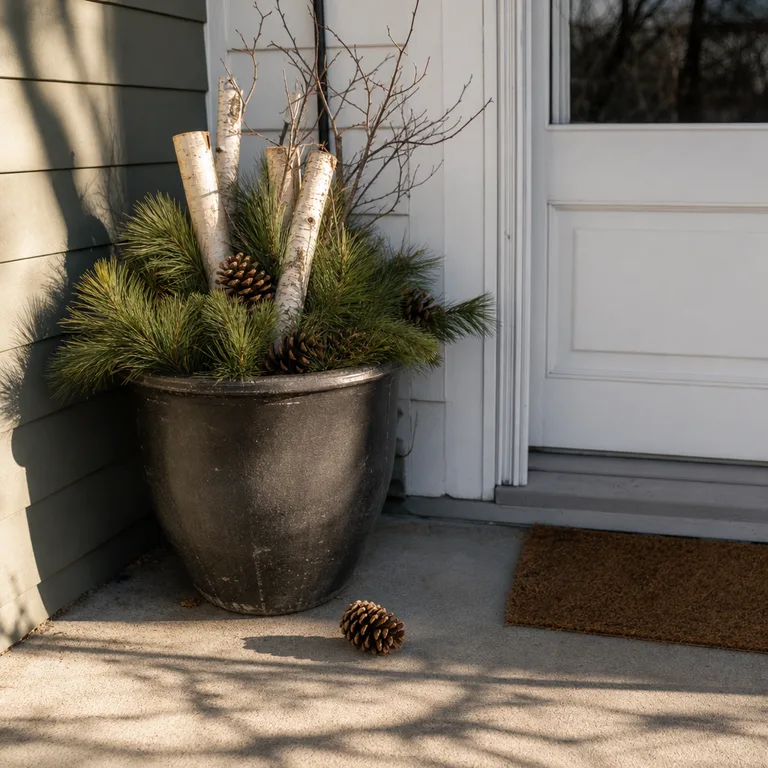
Set the tallest branches in a packed base of soil, sand, or gravel, then add pine around them so the pot looks full from the walkway. Gather fallen pinecones where permitted, or use saved cones from earlier seasonal displays; keep the arrangement narrow enough that it does not crowd the entrance.
If the pot needs attention after its summer use, see 8 Steps to Clean and Reuse Empty Garden Pots Before Replanting.
Worth knowing: Fresh pine can dry and shed needles, especially on a covered porch with winter sun or drying wind.
Related: 8 Steps to Clean and Reuse Empty Garden Pots Before Replanting
2.Red Twig Dogwood and Cedar in a Wide Bowl
Turn a broad, low bowl into a horizontal arrangement by laying cedar cuttings outward across the rim and grouping red twig dogwood stems in the center. The red stems bring clear color to a Christmas display while the low shape keeps the view open on a short step.
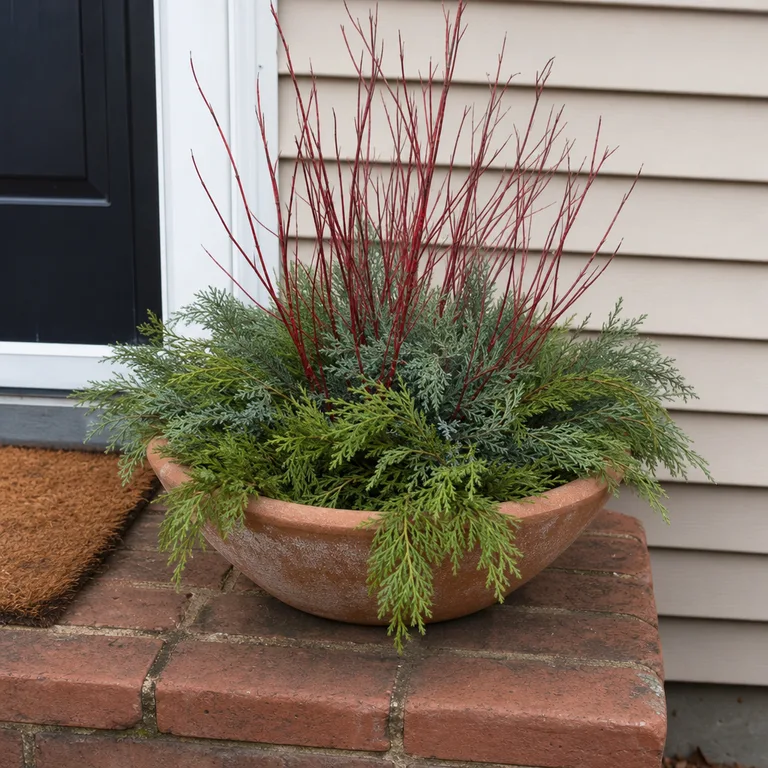
Use a few stem clusters rather than filling the center with a dense thicket. This approach makes a wide summer bowl look intentional and helps keep the arrangement below railings, door hardware, and nearby windows.
Fresh-cut cedar and dogwood work best when they are weighted into a stable base. Use locally suitable cuttings from the garden only if pruning is appropriate, and avoid collecting from parks or shared grounds without permission.
Worth knowing: A shallow bowl can become unstable in exposed wind, so it needs a heavy base and a protected placement.
3.Galvanized Pot With Magnolia Leaves and Greenery
Layer broad magnolia leaves behind fir, pine, or other evergreen cuttings in a galvanized tub. The glossy green leaf fronts and soft brown undersides add contrast, making a simple pot feel fuller without many separate decorations.
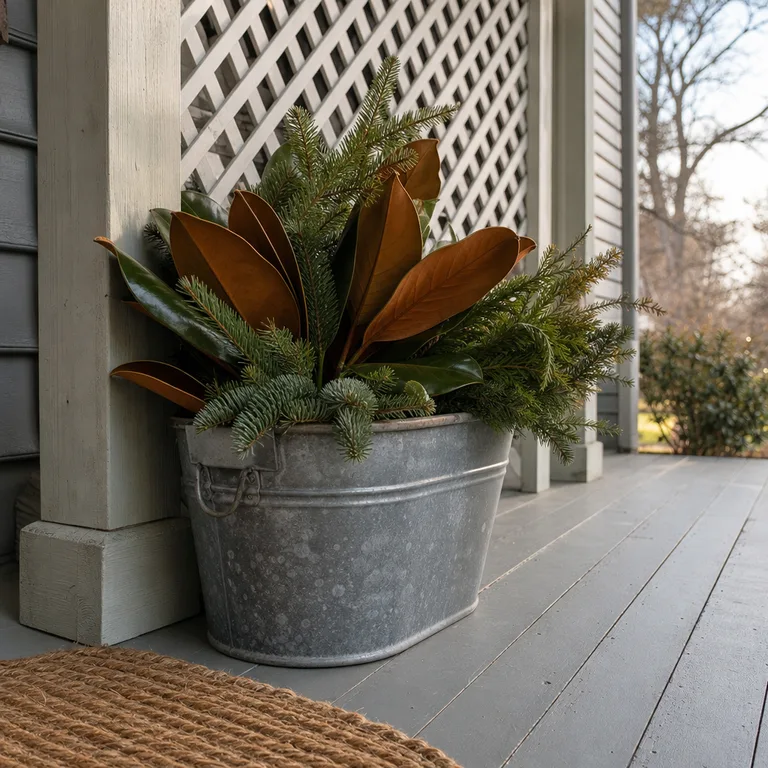
Fan the leaves around the back and sides first, then fill the front with shorter greenery. A covered porch is useful for this design because magnolia leaves look better when they are not constantly battered by rain, snow, and wind.
Reuse clipped evergreens from routine garden pruning where suitable, or choose durable faux stems for a pot that will be exposed for several weeks. Keep the tub away from bare wood if standing moisture tends to collect under it.
Worth knowing: Galvanized containers can rust over time, and magnolia leaves may curl or spot in harsh, wet weather.
4.Window Box of Spruce Tips and White Branches
Fill an empty window box with low spruce tips and a restrained row of white-painted branches. The long, horizontal shape brings Christmas detail to a porch without taking up landing space.
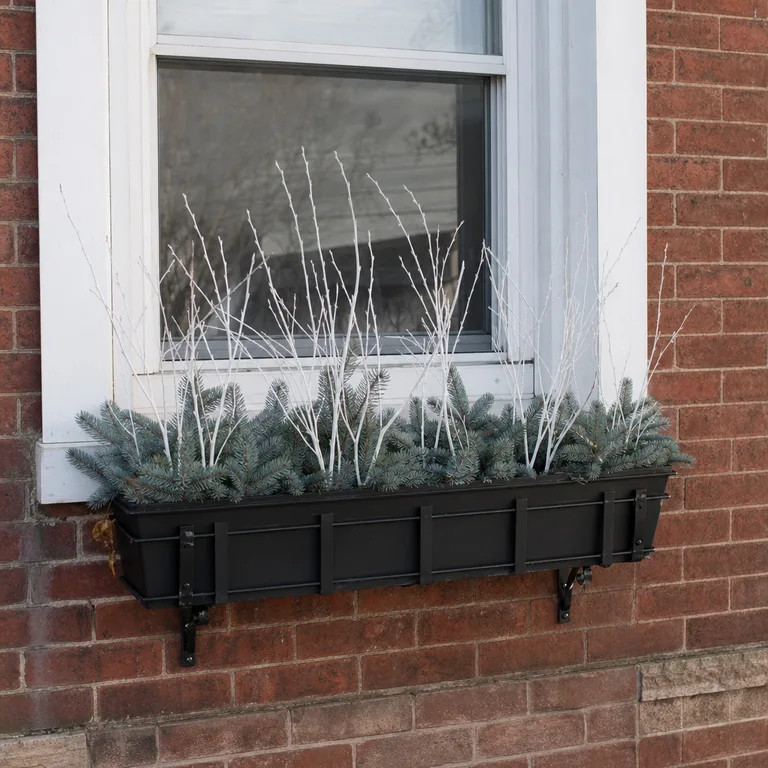
Keep the tallest branches below the window sill so they do not block light or create a cluttered view from inside. Set spruce along the full length first, then add branches at spaced intervals for a lighter outline rather than a dense wall of stems.
Use exterior-rated paint if branches will remain outdoors, and let it dry fully before arranging them. Check that the window box brackets and fasteners are sound, since wet greenery can add weight.
Worth knowing: Window boxes in full winter weather need secure mounting, and tall stems can catch wind around an exposed wall.
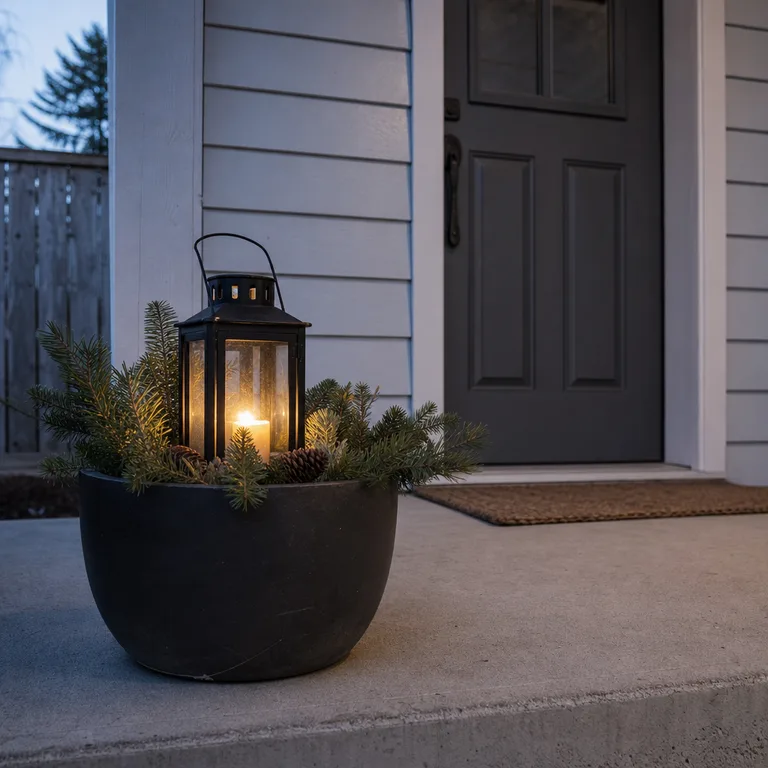
5.Evergreen Pot With a Small Lantern Centerpiece
Place a battery-operated outdoor lantern in the center of a wide, stable pot and surround it with a low ring of evergreen cuttings. It creates a clear focal point after dark while keeping the overall arrangement low enough for a small porch.
Build the greenery outward from the lantern so the glass panels stay visible and the door of the lantern can still open. Use a weather-rated flameless candle rather than an open flame, and position the pot where no one has to step around it.
A single lantern container can work well beside a narrow front step because it adds light without requiring several objects. Keep the walking path open and choose a pot with a broad base that will not tip if brushed past.
Worth knowing: Battery candles need occasional checking, and snow or heavy rain can obscure the lantern if the porch is fully exposed.
Related: 10 Budget Christmas Porch Ideas for a Narrow Front Step
6.Urn With Eucalyptus, Fir, and Dried Orange Slices
Use a raised urn for fir cuttings, silver-green eucalyptus, and a few wired dried orange slices. The mixed foliage softens the formal shape of an urn, while the orange slices add warm color without introducing plastic ornaments.
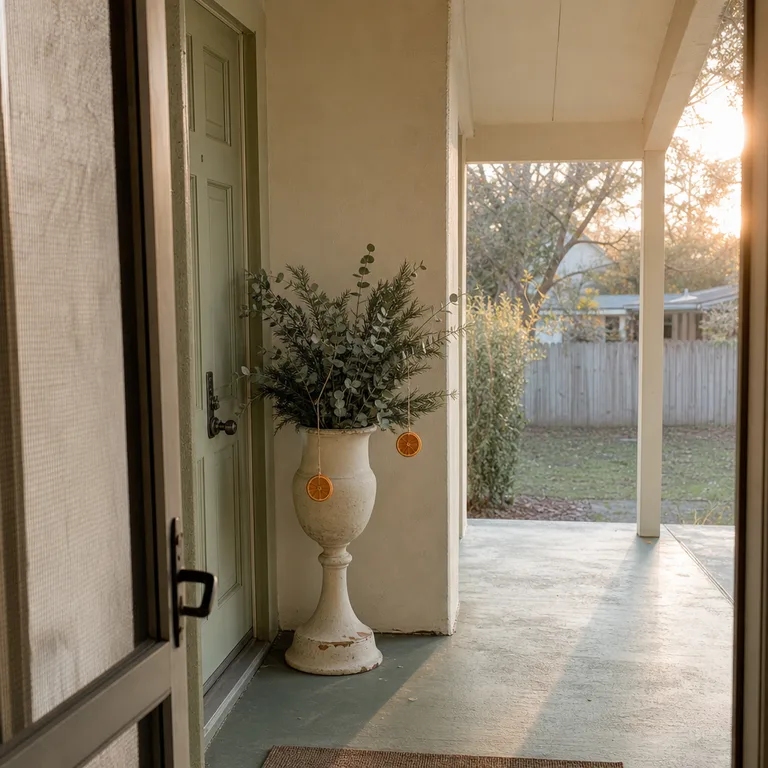
Place eucalyptus near the front where its rounded leaves can be seen, then tuck orange slices into the fir at different heights. Fine floral wire helps secure delicate pieces so they do not spin or fall in wind.
This arrangement suits a covered porch best. Dried fruit and eucalyptus generally hold their appearance better when they stay relatively dry, so use sturdier evergreen cuttings for a fully open location.
Worth knowing: Dried orange slices can darken, become fragile, or deteriorate quickly in repeated rain and snow.
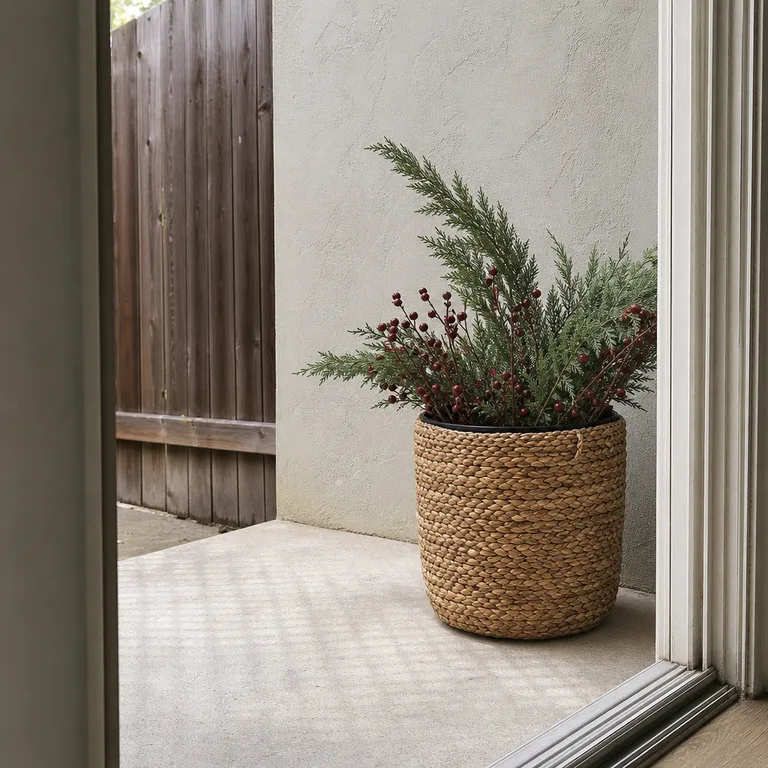
Keep the nursery pot inside the basket rather than planting directly into the weave. The inner pot holds the stems, allows the display to be lifted out easily, and helps prevent damp plant material from sitting against the basket.
Use faux picks with flexible stems so the arrangement can be reshaped after storage. Place the basket under cover and away from puddles, since natural fiber can weaken when it stays wet.
Worth knowing: A woven basket sleeve is not a good choice for an uncovered porch with frequent rain, snow, or standing water.
Related: 12 Container Garden Ideas for a Small Patio on a Budget
8.Paired Pots With Grapevine Stars and Juniper
Create a matched pair from two existing pots by filling each with low juniper cuttings and adding one grapevine star on a stake. Repeating the same materials on both sides of a step makes mismatched pots read as a deliberate set.
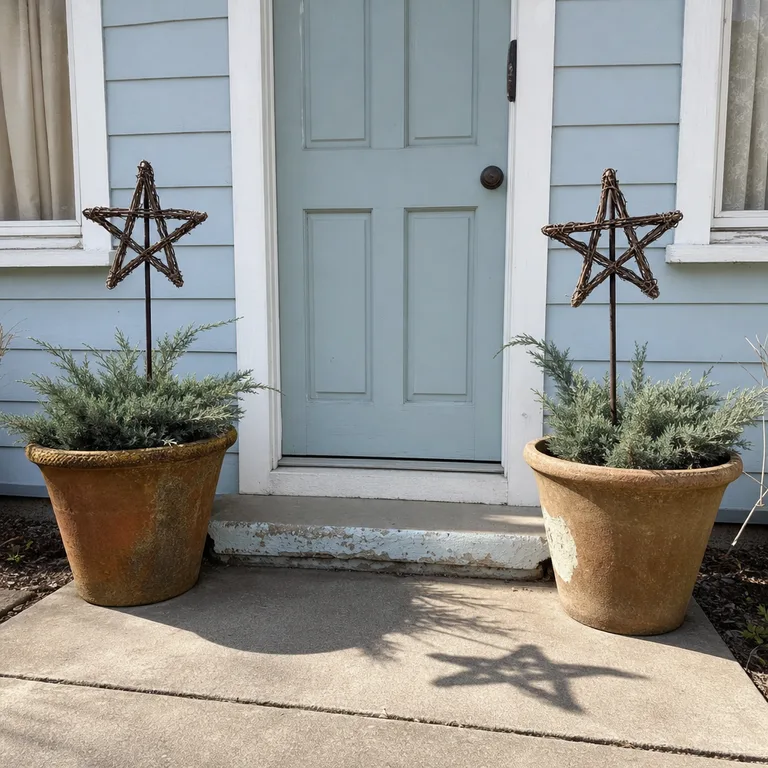
Keep the greenery low and set the stars at similar, not necessarily identical, heights. Push each stake deep into a firm weighted base, then test it gently so the stars do not sway into the path or strike the house in wind.
Use fresh juniper if it is available from suitable pruning, or use faux stems when local winter conditions are especially hard on cut foliage. Put the pair where both pots leave adequate room for people, packages, and a door that swings outward.
Worth knowing: Grapevine stars are light and can shift in breezy spots unless the stakes are firmly anchored.
About the author
Dana Ruiz, Senior editor
Dana writes about small-space living, storage and low-cost decorating.
Keep reading
7 Narrow Foundation Bed Layouts for the Front of a Small House
October 31, 2026

8 Small Front Yard Layouts for a Plain Rectangular Lawn
October 29, 2026
8 Christmas Gift-Wrapping Stations That Pack Away in a Small Home
October 31, 2026
9 Kids' School Paper Organization Ideas That Separate Forms From Keepsakes
October 31, 2026