8 Mug Storage Ideas for a Small Kitchen With Mismatched Cups
A mixed mug collection fits more safely when storage is planned around the tallest cup, widest handle, and pieces used most often rather than trying to make every shelf look uniform. These ideas keep the main counter clear while making sentimental mugs easier to reach without unstable stacks or crowded cabinet shelves.
As an Amazon Associate I earn from qualifying purchases.
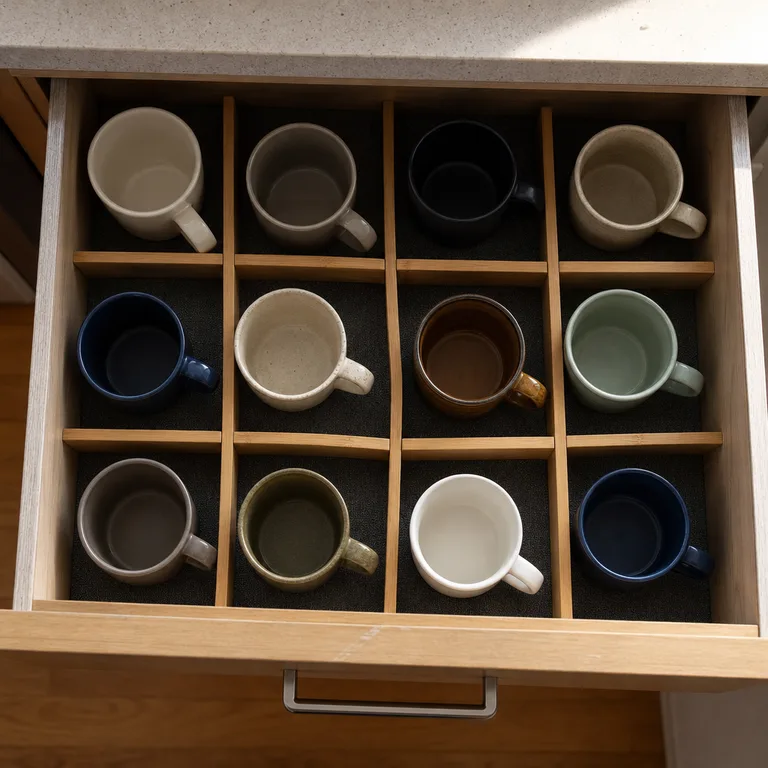
1.Group Tall and Short Mugs on Separate Shelf Zones
Give oversized mugs, travel tumblers, and tall souvenir cups their own cabinet zone with enough headroom. Keep standard mugs on a lower shelf where they can sit upright without being wedged beneath the shelf above.
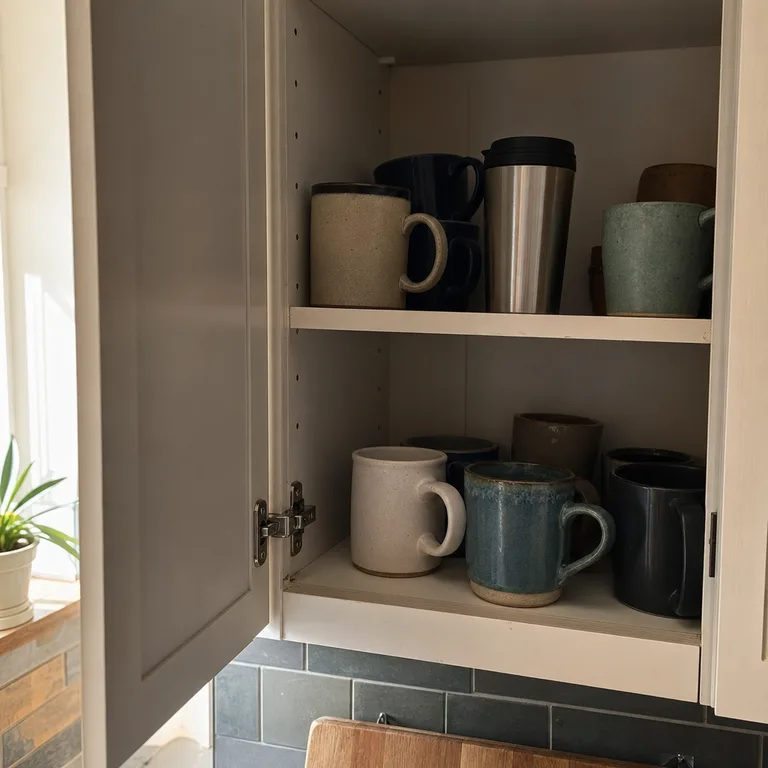
This makes the cabinet easier to scan and prevents a tall mug from forcing every other cup into an awkward arrangement. Adjustable shelves help, but a simple change in shelf assignments can work when the cabinet layout cannot be altered.
Put the mugs used least often in the higher or deeper part of the cabinet, and keep everyday cups at the front. Measure the tallest mug including any lid before moving a shelf, and retire chipped mugs from food use rather than storing them with the daily set.
Worth knowing: This only helps if the cabinet has at least two usable shelf zones; a very shallow cabinet may still be too tight for wide handles.
2.Turn Mug Handles in One Direction on a Cabinet Shelf
Arrange mugs in a single row with handles all facing the cabinet opening, or all turned toward the same side. Leave a small gap between handles so one mug can be lifted out without knocking into the next one.
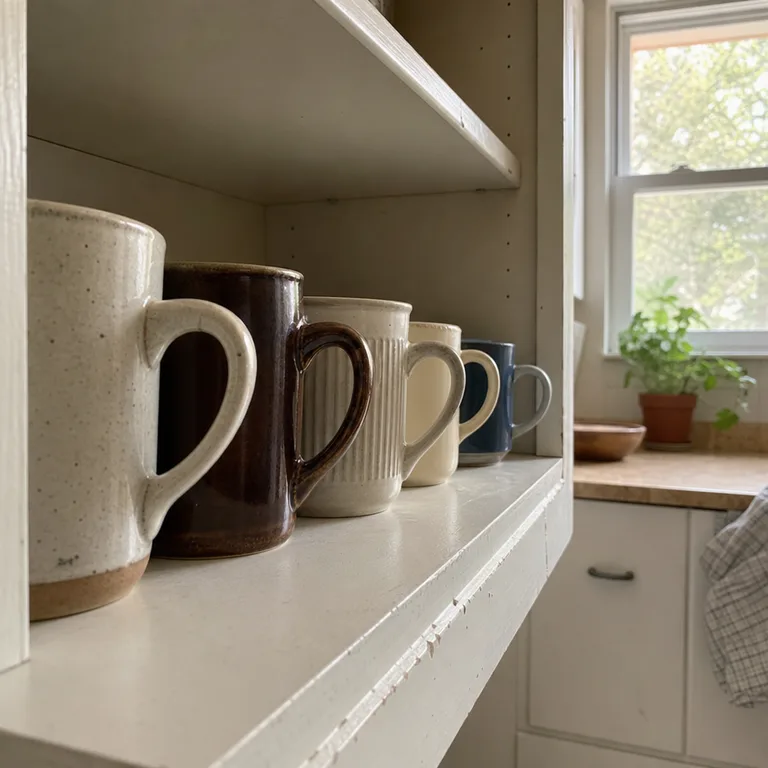
A consistent handle direction uses shelf depth more predictably than turning every mug to fit wherever it lands. It also makes mismatched shapes look calmer without requiring matching cups or containers.
Use a non-slip shelf liner if glossy cabinet shelves allow mugs to slide as they are moved. Keep the widest handled mugs at the ends of the row, where they are less likely to catch on neighboring cups.
Worth knowing: One-row storage can leave unused space at the back of a deep cabinet, especially when the mugs are small.
3.Add a Short Riser for Small Mugs and Cups
Use a short, sturdy riser to hold espresso cups, teacups, or low mugs above larger pieces. The larger mugs remain on the cabinet shelf below, where their height and handles have room.
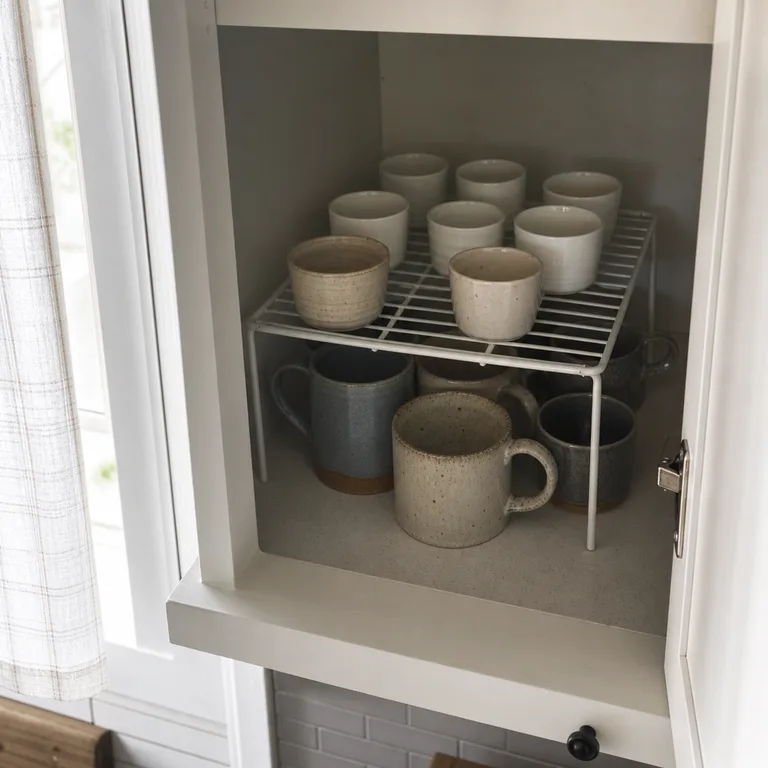
This creates a second layer without stacking ceramic directly on ceramic. It is especially useful for a collection that includes a few small cups that otherwise disappear behind full-size mugs.
Choose a riser with feet that sit flat on the shelf and a top surface wide enough for the cups being stored. Keep heavier stoneware on the lower level, and avoid overloading a lightweight wire riser.
Worth knowing: A riser reduces vertical clearance, so it will not suit cabinets already crowded by tall mugs.
4.Hang Light Mugs From Rated Under-Shelf Hooks
Under-shelf hooks can hold a limited group of lighter daily mugs beneath a strong cabinet shelf. Each mug hangs by its handle, which keeps the cups separated and opens up shelf space above.
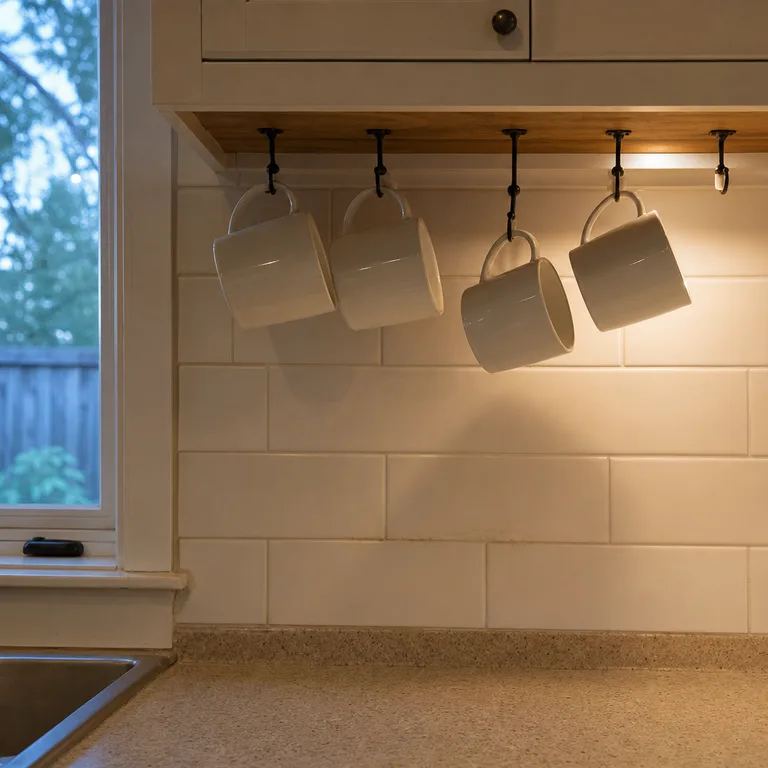
This works best for cups that are used often and do not need to be searched for in a crowded cabinet. The hanging row also keeps delicate handle shapes from pressing against other mugs.
Use hardware rated for the intended load and attach it to a shelf material that can support screws securely. Test the cabinet door clearance and leave room below the mugs so they do not hit the backsplash, counter, or items beneath them.
Worth knowing: This is not a safe choice for heavy oversized mugs, weak particleboard shelves, or hooks with an unverified load rating.
5.Lay Sturdy Mugs in Shallow Drawer Rows
A shallow drawer can store sturdy everyday mugs in individual rows when it is lined and divided. Lay each mug on its side only if the drawer closes without putting pressure on the handle or rim.
Drawer storage brings cups within easy reach and eliminates the need to reach over a front row on a high shelf. Dividers stop the mugs from rolling into one another each time the drawer opens.
Use a non-slip liner under the mugs and adjust dividers around the widest pieces first. Open and close the drawer slowly during setup to check for shifting, especially with thick stoneware or unusually shaped handles.
Worth knowing: Not every mug is suitable for side storage, and a drawer that closes tightly can chip rims or strain handles.
Related: 12 Small Kitchen Ideas That Free Up Prep Space Without Remodeling
6.Use a Small Tray for the Daily Mug Rotation
Place the few mugs used most often on a small handled tray inside a cabinet or pantry shelf. The tray can be lifted out as one group while special-occasion and sentimental mugs stay stored behind or above it.
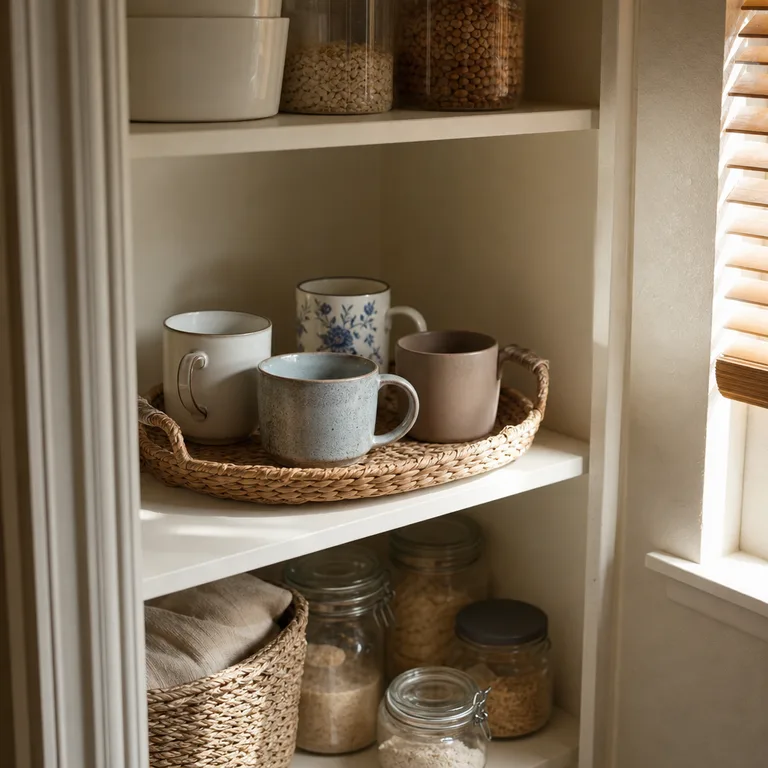
This separates the daily rotation from the larger collection without dedicating part of the counter to a coffee setup. It also makes cabinet shelves easier to reset when different household members reach for their usual cups.
Reuse a shallow serving tray, basket, or low bin that fits through the cabinet opening. Choose one with low sides so handles remain easy to grasp, and do not load it so heavily that it becomes difficult to lift.
Worth knowing: A tray uses some shelf footprint, so it is less effective when the cabinet is already too narrow for a row of mugs.
7.Keep a Compact Mug Tree at the Counter Edge
A compact mug tree can hold a tightly limited daily set in a counter corner that is not needed for chopping, dishwashing, or cooking. Keep it to a few mugs so it remains storage rather than becoming a full coffee station.
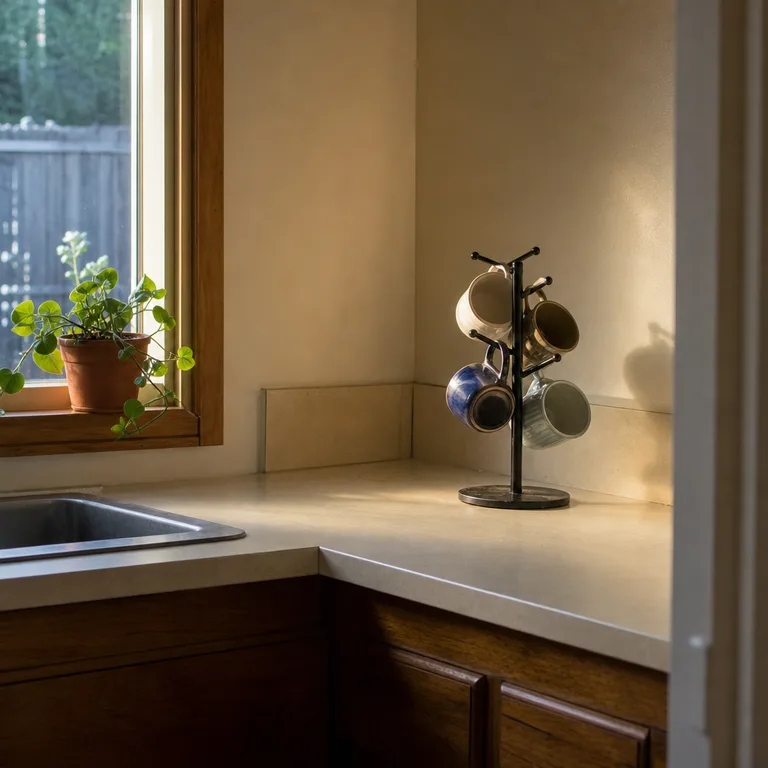
Vertical hanging storage frees cabinet room and prevents cups from being nested or stacked. It can also make the most-used mugs easy to grab without spreading supplies across the work surface.
Choose a stable base and place it away from the sink, cooktop, and main prep zone. A protective mat can help on delicate counters, and mugs should be spaced so their handles do not swing into one another.
Worth knowing: This does use a small amount of counter space and may not work in kitchens with very limited prep area.
Related: 10 Coffee Station Ideas for Kitchens With Very Little Counter Space
8.Mount Rated Wall Pegs on an Approved Surface
Install a short peg rail or individual wall pegs for a small display group of mugs, using mounting hardware suited to the wall and the intended load. This gives a few favorite cups a dedicated home while leaving cabinet shelves for the rest.
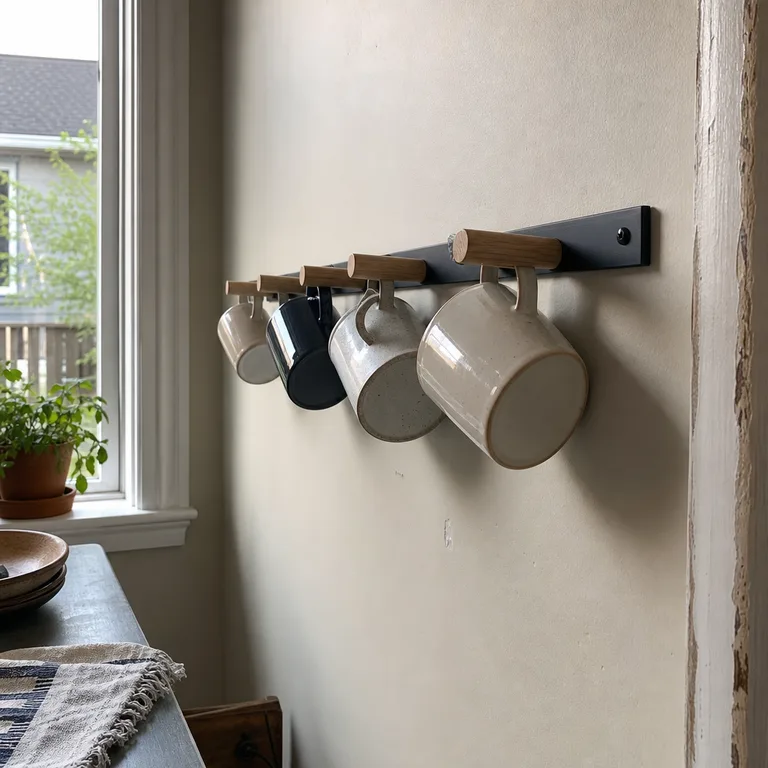
Wall storage can make sentimental mugs visible without mixing them into the daily cabinet shuffle. It also keeps handles apart, which is useful for wide or irregularly shaped mugs that waste space on a shelf.
Mount pegs only on a surface that can be securely fastened, following the hardware instructions for the wall type. Keep the rail away from grease, steam, and splash zones, and check rental rules before drilling into walls or tile.
Worth knowing: Installation can be difficult on tile, plaster, or rental-restricted walls, and unverified anchors should not be used for loaded mug storage.
About the author
Dana Ruiz, Senior editor
Dana writes about small-space living, storage and low-cost decorating.
Keep reading
8 Foil and Food Wrap Storage Ideas for Kitchens With Shallow Drawers
October 18, 2026
7 Broom and Mop Storage Ideas for Homes Without a Utility Closet
October 18, 2026
10 Small Appliance Storage Ideas for Kitchens Without an Appliance Garage
October 18, 2026
9 Water Bottle Storage Ideas That Keep Bottles and Lids Together
October 18, 2026