6 Parking Spots for a Folding Step Stool in a Small Kitchen
A folding step stool needs a consistent parking spot that keeps its retrieval path clear and does not interfere with cabinet doors, drawers, or daily traffic. These six locations work best after checking the stool’s folded depth, nearby door swings, and the manufacturer’s storage instructions.
As an Amazon Associate I earn from qualifying purchases.
1.Stand It Beside an Exposed Cabinet End
An exposed end panel at the end of a cabinet run can make a tidy parking place for a slim folded stool. Stand the stool upright and parallel to the cabinet so it reads as part of the run rather than an object left in the aisle.
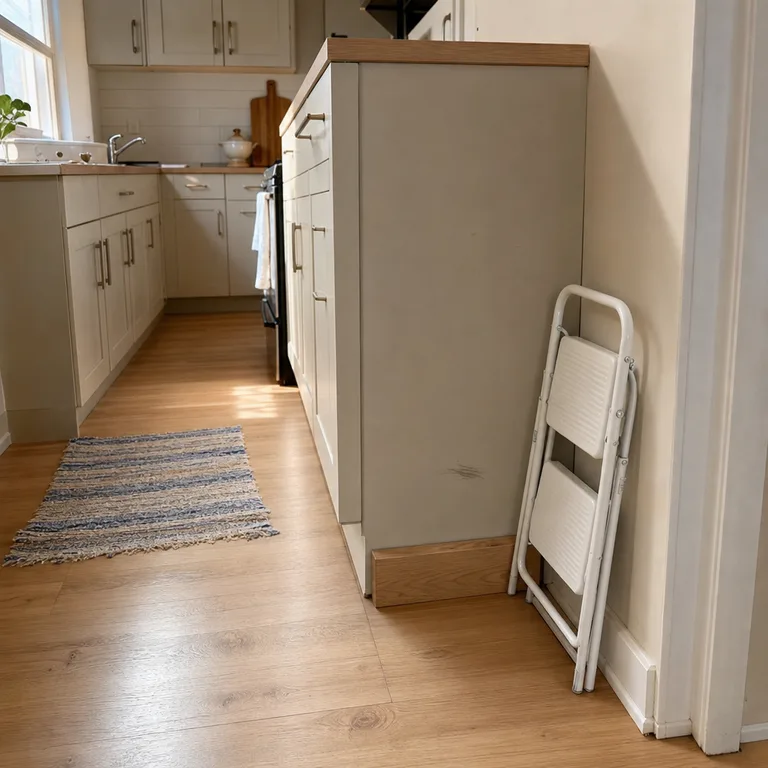
This works especially well near a kitchen entry or at the outer end of a peninsula, where there is wall-side space but no cabinet door to block. Add small non-slip pads or a shallow floor stop if the stool tends to slide on hard flooring.
Keep the stool clear of drawer pulls and leave enough room to walk past without catching a foot on its legs. A spot beside a cabinet is useful only if the stool can be lifted out in one motion rather than dragged across the traffic path.
Worth knowing: This location is not suitable for a narrow galley kitchen or any cabinet end that sits directly in the main walking lane.
2.Tuck It Along the Side of a Narrow Pantry
The side face of a tall pantry can hold a folded stool without taking up a base cabinet or countertop. Position it parallel to the pantry side, not in front of the door, so pantry access stays unchanged.
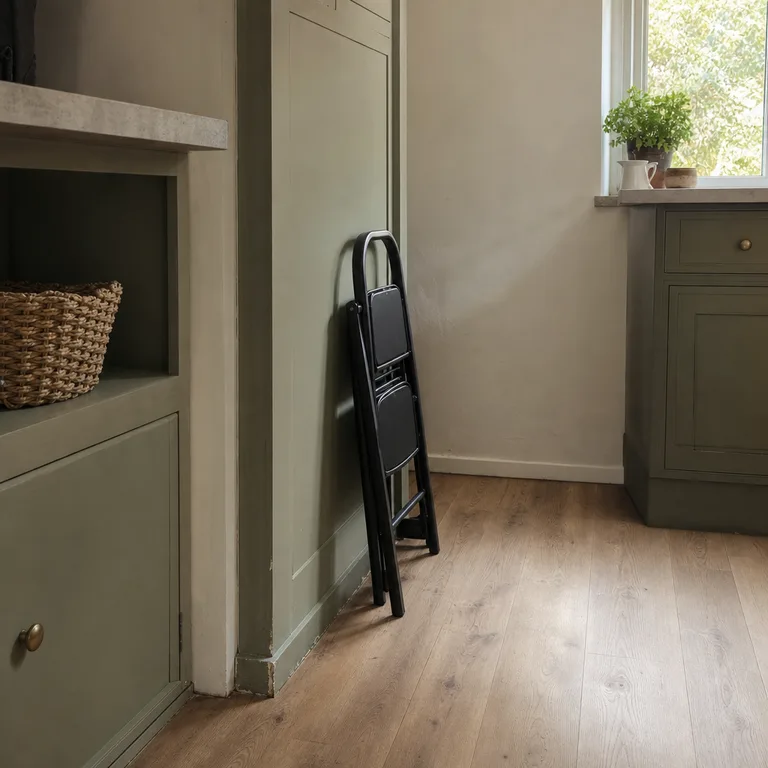
A stool in this spot is easy to grab when reaching upper pantry shelves, which makes it a practical match for the task. It can also soften the look of an unused narrow gap when its finish coordinates loosely with nearby hardware or flooring.
Check that the pantry door, adjacent cabinet doors, and nearby drawers can all open without striking the stool. A protective strip along the pantry edge can help if the stool frame rubs against painted cabinetry over time.
Worth knowing: This only works when the pantry has a true side clearance; do not squeeze the stool into a gap that makes the pantry door hard to open.
Related: 15 Small Pantry Organization Ideas Without Matching Containers
3.Store It Inside a Measured Base Cabinet
A deep lower cabinet can hide a folded stool completely, giving the kitchen a cleaner look between uses. Stand it against one cabinet wall or lay it flat only if it does not interfere with the door, hinges, shelves, or stored items.
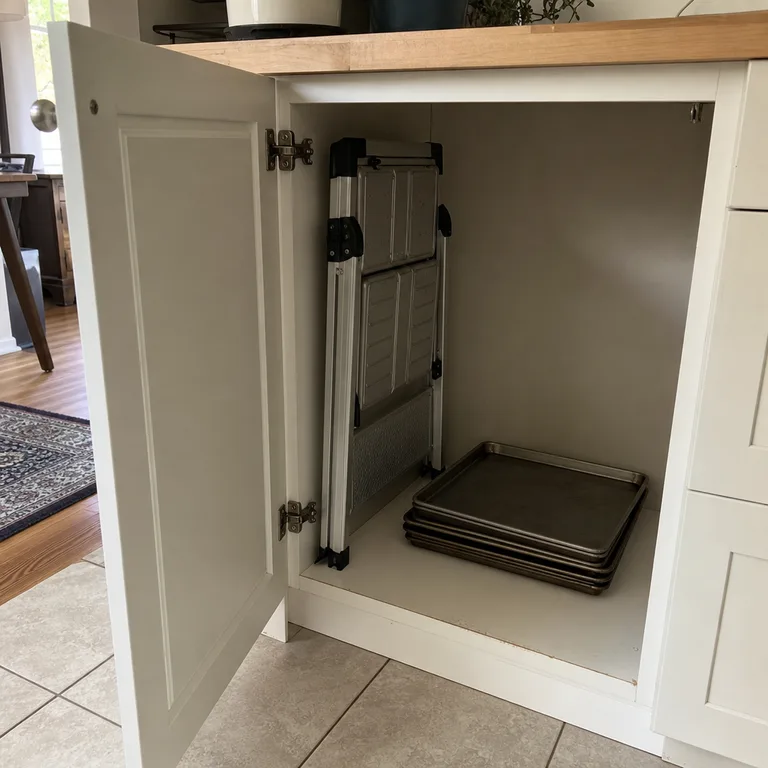
Measure the stool while folded, then compare it with the cabinet’s usable interior space rather than its outside dimensions. A less-used cabinet near baking sheets, serving pieces, or occasional cookware is often a better fit than a daily-use cabinet.
Use a simple liner or bumper where metal stool legs could scrape the cabinet floor or door. Keep plumbing, pull-out organizers, and appliance cords clear; the stool should come out without moving a stack of kitchen essentials.
Worth knowing: A stool stored in a cabinet is less convenient for frequent use, and it may not fit in cabinets with plumbing or fixed pull-out hardware.
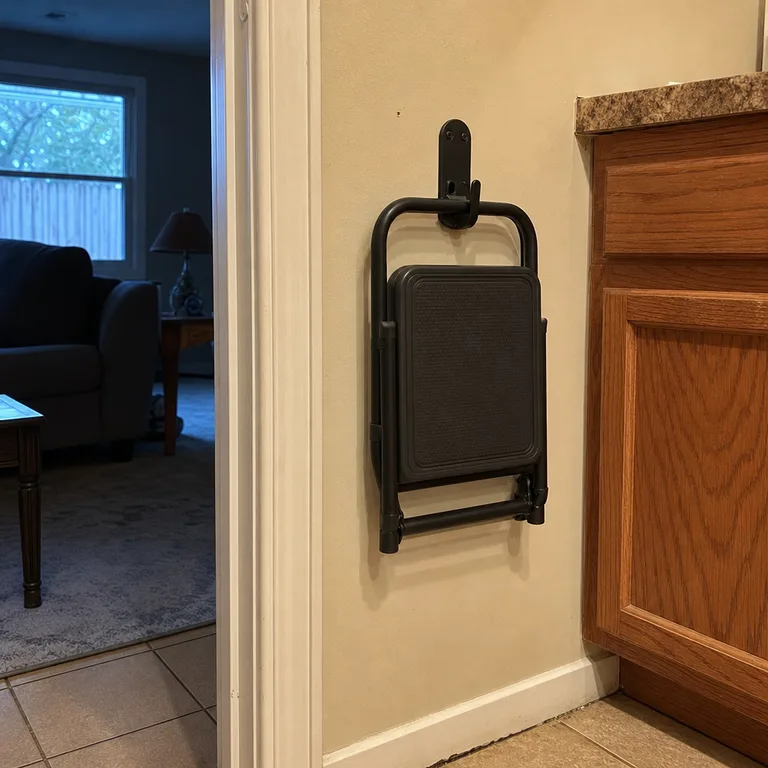
4.Hang It on a Rated Hook Near the Kitchen Edge
A folding stool with a suitable hanging point can sit flat against a wall near the outer edge of the kitchen. This gets it off the floor while keeping it close enough for upper cabinets and shelves.
Use a hook rated for the stool’s weight and install it according to the hardware instructions, with suitable backing for the wall type. Place it where the stool can hang flat without projecting into a doorway, cabinet opening, or path through the room.
This option works best on a small blank wall section beside a kitchen doorway or near a utility area. Check the stool manufacturer’s instructions first, since not every folding stool is designed to be stored by hanging.
Worth knowing: Wall storage depends on both an approved hanging method for the stool and secure hardware for the wall; it is not a good choice for weak or uncertain mounting surfaces.
5.Place It Behind a Utility Door With Full Swing Clearance
The wall behind a laundry, utility, or secondary kitchen door can be an out-of-sight parking spot for a folded stool. Set it against the wall rather than directly behind the door’s arc, leaving a visible gap when the door is fully open.
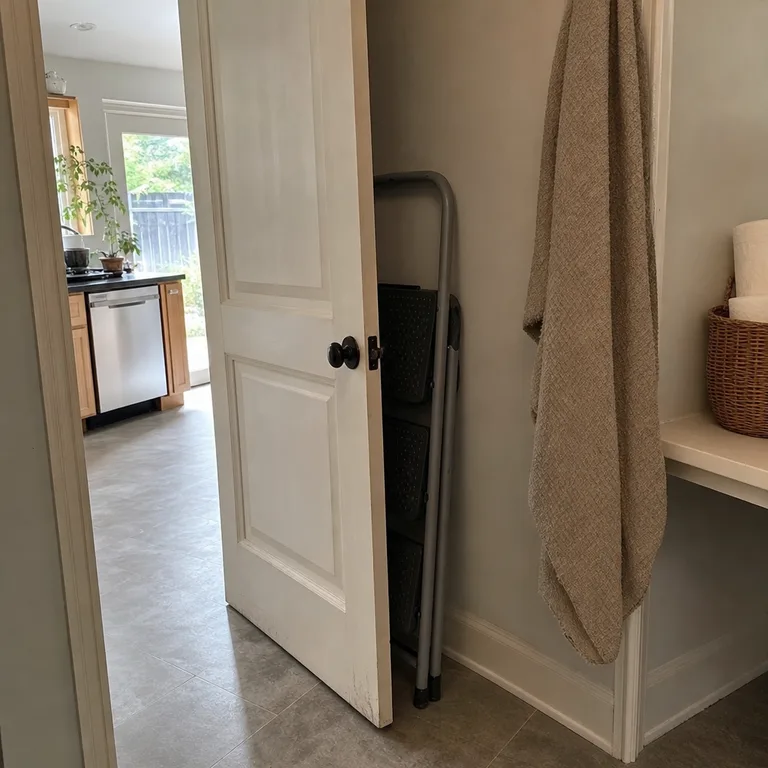
This location keeps the stool near household storage without putting it underfoot in the kitchen. It is especially useful when the door is normally open and the wall behind it would otherwise go unused.
Open the door all the way and test the full swing before treating this as storage. A door stop or bumper can protect the wall and stool, but it should not be used to force a door to stop short of its needed clearance.
Worth knowing: Do not use this spot if the door needs to open fully for laundry equipment, emergency access, ventilation, or a clear route through the room.
Related: 10 Small Laundry Nook Ideas for Homes Without a Laundry Room
6.Slide It Under a Fixed Open Shelf
A low folded stool can disappear beneath a fixed open shelf or shallow counter extension at the end of a cabinet run. The shelf creates a visual cover while leaving the stool accessible from the side or front.
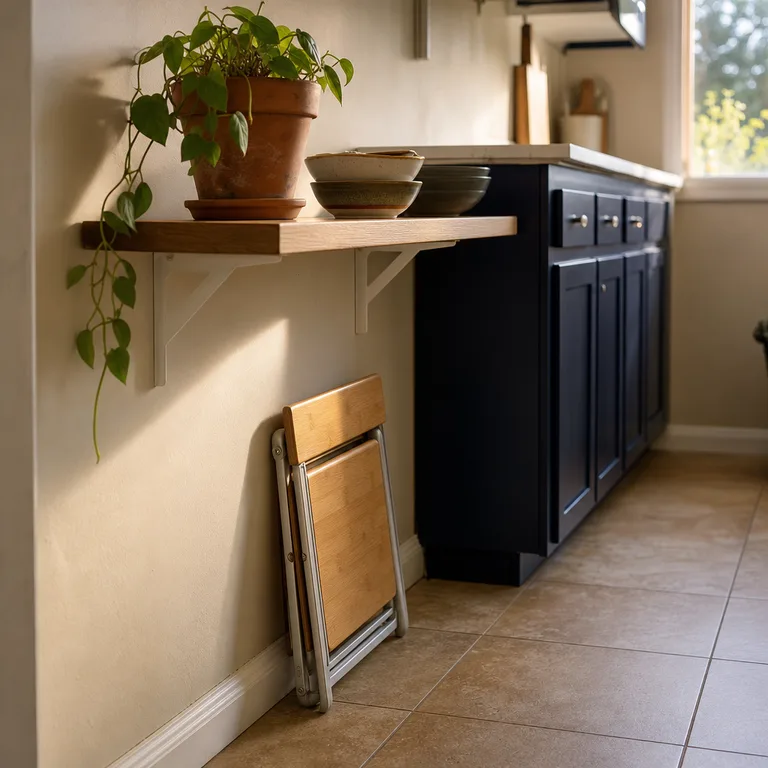
Choose a location with open floor in front so the stool can slide out cleanly. This can work well beneath a decorative shelf, a small coffee station shelf, or an end section that does not need toe-kick space.
Check for vents, outlets, and cabinet doors before assigning the space. Add soft pads to the stool feet if it may scrape tile or wood-look flooring each time it is pulled out.
Worth knowing: Avoid this arrangement where the stool would cover a heating vent, block an outlet, interfere with a toe-kick, or sit in front of a frequently opened cabinet.
About the author
Dana Ruiz, Senior editor
Dana writes about small-space living, storage and low-cost decorating.
Keep reading
10 Christmas Advent Calendar Displays for Small Homes
October 18, 2026
6 Entryway Parking Ideas for a Folded Stroller in a Small Apartment
October 18, 2026
8 Ways to Share a Small Kitchen Table Between Meals and Laptop Work
October 18, 2026
8 Mug Storage Ideas for a Small Kitchen With Mismatched Cups
October 19, 2026