8 Groundcover Planting Approaches for Gaps Inside a Small Flower Bed
Bare soil between established ornamentals can be filled with low, regionally appropriate groundcovers without turning the bed into a crowded mat. Match each planting pattern to the gap’s sun, moisture, and mature plant spread, and expect to weed and water new plants while they establish.
As an Amazon Associate I earn from qualifying purchases.
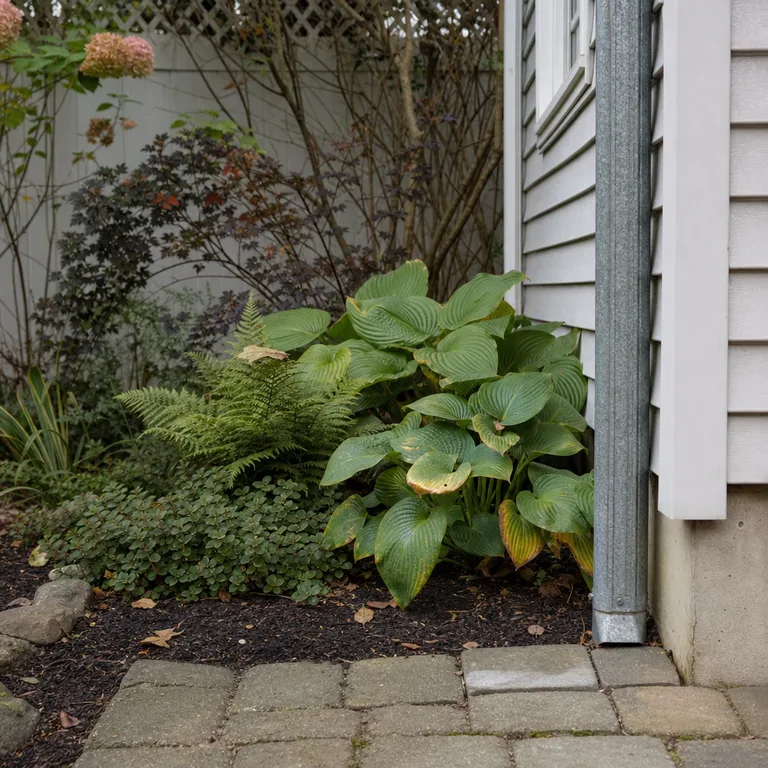
1.Repeat Low Clumps Along the Openest Spaces
Place matching low, clump-forming groundcovers in the widest spaces between existing ornamentals. Repeating one plant in a few open areas makes a mixed bed look connected without covering every bit of soil.
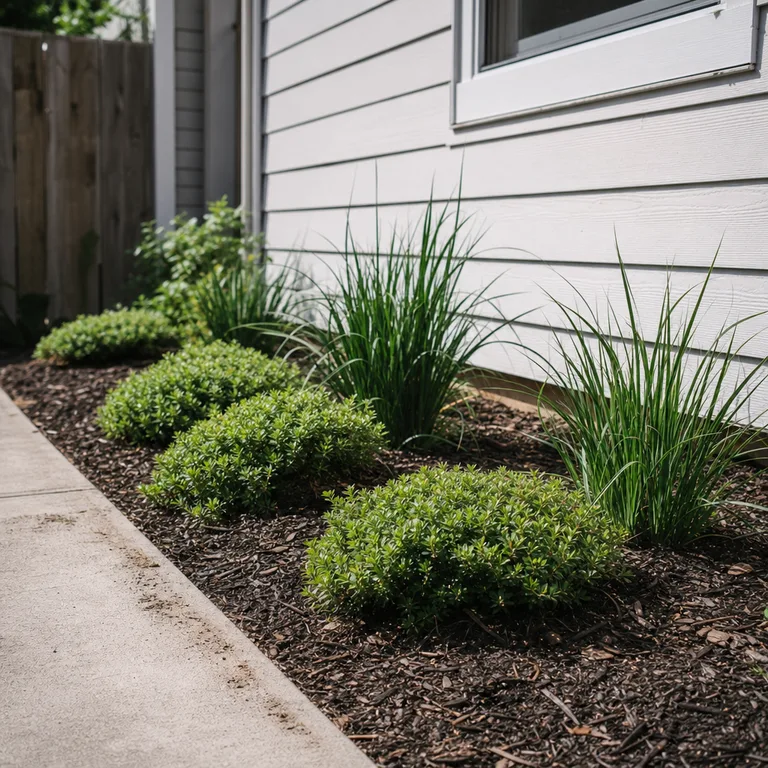
Set each clump far enough from perennial crowns that air can move around them and mature plants can still be divided later. Small starter plants are an affordable way to begin, and mulch can cover the remaining soil while the clumps widen.
Worth knowing: This approach will not hide a large bare area quickly, and clumps may need occasional division if they begin to press into neighboring plants.
Related: 8 Ways to Expand a Small Flower Bed With Divisions From Existing Perennials
2.Plant a Loose Plug Grid in a Broad Bare Patch
A broad open patch can take a staggered arrangement of small groundcover plugs. The offset rows look more natural than straight lines and help the planting fill in evenly over time.
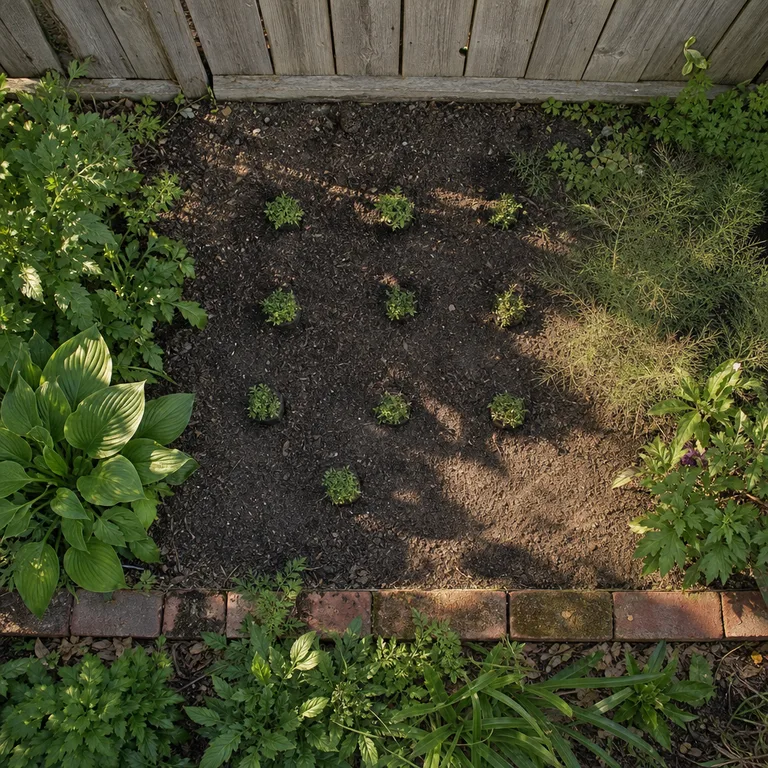
Use the plant’s stated mature width to determine spacing rather than planting tightly for instant coverage. Keep the patch weeded and watered during establishment, especially where surrounding perennials compete for moisture.
Worth knowing: A plug grid can look sparse for a while, and close spacing to speed up coverage can create crowding later.
3.Use a Drought-Tolerant Patch on the Sunny Side
Reserve the hottest, driest part of the bed for a groundcover suited to sun and fast-draining soil. This works well along patios, walls, or gravelly areas where taller plants may leave an open gap below them.
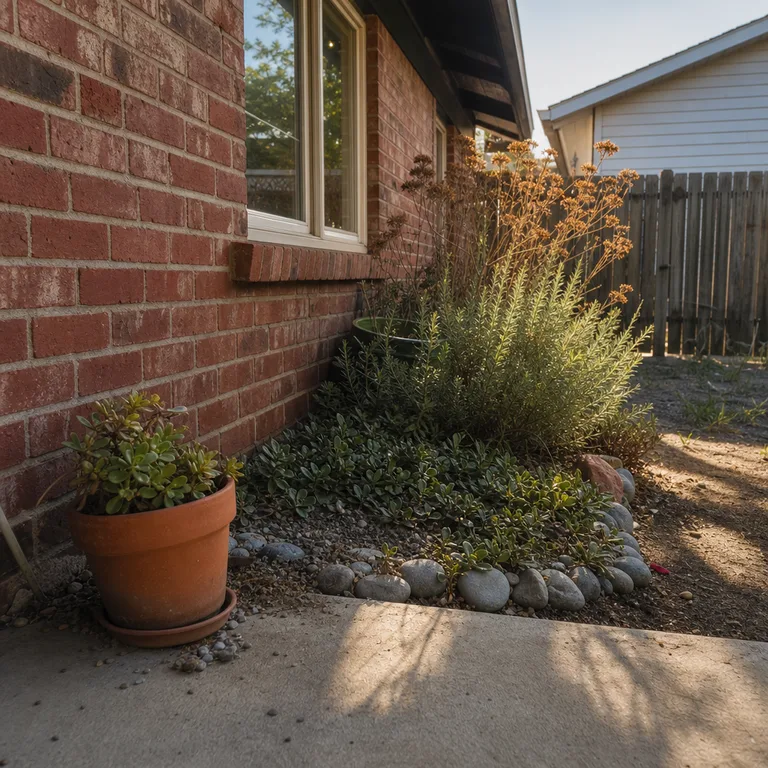
Prepare only the planting zone with compost or other suitable soil improvement if needed, then use a light mulch that will not trap excess moisture around the plants. Keep this patch separate from plants that need regularly damp soil, since one watering routine may not suit both.
Worth knowing: Even drought-tolerant groundcovers need regular watering while their roots establish, particularly during hot or windy weather.
4.Tuck Shade-Tolerant Plants Beneath Open Canopies
Gaps beneath airy shrubs and tall perennials can hold shade-tolerant groundcovers with foliage that remains useful after nearby flowers fade. Choose plants for the actual conditions under the canopy, including whether the soil stays dry from root competition.
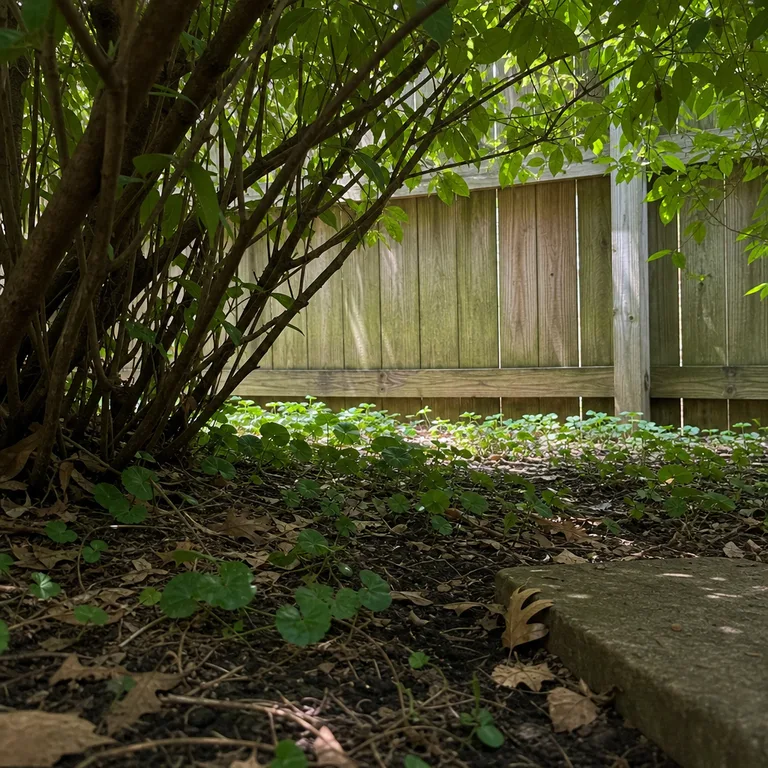
Plant carefully between larger roots instead of digging a wide, deep hole that damages the shrub. Leaf compost can help improve the surface soil, but a shallow layer is usually more practical than trying to rebuild soil around established roots.
Worth knowing: Deep shade and dense root systems can limit growth, so some areas may be better left mulched rather than heavily planted.
5.Mix Leaf Shapes for Coverage Between Bloom Seasons
Use a small mix of compatible groundcovers with clearly different leaf shapes, such as rounded leaves beside fine or ribbed foliage. The contrast gives an empty-looking area texture when surrounding perennials are between bloom periods.
Limit the mix to plants with similar light and moisture needs, then repeat each one in more than one spot rather than collecting many single plants. This keeps the bed readable and lets foliage do the visual work without relying on constant flowers.
Worth knowing: A mixed planting needs more careful editing than a single-species patch, since one faster-growing plant can overwhelm the others.
6.Test One Small Patch Around a Mature Perennial
Try a groundcover in a partial ring beside one mature perennial before using it throughout the bed. Leave clear soil around the perennial crown so moisture does not collect there and the main plant remains easy to inspect.
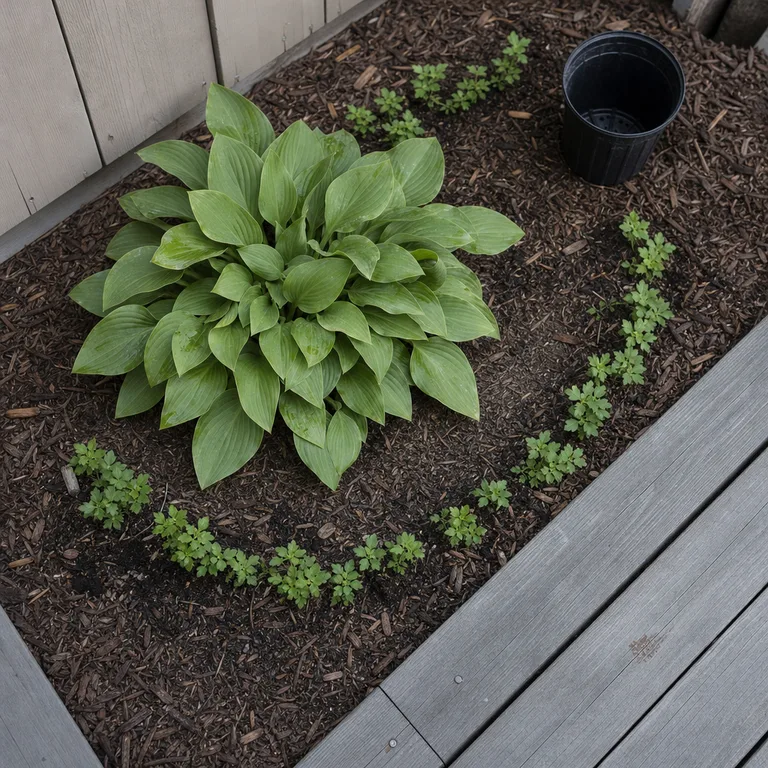
A few starter plants are enough for a trial patch, making this a lower-commitment way to see how quickly the groundcover spreads and how it handles the bed’s watering pattern. Watch for signs that the new plants are competing with the established perennial for water or space.
Worth knowing: A trial needs a full growing period, and sometimes longer, before it shows how the groundcover behaves in that location.
7.Make One Contained Interior Gap a Single-Species Carpet
Give one defined interior opening a calm, single-species groundcover carpet. A repeated leaf shape creates a visual pause among mixed perennials and makes the gap look planned rather than left over.
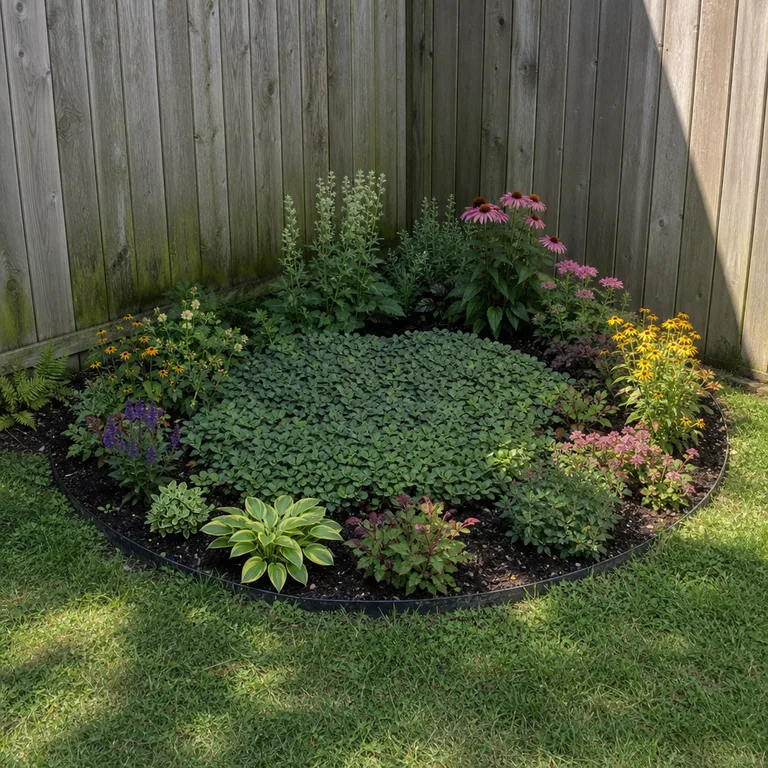
Choose a regionally appropriate, noninvasive plant with a spread that can be monitored easily in a small bed. A curved edge of mulch, pavers, or simple bed edging can clarify the patch, though the groundcover will still need occasional trimming or lifting at the boundary.
Worth knowing: A single-species carpet can become monotonous if it takes up too much of a very small bed.
Related: 12 Budget Garden Edging Ideas for One Small Flower Bed
8.Repeat Small Patches Around Separate Specimen Plants
Use the same groundcover in several small islands near separate shrubs or specimen perennials. These repeated patches create rhythm across an L-shaped or irregular bed while leaving each larger plant enough open ground for its mature footprint.
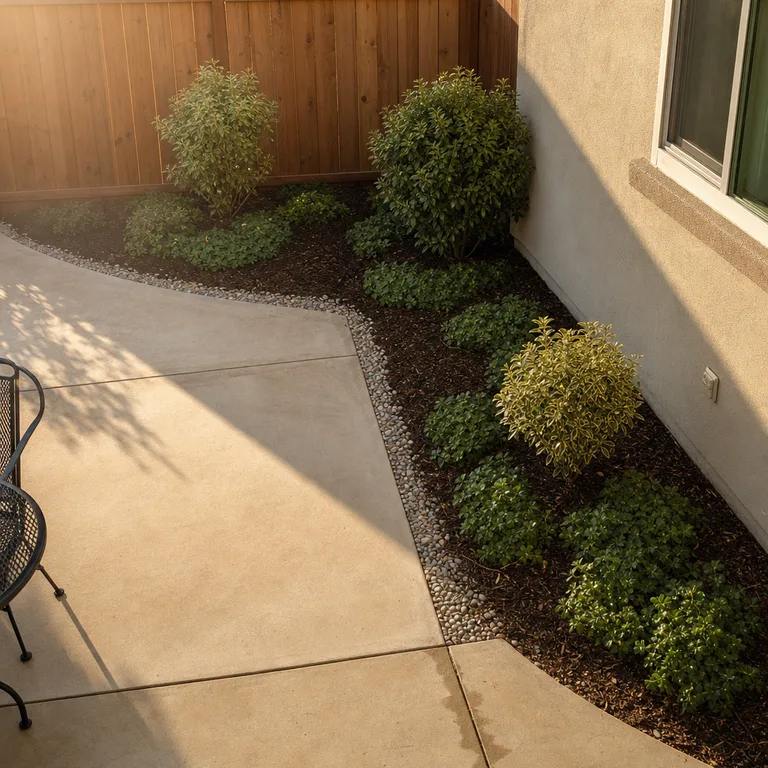
Keep every island away from trunks, crowns, and woody stems, and vary the outlines slightly so they do not look stamped into place. Planting a few small areas at a time is easier to water and weed than converting every gap in one weekend.
Worth knowing: Several small patches can look scattered if the specimen plants are too far apart or the groundcover is not repeated consistently.
About the author
Dana Ruiz, Senior editor
Dana writes about small-space living, storage and low-cost decorating.
Keep reading
7 Narrow Foundation Bed Layouts for the Front of a Small House
October 31, 2026
8 Christmas Porch Planters Using Empty Summer Pots
October 29, 2026
8 Small Front Yard Layouts for a Plain Rectangular Lawn
October 29, 2026
8 Christmas Gift-Wrapping Stations That Pack Away in a Small Home
October 31, 2026