12 Budget Garden Edging Ideas for One Small Flower Bed
A single flower bed is a practical place to compare edging materials because installation, mowing access, drainage, and upkeep are easier to judge at a small scale. These options range from simple surface borders to more permanent buried edges, with notes on where each works best.
As an Amazon Associate I earn from qualifying purchases.
1.Steel Landscape Edging for a Crisp, Mowable Line
Thin steel edging makes a sharp divide between turf and mulch without adding much visual bulk. When set nearly flush with the lawn, it gives mower wheels a clean line to follow and reduces the amount of trimming around a small bed.
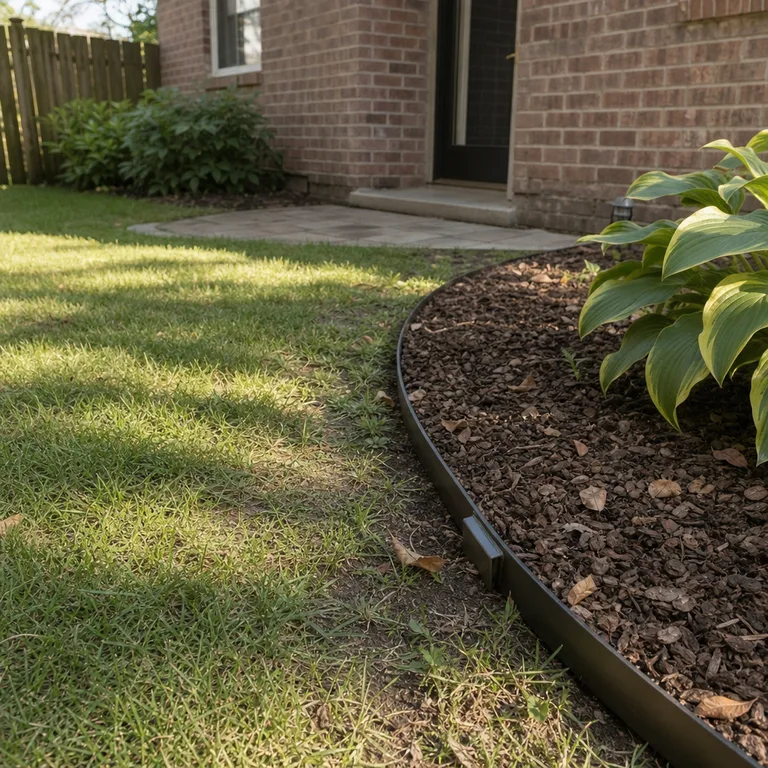
Use it for a simple curve or a straight foundation bed, taking time to align each section before securing the stakes. Steel is often a longer-lasting choice than lightweight plastic, but gloves are important because unfinished edges can be sharp; call for local utility marking before digging any deeper sections.
Worth knowing: Steel edging can shift or show uneven joins if the trench is shallow, rocky, or poorly leveled.
Related: 15 Budget Landscaping Ideas That Make a Small Yard Feel Finished
2.Brick-on-Edge Border for a Traditional Garden Bed
Clay bricks set upright create a substantial border that suits older homes, brick steps, and traditional planting schemes. Their raised edge helps keep mulch contained and gives a small flower bed more presence from the sidewalk or porch.
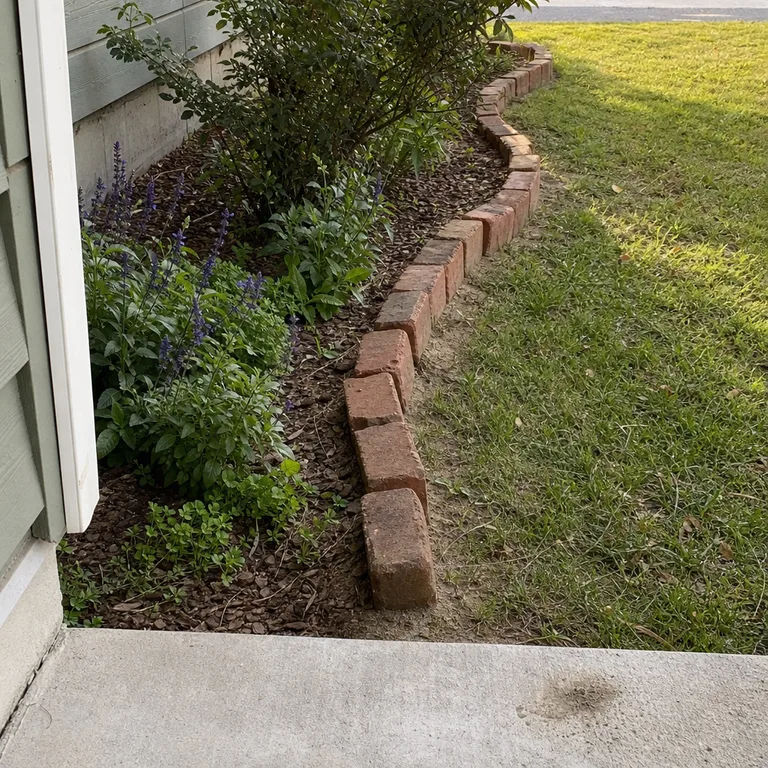
Reclaimed bricks can work well if their sizes are reasonably consistent. Dig a narrow trench, add a compacted base, and set the bricks close together; this extra preparation matters in cold climates where frost heave can push individual bricks out of line.
Worth knowing: An upright brick edge takes more digging and leveling than a simple surface border.
3.Flat Brick Soldier Course for an Easy Mowing Strip
Bricks laid flat around a bed create a practical mowing strip rather than a tall border. A mower wheel can run partly on the bricks, which cuts down on string-trimming and makes an oval or gently curved bed easier to maintain.
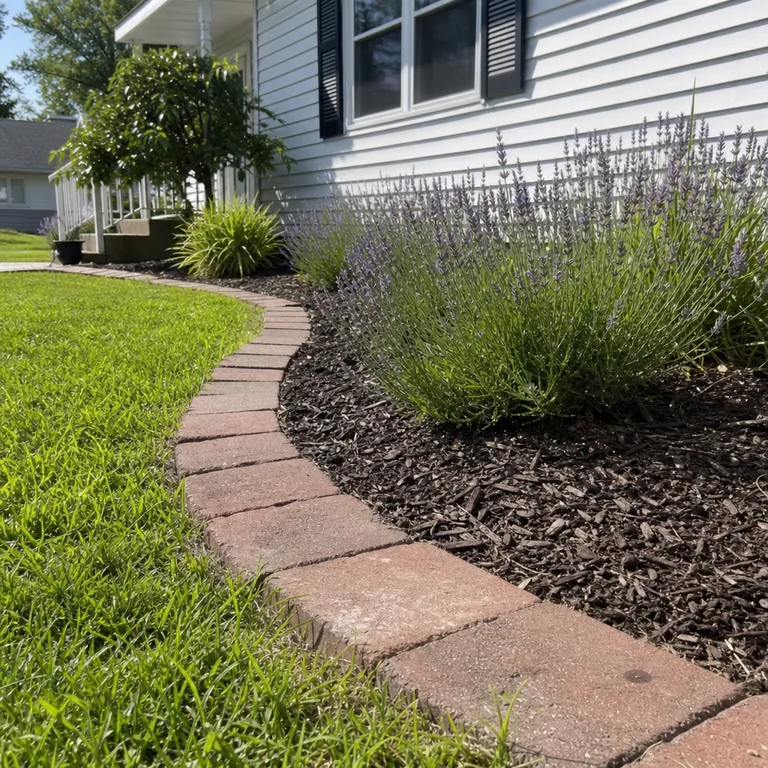
Lay the bricks on a firm, level base and keep their top surfaces close to lawn height. Used bricks with surface wear can look at home in a casual yard, while new matching bricks create a tidier patio-adjacent edge.
Worth knowing: Roots, settling soil, and freeze-thaw cycles can leave individual bricks uneven and in need of occasional resetting.
4.Natural Fieldstone Edge for an Informal Planting Bed
Irregular fieldstones give a bed a relaxed edge that fits shade gardens, native-style planting, and less formal side yards. Their varied shapes mean there is no need to cut materials precisely or force a perfectly straight line.
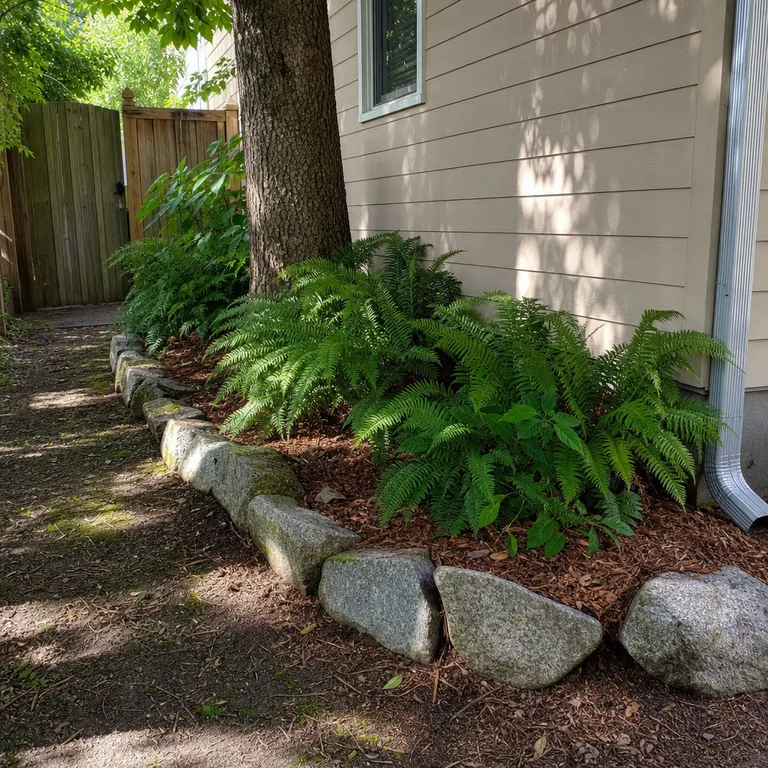
Choose broad, stable stones and nest their lower edges slightly into the soil so they do not rock when stepped near. Set them close enough to limit grass creeping through, while avoiding deep gaps that collect clippings, leaves, and weeds.
Worth knowing: Stone edges are not as easy to mow alongside as a flush metal or brick strip.
Related: 10 Shade Garden Ideas for a Small Yard on a Budget
5.Concrete Paver Edge for a Straight Patio-Bed Divide
Standard concrete pavers make a clean, durable boundary beside a patio, driveway, or straight walkway. Their level tops can serve as a mowing guide while visually tying a planting bed to nearby hardscape.
This is a good use for leftover pavers or a small batch of basic square units. Remove loose soil, add a compacted base where needed, and check the slope so water drains away from the house instead of pooling along the edge.
Worth knowing: Pavers can settle unevenly in poorly drained ground if the base is rushed.
Related: 12 Small Patio Seating Ideas on a Budget
6.Flexible Plastic Edging for Curved Beds
Flexible plastic edging follows round beds and broad curves without the cutting required for brick, stone, or pavers. It creates a dark, narrow line that disappears behind mulch while keeping grass from growing directly into the bed.
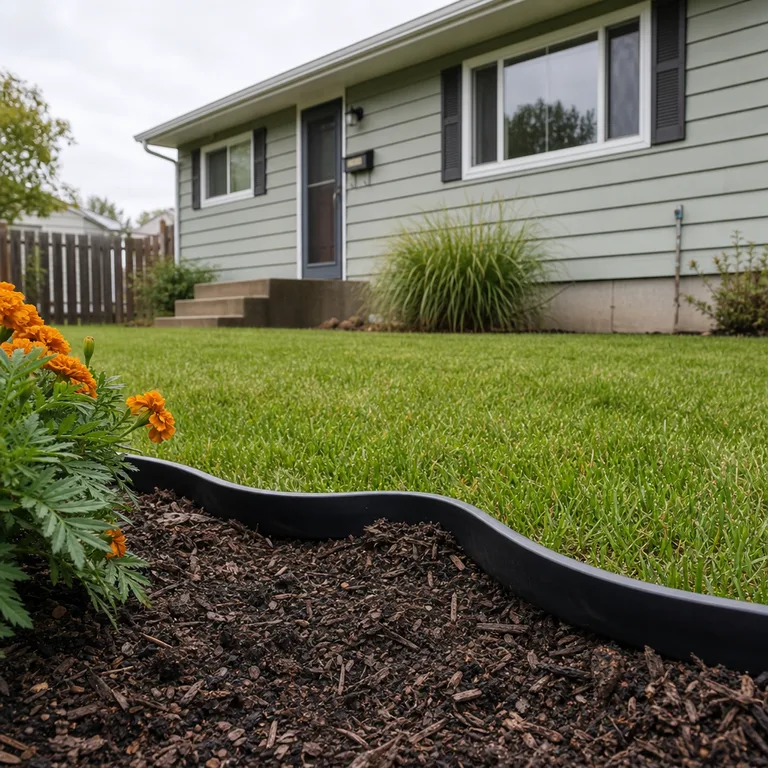
Install it in a trench deep enough that only a small top edge shows, then use enough stakes to hold the curve firmly. It is a manageable material for a beginner, especially on soil that is free of large roots and buried stones.
Worth knowing: Mower wheels and shifting soil can lift lightly installed plastic edging over time.
7.No-Dig Wood Grain Edging for a Quick Defined Border
Interlocking no-dig edging gives a narrow foundation bed a finished outline with less excavation than buried materials. The molded wood-grain look can soften the transition between mulch and lawn without introducing real wood that may rot at soil level.
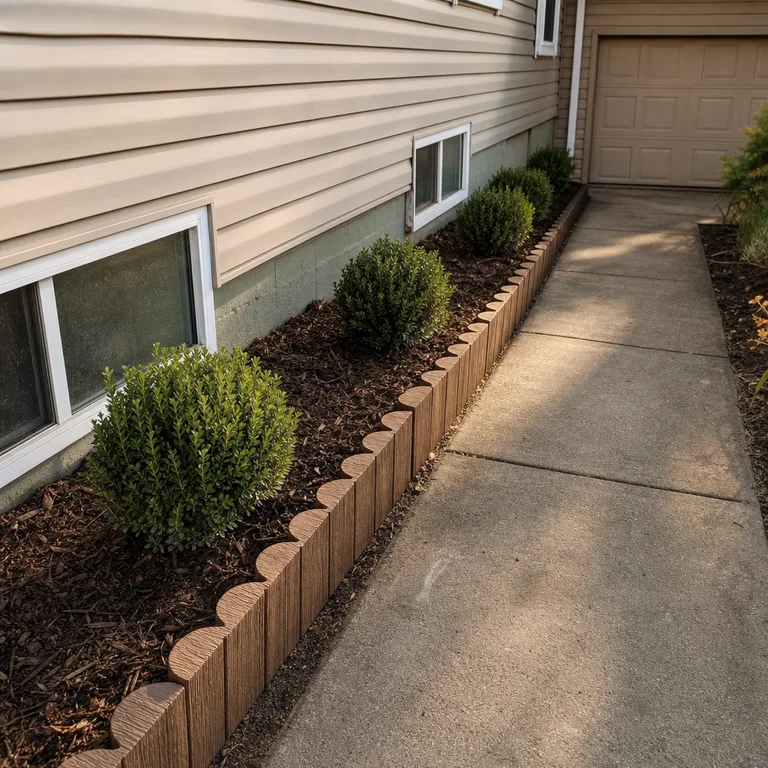
This option works best for shallow, mostly straight runs in loose soil. Position the sections carefully, connect them evenly, and drive the spikes straight down; compacted clay, rocks, and thick tree roots can make the installation much harder.
Worth knowing: No-dig sections are less reliable in ground where stakes cannot grip securely.
8.Short Timber Border for a Raised-Looking Bed
Short landscape timbers give a flat planting area the appearance of a shallow raised bed. They are useful for holding mulch on a gentle slope and for making a rectangular bed read clearly beside a fence or patio.
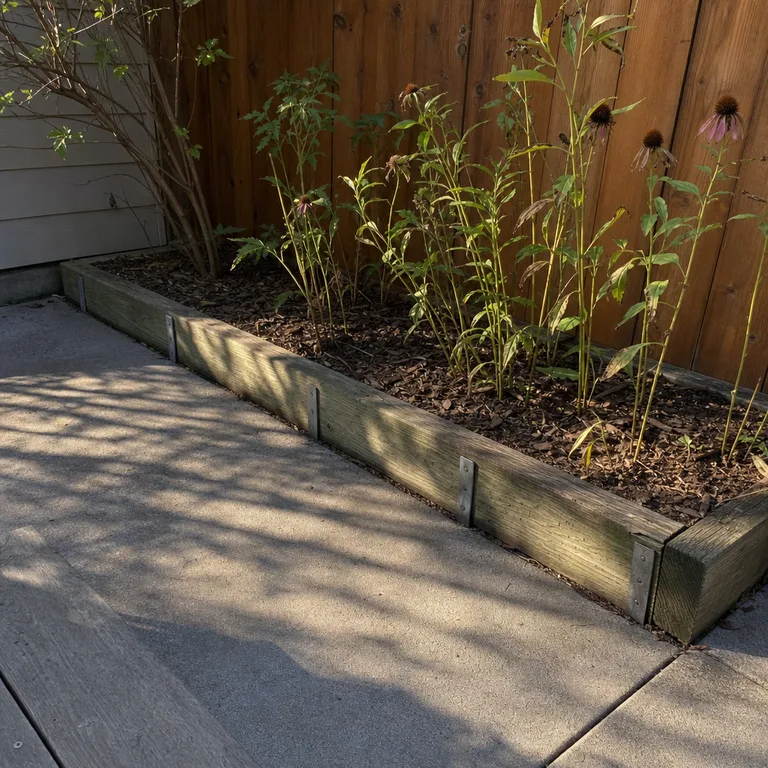
Use rot-resistant, outdoor-rated material and anchor the timbers so corners do not spread apart. Keep the bed from staying constantly wet, since standing moisture shortens the useful life of wood and can encourage shifting.
Worth knowing: Wood edging eventually weathers and is a poor fit for a spot with persistent drainage problems.
9.Woven Willow Border for a Cottage-Style Bed
Low woven willow panels add texture to a compact flower bed and work especially well around informal annuals, herbs, and cottage-style perennials. The border is more decorative than structural, so it can define a planting area without making the yard look rigid.
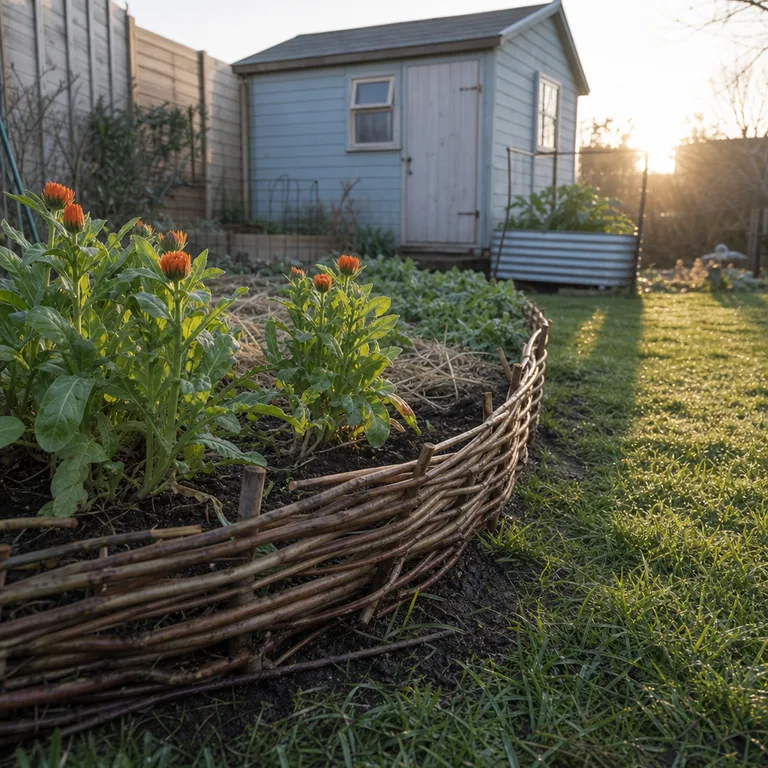
Set it where it can be seen from a path, patio, or window, and keep mulch pulled back slightly from the woven stems. It needs little digging compared with buried edging, but the stakes should go into reasonably workable soil.
Worth knowing: Willow weathers faster in wet climates or where irrigation regularly soaks the border.
10.Terracotta Pot Border for a Movable Edge
Small terracotta pots or saucers turned upside down make a playful, movable edge around a compact circular bed. This approach lets a beginner test a border shape without committing to a trench, permanent stakes, or heavy materials.
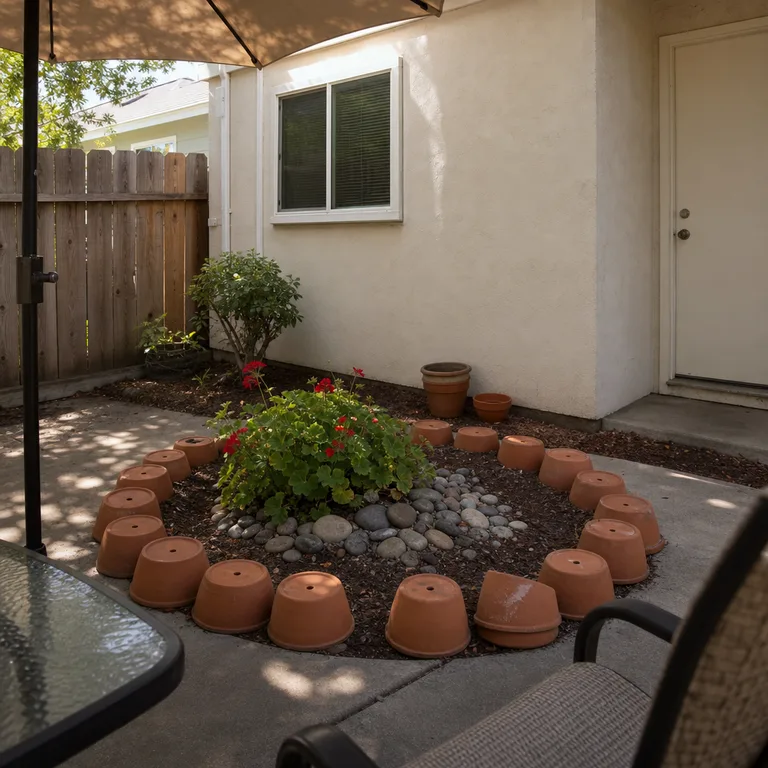
Keep the pieces close together and press them lightly into the soil so they look intentional rather than scattered. A pot border is most useful where mowing is already easy, since its uneven surface does not create a reliable mower strip.
Worth knowing: Unglazed terracotta can crack during freeze-thaw weather unless it is protected or stored seasonally.
11.Gravel Trench Edge for a Drainage-Friendly Line
A narrow gravel trench makes a visible separation between lawn and mulch without creating a raised wall. It suits drought-tolerant beds and sunny sites where a looser, more natural transition fits the planting style.
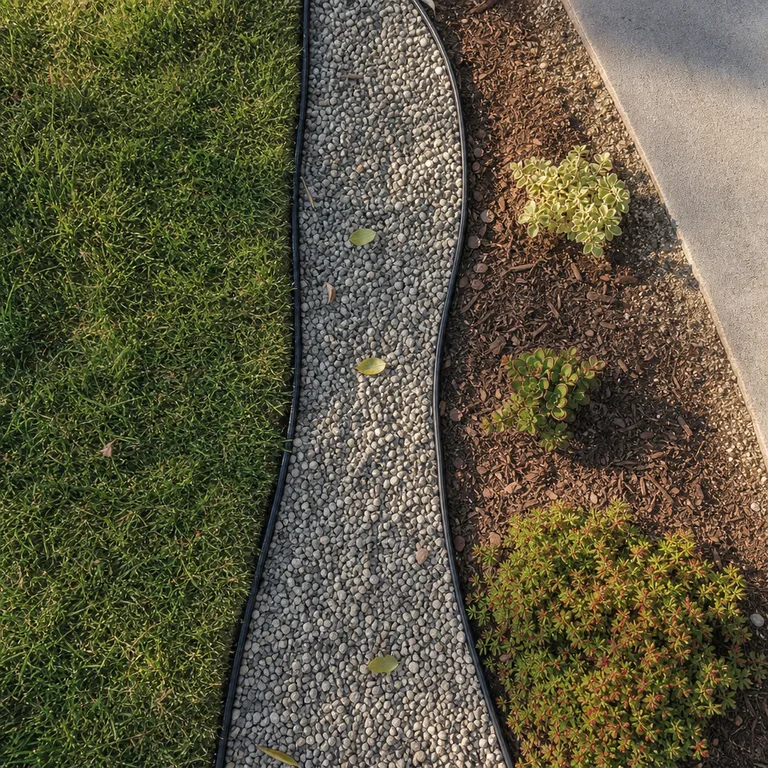
Excavate a shallow, even channel and use a stable separator along the bed side to help keep gravel from mixing into the mulch. Gravel works best where fallen leaves are limited, because leaf litter is tedious to pick out and can turn into weeds if left in place.
Worth knowing: Gravel tends to migrate into the lawn and bed unless it is contained and maintained.
12.Mulch-and-Spade Edge for the Lowest-Profile Border
A hand-cut trench is the simplest way to make a clean lawn-to-mulch edge without buying border material. The narrow shadow line makes a small shrub or flower bed look more deliberate while leaving the overall yard feeling open.
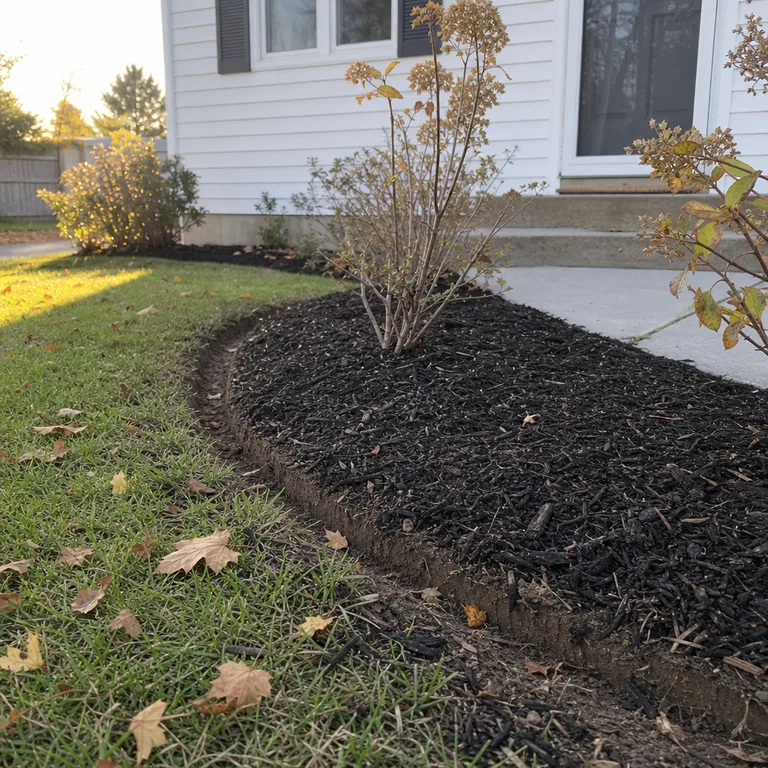
Use a sharp half-moon edger or border spade to cut a smooth curve, then pull soil back toward the bed and refresh the mulch as needed. This is easiest on level ground; verify local utility locations before cutting any unusually deep trench or working near service lines.
Worth knowing: A spade-cut edge needs refreshing during the growing season as grass creeps back toward the bed.
About the author
Dana Ruiz, Senior editor
Dana writes about small-space living, storage and low-cost decorating.
Keep reading
10 Outdoor Lighting Ideas for a Small Yard Without New Wiring
September 28, 2026
10 Small-Yard Lawn Alternatives You Can Try One Patch at a Time
September 26, 2026
10 Budget Patio Privacy Ideas for a Small Seating Area
September 25, 2026
10 Pot Lid Storage Ideas That Stop the Cabinet Avalanche
September 28, 2026