8 Budget Driveway Border Ideas for a Finished Front Yard
A narrow strip beside a driveway needs plants that stay clear of car doors, tires, and sightlines rather than simply filling every open inch. These eight approaches work with existing paving and soil conditions, while accounting for mature plant width, reflected heat, road salt, and the access needed to maintain the area.
As an Amazon Associate I earn from qualifying purchases.
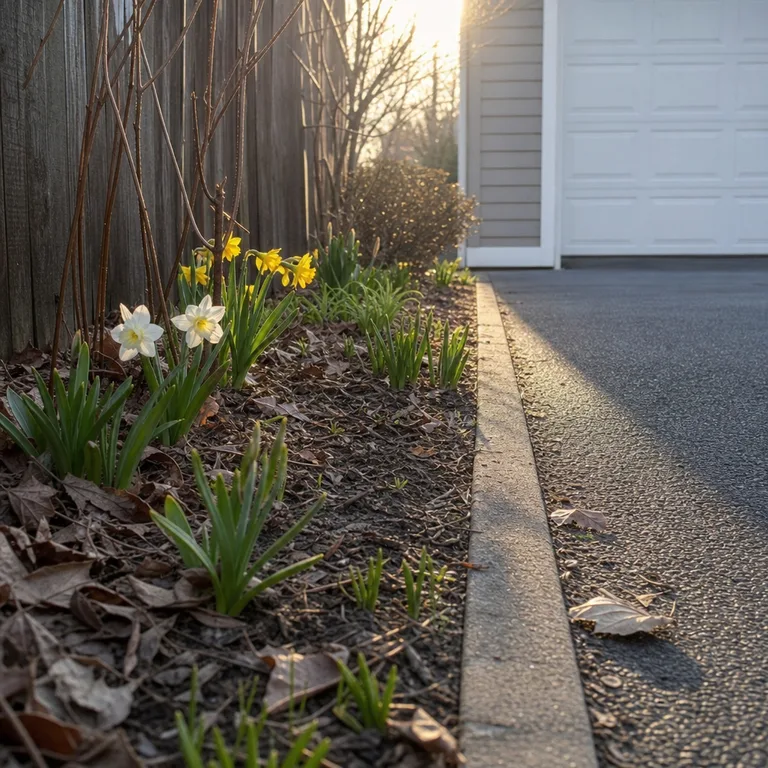
1.Low Mounding Perennials Along a Hot Driveway
Use low, rounded perennials in the sections that receive full sun and reflected heat from asphalt or concrete. Repeating a few plant types creates a calmer border than mixing many individual plants into a very narrow strip.
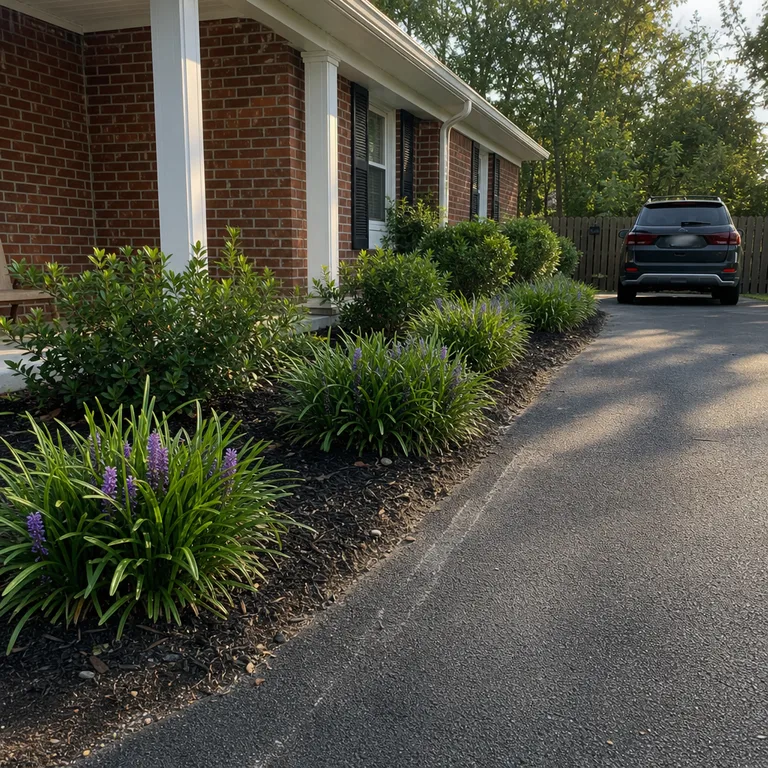
Choose plants with a mature width that leaves open space beside the pavement for tire overhang, car doors, and a hand-held trimmer. Divide healthy clumps from another part of the yard when suitable, or start with a small number of plants and let the group fill in gradually.
Worth knowing: Even heat-tolerant perennials need watering while they establish, and the hottest driveway strips may still need seasonal cleanup or replacement of struggling plants.
Related: 15 Budget Landscaping Ideas That Make a Small Yard Feel Finished
2.Salt-Tolerant Grasses Near the Street End
Reserve the street-facing end of the driveway border for low ornamental grasses that can handle the tougher conditions near curb splash and winter treatment. Their fine texture softens a hard driveway edge without forming a solid visual wall.
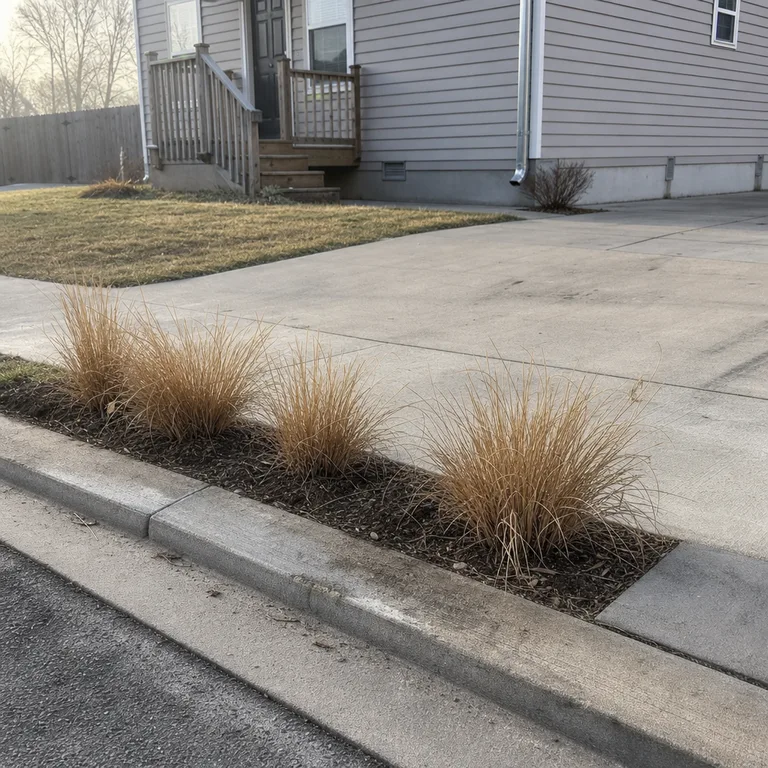
Keep each clump low enough to preserve the view when backing out, especially near a sidewalk or corner. Look for varieties suited to local winter salt exposure, since tolerance varies by plant and by how much salt runoff reaches the bed.
Worth knowing: Ornamental grasses usually need to be cut back in late winter or early spring, and some types spread more than a narrow strip can contain.
3.A Narrow Band of Drought-Tolerant Groundcover
Fill the thinnest sunny sections with a low groundcover rather than forcing upright plants into a space they will outgrow. A continuous low layer makes bare soil look intentional while keeping the driveway edge open.
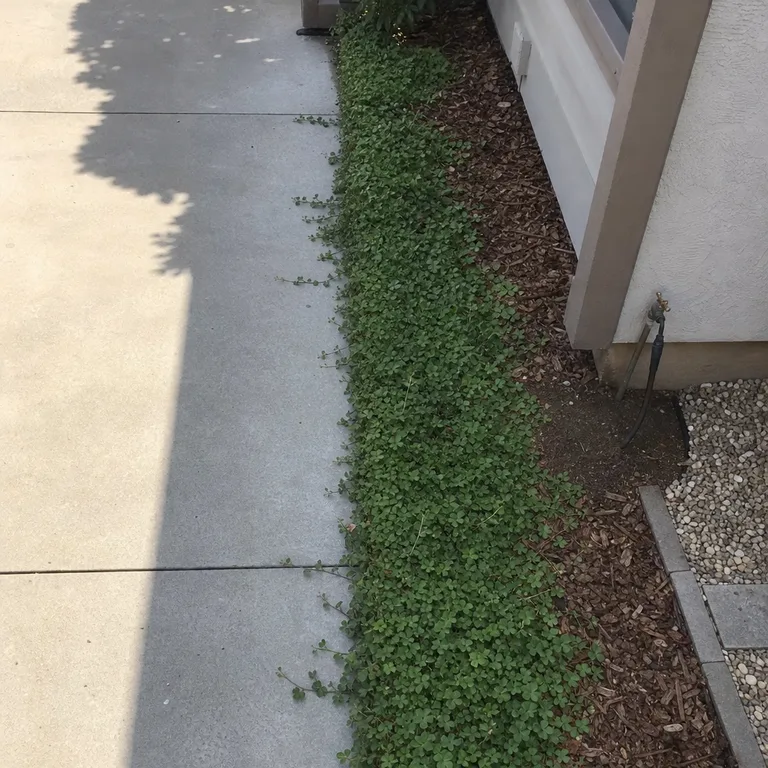
Use plugs or divisions spaced for their mature spread, and keep them back from the pavement so foliage does not creep into the driving surface. Choose a groundcover known to behave well in the local climate, especially if it will sit near a foundation or utility access point.
Worth knowing: Groundcover is not maintenance-free; it needs weeding while it fills in and may need trimming where it starts to spill over pavement.
4.One Small Shrub as a Doorway Anchor
Place one naturally compact shrub at the porch or walkway end of the strip, where it can give the entrance a focal point without crowding the center of the drive. This works best when the rest of the planting stays lower and quieter around it.
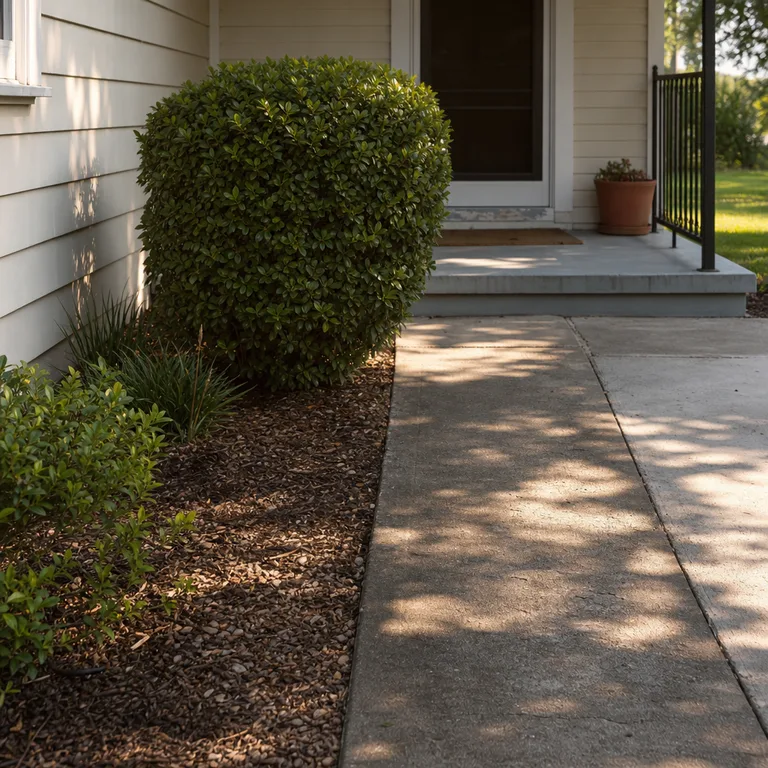
Check the shrub’s mature width against car-door clearance, windows, and the path to the front door instead of judging it by its nursery size. Reusing mulch already in good condition and planting a single anchor shrub can be a simpler budget approach than building a full shrub row.
Worth knowing: A shrub planted too close to the drive can become difficult to prune around, so this idea depends on having a genuinely wider protected section.
5.Spring Bulbs Through an Open Perennial Planting
Tuck spring bulbs between low perennials that emerge later, giving the driveway strip an early burst of color without adding a permanent tall border. As the bulbs fade, the perennial foliage helps cover the aging leaves.
Plant bulbs in small repeated pockets rather than one rigid line, leaving room for the later plants to grow. Use a hand tool around existing roots, irrigation lines, and buried utilities, and avoid placing bulbs where tires routinely cross the soil edge.
Worth knowing: Bulb foliage needs time to fade naturally after flowering, so this approach looks best when companion plants can hide it later in the season.
6.A Reused Pot Cluster on the Protected Porch Side
Use a cluster of sturdy reused pots in the wider porch-side portion of the strip, well away from the tire path and car-door swing. The containers add height and seasonal color where permanent plants would be inconvenient.
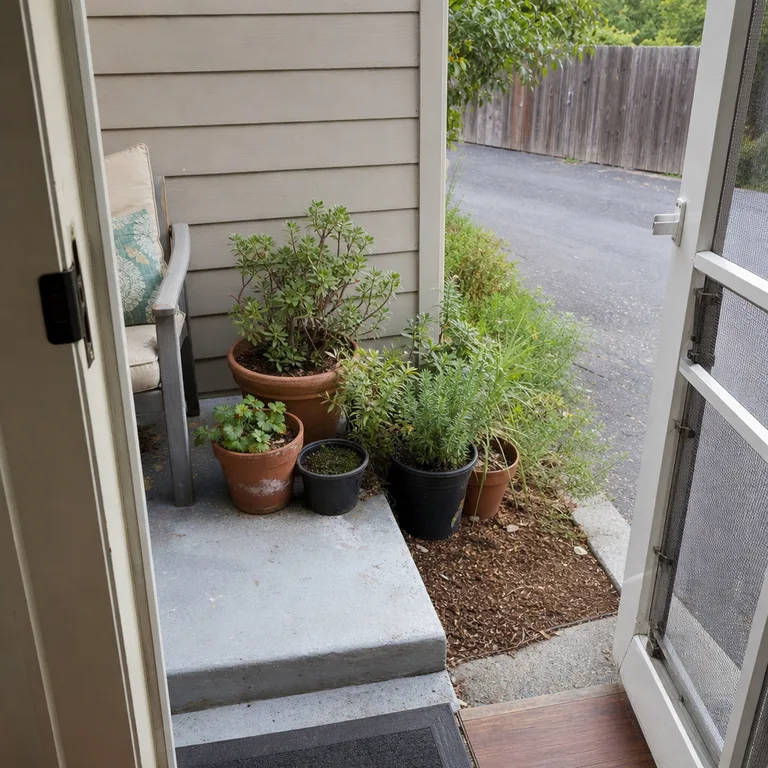
Group pots with similar tones or materials so mismatched containers still read as a collection. Fill them with plants suited to the site’s sun level, and move the pots when access changes for deliveries, repairs, or seasonal parking needs.
Worth knowing: Containers dry out faster than in-ground planting and may need protection or storage during freezing weather.
Related: 10 Front Porch Decorating Ideas for a Small Budget
7.Shade Plants Under a Driveway-Side Tree
Use low shade-tolerant foliage plants beneath an existing driveway-side tree instead of trying to establish sun-loving flowers in thin, dry shade. Their leaves can make a difficult strip look planted even when blooms would be sparse.
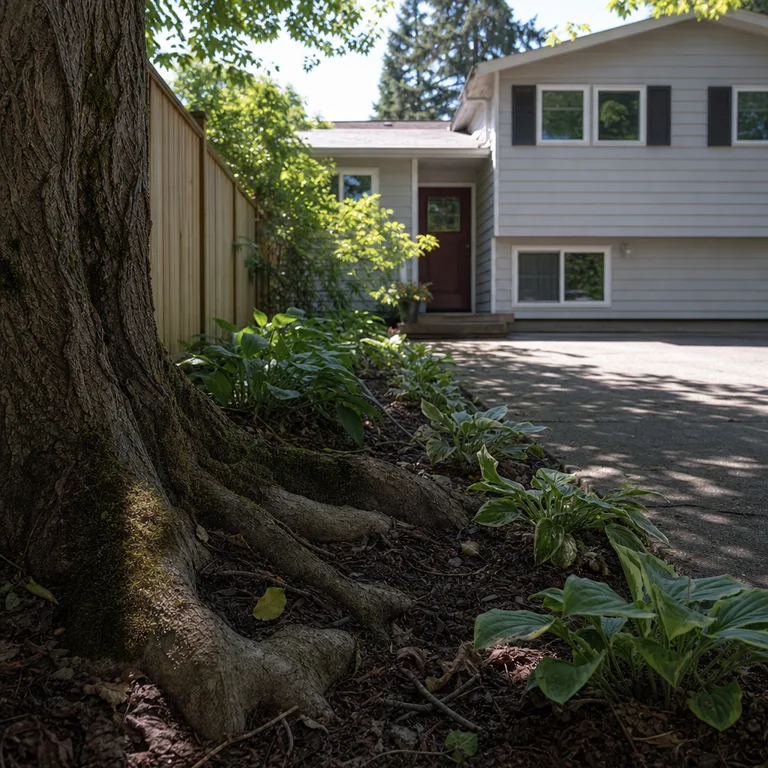
Set plants between visible roots and use a light mulch layer rather than digging deeply or piling soil against the trunk. Start with a few divisions or modest plants, because tree roots, shade, and competition for moisture can make establishment slower.
Worth knowing: A tree-rooted strip may remain dry despite shade, and digging or adding deep mulch can harm the tree.
Related: 10 Shade Garden Ideas for a Small Yard on a Budget
8.A Clear-Sightline Corner With Low Foliage
Keep the driveway exit corner planted with very low foliage and small flowers so a driver can see over it toward the sidewalk and street. This is more useful than a dense showy planting in the spot where pedestrians, cyclists, and cars need to be visible.
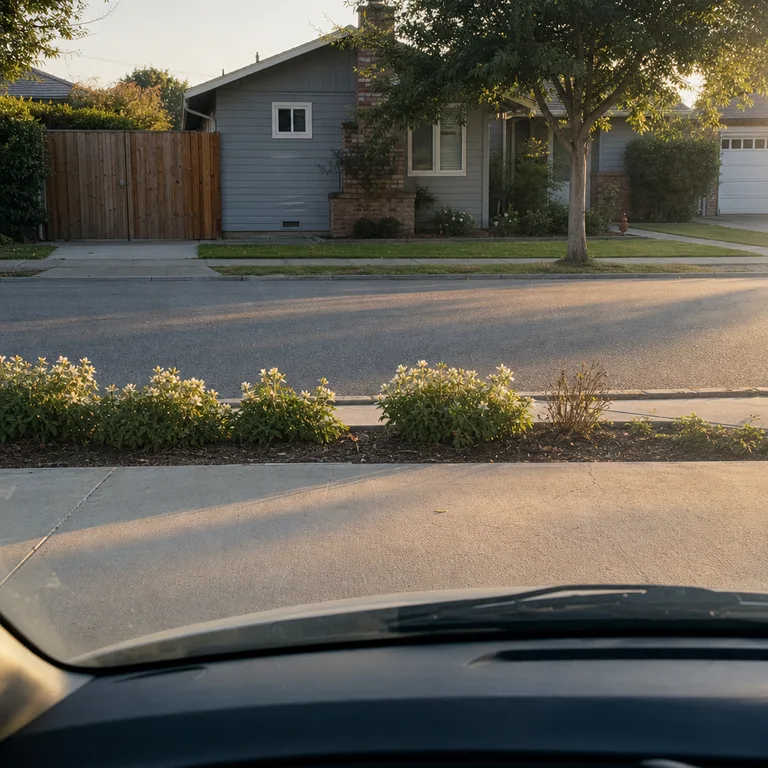
Test the view from the driver’s seat before choosing plants, then account for their mature height rather than their current size. Low, simple clusters are easier to maintain here because trimming should never become the only way to preserve a safe sightline.
Worth knowing: The safest plants for a driveway exit corner may feel less dramatic than taller choices, particularly during the peak growing season.
About the author
Dana Ruiz, Senior editor
Dana writes about small-space living, storage and low-cost decorating.
Keep reading
8 Budget Small Courtyard Garden Layouts With Clear Walkways
November 2, 2026
8 Concrete Patio Color and Pattern Ideas for an Existing Slab
November 2, 2026

8 Easy Small Living Room Layouts for TV and Fireplace
November 4, 2026
9 Budget Sewing Fabric Storage Ideas for Small Bedrooms
November 4, 2026