10 Easy Suitcase Storage Ideas to Clear Bedroom Clutter
Empty suitcases need a dry, clean home that can handle their weight and still let them come out without moving half the room. Measure each case, including its wheels and handles, along with the storage opening so the chosen spot actually fits.
As an Amazon Associate I earn from qualifying purchases.
1.Nest Matching Suitcases on a Closet Floor
Put smaller cases inside the largest one, then place the nested set on the closet floor near the door. This turns several awkward pieces into one stack and keeps the cases easy to grab for an upcoming trip.
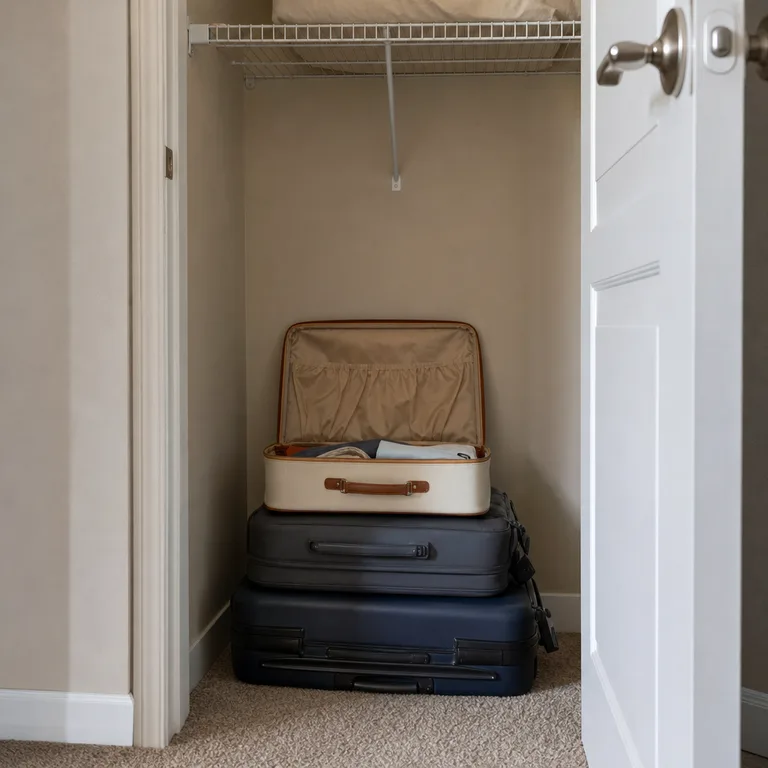
Use a washable cover, an old sheet, or a floor mat to protect luggage from dust and carpet grit. Check the closet floor for dampness first, especially in ground-level rooms or closets beside an exterior wall.
Worth knowing: This only works when the largest suitcase has enough interior space for the smaller cases and the closet floor stays dry.
2.Slide Shallow Luggage Under a Raised Bed
Use the open side of a raised bed for the flattest rolling suitcase or garment case. Keeping it in one visible under-bed zone clears floor space without turning the luggage into a hard-to-reach storage bin.
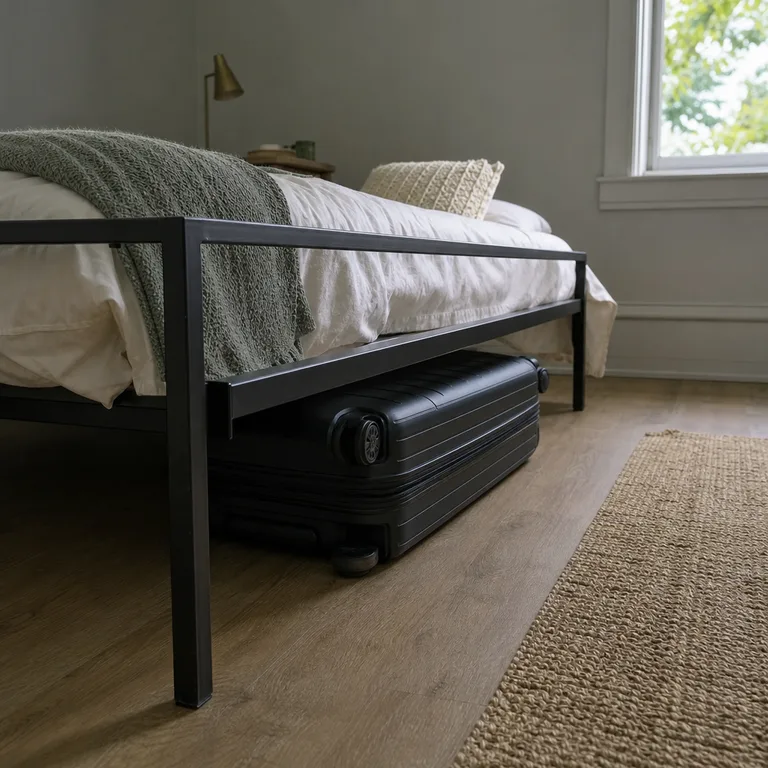
Measure the clearance at the lowest point of the bed frame, including wheels and handles. A simple cover helps keep dust off, and furniture sliders can make a heavy case easier to pull out on carpet or laminate.
Worth knowing: A low bed frame may not leave enough clearance, and a deeply placed suitcase can be frustrating to retrieve.
3.Use the Top Shelf Above Hanging Clothes
A lightweight carry-on can fit on the top shelf above hanging clothes, where it uses height that is often left empty. Store it with the wheels facing outward so the case is easier to identify and pull forward.
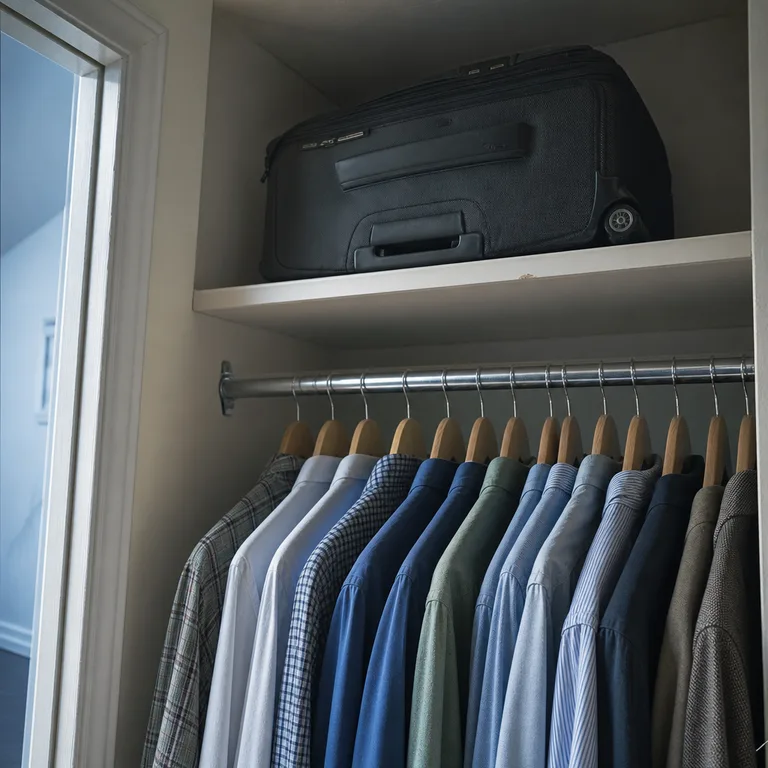
Keep this spot for a case that can be lifted down safely without straining or climbing on unstable furniture. Shelf supports should be secure, and a shelf liner can prevent scuffs on both the luggage and the shelf surface.
Worth knowing: Heavy checked luggage is not a good candidate for a high shelf because lifting it down can be unsafe.
4.Tuck an Upright Case Beside a Dresser
A narrow upright suitcase can disappear in the gap between a dresser and wall. This keeps the case standing in its natural position while preserving closet space for clothes and other daily-use items.
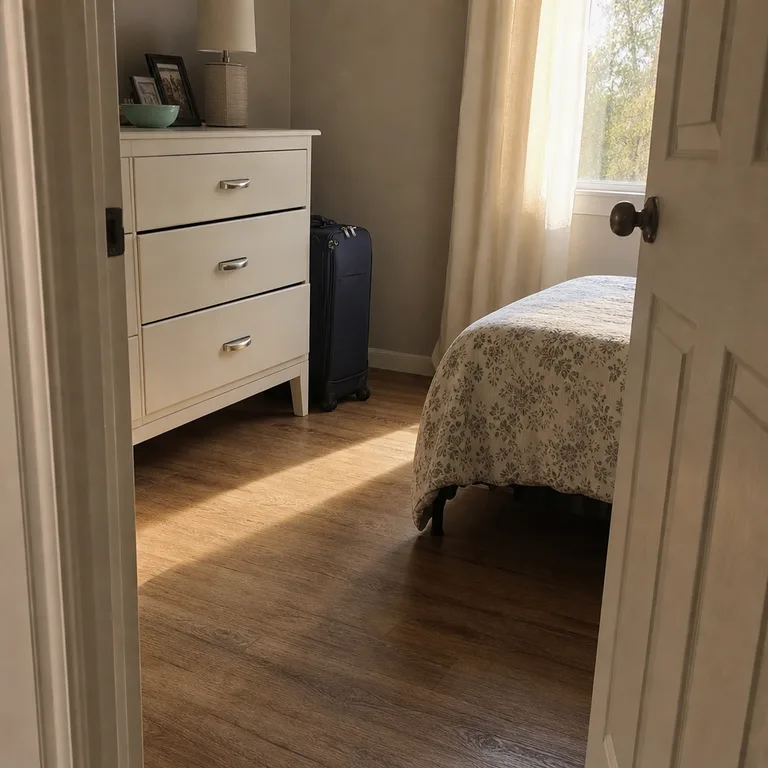
Leave enough room to reach the handle and avoid blocking a drawer, vent, or walkway. Felt pads beneath the dresser can make it easier to adjust the furniture slightly if the gap is almost large enough.
Worth knowing: The gap must remain wide enough for daily passage, or the suitcase will make the room feel more cramped.
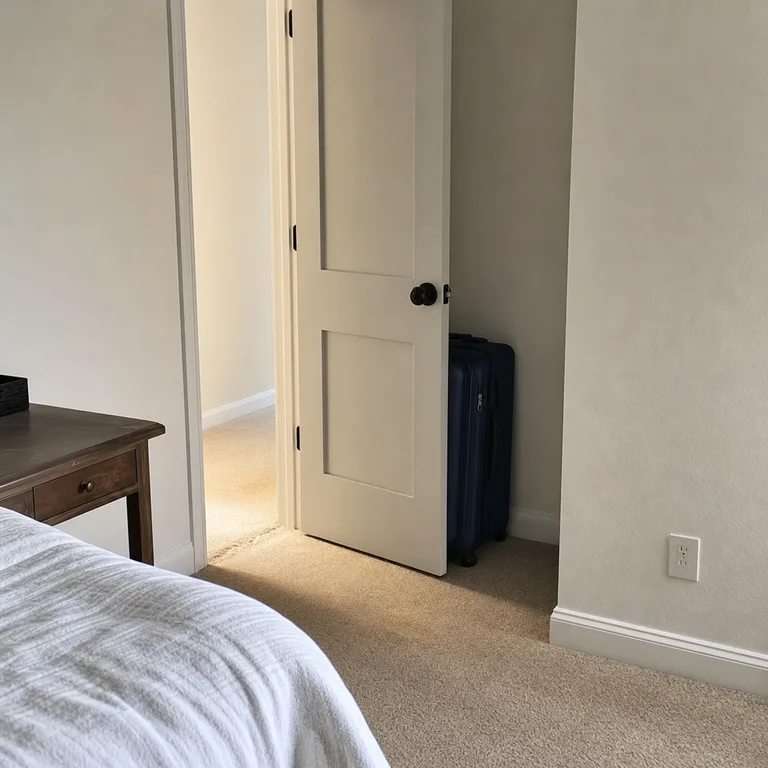
5.Store a Clean Suitcase Behind a Bedroom Door
The unused space behind an inward-opening bedroom door can hold a narrow suitcase upright. It is a practical place for luggage that needs to stay accessible but does not need to be on display.
Open and close the door fully before committing to this spot, checking that the handle and wheels do not get hit. Keep the case clean, since it sits close to a wall and can gather dust in a shaded corner.
Worth knowing: This arrangement will not work if the door swing is tight or if the suitcase interferes with a clear exit path.
6.Make a Low Bench From a Stored Hard-Shell Case
A sound hard-shell suitcase with a flat top can sit lengthwise beneath a bedroom window and double as occasional low seating with a removable cushion. It gives the luggage a defined home while making a quiet corner look more finished.
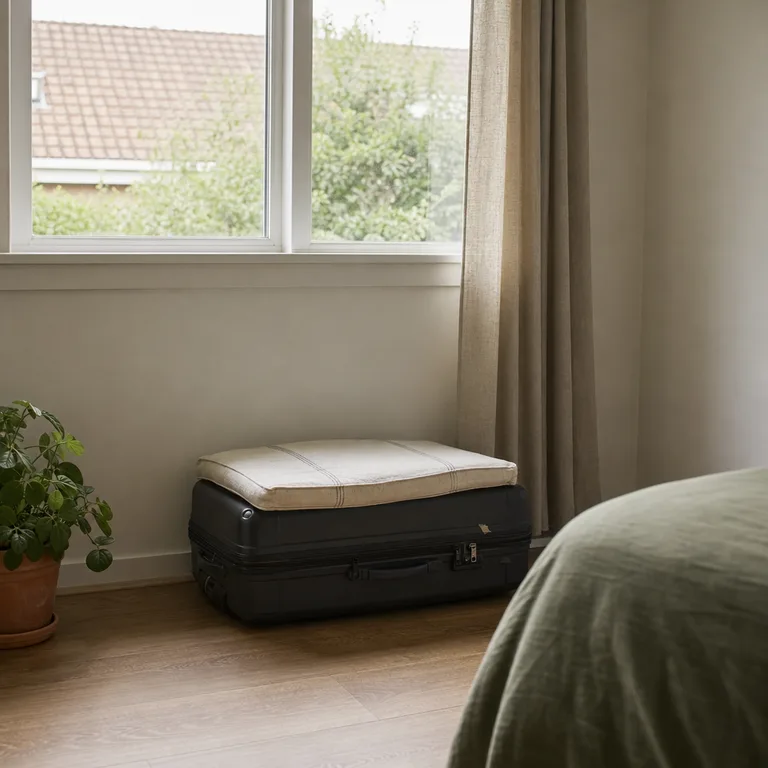
Use non-slip pads beneath the case and choose a cushion that can be removed when travel time comes. Inspect the shell, hinges, wheels, and latches before using it this way, and avoid placing it where direct sun could heat or fade the case.
Worth knowing: A suitcase is not a substitute for a properly built bench and should not be used for heavy or frequent seating.
7.Keep Travel Bags Inside a Lidded Bedroom Bench
Use a lidded bench at the foot of the bed to hold soft duffels, packing cubes, and smaller travel bags. The enclosed compartment keeps fabric luggage cleaner than open-floor storage and gives these loose items one contained place.
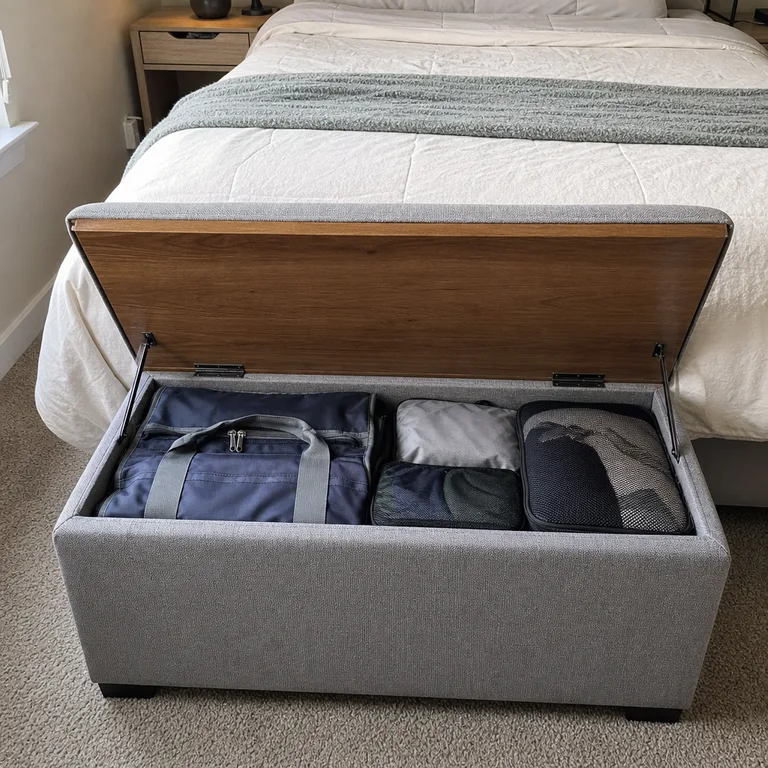
Fold soft bags flat or place them inside one another to use the bench efficiently. Keep the lid area clear so it opens easily, and avoid piling heavy items inside if the bench hardware feels light-duty.
Worth knowing: Most benches will not fit a full-size rigid suitcase, and an overloaded lid can be difficult to open safely.
8.Park a Suitcase on a Closet Shelf Under the Eaves
A low shelf beneath a sloped ceiling can be a useful home for a medium suitcase that does not fit well in a standard closet layout. This makes use of the shallow back area that is often too low for hanging clothes or tall bins.
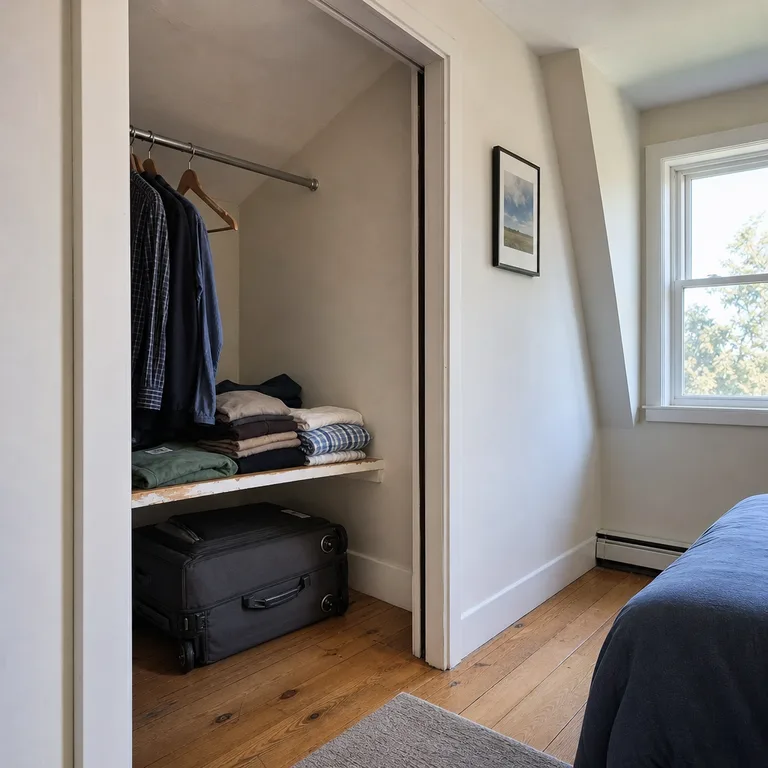
Choose a dry interior section of the closet and inspect the ceiling periodically for signs of condensation or roof leaks. A breathable cover helps with dust while allowing stored fabric luggage to air out.
Worth knowing: Attic rooms can have greater temperature swings and moisture concerns, so luggage should not be stored there if the area is damp.
9.Use a High Wall Shelf for Infrequently Used Cases
A properly anchored wall shelf can hold a small, lightweight carry-on above a desk or dresser. This frees up floor and closet space for luggage that is used more often or is harder to lift.
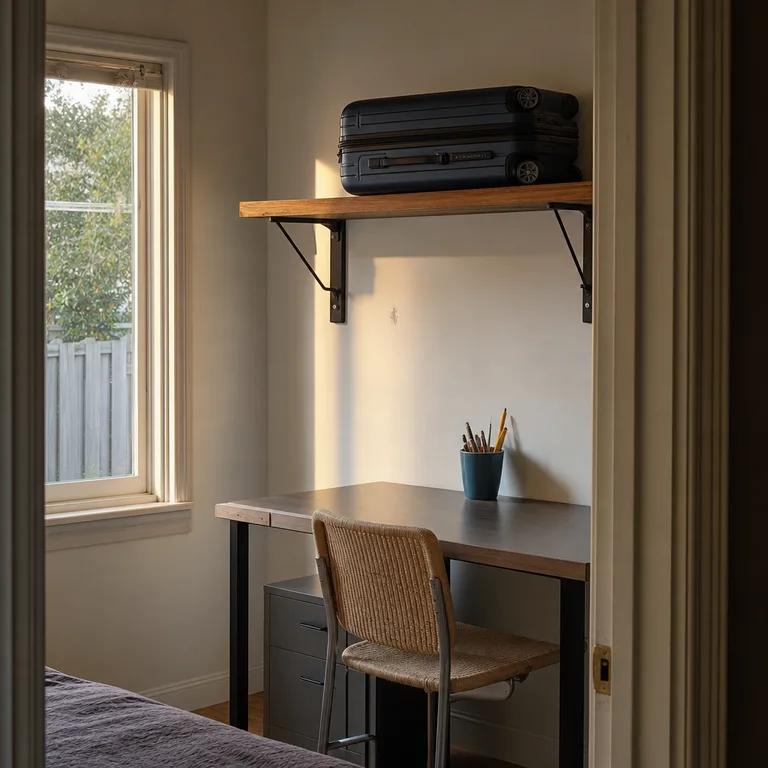
Install the shelf into studs or use mounting hardware suited to the wall type and expected load. Leave enough open space beneath the shelf to bring the case down safely without standing on a chair, desk, or bed.
Worth knowing: This option requires secure installation and is best reserved for lightweight luggage that is only needed occasionally.
10.Use the Suitcase to Contain Off-Season Travel Gear
Keep travel-only items inside an accessible suitcase: adapters, luggage straps, empty toiletry bottles, packing cubes, and travel pouches all belong together. This makes the suitcase useful between trips without scattering small gear through bedroom drawers.
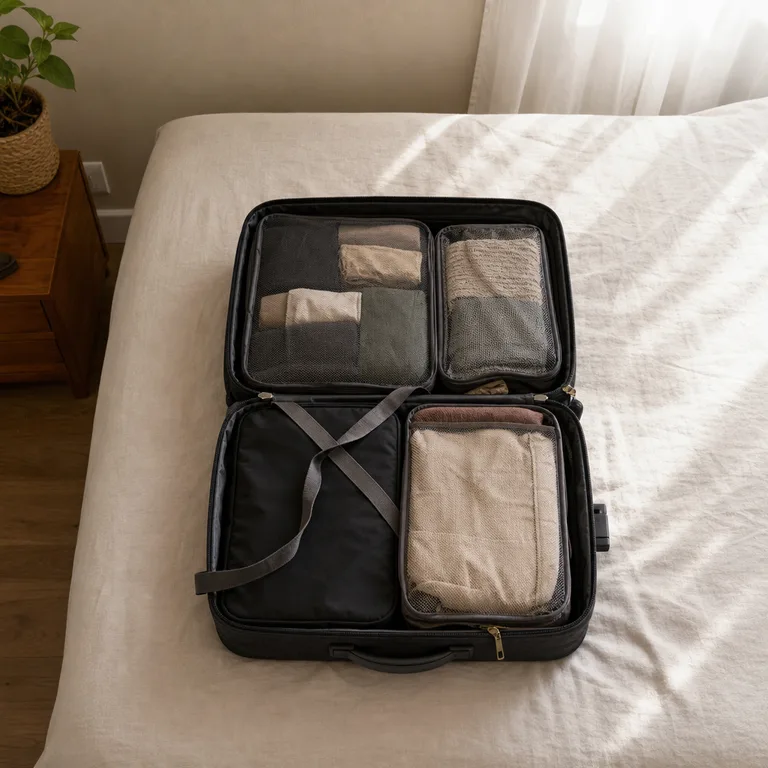
Wash and dry every item before storing it, particularly toiletry bottles and fabric organizers. Avoid putting liquids, damp towels, or used shoes inside a closed case, since trapped moisture can cause odor or mildew.
Worth knowing: A suitcase packed with too much gear becomes heavier and less convenient to pull out when it is time to travel.
About the author
Dana Ruiz, Senior editor
Dana writes about small-space living, storage and low-cost decorating.
Keep reading
9 Budget Sewing Fabric Storage Ideas for Small Bedrooms
November 4, 2026
8 Table Linen Storage Ideas for Homes Without a Dining Hutch
November 2, 2026
10 Craft Paper Storage Ideas for Small Homes
November 2, 2026
8 Easy Small Living Room Layouts for TV and Fireplace
November 4, 2026