8 Concrete Patio Color and Pattern Ideas for an Existing Slab
A sound concrete patio can take on a very different character with stain, paint, scoring, stencils, or a thin resurfacing layer, without removing the slab. Each direction has its own prep, moisture, slip-resistance, drainage, and maintenance needs, and cosmetic finishes should not be used to hide structural cracks or movement.
As an Amazon Associate I earn from qualifying purchases.
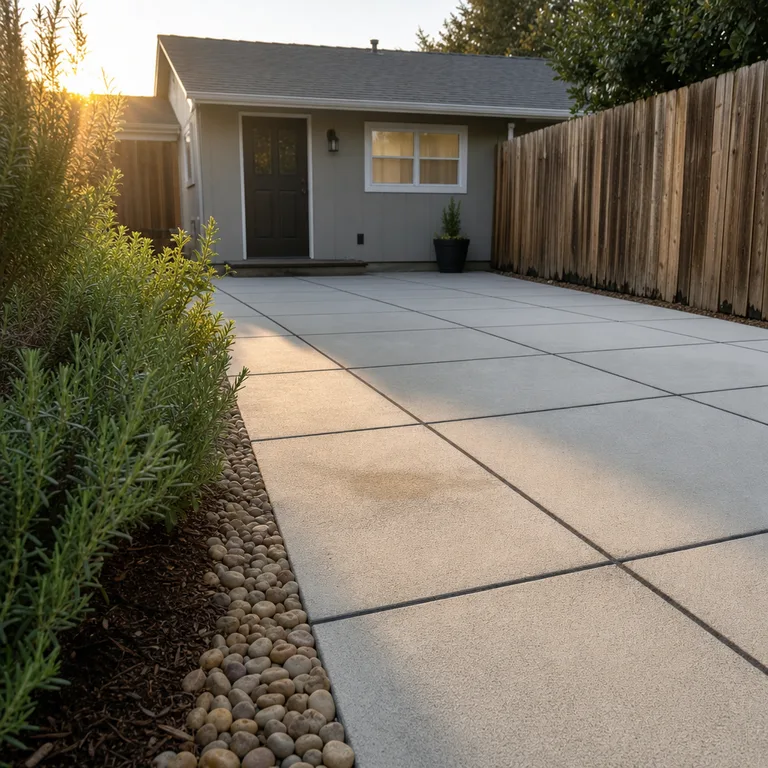
1.Soft Charcoal Solid-Color Porch Paint
A muted charcoal coating gives a plain slab a calmer, more finished base. It can make mismatched patio edges, old discoloration, and nearby metal or wood details feel more visually connected without changing the layout.
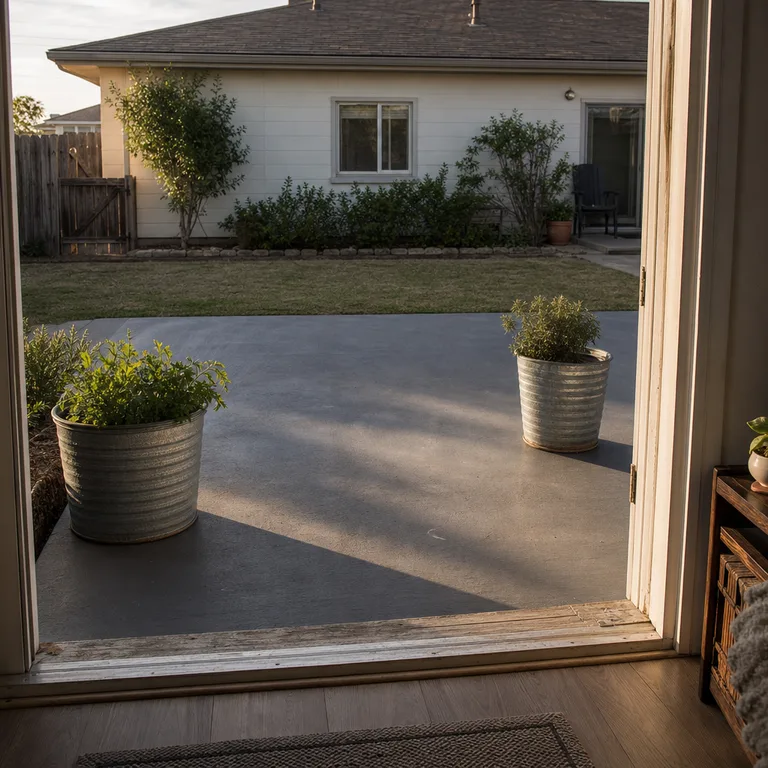
This approach suits concrete that is sound, clean, and dry. Remove dirt, grease, loose coating, and chalky residue first, then use an exterior concrete product rated for the local weather and wet-foot traction; an anti-slip additive may be useful on a shaded or rain-exposed patio.
Keep the color soft rather than near-black if the patio gets strong afternoon sun, since dark surfaces can show dust and become uncomfortably warm. A roller makes the broad field manageable, while a brush handles edges at the house and garden bed.
Worth knowing: Paint forms a surface film, so poor preparation, trapped moisture, or regular standing water can lead to peeling.
2.Warm Greige Concrete Stain
A warm greige stain changes the cast of bare concrete while keeping its pores, trowel marks, and slight color variation visible. The result is less uniform than paint and works well when the slab already has an honest, lightly weathered appearance.
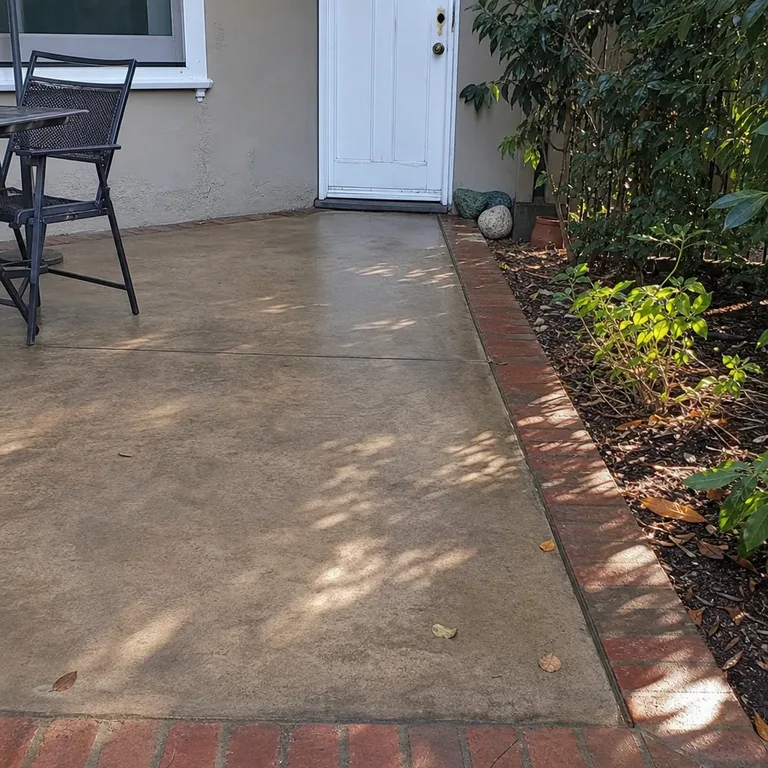
Penetrating stain needs exposed, absorbent concrete. Existing sealers, paint, adhesives, and oily spots have to be removed or treated, because they can leave pale patches where the stain cannot enter the slab.
Apply a test area in an inconspicuous corner to see how the concrete takes the color. A neutral greige can bridge red brick, painted siding, gravel, and planting beds without demanding that every surrounding finish match.
Worth knowing: Stain will not reliably disguise old paint marks, repairs, or heavily uneven absorption.
3.Two-Tone Checkerboard With Porch Paint
Large checkerboard squares turn a compact patio into a deliberate outdoor floor. Choose two muted colors, such as warm white and dusty sage, so the pattern reads as part of the yard rather than competing with plants and the house exterior.
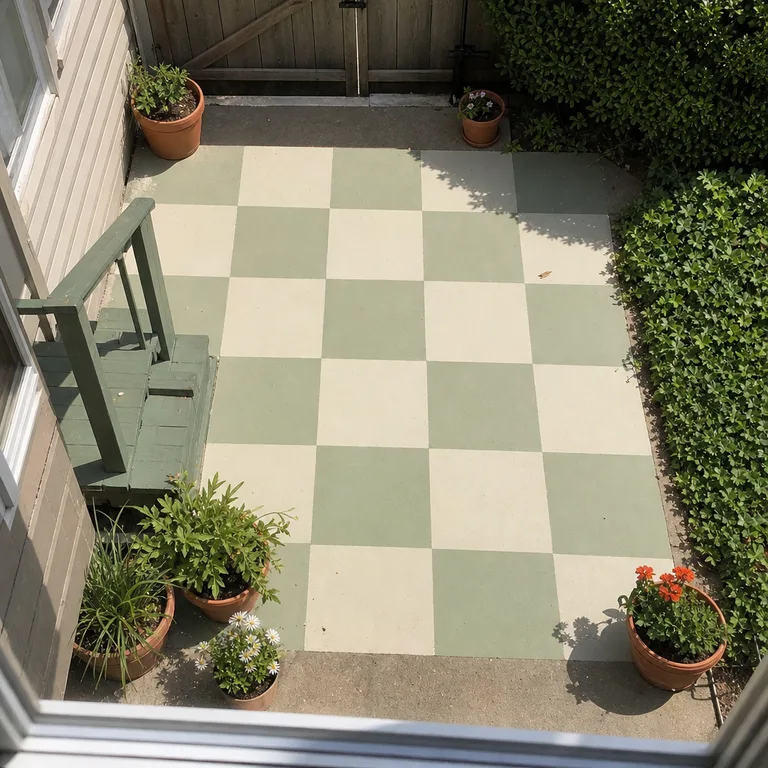
Snap chalk lines and dry-fit the square layout before taping. Keep the squares generously sized: a simple grid is easier to align on an existing slab and less likely to look busy beside furniture, pots, and door thresholds.
Use a concrete porch coating on a smooth, well-prepared slab, painting one color at a time and allowing it to cure as directed. If the patio slopes toward a drain or lawn, let the grid follow the slab rather than trying to correct the slope with paint lines.
Worth knowing: A checkerboard highlights crooked edges and slab irregularities, so it is less forgiving than a single-color finish.
4.Stenciled Border Around a Plain Center
A stenciled border gives the patio a defined edge while leaving the central walking and seating area mostly unchanged. It can frame a door, echo terracotta pots or brick, and make a basic rectangular slab look more intentional.
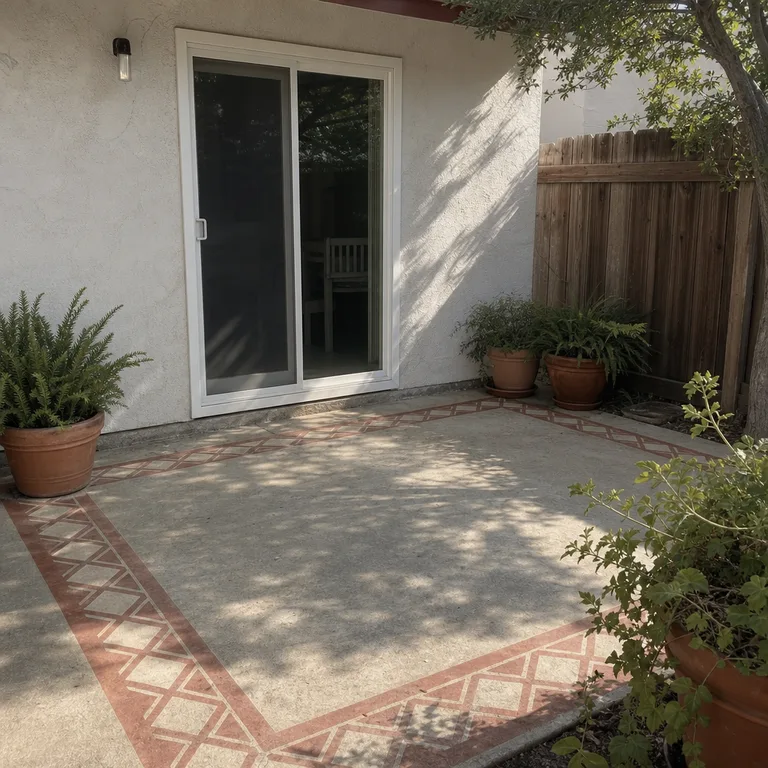
This is a practical choice when a full coating feels like too much maintenance. Clean the perimeter thoroughly, mark a consistent border width, and use a reusable floor stencil with exterior paint suited to concrete.
Work around expansion joints and drain edges instead of forcing a pattern through them. A slightly imperfect repeat is usually less noticeable in a border than in an all-over stenciled floor, and perimeter touch-ups are straightforward when scuffs occur.
Worth knowing: The border can look awkward on a patio with many angled cuts, posts, or interruptions along the edges.
5.Scored Grid With Contrasting Joint Color
A scored grid breaks a broad slab into panel-like sections without covering the whole surface in opaque color. Darkened joints create a clean graphic pattern while allowing the natural concrete to remain the main finish.
The cuts should be shallow and planned around existing control joints, cracks, and the slab’s layout. This is generally a job for a capable concrete-cutting professional or experienced operator, since cutting too deeply can damage the slab or encounter reinforcement.
After the grid is cut and cleaned, a suitable exterior joint color can make the pattern more visible. This option works especially well on patios with broad open areas, where the repeating lines add structure without adding several surface layers.
Worth knowing: Scoring does not solve cracking or movement, and improper cuts can create a more costly repair problem.
6.Faux Paver Pattern With a Thin Resurfacer
A thin polymer-modified resurfacer can give worn but stable concrete a new continuous skin, then take a taped, stamped, or tooled pattern resembling broad offset pavers. It is useful when surface wear is widespread enough that paint or stain would only emphasize it.
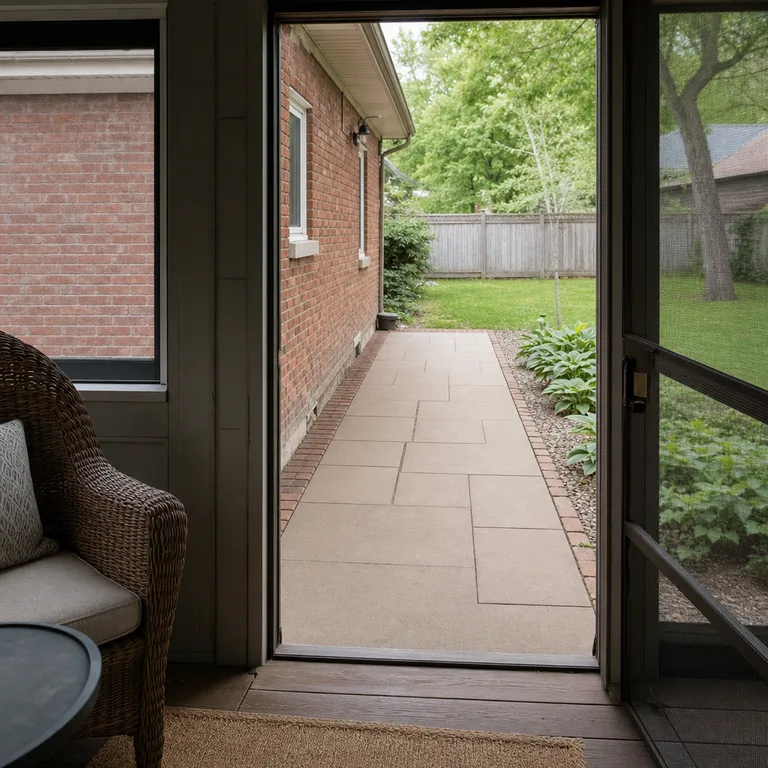
Preparation is more involved than for a simple coating. The slab needs sound concrete, reliable drainage, and a surface free of loose material; active cracks, heaving, and moisture problems need proper repair rather than a cosmetic layer over them.
Keep the pattern broad and shallow for an attainable look that suits an ordinary patio. Sandy taupe or soft gray tones tend to work with brick, wood fencing, and planting beds, while narrow faux grout lines can become difficult to keep clean.
Worth knowing: Resurfacing is sensitive to preparation, weather, and drainage, so it may be better handled by a contractor when the slab condition is uncertain.
7.Terracotta Wash Over Natural Concrete
A translucent terracotta-toned wash warms cool gray concrete without hiding every mark in the slab. It is a softer direction than opaque paint, especially beside clay pots, pale siding, weathered wood, or a garden with warm-toned foliage.
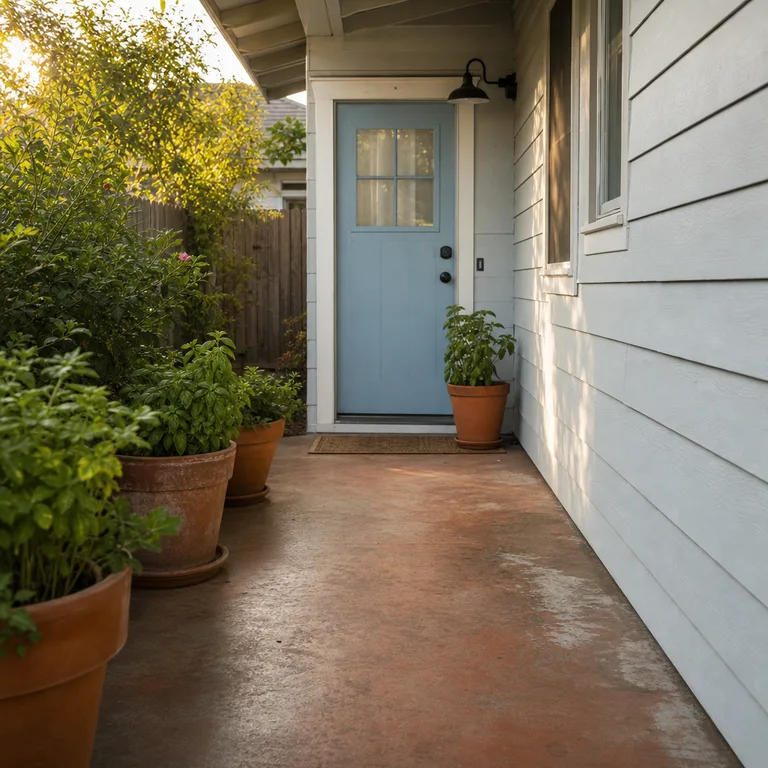
Use a color system intended for masonry or concrete and test it first, because older slabs often absorb color unevenly. Brushing or rolling in thin layers can preserve the concrete texture and lets the finish build gradually rather than becoming heavy.
This treatment works best when variation is welcome. Leave sound, subtle weathering visible and avoid trying to make every section identical; the changing tone is part of why a wash can look more relaxed than a solid coating.
Worth knowing: A color wash can make existing stains and old repair patches less prominent, but it will not fully conceal them.
8.Black-and-Cream Painted Runner Stripes
Wide lengthwise stripes can make a narrow side patio feel more deliberate and visually longer. Treating the design as a runner focuses the color on the main route from gate to door instead of turning every inch of concrete into a pattern.
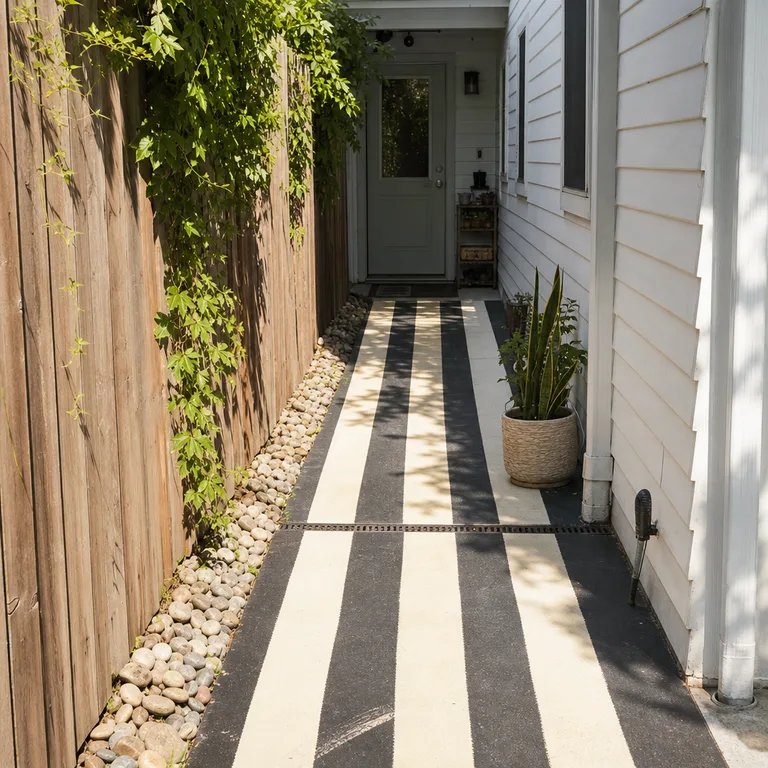
Lay out the stripes in relation to the slab’s actual slope, drain channel, and door path. Keeping drainage features visible matters more than perfectly equal stripe widths, particularly on a patio that collects rain or runoff from the roof.
A warm cream paired with softened black creates contrast without requiring intricate stencil work. Use an exterior concrete coating with appropriate slip resistance, and reserve the lightest stripe for areas that will not show every muddy footprint from the garden.
Worth knowing: High-contrast stripes show chips, dirt, and alignment mistakes more readily than a low-contrast or solid-color finish.
About the author
Dana Ruiz, Senior editor
Dana writes about small-space living, storage and low-cost decorating.
Keep reading
9 Three-Plant Color Schemes for a Small Flower Bed
November 2, 2026
8 Winter Porch Decorating Ideas That Still Work After Christmas
November 2, 2026
10 Garden Fence Decorating Ideas That Don't Depend on Climbing Plants
November 1, 2026

10 Living Room Rug Looks That Make Pet Hair Less Noticeable
November 2, 2026