7 Ways to Pair Mismatched Bedside Lamps So They Look Collected
Two secondhand bedside lamps can read as a deliberate pair when one or two visible details repeat across both sides of the bed. Keep the useful task-light function intact by checking shade fittings, bulb limits, switch access, and whether each lamp gives enough light for reading.
As an Amazon Associate I earn from qualifying purchases.
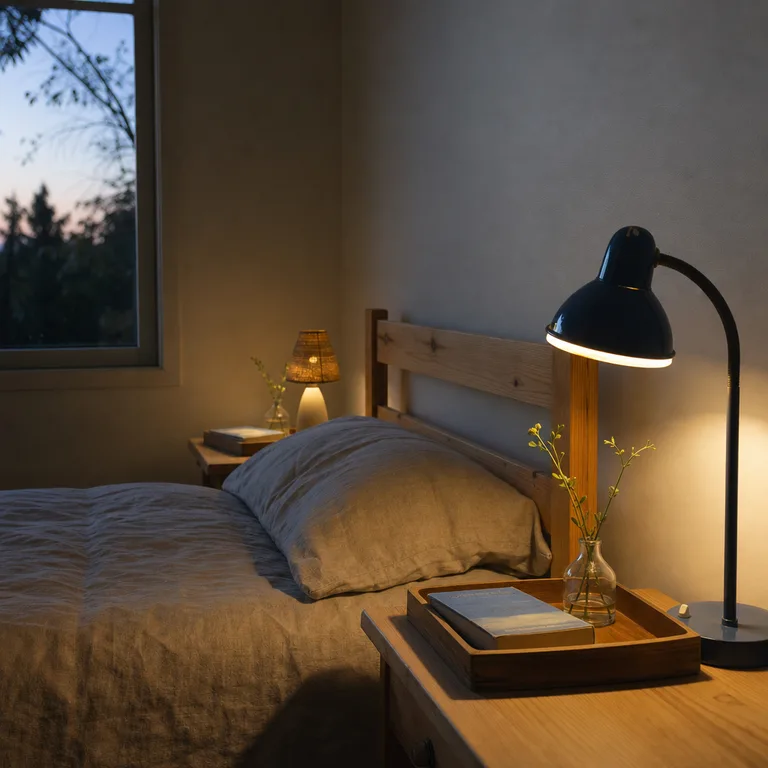
1.Use the Same Shade Color on Both Lamps
Matching shades can do more to unite two different bases than matching the bases themselves. An ivory, cream, tan, gray, or muted color gives both sides of the bed one calm visual line, even if one lamp is ceramic and the other is wood or metal.
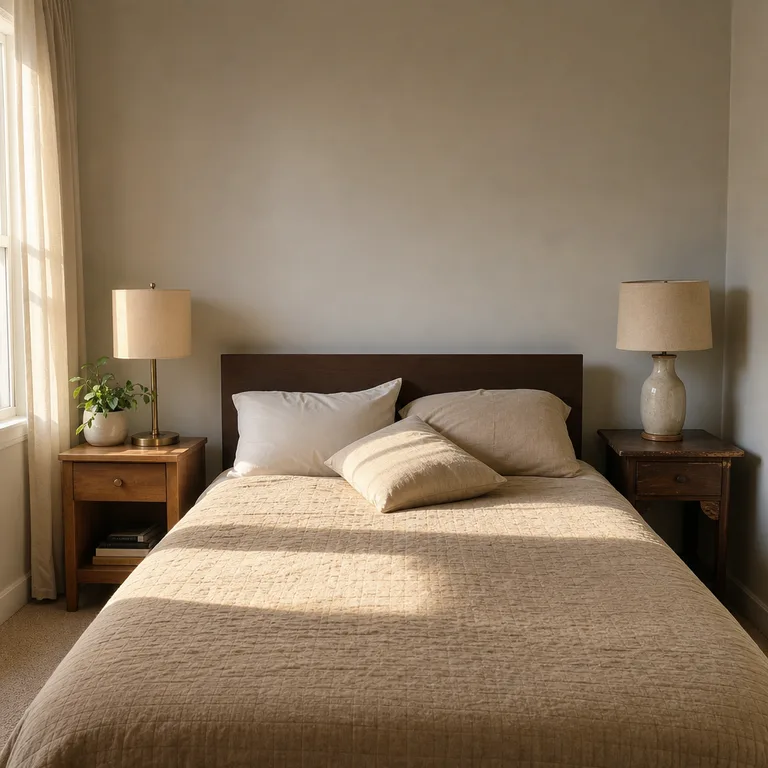
Reuse the lamp bases and replace only the shades if the current pair feels unrelated. Choose the correct fitter for each lamp, and keep shade material and bulb type compatible so heat does not build up inside the shade.
A simple drum shade is often the easiest common choice because it works with many base shapes. Check that each shade sits level and leaves enough space to reach the switch without brushing the shade.
Worth knowing: Identical shades may not fit both lamps if their harps, fitters, or neck shapes differ, so measure and check the attachment style before ordering.
Related: 12 Thrifted Decor Ideas That Make Mismatched Finds Feel Collected
2.Repeat One Metal Finish Around Both Lamps
A repeated metal finish can connect lamps that share almost nothing else. A black lamp and a glass lamp, for example, can feel related when each nightstand includes a small brass frame, tray, or hardware detail.
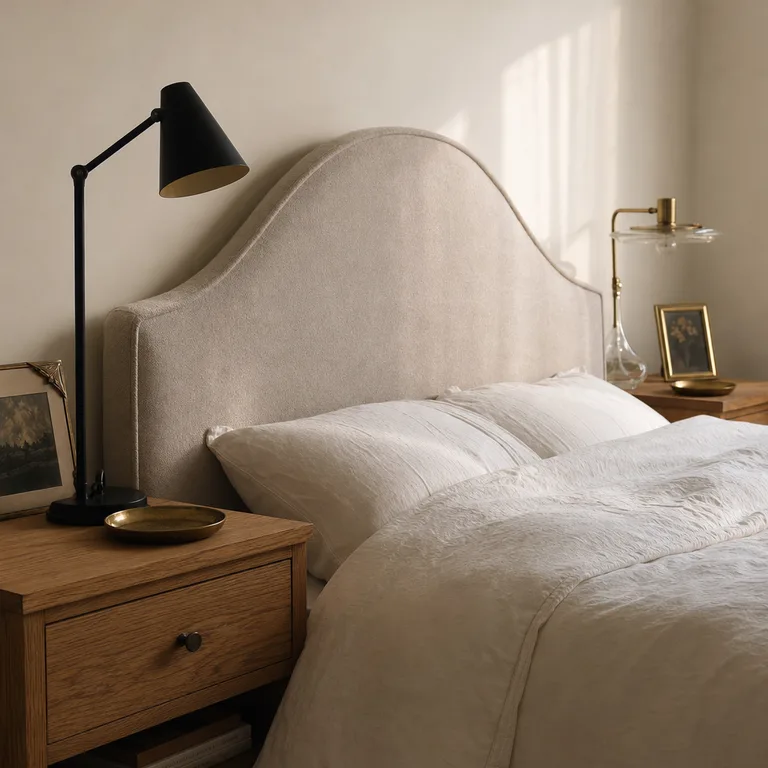
Use nearby accents instead of trying to alter both lamp bases. A pair of similar catchall trays, matching picture frames, or coordinated drawer pulls can carry one finish across the bed without making the room look overly matched.
Keep the repeated metal limited to a few visible touches. Too many competing finishes can make a small bedroom feel busy, while a single repeated finish gives the lamps a clear link.
Worth knowing: Metal finishes do not need to match exactly, but very shiny and heavily weathered versions of the same color can still look disconnected.
3.Match the Shade Proportions, Not the Bases
A slim lamp and a broad lamp can look balanced when their shades have similar width and height. The bases remain different, but the matching upper shapes give each side of the bed similar visual weight.
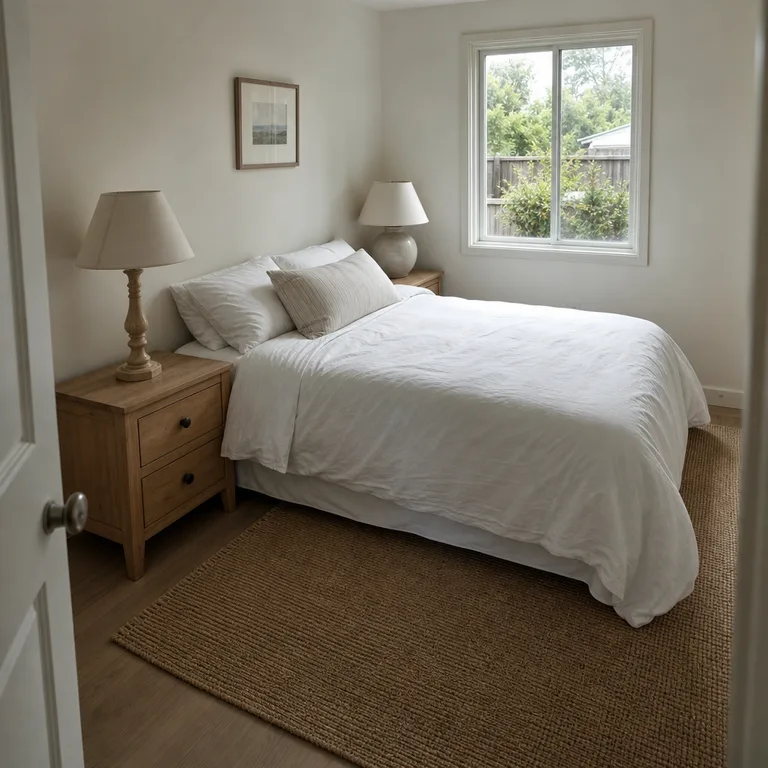
Compare the overall shade silhouette rather than searching for identical dimensions. Two similarly sized tapered shades, or two shades with nearly the same diameter, usually look more coordinated than one tiny shade beside one oversized drum.
Leave room around both shades for the headboard, wall, and any nearby artwork. A shade that crowds the wall or blocks a switch will make the arrangement less useful, no matter how well it matches visually.
Worth knowing: Similar-looking shade proportions can be hard to achieve when one lamp has a very narrow neck or a particularly wide base.
4.Put the Same Bedside Accent Beside Each Lamp
Repeating one useful object on both nightstands gives unrelated lamps a shared setting. Small trays, bud vases, book stacks, or simple dishes can create a quiet rhythm from one side of the bed to the other.
Choose an accent that supports how the nightstands are used. A tray can contain glasses and chargers, while a small vase or book stack can add height without taking over the reading area.
Use the same material or shape on both sides, but allow the contents to differ. Two wood trays can hold different books and personal items while still making the lamp pair look intentional.
Worth knowing: Nightstands with very limited surface area may need to stay mostly clear for a lamp, phone, water glass, or medication.
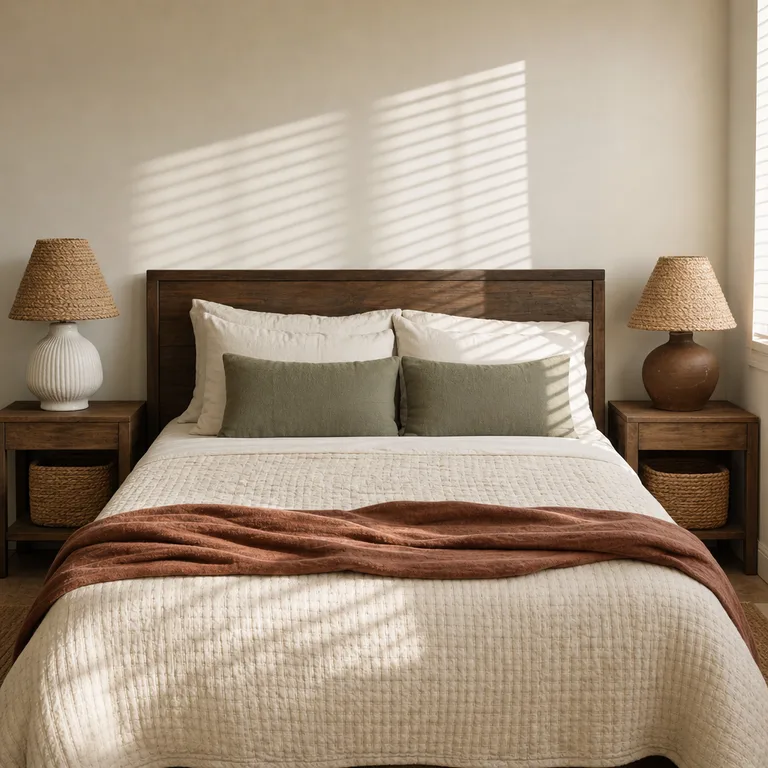
Add texture through an element that is easy to change, such as a shade, basket, or cord cover. This approach preserves the character of an older lamp instead of forcing both bases into the same finish.
Choose bedroom-friendly materials that can be cleaned without much trouble. Open weave and deeply textured surfaces collect dust more readily, especially near windows or in homes with pets.
Worth knowing: Natural-fiber shades can reduce or alter the light output, so they may not provide enough direct light for regular reading.
Related: 10 Ways to Group Mismatched Plant Pots So a Patio Looks Intentional
6.Make a Tall-and-Short Pair Look Deliberate
A tall lamp on one side and a short lamp on the other do not need to be forced to the same height. Balance the shorter side with a tall framed print, narrow vase, or vertical wall element so the full bedside compositions feel evenly weighted.
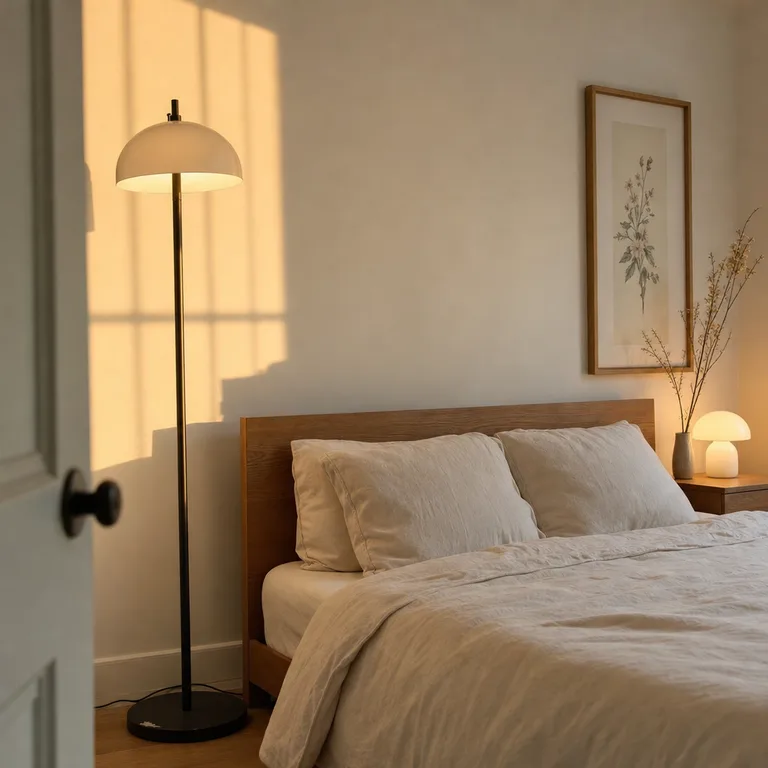
Keep the shorter lamp on a stable nightstand rather than placing it on stacked books, boxes, or improvised risers. The light should remain easy to switch on, steady when the table is bumped, and positioned well enough for reading.
A floor lamp can pair successfully with a table lamp when both serve the bed comfortably. Use the headboard, art, or a tall object near the lower lamp to make the height difference look planned rather than accidental.
Worth knowing: Visual balance cannot fix poor task lighting; a very low lamp may still be inconvenient for reading in bed.
7.Repeat One Color Across Two Different Shade Styles
Two shade shapes can still belong together when they share a clear color family. A pleated empire shade and a smooth drum shade in sage, rust, blue, or another muted color preserve the individuality of each lamp while creating an obvious connection.
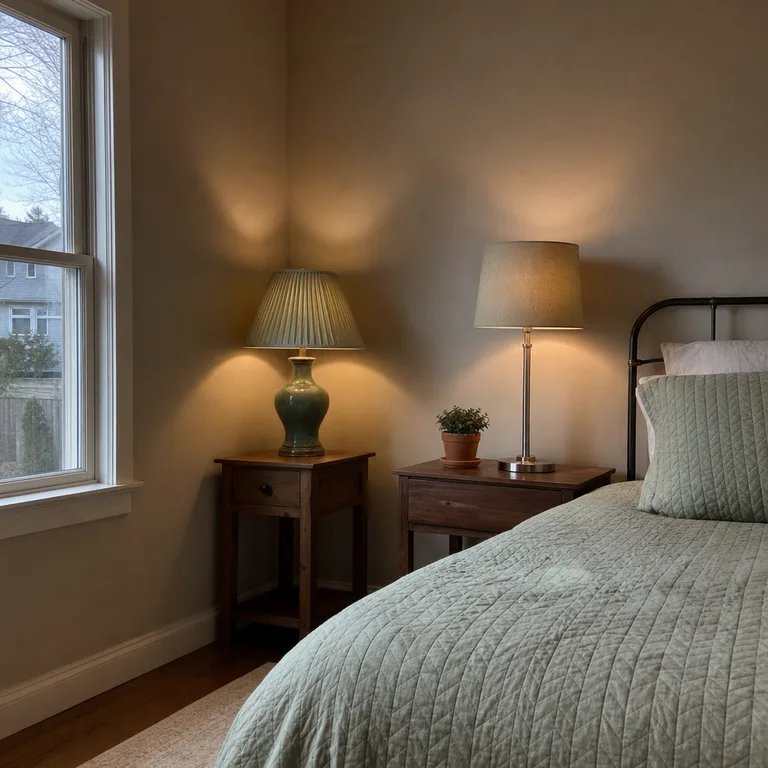
Use shades with similar color depth rather than chasing an exact match across different fabrics. Linen, cotton, and pleated materials absorb light differently, so close tones often look more natural than shades that appear identical online.
Let the differing shapes suit the lamp bases. A more traditional base may look right with an empire shade, while a cleaner metal lamp may suit a drum shade, and the repeated color keeps the pair from drifting apart.
Worth knowing: Colored shades can tint the light and make a room feel dimmer, particularly with darker fabrics or low-output bulbs.
Related: 12 Cozy Bedroom Refresh Ideas That Keep Your Existing Furniture
About the author
Dana Ruiz, Senior editor
Dana writes about small-space living, storage and low-cost decorating.
Keep reading
9 Open Kitchen Shelf Styling Ideas Using Dishes You Actually Use
October 16, 2026
10 Shower Curtain Color Schemes That Work With Dated Bathroom Tile
October 16, 2026
10 Living Room Color Pairings for Dark Rental Floors You Cannot Change
October 16, 2026
9 Kitchen Textile Pairings That Make Everyday Towels Look Intentional
October 16, 2026