12 Cozy Bedroom Refresh Ideas That Keep Your Existing Furniture
A bedroom can feel calmer and more finished without replacing the bed, dresser, or nightstands. These low-cost refreshes use layered bedding, focused color, and softer light to make an ordinary room feel more inviting.
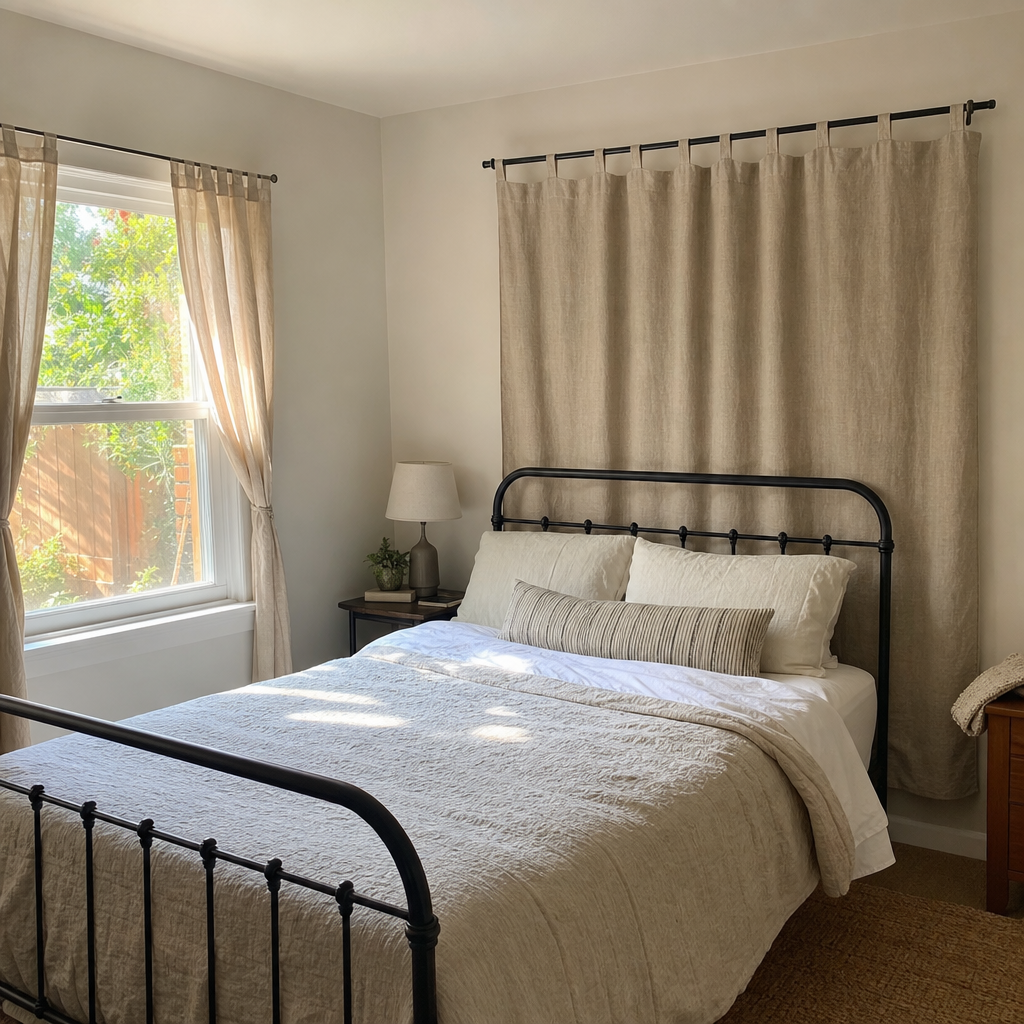
1.Layer a quilt over plain existing sheets
A quilt, coverlet, or lightweight blanket gives plain sheets more depth without requiring a full new bedding set. Fold it across the lower half of the bed so the sheets and main pillows still show.
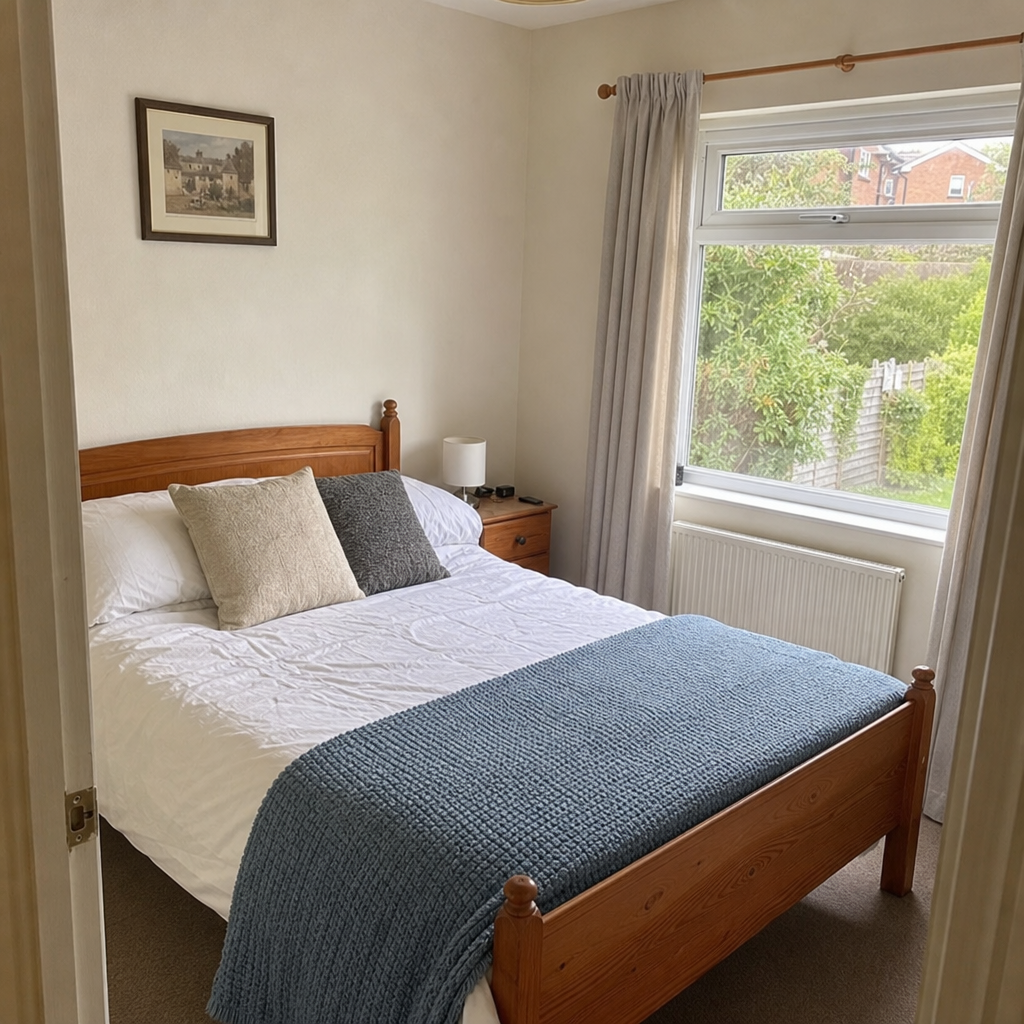
Choose a color that works with the room's wall color and existing furniture rather than trying to match every item. A spare blanket from another room can do the job if its scale and condition suit the bed.
Worth knowing: A thick quilt can feel too warm in hot climates or in bedrooms without reliable cooling, so a lightweight layer is often the more practical choice.
Related: 12 Warm Neutral Living Room Ideas on a Budget
2.Use pillow covers to introduce one accent color
Removable pillow covers are a simple way to bring in rust, moss, dusty blue, or warm ochre while keeping the larger bedding pieces neutral. Pick one main accent shade so the bed looks composed rather than crowded.
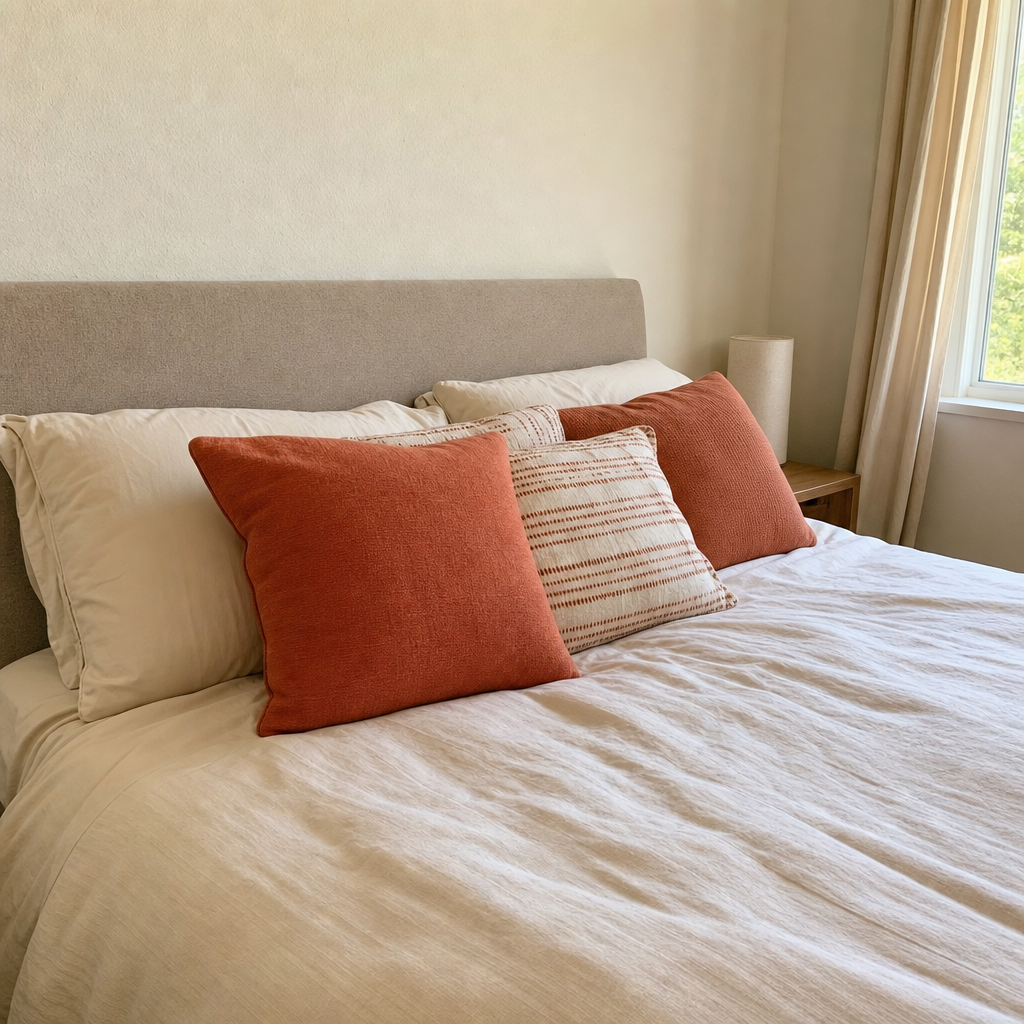
Mix a solid cover with one subtle stripe, check, or textured weave for variety. Reuse pillow inserts already on the bed when they are still supportive and the cover size fits.
Worth knowing: Very small bedrooms can look busy quickly, so keep the number of decorative pillows modest enough that making the bed stays easy.
Related: 12 Sage Green and Brown Decorating Ideas That Feel Cozy
3.Bring in a throw with visible texture
A knitted, waffle-weave, fleece, or fringed throw adds a softer finish at the foot or lower corner of the bed. Its texture can make basic bedding feel more intentional even when the colors are quiet.
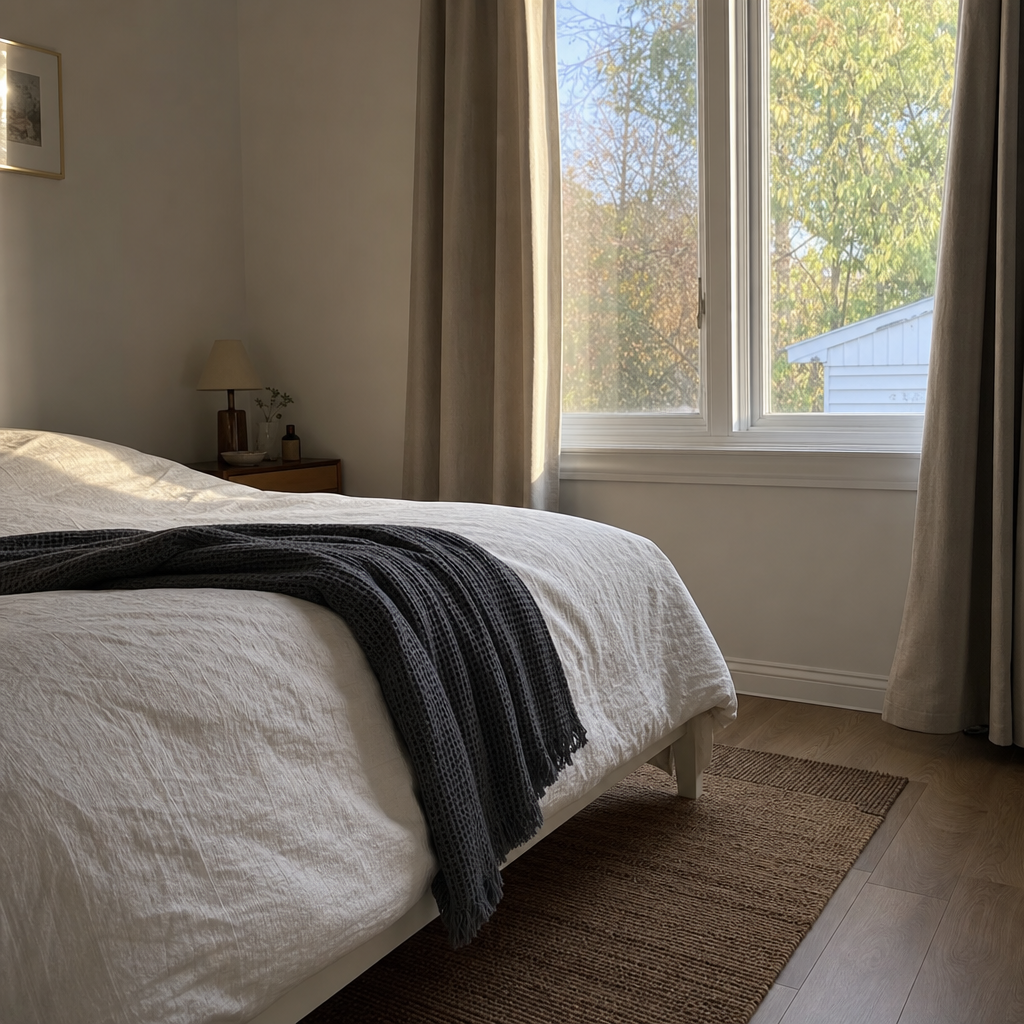
Use a throw already in the living room during colder months, then switch it back when the season changes. Choose a washable material if pets use the bed or the room collects dust easily.
Worth knowing: Loose knits and long fringe can snag on pet claws or catch on rough bed frames, making a tighter weave easier to maintain.
4.Paint only the wall behind the bed
Painting the wall behind the bed creates a clear focal point while leaving the rest of the room light and open. A muted olive, warm clay, smoky blue, or deep neutral can make existing wood, metal, or upholstered furniture feel more grounded.
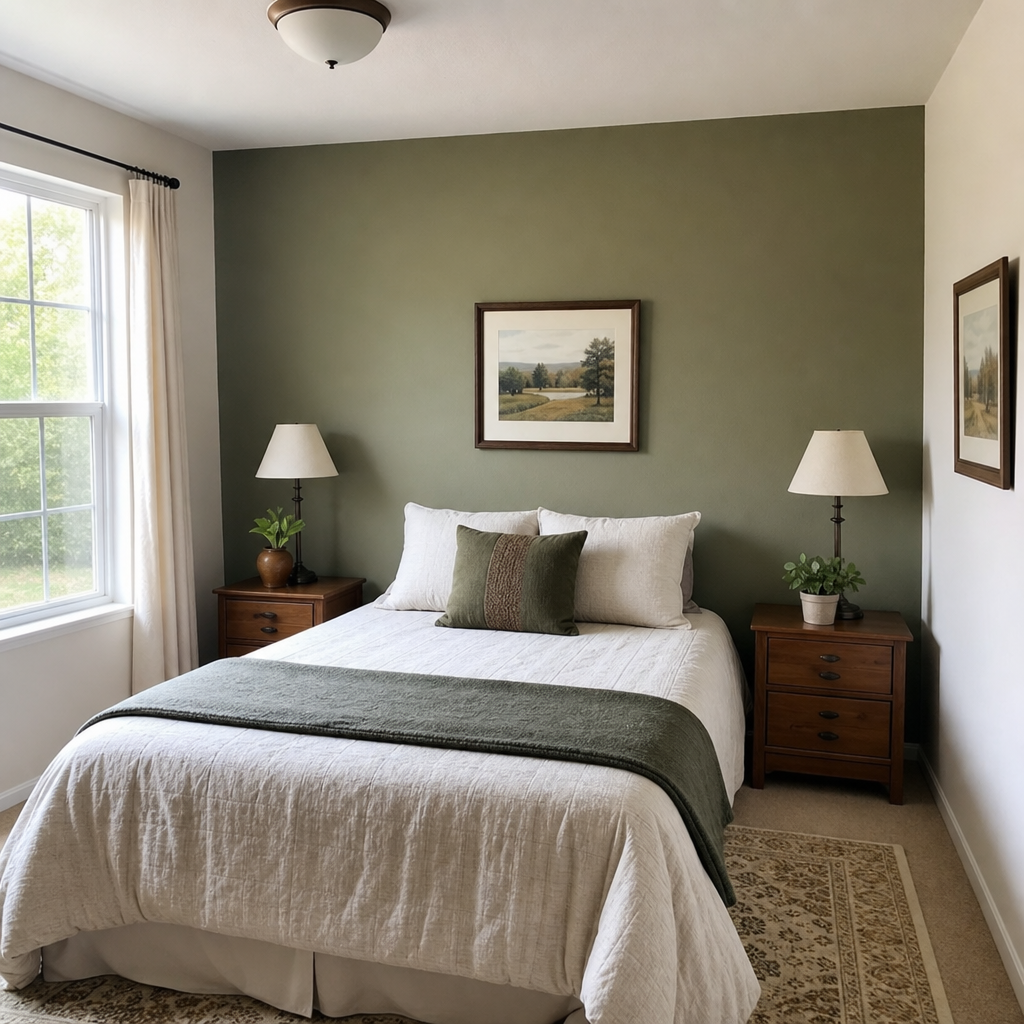
Limiting paint to one wall reduces disruption and makes this a manageable weekend job. Test a sample on the wall first, because window direction and evening light can shift the color considerably.
Worth knowing: An accent wall will not hide ongoing dampness, peeling paint, or cracks; those wall issues need attention before painting.
5.Hang a fabric panel behind the headboard
A curtain panel, flat sheet, or broad piece of washable fabric can create a soft backdrop behind the bed where painting is not an option. This works especially well with simple metal frames or beds that have little visual weight.
Hang the fabric from a slim rod or another rental-appropriate method permitted by the lease. A neutral linen-look weave adds texture, while a faded pattern can bring in color without covering every wall.
Worth knowing: Fabric can gather dust and may fade in strong direct sunlight, so choose a washable panel and avoid placing it where it blocks ventilation or a heat source.
6.Switch harsh bulbs to warm bedside lighting
Harsh overhead light can make a bedroom feel stark even when the furniture and bedding are pleasant. Warm-toned bulbs in bedside lamps or compact plug-in wall lights create smaller pools of light around the bed.
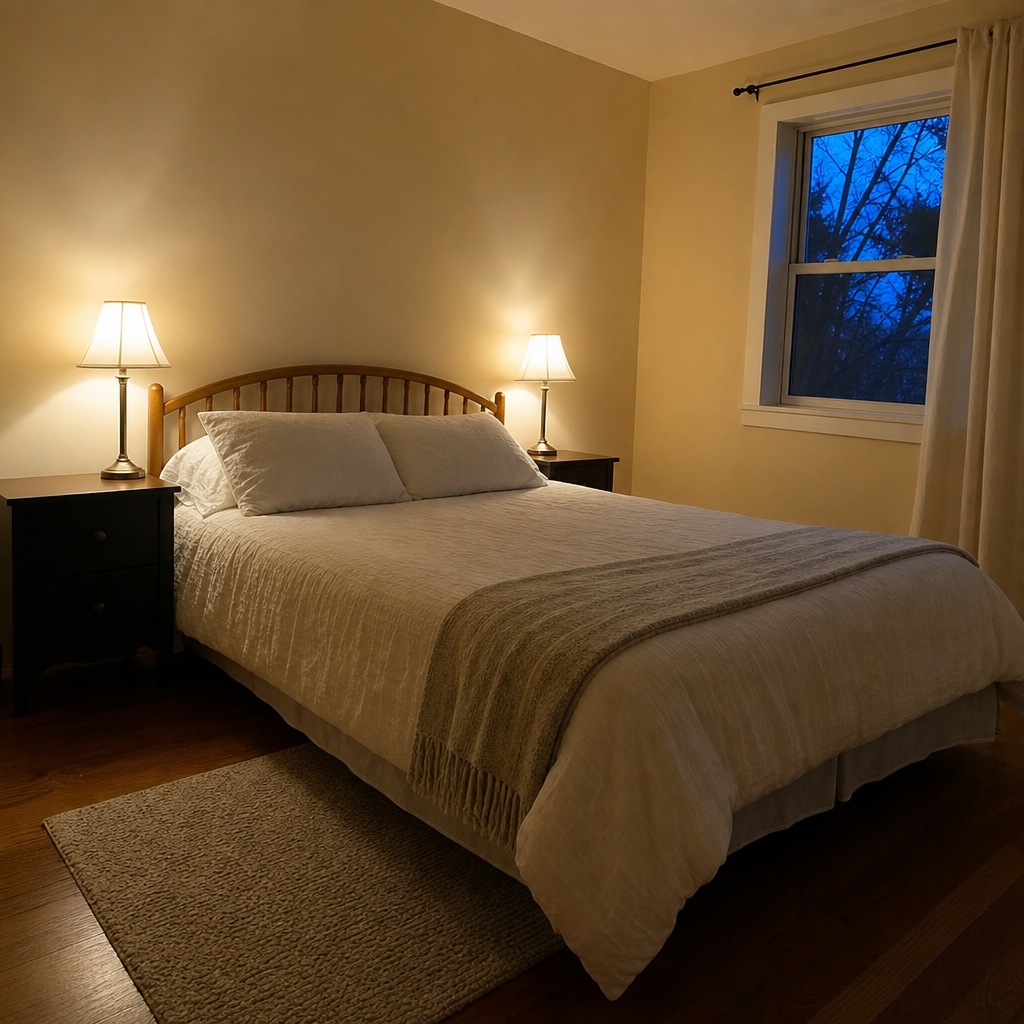
Keep a brighter light available for dressing, cleaning, and finding items in drawers. Matching lamps make the room feel more settled, but similar shades or bulb warmth can also connect mismatched lamps.
Worth knowing: Check the lamp's bulb rating and keep cords clear of walking paths, especially in compact rooms where the bed is close to outlets.
7.Set lamps at different heights beside the bed
A bedside area can look more considered when the lamps do not both sit at the same low level. Raise a small lamp on a stack of sturdy books, or use a taller lamp on one side to vary the silhouette.
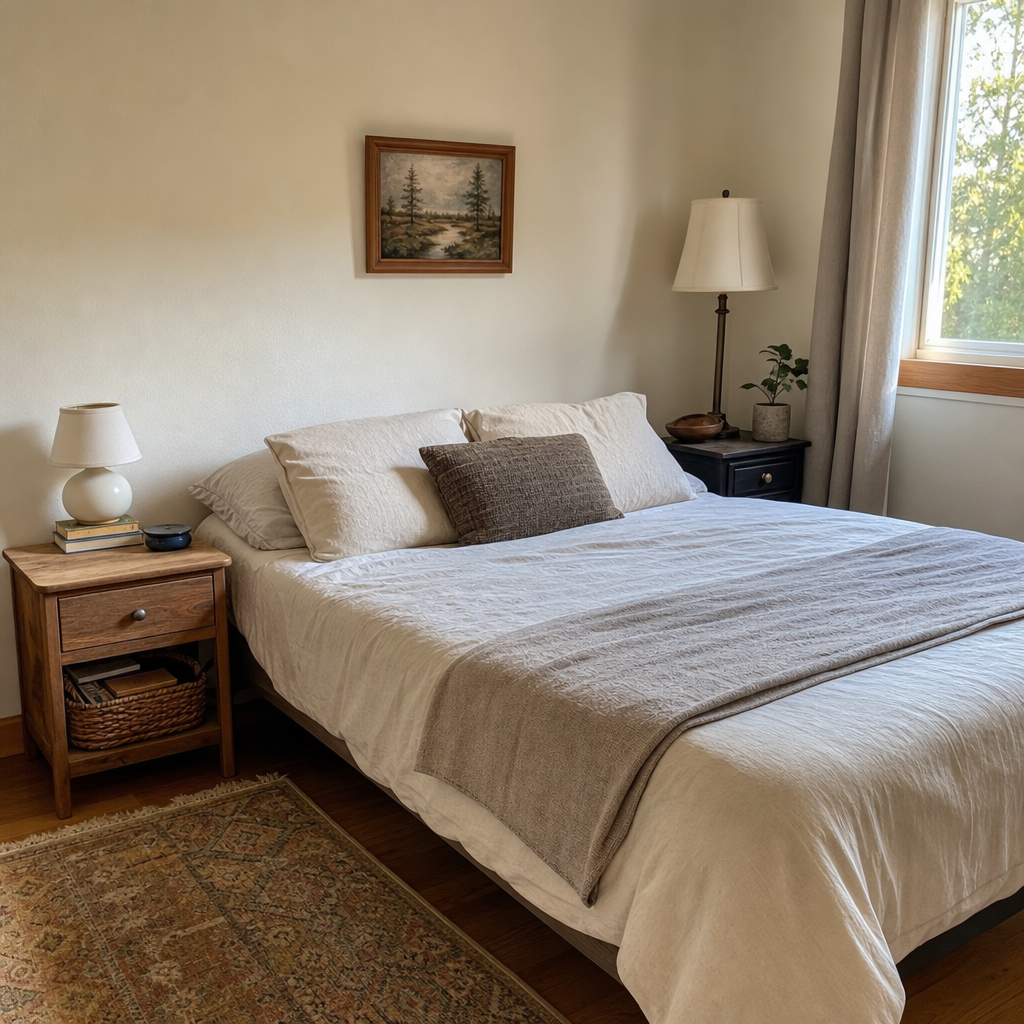
Keep the useful parts simple: a place for a glass, a book, and any nightly essentials. This approach lets existing mismatched nightstands look deliberate instead of unfinished.
Worth knowing: Do not raise a lamp on unstable objects or stack books where they could slide; the base needs to remain level and the cord must reach safely.
Related: 12 Thrifted Decor Ideas That Make Mismatched Finds Feel Collected
8.Add a washable rug beside the bed
A small washable rug or runner softens the first step out of bed and brings color close to the floor. It can warm up plain laminate, tile, or wood without competing with the bed itself.
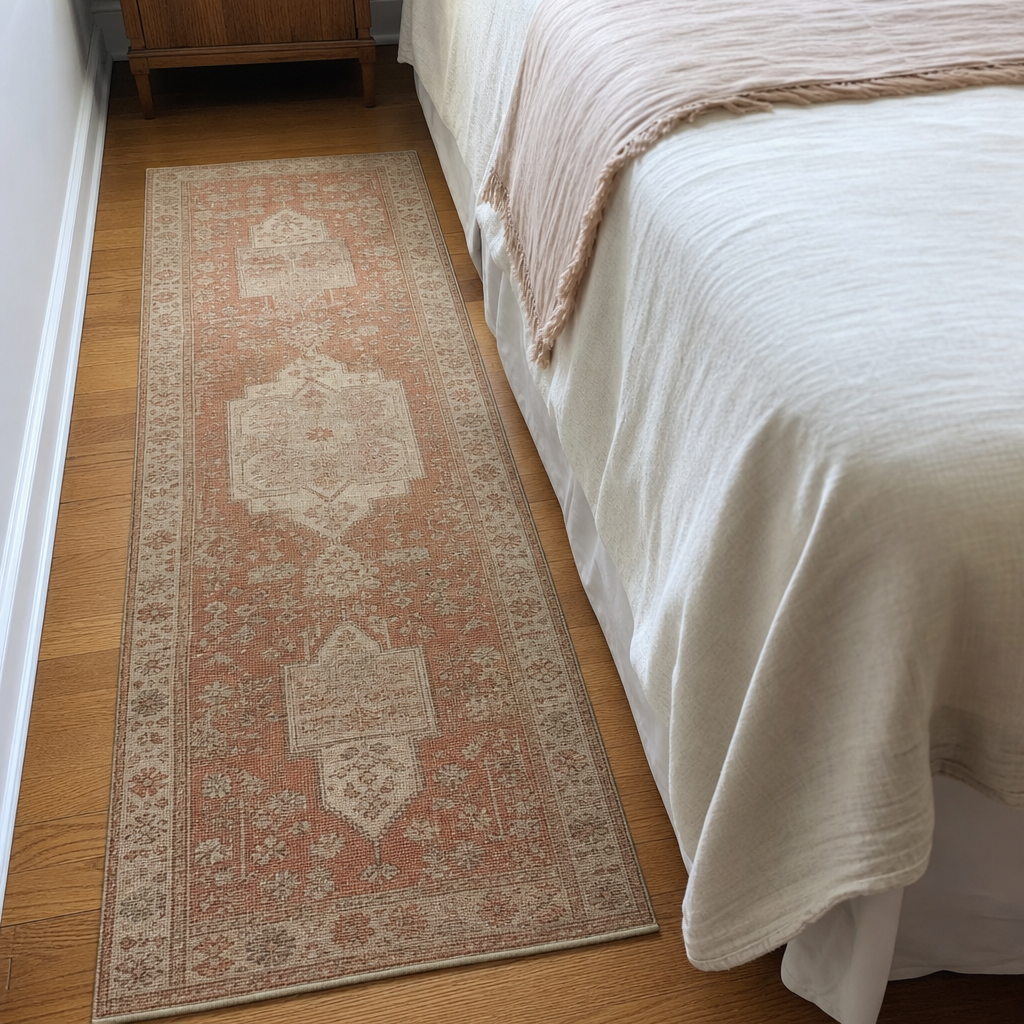
Look for a low-pile option if the room gets dusty, sheds pet hair, or has a door that needs to swing over the rug. A faded terracotta, soft cream, or muted stripe can connect with the bedding without needing an exact match.
Worth knowing: Rugs can bunch or slide on smooth flooring, so use a suitable non-slip layer and make sure the edge does not create a trip point.
9.Frame the window with fuller curtains
Ready-made curtains hung wider than the window make a small window look softer and more substantial. Mounting the rod close to the ceiling when practical can also draw the eye upward in a compact bedroom.
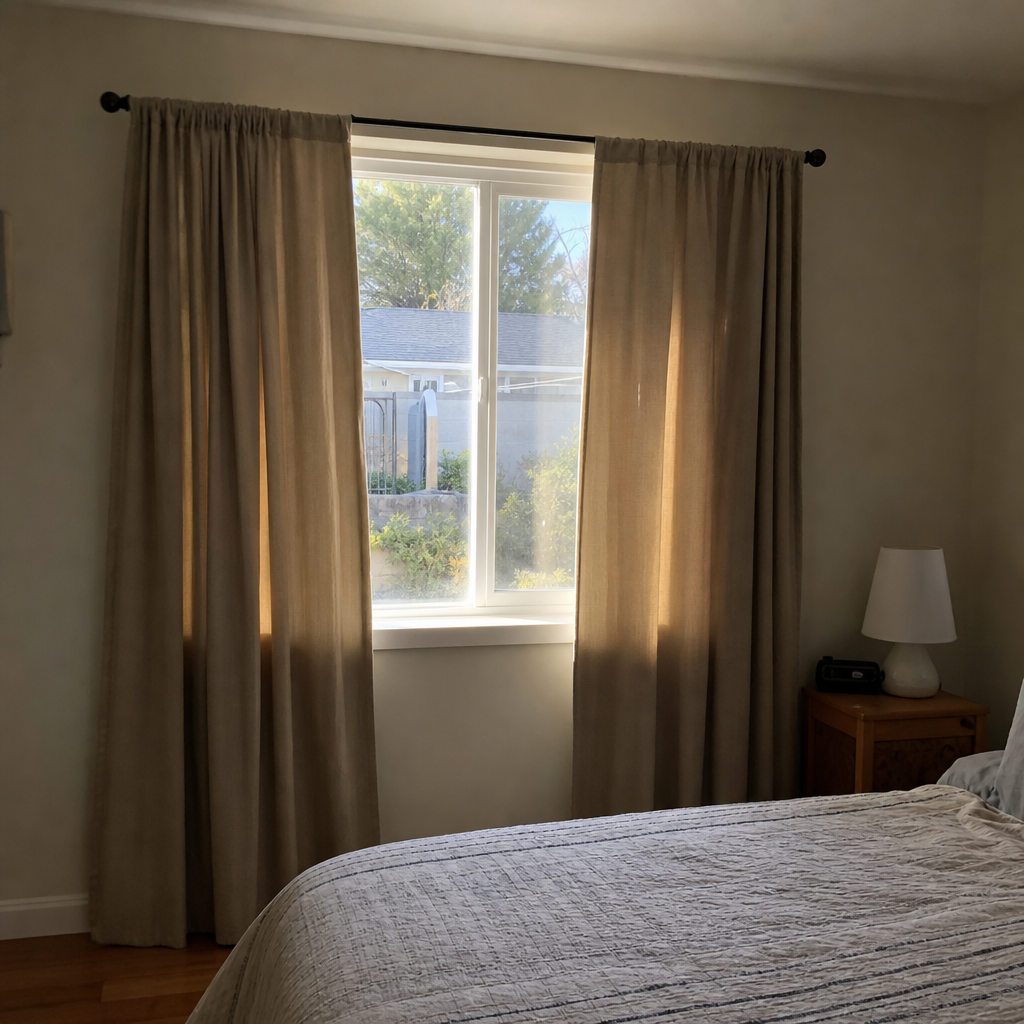
Choose a lining or heavier weave if streetlights, neighboring windows, or early sun make the room feel exposed. Existing curtain panels can be reused if they are long enough and still block light where needed.
Worth knowing: Curtains should not cover radiators, heaters, or vents, and rental rules may limit whether new brackets can be installed.
10.Create a tray vignette on the nightstand
A tray turns ordinary bedside items into one contained arrangement. Group a small lamp, catchall dish, current book, and one low-maintenance object so the nightstand looks intentional while remaining useful.
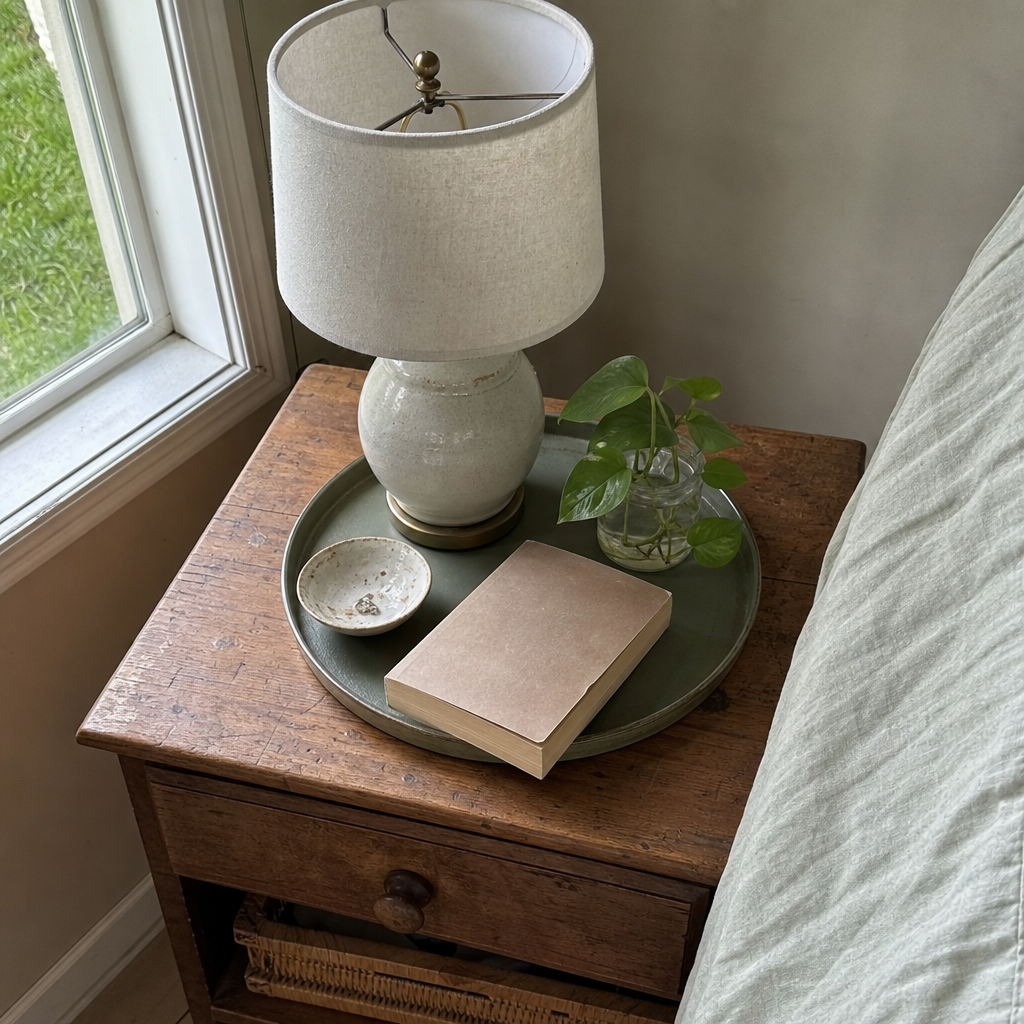
Use a tray, shallow basket, plate, or wooden board already at home instead of buying a matching bedside set. A leafy cutting in a jar can add life, but a simple object is easier if the room has little natural light.
Worth knowing: Keep the tray small enough that there is still open surface space for practical nightly items, especially on narrow nightstands.
11.Use one large piece of calm wall art
One large print, framed textile, or enlarged personal landscape above the bed gives the wall a clear purpose. It is often calmer than several small pieces, which can make a compact bedroom feel visually fragmented.
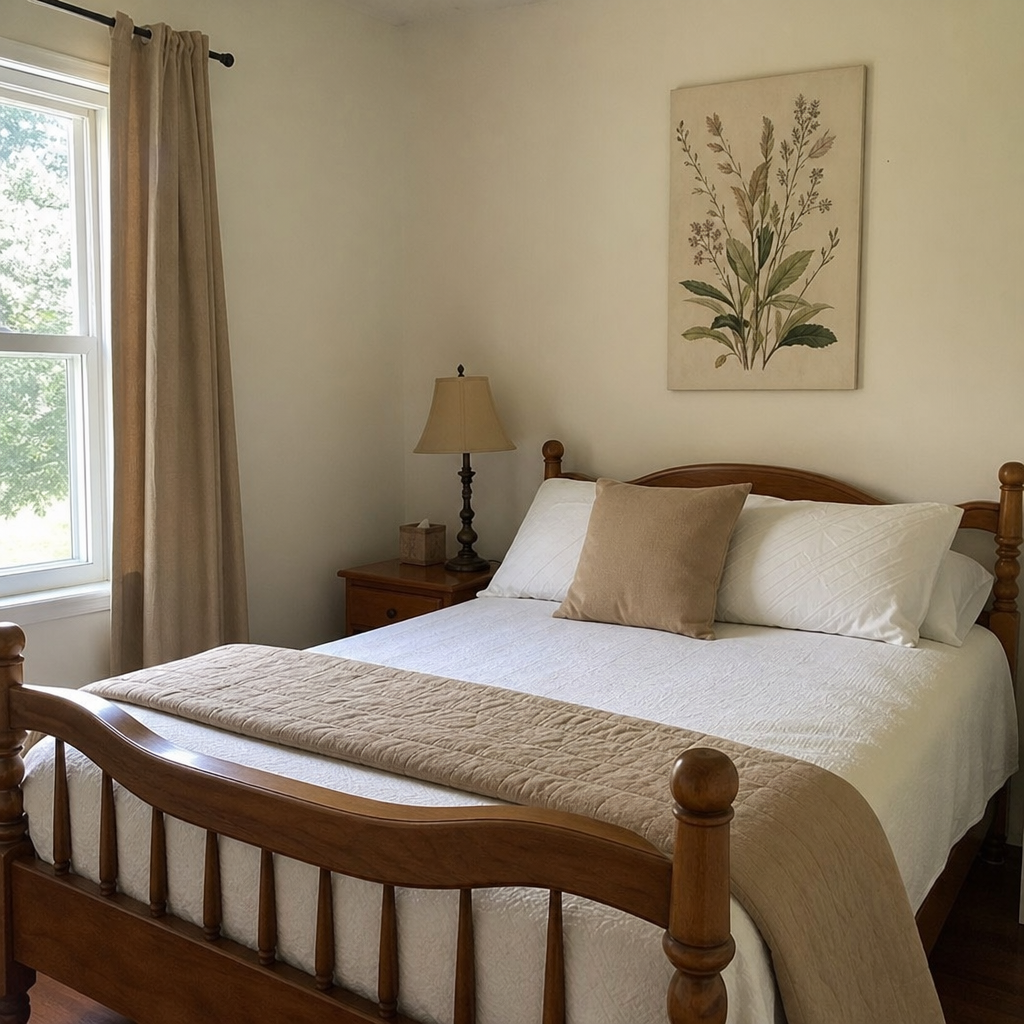
Choose muted colors that echo the bedding or wall color, then center the piece in relation to the bed rather than the entire wall. Lightweight options are usually simpler to hang, particularly in rentals with wall restrictions.
Worth knowing: Check the wall type, hanging hardware, and rental agreement first; adhesive methods may not hold heavier art or may damage some paint finishes.
12.Repeat one color in bedding and bedside details
Pick one accent color and repeat it in two or three places, such as a pillow cover, lamp base, bedside dish, or small piece of art. That repetition makes existing mismatched furniture feel connected without forcing a fully matched look.
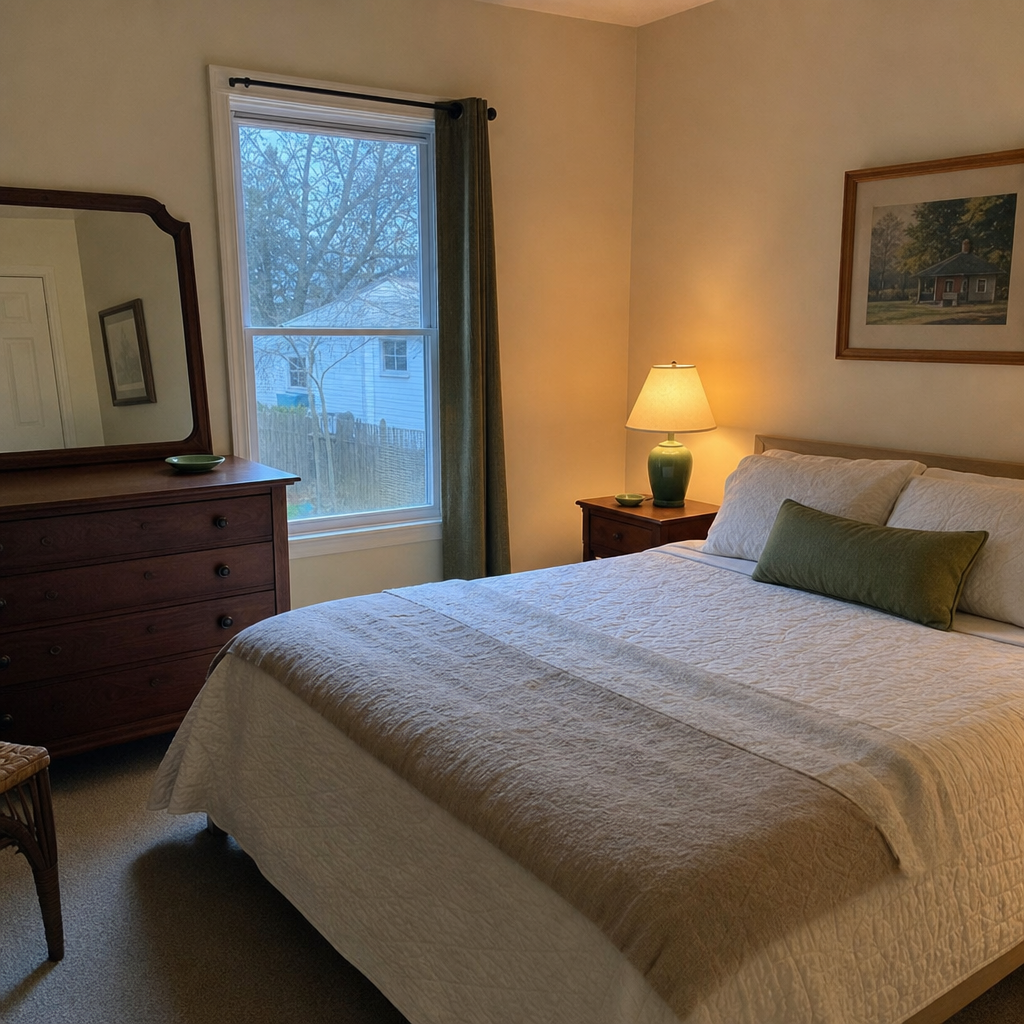
Keep the larger surfaces calm with cream, tan, white, gray, or another quiet base already present in the room. Reusing a colored vase, book cover, or textile can be enough to carry the accent through the bedside area.
Worth knowing: Using the same color in too many items can make a small room feel themed, so leave space for neutrals and natural materials.
About the author
Dana Ruiz, Senior editor
Dana writes about small-space living, storage and low-cost decorating.
Keep reading
10 Budget Curtain Ideas That Make Windows Feel More Finished
September 14, 2026
10 Living Room Lighting Ideas for Renters on a Budget
September 14, 2026
12 Sage Green and Brown Decorating Ideas That Feel Cozy
September 13, 2026
12 Warm Neutral Living Room Ideas on a Budget
September 13, 2026