9 Open Kitchen Shelf Styling Ideas Using Dishes You Actually Use
Open kitchen shelves work hardest when daily dishes are grouped by use, size, and color instead of being scattered like display pieces. These nine arrangements keep frequently reached items accessible while making an existing shelf easier to wipe down and live with.
As an Amazon Associate I earn from qualifying purchases.
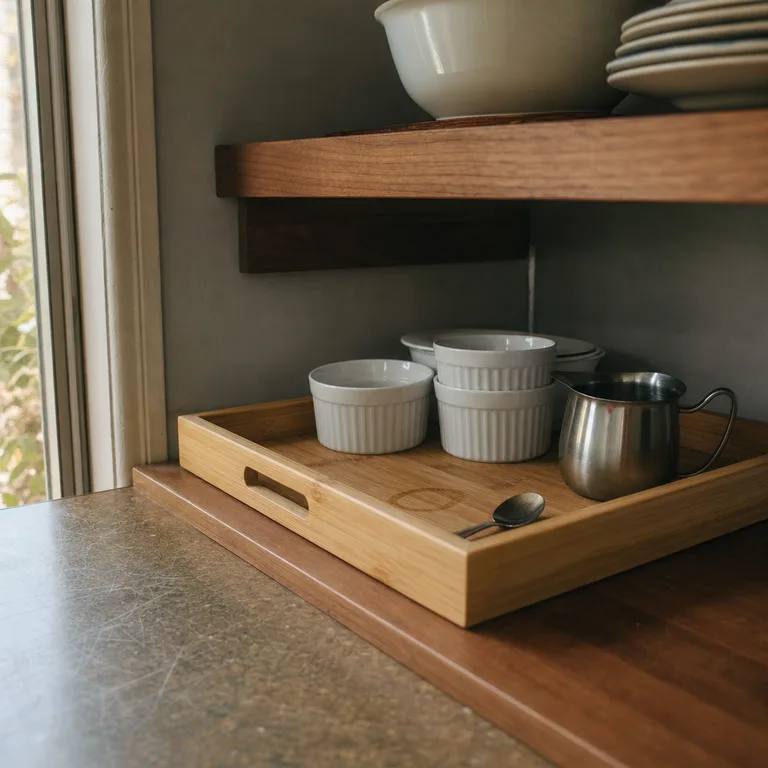
1.Build One Plate Stack With a Bowl Stack Beside It
Use one steady stack for dinner plates and a second stack for the bowls reached for most often. Keeping the two groups side by side makes the shelf read as a working place setting rather than a collection of separate items.
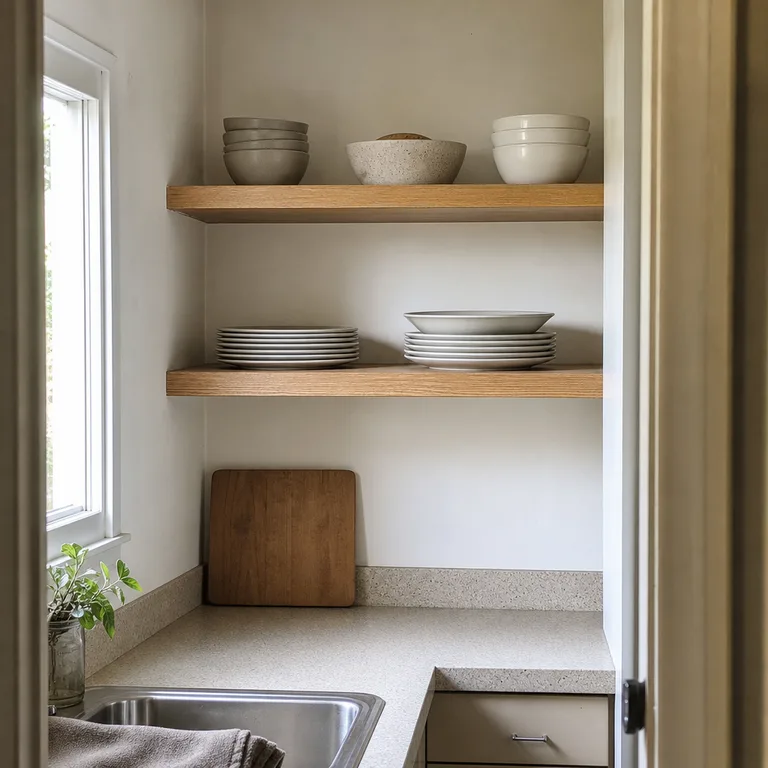
Put the heaviest stacks on a lower shelf and keep within the shelf’s stated load limit. A simple shelf liner can reduce slipping and protect painted or wood surfaces, especially if plates tend to be returned while still slightly damp.
Worth knowing: Tall stacks can be awkward to lift from an upper shelf, so this works best where the top item can be reached comfortably.
2.Line Up Matching Daily Mugs in One Reachable Row
Gather the mugs used for coffee, tea, or other daily drinks and place them in one row. Turn the handles in the same direction for a calmer look that still makes each mug easy to grab.
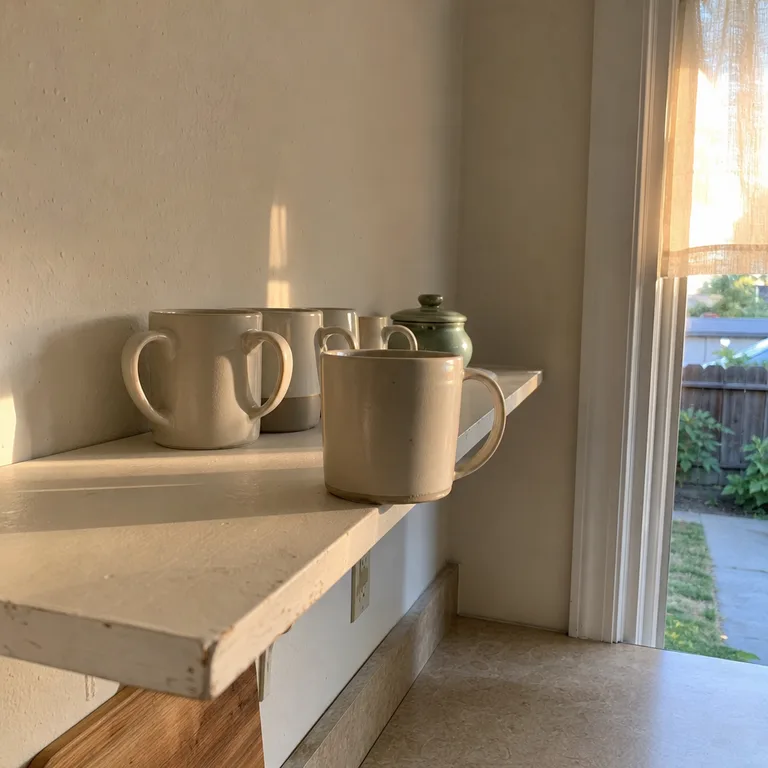
Keep a little space between mugs so one can be lifted out without knocking the next one. This is an easy arrangement to maintain when the shelf is close to the kettle or coffee maker, but not so close to the stove that grease settles on the glaze.
Worth knowing: A mug row can look untidy quickly if many unmatched extras are added, so reserve it for the set used most often.
3.Use White Everyday Dishes With One Accent Color
Let white plates and bowls form the main part of the shelf, then repeat one useful colored item, such as cereal bowls or small plates. The repeated color creates a clear pattern without requiring decorative objects.
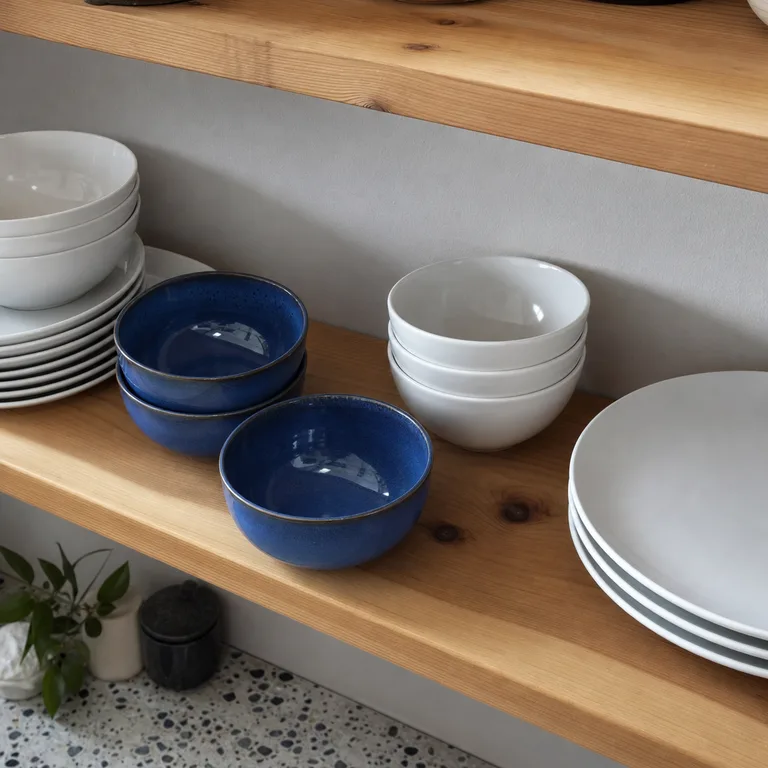
Use dishes already in rotation rather than buying a color theme for the shelf. Keep the accent pieces in one short stack or in matching pairs, which prevents a few colored dishes from looking randomly scattered among the white ones.
Worth knowing: This approach is less effective when several unrelated colors are in daily use on the same shelf.
4.Keep Everyday Drinking Glasses Together by Type
Make one compact group for water glasses and another for tumblers, juice glasses, or other regularly used shapes. Grouping by type makes it faster to set the table and gives clear glassware a more orderly appearance.
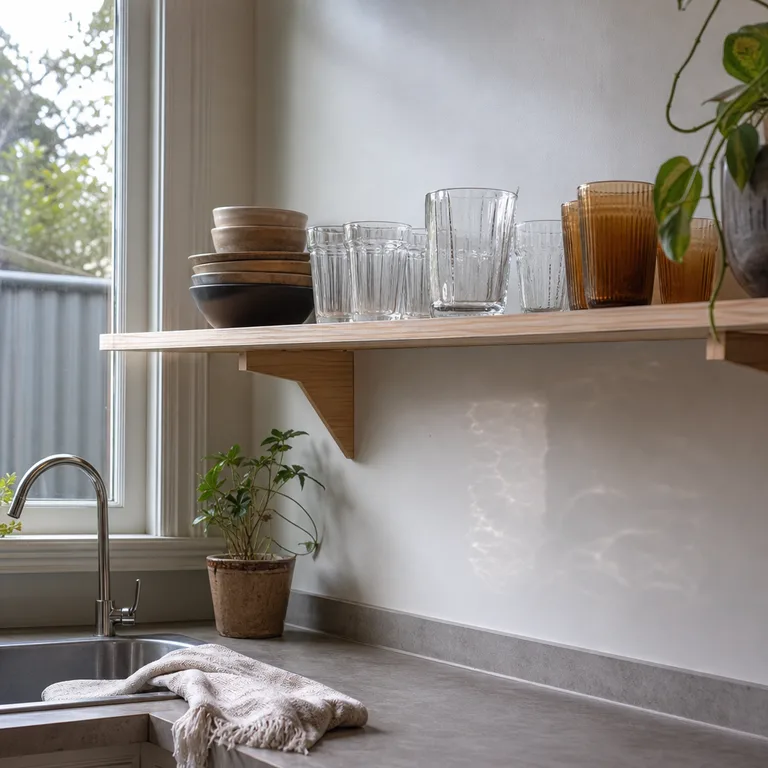
Choose a shelf that is easy to reach and easy to wipe, since glass shows dust, fingerprints, and kitchen grease quickly. Keep fragile pieces away from a crowded shelf edge, particularly in a narrow kitchen where people may brush past them.
Worth knowing: Open glass storage needs regular wiping, especially near cooking areas or in kitchens with limited ventilation.
5.Contain Small Daily Pieces on a Washable Tray
Set loose useful pieces such as teaspoons, a sugar bowl, a small pitcher, or ramekins on one washable tray. The tray gives small objects a boundary, so the shelf looks intentional even when those pieces are used throughout the day.
A tray also makes shelf cleaning simpler because the whole group can be lifted away at once. Choose a size that leaves room around it for fingers to grip and use a material that can handle occasional spills and crumbs.
Worth knowing: A tray can become a catchall, so it needs occasional editing to keep it limited to genuinely useful items.
6.Anchor a Shelf With Large Bowls and Fill the Gap With Small Ones
Place one large mixing bowl or serving bowl near an end of the shelf, then add a short stack of smaller everyday bowls beside it. The larger piece gives the arrangement visual weight while the smaller stack keeps the space practical.
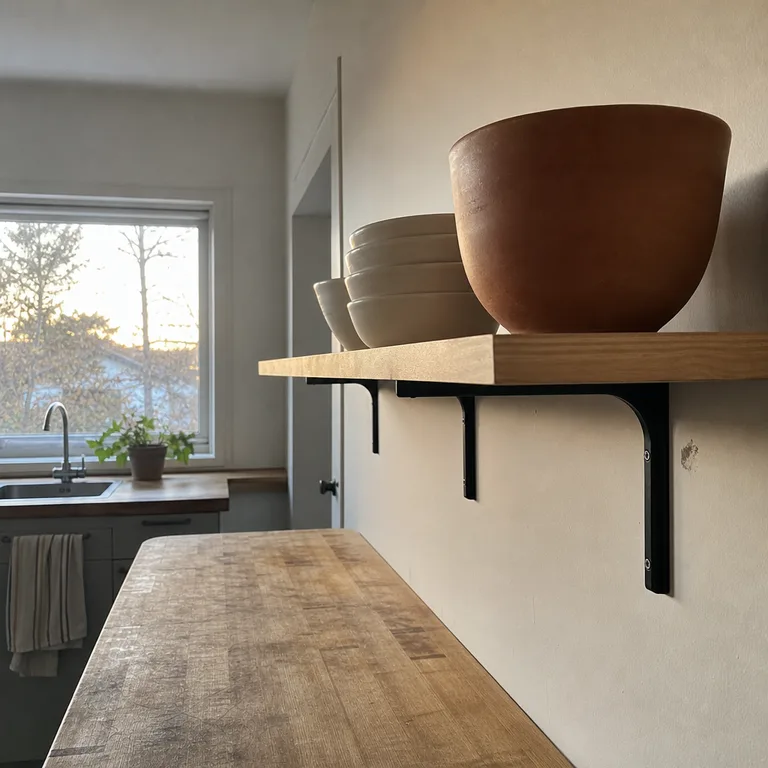
Use this on a shelf deep enough that the large bowl does not project into the working area below. A bowl used only occasionally can sit slightly farther back, while the smaller bowls should stay near the front if they are part of daily meals.
Worth knowing: Large bowls can make a shallow shelf feel crowded and may be difficult to lift down safely from above shoulder height.
7.Nest Serving Dishes as One Useful Display Group
Nest platters, serving bowls, and casserole dishes by size so they read as one compact group rather than several bulky items. This uses vertical space efficiently and keeps pieces together when a meal calls for serving dishes.
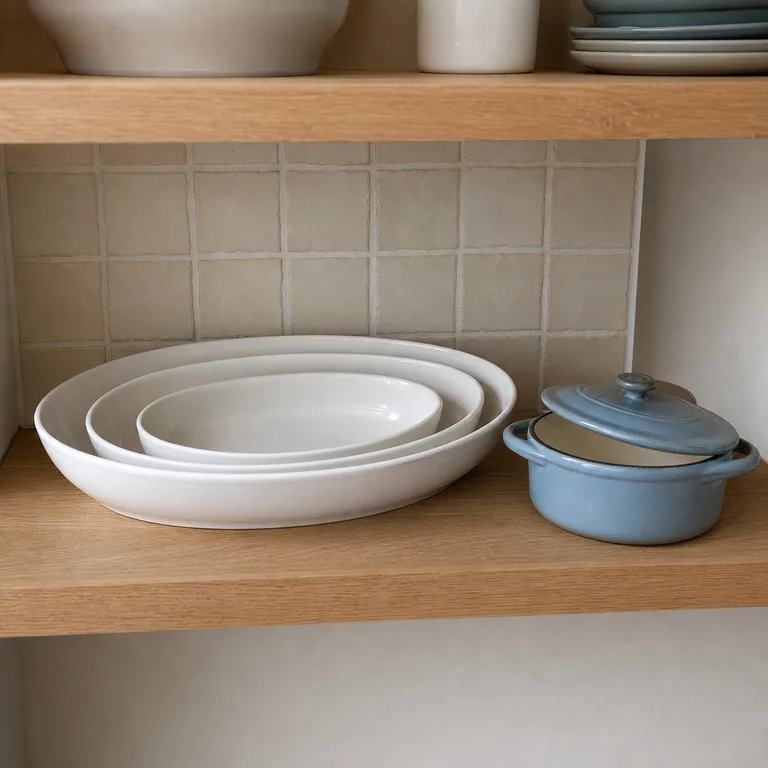
Put heavier pieces on a lower shelf and check there is enough clearance to lift a platter or lid out without scraping the shelf above. Thin pads or clean cloth layers can help protect delicate glazed surfaces, but avoid making the stack so padded that it becomes unstable.
Worth knowing: Nested dishes are efficient, but the piece needed most may be at the bottom of the group.
Related: 12 Budget Dining Table Styling Ideas for Everyday Meals
8.Use a Small Cookbook Stack as a Dish End Stop
Place a short stack of frequently used cookbooks at one end of a dish shelf to keep plates or bowls from spreading sideways. The books add a practical vertical edge without taking up the room needed for daily dishware.
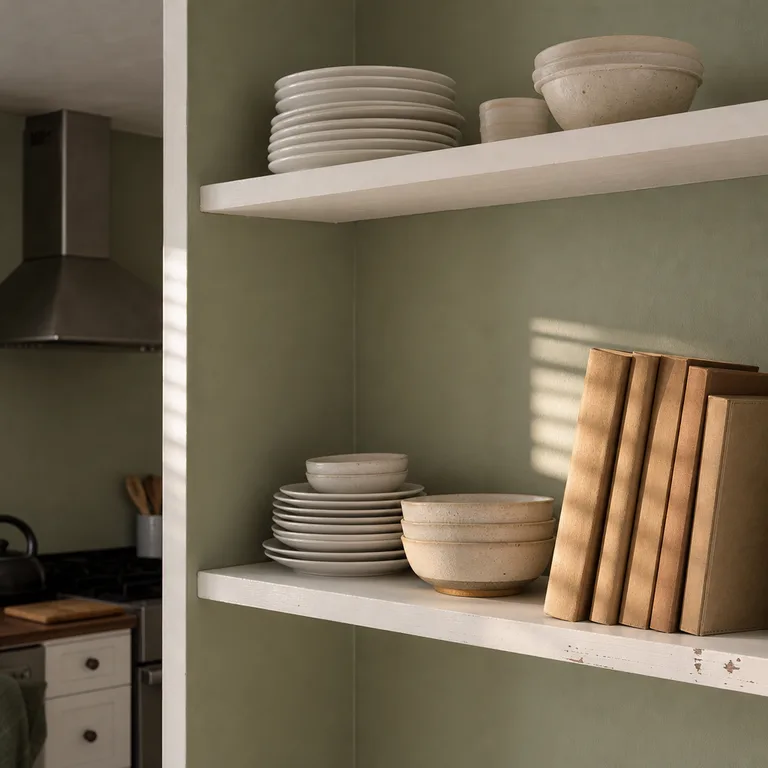
Keep the stack short enough that it does not hide dishes behind it or make the shelf feel top-heavy. Choose books that are actually used and keep them away from the stove side of the kitchen, where grease and steam can damage covers and pages.
Worth knowing: Cookbooks on open shelves collect dust and grease more easily than books stored behind cabinet doors.
9.Separate Clear Glass From Colored Glass
Give clear glasses one cluster and colored tumblers another, rather than alternating them across the shelf. Each group becomes easier to scan, and the color reads as a deliberate part of the arrangement.
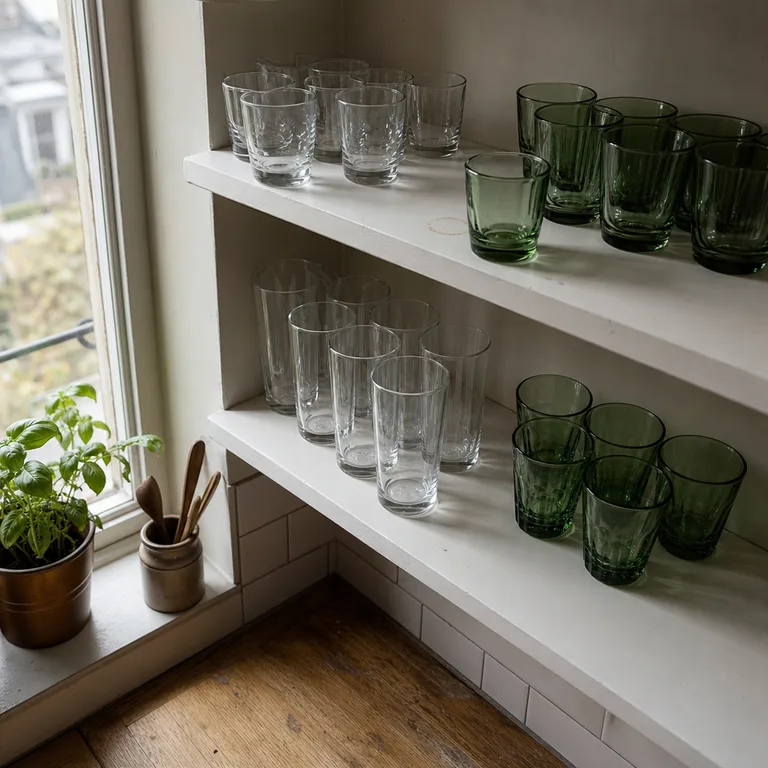
Keep the clusters compact and leave a little open shelf surface between them if space allows. This arrangement works particularly well when colored glasses are used for everyday drinks but do not match the rest of the dishware.
Worth knowing: Colored glass can look visually heavy on a small shelf if the group is too large or mixed with several other bold colors.
About the author
Dana Ruiz, Senior editor
Dana writes about small-space living, storage and low-cost decorating.
Keep reading
10 Shower Curtain Color Schemes That Work With Dated Bathroom Tile
October 16, 2026
7 Ways to Pair Mismatched Bedside Lamps So They Look Collected
October 16, 2026
10 Living Room Color Pairings for Dark Rental Floors You Cannot Change
October 16, 2026
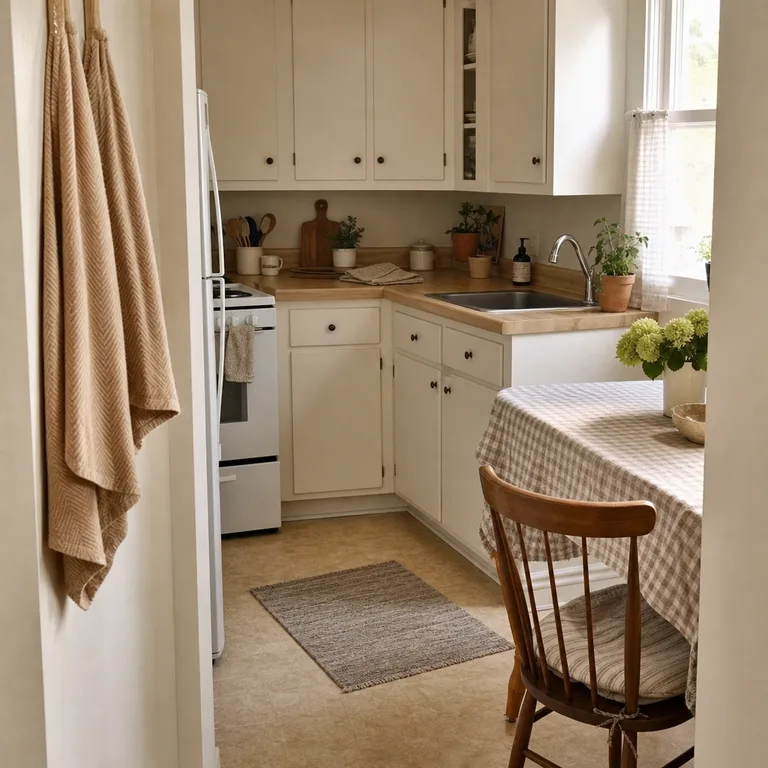
9 Kitchen Textile Pairings That Make Everyday Towels Look Intentional
October 16, 2026