12 Thrifted Decor Ideas That Make Mismatched Finds Feel Collected
A living room can make unrelated thrifted pieces feel intentional when their size, material, color, and placement follow a few clear patterns. These ideas use repetition and proportion to give secondhand finds a collected look while keeping a first home practical and easy to change.
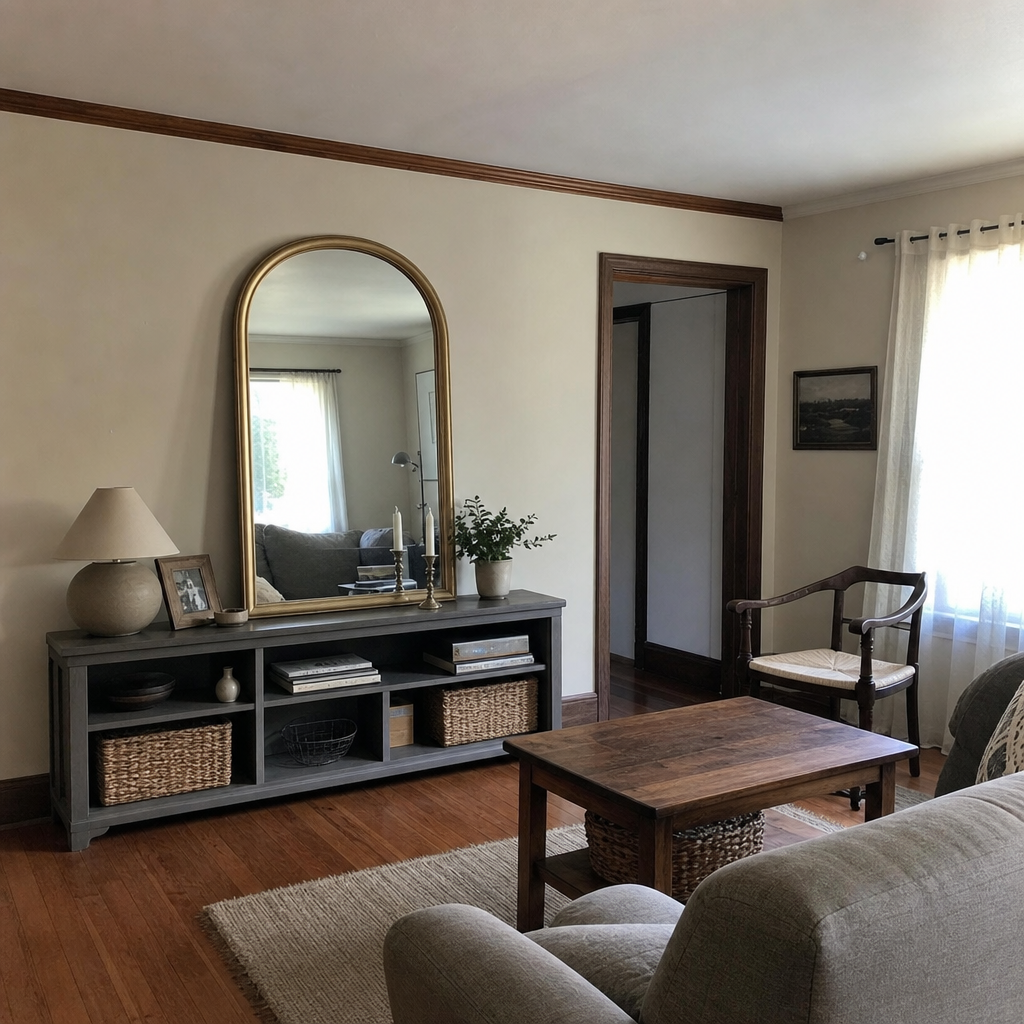
1.Repeat One Wood Tone Across the Room
Choose a few wood pieces that sit in the same general family: warm honey, medium walnut, or deep brown. A side table, picture frames, and a serving tray do not need to match exactly when they share a similar visual warmth.
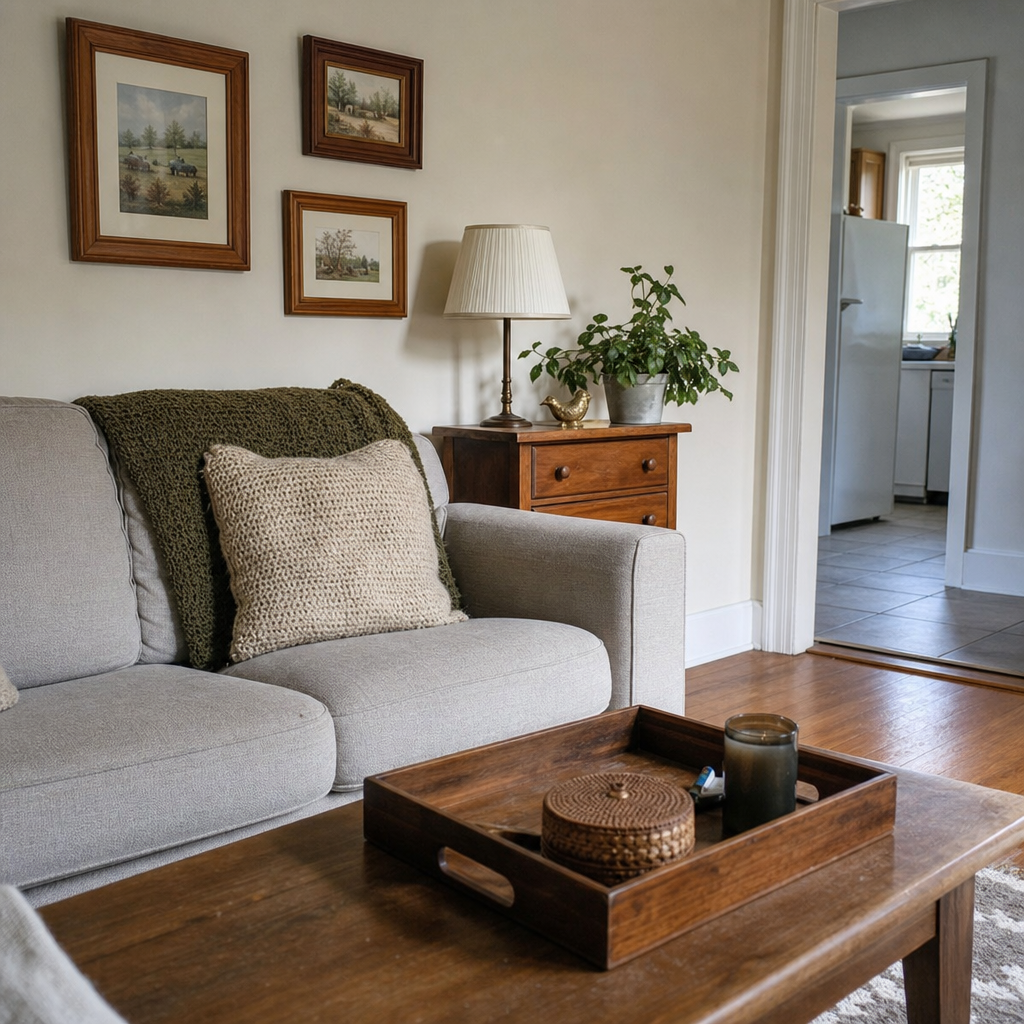
Spread those pieces through the room instead of grouping every wood item in one corner. This gives the eye a repeated material to follow and makes varied thrifted furniture feel more connected.
Look closely at construction before bringing wood furniture home. Severe veneer lifting, deep water stains, and loose or unstable joints can make a bargain impractical for a first-home living room.
Worth knowing: Wood tones with strongly conflicting undertones, such as very orange pieces beside very gray-brown ones, may still look accidental even when repeated.
2.Build a Pair of Matching Lamp Shapes
Use two lamps with related shapes at opposite ends of a seating area. Rounded ceramic bases, narrow column lamps, or squat urn-like forms can create a pair even if the bases are not identical.
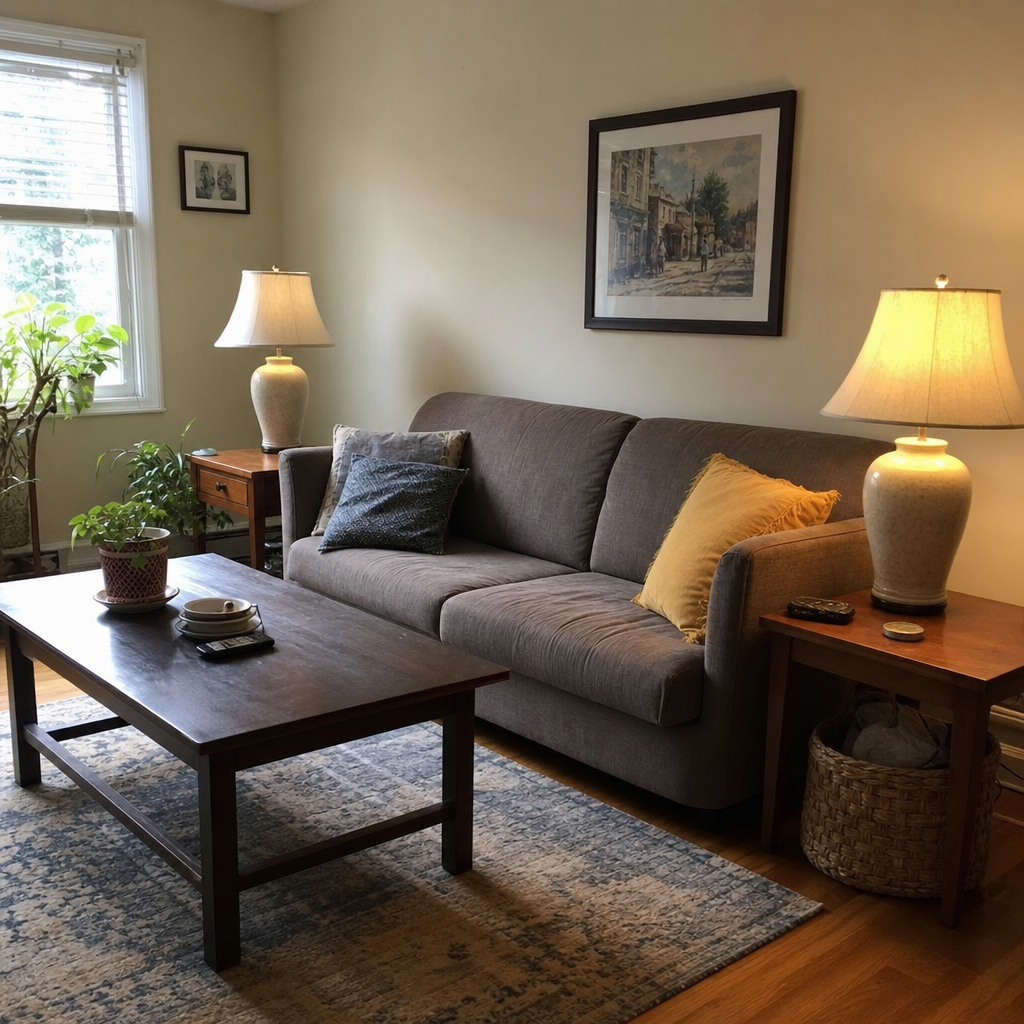
Matching shades do much of the unifying work. Choose simple shades with a similar shape and keep them proportional to the tables beneath them so the lamps look settled rather than top-heavy.
Check cords, switches, plugs, and stability on secondhand lamps. Electrical issues and cracked bases are better avoided than treated as a simple cosmetic project.
Worth knowing: Finding two compatible lamps may take more than one thrift trip, especially when both need to fit small end tables.
3.Group Small Ceramics on One Large Tray
Place assorted pottery, a small bowl, and a candleholder on one broad tray rather than scattering them across a coffee table. The tray gives unrelated objects a shared boundary, so the group reads as a single arrangement.
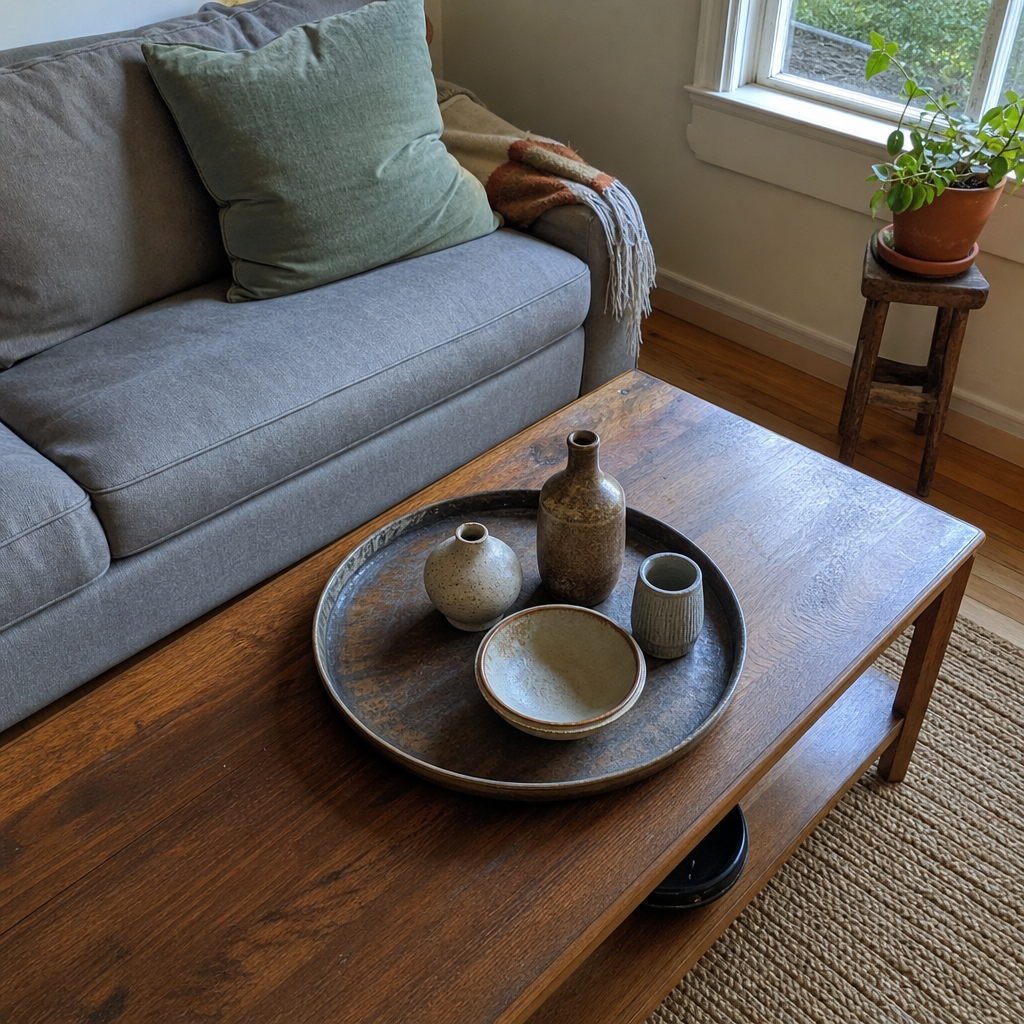
Vary the heights slightly, but keep the collection low and useful. A shallow bowl can hold remotes, while a small vessel or candleholder adds texture without taking over the table.
A thrifted serving tray is often enough to organize pieces already on hand. Keep clear space around it for drinks, books, and daily living.
Worth knowing: A crowded or tall tray arrangement can block sightlines across a small seating area or make the coffee table harder to use.
4.Create a Gallery Wall With Repeated Frame Finishes
Mix thrifted art, postcards, landscape prints, and older frames, but limit the display to two repeated finishes. Black and medium-toned wood, for example, give varied images a simple structure.
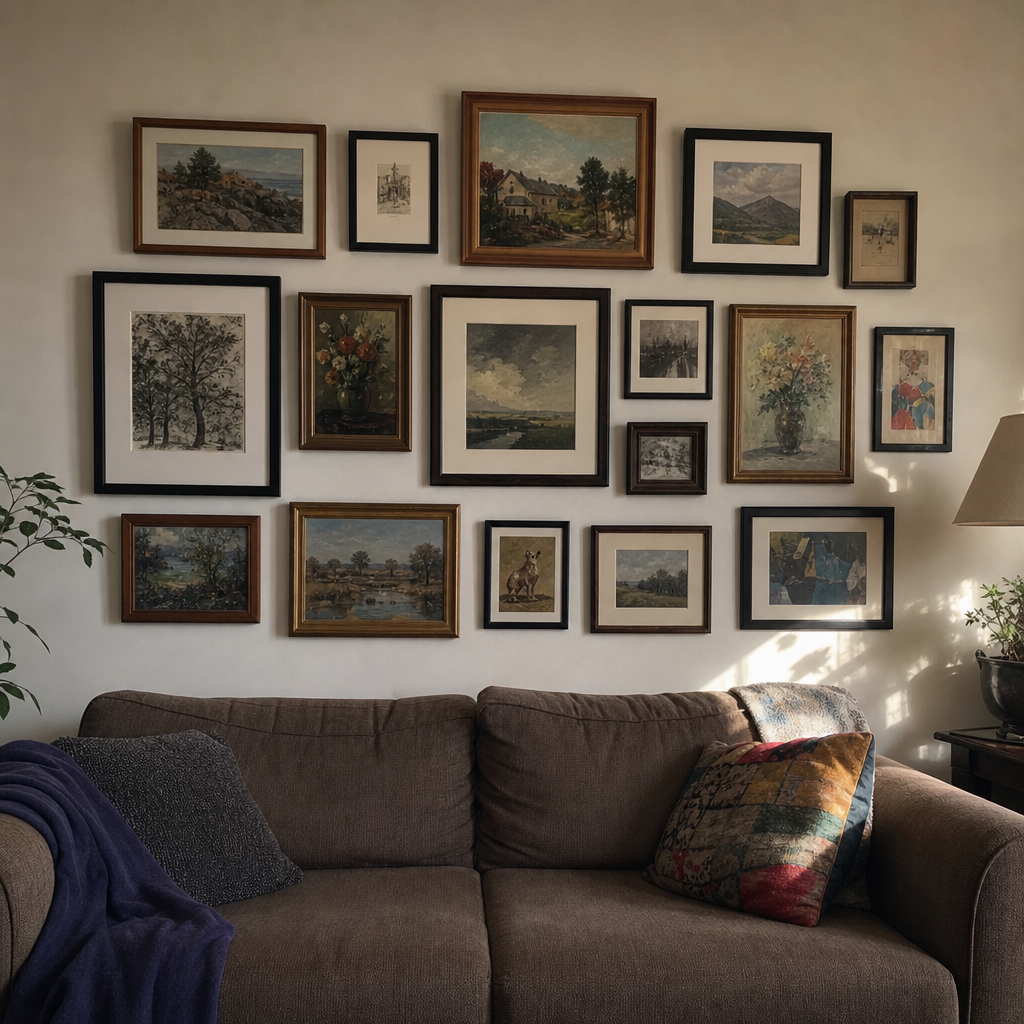
Arrange the pieces as one close grouping rather than dotting them across the wall. Varied sizes work well when the outside edges form a loose, intentional shape above a sofa, desk, or console.
Use removable hanging methods where rental rules require them, and check the weight limit of each hanger. Heavy framed art needs more support than lightweight prints or empty frames.
Worth knowing: A very small wall can look busy quickly, so a tighter edit may work better than trying to display every good find.
5.Use One Oversized Piece as the Anchor
Choose one large mirror, artwork, cabinet, or framed textile to establish the room’s scale. A substantial piece gives small thrifted accents something to relate to, making the whole room feel less pieced together.
Keep surrounding surfaces simple once the anchor is in place. A few smaller objects nearby can support it, but too many competing finds make the room look crowded instead of collected.
Measure the wall, doorway, and intended placement before taking home a large item. Leaning mirrors and tall cabinets also need to be secured appropriately, particularly in homes with children, pets, or uneven floors.
Worth knowing: An oversized piece can overwhelm a compact room if it blocks light, narrows a walkway, or leaves no visual breathing room.
6.Stack Books by Color in Short, Useful Piles
Turn scattered secondhand books into a repeated color element by making a few short stacks. Soft neutrals, faded blues, greens, or warm covers can look connected without requiring every spine to match.
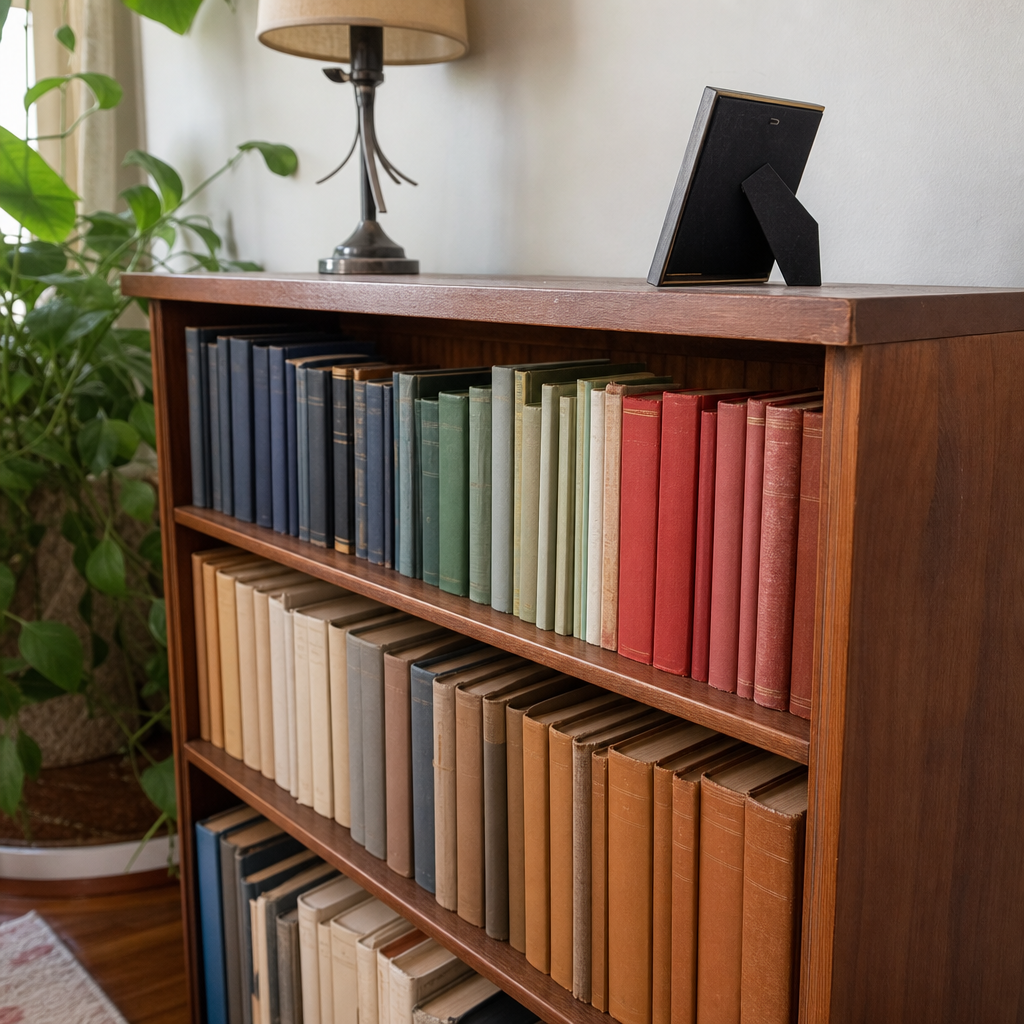
Use stacks where they serve a purpose: under a small object on a shelf, beside a lamp, or on a coffee table. Leave room for remotes, drinks, and books that are actually being read.
Sort through books for musty odors, moisture damage, and loose pages before displaying them indoors. In humid spaces, avoid packing books tightly together, since airflow helps limit mildew problems.
Worth knowing: Color sorting can hide useful titles or make a shelf feel overly styled if every book is treated as decoration.
7.Make a Seating Cluster Around One Rug
Bring a sofa, thrifted chairs, and a coffee table into one conversation area by placing their front legs on the same rug. The rug acts like a visual floor plan, making furniture from different eras feel like it belongs together.
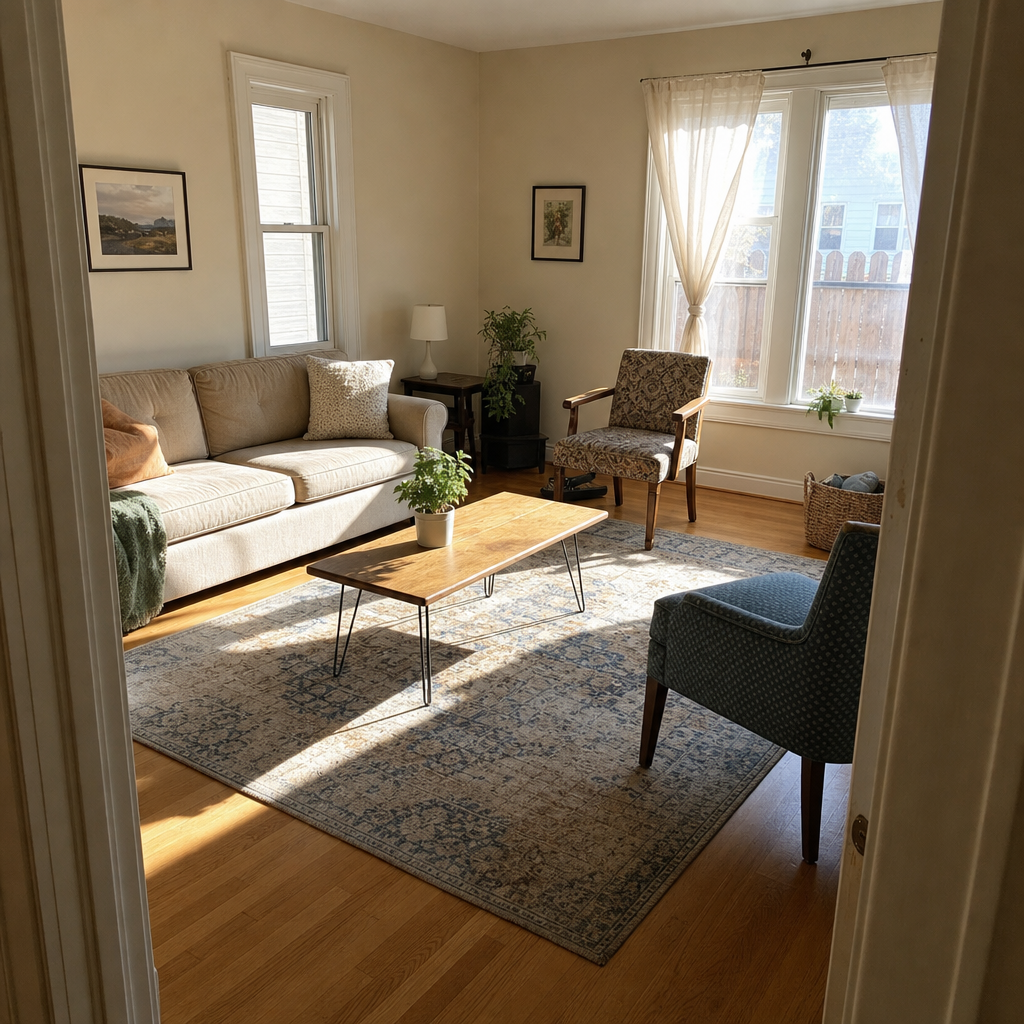
Choose a rug broad enough to connect the seating rather than leaving each piece on its own small island. Even different chair styles look more intentional when their placement is organized around the same central surface.
Keep rug edges flat and clear of busy walkways. A rug pad can help prevent sliding, while a low-pile option is often easier to manage around doors, pets, and frequent cleaning.
Worth knowing: A rug that is too small can emphasize the gaps between mismatched furniture instead of unifying it.
8.Repeat Curved Shapes in Different Finds
Look for a shared outline rather than a matching material. An oval mirror, rounded lamp base, curved chair arms, and bowl-shaped planter can make wood, ceramic, metal, and upholstery feel related.
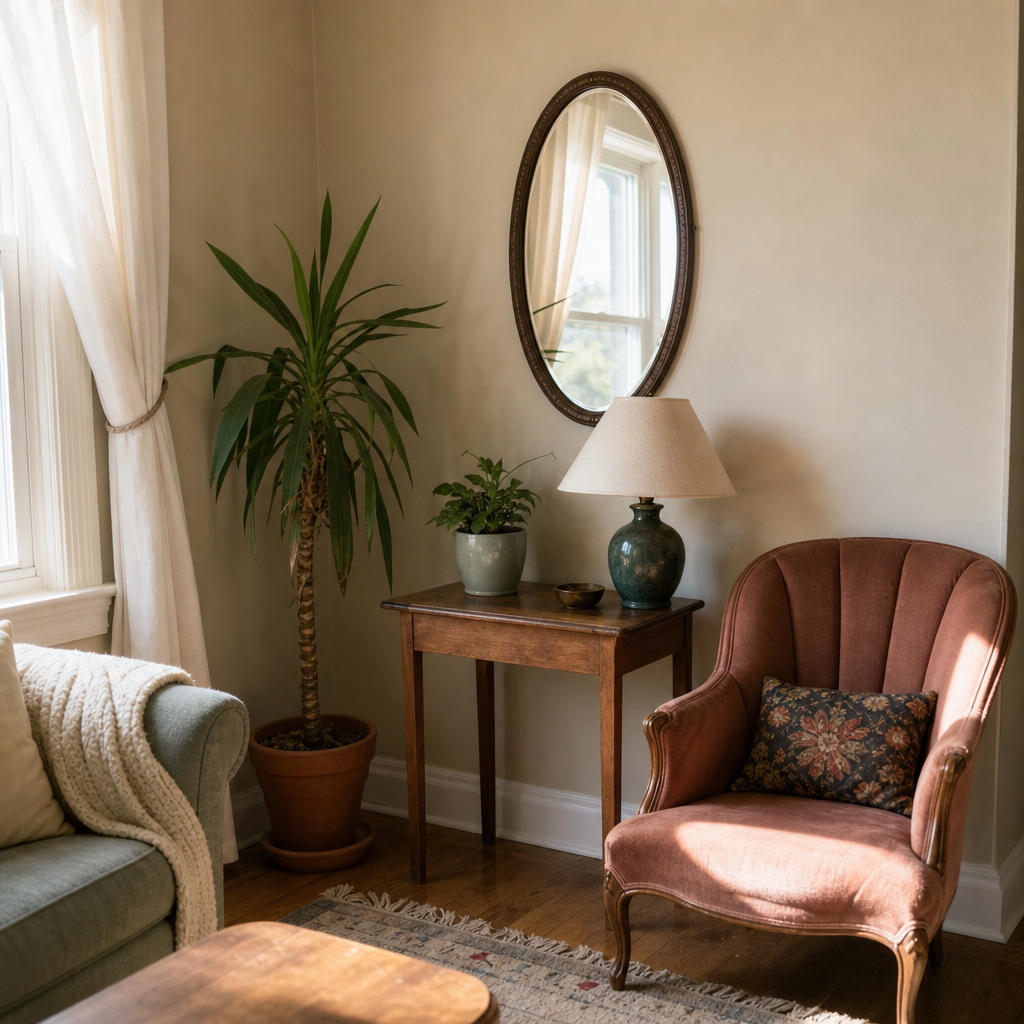
Use curved items in separate parts of the room so the shape repeats naturally. This works especially well in a room full of boxy rental finishes, straight-lined sofas, and rectangular windows.
Do not force every item into the same silhouette. A few straight pieces, such as a console or bookshelf, give rounded finds contrast and keep the room from feeling overly themed.
Worth knowing: Too many decorative curves in a small room can make the arrangement feel fussy, especially when furniture already has ornate details.
9.Line Up a Collection Along One Shelf
Give a small collection one clear home on a mantel, shelf, or console. Brass candlesticks, glass bottles, or ceramic vessels look deliberate when placed in a single row with space between each piece.
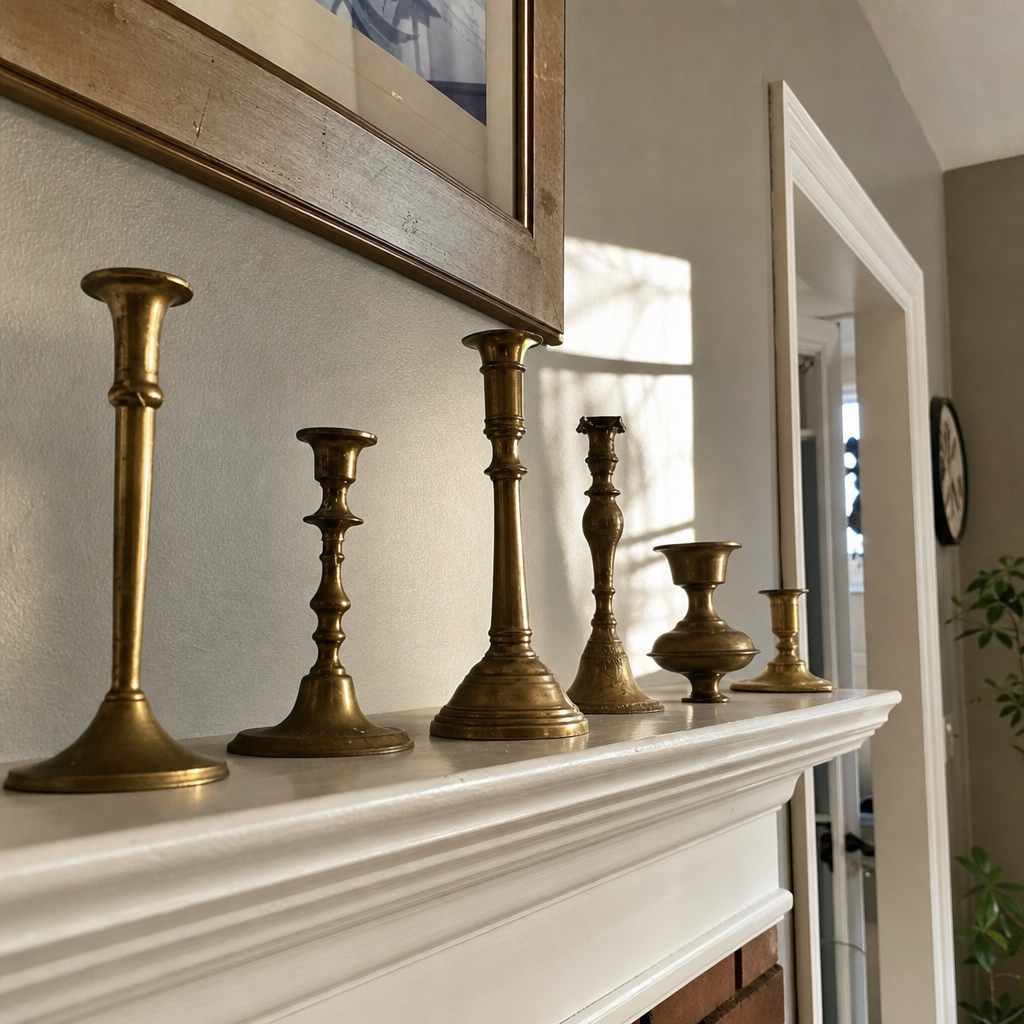
Vary height and shape, but repeat the material or general type of object. A line of candlesticks in different heights has a cleaner effect than mixing candlesticks, figurines, bowls, and unrelated souvenirs together.
Inspect thrifted decor for sharp chips, stubborn residue, and damage that cannot be cleaned safely. Pieces with chipped rims or unstable bases are not ideal for shelves at hand height or in homes with children and pets.
Worth knowing: A single-row display needs enough shelf length to breathe; squeezing many objects together can look like storage rather than a collection.
10.Match the Height of End Tables Beside Seating
Different end tables can sit together when their tops land at a similar usable height beside a sofa or chair. The materials and shapes may vary, but aligned table heights make the seating area feel planned.
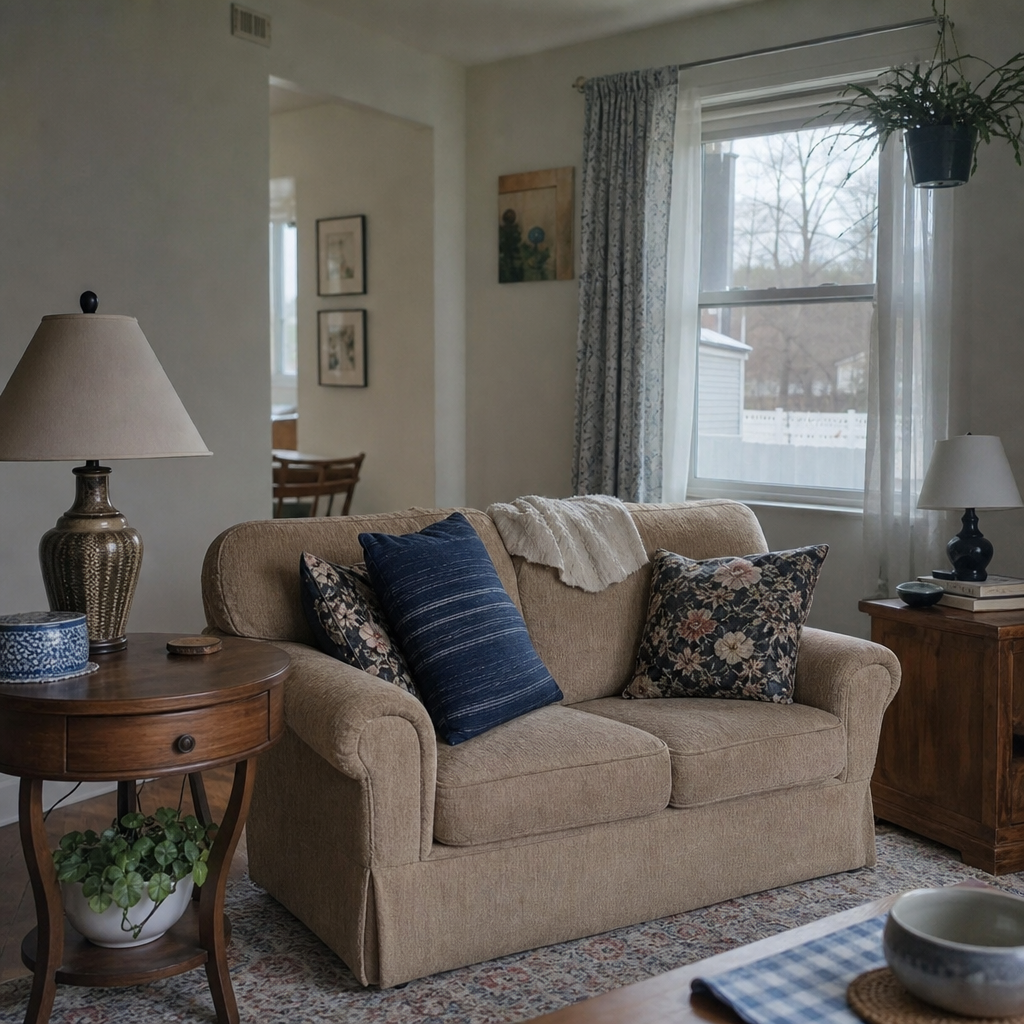
Use each table for the same basic job: holding a lamp, drink, book, or small tray. Repeating that function creates order without requiring a manufactured furniture set.
Test thrifted tables for wobble and check whether their tops are level enough for everyday use. A high-use table beside seating should be sturdy, not a repair gamble.
Worth knowing: Tables with dramatically different heights are difficult to disguise and may be uncomfortable to use, even if their styles work together.
11.Layer Textiles in a Narrow Color Family
Pull together thrifted pillows, a throw, and a small upholstered stool through a narrow color family. Earthy rusts and creams, muted blues, or layered neutrals allow patterns to vary while still giving the sofa a clear direction.
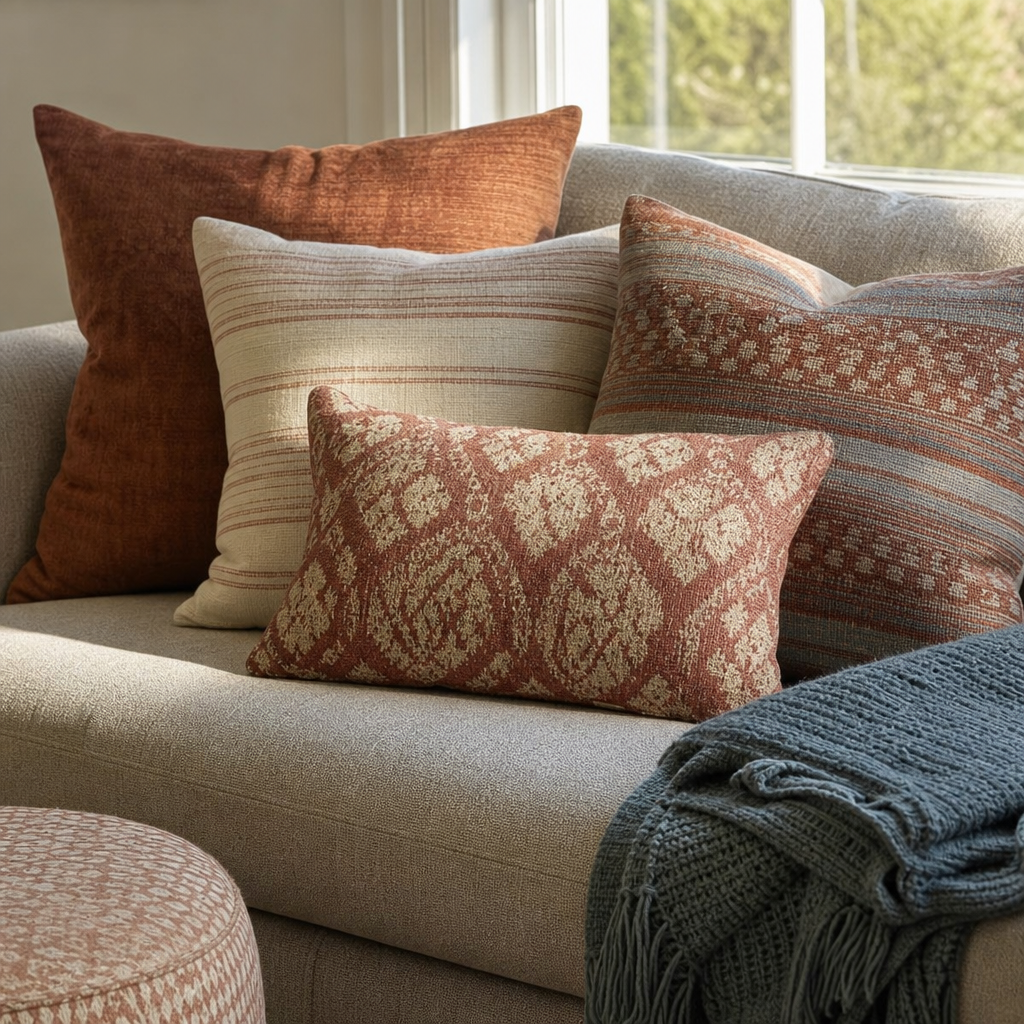
Mix scale instead of matching every pattern. One larger pattern, one smaller print, and one plainer texture can make old textiles feel layered rather than random.
Check upholstered finds for odors, staining, pests, and fabric wear before bringing them inside. Washable covers and easily laundered throws are often the most practical choices for a first home.
Worth knowing: A narrow palette can still feel busy if every pillow has a strong pattern or heavily textured fabric.
12.Leave Empty Space Around the Best Finds
Edit each surface so a standout thrifted vase, artwork, or lamp has room around it. Open space makes chosen pieces look more important and prevents a collection from reading as overflow.
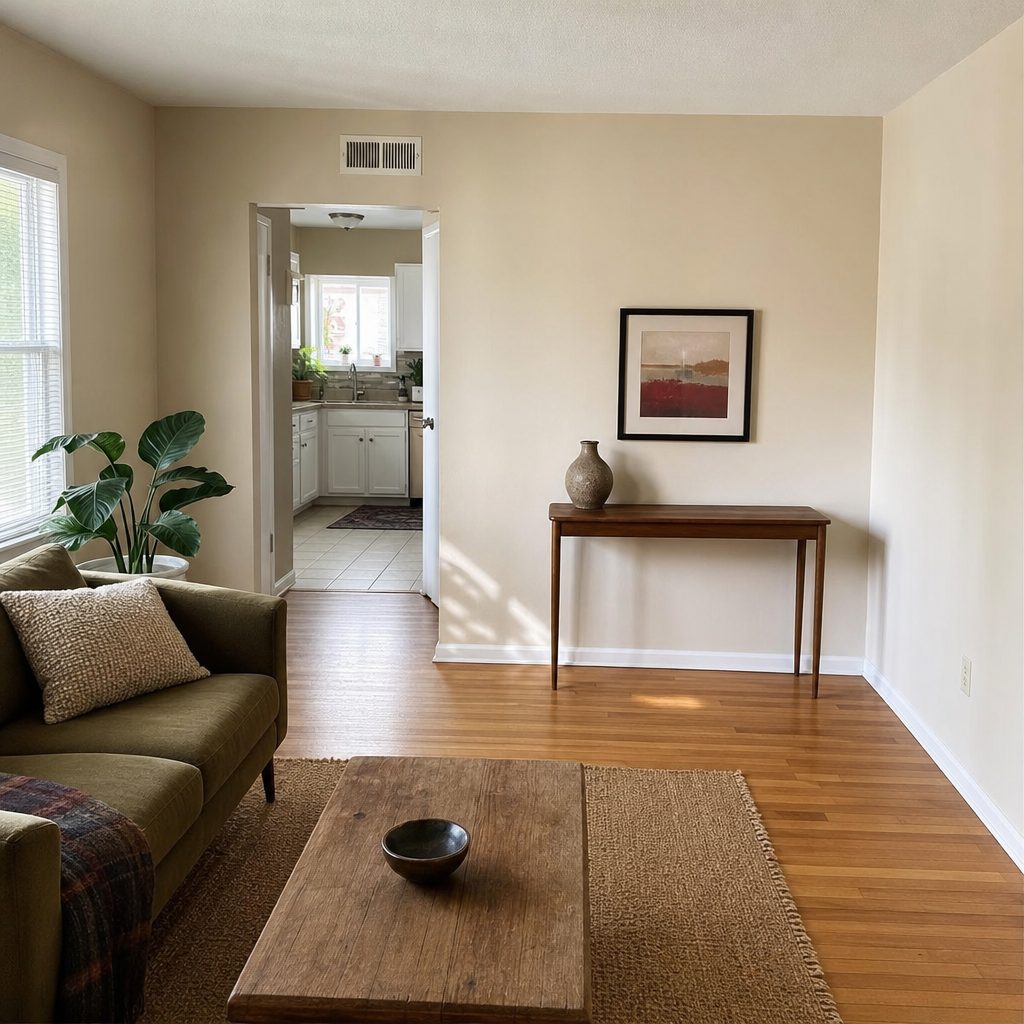
Keep taller objects away from window areas where they interrupt daylight, and leave walkways clear around consoles and side tables. This matters in rentals and first homes where rooms often need to serve several purposes.
Rotate smaller finds rather than displaying everything at once. Storing a few pieces for later refreshes keeps shelves lighter and gives favorite objects a chance to stand out.
Worth knowing: A very sparse arrangement can feel unfinished if the room lacks larger furniture, art, or textiles to provide warmth and visual weight.
About the author
Dana Ruiz, Senior editor
Dana writes about small-space living, storage and low-cost decorating.
Keep reading
12 Sage Green and Brown Decorating Ideas That Feel Cozy
September 13, 2026
12 Warm Neutral Living Room Ideas on a Budget
September 13, 2026
15 Budget Living Room Updates That Work With the Sofa You Already Own
September 13, 2026
15 Budget Landscaping Ideas That Make a Small Yard Feel Finished
September 11, 2026