8 Easy 4-by-4 Raised Bed Planting Layouts for Beginners
These eight overhead planting plans use one existing 4-by-4-foot bed, with spacing that leaves each crop enough room to mature and keeps the middle reachable from the surrounding path. Match spring, summer, fall, and overwintering plans to local frost dates and extension guidance, and place taller crops on the side that will not shade shorter ones during the main growing season.
As an Amazon Associate I earn from qualifying purchases.
1.Early Spring Salad Bed With Lettuce, Spinach, and Radishes
Use this quick cool-season layout in early spring or fall. Set four looseleaf lettuces in a central square at roughly 10-inch spacing, sow spinach in two 6-inch-spaced rows along one side, and use the remaining edge rows for radishes spaced about 2 inches apart.
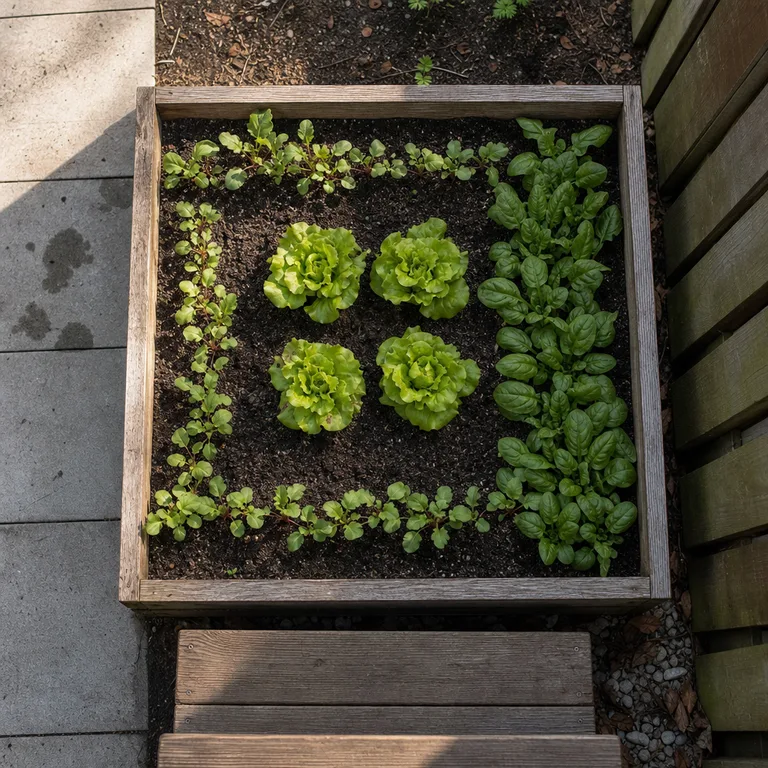
Radishes are the first crop to come out, which gives the lettuces more room as their heads widen. Mark the rows with a stick or saved plant labels so small seedlings are easier to distinguish from weeds.
Keep the bed evenly moist during germination, especially if spring winds dry the soil surface. A bed that receives gentle morning sun but has some afternoon protection can help the greens last longer in warm spring weather.
Worth knowing: This is a short-season plan; heat can make spinach and radishes bolt, so it is not a reliable summer layout in hot climates.
2.Warm-Season Bush Bean Grid
After frost danger has passed and the soil has warmed, plant bush beans in a six-by-six grid with plants about 6 inches apart. Reserve a narrow bare strip along the front edge so pods can be picked without pressing down the soil or reaching through foliage.
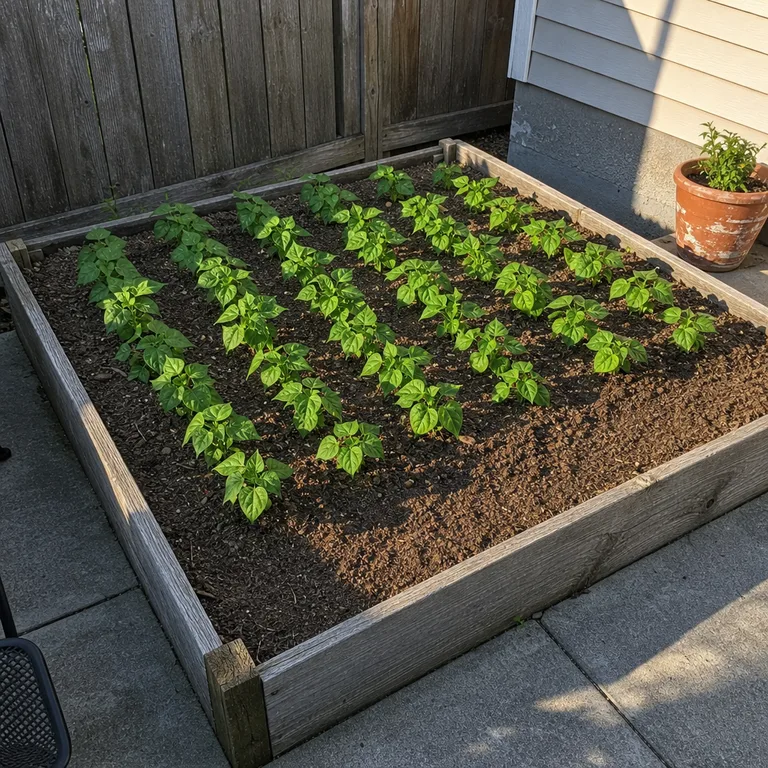
A simple string grid makes even spacing easier than estimating each planting hole. Bush beans stay lower than pole types, so this layout keeps the bed open and does not require a tall support structure.
Water at the soil level while seedlings establish, then check the bed often once plants begin flowering and setting pods. Use the clear front strip as the main harvesting side rather than stepping into the planted area.
Worth knowing: A dense bean grid can be difficult to inspect after rain, particularly in humid areas where foliage stays wet for longer.
3.Four Determinate Tomatoes With a Center Reach Zone
Plant one compact determinate tomato in each quadrant of the bed, with plant centers about 20 inches apart. Place each cage or support toward the outer edge and leave a cross-shaped open area through the middle for watering, tying, and checking fruit.
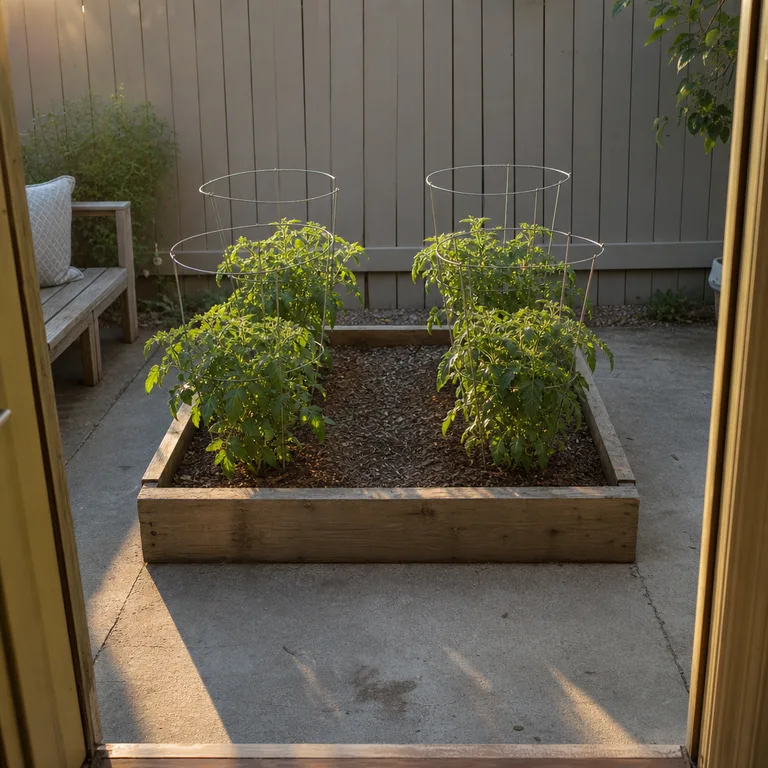
This arrangement gives four plants separate root zones while keeping the supports from creating a wall across the center. Reusing clean cages or sturdy supports from a previous season is an affordable way to keep heavy stems upright.
Tomatoes need full sun and consistent moisture at the root zone. Mulch around, but not tightly against, the stems to reduce splashing soil and slow surface drying.
Worth knowing: Even compact tomatoes can become crowded in a small bed, so indeterminate varieties are not a good fit for this four-plant plan.
4.Nine-Pepper Square for Summer Heat
For warm summer weather, arrange nine compact pepper plants in three rows of three, with about 18 inches between centers. Keep the soil surface open between plants and run a soaker hose or water slowly at the base rather than wetting leaves from above.
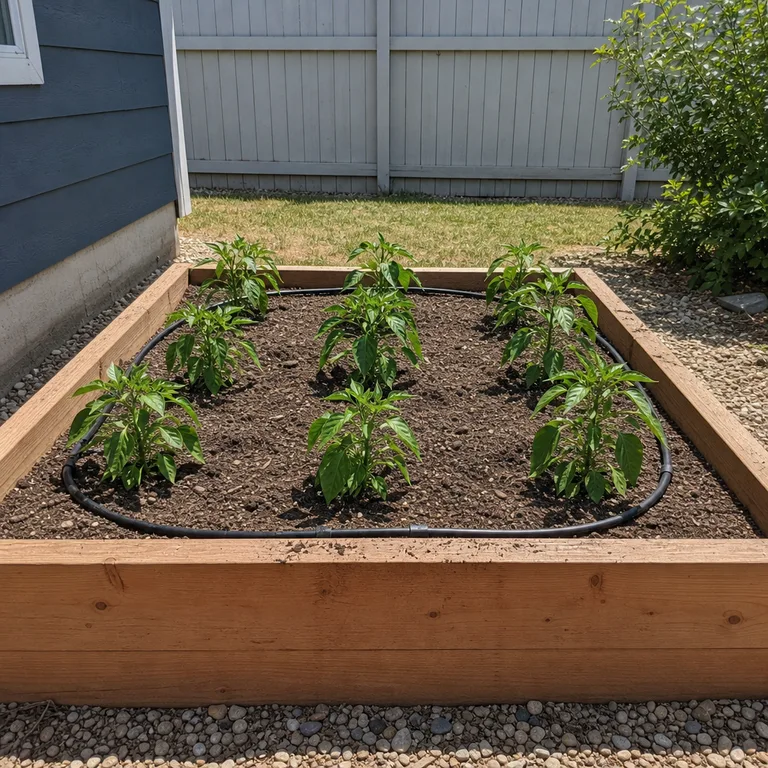
The repeating square gives every plant similar light exposure and makes the small bed look orderly. Plant support rings can be added as stems gain weight, and reused stakes work well if they are set in place early.
Peppers need a sunny location and warm soil to grow steadily. In areas with frequent summer rain, good spacing and soil-level watering matter because crowded foliage is slower to dry.
Worth knowing: Nine plants are suitable only for compact pepper varieties; large or especially vigorous types need wider spacing.
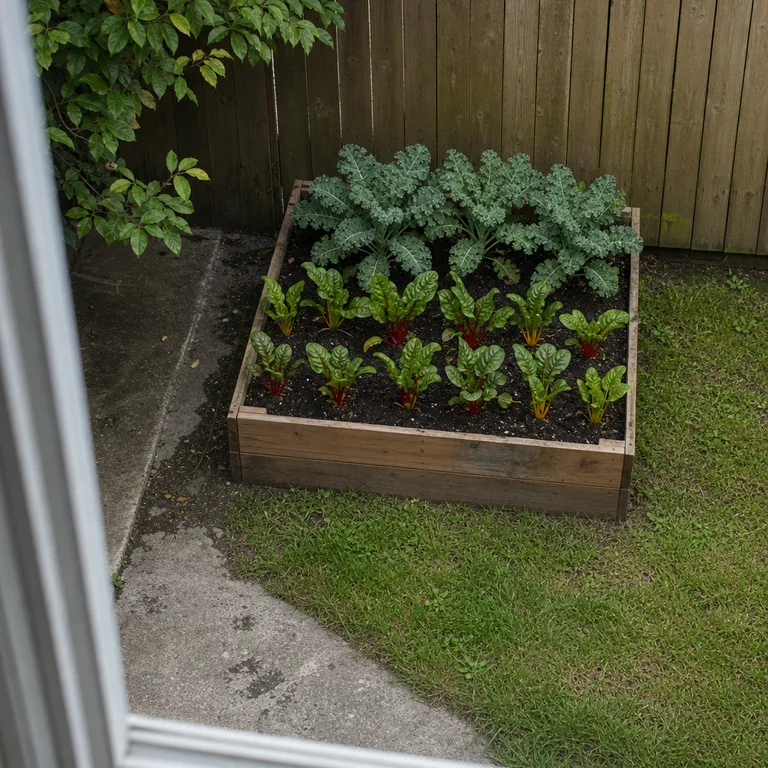
5.Cool-Season Kale and Swiss Chard Rows
Use this plan for spring or fall, placing four kale plants across the back half at about 18-inch spacing and eight Swiss chard plants in two front rows about 12 inches apart. Position the kale on the side where its broad leaves will not block the shorter chard from the strongest daily sun.
The taller, blue-green kale forms a clear backdrop, while the chard fills the front in a more regular row pattern. Start with transplants or carefully marked seed positions so the spacing stays visible while plants are small.
Harvest a few outer leaves at a time instead of stripping one plant bare. Check the undersides of kale leaves regularly, since cool-season brassicas can attract caterpillars.
Worth knowing: This mixed planting becomes tight as kale matures, and it needs regular harvesting to keep chard from being shaded.
6.Trellised Cucumbers With Front-Row Greens
Plant two cucumbers about 18 inches apart along the north edge, or the edge least likely to shade the rest of the bed. Train the vines straight up a narrow trellis, then plant four looseleaf lettuces across the front at about 10-inch spacing.
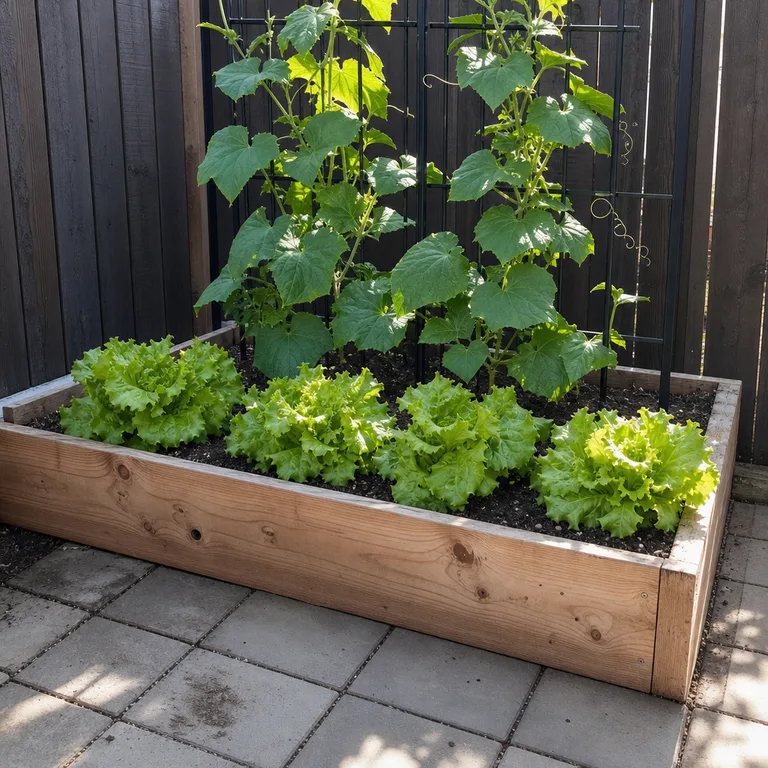
Growing cucumbers vertically turns unused air space into growing room and leaves the soil more accessible. The lettuce can benefit from a little filtered afternoon shade in hot climates, while still receiving enough light earlier in the day.
Secure vines gradually with soft ties or clips instead of forcing stems through the trellis. Keep the trellis firmly anchored, since cucumber vines become heavier as fruit develops and can catch wind.
Worth knowing: This layout needs a sturdy trellis and works best where cucumbers receive strong sun; heavy shade will reduce their growth.
7.Four Fall Broccoli Plants With Open Corners
For a fall crop where the cool season is long enough, plant four broccoli transplants in a two-by-two pattern at roughly 24-inch centers. Leave the corners and all bed edges open so each plant can be reached as the leaves expand.
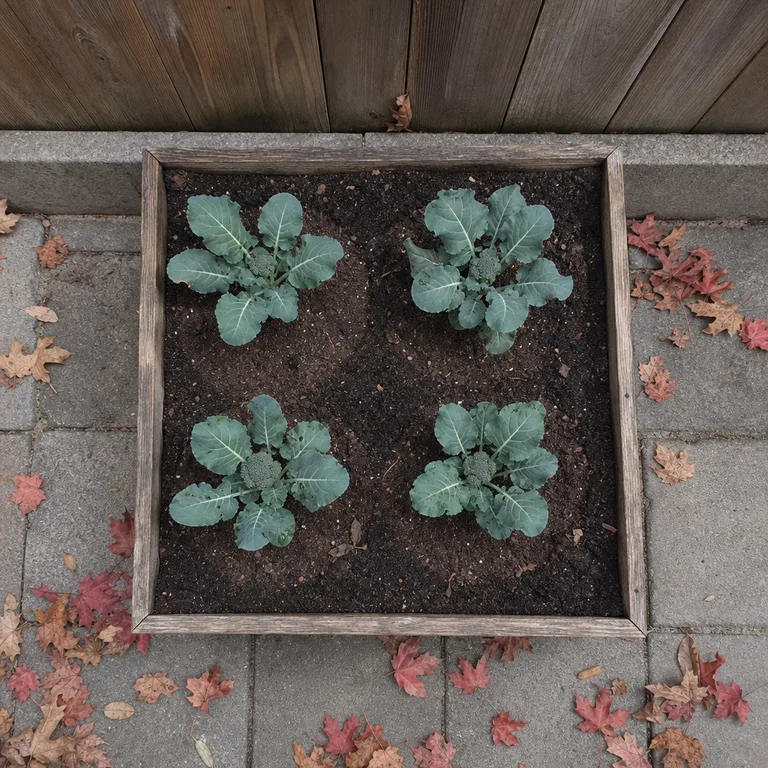
The wide spacing suits broccoli’s large mature form and makes it easier to inspect plants from every side. Start plants on the schedule recommended for the local region, since broccoli needs time to mature before severe cold arrives.
Water deeply enough to support steady growth, especially during dry fall weather. Lightweight insect mesh over hoops can help protect young plants, but it must be removed or adjusted as plants grow.
Worth knowing: Broccoli timing is regional, and a late planting may not form a full head before hard freezes arrive.
8.Fall-Planted Garlic Grid for Summer Harvest
Plant garlic cloves point-up in fall in an eight-by-eight grid, with about 6 inches between cloves. Cover the bed with an even layer of straw or other suitable mulch after planting, leaving the bed dedicated to garlic through winter and spring.
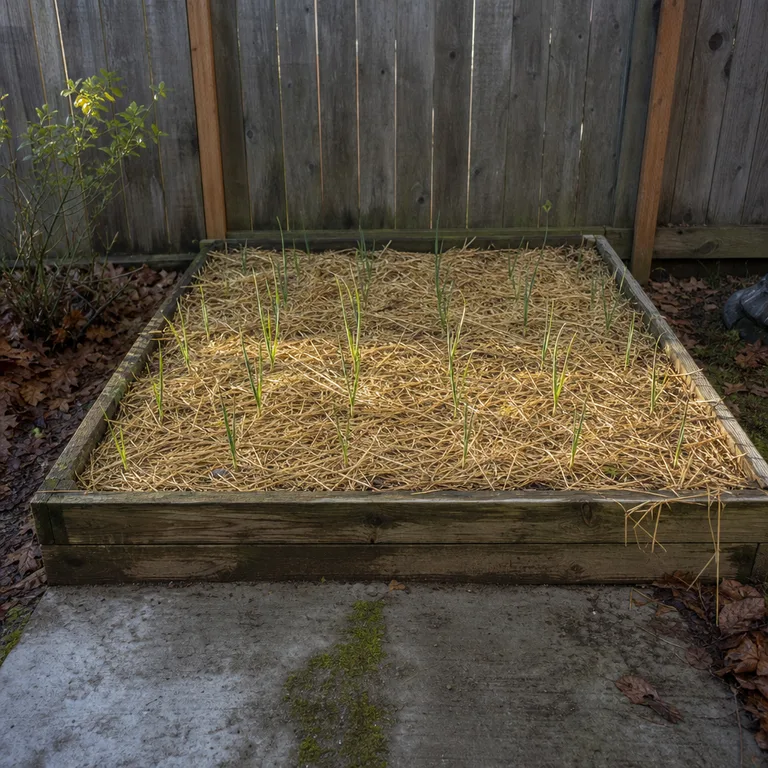
A single-crop grid is easy to mark and leaves each bulb a consistent amount of space. Saved clean straw and other available garden mulch can make this a practical reuse-first plan, provided it is free of weed seeds and disease.
Check mulch after strong wind or winter weather and redistribute it if bare soil is exposed. Remove or pull back excess mulch in spring if shoots struggle to emerge, while keeping enough coverage to limit weeds and moisture swings.
Worth knowing: Garlic occupies the bed for a long season, so there is little room for another full-size crop until harvest.
About the author
Dana Ruiz, Senior editor
Dana writes about small-space living, storage and low-cost decorating.
Keep reading
8 Budget Ways to Make a Gravel Garden Look Intentional
November 7, 2026
7 Budget Outdoor Christmas Lighting Layouts for Small Homes
November 7, 2026
8 Easy Ways to Decorate With Pattern Without a Busy Room
November 8, 2026
9 Easy Bedroom Reset Ideas That Make Mornings Easier
November 8, 2026