7 Easy Ways to Host Outdoors With Indoor Furniture
An occasional fair-weather gathering can use sturdy indoor pieces for a few hours instead of requiring a full outdoor furniture set. These temporary setups work best on dry, level surfaces with sound furniture that can be carried back inside promptly after guests leave.
As an Amazon Associate I earn from qualifying purchases.
1.Use a Sideboard as a Covered Serving Station
Set a narrow sideboard under a genuinely dry covered patio edge to hold plates, pitchers, serving bowls, and napkins. Position it against a wall rather than in the main traffic lane, so guests can serve themselves without blocking the door.
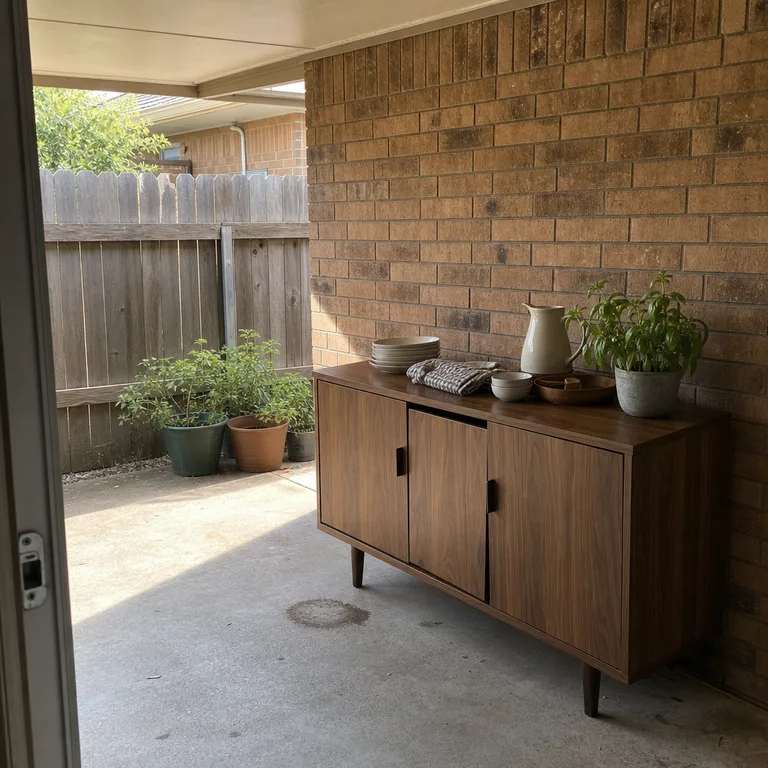
A sideboard makes the meal feel organized without needing a permanent buffet or outdoor bar. Use trays to contain drips and add felt pads beneath the feet if the patio surface could scuff the base.
Keep this role simple and temporary: carry out only the dishes needed for the gathering, then clear the top and bring the piece back in soon afterward. Avoid spots reached by rain, sprinkler spray, or windblown moisture.
Worth knowing: A sideboard is only suitable beneath reliable cover on dry paving; veneer, particleboard, and wood finishes can be damaged by moisture.
2.Set a Folding Table Up as a Drink Surface
Place a folding table near the back door as a dedicated drink station. A tub or tray, cups, and a pair of pitchers give guests one clear place to refill without crowding the food table.
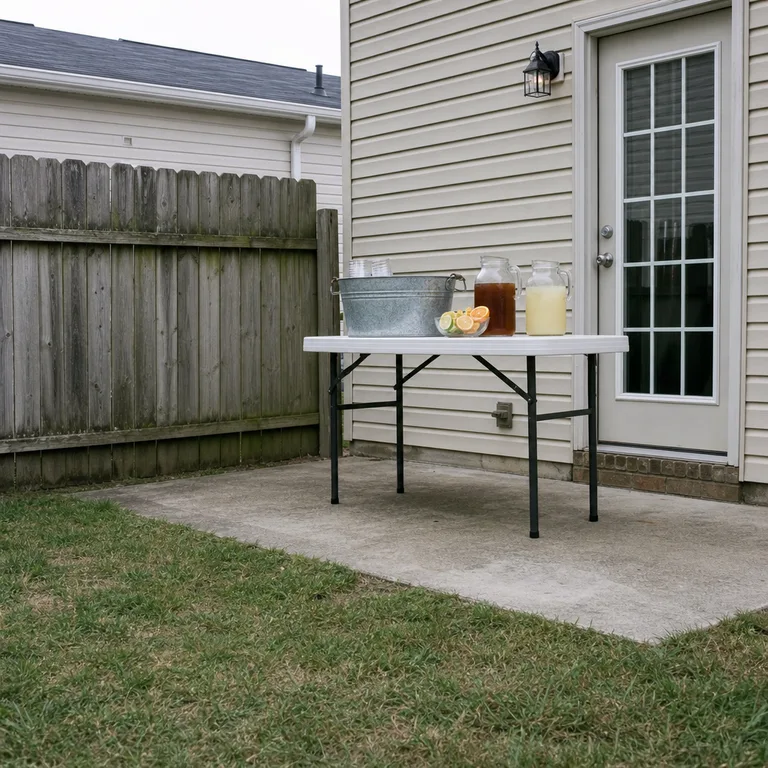
This setup is especially useful when the outdoor area is small because the table can sit close to the house and fold away after the event. A washable cloth or simple tray can make a basic folding table look more intentional while catching condensation.
Choose firm, level concrete, pavers, or a deck surface, and keep the table out of the path of a swinging door. Bring it inside before evening damp settles on the tabletop and hardware.
Worth knowing: Lightweight folding tables can shift on uneven ground and are not a good choice for a heavily loaded drink setup.
3.Move Stools Around as Guest Side Tables
Bring out a few stable stools and place one beside each existing chair or seating group. Each stool can hold a drink, a small plate, or a bowl of snacks, which makes scattered seating more useful without adding full side tables.
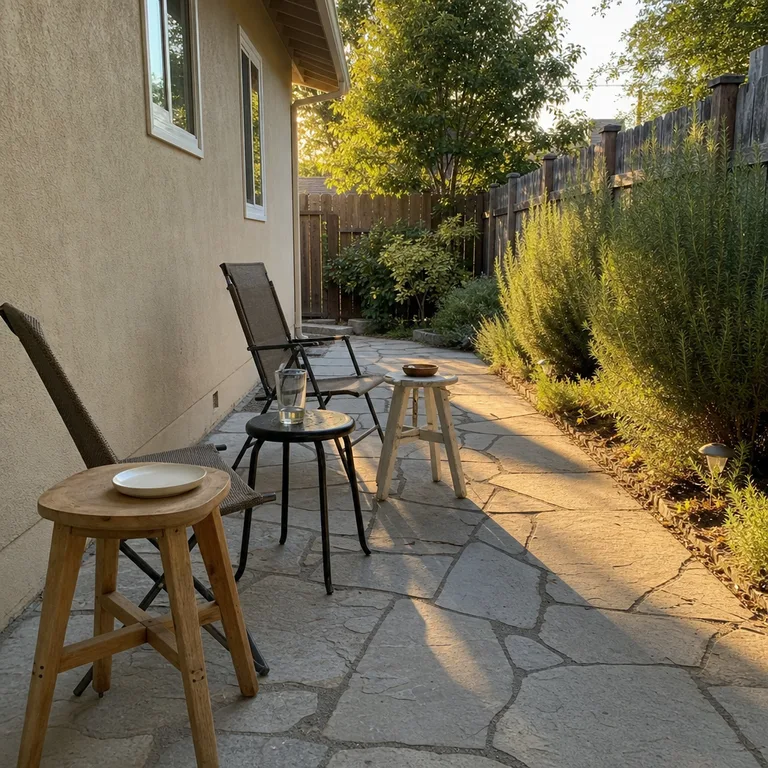
Mismatched stools work well here because they are serving a practical role for one gathering, not forming a permanent patio set. Keep the tops uncluttered, and use coasters under cold drinks to limit rings and spills.
Set every stool on dry ground where all of its legs sit evenly. A stool that feels steady indoors can wobble on flagstone joints, gravel, lawn, or sloped paving.
Worth knowing: Stools are best for light items only and should not be used as extra guest seating unless they are made and positioned for that purpose.
4.Pair Indoor Dining Chairs With an Existing Outdoor Table
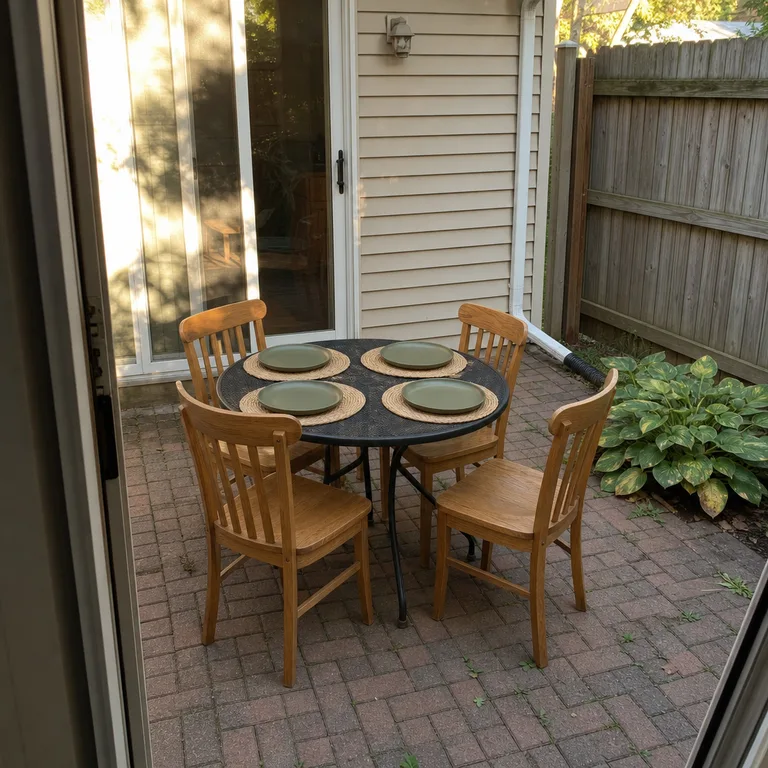
When an outdoor table is already in place but seats are short, carry out matching or mixed indoor dining chairs for the meal. This gives the table a complete dining function without buying a second set of patio chairs for occasional use.
Indoor chairs can make a casual outdoor table feel more welcoming, particularly for a daytime lunch or early dinner in settled weather. Use washable placemats and unbreakable dishes if the table is exposed to breezes or nearby planting debris.
Check that every chair sits squarely on flat, dry paving before guests arrive. Keep the arrangement close enough to the house for an easy return trip if the weather changes.
Worth knowing: Wood chairs, upholstered seats, and felt floor protectors are poorly suited to damp pavers, grass, or unexpected rain.
Related: 10 Small Patio Dining Ideas Without a Big Furniture Set
5.Place a Small Desk by the Entry as a Welcome Table
A compact desk can become a temporary welcome table beside the patio door or back step. Use it for a basket of wraps, insect repellent, a small lantern, and a bowl for sunglasses or other small essentials.
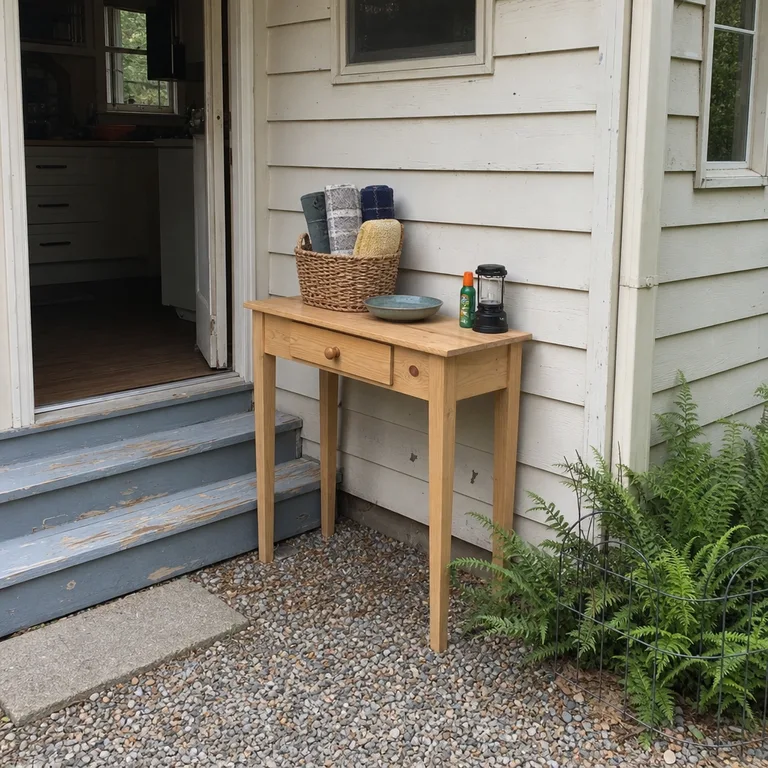
Giving these items one home keeps the outdoor seating area less cluttered and makes guests feel looked after as they arrive. The desk drawers, if it has them, can hold extra napkins or a deck of cards during the gathering.
Choose a place under an awning or roof edge that does not narrow the entrance. Leave enough room for people to carry food, move chairs, and go back inside without squeezing past the desk.
Worth knowing: A welcome table can quickly become an obstruction on a narrow landing, step, or patio doorway.
6.Scatter Nesting Tables for Individual Snack Spots
Separate a set of nesting tables and place the smaller pieces near different seats. One can hold a snack bowl, another a drink tray, and another a stack of napkins, so guests do not have to reach across a crowded central table.
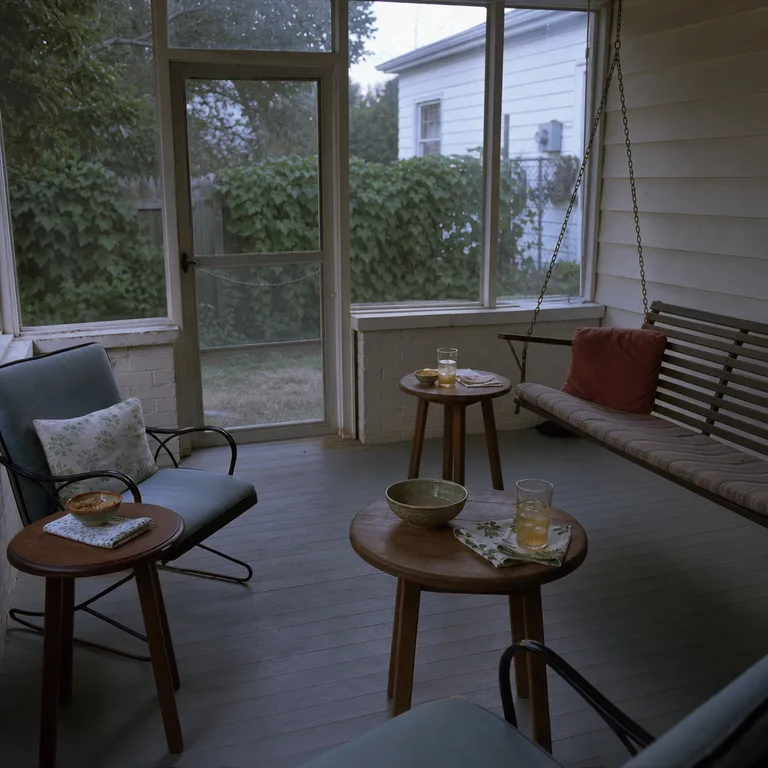
This arrangement works particularly well on a covered porch or screened area where people sit in small groups. The tables can be gathered back together quickly when it is time to clean up or move indoors.
Keep each table where it will not interrupt a walkway, screen door, or porch step. Lightweight nesting tables should stay out of exposed, windy areas where drinks and loose napkins can blow around.
Worth knowing: Small nesting tables have limited surface area and can feel cluttered if asked to hold full plates, serving dishes, and drinks at once.
7.Bring Out a Low Table for Seated Games
Use a low coffee table as a game surface on a covered patio or porch, with floor cushions or low chairs around it. Cards, a board game, and lidded snack bowls fit naturally on a low table and create a relaxed activity zone away from the food station.
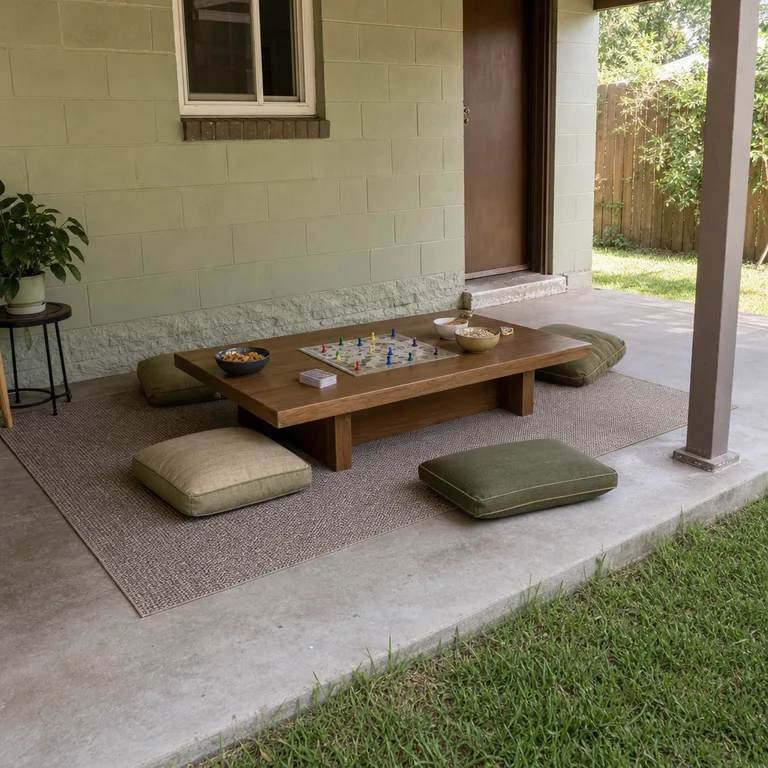
An indoor-outdoor rug can visually define the setup and make the arrangement feel deliberate for an afternoon gathering. Keep the table centered with a clear route around it, especially if guests will be carrying drinks.
Only use a sound table on a stable, dry surface, and return it indoors once the game is over. Covered concrete works better than grass, gravel, or an area near an open edge where people may trip.
Worth knowing: Low tables create a trip hazard in tight spaces and are not ideal where guests need easier chair-height seating.
About the author
Dana Ruiz, Senior editor
Dana writes about small-space living, storage and low-cost decorating.
Keep reading
8 Easy Decisions for a Low-Maintenance Garden
November 5, 2026
9 Easy Ways to Refresh an Overgrown Garden Bed
November 5, 2026
8 Budget Driveway Border Ideas for a Finished Front Yard
November 4, 2026
9 Budget Ways to Make Open-Plan Rooms Feel Connected
November 5, 2026