10 Small Patio Dining Ideas Without a Big Furniture Set
A compact patio can handle everyday meals and occasional guests when the table, chairs, and serving space are chosen for the traffic path around them. These layouts favor foldable pieces, wall edges, corners, and multiuse surfaces while keeping doors, drainage routes, and shade in mind.
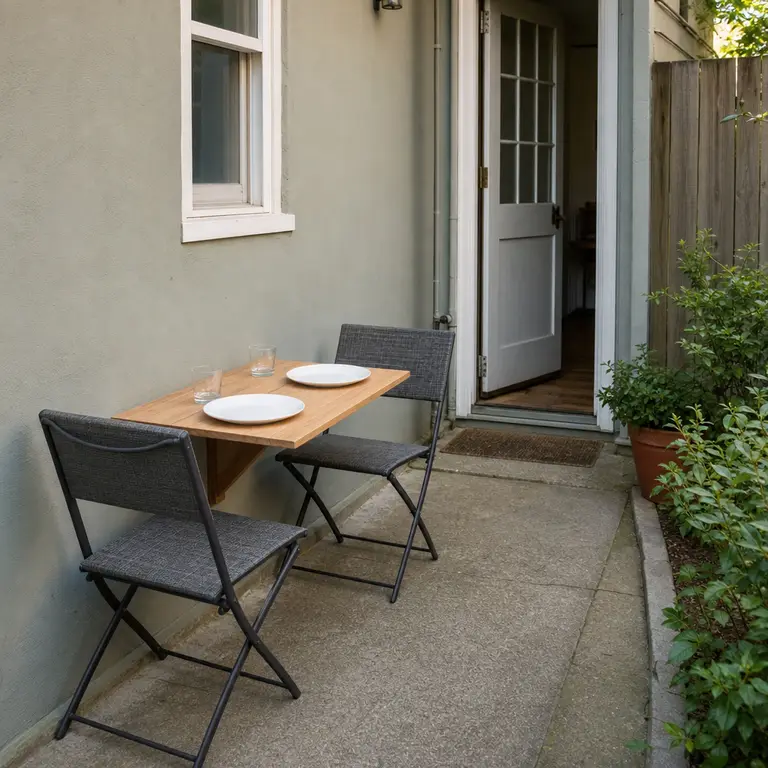
1.Use a Narrow Bistro Table Along a Clear Wall
Set a slim bistro table along a fence, side wall, or quiet stretch of exterior wall. This keeps the center of the patio open for getting to the door, gate, bins, or garden.
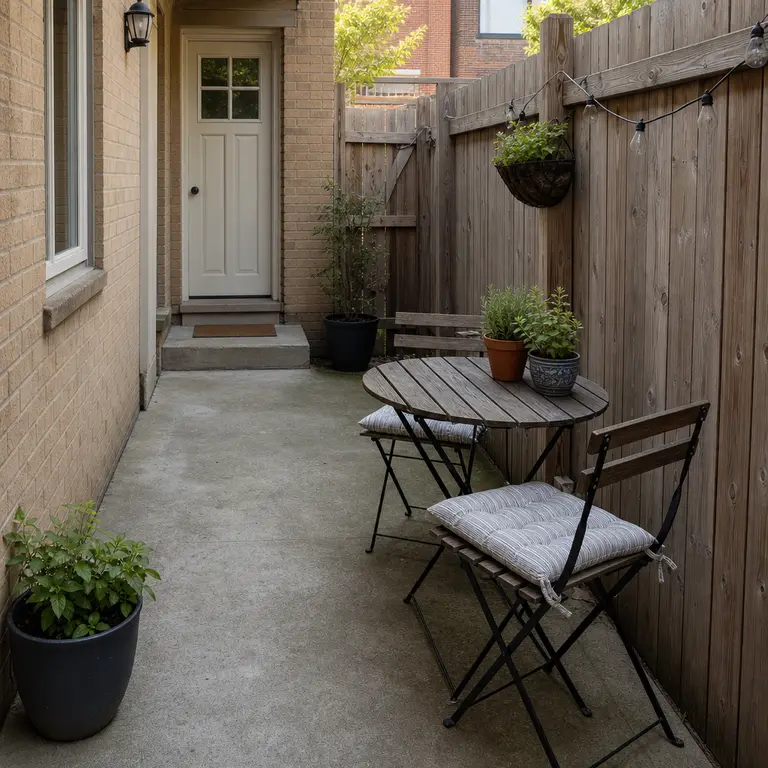
Choose two chairs that slide completely under the tabletop, or use folding chairs that can be hung or stored when not needed. A small planter of herbs nearby makes the eating area feel intentional without taking over the table.
Keep the table away from an outward-swinging door and leave a direct route outside. A wall-side position is most useful when that wall is not damp, heavily shaded, or used for regular storage.
Worth knowing: This layout is best for two; adding guests usually requires moving the table away from the wall or bringing out folding seats.
Related: 12 Small Patio Seating Ideas on a Budget
2.Choose a Drop-Leaf Table for Daily Meals and Extra Place Settings
A drop-leaf table gives a small patio a compact everyday surface, then opens when another person joins dinner. Keep one or both leaves down for daily use so chairs and feet have more room to move.
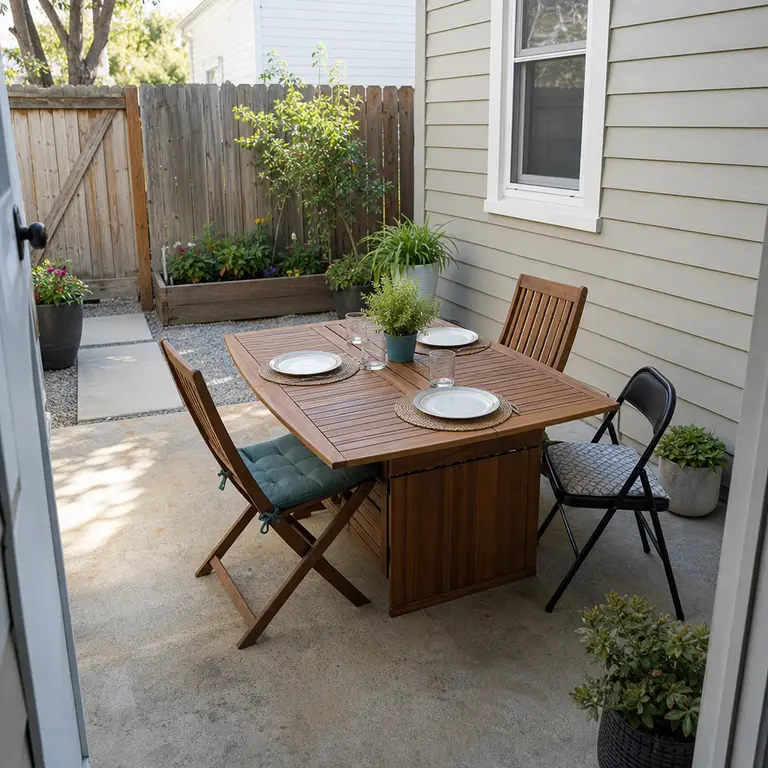
Look for a simple outdoor-rated table with a sturdy support underneath the opened leaf. Pair it with lightweight chairs for regular meals and a folding chair that can come out only for guests.
Test the open position before committing to the layout. There should still be a usable path around the table, particularly if the patio is the main route between the house and yard.
Worth knowing: The table needs a sheltered storage spot or a weather-resistant construction if harsh rain, snow, or prolonged damp conditions are common.
3.Turn a Sunny Corner Into a Fixed Dining Nook
Use an underused corner for an L-shaped bench and a small round pedestal table. The bench keeps seating against the edges instead of scattering chair legs through the middle of the patio.
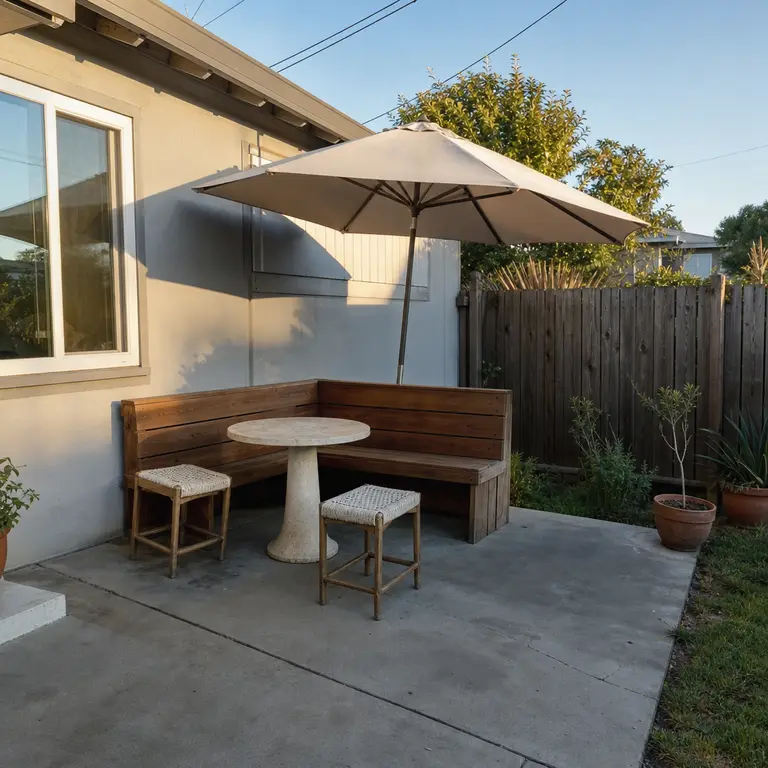
A pedestal base is easier to pull chairs or stools around than a table with four legs. Build the bench from simple exterior-safe materials, or adapt a pair of sturdy outdoor benches to meet in the corner.
Add a small umbrella or other removable shade if the corner gets strong afternoon sun. Outdoor cushions should be quick to remove, dry, or store so they do not stay wet after rain.
Worth knowing: A fixed bench is less flexible than loose furniture and can make a rental patio difficult to restore later.
4.Put a Bar-Height Ledge at the Patio Edge
A narrow ledge along a solid fence or stable railing creates a place for two people to eat without placing a full table in the patio center. It works especially well on a long, narrow patio where a standard dining set would block the route through.
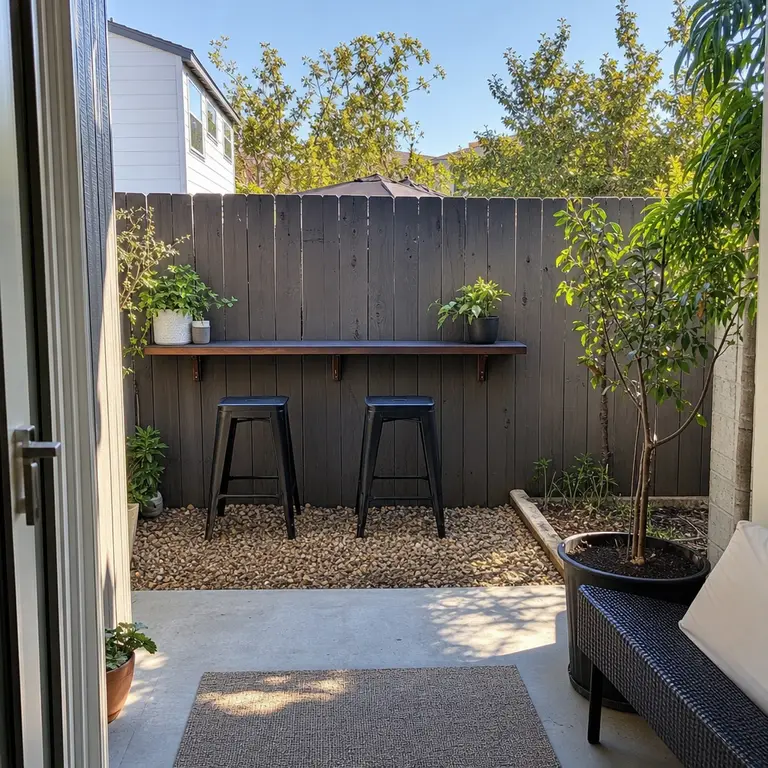
Use stools that tuck underneath and choose a ledge deep enough for a plate and drink, without projecting into the main walkway. A freestanding console-height table can give a similar effect where mounting is not allowed.
Check the fence or railing condition before attaching anything. In exposed locations, use weighted or easily stored stools, since lightweight seating can shift or blow over in wind.
Worth knowing: Fence-mounted ledges may be prohibited by rental rules or unsuitable for weak, aging, or shared boundary fences.
5.Use a Folding Wall Table Beside the Back Door
A fold-down wall table turns a spare wall into a meal spot and disappears after lunch or dinner. It is a strong option for a shallow patio that cannot hold a permanent table and chairs.
Mount it on a solid exterior surface, then add folding chairs that can sit flat against the wall or move into a storage area. Use the open table for meals, potting small plants, or holding food during an outdoor gathering.
Place it beside a door rather than directly in its swing path. It should never narrow an emergency exit or make it difficult to carry groceries, laundry, or waste bins through the patio.
Worth knowing: Installation can be difficult on masonry, siding, or rented walls, and the hardware must be appropriate for outdoor weather.
6.Make a Storage Bench Do Double Duty as Dining Seating
Put a weather-resistant storage bench along the least active side of a compact dining table. It gives two people a shared seat while reducing the number of loose chairs that need to be moved around.
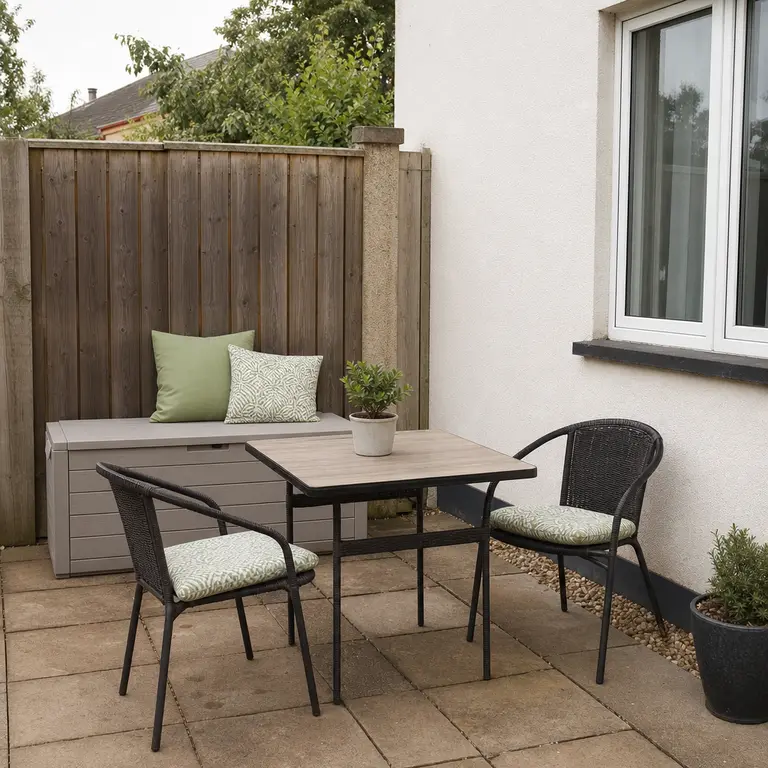
Use the inside for cushions, placemats, outdoor dishes, or a folded tablecloth. This keeps meal supplies close by and makes it easier to clear the table quickly when rain is expected.
Choose a bench with a lid that sheds water and a base that does not trap moisture against the patio. Leave enough space behind or beside it to open the lid without shifting the table.
Worth knowing: Storage benches can be bulky, so this option is not ideal if the patio needs a fully open floor for other uses.
7.Pair a Small Table With Stackable Guest Chairs
Keep a compact table set for two, then store stackable chairs for visitors against a sheltered wall. The main setup stays calm and usable every day without requiring a larger dining set.
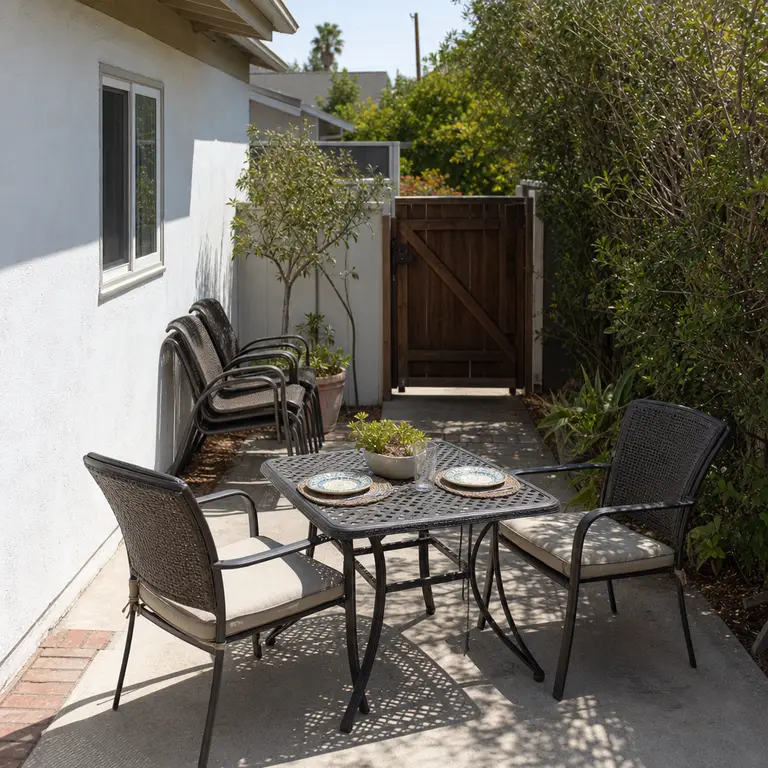
Choose chairs that stack neatly and are comfortable enough for a meal, rather than treating guest seating as an afterthought. A small hook or narrow covered area can help keep them out of the wettest weather.
Store the stack where it will not block a gate, utility access, or the path to bins. On damp patios, avoid pressing chairs tightly against a wall where water and dirt can collect.
Worth knowing: Stacked chairs still need a dedicated parking spot, and they can look cluttered when there is no sheltered edge to use.
8.Add a Rolling Serving Cart Instead of a Larger Table
Keep the dining table small by moving drinks, bowls, and serving dishes onto a narrow rolling cart. This gives a two-person table enough room for plates while making casual outdoor meals easier to manage.
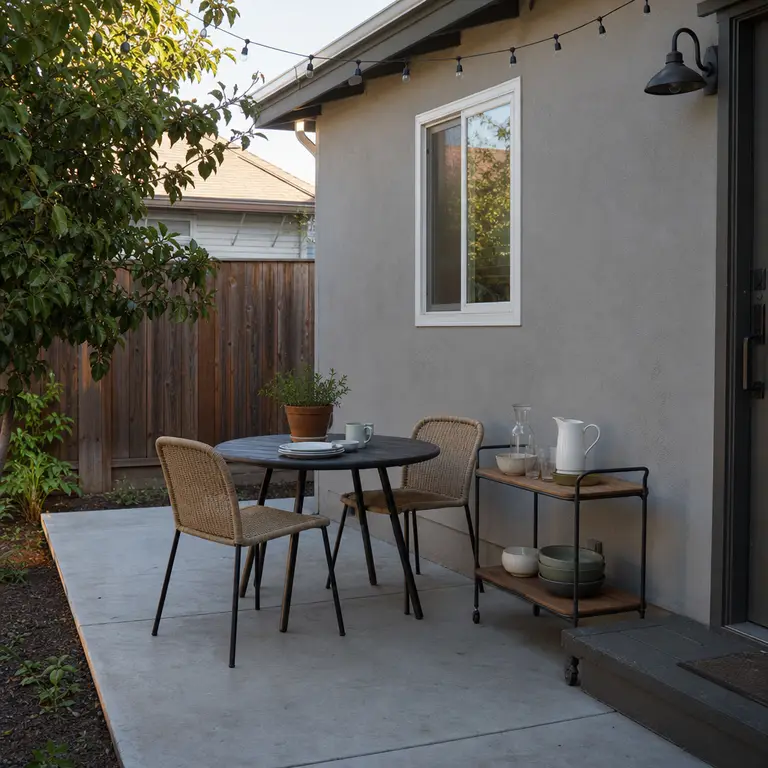
Choose a cart with a raised edge or stable shelves, then park it beside the table instead of at the end of a narrow route. It can also hold a lantern, napkins, or extra dishes during a small gathering.
Match the wheels to the patio surface. Larger, sturdier wheels are easier over uneven paving, while a very smooth cart may be more practical on level concrete or tile.
Worth knowing: Carts can be awkward on sloped, gravel, or cracked surfaces and should be brought in during freezing or very wet weather.
9.Set a Picnic-Style Bench Parallel to the Fence
A short picnic-style table can serve a small group without spreading separate chairs across a narrow patio. Run it parallel to the fence, leaving the opposite side clear as the route in and out.
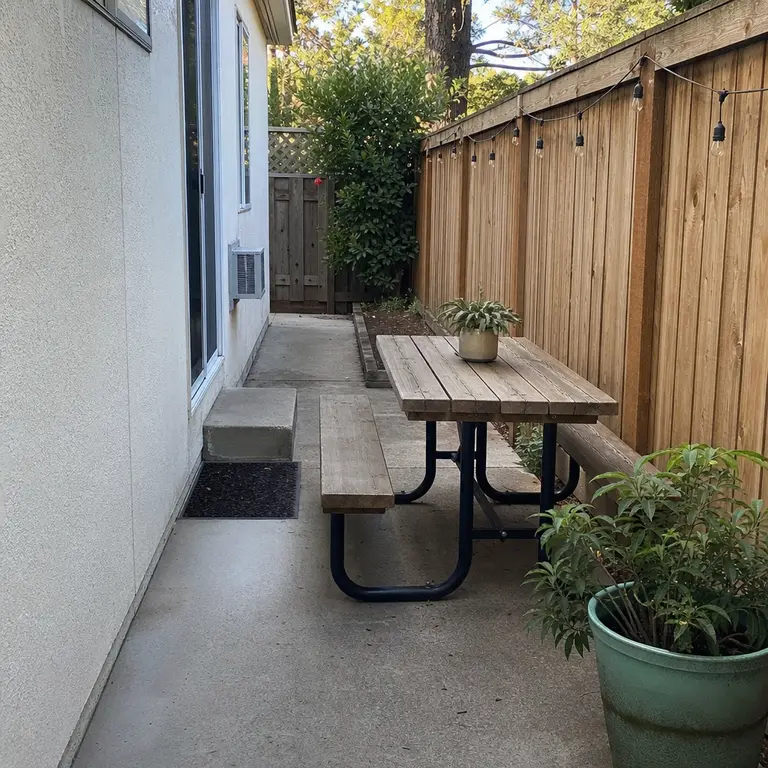
Attached benches keep the arrangement orderly and make it easy to fit more people at one table for an occasional meal. A simple, compact design is easier to use than a long picnic table that overwhelms the space.
Leave clearance at one end so people can slide into the benches without climbing over them. Check drainage along the fence line, since a table placed in a persistently wet strip will need more cleaning and maintenance.
Worth knowing: Attached benches are harder for some guests to get in and out of than individual chairs.
10.Use a Low Coffee Table for Floor-Level Dining
A low outdoor table can create an occasional dining area on a very shallow patio where normal chairs would fill the entire footprint. Add floor cushions, low chairs, or a washable outdoor mat that can be rolled away after the meal.
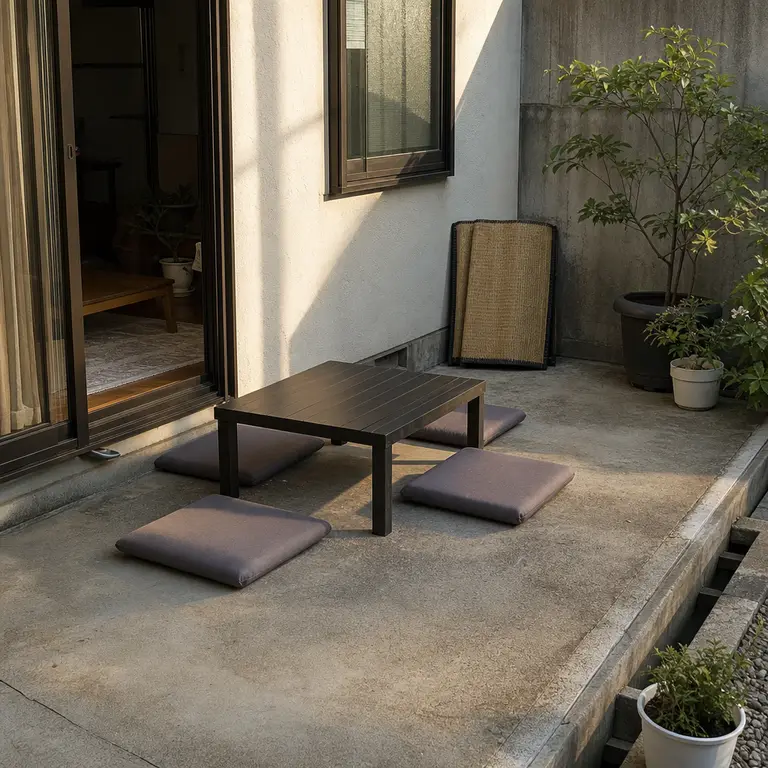
This setup feels flexible because the table and cushions can be stored when the patio is needed for another purpose. Use a stable, wipeable table large enough for shared dishes, but keep the center clear enough for everyone to reach food comfortably.
Choose a level surface with reliable drainage so cushions and mats do not sit in puddles. Store soft pieces indoors after use, especially in wet climates or places with frequent morning dew.
Worth knowing: Floor-level dining is not comfortable or practical for every guest, particularly those who need higher, more supportive seating.
About the author
Dana Ruiz, Senior editor
Dana writes about small-space living, storage and low-cost decorating.
Keep reading
10 Front Porch Decorating Ideas for a Small Budget
September 19, 2026
12 Container Garden Ideas for a Small Patio on a Budget
September 18, 2026
12 Budget Balcony Ideas for a Comfortable Outdoor Corner
September 18, 2026
12 Under-Sink Storage Ideas That Work Around Pipes
September 19, 2026