9 Budget Ways to Make Open-Plan Rooms Feel Connected
Open-plan living and eating areas feel more settled when a few visual details deliberately repeat across both zones. These nine ideas connect what is already there without adding a divider or moving the main seating layout.
As an Amazon Associate I earn from qualifying purchases.
1.Repeat One Small Accent Color
Choose one accent color and place it in both areas through small, easy-to-change pieces. A rust-toned pillow on the sofa and a runner or small vase on the dining table can make the two zones read as part of one room without making them match exactly.
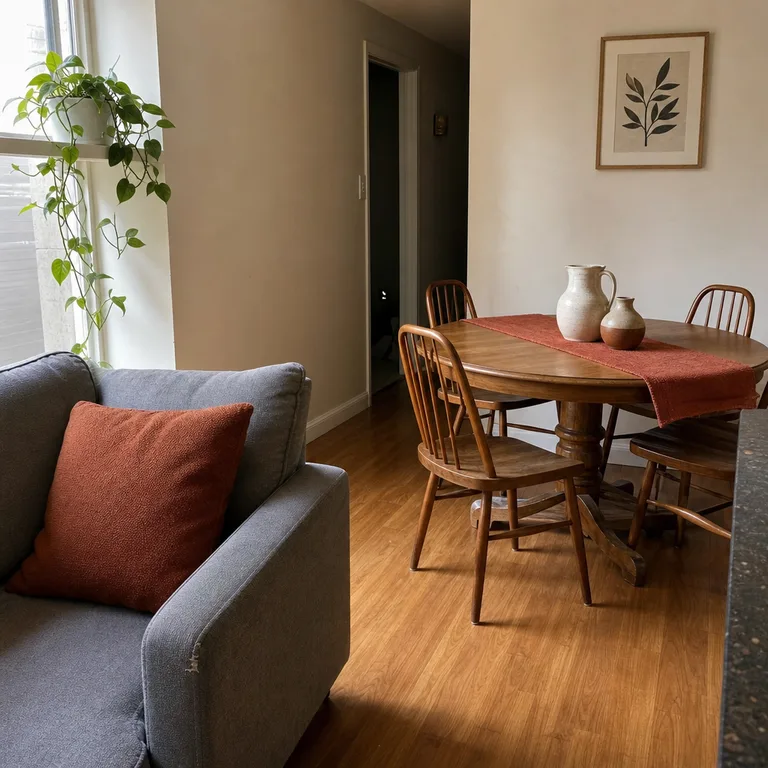
Keep the larger pieces neutral or already in place, then use the repeated color sparingly. This approach works especially well when the living and eating areas have different furniture styles, since the color becomes the common thread rather than the furniture.
Worth knowing: Colors can shift noticeably between daylight near a window and warmer light farther into the room, so compare items in their final locations.
2.Carry One Wood Tone Across Both Zones
Repeat one wood family on a visible smaller piece in each zone. For example, a walnut-toned side table in the living area can relate to walnut-toned dining chairs, picture frames, or a serving tray in the eating area.
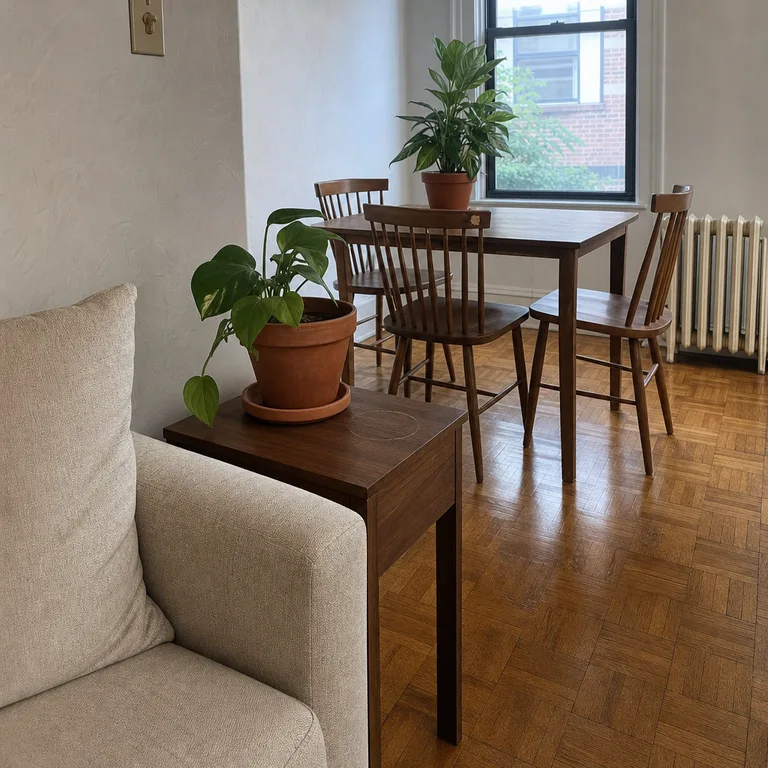
There is no need to replace every wood surface. A few repeated tones make an existing mix of furniture look considered, while the original dining table, floor, or cabinet finish can remain different.
Worth knowing: Even similar wood finishes can look warmer or cooler under different lighting, so aim for related undertones instead of an exact match.
Related: 9 Ways to Mix Wood Furniture Tones Without Buying a Matching Set
3.Echo a Rounded Shape
Bring one rounded form into both zones to soften the transition between rectangular sofas, tables, and cabinets. A round coffee table in the living area can be echoed by round candleholders, a tray, or a bowl on the dining table.
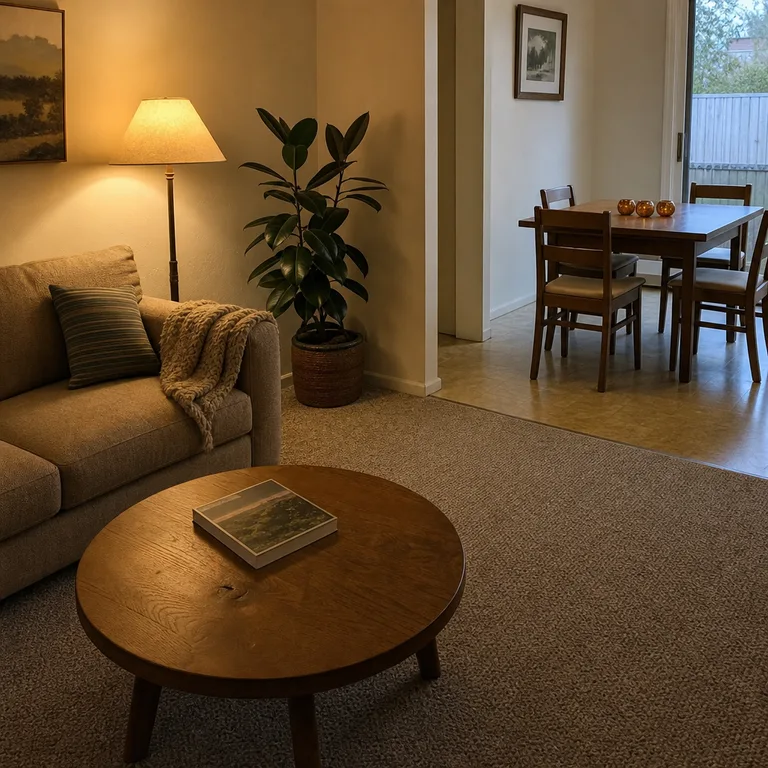
The repeated curve gives the eye something to follow across the room. It is an affordable way to create continuity when changing major furniture would not make sense.
Worth knowing: Too many round pieces can make a compact room feel cluttered, particularly if the dining table and main seating layout already occupy a tight path.
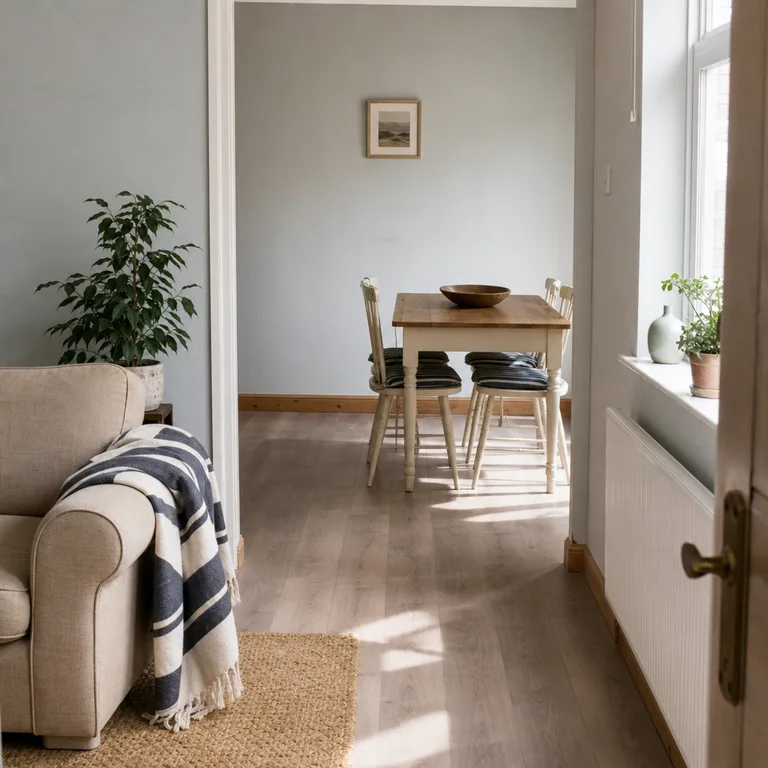
Limiting the connection to one pattern and a restrained color palette keeps the room from looking over-coordinated. Removable covers, throws, and cushions are also practical choices for renters or anyone who wants an easy seasonal change.
Worth knowing: Dining textiles collect crumbs and spills, so choose washable materials for chairs and table linens rather than relying on delicate fabric.
Related: 12 Playful Striped Decor Ideas You Can Try on a Budget
5.Repeat One Metal Finish
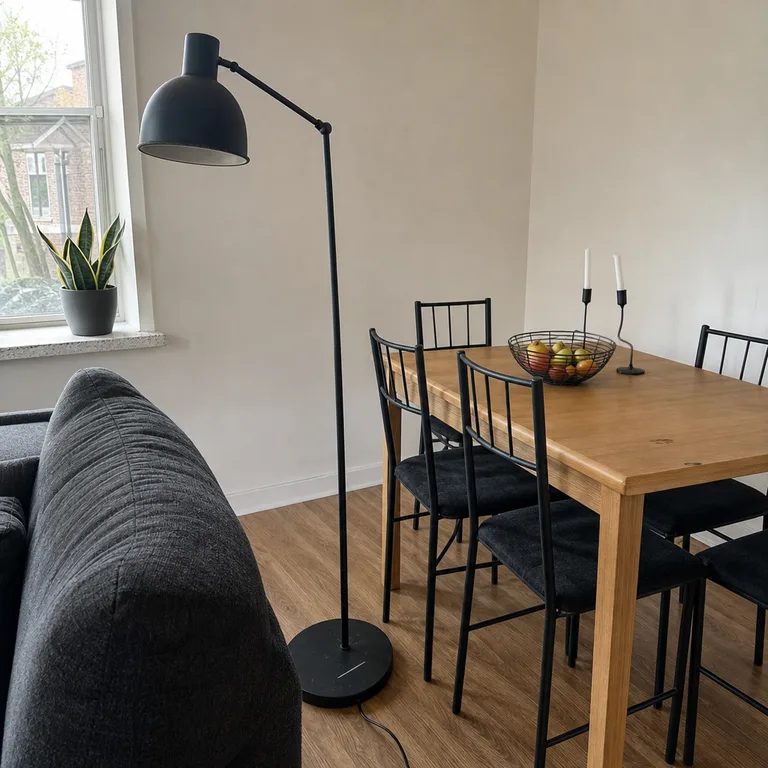
Use a shared metal finish on small functional objects across the two areas. A black floor lamp beside the sofa can relate to a black fruit bowl, taper holders, or cabinet hardware near the dining table.
This works best when the repeated finish appears in several modest touches instead of one oversized statement piece. It can make mixed furniture feel deliberate without requiring replacement of an existing ceiling fixture or table base.
Worth knowing: Do not force every metal in the room to match; fixed hardware and existing fixtures can stay if the repeated finish is clearly present in both zones.
6.Align Art at One Sightline
Hang art in the living and eating areas so the visual centers of the pieces sit at a similar horizontal level. A pair of frames above a low sofa can relate to a single frame near the dining table, even when the furniture beneath them is different heights.
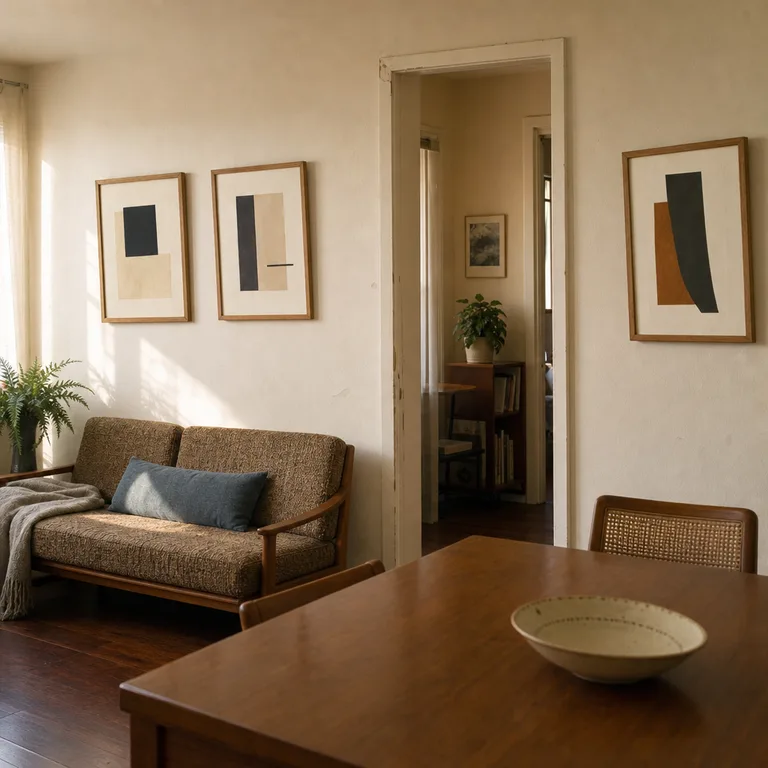
Matching frame materials or using a related color palette strengthens the connection further. Removable hanging strips can be useful for lightweight art in rentals, while heavier frames need the right wall-safe hardware.
Worth knowing: A strict row is not always the answer: very tall furniture, sloped ceilings, or a low window may call for a slightly adjusted placement.
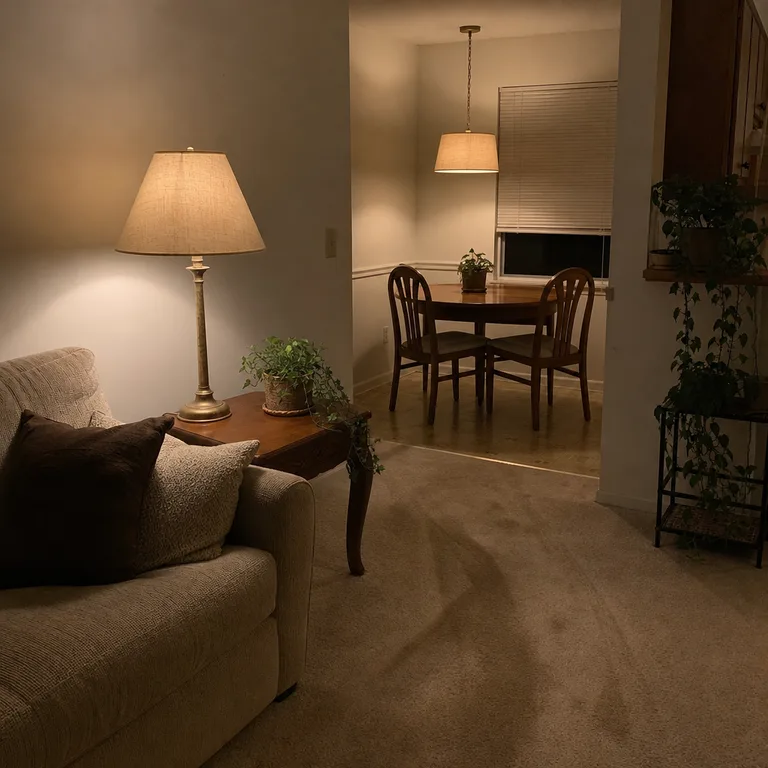
Related shades create a calm link after dark, when lighting becomes a major part of how an open-plan room feels. Start with plug-in lamps or replacement shades where possible instead of changing fixed electrical fixtures.
Worth knowing: The available outlets, switch locations, and existing ceiling fixture will determine which lighting changes are realistic.
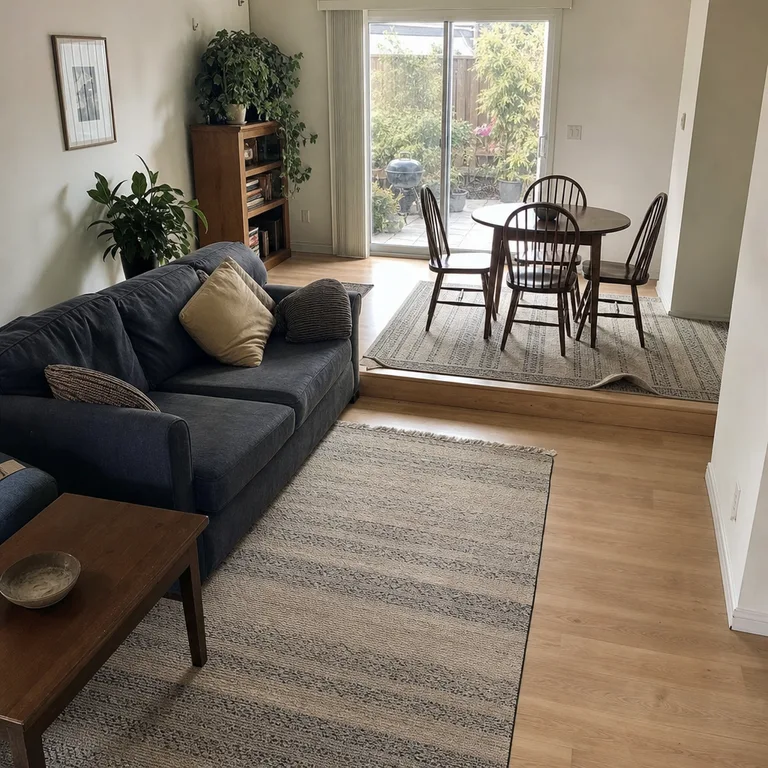
The rugs can serve different jobs while still looking connected. A softer rug can suit the seating area, while a flatter, easier-to-clean option makes more sense where dining chairs slide in and out.
Worth knowing: Avoid thick or deep-pile rugs under dining chairs, and use non-slip pads or corner grips where rug edges may curl.
9.Repeat Greenery at a Similar Scale
Place plants with a similar visual height or volume in both areas to form a quiet bridge. A tall snake plant near an armchair and a similarly scaled rubber plant by the dining window can balance the room without using matching pots or matching species.
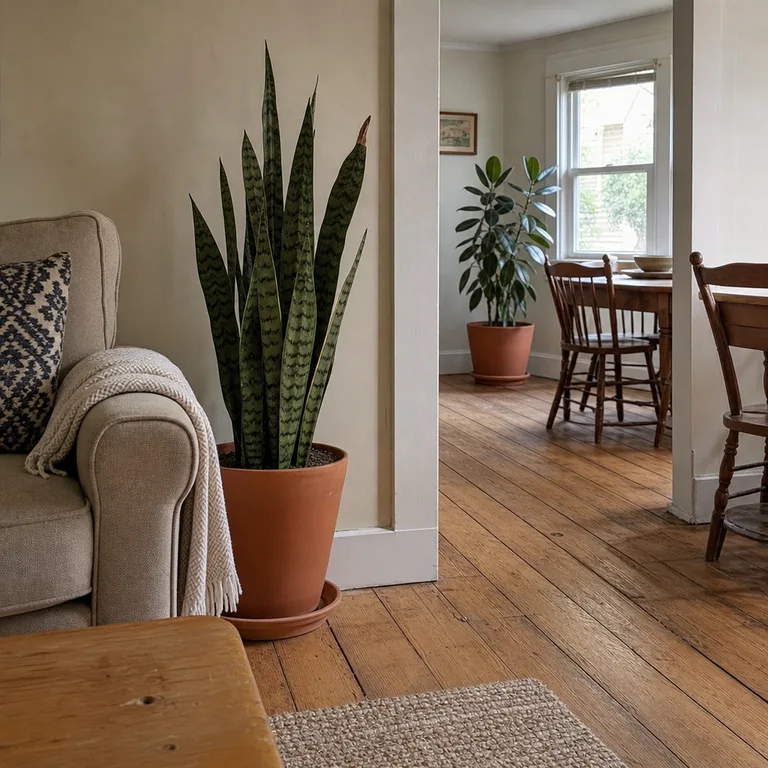
Use related planters, such as matte clay pots or simple woven baskets, to make the pair read together. Choose plants based on the actual light in each location, since a bright dining window and a dimmer living corner may need different varieties.
Worth knowing: Live plants need light and a consistent watering routine, so realistic artificial greenery may be more practical in very dark rooms or for low-maintenance households.
About the author
Dana Ruiz, Senior editor
Dana writes about small-space living, storage and low-cost decorating.
Keep reading
9 Easy Christmas Garland Ideas Beyond the Mantel
November 4, 2026
10 Budget Retro Decorating Ideas for a Playful Home
November 4, 2026
7 Easy Ways to Host Outdoors With Indoor Furniture
November 5, 2026
8 Easy Decisions for a Low-Maintenance Garden
November 5, 2026