6 Entryway Parking Ideas for a Folded Stroller in a Small Apartment
A folded stroller needs a repeatable landing spot that keeps the entry clear, contains wheel dirt, and still allows the door to open fully. Match the location to the stroller’s folded dimensions, keep locks engaged as the manufacturer directs, and leave exits and fire routes unobstructed.
As an Amazon Associate I earn from qualifying purchases.
1.Use the Cabinet End as a Stroller Pocket
An exposed cabinet end can turn a shallow stretch of entry wall into a defined stroller spot. Park the folded stroller lengthwise against it, rather than across the hallway, so the cabinet visually contains the bulk of the frame.
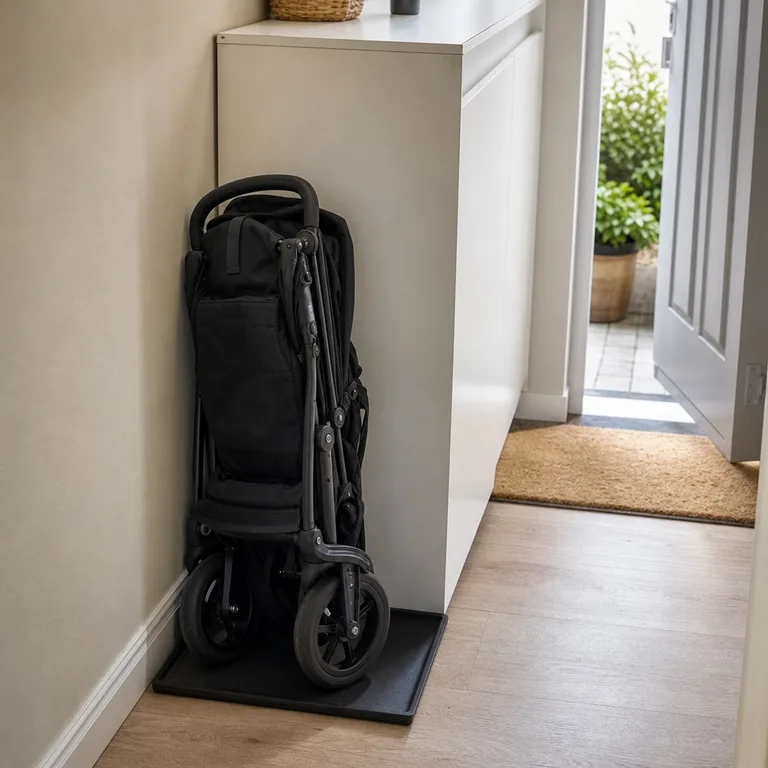
Set a narrow rubber tray or washable mat under the wheels to catch grit and moisture. Check the full door swing with the stroller in place, including the handle, brake, and any wheels that sit proud of the folded frame.
This works best with a slim shoe cabinet or other shallow unit that does not already pinch the walking route. Small bumper pads on the cabinet side can prevent repeated scuffs without changing the stroller itself.
Worth knowing: A cabinet-end pocket only works when the door can open fully and the stroller remains outside the required exit path.
Related: 10 Small Entryway Ideas for Coats When You Have No Coat Closet
2.Claim a Recess Beside the Entry Door
A shallow recess beside the entry door can hold a folded stroller upright while keeping its widest parts inside the wall line. This makes better use of an awkward notch that might otherwise collect bags or shoes.
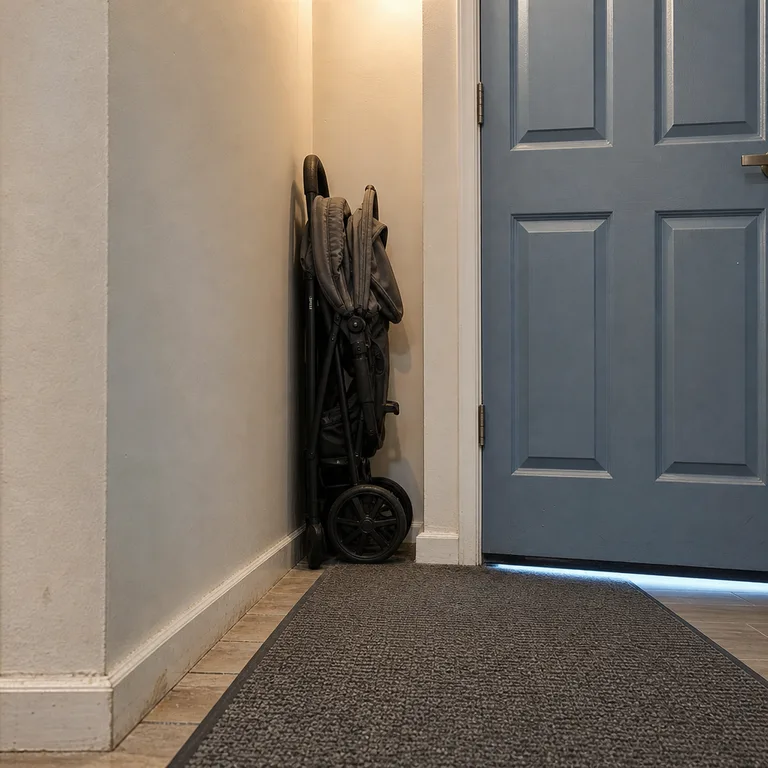
Place a narrow washable runner in the recess and test whether the stroller stands securely with its manufacturer-directed locks engaged. The handle, wheels, and folded seat should not project into the hall or interfere with hinges, hardware, or the door swing.
A plain recess often needs no new furniture at all. If the wall is prone to marks, clear corner guards or removable protective pads can reduce scuffs in a rental.
Worth knowing: Not every folded stroller is stable when stored upright, so this option should be skipped if the model leans or can tip into the passage.
3.Keep One Open Corner by the Coat Area
Reserve one floor corner beside the coat area specifically for the folded stroller. Giving it its own patch of floor stops the stroller from migrating into the center of the entry every time the household comes home.
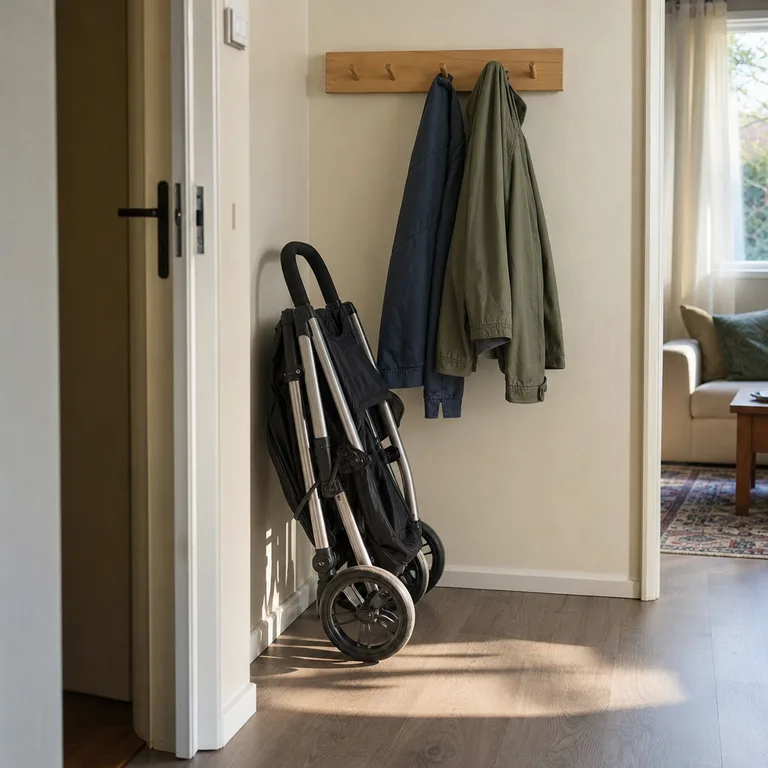
Keep hanging coats high enough and far enough away that damp fabric does not rest on the stroller or brush the wheels. A washable cloth kept near the door makes it easier to wipe visible mud before parking the frame.
This approach is inexpensive because it depends mainly on clearing rather than adding storage. A small wall hook rail can keep coats above the stroller zone, provided the wall and rental rules allow installation.
Worth knowing: An open corner can look cluttered if it also becomes overflow storage for shoes, bags, and parcels.
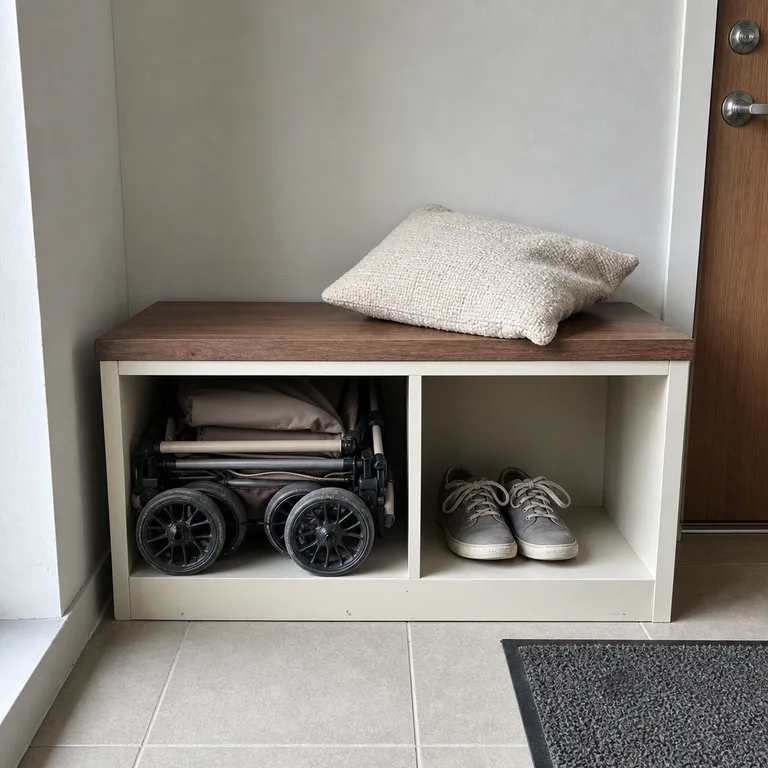
4.Slide It Into an Open Lower Cubby
An entry bench or shelving unit with a fully open lower bay can hide much of a folded stroller while leaving the top useful for bags or sitting down. Choose a cubby with no center divider in the stroller bay, and measure the interior width, depth, and height against the actual folded model.
Roll the stroller in with the wheels facing outward if that gives the cleanest retrieval and keeps dirty tires away from the wall. A removable non-slip liner or thin tray protects the cubby base and can be taken out for cleaning.
Reusing an existing open shelf is usually more affordable than buying a purpose-built unit. Avoid forcing the stroller into a tight opening, since snagged handles and compressed fabric make everyday use frustrating.
Worth knowing: Many benches are too shallow or too low for a folded stroller, so this is only useful when the fit is genuinely easy.
5.Make a Mat-Backed Parking Strip Along the Wall
A washable runner can mark a dedicated stroller lane along one side of a narrow hall. The visible boundary helps everyone park the stroller parallel to the wall instead of leaving it angled across the walkway.
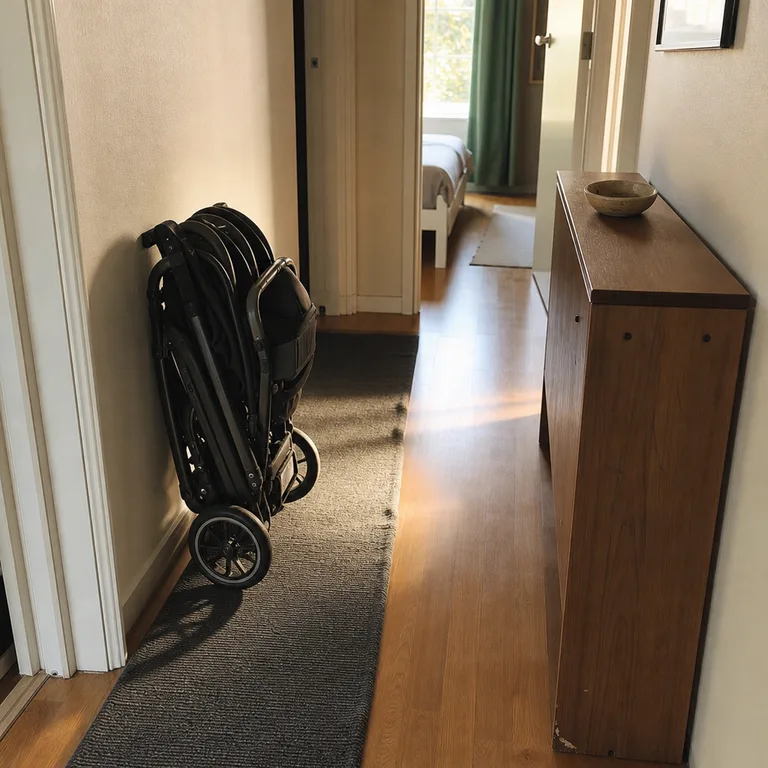
Use a runner or wheel mat with a grip layer appropriate for the floor beneath it, especially on smooth laminate or tile. Keep the opposite wall free of deep furniture so there is a comfortable center passage from the entry door into the home.
This is a simple way to manage wheel dirt without adding a cabinet or bench. It suits a longer hallway where the stroller can lie flat but must not intrude on doorways, closets, or a shared building route.
Worth knowing: A parking strip does not create storage; it only works if the hallway is already wide enough for both the stroller and a clear walking path.
Related: 12 Small Entryway Ideas for Homes With No Foyer
6.Use the Doorway-Side Niche in an Adjacent Room
When the entry is too tight, move the stroller just through the nearest interior doorway and park it in the niche beside that opening. This keeps the arrival routine close to the door without turning the entry into an obstacle course.
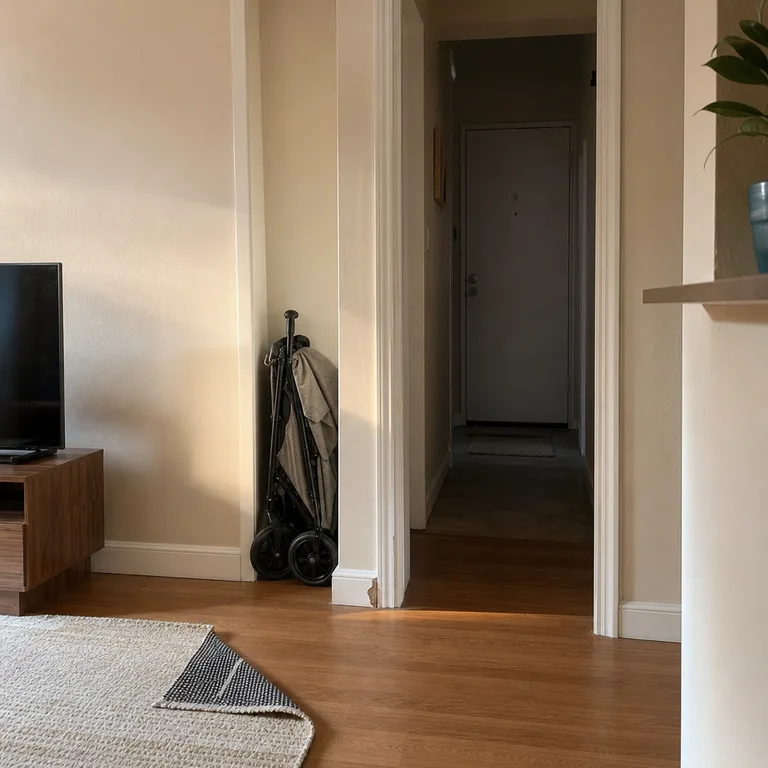
Choose the side of the doorway that does not conflict with the interior door swing. A small washable mat protects the floor where the wheels land, while leaving the threshold and both rooms easy to pass through.
This solution can be especially useful in apartments where the living room begins immediately after the entrance hall. Keep the stroller close enough for quick departures, but not in a spot that crowds seating, blocks a closet, or becomes a trip hazard in low light.
Worth knowing: This arrangement shifts visual clutter into the adjacent room, which may not suit a very small living area.
About the author
Dana Ruiz, Senior editor
Dana writes about small-space living, storage and low-cost decorating.
Keep reading
10 Christmas Advent Calendar Displays for Small Homes
October 18, 2026
8 Ways to Share a Small Kitchen Table Between Meals and Laptop Work
October 18, 2026
7 Christmas Morning Gift-Opening Setups for a Small Living Room
October 17, 2026
7 Small Living Room Layout Adjustments That Keep Windows Easy to Open
October 17, 2026