10 Small Laundry Nook Ideas for Homes Without a Laundry Room
A laundry corner can work harder with a few surfaces, storage spots, and drying options placed around the machines rather than added through a major remodel. These ideas suit laundry appliances in a bathroom or closet while keeping vents, hookups, service access, and door swings clear.
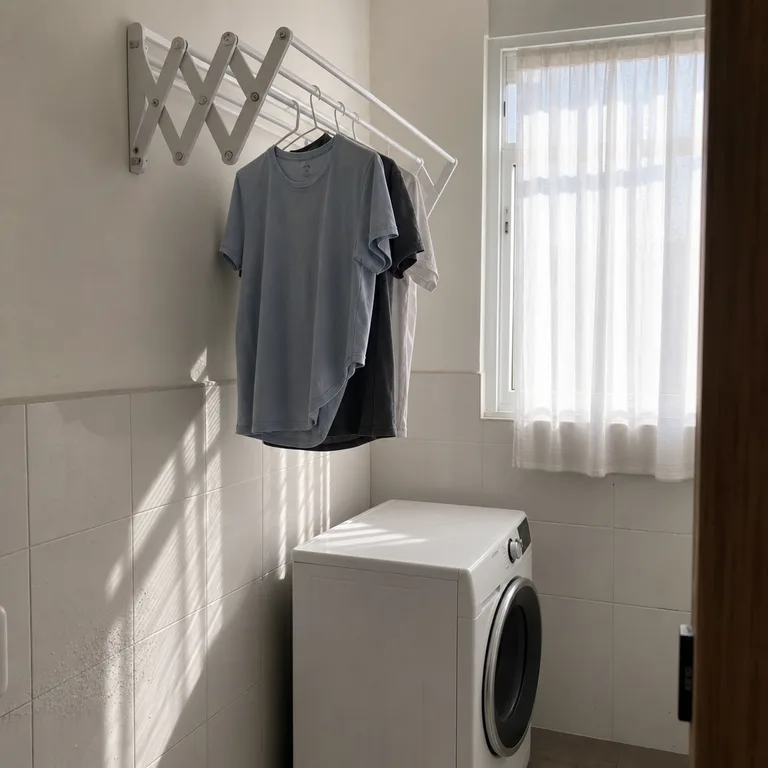
1.Add a narrow folding surface beside the washer
Set a slim freestanding cart beside the washer to create a spot for folding small loads, holding a basket, or setting down detergent while it is in use. A movable piece is often more useful than a permanent cabinet in a bathroom or closet where the walkway is already tight.
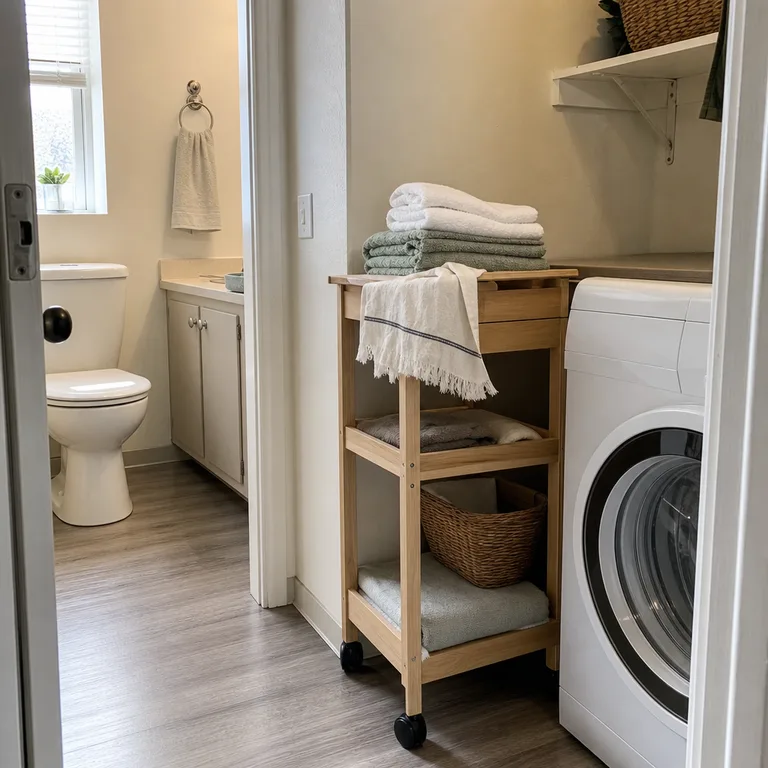
Choose a cart with a wipeable top and enough clearance to roll it away. Keep it out of the machine door path and leave access to the sides and back of the appliance for cleaning or service.
Worth knowing: A side cart only works where there is a true spare gap; squeezing one into a narrow bathroom can make the room harder to move through.
Related: 10 Small Bathroom Ideas That Keep the Floor Clear
2.Hang a fold-down shelf over open wall space
A fold-down shelf turns an unused patch of wall into a temporary folding station. Open it when a load is ready, then close it flat so closet doors, bathroom doors, and everyday foot traffic have room again.
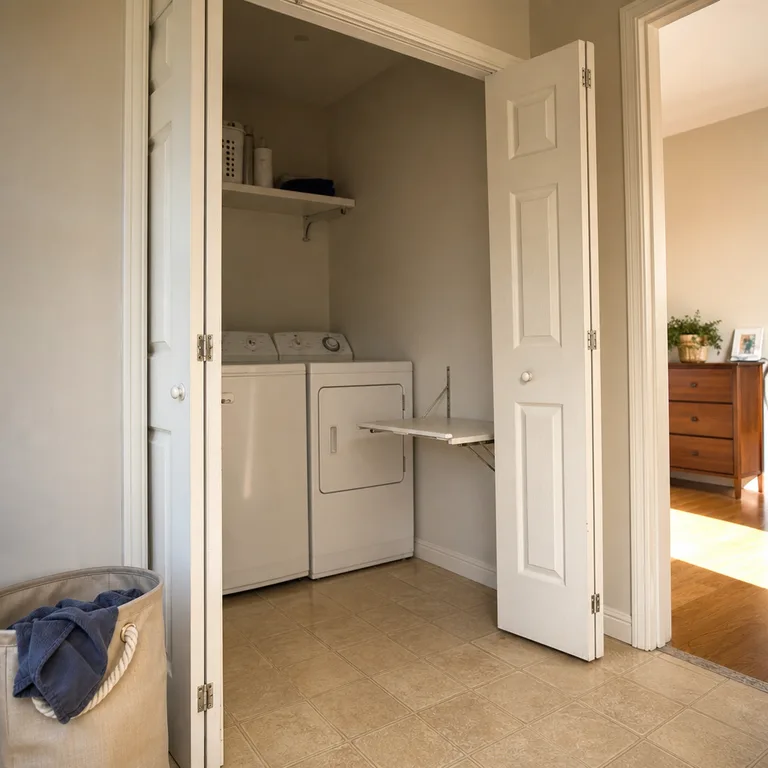
Use a simple shelf sized for the clear wall area rather than trying to span the machines. Secure it to suitable wall framing or use a rental-friendly freestanding alternative if permanent mounting is not allowed.
Worth knowing: A fold-down shelf needs clear wall space and secure installation, so it may not suit tiled walls, thin partitions, or rentals with drilling restrictions.
3.Use open baskets for sorting loads
Place a few open baskets beneath a counter, on a nearby shelf, or along an open closet wall to separate laundry as it comes off. Different basket materials, colors, or locations can distinguish loads without adding labels to the room.
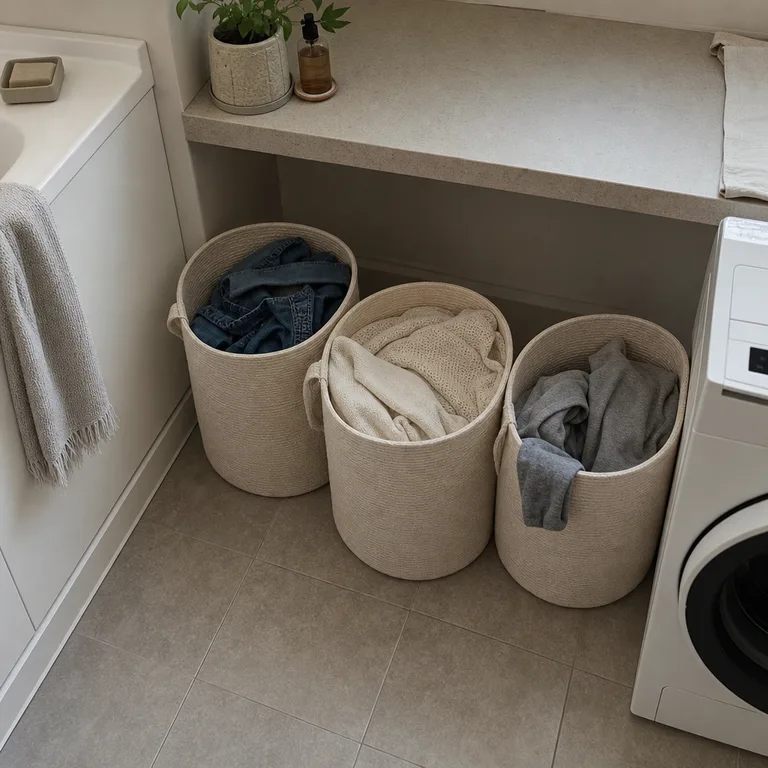
Lightweight baskets with handles make it easier to carry a sorted load to another room or back to the machine. Choose shapes that can be pulled out without scraping appliance doors or blocking a bathroom cabinet.
Worth knowing: Several baskets can quickly consume floor space, so this approach is best when they can tuck under an existing surface or sit in a wider closet.
4.Place a slim hamper in the unused side gap
A tall, narrow hamper can turn the gap beside a washer or dryer into a useful landing place for dirty clothes. It keeps loose clothing from collecting on the floor or migrating to another room before wash day.
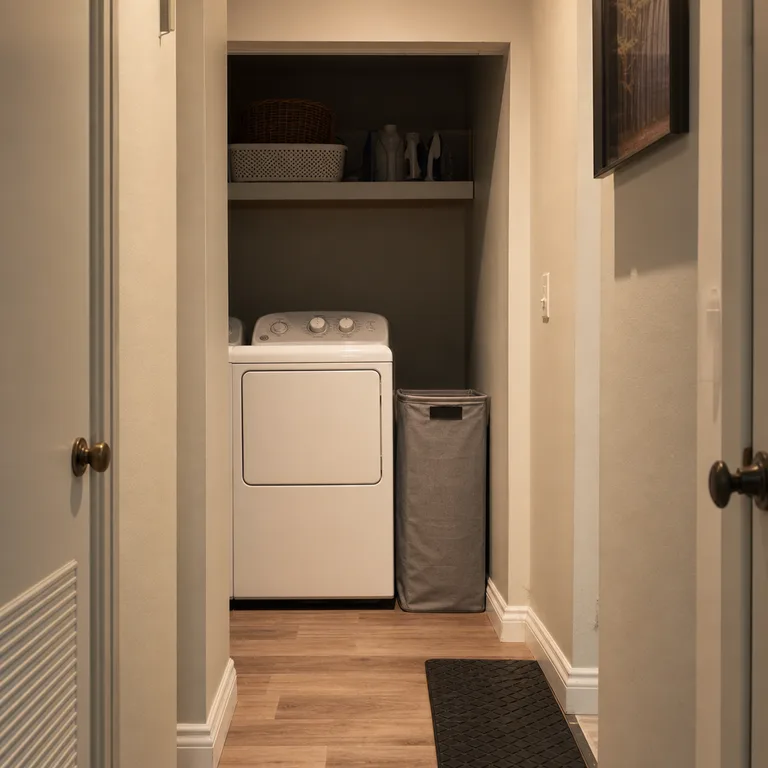
Look for a lightweight hamper that can be lifted out easily rather than one built tightly into the nook. Leave enough room to pull it forward, wipe behind it, and reach any appliance connections that may be nearby.
Worth knowing: Do not treat a narrow gap as permanent storage if it is needed for appliance ventilation, access panels, hoses, or service work.
5.Mount a wall drying rack that folds away
A folding wall rack gives delicate items a dedicated place to air-dry without taking over the tub edge or bathroom floor. When it folds flat, the wall stays clear between loads.
Install it where hanging clothes will not touch the washer controls, a door, or damp shower surfaces. In a humid bathroom, run ventilation as needed and avoid leaving wet fabric pressed against walls, since slow drying can create lingering moisture problems.
Worth knowing: A wall rack handles only a limited amount of laundry and may dry clothing slowly in a poorly ventilated bathroom.
6.Set a tension rod inside a deep closet opening
A tension rod across a deep laundry closet can hold a few hangers for shirts, lightweight knits, or items that need to drip-dry. It adds a temporary hanging zone without requiring holes in the trim, which can make it useful in a rental.
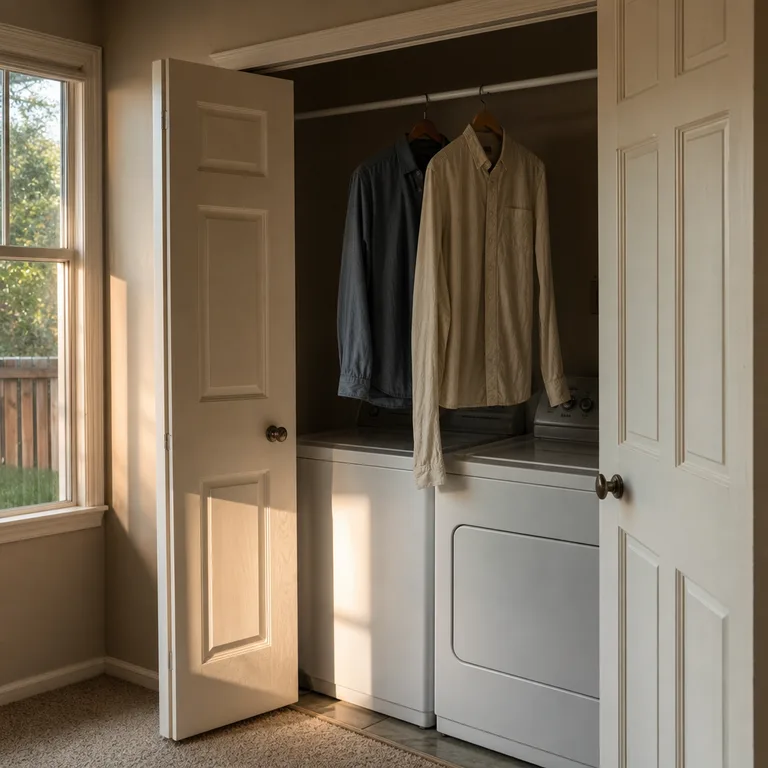
Position the rod high enough that garments stay out of the way of appliance doors and controls. Check that the closet is deep enough for hangers to sit inside the opening rather than jutting into a hall or catching on the doors.
Worth knowing: A tension rod can slip under too much weight, so it is better for a few lightweight pieces than for heavy, waterlogged items.
7.Store supplies on a rolling utility cart
Use a narrow rolling cart to gather detergent, stain treatment, clothespins, and cleaning cloths in one movable place. This reduces the need to reach over machines or fill a bathroom cabinet with laundry supplies.
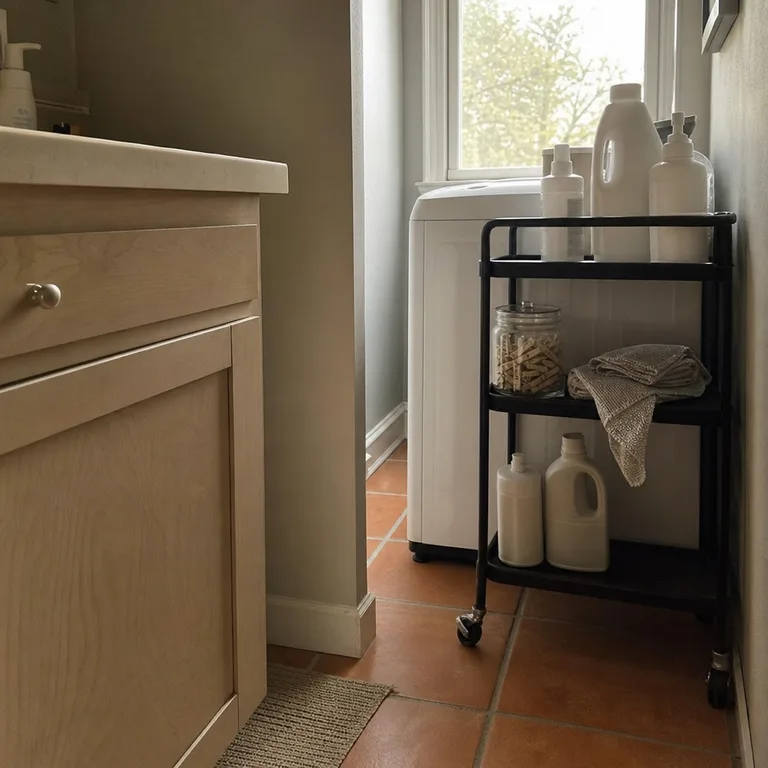
Park the cart beside the appliances when doing laundry, then roll it away when access is needed. Keeping only the supplies used regularly on the cart prevents it from becoming a crowded catchall.
Worth knowing: A rolling cart needs a stable parking spot; on a tight layout, it can become another obstacle rather than a convenience.
8.Fit a shallow shelf above the appliances
A shallow shelf above front-loading machines makes use of vertical space for towels, empty baskets, and lightweight laundry supplies. It gives the nook a finished look while keeping the appliance tops less cluttered.
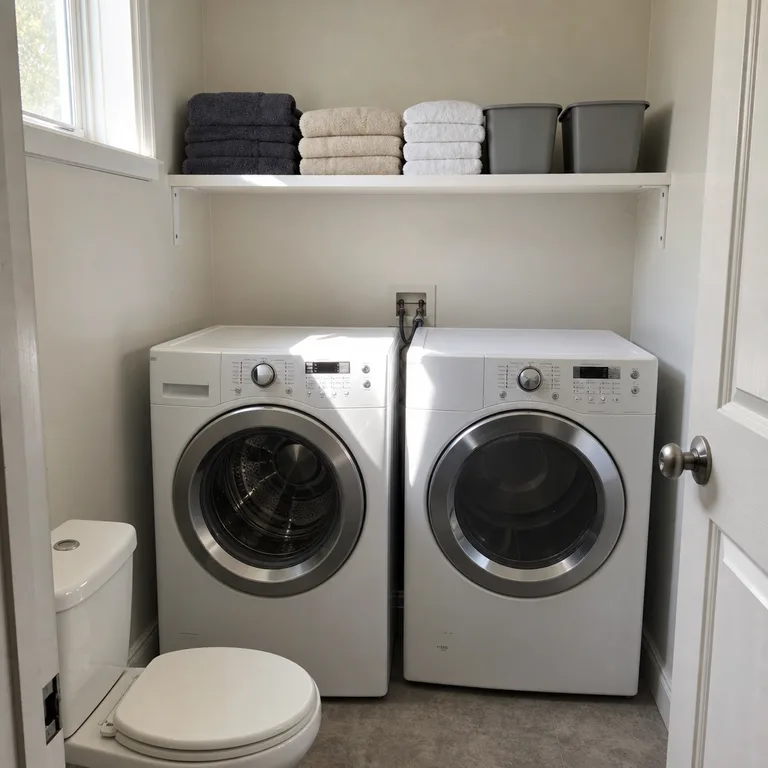
Keep the shelf narrow enough that it does not interfere with required clearance, controls, or access behind the machines. Use bins or small baskets to group loose items, but avoid overloading a shelf that is mounted on ordinary wallboard alone.
Worth knowing: This shelf is not a substitute for proper appliance clearance, and its placement depends on the machine layout and the wall behind it.
9.Create a removable counter across side-by-side machines
A removable board across two side-by-side machines can create one broad surface for folding, sorting, or holding a basket. It makes a compact laundry setup feel more intentional without adding built-in cabinetry.
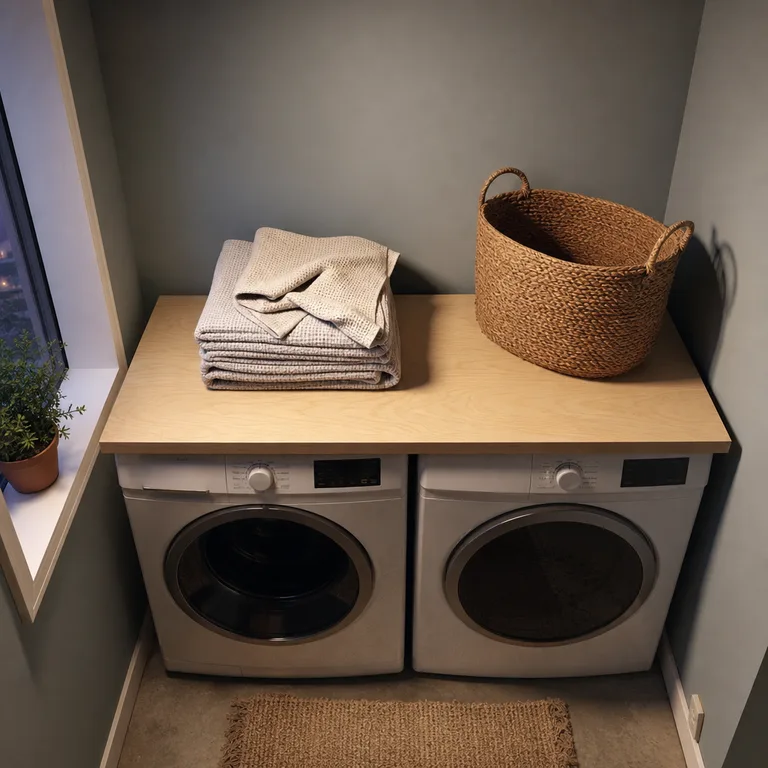
Use a smooth, sealed board that can be lifted off quickly when access is needed. Avoid fastening it to the appliances, covering controls, or trapping vibration; the surface should remain easy to remove for cleaning and maintenance.
Worth knowing: This works only with compatible side-by-side machines and enough stable space above them; it is not appropriate where appliance instructions require the tops to stay clear.
10.Keep a collapsible drying rack near the doorway
A freestanding collapsible rack is useful for occasional air-drying because it can open only when needed. Fold it flat afterward and slide it into a nearby wall gap, behind a door if clearance allows, or beside a closet rather than leaving it out all week.
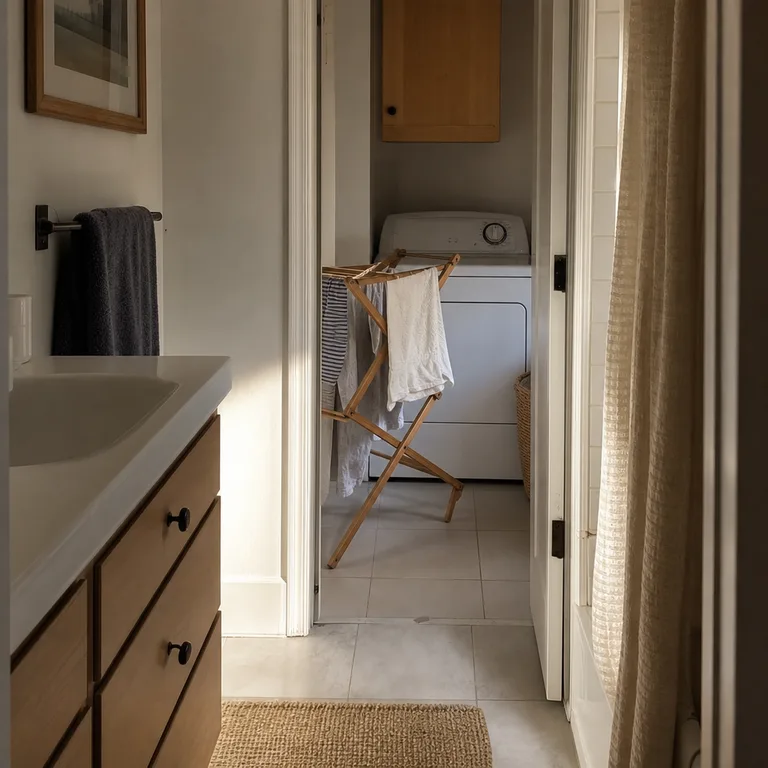
Set it where damp clothes have airflow and where the rack does not narrow the route to the bathroom exit or laundry closet. A small load of lightweight items is easier to manage in a compact home than filling every rail at once.
Worth knowing: An open drying rack can block a small bathroom or hallway, especially when doors need to swing through the same area.
About the author
Dana Ruiz, Senior editor
Dana writes about small-space living, storage and low-cost decorating.
Keep reading
10 Guest Room and Office Ideas for One Small Room
September 20, 2026
10 Budget Reading Nook Ideas for an Unused Corner
September 20, 2026
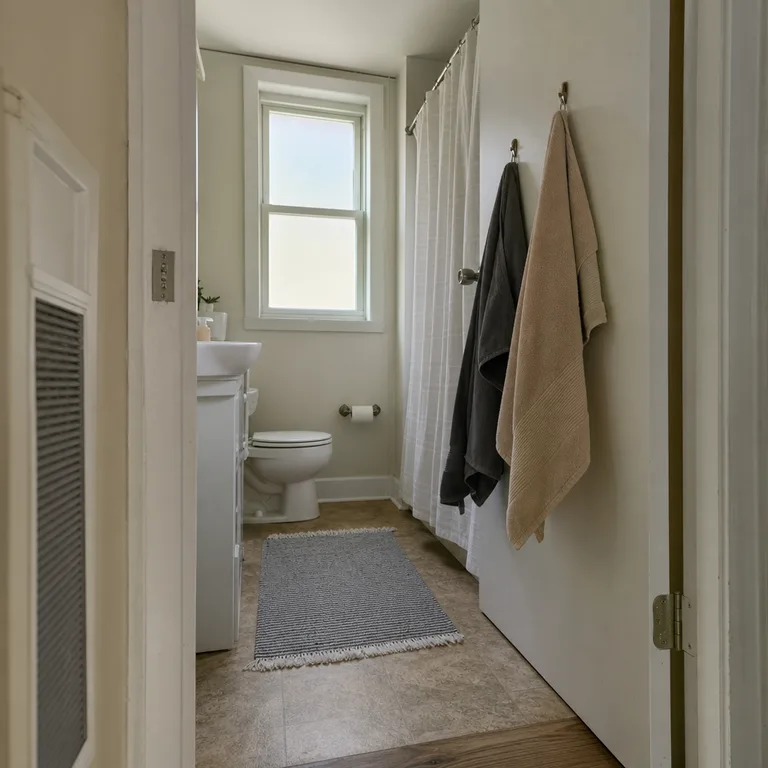
10 Small Bathroom Ideas That Keep the Floor Clear
September 19, 2026
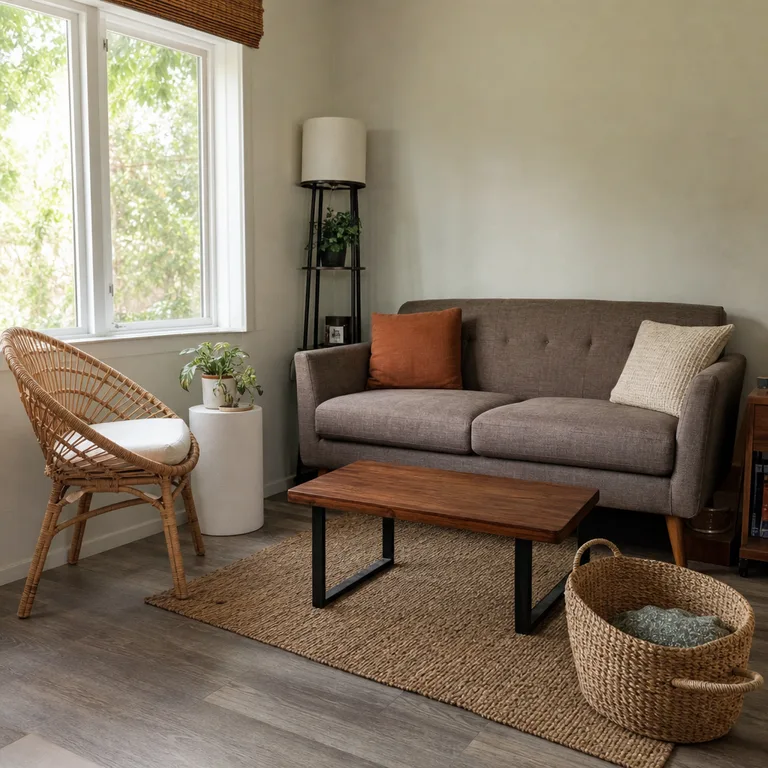
10 Rattan Accent Ideas That Add Warmth Without a Full Room Makeover
September 20, 2026